


Should I open a storage franchise or a mobile storage business in 2027?
Quality
Certified
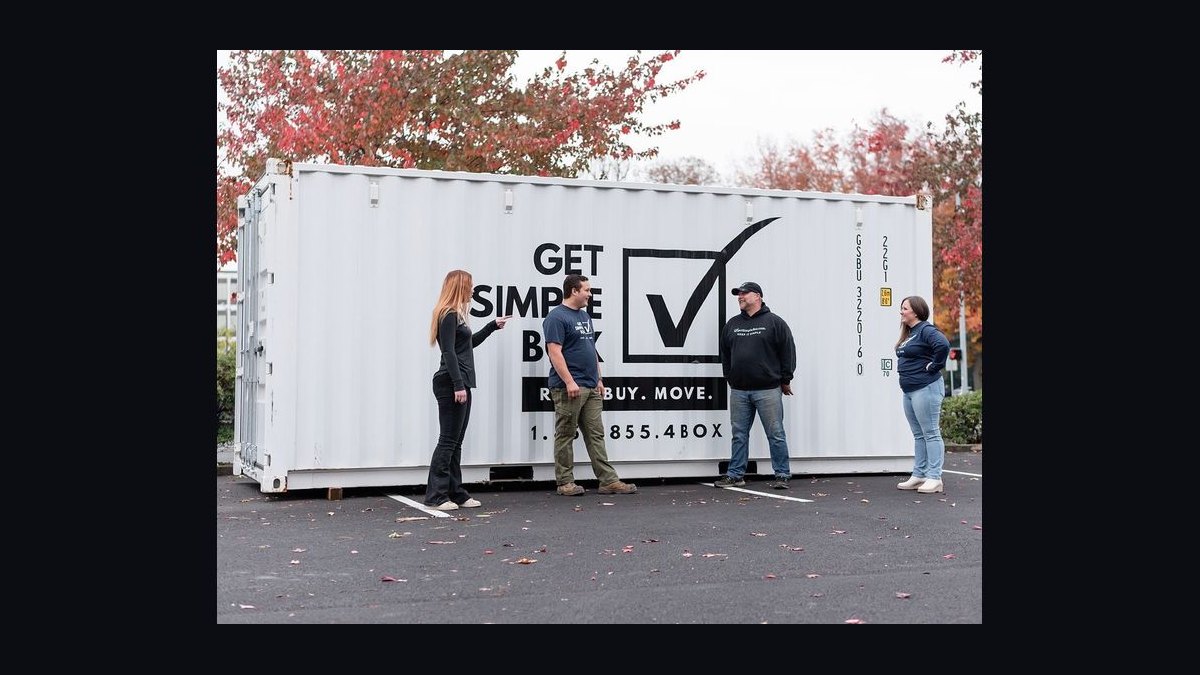
Open a mobile storage business if you want lower capital outlay, faster breakeven, and route-based recurring revenue; open a self-storage franchise if you have land, patient capital, and want an appreciating real-estate asset. Mobile suits operators with under roughly $300K; franchised facilities typically demand seven-figure development or acquisition budgets.
The outcome you should expect
These two businesses share a word — storage — and almost nothing else. Understanding what each actually produces at the end of year three is the whole decision, so start there rather than with brand names or franchise disclosure documents.
A self-storage franchise (or a licensed or branded facility operating under a management agreement) is a real estate development and lease-up business. You acquire or build a facility, spend 24 to 36 months filling it, and then hold an asset whose value is driven by net operating income divided by a capitalization rate. Your day-to-day revenue is monthly rent on 300 to 700 units. Your operating margin at stabilization is high — mature self-storage facilities commonly run net operating income margins in the 60 to 70 percent range because the physical product requires very little labor, no inventory, and minimal ongoing service. Your real return, though, comes at exit or refinance: if you build a facility for $8 million that stabilizes at $800,000 of NOI and the market trades at a 5.5 percent cap rate, the asset is worth roughly $14.5 million. That spread — the development margin — is the actual prize, not the monthly cash flow.
A mobile storage business (portable containers delivered to a customer's driveway or jobsite, either left on site or hauled back to a yard) is a logistics and rental-fleet business. You buy or lease containers, you buy a truck with a lift system, and you generate revenue three ways: a delivery fee, a monthly rental fee per container, and a pickup or redelivery fee. Margins per unit are lower than self-storage because you have drivers, fuel, insurance, and equipment maintenance, but capital per revenue dollar is dramatically lower and you can start earning in month two rather than month thirty.

Expect a mobile operation to be cash-flow positive far sooner and to plateau lower. Expect a franchise facility to consume cash for two to three years and then throw off both durable income and equity. If your goal is replacing income within 18 months, mobile is the honest answer. If your goal is building a $5 million to $15 million asset over a decade and you can survive the lease-up, the facility path wins on absolute wealth creation. Very few people can do both at once, and trying to is the most common way first-time operators in this space fail.
The 2027 timing question matters too. Self-storage went through a heavy national development cycle, and many secondary and tertiary markets absorbed significant new square footage. That means new supply in a saturated submarket faces slower lease-up and heavier concession pressure — the operator discounting the first three months to fill units is competing with three other operators doing the same thing. Mobile storage faces a different constraint: it is far less overbuilt in most metros, but it is also more exposed to moving volume, residential transaction activity, and construction and restoration demand, all of which move with interest rates and local housing turnover.
One more outcome difference worth naming: the exit. A stabilized facility sells into a deep pool of buyers — private operators, syndicators, institutional funds, and publicly traded REITs — and is priced off NOI at a market cap rate. A mobile storage business sells as a small operating company plus a fleet of depreciating equipment, typically at a multiple of earnings or a per-container value, into a much thinner buyer pool. That difference in exit liquidity is real money and should be part of your year-three expectation, not an afterthought.
What drives that outcome

Four variables determine which model wins for you specifically. Rank them honestly before you look at a single franchise brochure.
Capital available and its cost. A ground-up self-storage facility in most U.S. markets runs somewhere between $45 and $80 per square foot of gross building area for a single-story non-climate build, and materially more for multi-story climate-controlled construction in urban infill locations, before land. A 50,000 square foot facility is therefore a multi-million-dollar project, and lenders typically want 25 to 35 percent equity on a construction loan, plus personal guarantees and a completion guaranty. Buying an existing facility skips lease-up risk but you pay for stabilized NOI at market cap rates, which compresses your return. Mobile storage inverts this: a starting fleet of 40 to 60 containers plus one truck with a lift trailer plus a fenced yard lease is an order of magnitude cheaper, and much of the container cost can be financed as equipment rather than as real estate.
Land control and entitlement risk. This is the silent killer on the franchise side. Municipalities have grown hostile to new self-storage — many jurisdictions have added moratoriums, special-use permit requirements, or design standards that force expensive facades on what is fundamentally a warehouse. Entitlement can take 9 to 18 months with no guarantee of approval, and you burn real money on civil engineering, traffic studies, and legal fees before you know the answer. A mobile business needs a yard, which is a far easier zoning conversation, and in many cases containers spend most of their life on customer property rather than in your yard at all.
Your operating temperament. A self-storage facility is a low-touch, high-systems business: pricing algorithms, delinquency management and lien auctions, security, and marketing. Once stabilized it can be run with one part-time manager plus remote support. A mobile storage business is a daily operations job: routing, driver hiring and retention, DOT compliance, equipment breakdowns, and customer scheduling. If you hate dispatch and vehicles, mobile will grind you down regardless of its better cash math.
Local demand structure. Look at what actually generates portable-container demand in your metro: home renovation volume, insurance restoration work after storms, commercial tenant improvement projects, retail seasonal overflow, and residential moves. Self-storage demand is driven by population density, household formation, apartment stock, and existing square feet per capita in a three-mile ring. Two metros with identical populations can produce completely different answers because one has a renovation-heavy housing stock and the other is a new-build suburb where nobody has accumulated enough stuff to need either service.
Benchmarks and realistic ranges
Numbers here are ranges, not promises, and they vary enormously by metro. Use them to size your model, then replace every one with a local quote before you commit capital.
Self-storage facility economics. Industry rule of thumb for market saturation is net rentable square feet per capita within a three-mile radius. Roughly 7 square feet per capita has long been treated as an equilibrium marker; meaningfully below that suggests room for supply, meaningfully above suggests you will be fighting for occupancy. Physical occupancy at stabilization is typically targeted in the high 80s to low 90s percent. Economic occupancy — what you actually collect after discounts and delinquency — runs several points lower. Delinquency in the 3 to 6 percent range is normal, and lien auction processes are governed by state statute with specific notice requirements you must follow precisely.
Facility revenue per square foot varies from roughly $8 to $12 annually in rural and low-cost markets to well over $25 in dense urban climate-controlled product. Operating expense ratios commonly land at 30 to 40 percent of gross potential revenue once you include property taxes, insurance, payroll, utilities, marketing, credit card fees, and a management fee. Third-party management typically costs around 6 percent of gross revenue plus fees; franchise or brand-license arrangements add royalty and marketing fund percentages on top, and those percentages compound against your NOI and therefore against your exit value. A 5 percent royalty on a facility generating $1.2 million of revenue is $60,000 per year — capitalized at a 5.5 percent cap rate, that royalty stream is costing you over $1 million of asset value.

Mobile storage economics. A steel container suitable for portable storage — whether a purpose-built weatherproof unit or a modified shipping container — is typically a low-thousands-of-dollars asset with a service life measured in decades if maintained. Monthly rental rates for a portable container on a customer's property commonly sit in a band roughly comparable to or slightly above a large self-storage unit, plus one-time delivery and pickup charges that often each run in the low hundreds of dollars. The unit economics question is simple: how many months does it take for rental income to recover the container's cost, and what is your utilization rate across the fleet?
If a container costs $3,500 delivered and rents for $175 a month, gross payback is 20 months at 100 percent utilization. At a realistic 65 to 75 percent utilization, payback stretches toward 27 to 31 months before overhead. That is why delivery and pickup fees matter so much — they front-load revenue and cover the true marginal cost of the truck run. Operators who discount delivery to win the rental are usually the ones who cannot explain why their bank balance never grows.
Route density is the whole game in mobile. A driver doing six drops within a 15-mile radius is profitable; the same driver doing three drops across 70 miles is not. Fuel, insurance for commercial vehicles, driver wages, and the fixed cost of a lift-equipped truck are all spread across drops, not across containers. Model your business at the drop level, then check whether the metro can supply enough drops per day within a tight radius. This is also why mobile scales geographically in clusters rather than smoothly.
Franchise fees and the disclosure document. Any franchise offering in the United States must provide a Franchise Disclosure Document, and Item 19 is the Financial Performance Representation. Read it closely: many franchisors provide no Item 19 at all, and those that do often present ranges from a self-selected subset of units. Item 7 gives the estimated initial investment range, Item 6 gives ongoing fees, and Item 20 lists franchisee turnover — that turnover table is frequently the most informative page in the entire document. Call former franchisees, not just the reference list the franchisor hands you.
Risks, edge cases, and failure modes

Overbuilding in your submarket is the number-one facility risk. New supply within a three-mile ring will slow your lease-up and force concessions, and unlike most businesses you cannot easily reduce capacity. Before committing, physically drive the ring, count facilities, call each one as a mystery shopper for current promotional rates, and check municipal permit records for approved-but-unbuilt projects. An approved project you did not know about can arrive halfway through your lease-up and reset your pricing assumptions.
Lease-up assumptions that are too aggressive. Pro formas frequently assume 6 to 10 units rented per month. In a competitive market, 4 to 5 is more realistic, and the difference stretches your stabilization from 30 months to 50 and can break your debt service coverage covenant. Model a pessimistic lease-up curve and confirm you can still service the loan.
Interest rate and refinance risk. Construction loans are typically short-term and floating, with a takeout permanent loan assumed at stabilization. If rates are higher at refinance than at underwriting, or if the property has not stabilized enough to support the permanent loan proceeds, you must inject additional equity or sell at a bad moment. This is the mechanism by which otherwise sound self-storage projects fail.
On the mobile side, the dominant failure mode is fleet imbalance. Buying containers ahead of demand converts cash into steel that sits in a yard earning nothing while you still pay yard rent, insurance, and interest. Buying behind demand means turning away customers and training them to call a competitor. Discipline: add containers in increments tied to a utilization trigger — for example, order the next batch only when trailing 60-day utilization exceeds 80 percent.

Vehicle and safety exposure. A lift-equipped truck moving heavy loaded containers on residential streets is a genuine liability exposure. Commercial auto insurance, cargo coverage, general liability, and — depending on vehicle weight and interstate operation — DOT registration, driver qualification files, and hours-of-service compliance all apply. Undercapitalizing insurance is a business-ending mistake in this model.
Container placement and local rules. Many municipalities and virtually all homeowners associations restrict how long a container may sit in a driveway or on a street. Some require permits for street placement. A business plan assuming 6-month driveway rentals will collide with a 14-day municipal limit. Check the ordinances in your top five target ZIP codes before buying a fleet.
Franchise-specific traps. Territory definitions matter enormously — a "protected territory" that excludes national accounts, online bookings routed by the franchisor, or a franchisor-owned unit nearby is not real protection. Read the transfer clause: if you cannot sell your unit without franchisor approval and a transfer fee, your exit liquidity is constrained. Read the renewal terms, the post-term non-compete, and any required remodel or re-imaging obligations, which can force six-figure capital spend on a schedule you do not control.
The hybrid temptation. Some operators try to run a small facility and a container fleet simultaneously, using the facility yard for container storage. This can work and is genuinely synergistic — the yard is already zoned and fenced, and containers can absorb overflow demand. But it doubles your operational surface area at exactly the moment you have the least management bandwidth. If you pursue it, sequence it: get one model to stability first, then add the second.
Seasonality. Both models are seasonal, but differently. Self-storage demand peaks with the summer moving season and holds through inertia — people forget to move out. Mobile storage is sharply seasonal with moving and construction, and your truck and drivers are fixed costs in the slow months. Plan winter cash reserves accordingly, and consider counter-seasonal demand like restoration work or commercial inventory overflow.
A practical rollout plan

Work the decision in this sequence rather than starting with franchisor conversations, which are designed to sell you a specific answer.
Weeks 1 to 3 — market diagnostics. Pull population, household count, and median household income for your three-mile and ten-mile rings. Count existing self-storage square footage in the three-mile ring and compute square feet per capita. Separately, inventory portable-container competitors in the metro — national brands and local operators. Call both sets as a customer and record actual quoted rates, availability, and wait times. Availability constraints are the single best demand signal you will find.
Weeks 3 to 6 — capital and financing reality check. Get a real conversation with an SBA lender and a conventional commercial lender. Self-storage construction commonly uses SBA 504 or conventional construction debt; container fleets and trucks are usually financed as equipment, sometimes via SBA 7(a) working capital. Learn what equity injection, personal guaranty, and debt service coverage ratio each lender will require. This conversation collapses the decision faster than any spreadsheet — if you cannot raise 30 percent of a $6 million project, the franchise question resolves itself.
Weeks 5 to 9 — if pursuing a franchise, do the FDD work. Request the Franchise Disclosure Document, then wait the statutorily required period before signing anything. Hire a franchise attorney — not a general business attorney — to review it. Build your own pro forma from Items 6 and 7; do not use the franchisor's model. Call at least 10 current franchisees and every terminated franchisee you can reach from Item 20. Ask each one: what did the first year actually cost, what did the franchisor do that you could not have done yourself, and would you sign again.
Weeks 5 to 9 — if pursuing mobile, run a minimum viable route test. Secure a small yard lease with a short term. Buy or lease 15 to 25 containers rather than 60. Buy one used lift truck or contract delivery with a local hauler for the first quarter. The goal is to learn true utilization, true drop time, and true customer mix before you commit fleet capital. Almost every successful independent mobile storage business started smaller than the owner wanted to.

Weeks 8 to 16 — build the operating stack. For a facility: management software with dynamic pricing, gate and access control, camera coverage, an online rental funnel that actually completes a rental without a phone call, and a documented delinquency and lien process matched to your state statute. For mobile: dispatch and routing software, a container tracking system, a maintenance log per unit, a delivery checklist with photo documentation at drop and pickup, and clear damage-liability terms in the rental agreement.
Month 4 onward — instrument the business. For the facility, track physical occupancy, economic occupancy, revenue per occupied square foot, move-in and move-out counts, and delinquency aging weekly. For mobile, track fleet utilization, drops per truck-day, revenue per drop, average rental duration, and container turn time between customers. Both models die quietly from unmeasured drift; both are easy to steer once instrumented.
Month 12 and beyond — decide about scale deliberately. A facility scales by adding phases, buying the next facility, or converting unused space to climate-controlled. A mobile business scales by adding containers within existing route density first, then a second truck, then a second yard in an adjacent cluster. Resist adding a second yard before the first is above 80 percent utilization with a waiting list.
Related questions
Can I run a mobile storage business without buying a truck?
Yes, at least initially. Contract with a local hauler or roll-off operator for deliveries during your pilot quarter. You give up margin per drop and some scheduling control, but you avoid a six-figure vehicle purchase before you know your real drop volume.
Is buying an existing self-storage facility better than building one?
Often, for first-time operators. You buy known cash flow and skip entitlement and lease-up risk, which are where most new developers fail. You pay for that certainty through a market cap rate, so your upside comes from operational improvement and expansion rather than development margin.
Do I actually need a franchise brand for self-storage?

Not necessarily. Third-party management companies offer national brand, revenue management, and call-center support under a management agreement, typically without the long-term contractual constraints and transfer restrictions of a franchise. Compare total fee load and exit flexibility, not just the brand name.
How saturated is self-storage in most U.S. markets?
It varies dramatically by submarket, which is why national averages mislead. Compute net rentable square feet per capita in your specific three-mile ring and check municipal records for approved-but-unbuilt projects. A metro-level average can hide a badly oversupplied ring and vice versa.
Which model is easier to sell when I want out?
A stabilized facility, generally. It sells as real estate to a deep buyer pool including institutional capital and REITs, priced off NOI. A mobile fleet sells as a small business plus equipment at a business multiple, to a much thinner buyer pool, and franchise transfer clauses can complicate it further.
FAQ
How much capital do I realistically need for each path?
A mobile storage business can start meaningfully with a yard lease, 15 to 25 containers, and either one used lift truck or contracted hauling — a five-to-low-six-figure range for a genuine pilot, scaling into the low hundreds of thousands as the fleet grows. A ground-up self-storage facility is a multi-million-dollar project requiring 25 to 35 percent equity from a lender's perspective, plus personal guarantees. Acquiring an existing facility is similar in magnitude. The gap between these two is not a matter of degree; they are different asset classes with different investors.
Which one breaks even faster?
Mobile, by a wide margin. Containers begin earning within weeks of arriving, and a well-routed operation can cover fixed costs within the first year. A new facility typically absorbs cash for 24 to 36 months during lease-up before reaching stabilized occupancy and positive cash flow after debt service. If your personal runway is under two years, the facility path carries real personal financial risk.

What is the biggest hidden cost in each model?
For a facility: entitlement and pre-development spend on engineering, permits, and legal that is entirely sunk if approval fails, plus concessions during lease-up that never appear in a pro forma. For mobile: commercial vehicle insurance, driver turnover, and idle container carrying cost when the fleet outruns demand. Both models also carry payment processing and marketing costs that first-time operators consistently underestimate.
Should I be worried about the self-storage development cycle in 2027?
Worried is the wrong frame; specific is the right one. National supply conditions are less relevant than your three-mile ring and your municipality's permit pipeline. Some submarkets are genuinely oversupplied and will punish new entrants with long lease-ups; others remain underserved. Do the ring-level analysis and treat any national statistic as background, not as a decision input.
Can a mobile storage business and a self-storage facility be combined?
Yes, and there is real synergy — the facility yard is already zoned, fenced, secured, and insured, and containers can capture demand from customers who want the unit brought to them. The caution is sequencing. Launch one, get it to operational stability with a repeatable process and a manager who is not you, then add the second. Running both from day one doubles the failure surface at your point of minimum bandwidth.
What should I look for in a franchise disclosure document specifically?
Item 7 for the estimated initial investment range, Item 6 for ongoing royalty and marketing fees, Item 19 for any financial performance representation and — importantly — the absence of one, and Item 20 for the franchisee turnover table showing terminations, non-renewals, and transfers. Then read the territory definition, the transfer and renewal clauses, and any mandatory remodel obligation. Hire a franchise attorney to review it, and call former franchisees, not only the ones the franchisor recommends.
Sources
- https://www.ftc.gov/business-guidance/resources/franchise-rule-compliance-guide
- https://www.sba.gov/funding-programs/loans
- https://www.irs.gov/businesses/small-businesses-self-employed/starting-a-business
- https://www.fmcsa.dot.gov/registration/do-i-need-usdot-number
- https://www.census.gov/programs-surveys/acs
- https://www.bls.gov/oes/current/oes533032.htm
- https://www.osha.gov/powered-industrial-trucks
- https://www.consumerfinance.gov/consumer-tools/
- https://www.nfib.com/
- https://www.score.org/
Related on PULSE
- Should I buy an existing business or start one from scratch in 2027?
- How do I evaluate a franchise disclosure document before signing?
- What does a realistic lease-up curve look like for a new facility?
- How do I price recurring rentals against local competitors?
- When should a route-based business add its second truck?
- How do I know if my local market is oversupplied?
This page will be disappearing soon. Save it to your device for $1 — or read it free while it is here.
@Kory-White- · if Venmo asks, the last 4 of my number are 2012
This page is gone.
This one is off the shelf now. $1 keeps it on your phone for good — the whole page, pictures and diagrams included.
 franchiseShould I open or buy a Great Clips franchise in 2027?
 franchiseShould I open or buy a Jeremiah's Italian Ice franchise in 2027?
 franchiseShould I open or buy a Mac Tools franchise in 2027?
 franchiseShould I open or buy an Orangetheory Fitness franchise in 2027?
 franchiseShould I open or buy a Subway franchise in 2027?
 franchiseShould I open or buy a Panera Bread franchise in 2027?
 franchiseShould I open or buy a Stanley Steemer franchise in 2027?
 franchiseShould I open or buy a Take 5 Oil Change franchise in 2027?
 franchiseShould I open or buy a Wienerschnitzel franchise in 2027?
 franchiseShould I open or buy a Bruster's Real Ice Cream franchise in 2027?