


Should I open or buy a self-storage franchise compared to an independent facility in 2027?
Quality
Certified
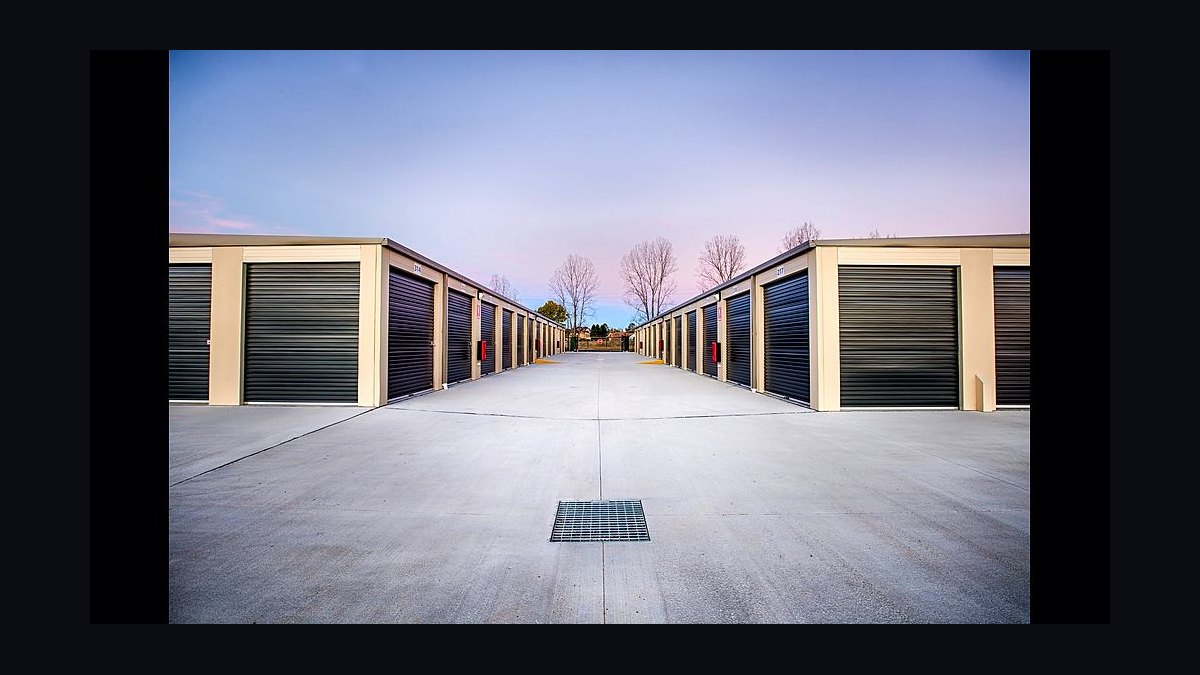
Buy an existing independent facility if you can find one with real occupancy history; open ground-up only if you have a proven undersupplied trade area. Self-storage franchising is thin compared to food or fitness — most "franchise" offers are actually third-party management or brand-licensing deals, so weigh the fee against the revenue lift they measurably deliver.
What it is and why it matters
The first thing to understand is that self-storage does not have a franchise market that looks anything like quick-service restaurants, gyms, or home services. If you go looking for a self-storage franchise in 2027 the way you would look for a Subway or a Chick-fil-A, you will find a much smaller and stranger menu. The dominant model in the industry is not franchising at all — it is third-party management. The large public REITs and several large private operators will put their brand on your building, run your call center, set your rates with their revenue-management system, take your facility onto their national website, and charge you a management fee (commonly around 6% of gross revenue, sometimes with a floor of a few thousand dollars a month, plus platform and call-center fees) — while you own the real estate outright and they own no equity in your business.
That is structurally different from a franchise. In a true franchise you buy a license to operate under a brand, you pay an upfront franchise fee plus ongoing royalties, you sign a franchise agreement governed by the FTC Franchise Rule, you receive a Franchise Disclosure Document (FDD) with 23 mandated items, and you generally run the operation yourself under the franchisor's system. In third-party management, the operator *runs the store for you*. You are closer to a passive owner. The distinction matters enormously for how you should think about the decision, because most of the "franchise or independent?" question in self-storage is really a "branded/managed or independent?" question.
There is a second reason the distinction matters: the exit. Self-storage is a real estate asset class. Buyers price it on net operating income and a capitalization rate, the same way they price apartments or strip centers. A branded, professionally managed facility with clean books, a stabilized occupancy curve, and demonstrated rate discipline sells at a tighter cap rate than a mom-and-pop facility with handwritten leases and a gate code taped to the office window. So the brand decision is not only an operating decision — it is a valuation decision that shows up years later when you sell.

Why does any of this matter *specifically in 2027*? Because the industry is coming out of a genuinely unusual cycle. The 2020–2022 period produced record move-in rates and near-full occupancy, which pulled an enormous amount of new development into the pipeline. That supply landed in 2023–2025 into a housing market where existing-home sales were depressed. Storage demand is heavily tied to moves — the "four Ds" (death, divorce, downsizing, dislocation) plus ordinary relocation — so when people stop moving, the top of the demand funnel narrows. The result across many markets has been a multi-year period of soft street rates, heavy promotional discounting (the "first month $1" offers), and existing-customer rate increases doing the heavy lifting on revenue. Anyone underwriting a facility in 2027 needs to underwrite that reality, not the 2021 one.
For a first-time owner, the practical translation of all this is: your two real decisions are (1) build/open versus buy an existing operating asset, and (2) run it independent versus attach a brand and management platform. Those are separate axes, and people conflate them constantly. You can buy an existing independent facility and immediately hand it to a third-party manager. You can build ground-up and run it independently with cloud software and a kiosk. The four combinations have very different risk profiles.
The step-by-step process
Here is the sequence that actually works, in order, whether you end up franchised, managed, or fully independent. Skipping steps here is where first-time owners lose money.

Step 1 — Define the trade area before you define the deal. Self-storage is a three-to-five-mile business in suburbs and often a one-mile business in dense urban areas. Pull the population inside that ring, the household count, the renter share, the median household income, and the number of new apartment units delivered or permitted in the last three years. Renters and recent movers are your customers; long-tenured single-family homeowners with garages are not.
Step 2 — Count the existing supply and the pipeline. Add up net rentable square feet of storage inside your ring and divide by population. The industry rule of thumb is roughly 7–8 net rentable square feet per capita as a rough equilibrium, though this varies widely — dense coastal metros can absorb far less per capita because of price, and some Sun Belt markets are well above it and still functioning. What matters more than the absolute number is the *trend*: pull the local planning department's approved-but-unbuilt storage projects. A market at 6 square feet per capita with two 80,000-square-foot projects approved is not undersupplied; it is about to be oversupplied.
Step 3 — Shop the competition like a customer. Call every facility in the ring. Ask for a 10x10 climate-controlled price, ask what the move-in special is, ask what's available. Do this twice, six weeks apart. You are looking for two things: the spread between advertised web rate and what they'll actually give you on the phone, and whether the same units are still available on the second call. Heavy discounting plus persistent availability equals a soft market, full stop, regardless of what the pro forma says.
Step 4 — Choose your path: build, buy stabilized, or buy value-add. Ground-up development is the highest return and the highest risk: you eat 18–36 months of lease-up with no meaningful revenue. Buying stabilized is the lowest risk and the lowest return — you're paying for someone else's completed work. Buying value-add (a tired independent at 70% occupancy with below-market rates and no online rental capability) is where most first-time buyers should focus, because the improvements are operational rather than construction-related.
Step 5 — Underwrite with real documents. For an acquisition, demand the trailing 12 months of the rent roll month by month, not a summary. Demand the tenant ledger showing move-in date, current rate, and last rate increase for every unit. Demand delinquency and auction history. Demand the property tax bill and — critically — ask your county assessor how the property gets reassessed on sale, because a low tax basis carried by a 30-year owner can reset upward and vaporize your margin.
Step 6 — Evaluate brand/management as a line item, not a philosophy. Get the management agreement or the FDD. Model the facility twice: once independent, once branded. The branded model should show higher gross revenue (better rate management, national web traffic, higher trust) minus the fee. If the branded net operating income isn't clearly higher, the brand is not paying for itself at that location.
Step 7 — Line up financing before you go hard on a deal. SBA 7(a) and 504 loans have historically been usable for self-storage acquisitions and construction by owner-operators, and the SBA programs are one of the few paths to a lower down payment. Conventional commercial lenders will typically want more equity. Terms move constantly; get a real term sheet, not a rate you read somewhere.
Step 8 — Close, then execute a 90-day plan. Raise below-market rates on existing tenants in staged waves. Get online rental live. Fix the gate and the cameras. Photograph everything. Then hold and let the rate increases compound.
Costs, timelines, and typical ranges
Numbers in self-storage swing hard by market, so treat everything below as a structure for your own underwriting rather than as quotable figures for your specific deal. Get real quotes for your county.

Ground-up development. Land is the wild variable — the same 2.5-acre pad can be a rounding error in rural Georgia and the single largest line item in a coastal metro. Construction of a single-story drive-up facility is materially cheaper per square foot than a multi-story climate-controlled building, which needs an elevator, HVAC, sprinklers, and often a more complex structural system. Beyond the shell you have site work, stormwater management, paving, fencing, gate systems, security cameras, unit doors and partitions, signage, and an office build-out. Soft costs — architecture, engineering, civil, permitting, impact fees, legal, and construction-period interest — routinely run a meaningful percentage on top of hard costs and are the line first-timers most often under-budget.
Entitlement is the timeline killer. Many municipalities have grown hostile to storage because it generates little sales tax and few jobs. Some have outright moratoriums, some require conditional use permits, some impose design standards that force you into an expensive façade. Budget 6–18 months for entitlement in a friendly jurisdiction and understand that an unfriendly one can simply say no after you've spent six figures on drawings. Construction after permits typically runs 9–14 months. Then lease-up: a well-located facility might absorb 3–5% of its units per month, meaning roughly 20–30 months to stabilization. Total: often three to four years from land purchase to stabilized operations.
Acquisition. You buy on net operating income divided by cap rate. Cap rates for self-storage compressed dramatically through 2021 and then widened as interest rates rose. Institutional-quality assets in strong metros trade tighter than a single tired facility in a tertiary market — the spread between those two ends of the market is wide, and it is where a first-time buyer's opportunity lives, because the institutions largely aren't shopping small tertiary deals. Expect to put down substantially more equity than you would on a house; conventional commercial lenders commonly want 25–35% down, while SBA programs can go lower for owner-operators who meet the criteria.

Franchise and management fees. For a true franchise, the FDD's Item 5 discloses the initial franchise fee, Item 6 discloses royalties and other recurring fees, and Item 7 gives the franchisor's estimated initial investment range. Item 19 is the financial performance representation — and note that franchisors are *not required* to include one. A missing Item 19 is a meaningful signal; it means the franchisor will not put unit-level economics in writing. For third-party management, the industry-standard structure is a percentage of gross revenue (commonly around 6%), often with a monthly minimum, plus separate charges for the call center, the platform, and sometimes a share of tenant insurance or protection-plan revenue. Read the tenant-protection-plan economics carefully — that revenue stream is material at a stabilized facility and who keeps it is negotiable.
Ongoing operating costs. Property taxes and insurance are the two largest and the two most volatile. Insurance in particular has moved sharply in coastal and wildfire-exposed markets. Then payroll (or the management fee that replaces it), utilities, marketing, software, repairs, and a capital reserve for roofs, paving, and doors. A well-run facility can hold operating expenses to roughly 30–40% of effective gross income, but a small facility carries a worse ratio because fixed costs don't scale down.
Where teams get it wrong
Treating a franchise brand as a demand generator. In food service, the brand *is* the demand — people seek out the specific restaurant. In storage, almost nobody wakes up wanting a specific brand. They search "storage near me," compare price and distance, and rent. What a national brand buys you is search visibility, a professional booking funnel, trust at the moment of transaction, and disciplined revenue management. Those are real and worth paying for. But if you are underwriting a brand as a source of *new* demand rather than as a better conversion machine on *existing* demand, you have mispriced it.
Underwriting off street rates instead of in-place rates. The advertised web rate for a 10x10 and the average rate actually being paid by tenants in that facility are often very different numbers. Existing customers who moved in two years ago on a promotion and have received two increases may be paying more than the street rate; or a passive owner may have never raised rates and the whole ledger sits far below market. The tenant ledger, unit by unit, tells you the truth. The pro forma tells you the seller's hopes.

Ignoring the existing-customer rate increase engine. Modern self-storage revenue management is largely built on this: attract move-ins with a discounted rate, then raise the existing tenant's rate periodically thereafter. It works because moving your belongings out of a unit is genuinely painful — the switching cost is physical labor. A facility with no rate-increase program is not a low-revenue facility, it is an *unexercised* one, and that's the single most reliable value-add lever in the business. Conversely, a facility whose rates have been pushed aggressively for three straight years may have no headroom left, and its trailing NOI is not repeatable.
Missing the property tax reassessment. A facility owned by the same family since 1998 may carry a tax assessment anchored to a long-ago valuation. Your purchase resets it in many jurisdictions. If you underwrite the seller's tax line, you can lose a large fraction of your projected NOI on day one.
Assuming a management agreement is easy to exit. Termination provisions vary widely — notice periods, termination fees, and non-compete or non-solicit clauses that restrict what you can do afterward. Some agreements contain a right of first refusal on a sale of the property, which directly affects your exit. Have a lawyer who has read storage management agreements before read yours.
Overbuilding climate-controlled space. Climate control costs much more to build and to run, and commands a rate premium — but only in markets where the customer actually values it. In a humid Southern market, climate control is table stakes. In a dry, temperate market, you may have spent a great deal of money for a modest premium. Match the unit mix to what the local competition is actually renting, not to what maximizes theoretical revenue.
Skipping the environmental and title work on a value-add buy. Storage sites are frequently redeveloped industrial or commercial parcels. A Phase I environmental site assessment is standard and non-negotiable. So is checking access easements — a facility whose only entrance crosses a neighbor's parcel on a handshake is a lawsuit waiting to happen.

Buying a facility with no online rental capability and assuming it's a quick fix. It usually is fixable, but it means a software migration, re-keying the gate system, digitizing paper leases, and often discovering that a meaningful percentage of "tenants" are delinquent, uncontactable, or occupying units under expired agreements. Budget time and legal cost for lien and auction processes under your state's self-storage lien statute.
Decision framework: when to choose what
The clean way to make this call is to run two independent tests and then combine them.
Test one: build or buy? Build only if all three are true — your trade area is genuinely undersupplied after counting the approved pipeline, you can secure entitlements at a known cost, and you have the capital and the temperament to carry 24–36 months of negative cash flow. If any one of those fails, buy. For a first facility, buying an operating asset is almost always the better risk-adjusted decision, because you are buying a proven demand signal rather than betting on one.
Test two: branded or independent? Attach a brand and a third-party manager if you are capital-rich and time-poor, if the facility is large enough that a roughly 6% fee is small relative to the professionalization it buys, if you are in a competitive metro where organic search visibility is expensive to win, or if you plan to sell to an institutional buyer within five to seven years and want the cleaner story. Stay independent if the facility is small enough that a percentage fee plus minimums eats your margin, if you're in a rural or tertiary market where you already *are* the market and local word-of-mouth does the work, if you genuinely want an owner-operator lifestyle business, or if you have the discipline to run modern revenue management yourself with off-the-shelf software.

The size threshold is the crux. Management fees have minimums, and a small facility's gross revenue may not be large enough for a percentage-of-revenue fee to make sense against a fixed monthly floor. Do the arithmetic on your specific rent roll rather than accepting a rule of thumb.
On true franchising specifically: if you are evaluating an actual franchise offering rather than a management agreement, apply ordinary franchise diligence. Read the full FDD. Note whether Item 19 exists at all. Use Item 20 to get the list of current and former franchisees, then call the *former* ones — they're the honest ones. Ask what the franchisor actually delivered versus promised. Compare the total royalty burden against what a third-party management agreement would cost for the same services, because in this industry the management path is the direct competitor to franchising and it is often the better deal.
A hybrid worth considering: buy an underperforming independent facility, sign a third-party management agreement for the first three years to professionalize the operation and capture the rate lift, and negotiate a termination right that lets you take it in-house once you've learned the playbook. You get the brand's lease-up and revenue-management horsepower during the period when it matters most, and you keep the option to reclaim the margin later.
Related questions
How much does a self-storage facility cost to buy?
Price is net operating income divided by the market cap rate, so it depends entirely on the facility's revenue and the market. A small tertiary-market facility and an institutional-quality metro asset can differ by an order of magnitude. Get broker comps for your specific submarket before anchoring on any number.
Is self-storage still a good investment in 2027?
It remains a durable asset class with low operating complexity and strong pricing power over existing tenants, but the 2020–2022 return environment was exceptional and is not the baseline. Underwrite conservatively, assume competitive discounting on move-ins, and buy on in-place numbers rather than projected ones.
Can I use an SBA loan for self-storage?
SBA 7(a) and 504 loans have historically been available for owner-operated self-storage acquisition and construction, which is one reason the asset class is accessible to first-time buyers. Eligibility depends on owner-operator status and current SBA rules — confirm with an SBA-preferred lender before underwriting the leverage.
What does a third-party management company actually do?
Rate setting through revenue-management software, national website and call-center lead capture, staffing and training, collections and lien processing, vendor management, and monthly reporting. You keep ownership of the real estate and the profit after the fee. Scope varies by agreement — read the exclusions.
How long does self-storage lease-up take?
Typically 24–36 months from certificate of occupancy to stabilized occupancy for a well-located new facility, absorbing roughly 3–5% of units per month. Oversupplied markets stretch that considerably. Your loan structure must survive the full lease-up period, not the optimistic version of it.
FAQ
Are there real self-storage franchises, or is it all third-party management?
Both exist, but third-party management dominates by a wide margin. The large REITs and several large private operators run management platforms that brand and operate facilities you own. True franchise offerings in storage are comparatively rare and smaller in scale. If someone pitches you a self-storage "franchise," read the paperwork carefully to determine whether it is legally a franchise with an FDD or a management agreement wearing franchise language — the obligations and your control differ substantially.
Is an independent facility harder to sell than a branded one?

Generally yes, at the margin. Institutional and large private buyers pay for clean, auditable financials, a modern property-management system, a documented rate-increase history, and a stabilized occupancy curve. An independent facility with all of those sells fine. An independent facility with paper leases, no rent-roll history, and deferred maintenance sells at a discount — and the discount is usually larger than the management fees you saved.
What should I look at first in a Franchise Disclosure Document?
Item 19, then Item 20, then Item 7, then Item 17. Item 19 is the financial performance representation and is optional — its absence tells you something. Item 20 gives you the franchisee lists including departures, so you can call former franchisees. Item 7 is the estimated initial investment. Item 17 covers renewal, termination, and dispute resolution, which is where you find out how hard it is to leave.
How many square feet per capita means a market is oversupplied?
Roughly 7–8 net rentable square feet per capita is the common equilibrium rule of thumb, but it's crude. Dense urban markets function at lower numbers because price rations demand; some Sun Belt markets sustain higher numbers. Use it as a screen, not a verdict, and always add the approved-but-unbuilt pipeline before you decide a market is undersupplied.
Can I run an independent facility without on-site staff?
Yes — unattended and kiosk-based operations are well established. Online rental, electronic gate access, remote-monitored cameras, smart locks, and a call-answering service can replace a full-time manager, though you still need local hands for cleaning, snow, lock cuts, and auctions. It lowers payroll meaningfully but shifts the burden onto your systems and your local vendor bench.
Should my first deal be ground-up or an acquisition?
An acquisition, in nearly every case. Ground-up development compounds three separate risks — entitlement, construction, and lease-up — and any one of them can consume years and capital. Buying an operating facility means the demand is already proven; your job is operational improvement, which is a much more forgiving problem for a first-time owner to solve.
Sources
- https://www.ftc.gov/business-guidance/resources/franchise-rule-compliance-guide
- https://www.sba.gov/funding-programs/loans/7a-loans
- https://www.sba.gov/funding-programs/loans/504-loans
- https://www.selfstorage.org/
- https://www.publicstorage.com/
- https://investors.extraspace.com/
- https://ir.cubesmart.com/
- https://www.census.gov/data/developers/data-sets/acs-5year.html
- https://www.irs.gov/businesses/small-businesses-self-employed/depreciation-frequently-asked-questions
Related on PULSE
- How to underwrite an existing small business acquisition on seller financials
- What a Franchise Disclosure Document actually tells you before you sign
- Building a trade-area analysis for a location-dependent small business
- Owner-operator vs. absentee ownership: which model fits your capital
- How SBA 7(a) and 504 loans differ for real-estate-heavy businesses
This page will be disappearing soon. Save it to your device for $1 — or read it free while it is here.
@Kory-White- · if Venmo asks, the last 4 of my number are 2012
This page is gone.
This one is off the shelf now. $1 keeps it on your phone for good — the whole page, pictures and diagrams included.
 franchiseShould I open or buy a Kona Ice franchise in 2027?
 franchiseShould I open or buy a KinderCare franchise in 2027?
 franchiseShould I open or buy a McAlister's Deli franchise in 2027?
 franchiseShould I open or buy a Chipotle franchise in 2027?
 franchiseShould I open or buy a Firehouse Subs franchise in 2027?
 franchiseShould I open or buy a Panera Bread franchise in 2027?
 franchiseShould I open or buy a UPS Store franchise in 2027?
 franchiseShould I open or buy a Wienerschnitzel franchise in 2027?
 franchiseShould I open or buy a Dunkin' franchise in 2027?
 franchiseShould I open or buy a Big O Tires franchise in 2027?