


Should I open or buy a Firehouse Subs franchise in 2027?
Quality
Certified
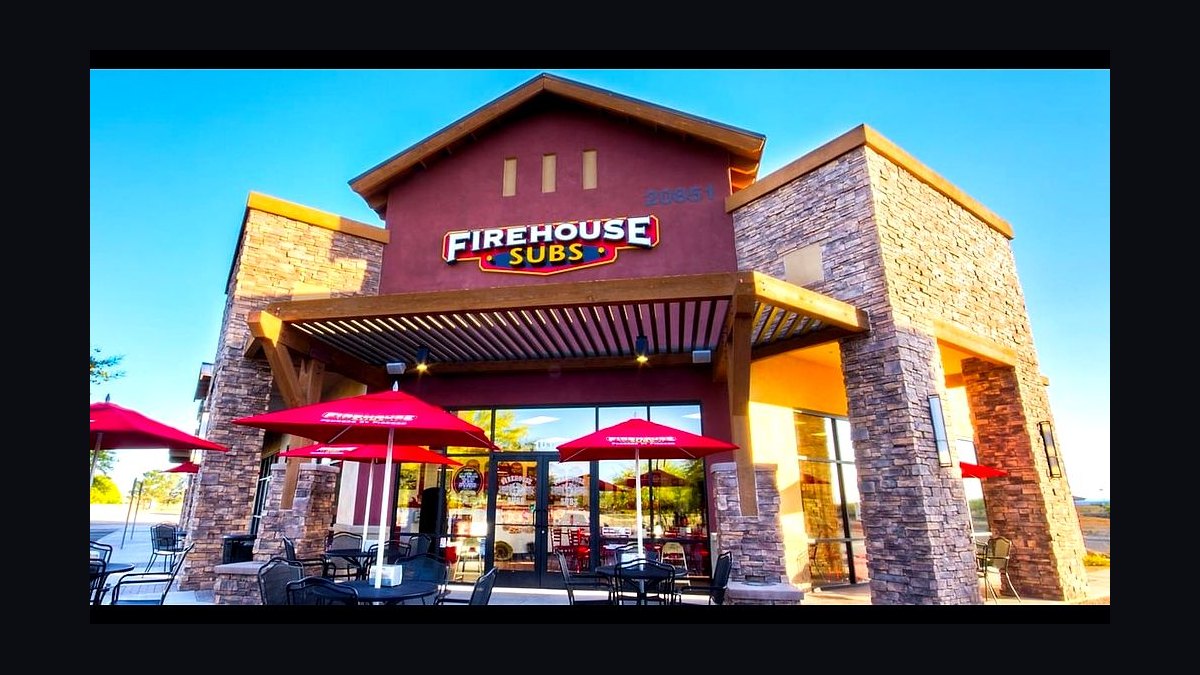
Open a Firehouse Subs franchise in 2027 only if you bring roughly $200K–$300K liquid, $600K+ net worth, a drive-thru-capable end-cap or pad site, and owner-operator hours. At median unit volume near $1M, expect low-teens store-level margins and a 24–36 month payback. Absentee operators and weak in-line sites reliably underperform.
The outcome you should expect
Strip away the brochure language and the realistic base case for a single traditional Firehouse Subs unit opening in 2027 looks like this: an all-in capital outlay somewhere between $380,000 and $800,000 for an in-line build, first-year sales landing in the $850,000–$1,000,000 band if your site selection was competent, store-level EBITDA of roughly 12–17% of sales, and owner cash flow after debt service of $90,000–$140,000. That is the median outcome, not the pitch-deck outcome. It is a real income, it is not passive, and it is not a wealth event on one unit.
The distribution matters more than the median. In sub-sandwich franchising generally, the gap between top-quartile and bottom-quartile units inside the same brand is frequently 2x on revenue and 4x or worse on owner cash flow, because the cost structure is largely fixed above roughly $700K in sales. Rent, the general manager, the opening and closing labor blocks, insurance, and the 11% royalty-plus-marketing load all exist whether you do $640,000 or $1,350,000. Every incremental dollar above your breakeven flows through at a much higher rate than the average margin suggests. That is why site quality — not menu execution, not local marketing cleverness — is the single largest determinant of your outcome, and why experienced multi-unit operators in this category will walk away from a mediocre site rather than "make it work."
The second thing to expect is a slow ramp. Fast-casual sandwich concepts do not open to a line out the door the way a chicken or coffee concept does. Opening-week volume is often inflated by curiosity and promotional traffic, drops 20–30% over the following six to ten weeks, then rebuilds through months six to eighteen as lunch-daypart habit forms among the office, retail, and municipal-worker population inside your three-mile ring. Underwrite for a trough, not a straight line. Operators who plan working capital against opening-week sales run out of cash in month four, which is the most common preventable failure in the entire category.
Third, expect the time commitment to be front-loaded and heavy. Fifty-five to sixty-five hours a week for the first twelve months is the honest number for a first-unit owner-operator. That drops toward thirty-five to forty-five in year two once you have a general manager you actually trust, but only if you spent year one training that person rather than working the line yourself. This is the trade that separates people who end up with a job from people who end up with a business.
What drives that outcome
Four variables move the number, and they do not move it equally. Ranked by impact:
Site format and visibility. A free-standing pad with a drive-thru will typically outperform an in-line strip position in the same trade area by a wide margin, because the drive-thru captures a lunch occasion that in-line units simply cannot — the customer who will not park and walk. The tension is that the pad costs two to three times more to build. The correct way to think about this is not "which is cheaper" but "which produces a better return on the incremental capital." If a drive-thru pad costs $600,000 more than the in-line option and produces $300,000 more in annual sales at, say, a 25% incremental flow-through, that is $75,000 of incremental EBITDA on $600,000 — a 12.5% incremental return before financing. Thin. If the same pad produces $450,000 more in sales, the math flips decisively. You cannot know which case you are in without real trade-area data, which is why the site work has to precede the financing decision, not follow it.
Trade-area demographics and daytime population. Sub shops live on lunch. Residential rooftops matter far less than daytime population — office parks, hospitals, distribution centers, schools, courthouses, fire and police stations. A trade area with 40,000 daytime population and 15,000 households will outperform the reverse ratio for this concept. Median household income in the $60,000+ range is the usual screen, but the daytime figure is the one that separates a $1.2M unit from an $800K unit.
Competitive density. Jersey Mike's has been the share gainer in fast-casual subs for several years running, growing both units and comparable sales faster than the category. Subway has been closing units and losing category share. That combination means the competitive picture in your trade area in 2027 will not look like the picture in 2032. Underwrite a ten-year franchise term against two to three additional fast-casual sub entrants inside your ring, not zero.
Operator presence. The absentee-versus-present gap in this category is worth several hundred basis points of margin, almost entirely through labor scheduling discipline and food-cost control. A manager running someone else's store schedules for comfort; an owner schedules for throughput.
Benchmarks and realistic ranges
Use the Franchise Disclosure Document as the primary source and treat every third-party summary as secondary. The FDD registered in the calendar year you sign is the binding document; a 2027 opening will generally be underwritten off the FDD in effect when you execute the franchise agreement, so pull the current one and then pull the newest one before signing.
Item 7 — initial investment. The published range for Firehouse Subs spans roughly $380,000 at the low end for a modest in-line traditional build to approximately $1.4 million at the top for a free-standing unit with a drive-thru. The components that vary most are leasehold improvements and equipment; the franchise fee, training, insurance, and opening inventory lines are comparatively stable across formats. Build-out is where budgets die. A second-generation restaurant space with usable grease interceptor, hood, and three-phase power can save $80,000–$150,000 versus raw vanilla shell. Conversely, a landlord who "delivers" a shell with no HVAC distribution and no restroom rough-in has quietly moved six figures onto your side of the ledger.
Item 19 — financial performance representations. System median average unit volume has been reported in the $962,000–$1,000,000 range, with top-quartile traditional units near $1,348,000 and bottom-quartile units around $640,000. Read Item 19 with a specific question in mind: which subset of stores is included? Item 19 tables routinely exclude units open less than a full year, non-traditional locations, and sometimes closed units — all of which bias the reported figure upward relative to what a brand-new unit will do in year one. A reasonable planning assumption is 75–85% of system median in year one for a well-sited unit, reaching system median in year two or three.
Item 20 — outlets and closures. This is the most underread item in any FDD and the most predictive. It shows openings, closures, transfers, and terminations by state over three years. If your target state shows closures and transfers exceeding new openings, that is the market telling you something the sales process will not. Transfers in particular are worth attention: a high transfer count can mean healthy resale liquidity or it can mean operators exiting at a loss. The way to tell the difference is to call the people who bought.
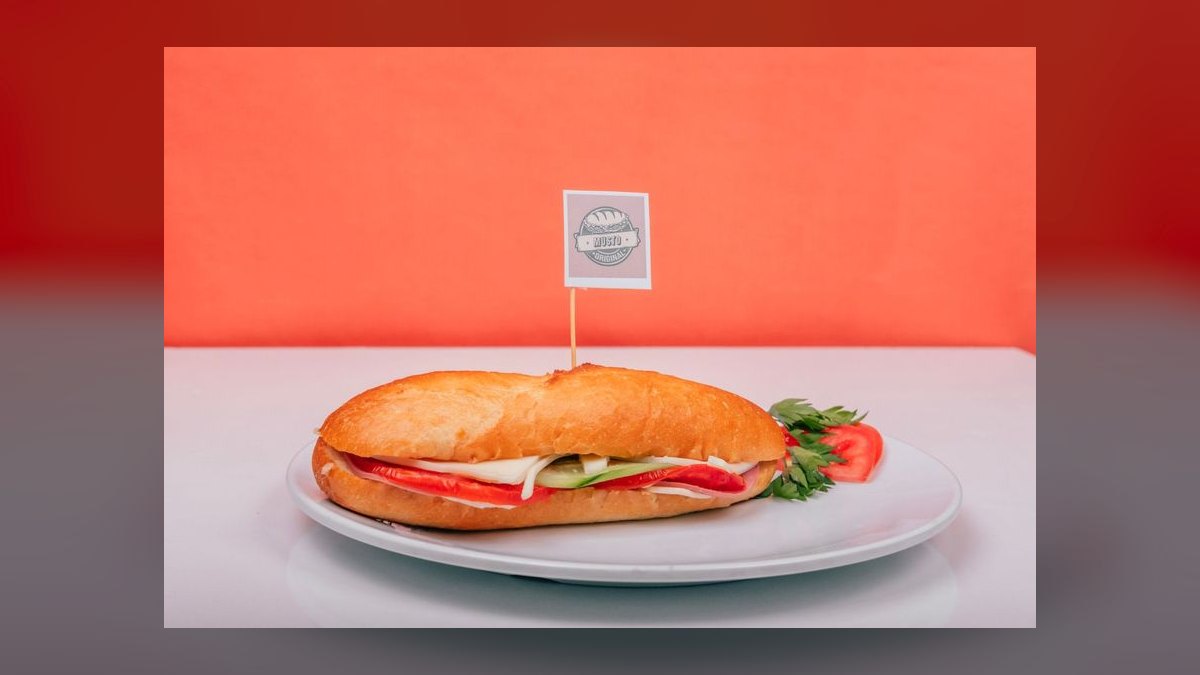
The cost stack. Food and paper typically runs 28–30% of sales for the concept, with the smoked-brisket and premium-protein SKUs carrying commodity exposure that a chicken-and-turkey-weighted menu would not. Labor runs 28–32% in most markets and is migrating toward 32–34% in states with sector-specific fast-food minimums — California's $20/hour floor for large limited-service chains is the clearest example, with several other states advancing similar $18–$20 measures. Occupancy in the 9–12% band is healthy; above 12% you are structurally impaired and no amount of operational excellence recovers it. Royalty at 6% plus a 5% marketing contribution is 11% off gross before you have paid for anything, which is a heavier load than some competing sub concepts and materially heavier than an independent.
Financing. Most first-unit buyers use SBA 7(a). Expect to inject 20–30% equity, personally guarantee the note, and pledge available collateral including a home in many cases. At recent rate levels a $500,000 ten-year note carries roughly $6,500–$7,000 monthly, which is $78,000–$84,000 a year coming straight out of store-level EBITDA before you take a dollar. Model the debt service explicitly and stress it at a rate 200 basis points above your quote.
Incentives. Restaurant Brands International has publicly offered development incentives for Firehouse Subs — reported at up to $100,000 per restaurant — aimed at accelerating unit growth, with additional programs historically targeted at veterans and first responders given the brand's founding story. Incentives are real money and they change the return meaningfully, but two cautions apply. First, they are almost always tied to development schedules with penalties for missing dates. Second, a brand paying to accelerate openings is telling you something about the difficulty of the current build economics. Take the cash; do not let it be the reason you say yes.
Risks, edge cases, and failure modes
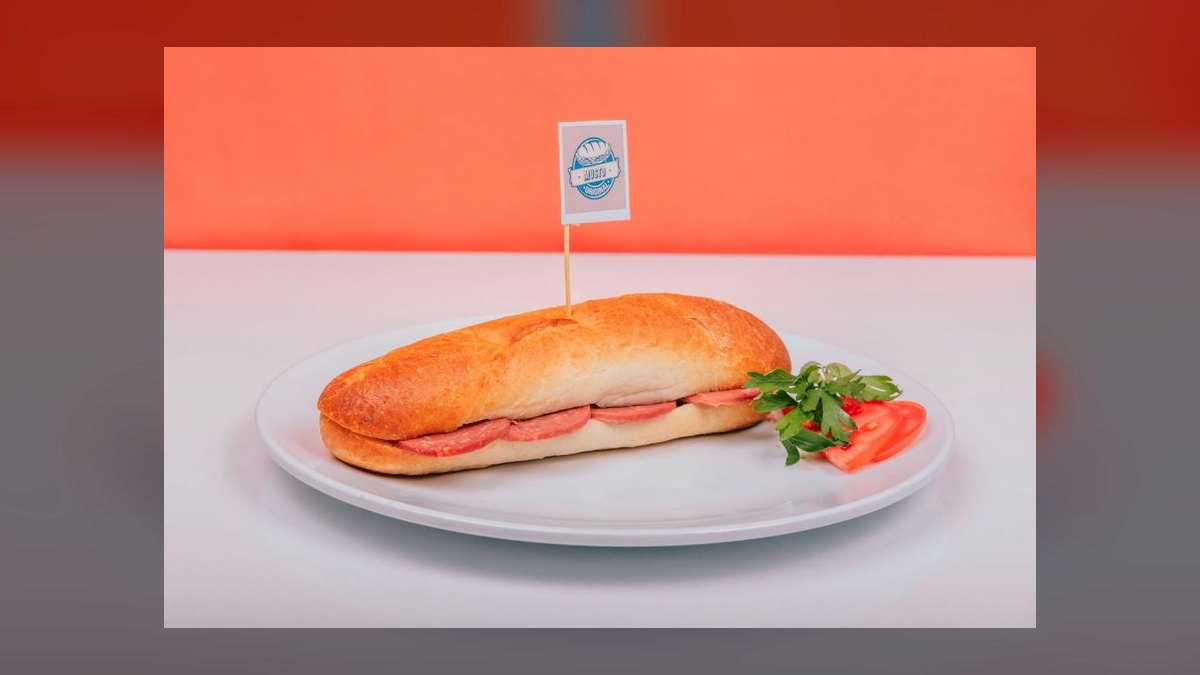
The over-leveraged pad. The single most dangerous configuration is a first-time operator building a $1.3M free-standing unit at 85–90% leverage. Debt service of $13,000–$15,000 a month means you need volume well above system median just to reach breakeven after rent, and you have no margin for a slow ramp. If you are building the expensive format, bring more equity, not more debt.
The absentee structure. Investors who buy a unit and install a general manager from day one consistently land below median. The concept does not have enough gross margin dollars per transaction to absorb both a full management layer and an owner draw at median volume. Absentee ownership becomes viable at three-plus units where an area manager's cost spreads across a base — but you get to three units by operating the first one yourself.
Third-party delivery. Marketplace commissions in the 20–30% range on gross order value will consume the entire store-level margin on those orders. At 10% of sales, delivery is a manageable incremental channel. Above 25% of sales, it is a structural margin problem that shows up as growing revenue and shrinking cash. Cap it deliberately, price the menu up on marketplace channels where the agreements allow, and push first-party digital ordering hard.
Site regret is permanent. A ten-year lease on a bad location is the one mistake you cannot operate your way out of. Franchisees under pressure to hit a development schedule take a site they would otherwise reject. The incentive money is not worth a bad ten-year lease. If the only approvable site in your territory is a low-visibility in-line with weak co-tenants, the correct answer is to wait or to change territories.
Commodity and wage drift. Wheat, beef, and packaging inflation compounds. Model food cost at 30% rather than the 28% the brand will show you, and model wage inflation at 3–5% annually in normal markets and higher in states with legislated escalators. If your pro forma only works at the optimistic end of both, it does not work.

Capex you have not budgeted. Remodel obligations are in the franchise agreement, typically tied to a term anniversary or a transfer. Assume a mid-term refresh in the $75,000–$200,000 range depending on format. Additionally, kitchen and ordering automation — voice ordering, automated toasting, digital menu boards — is an active area across large limited-service systems, and a system-mandated technology upgrade in the $25,000–$50,000 range during a ten-year term is a realistic planning assumption rather than a certainty.
The resale alternative and its own trap. Buying an existing unit removes construction risk and pre-revenue burn, and established fast-casual units in this category commonly transact in the range of three to four times store-level EBITDA plus inventory. That can put a proven $1.1M-volume store at roughly half the cost of building new. The trap is deferred maintenance and a distressed reason for sale. Insist on three years of tax returns and POS-level daypart data, walk the equipment with your own contractor, confirm remaining lease term and remaining franchise term, and find out whether the franchisor will require a remodel at transfer — that condition can add six figures the day you take keys.
Territory and encroachment. Read the territory language in Item 12 carefully. Understand exactly what protection you have, whether non-traditional venues (airports, stadiums, universities, convenience-store licenses) are carved out, and whether the franchisor may sell through delivery-only or ghost-kitchen channels into your area. In multi-brand systems, sister-brand placement in the same center is also worth asking about directly.
A practical rollout plan
Work the sequence below and do not let a broker compress it. From first FDD read to open doors is realistically nine to twelve months, and permitting is the variable that blows up timelines most often.
Weeks 1–2: read the document yourself, then with a lawyer. Read Items 3, 6, 7, 12, 19, and 20 personally before any attorney sees it, so you can ask specific questions rather than paying for a summary. Then engage a franchise attorney — not a general business attorney — for a formal review of the franchise agreement, the personal guaranty, the territory grant, transfer conditions, and post-term non-compete.
Weeks 2–3: prove your own capital. Confirm liquidity, net worth, and credit. Get a pre-qualification from an SBA preferred lender that has actually funded units in this brand; lenders with brand history underwrite faster and are more realistic about the collateral shortfall. Ask the lender what they have seen actual all-in costs run versus the FDD range — they have the loan files and they will often tell you.
Weeks 3–5: build the trade-area case. Use a foot-traffic data provider to compare candidate rings on daytime population, visit patterns, and competitive draw. Physically sit in the parking lot of each candidate site at 11:30 a.m. and 5:30 p.m. on a Tuesday and a Saturday and count cars. Data plus your own eyes; neither alone.
Weeks 5–7: validator calls — fifteen to twenty, not three. The franchisee list in the FDD is your best asset and nearly nobody uses it properly. Ask four questions: What did your unit actually do in year one versus the Item 19 median? What was your true all-in cost versus the Item 7 range? What is your labor percentage right now versus what you modeled? Would you sign again? Call former franchisees too — the list of departures is in the document and their answers are the ones that change decisions.
Weeks 7–10: site submission and lease negotiation. Submit multiple sites to franchisor real-estate review and expect several weeks for approval. On the lease, fight for a tenant-improvement allowance, a rent-abatement period covering construction plus early ramp, a co-tenancy clause tied to the anchor, an exclusive-use clause preventing a competing sandwich operator in the same center, and a personal-guaranty burn-off after a defined performance period.
Weeks 10–12: discovery day, agreement, financing close. Confirm any incentive terms in writing inside the franchise agreement or a signed addendum — verbal incentive promises are worth nothing. Close the loan, lock a general contractor with liquidated damages for delay, and submit for permits immediately.
Months 4–8: build, hire, and pre-open. Build-out typically runs fourteen to twenty weeks after permit issuance. Hire your general manager early enough to send them through franchisor training and to have them present during equipment installation — a manager who watched the store get built troubleshoots it far better. Line up local grand-opening marketing aimed squarely at the daytime workforce: hospital break rooms, fire and police stations, office-park property managers, school administrative staff. Catering is the highest-margin channel in this category and it is built through relationships that start before you open.
Months 9–18: run the numbers weekly. Weekly P&L review against a written plan, daily labor-to-sales tracking by daypart, and a monthly food-cost variance report. The operators who hit top-quartile are not doing anything exotic — they are simply looking at the numbers every week and correcting within days instead of quarters.
Related questions
Is buying an existing Firehouse Subs unit better than building new?
Often yes for a first-time owner. A resale removes construction and permitting risk and gives you trailing financials to underwrite against, frequently at a lower total cost than a new build. Verify remaining lease term, remodel obligations at transfer, and equipment condition before agreeing on price.
How does Firehouse Subs compare to Jersey Mike's for a new franchisee?
Jersey Mike's has led the category on comparable-sales and unit growth in recent years, with higher reported average volumes and a correspondingly competitive award process. Firehouse generally offers easier territory access and active development incentives. Compare Item 19 and Item 20 for both in your specific state.
Can I run a Firehouse Subs franchise as a passive investment?
Realistically, no — not at one unit. The concept's margin structure does not support both a full management layer and a meaningful owner return at median volume. Passive structures become workable at three or more units where area-manager cost spreads across the base.
What credit and net worth do lenders actually require?
Expect lenders to look for roughly $200,000–$300,000 liquid, $600,000+ net worth, a credit score in the high 600s or better, and a 20–30% equity injection. A personal guaranty is standard on SBA 7(a), and available real estate is typically pledged as additional collateral.
How much does the drive-thru actually change unit economics?
Meaningfully, but at a much higher build cost. Evaluate it as incremental return: the additional sales the drive-thru generates, times the incremental flow-through rate, divided by the additional capital. Below roughly a 15% incremental return before financing, the in-line format is usually the better allocation.
FAQ
What does it cost to open a Firehouse Subs franchise?
The FDD Item 7 range runs roughly $380,000 for an in-line traditional build to approximately $1.4 million for a free-standing unit with a drive-thru, inclusive of the franchise fee, leasehold improvements, equipment, opening inventory, training, insurance, and three months of working capital. Second-generation restaurant space can reduce the build-out line substantially; raw vanilla shell space increases it.
What are the ongoing fees?
Six percent of gross sales in royalty plus a five percent advertising and marketing contribution, totaling eleven percent off the top before any operating expense. Model this against gross sales, not net, and remember it applies to third-party delivery revenue as well — which is part of why heavy delivery mix compresses margin so sharply.
What sales volume should I plan for in year one?
System median average unit volume has been reported near $962,000 to $1,000,000, with top-quartile traditional units around $1,348,000 and bottom-quartile near $640,000. Plan year one at roughly 75–85% of system median for a well-sited unit and expect to reach median in year two or three, not in month three.
How long until I get my money back?
Twenty-four to thirty-six months is the commonly cited payback range at median volume for a traditional in-line unit; expensive free-standing builds stretch longer, often into the four-to-five-year range, because the denominator is two to three times larger. Payback is highly sensitive to leverage, so run it both levered and unlevered.
Are the development incentives worth pursuing?
Yes, if the deal works without them. Restaurant Brands International has publicly offered incentives reported at up to $100,000 per restaurant to accelerate Firehouse Subs growth, with programs historically favoring veterans and first responders. Confirm terms in writing, and understand the development-schedule obligations and penalties attached before you commit.
What is the single biggest predictor of whether my unit succeeds?
Site quality, by a wide margin — specifically daytime population, visibility, access, and drive-thru capability. Operational discipline determines whether you capture the site's potential, but it cannot manufacture demand that the trade area does not contain. Never accept a marginal site to satisfy a development deadline.
Sources
- https://www.ftc.gov/business-guidance/resources/franchise-rule-compliance-guide
- https://www.sba.gov/funding-programs/loans/7a-loans
- https://www.sec.gov/cgi-bin/browse-edgar?action=getcompany&CIK=QSR&type=10-K
- https://www.franchisechatter.com/
- https://www.restaurantbusinessonline.com/
- https://www.nrn.com/
- https://www.restaurantdive.com/
- https://www.franchise.org/franchise-information/franchise-business-outlook
- https://www.ers.usda.gov/data-products/food-price-outlook/
- https://www.dir.ca.gov/dlse/Fast-Food-Minimum-Wage-FAQ.htm
Related on PULSE
- Should I open or buy a Lenny's Grill & Subs franchise in 2027?
- Should I open or buy a Jon Smith Subs franchise in 2027?
- Should I open or buy a Port of Subs franchise in 2027?
- Should I open or buy a Cousins Subs franchise in 2027?
- Should I open or buy a Penn Station East Coast Subs franchise in 2027?
This page will be disappearing soon. Save it to your device for $1 — or read it free while it is here.
@Kory-White- · if Venmo asks, the last 4 of my number are 2012
This page is gone.
This one is off the shelf now. $1 keeps it on your phone for good — the whole page, pictures and diagrams included.
 franchiseShould I open or buy a Great Clips franchise in 2027?
 franchiseShould I open or buy a Servpro franchise in 2027?
 franchiseShould I open or buy a Marco's Pizza franchise in 2027?
 franchiseShould I open or buy a Cold Stone Creamery franchise in 2027?
 franchiseShould I open or buy an F45 Training franchise in 2027?
 franchiseShould I open or buy a Sonic Drive-In franchise in 2027?
 franchiseShould I open or buy a Jamba franchise in 2027?
 franchiseShould I open or buy a Massage Envy franchise in 2027?
 franchiseShould I open or buy a Goddard School franchise in 2027?
 franchiseShould I open or buy a Dunkin' franchise in 2027?