


Should I open or buy a franchise versus an independent retail store in 2027?
Quality
Certified
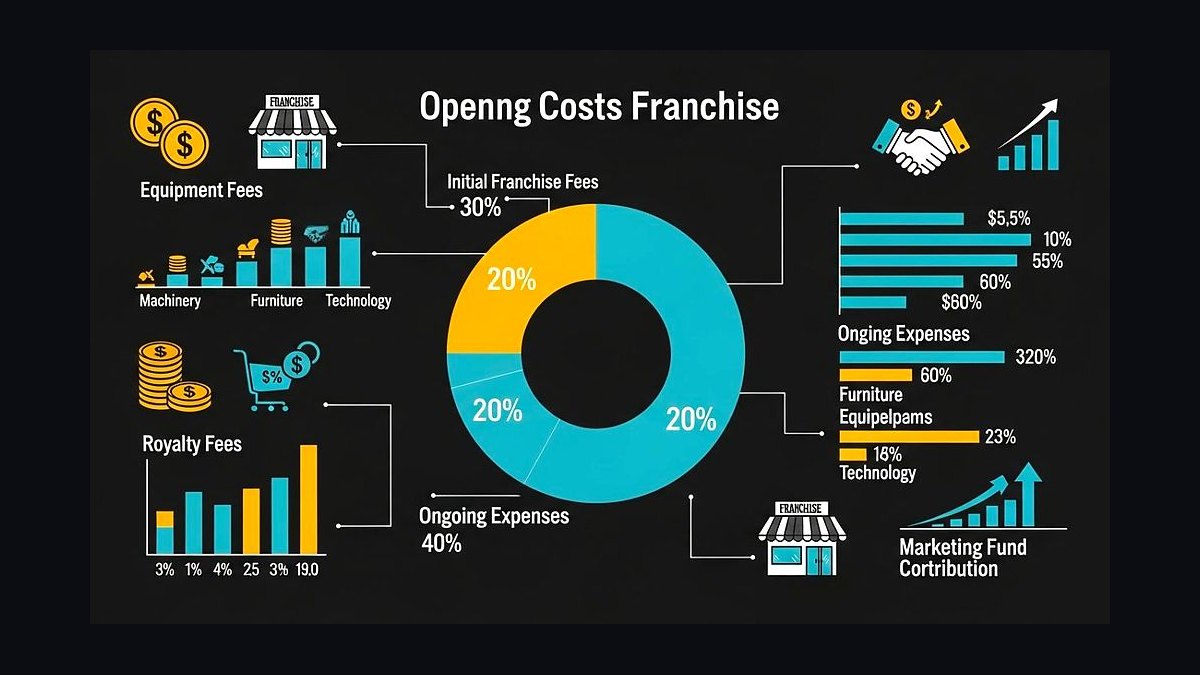
Buy a franchise if you want a proven system, financing lenders recognize, and supplier scale — accepting royalties near 4–8% of gross sales and tight brand control. Open an independent retail store if margin control, local assortment, and resale freedom matter more than a playbook. Existing profitable units usually beat both.
What "franchise versus independent retail" actually means in 2027
The choice is usually framed as two options, but in practice you are picking from four: open a new franchise unit, buy an existing franchise resale, open a brand-new independent retail store, or buy an existing independent store from a retiring owner. Those four have wildly different risk curves, and most people who "decide between franchise and independent" are really deciding between the two *hardest* versions of each — building from zero.
A franchise is a licensing relationship. You pay an initial franchise fee for the right to operate under the brand in a defined territory, then ongoing royalties and usually a separate advertising or brand-fund contribution. In exchange you get the trademark, an operations manual, training, an approved supplier network, site-selection help, and — critically — a system that a bank underwriter has probably seen before. In the U.S., the franchisor must give you a Franchise Disclosure Document (FDD) at least 14 calendar days before you sign anything or pay any money. That document is the single most valuable artifact in this entire decision, and it is the thing most first-time buyers skim.
An independent retail store is exactly what it sounds like: your name, your assortment, your pricing, your vendors, your marketing, your mistakes, your upside. There is no royalty, no brand fund, no approved-vendor list, no territory restriction, and no one to call at 9pm when the POS goes down. Every dollar of gross margin you generate stays inside your P&L instead of routing a slice to a franchisor.
Why this matters more in 2027 than it did five years ago comes down to three structural shifts. First, retail rent negotiations swung toward tenants in a lot of secondary markets as legacy anchor space turned over, which lowers the barrier for an independent who can negotiate a shorter term with a build-out allowance — a franchisor's site criteria often won't let you take that same flexible deal. Second, the tooling gap collapsed. An independent in 2027 can stand up Shopify or Lightspeed POS with integrated inventory, a loyalty program, local SEO, and paid social for a few hundred dollars a month — capabilities that in 2015 were a genuine franchise advantage. Third, small-business acquisition financing matured: SBA 7(a) lending is routinely used to buy existing businesses, not just start them, which makes "buy a profitable independent from a retiring owner" a real third path rather than an exotic one.
The honest summary: franchising sells you *reduced variance*, not increased expected return. You are buying a narrower distribution of outcomes. You give up upside — the royalty, the mandated vendors, the inability to pivot your assortment — in exchange for a lower probability of the catastrophic first-year mistakes that kill independents. Whether that trade is good depends entirely on how much operating experience you personally bring to the table and how differentiated your independent concept would actually be.
One more thing worth naming up front: the "franchise" category is not one thing. A food franchise with a $1.4M buildout, an inventory-light service franchise run from a van, and a soft-goods retail franchise with $300K in opening inventory are three completely different financial animals that happen to share a legal structure. When someone quotes you a "typical franchise ROI," ask which of those three they mean. Retail franchises specifically tend to carry heavier inventory carrying costs and lower royalty percentages than food, because gross margins on merchandise are thinner and a 6% royalty on a 35%-margin retail dollar bites much harder than 6% on a 70%-margin food dollar.
The step-by-step process for evaluating both paths

Run both tracks in parallel for the first 60 days rather than committing early. The cost of investigating both is a few thousand dollars in professional fees; the cost of committing to the wrong one is your down payment plus a personal guarantee.
Step 1 — Define your operating constraint honestly. Write down three numbers before you look at any opportunity: your total liquid capital, your maximum acceptable personal guarantee, and the minimum monthly owner's draw you need to survive. Most retail concepts take 12–24 months to support a full owner salary. If you need income in month three, you are buying an existing business, not opening anything.
Step 2 — Request FDDs from three to five franchisors in your category. They are free and you are under no obligation. Read Item 7 (estimated initial investment range), Item 19 (financial performance representations — and note that franchisors are not required to make one; roughly a third historically decline, which is itself a signal), Item 20 (outlet counts, including transfers, terminations, and non-renewals over three years), and Item 21 (the franchisor's own audited financials).
Step 3 — Call franchisees the franchisor did not hand you. Item 20 includes a list of current and former franchisees with contact information. Call the *former* ones. Ask: what did you actually spend versus Item 7, what is your real royalty-plus-brand-fund load, how long to breakeven, would you buy this again, and what does the franchisor charge you for that you didn't expect.

Step 4 — Build the independent version of the same store. Same square footage, same market, same category. Price out your own POS, inventory, buildout, signage, and marketing. The gap between your independent number and the franchise Item 7 number *is the price of the system*. Now ask whether the system is worth that.
Step 5 — Shop the acquisition market for both. Look at franchise resales through the franchisor's own transfer list and at independent retail listings through business brokers and BizBuySell. Existing units come with a P&L, a customer base, trained staff, and — the big one — immediate cash flow that services the acquisition debt.
Step 6 — Get a franchise attorney to review the FDD and the franchise agreement. Budget $2,500–$7,500. This is not optional and it is not a place to save money. Have them flag: territory definition (is it protected or just "designated"?), transfer/resale conditions, renewal terms and renewal fees, post-term non-compete radius and duration, personal guarantee scope, and required remodel/refresh obligations mid-term.
Step 7 — Validate demand independently of anyone's projections. Sit in the parking lot of a comparable store and count traffic at three dayparts. Pull foot-traffic and demographic data for the trade area. Talk to three neighboring tenants about their sales trend over the last two years.
Step 8 — Model both at 70% of projection. If the franchise works at 70% of Item 19 and the independent works at 70% of your own forecast, you have a real decision. If only one survives that haircut, you already have your answer.
Costs, timelines, and typical ranges
Numbers below are ranges you should treat as a framework to fill in with real quotes for your market and category, not as quotes themselves. Retail buildout in a Tier-1 metro can run double a small-town number for identical square footage.

Franchise-specific costs. The initial franchise fee for a single retail unit commonly falls in the $20,000–$50,000 range, with multi-unit development agreements priced higher per the number of units committed. Ongoing royalties in retail franchising typically run about 4–8% of gross sales — note *gross*, not net, which means you pay in a bad month too. Brand fund or national advertising contributions usually add another 1–3% of gross, and many agreements also require a local marketing minimum on top of that. Add those up: an 8% combined load on a store doing $900,000 a year is $72,000 leaving the business annually before you take a dollar. Against a retail net margin that might be 5–10%, that number is not a rounding error — it is often the difference between a good year and a break-even one.
Beyond the recurring load, budget for the costs that surprise people: technology fees charged per month per terminal, mandatory POS and back-office software you cannot substitute, required participation in system-wide promotions that compress your margin, remodel obligations triggered at renewal or at a set number of years, training travel for you and each new manager, and transfer fees if you ever sell (frequently a flat fee or a percentage of sale price, plus the franchisor's right of first refusal).
Costs both paths share. Security deposit and first month's rent; a personal guarantee on the lease that often survives a business failure; buildout and fixtures; signage and permits; opening inventory; POS hardware and software; insurance (general liability, property, workers' comp, and increasingly cyber); professional fees for entity formation and lease review; and working capital. That last one is where most failures originate. A realistic reserve is six months of full fixed costs — rent, payroll, insurance, debt service, utilities — held in cash and untouched at opening. Undercapitalization, not bad merchandising, kills the majority of first-year retail stores.

Timelines. From signing a franchise agreement to opening the doors, 6–12 months is typical for retail: site selection and franchisor approval, lease negotiation, permitting, buildout, training, and inventory load-in. Independents can move faster on the front end because there is no franchisor approval gate — 3–9 months is achievable if you take a second-generation space that needs light work — but they lose that time back on the vendor side, since establishing trade credit with suppliers from zero takes months and often starts with prepayment terms while a franchisee inherits the system's negotiated terms on day one.
Buying an existing business, franchise or independent, is a different clock entirely: 90–150 days from letter of intent to close is normal, driven by SBA underwriting, a business valuation, landlord lease assignment, and due diligence.
Financing. SBA 7(a) is the workhorse for both paths. Lenders generally look for roughly 10–30% equity injection depending on whether you are starting or acquiring, and personal guarantees are standard for owners holding 20% or more. Franchises listed in the SBA Franchise Directory get a faster review because the agreement has already been screened for affiliation issues — a genuine, concrete franchise advantage. Independents often need to lean harder on the collateral and on the seller: seller financing covering 10–25% of the price, on standby behind the bank note, is common in independent retail acquisitions and doubles as a signal that the seller believes the business survives without them.
Breakeven. For a new retail store of either type, 12–24 months to consistent cash-flow positive is a realistic planning assumption. An acquisition of a profitable store should cash-flow from month one after debt service — that is the entire point of paying a multiple for it. If a broker shows you a deal that doesn't cover its own debt service plus a market-rate manager salary, the price is wrong, not the plan.
Where buyers get this decision wrong

Treating Item 19 as a promise. Financial performance representations are historical and frequently reported as system averages or top-quartile subsets. Read the footnotes: how many units are in the reported sample, are they company-owned or franchised, what is the median rather than the mean, and how long have they been open. A number drawn from mature units tells you nothing about your year one.
Underestimating the royalty on a thin-margin category. People mentally price a 6% royalty against revenue and shrug. Price it against gross profit instead. On a retail dollar with 38% gross margin, a 6% gross-sales royalty consumes roughly 16% of your gross profit. Add a 2% brand fund and you are near 21%. That is the actual number.
Assuming "independent" means "no system." The independents that fail are usually the ones with no operating discipline, not the ones with no brand. If you go independent, you have to build the system a franchisor would have sold you: written opening and closing procedures, an inventory reorder point per SKU, a weekly P&L review, a defined merchandising calendar, and a hiring and training process. Buy the discipline even if you don't buy the brand.
Ignoring the resale math at the other end. Franchises often resell more easily to a buyer who can be financed and approved, but the franchisor controls the transfer, takes a fee, and may exercise a right of first refusal. Independents sell to a smaller buyer pool and are valued heavily on documented seller's discretionary earnings — which means sloppy books directly reduce your exit price. Decide now, while you are buying, how you will exit, and keep the books accordingly from day one.
Skipping the trade-area work because the franchisor "does site selection." Franchisor approval means the site meets *their* criteria, which are optimized for system growth and brand presence, not necessarily for your unit economics. You sign the lease and the personal guarantee, not them. Do your own traffic counts.

Buying a territory you didn't read. "Protected territory" and "designated territory" are not synonyms. Read whether the franchisor reserves the right to sell online into your area, to place units in non-traditional locations like airports or big-box stores inside your radius, or to acquire a competing brand and operate it next door. These reservations are disclosed — they are just disclosed in dense language.
Confusing enthusiasm with due diligence. A franchise development rep is a salesperson compensated on closed deals. Their job is legitimate and their information can be accurate, but they are not your advisor. Every claim they make should appear somewhere in the FDD; if it doesn't, ask why in writing.
Not modeling the failure case. Before signing, write down what happens if the store does 60% of plan for 18 months. Who is on the personal guarantee, how long is the lease term, what does terminating the franchise agreement early cost, and is there a liquidated-damages clause. Knowing your downside cost precisely is what lets you take the risk calmly.
Decision framework: when to choose what
The cleanest way to resolve franchise versus independent is to score yourself on four axes rather than argue the general case.
Operating experience in the category. If you have run a comparable retail store — managed inventory turns, hired and scheduled staff, negotiated with vendors, read a P&L weekly — the franchise system is selling you something you already own, and the royalty is close to pure cost. If you have never run a store, the manual, the training, and the field consultant are worth real money. Experience is the single strongest predictor of which side of this line you belong on.
Differentiation of your concept. Independent retail wins where the assortment, curation, service, or community relationship *is* the product: specialty grocery, local apparel with a point of view, hobby and enthusiast categories, anything where the owner's taste is the moat. Franchising wins where consumers want predictability and where national supplier scale materially lowers your cost of goods. Ask plainly: is there a reason a customer would drive past a chain to reach my store? If you can't answer that in one sentence, take the brand.

Capital and risk tolerance. Thinner capital argues for the lower-cost path, which is usually independent — but only if you also have the experience axis covered. Thin capital plus no experience is the worst quadrant in this entire decision and the honest answer there is to go work in the category for a year first, ideally as a manager for someone who already runs the store you want to own.
Exit horizon. Planning to sell in five to seven years pushes toward whichever path produces a clean, financeable, documented set of books. That is achievable either way, but franchises get there by default because the reporting is mandated.
Layer one more question across all four: build or buy. For most first-time owners with adequate capital, buying an existing profitable store — franchise resale or independent — beats opening either from scratch, because you are purchasing proven local demand rather than a hypothesis about it. The premium you pay over startup cost is buying away the two riskiest years. If you buy, insist on a quality-of-earnings review or at minimum verified tax returns matched to bank deposits, a written add-back schedule you can defend, a lease assignment secured before closing, and a real transition period with the seller.
Related questions
How much working capital should I hold at opening?
Six months of full fixed costs — rent, payroll, insurance, debt service, utilities — in cash, separate from buildout and inventory budgets. Undercapitalization is the most common cause of first-year retail failure, and it is the one variable entirely within your control before you sign anything.
Is buying an existing store safer than opening one?

Usually yes. You purchase proven local demand, trained staff, vendor terms, and immediate cash flow instead of a hypothesis. The premium over startup cost buys away the riskiest two years. Verify the P&L against tax returns and bank deposits before closing.
What does a franchise royalty actually cost me?
Measure it against gross profit, not revenue. A 6% gross-sales royalty on a store with 38% gross margin consumes roughly 16% of gross profit. Add a 1–3% brand fund and local marketing minimums to get the true recurring load.
Can I convert an independent store into a franchise later?
Some franchisors run conversion programs for existing independents, offering reduced initial fees in exchange for rebranding, remodeling to standards, and adopting system suppliers. It preserves your customer base but requires a full buildout refresh and surrenders assortment control.
Which path is easier to finance?
Franchises listed in the SBA Franchise Directory move faster through underwriting because the agreement is pre-screened. Independents typically compensate with stronger collateral or seller financing on standby. Acquisitions of either type finance more easily than startups because there is documented cash flow.
FAQ
How long before I can pay myself a full salary?
For a new store of either type, plan on 12–24 months before the business supports a market-rate owner salary on top of debt service. If you buy an existing profitable store, that timeline collapses to essentially immediate — but you pay a multiple of earnings for that privilege. Do not build a household budget that assumes income from a startup retail store in year one.
Do I really need a franchise attorney if the FDD looks standard?

Yes. FDDs are standardized in structure, not in terms. The clauses that determine your outcome — territory definition, transfer conditions, renewal fees, post-term non-compete radius, personal guarantee scope, mid-term remodel obligations, liquidated damages — vary enormously between systems that look identical in a brochure. Budget $2,500–$7,500 for a specialist review.
What if the franchisor doesn't provide an Item 19?
Franchisors are not required to make a financial performance representation, and a meaningful share choose not to. It is not automatically disqualifying, but it shifts all the burden onto your franchisee calls. If there is no Item 19, you must talk to more current and former franchisees, and you should weight the former ones heavily.
How do I compare an independent's costs to a franchise fairly?
Build the independent version at the same square footage, same market, and same category as the franchise's Item 7 range. Include what you would have to buy yourself: POS and inventory software, brand and signage design, initial marketing, consulting or training. The remaining gap is the true price of the franchise system.
Does the 2027 tooling landscape really favor independents?
It narrows one specific franchise advantage — operational technology. Modern retail POS with integrated inventory, loyalty, e-commerce, and reporting is available to any independent for a modest monthly cost. What franchising still provides that tooling cannot replicate is negotiated supplier pricing, brand recognition on day one, lender familiarity, and a documented playbook.
Is a franchise or an independent store easier to sell later?
Franchises often reach a financeable, approvable buyer more easily, but the franchisor controls the transfer, charges a fee, and may hold a right of first refusal. Independents face a smaller buyer pool and get valued on documented seller's discretionary earnings. Either way, clean books from day one are what determine the exit price.
Sources
- https://www.ftc.gov/business-guidance/resources/franchise-rule-compliance-guide
- https://consumer.ftc.gov/articles/buying-franchise-consumer-guide
- https://www.sba.gov/funding-programs/loans/7a-loans
- https://www.sba.gov/document/support-sba-franchise-directory
- https://www.sba.gov/business-guide/plan-your-business/buy-existing-business-or-franchise
- https://www.irs.gov/businesses/small-businesses-self-employed/starting-a-business
- https://www.census.gov/retail/index.html
- https://www.bls.gov/bdm/entrepreneurship/entrepreneurship.htm
- https://www.sec.gov/edgar/search/
- https://www.bizbuysell.com/
Related on PULSE
- How do I value a small retail business before buying it?
- What working capital reserve does a new store actually need?
- How does SBA 7(a) financing work for a business acquisition?
- What should I look for in a retail lease before signing?
- How do I read an FDD Item 19 without fooling myself?
- When is seller financing a good sign versus a red flag?
This page will be disappearing soon. Save it to your device for $1 — or read it free while it is here.
@Kory-White- · if Venmo asks, the last 4 of my number are 2012
This page is gone.
This one is off the shelf now. $1 keeps it on your phone for good — the whole page, pictures and diagrams included.
 franchiseShould I open or buy a Domino's franchise in 2027?
 franchiseShould I open or buy a Jeremiah's Italian Ice franchise in 2027?
 franchiseShould I open or buy a Servpro franchise in 2027?
 franchiseShould I open or buy an F45 Training franchise in 2027?
 franchiseShould I open or buy a Marco's Pizza franchise in 2027?
 franchiseShould I open or buy a Dairy Queen franchise in 2027?
 franchiseShould I open or buy a Kumon franchise in 2027?
 franchiseShould I open or buy a Dunkin' franchise in 2027?
 franchiseShould I open or buy a Sonic Drive-In franchise in 2027?
 franchiseShould I open or buy a Cinnabon franchise in 2027?