


Should I open or buy a Carl's Jr. franchise or open an independent sandwich shop in 2027?
Quality
Certified
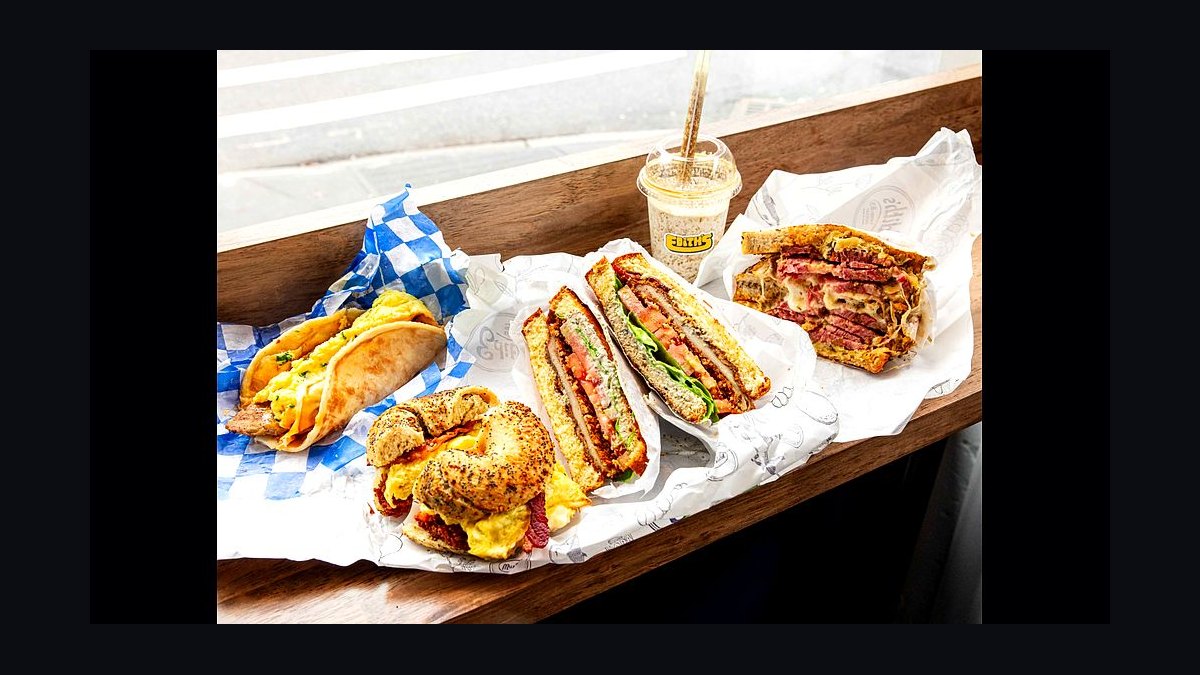
Buy the Carl's Jr. franchise if you want a proven system, national brand recognition, and are prepared to invest $1.2–2.5 million with a 4% royalty forever. Open an independent sandwich shop if you want full creative and financial control, lower upfront capital (often $150,000–$500,000), and are willing to build your own brand and supply chain from zero. Neither is universally "better" — the right choice depends on your capital, risk tolerance, and appetite for following someone else's playbook.
The two paths in plain terms
Buying into an established franchise like Carl's Jr. and starting an independent sandwich shop are not variations of the same business — they are two different bets on where risk and reward live. When you franchise, you are purchasing access to a system: a tested menu, a supply chain already negotiated at scale, a marketing engine funded by every other franchisee in the country, site-selection criteria refined over decades, and operating procedures that remove most of the guesswork from day-to-day management. In exchange, you sign away flexibility. You cannot change the menu, redesign the dining room on a whim, run your own local promotions without approval, or walk away from a lease obligation without consequence. You are also bound to an initial franchise fee, an ongoing royalty (typically in the 4% range for burger-segment QSR brands), and a marketing/ad fund contribution on top of that — money that leaves your P&L before you see a dollar of profit.
An independent sandwich shop flips every one of those trade-offs. You open under your own name, set your own prices, design your own menu, and keep 100% of what the business earns after expenses — there is no royalty check going out the door every month. But you also inherit every problem the franchise system would otherwise have solved for you: you have to find your own recipes and vendors, build brand awareness from a standing start with zero existing customer trust, negotiate your own lease without a franchisor's real-estate team backing you, and figure out marketing without a shared regional ad fund. The upside is you keep the entire enterprise value you build; the downside is you're building it with no safety net and no playbook.
The honest way to frame the decision is not "franchise vs. independent" as a philosophical question, but "what am I actually good at, and what am I willing to pay someone else to handle." If you are a first-time restaurant operator who wants training, support, and a lower failure rate in exchange for lower margins and less control, the franchise model is built for exactly that trade. If you already understand food cost, labor scheduling, local marketing, and are comfortable with the higher failure risk of an unbranded concept in exchange for keeping all the equity you build, independent ownership is the more rational fit.
How to decide between the two
The decision isn't really "franchise or independent" in the abstract — it's a sequence of narrower questions that, taken together, point you toward one path or the other. Start with capital: how much can you deploy without financing more than 70-75% of the total project cost, since most SBA-backed lenders and franchisors alike want to see meaningful owner equity in the deal. Then look at your operating experience: have you run food-cost percentages, hired and fired kitchen staff, and handled a health inspection before, or would you be learning all of that live for the first time. Then look at your local market: is there already a Carl's Jr. footprint nearby that would cannibalize your traffic, or unmet demand for an independent concept with a differentiated menu. Finally, be honest about your appetite for autonomy versus structure — some owners thrive inside a franchise's rules, others find the same rules suffocating and quit within two years.
Run this test on paper before you run it with real money: build two simple five-year P&Ls, one under franchise economics (royalty, ad fund, and franchise fee baked in) and one under an independent structure (higher marketing spend, no royalty, but slower initial traffic ramp). Whichever model still produces an acceptable owner return after a conservative revenue assumption — not the optimistic one the franchisor or your own excitement will hand you — is the one that survives contact with reality.
What the numbers actually look like
The capital gap between these two paths is the single biggest differentiator, and it's worth being specific about where the money actually goes. A Carl's Jr. franchise, per publicly available franchise-disclosure information, typically requires a total investment in the range of roughly $1.2 million to $2.5 million depending on whether you're building a traditional freestanding restaurant, a smaller express/inline format, or converting an existing structure. That figure covers the initial franchise fee (commonly in the tens of thousands of dollars per unit), real estate or leasehold improvements, kitchen equipment built to brand spec, initial inventory, signage, technology systems, and a working-capital reserve. On top of the upfront number, plan on an ongoing royalty around 4% of gross sales and a separate marketing/ad fund contribution, often another few percentage points — money that comes off the top before any operating expense is paid.
An independent sandwich shop can be built for dramatically less. A modest, well-run independent concept — leased space, used or refurbished equipment, a lean build-out — can often open in the $150,000 to $500,000 range, and in a small market with minimal buildout that number can go lower still. The catch is that every dollar of marketing, POS technology, recipe development, and vendor negotiation has to be sourced and paid for individually rather than bundled into a franchise fee, and first-year revenue for an unknown brand is almost always slower to ramp than for a recognized name opening in the same trade area. Lenders also price the risk differently: SBA and conventional lenders frequently view an established franchise's track record as collateral of sorts, which can mean more favorable financing terms than an unproven independent concept can access on day one.
Labor and food cost run on similar percentages in both models — food cost in the high-20s to low-30s percent of sales, labor typically in a comparable band — because those are dictated by the category (fast food/fast-casual), not by whether you're branded or independent. Where the real economic gap shows up is in the fixed layer above those variable costs: royalty and ad-fund percentages are a permanent tax on revenue in the franchise model that simply doesn't exist for the independent operator, but the independent operator pays for that absence with slower customer acquisition and no shared national advertising reach.
Getting from decision to opening day
Once you've picked a lane, the sequencing of how you actually open the doors looks different for each path, and getting the order wrong is one of the most common ways new owners burn cash before they've served a single sandwich. For the Carl's Jr. franchise route, the process typically starts with submitting a formal application to the franchisor, followed by a review of your financial qualifications and the Franchise Disclosure Document (FDD) — a legally mandated document you should have an attorney review before signing anything. After approval, the franchisor's real-estate team usually works with you on site selection using their own demographic and traffic criteria, which is one of the genuine value-adds of the franchise model since a bad location kills more restaurants than a bad menu does. Construction follows brand specifications exactly, staff go through the franchisor's training program before opening, and a grand-opening marketing push is typically coordinated with the regional ad fund.
For the independent sandwich shop, you own every one of those steps yourself. Site selection has no franchisor demographic model behind it, so you'll want to do your own trade-area analysis — traffic counts, competing food options within a short drive, daytime population if you're targeting a lunch crowd. Lease negotiation has no template to fall back on, so budget time and possibly a broker's help to avoid unfavorable terms on rent escalations or exclusivity clauses. Recipe and menu development, vendor sourcing for bread, meat, and produce, and health-department permitting all run in parallel and all take longer than first-time owners expect. Because there's no brand recognition pulling in customers on day one, plan a longer runway of working capital — enough to cover several months of below-breakeven operation while local awareness builds through word of mouth, local marketing, and reviews.
In both cases, the last mile before opening is the same regardless of model: staffing up, a soft-open period to shake out kitchen and service kinks, and a realistic cash reserve for the first 90 days when revenue is almost always below the stabilized run rate you'll eventually reach. The difference is who is holding your hand through that sequence — a franchisor's operations manual and support staff, or your own judgment and whatever mentors or consultants you bring in independently.
Related questions
How much does it cost to buy an existing Carl's Jr. franchise location versus building new?
Buying an existing, already-profitable unit generally costs more upfront (you're paying for cash flow and an established customer base) but skips construction time and site-selection risk. New builds cost less initially but carry ramp-up risk before revenue stabilizes.
Can I negotiate the royalty percentage on a franchise agreement?
Royalty rates on major franchise systems are typically standardized across all franchisees and non-negotiable, since changing them for one owner would break the economics the franchisor promised everyone else in the system.
What's the failure rate difference between franchise and independent restaurants?
Independent restaurants generally carry a higher early-failure rate than established franchise systems, largely because franchises supply a tested operating model, but franchise success still depends heavily on location and operator execution.
Should I use an SBA loan to finance either option?
SBA 7(a) loans are commonly used for both franchise and independent restaurant financing; franchises on the SBA's approved franchise directory can sometimes move through underwriting faster because the concept is already vetted.
Is a smaller express-format Carl's Jr. a middle option between the two paths?
Yes — a smaller-footprint or non-traditional franchise format can lower the total investment closer to independent-shop territory while keeping the brand's system and support, worth exploring if full-size capital is out of reach.
FAQ
Should I open or buy a Carl's Jr. franchise or open an independent sandwich shop in 2027? It depends primarily on capital and experience: choose the franchise for a proven system and lower first-time-operator risk at a higher price and lower margin, or choose independent ownership for full control and higher long-term margin at a higher personal risk and lower initial support.
Is it cheaper to open an independent sandwich shop than to buy a franchise? Almost always, yes — an independent shop can often be opened for a fraction of a full-format franchise's total investment, though it comes with slower revenue ramp and no shared marketing fund.
Do I need restaurant experience to open a Carl's Jr. franchise? Franchisors provide structured training and operating manuals specifically because many franchisees are first-time restaurant operators; prior experience helps but isn't always a hard requirement for approval.
What ongoing fees does a Carl's Jr. franchisee pay besides the initial investment? Expect an ongoing royalty on gross sales (commonly around the mid-single-digit percentage range for the segment) plus a separate marketing/ad fund contribution, both paid continuously for the life of the franchise agreement.
Can I switch from an independent sandwich shop to a franchise model later? Yes, some owners open independently to prove a concept and later either franchise their own brand or close and reopen under an established franchise, but each path carries its own lease, branding, and financing implications to unwind or restart.
How long does it typically take to open either type of restaurant from decision to opening day? Franchise openings often run nine to eighteen months from application to opening day depending on construction and permitting; independent openings can move faster or slower depending entirely on how quickly you personally secure a lease, permits, and buildout.
Sources
- https://www.sba.gov/business-guide/plan-your-business/franchise-businesses
- https://www.ftc.gov/business-guidance/resources/franchise-rule-compliance-guide
- https://www.franchise.org
- https://www.entrepreneur.com/franchises
- https://www.ckerestaurantsfranchising.com
- https://www.restaurantbusinessonline.com
- https://www.qsrmagazine.com
- https://www.census.gov/programs-surveys/susb.html
Related on PULSE
- What does a Franchise Disclosure Document (FDD) actually tell you before you sign?
- How much working capital should a new restaurant owner keep in reserve?
- SBA 7(a) vs. conventional financing for a first restaurant purchase
- How to run a trade-area analysis before signing a restaurant lease
- What food cost and labor cost percentages are normal for quick-service restaurants?
- Building a brand from zero: local marketing tactics for a first-year independent restaurant
This page will be disappearing soon. Save it to your device for $1 — or read it free while it is here.
@Kory-White- · if Venmo asks, the last 4 of my number are 2012
This page is gone.
This one is off the shelf now. $1 keeps it on your phone for good — the whole page, pictures and diagrams included.
 franchiseShould I open or buy a Goddard School franchise in 2027?
 franchiseShould I open or buy a Massage Envy franchise in 2027?
 franchiseShould I open or buy a Smoothie King franchise in 2027?
 franchiseShould I open or buy a Culver's franchise in 2027?
 franchiseShould I open or buy an F45 Training franchise in 2027?
 franchiseShould I open or buy a Wendy's franchise in 2027?
 franchiseShould I open or buy a Rita's Italian Ice franchise in 2027?
 franchiseShould I open or buy a Great Clips franchise in 2027?
 franchiseShould I open or buy a Matco Tools franchise in 2027?
 franchiseShould I open or buy a Subway franchise in 2027?