


Gap Selling by Keenan — Cliff Notes Summary & Key Takeaways
Quality
Certified

Gap Selling by Jim Keenan (A Sales Guy Publishing, 2018) is a problem-centric selling method built on one claim: you cannot sell to someone who does not believe they have a problem. Reps map Current State, Future State, and the quantified gap between them — impact, root cause, emotional cost — on a single Problem Identification Chart before pitching anything.
The two selling motions compared: product-led versus gap-led
Keenan's book is structured as a straight comparison between two operating motions, and the whole argument only makes sense if you hold them side by side. On one side sits the traditional product-led motion: the rep opens with what the product does, what it costs, how it beats the competitor, and how many logos already use it. On the other side sits the gap-led motion: the rep opens by establishing where the buyer is today, where they want to be, and what the distance between those two states is costing them in dollars, time, risk, and personal reputation. Keenan's position is that the first motion answers a question the buyer never asked, while the second motion creates the question.
This is not a stylistic preference in his framing — it is a claim about buyer psychology. In the product-led motion, discovery is treated as rapport-building: a few warm-up questions, a "what keeps you up at night," then a demo. In the gap-led motion, discovery is a structured interrogation with four outputs the rep must be able to write down before the call ends: the specific problem, its dollarized business impact, its root cause, and its emotional cost to the individual buyer. If any of the four is missing, Keenan treats the opportunity as unqualified regardless of how enthusiastic the buyer sounded.

The second structural difference is the artifact. Product-led selling runs on a feature matrix, a competitive battlecard, or a demo script. Gap-led selling runs on the Problem Identification Chart (PIC) — a six-column worksheet covering Current State, Problem, Impact, Root Cause, Future State, and Emotional Impact. The PIC is the reason most readers buy the book. It converts discovery from a conversation into a document, and a document can be reviewed, coached, forecast against, and handed to a manager. A conversation cannot.
The third difference is where objections get handled. In the product-led motion, objections are events that happen late and get answered with rebuttals: price pushback gets a discount, timing pushback gets a limited-time incentive, "let me check with my team" gets a follow-up sequence. In the gap-led motion, an objection is diagnostic evidence that a PIC column was never filled. A price objection means impact was never quantified — the buyer cannot see what inaction costs, so any price looks expensive. A timing objection means emotional impact was never surfaced — nothing personal is at stake, so later is fine. Keenan's prescription is to go back to the chart, find the empty column, and reopen that part of discovery rather than counter the objection head-on.

Finally, the two motions differ in what closing looks like. Product-led selling needs closing technique because the deal was never fully built: assumptive closes, alternative closes, urgency tactics. Gap-led selling treats the close as logistics — once Current State, Future State, impact, root cause, and emotional weight are all quantified and agreed, the remaining questions are start date, signer, and kickoff. Keenan's blunt version of this is that anyone still doing closing gymnastics is compensating for discovery that never finished.
It is worth naming the lineage here, because Keenan is not operating in a vacuum. The four discovery questions map closely onto Neil Rackham's SPIN Selling, where Implication questions do the work of dollarizing the problem and Need-Payoff questions do the work of articulating the future state. Keenan's contribution is the artifact and the insistence on quantification before any product conversation. The broader commercial-teaching idea — that the seller must bring insight the buyer does not already have — runs through The Challenger Sale as well. Where Keenan diverges is tone and sequencing: he wants the gap written down and sized in dollars before the demo happens, not after.

How to decide which motion to run (and when to blend)
The decision is less about which philosophy is correct and more about what the buyer already believes when the rep arrives. Keenan's core claim — that most buyers do not know they have the problem the seller solves — is the deciding variable. If the buyer is unaware, mis-diagnosed, or has rationalized the pain as the cost of doing business, a product-led motion fails immediately because there is no felt need to attach the product to. If the buyer is already researching the category, has a named problem, and is comparing vendors, a gap-led motion still works but compresses: the rep fills the PIC faster because the buyer supplies half the columns.
The practical rule most enablement teams extract from the book is this: run gap-led discovery on every opportunity, but adjust how much of it you have to manufacture versus confirm. On cold outbound into an unaware account, expect to spend most of the first call establishing that a problem exists at all — peer benchmarks, named comparables, and specific numbers do the heavy lifting. On inbound from a buyer who downloaded a category guide, the same four questions get answered in twenty minutes instead of two calls, and the rep's job shifts to validating the buyer's own numbers and finding the root cause they have not yet identified.
There is also a portfolio question. Gap-led discovery is expensive in rep time — it requires pre-call research, benchmark data, and two or more substantive conversations before a demo. Teams that apply it indiscriminately to every inbound lead burn capacity on deals that were never going to need it. The common compromise is to reserve full PIC discipline for opportunities above a value threshold and use a lighter version for smaller deals, while never abandoning the underlying four questions entirely. Keenan would push back on the lighter version, and the trade-off is real: the lighter you make it, the more you drift back toward product-led habits.
Concrete numbers behind each option

Keenan's most cited figure is that 87% of buyers do not know they have the problem the seller is qualified to solve. Treat that as directional rather than precise — it predates modern intent-data platforms, and tools that identify in-market accounts have moved a measurable share of pipeline into the already-aware bucket. But the operational implication holds for cold outbound: if the large majority of your prospects are unaware, then discovery questions that assume awareness ("what keeps you up at night") only work on the minority who already know.
The second number set is the one reps actually use in conversation: peer benchmarks. The book's guidance is to lead with specific comparative figures rather than vague language — companies of a given size and segment typically see a defined range of leakage, waste, or cycle-time drag in a specific process, and the rep asks the buyer where they land within that range. The point is not the exact figure; it is that a specific number invites a specific correction, and the buyer's correction is the beginning of quantification. Vague questions get vague answers, and vague answers cannot be defended to a CFO.

The third set is the six elements of a sellable Future State, each of which has to be concrete enough to survive procurement scrutiny: a quantified outcome with a specific number, a named metric the buyer already tracks, a timeline expressed in weeks or quarters, a named internal owner, comparable proof from a peer company, and a tie to a business priority the CEO already cares about. A Future State missing any one of the six tends to collapse in budget review — not because the buyer disagrees, but because the buyer cannot repeat it upward.
The fourth set is the objection-to-column mapping, which functions as a diagnostic table. Price objections point to an unquantified Impact column. Timing objections point to an empty Emotional Impact column. "I need to check with my team" points to a Root Cause that was never mapped to the right stakeholder. "Send me some information" points to a Problem column that was never made concrete. Each mapping gives the rep a specific next action instead of a generic follow-up.
The fifth set is the business case sentence. Keenan's discipline is that before writing a proposal, the rep writes the single sentence the economic buyer will repeat to the CFO — a sentence that names the metric, the annual cost of the gap, and the expected recovery window. If that sentence cannot be written, the deal is not real yet, regardless of how positive the calls felt.
Implementation details and sequencing
Rolling Gap Selling into a team is a sequencing problem, not a training-event problem. The artifact has to land first, because everything else depends on it. The standard rollout starts with the PIC as a required opportunity field set in the CRM, not a PDF that lives in a shared drive. If the six columns are not required fields, reps fill them once during a workshop and never again.
The second step is pre-call preparation. Gap-led discovery requires the rep to arrive with benchmark data and at least a hypothesis about the likely problem, because the first call's job is to surface a problem the buyer may not have named. Reps who arrive with nothing but questions end up in the "send me a deck" outcome Keenan describes — polite interest, no deal.
The third step is splitting discovery across calls. The four questions rarely get fully answered in one sitting. The first call typically establishes the problem and the business impact; the second establishes root cause and emotional cost. Compressing all four into a single call tends to produce shallow answers on the last two, which are the hardest to get and the most predictive of whether the deal closes.
The fourth step is the demo rewrite. In a gap-led motion, the demo walks the buyer through the closure of their specific gap using their numbers and their named workflows. The practical test is whether each demo segment can be mapped back to a PIC column. Segments that cannot be mapped get cut. Teams that run this exercise typically find their demo runs half as long and covers a fraction of the feature surface, which is uncomfortable for product marketing and usually welcomed by buyers.
The fifth step is objection handling as a diagnostic rather than a rebuttal script. Reps get trained to hear an objection, identify the missing column, and reopen discovery — which means the objection conversation sounds like more questions, not like a counter-argument. This is the hardest habit to install because it feels like going backward, and reps under quota pressure want to move forward.
The sixth step is the close. Once the chart is full and the business case sentence exists, closing becomes scheduling: start date, signature path, kickoff plan. Reps who have done the first five steps well report that the close is anticlimactic, which is the intended outcome. The seventh step, often skipped, is post-sale expansion — the same four questions applied to the next problem inside the account, which is where the method compounds.
It is worth noting what has aged in the book, because a summary that ignores the criticism is not useful. Keenan's tone divides readers; his dismissal of relationship-led and consultative selling reads as polemic in places. The 87% figure predates intent-data platforms that identify already-aware buyers. And the book is thinner on named case studies than comparable titles in the category, leaning on assertion where others bring customer detail. None of that undermines the PIC or the four questions — it just means the reader should take the framework and leave the rant.
Related questions

What is the single most important Takeaways from Gap Selling?
That you cannot sell to someone who does not believe they have a problem. Every tactic in the book derives from that rule. If the buyer has not accepted a quantified problem worth solving, no demo, discount, or closing technique recovers the deal.
How does Gap Selling relate to the Summary of SPIN Selling?
SPIN gives four question types — Situation, Problem, Implication, Need-Payoff. Gap Selling is the operating system you run them through, with Implication mapping to Impact and Need-Payoff mapping to Future State. Keenan adds the written artifact and demands dollarization before the demo.
Is the gap-led strategy compatible with MEDDPICC?
Yes. The PIC fills the Identify Pain element and informs Metrics. Many enablement teams teach them as a pair: Gap Selling shapes discovery, MEDDPICC governs forecast hygiene. The mapping is close enough that reps typically learn both in the same onboarding block.
Which chapters should a busy reader actually read?
Chapters 4 through 6 cover the PIC, discovery, and why buyers downplay problems. Chapter 11 covers objections as discovery gaps. That is roughly 80% of the operational value. The rest is reinforcement, repetition, and argument.
Does gap-led discovery still work when the buyer is already aware?

Yes, but compressed. The rep confirms the buyer's numbers, hunts the root cause the buyer has not identified, and extends the gap to adjacent problems. Awareness shortens discovery; it does not remove the need for it.
FAQ
Who is Gap Selling written for? B2B sellers, frontline sales managers, and revenue operations leaders who want a single-page artifact for every opportunity instead of a conversation-based discovery process. It is most valuable for account executives selling into buying committees of five or more, where a written chart can be reviewed and coached. Teams selling low-ACV transactional deals will find the full method heavier than the deal size justifies.
What exactly is the Problem Identification Chart? A six-column worksheet: Current State, Problem, Impact, Root Cause, Future State, and Emotional Impact. Keenan's rule is that if you cannot fill all six columns, you do not have an opportunity — you have a hope. Many revenue operations teams have rebuilt it as required CRM fields rather than a standalone document.
Why does Keenan say objections are discovery gaps?

Because each objection type maps to a specific empty column. Price pushback means impact was never dollarized. Timing pushback means emotional cost was never surfaced. "Let me check with my team" means root cause was never tied to the right stakeholder. The fix is to reopen that column, not to counter the objection.
What are the six elements of a sellable Future State? A quantified outcome, a named metric the buyer already tracks, a timeline, a named internal owner, comparable proof from a peer company, and a tie to a business priority the CEO already cares about. A future state missing any element tends to collapse during procurement or budget review.
Is the 87% awareness statistic still accurate? Less so than when the book was published. Intent-data platforms have moved a meaningful share of pipeline into the already-aware category. Treat the number as directional: most cold outbound prospects remain unaware, while inbound and intent-sourced opportunities increasingly are not. The method still applies, just with less manufacturing required.
Should a team adopt the full method or just the chart? Adopt the chart first, as required fields, and let it force the discovery behavior. The four questions and the objection diagnostic follow naturally once reps have to fill six columns before a deal can be forecast. Skipping the artifact and training only the philosophy tends to produce enthusiastic agreement and no behavior change.
Sources
- Keenan — Gap Selling: Getting the Customer to Yes (A Sales Guy Publishing, 2018)
- Keenan — A Sales Guy blog and podcast archive: https://asalesguy.com
- Neil Rackham — SPIN Selling (McGraw-Hill, 1988)
- Matthew Dixon & Brent Adamson — The Challenger Sale (Portfolio/Penguin, 2011)
- Chris Voss — Never Split the Difference (HarperBusiness, 2016)
- Force Management — Command of the Message: https://www.forcemanagement.com
- Winning by Design — SPICED framework: https://winningbydesign.com
- Gong Labs — revenue research and call analytics: https://www.gong.io/resources/labs
- MEDDIC Academy — MEDDPICC reference materials: https://meddic.academy
Related on PULSE
- Gap Selling by Keenan: Summary, Key Lessons, and RevOps Takeaways
- SPIN Selling by Neil Rackham: Summary, Key Lessons, and RevOps Takeaways
- Secrets of Question-Based Selling by Thomas Freese: Summary, Key Lessons, and RevOps Takeaways
- CustomerCentric Selling by Michael Bosworth — Cliff Notes Summary & Key Takeaways
- The Challenger Sale by Dixon and Adamson — Cliff Notes Summary & Key Takeaways
This page will be disappearing soon. Save it to your device for $1 — or read it free while it is here.
@Kory-White- · if Venmo asks, the last 4 of my number are 2012
This page is gone.
This one is off the shelf now. $1 keeps it on your phone for good — the whole page, pictures and diagrams included.
 pulse-booksTop 10 practical takeaways from Atomic Habits for building a new routine in 2027.
 pulse-recentInsight Selling by Mike Schultz and John Doerr — Top 10 Key Takeaways for Sales Leaders in 2027
 pulse-recentWhat is the first concrete step in Sandler Rule #4 for a sales leader to implement in 2027?
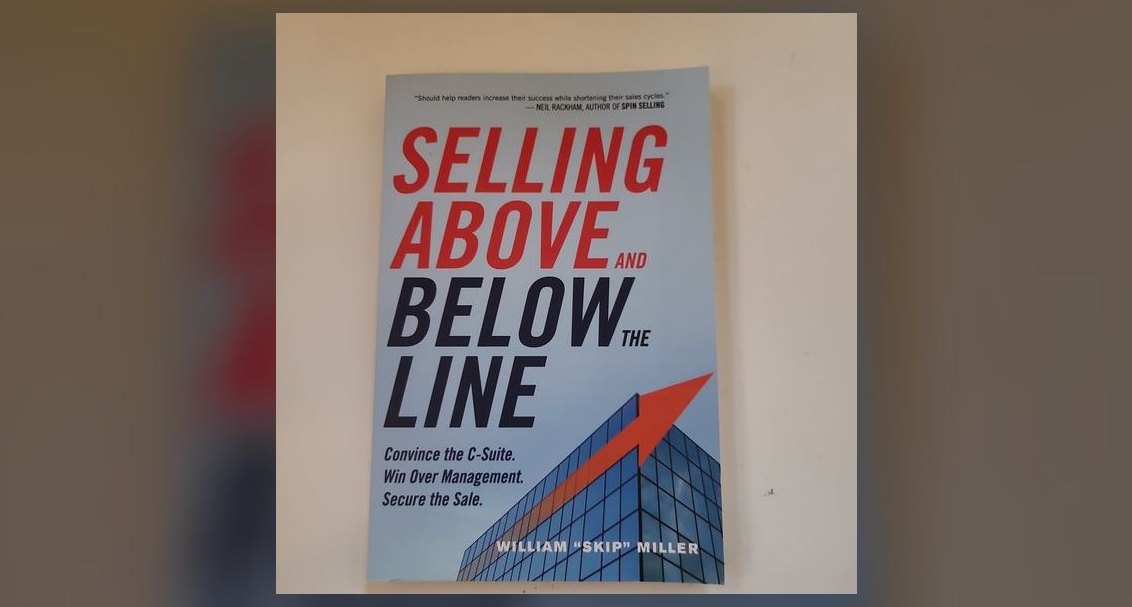 pulse-recentSelling Above and Below the Line by Skip Miller — Top 10 Key Takeaways for Sales Leaders in 2027
 pulse-booksWhat are the most common mistakes in Book Summaries in 2027?
 pulse-recentSales Engagement by Manny Medina — Top 10 Key Takeaways for Sales Leaders in 2027
 pulse-recentWhat is the second concrete step in Strategic Selling by Miller Heiman for identifying a sales coach in 2027?
 book-summaryMajor Account Sales Strategy by Neil Rackham: Summary, Key Lessons, and RevOps Takeaways
 pulse-recentThe Sales Acceleration Formula by Mark Roberge — Top 10 Key Takeaways for Sales Leaders in 2027
 pulse-recentWhat is the step-by-step process for Strategic Selling by Miller Heiman in 2027?