


Selling From the Heart by Larry Levine — Cliff Notes Summary
Quality
Certified
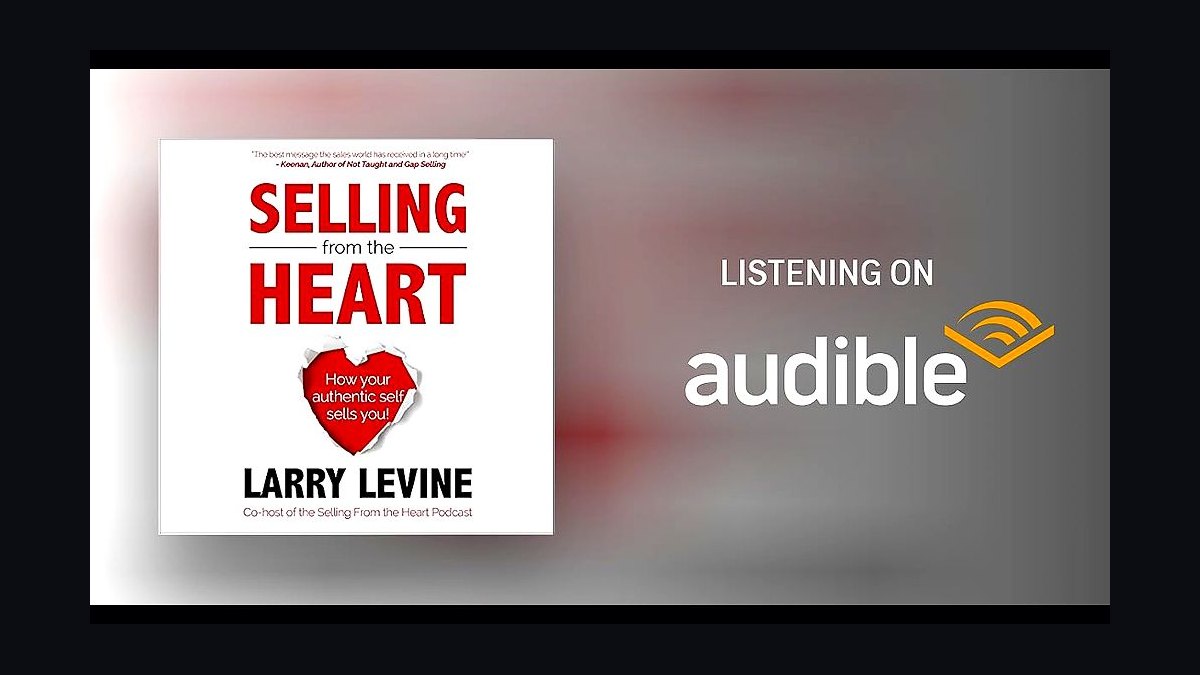
*Selling From the Heart* by Larry Levine argues that in an AI-saturated, template-email world, authenticity is a seller's last durable advantage. Levine's Heart-plus-Hustle strategy rests on four pillars — Mindset, Heartset, Skillset, Toolset — and warns that generic "Empty Suit" sellers, indistinguishable from bots, are the first to be replaced.
What it is and why it matters
*Selling From the Heart: How Your Authentic Self Sells You* (Authority Publishing, 2018) is Larry Levine's answer to a specific problem: B2B buyers can no longer tell one seller apart from the next. Levine spent roughly 30 years in B2B sales — much of it selling copier and print services, where he was the number-one rep for ten straight years — before turning that experience into a book and, with co-host Darrell Amy, the weekly *Selling From the Heart Podcast*. This Summary treats the book as a working operating system, not a motivational read, because that is how Levine intends it to function.
The core thesis is a single question Levine puts to the reader early: "Are you selling from your heart or your wallet?" A wallet-first seller leads with the product, follows a script, and treats every conversation as a pipeline stage to be advanced. A heart-first seller leads with genuine curiosity about the buyer's actual problem, treats the conversation itself as the point, and trusts that revenue is a lagging indicator of relationship. Levine's claim is blunt: buyers sense the difference through a screen, and the wallet-first posture — quota anxiety, commission math, end-of-quarter desperation — leaks into every touch, every email, every call opener.

It matters more now than it did in 2018 because Levine's central villain, the "Empty Suit," has acquired a new competitor. The Empty Suit is the seller with a corporate-template headshot, a job title as a LinkedIn headline, an About section that reads like a résumé, zero original content, and a deck full of features. Levine predicted that interchangeable sellers would be replaced first by cheaper SDRs and then by automation. LLM-driven outreach platforms have since made template-feel messaging worse than useless — buyers now filter it reflexively — which is exactly why the book's argument about Heart and authenticity reads as prescient rather than sentimental. The logic is unforgiving: if a buyer cannot distinguish you from three other reps pitching the same category, or from a bot, you *are* the Empty Suit, and no amount of activity fixes it.
The distinction Levine draws is not soft. He is not arguing that nice sellers win; he is arguing that *differentiated* sellers win, and that in a commoditized category the only remaining axis of differentiation is the human being doing the selling. Product parity is real. Pricing converges. What does not converge is a seller who has done the work to be genuinely known, trusted, and worth a buyer's time before the first meeting is ever booked.
The step-by-step process

Levine turns the philosophy into a repeatable daily practice, because — in his framing — heart-first is a practice, not a personality. The process moves from internal state, to visible brand, to service-first conversation, and back again. The four pillars stack in a deliberate order: Mindset first, then Heartset, then Skillset, then Toolset — because tools without Heartset just produce slicker Empty Suits.
Mindset is the internal operating system. Levine borrows from Carol Dweck's growth-mindset research and Stephen Covey's abundance-versus-scarcity framing. Scarcity sellers hoard accounts, withhold knowledge, and treat every deal as zero-sum; abundance sellers share leads, mentor juniors, and refer business they cannot serve. Heartset — Levine's coined term and the book's most distinctive idea — is the practiced discipline of caring about the buyer's outcome whether or not the deal closes: returning a call that has no deal in it, sending a useful article with no ask attached. He ties it explicitly to Bob Burg's *The Go-Giver* and Adam Grant's *Give and Take*.
Skillset is the durable craft: deep discovery with open questions, active listening (the rep talks under 40% of the call), storytelling in narrative rather than bullet form, and direct, unscripted asking. Levine aligns this layer with Neil Rackham's SPIN Selling. Toolset is the modern infrastructure — a fully built LinkedIn profile, comfort on video, a published content cadence, and disciplined CRM hygiene. It comes last precisely so that reps do not mistake the plumbing for the water.

Layered on top of the pillars is a daily cadence that converts them into muscle memory. The morning opens with a five-minute Heart Set ritual — gratitude journaling that names three specific things and three specific people — meant to calibrate the seller's internal state before the first call so warmth precedes the ask; Levine cites HeartMath Institute research on gratitude and heart-rate variability. The day then follows a rhythm: three personal, additive LinkedIn comments (never "great post!"), one piece of original content posted or drafted, five personal-not-templated outreach messages each referencing something specific about the recipient, the actual selling calls, and a closing reflection — what did I give, what did I learn, who did I help? The reflection matters as much as the ritual; it is the feedback loop that keeps the practice honest instead of performative.
Costs, timelines, and typical ranges
The book's headline cost is time, not money. Levine's daily ritual — three comments, one content unit weekly, five personalized messages, plus the morning and evening bookends — runs roughly 30 minutes a day of deliberate, non-selling work. The return is not immediate. This is a compounding strategy: like the give-first research in *Give and Take*, givers often lag in the short run and dominate the long run because their networks compound. Practitioners should expect a multi-month runway before the personal brand produces inbound recognition, not a quarter-over-quarter lift. Reps who quit at week six because "nothing happened" are quitting exactly when the compounding is about to start.

The concrete standards Levine sets are worth stating as ranges. On LinkedIn activity, his floor is three personal comments per day plus one piece of original content per week — every week, indefinitely. A profile with zero posts and zero comments in the trailing 90 days reads as abandoned to any buyer who checks. On call behavior, the target is a talk-to-listen ratio under 40% for the rep, meaning the buyer talks around 60% of the time; if you are talking more than the buyer, you are pitching, not discovering. On outreach volume, five genuinely personalized messages a day beats a hundred templated ones — the book's argument is that reply rates on generic sequences have collapsed while specific, personal outreach still books meetings.
The profile audit itself is a one-sitting task with recurring upkeep. Six elements get graded: the *photo* (warm, eye contact, a smile, professional but human — not a stiff corporate headshot, not a cropped wedding photo, not a logo); the *banner* (a tagline, question, or visual identity communicating point of view, not default LinkedIn blue); the *headline* (name the problem you solve and the buyer you serve — "Helping HVAC operators hit 18% net margin" beats "Account Executive at Acme"); the *About section* (a first-person story, not a résumé); the *Featured section* (proof — case studies, articles, testimonials — not props); and *Activity* (the three-comments-plus-one-post-weekly standard). Reading time for the book is a few hours; the behavior change is the actual cost, and it is ongoing rather than one-time. Budget the reading in an evening and the profile rebuild in a weekend, then treat the daily 30 minutes as a permanent line item, the same way a disciplined rep treats pipeline review.
Where teams get it wrong

The most common failure is treating Toolset as the whole book. Sales teams roll out video tools, buy a LinkedIn training, and mandate a posting quota — then wonder why the numbers do not move. Levine puts Toolset last on purpose: tools without Heartset produce polished Empty Suits, and tools without Skillset produce noisy beginners. A team that skips Mindset and Heartset and jumps straight to content cadence simply automates its inauthenticity, which in an AI-outreach world is the fastest way to get filtered into oblivion.
A second mistake is misreading "heart-first" as "hustle-optional." Levine's framing is Heart *plus* Hustle — the daily ritual cadence *is* the hustle, but it is hustle pointed at service rather than pressure. Reps who take the book as permission to stop doing the reps miss the point entirely; the framework collapses without the daily practice. There is no version of this strategy where you post inspirational quotes twice a month and wait for the phone to ring.
Teams also over-apply the book past its edges. *Selling From the Heart* is deliberately light on enterprise multi-threading and procurement navigation — it is a human-operating-system layer, not a complex-deal methodology. Pairing it with Anthony Iannarino's *Eat Their Lunch* for the competitive-displacement and multi-threading layer covers that gap cleanly. Similarly, the 2018 LinkedIn tactics have aged: specific posting formats predate short-form video, carousels, and newsletter features, so the *tactics* need a refresh even though the *strategy* holds. Read the platform specifics as illustrative, not prescriptive.

Finally, skeptical readers stall on the spiritual language and dismiss the whole thing. The fix is to separate the vocabulary from the machinery. The frameworks — the four pillars, the personal brand, the six-point profile audit, the daily rituals — are operationally concrete, and the supporting research (HeartMath, Dweck, Grant, Burg) is real, even if Levine cites it lightly rather than academically. Treat the "heart" language as a mnemonic for a disciplined service practice and the objection mostly dissolves. The seller who dismisses the book on tone is usually the exact Empty Suit it was written to describe.
Decision framework: when to choose what
*Selling From the Heart* is not a replacement for Challenger, MEDDPICC, or Sandler — it is the layer underneath them. Challenger gives you the insight to teach, MEDDPICC gives you qualification rigor, Sandler gives you a disqualification spine; *Selling From the Heart* gives you the human operating system that makes any of those land instead of bounce. The decision is not "which methodology," it is "have I built the trust layer that lets my methodology work." A perfect MEDDPICC scorecard on a deal where the buyer does not trust the rep is a well-organized loss.
Use the following to decide where to start.
The practical sequence for an individual seller: audit the profile against Levine's six-point checklist, then commit to the daily ritual, then choose the sales methodology that fits the deal size on top of that foundation. Order matters — layering a rigorous methodology on a résumé-shaped profile and a silent feed produces the same interchangeable seller the book warns about, just with better call notes.

For a sales leader, the decision is whether the team's problem is a *trust* problem (blending into AI-generated noise, falling reply rates, cold outreach that no longer converts) or a *process* problem (poor qualification, stalled deals, no forecast discipline). *Selling From the Heart* addresses the former and should be paired with — never swapped for — a qualification methodology that addresses the latter. Leaders who diagnose a process problem and prescribe a personal-branding push, or diagnose a trust problem and prescribe more CRM fields, waste a quarter fixing the wrong layer.
Related questions
Should I read the original or the 2023 sequel first?
Start with the 2018 original — it establishes the four pillars and the Empty Suit framing. Levine's later work assumes you already have that foundation and extends the model into the AI-saturated buying environment, so reading it first leaves you missing the base vocabulary the sequel builds on.
How is it different from Jeb Blount's *People Buy You*?
Blount focuses on the in-person, in-conversation impression a buyer forms of the seller. Levine extends that idea into the digital-first reality where most of the impression is formed *before* the first call — on LinkedIn, through content and profile — rather than across a table.
Is the book religious or spiritual?

It uses heart-and-soul vocabulary but is not religious. The frameworks are operationally concrete and grounded in cited research from HeartMath, Carol Dweck, Adam Grant, and Bob Burg. Treat the "heart" language as shorthand for a disciplined, consistent service practice.
What is the single Monday-morning action?
Audit your LinkedIn profile against Levine's checklist — photo, banner, headline, About, Featured, Activity — then commit to the daily ritual: three personal comments, one piece of content per week, and five personal, non-templated outreach messages per day.
Does AI make this book obsolete or more relevant?
More relevant. As generic AI sequences flood inboxes and get filtered, genuinely personal outreach stands out sharply. AI can even amplify a heart-first seller's reach — but only when the underlying authenticity is real rather than a generated impression of it.
FAQ
**Who should read *Selling From the Heart*?** B2B sellers and sales leaders who feel the high-pressure script has stopped working, anyone rebuilding a personal brand on LinkedIn, and managers whose teams are being drowned out by AI-generated outreach. It suits transactional and mid-market sellers especially well, and gives enterprise reps a trust foundation to build on.
What are the four pillars?

Mindset (self-belief and abundance), Heartset (empathy and service-first), Skillset (discovery, listening, storytelling, asking), and Toolset (LinkedIn, video, content, CRM). They stack in that order — Toolset comes last on purpose, because tools without the inner pillars just produce a slicker Empty Suit.
What is an "Empty Suit"? Levine's term for a seller with a generic profile, a scripted pitch, no distinctive point of view, and no visible presence — someone indistinguishable from competitors and from AI bots. His prediction is that these interchangeable sellers are the first to be replaced by cheaper labor and automation.
How does this fit with Challenger, MEDDPICC, and Sandler? It is a layer underneath, not a replacement. Those methodologies supply insight, qualification rigor, and a disqualification spine; *Selling From the Heart* supplies the human operating system that makes any of them land instead of bounce off a buyer who does not trust the rep.
Is it useful for enterprise complex deals? Partly. It is the trust and personal-brand foundation, but it is light on multi-threading and procurement navigation. Pair it with Anthony Iannarino's *Eat Their Lunch* for the complex-deal layer while keeping Levine's strategy as the underlying trust practice across the whole account.
What is the biggest risk in applying it? Treating Toolset as the whole book — mandating posts and video without building Mindset and Heartset first. That just automates inauthenticity, which in an AI-outreach environment is the fastest way to get filtered out and ignored.
Sources
- https://www.sellingfromtheheart.net/
- https://www.linkedin.com/in/larrylevine1992/
- https://www.goodreads.com/book/show/40538888-selling-from-the-heart
- https://www.mindsetworks.com/science/
- https://www.adamgrant.net/book/give-and-take/
- https://thegogiver.com/
- https://www.heartmath.org/research/
- https://www.iannarino.com/
Related on PULSE
- Heart and Sell by Shari Levitin — Cliff Notes Summary
- Selling the Invisible by Harry Beckwith — Cliff Notes Summary
- Secrets of Question-Based Selling by Thomas Freese: Summary, Key Lessons, and RevOps Takeaways
- SPIN Selling by Neil Rackham: Summary, Key Lessons, and RevOps Takeaways
- Gap Selling by Keenan: Summary, Key Lessons, and RevOps Takeaways
- The SPIN Selling Fieldbook — Cliff Notes Summary
This page will be disappearing soon. Save it to your device for $1 — or read it free while it is here.
@Kory-White- · if Venmo asks, the last 4 of my number are 2012
This page is gone.
This one is off the shelf now. $1 keeps it on your phone for good — the whole page, pictures and diagrams included.
 pulse-booksTop 10 practical takeaways from Atomic Habits for building a new routine in 2027.
 pulse-recentHow do you implement the Sandler Rules by David Mattson in your first 30 days as a new sales manager in 2027?
 pulse-recentHow do you implement the Sandler Rules in your first 30 days as a new sales rep in 2027?
 pulse-recentThe Transparency Sale by Todd Caponi — Top 10 Key Takeaways for Sales Leaders in 2027
 pulse-recentWhat is the first concrete step in the Sandler Selling System for handling a prospect's initial brush-off in 2027?
 pulse-recentThe Sales Manager’s Guide to Greatness by Kevin Davis — Top 10 Key Takeaways for Sales Leaders in 2027
 pulse-recentBlue Ocean Strategy by W. Chan Kim and Renee Mauborgne — Top 10 Key Takeaways for Sales Leaders in 2027
 pulse-recentWhat are the concrete steps to implement the Sandler Rules for Sales Leaders by David Mattson in 2027?
 pulse-recentThe Closer’s Survival Guide by Grant Cardone — Top 10 Key Takeaways for Sales Leaders in 2027
 pulse-recentConceptual Selling by Robert Miller and Stephen Heiman — Top 10 Key Takeaways for Sales Leaders in 2027