


The Sandler Rules for Sales Leaders by David Mattson — Cliff Notes Summary
Quality
Certified
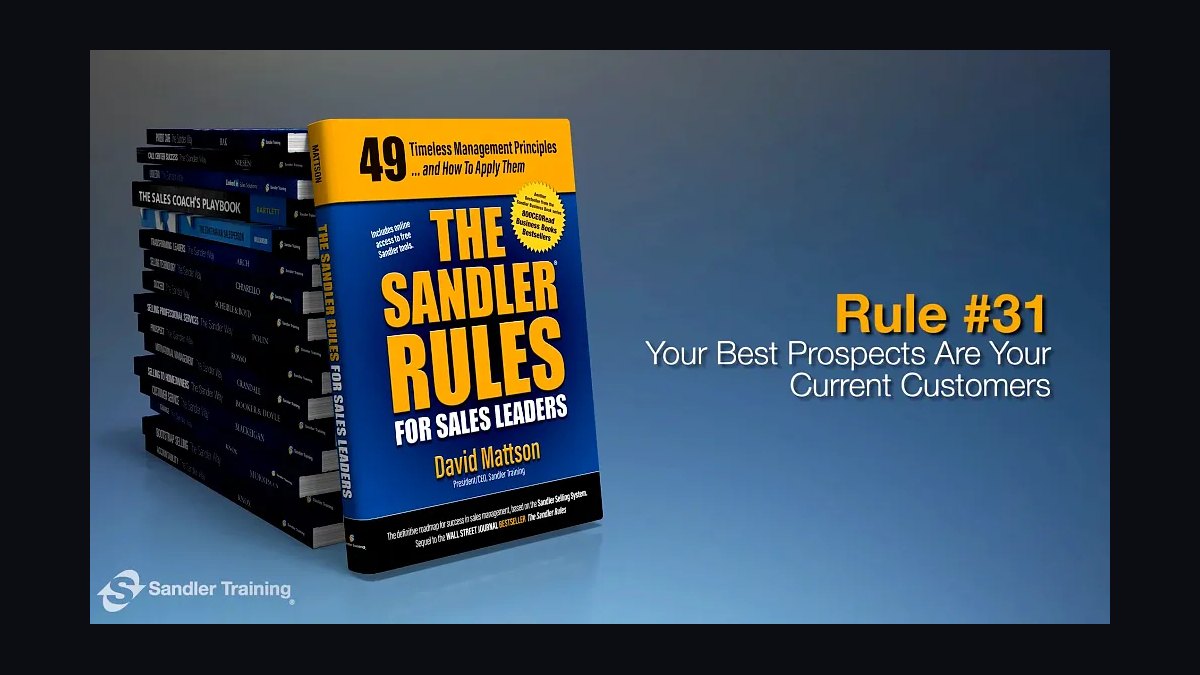
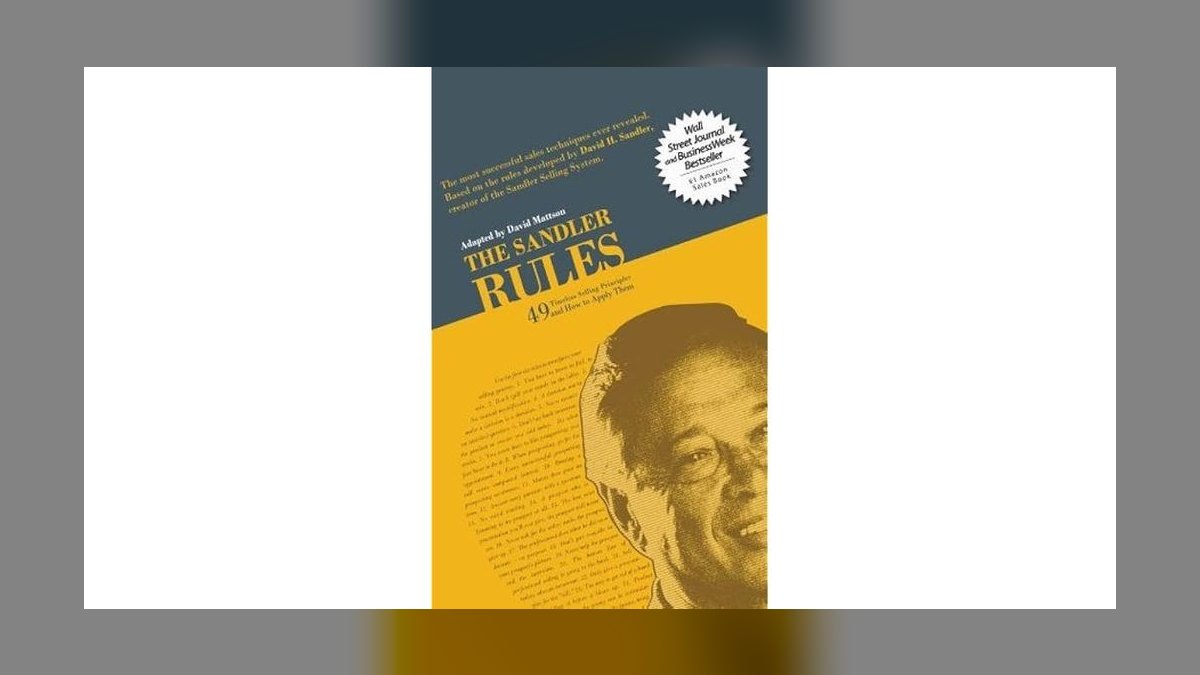
*The Sandler Rules for Sales Leaders* (Pegasus Media World, 2018) is David Mattson's 49-rule manual for front-line sales managers, adapting the rep-focused 2009 original for people who lead sellers. Its thesis: top reps get promoted with no leadership training, so the book gives them a weekend-readable operating system for coaching, hiring, pipeline inspection, and self-management.
What actually changes when a manager adopts the rules
Read the book and nothing happens. Apply four or five of the Rules with real discipline for a quarter and three things shift in a way the team can feel.
The first is who owns the deal. Before, the manager sits in a deal review, hears a stalled opportunity, and says "here's what you tell them." The rep executes the manager's script, it half-works, and the next deal stalls the same way — because the rep never built the diagnostic muscle. After, the manager runs a Socratic debrief instead: *walk me through it, what did the champion say after you sent the proposal, what did you expect them to say, what surprised you, what's your next move?* The rep talks most of the meeting and leaves with a next step they authored. The observable change is that reps start bringing you a diagnosis instead of a request for instructions.
The second is forecast honesty. "Inspect what you expect" isn't a slogan about working harder; it's a rule that the question *"are we still good for the quarter?"* is worthless because it can only be answered yes. Replace it with artifact questions — show me the mutual action plan, name the economic buyer, when did you last speak to them, what's the next meeting already on a calendar — and deals with no substance behind them get downgraded in the meeting rather than in week eleven. Managers describe the first month of this as brutal: the number goes *down* before it gets accurate. That's the intended behavior, not a failure of the method.
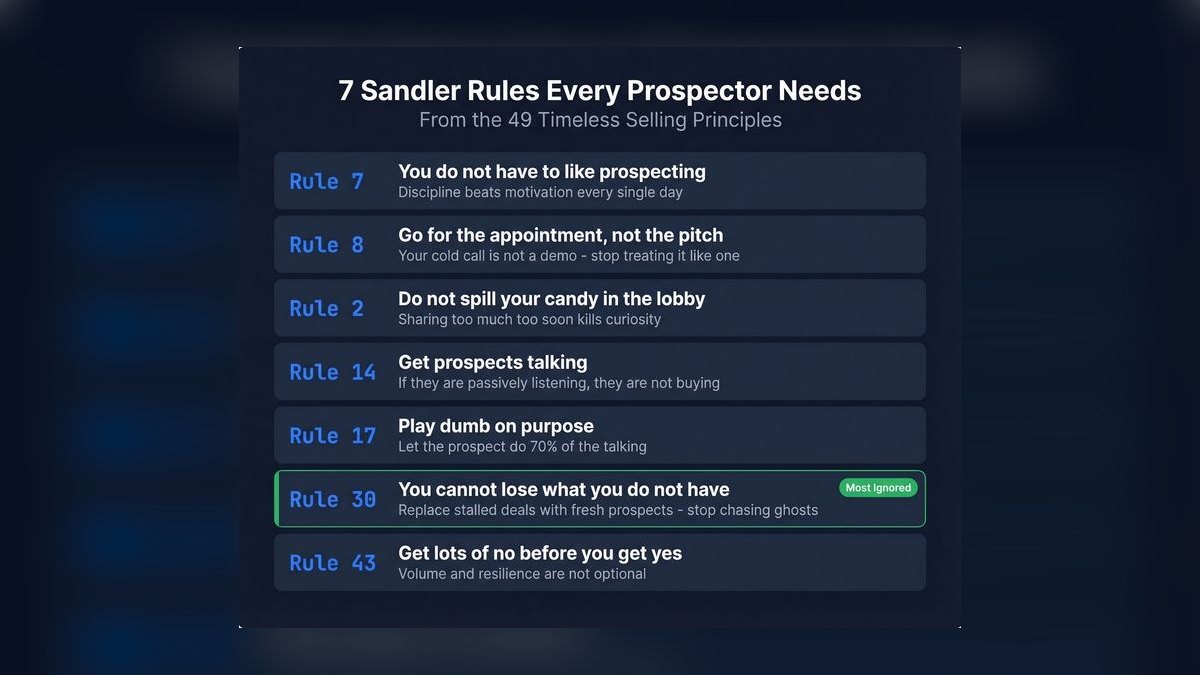
The third is what the team tolerates. Mattson's most-quoted line for leaders is that your team becomes what you tolerate. One rep skipping Monday pipeline review is not a rep problem; it's a standard problem, and it compounds. The change you should expect here is uncomfortable and fast: correct the first miss calmly, in the moment, and the second miss usually never happens. Let it ride to the third, and you're now renegotiating the standard with the whole team.
What you should *not* expect is a mechanical lift in attainment because you read a book. The Rules are behavioral scaffolding. They work on managers who will actually change their calendar, and they do nothing for managers who keep running the same forecast call with new vocabulary.
What drives the outcome underneath the Rules
Strip the 49 Rules down and they run on a small number of load-bearing mechanisms. Understanding those mechanisms matters more than memorizing the list, because it tells you which Rules to apply first in your specific mess.
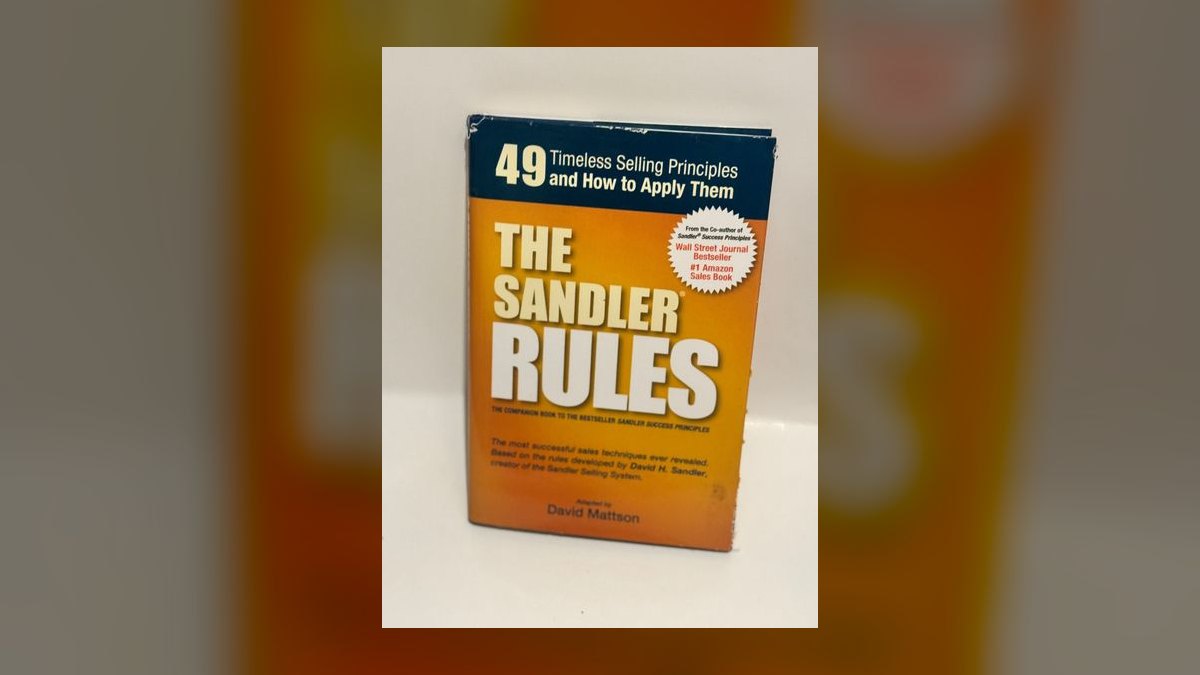
Mechanism one: separate the deal conversation from the person conversation. Mattson's "coach the person, not the deal" only works structurally. If deal review and skill coaching happen in the same meeting, the deal always wins — it's urgent, it has a close date, and the skill gap has no deadline. So they get split: a short weekly deal/forecast pass driven by pipeline artifacts, and a longer, less frequent person-coaching session indexed to exactly one skill gap you observed. Call recordings make this practical — you're not coaching a memory of what the rep said, you're coaching the actual discovery call where they took the first "we're happy with our current vendor" at face value.
Mechanism two: inspect upstream. Activity feeds pipeline, pipeline feeds forecast, forecast feeds bookings. A manager who only reads forecast learns about a problem one full cycle after it became unfixable. A manager who reads coverage and stage-entry quality sees the same problem while there's still time to run a prospecting push, pull an expansion play forward, or lean on a partner co-sell. The whole "hope" family of Rules — a hope deal being one with no scheduled next step, no identified economic buyer, and no mutual close plan — is just an upstream-inspection tool wearing a folksy name.
Mechanism three: modeling before enforcement. The Rule that the manager sets the standard themselves is not motivational fluff. If the expectation is CRM hygiene inside 24 hours and the manager's own records are a week stale, the team calibrates to the observed behavior every time. Model it first, visibly, then enforce it.
Mechanism four: the leader's own capacity. The "oxygen mask" Rules exist because a depleted manager reverts to the fastest behavior available, which is telling reps what to do. Coaching is slower than instructing. Under stress, managers stop coaching — not because they forgot the Rule, but because they have nothing left. Calendar-blocked exercise, a hard stop on evening Slack, a quarterly thinking day, and a 1:1 with your own manager about *your* development are the maintenance schedule for the machine that runs everything else.
Notice the shape: every branch converges. That's the argument of the book in one picture — no single Rule carries the quarter, and a manager who coaches beautifully but hires badly still ends up rebuilding the team every eighteen months.
Where the book sits, and what to read alongside it
Mattson has been CEO of Sandler Training since 2007, and the company traces to David Sandler's 1967 founding, so the leader edition is compressed institutional coaching IP rather than one person's opinion. Structurally, every Rule here has an ancestor in the 2009 rep edition — the rep Rule about not dwelling on a lost deal becomes a manager Rule about debriefing the loss and moving the rep forward. If you've read the rep book, the leader book reads fast, because you're mapping familiar principles onto a new job.
That lineage is also the book's main limitation as a standalone text. It is a principles book, not a metrics book. It will tell you to inspect, and it will not hand you a coverage model, a stage-conversion baseline, or a math framework for how many activities produce a qualified opportunity in your segment. For that, Jason Jordan and Michelle Vazzana's *Cracking the Sales Management Code* is the natural complement — Jordan's argument is that managers can only manage activities, can only influence objectives, and can only report results, which is the quantitative version of Mattson's inspection triangle. Mike Weinberg's *Sales Management Simplified* is the closest tonal sibling: same bluntness about promoted reps who never learned to lead, more page-time on protecting selling time from internal noise. Kevin Davis's *The Sales Manager's Guide to Greatness* rounds out the shelf on developmental coaching.
On the hiring Rules specifically, Mattson is walking ground that Geoff Smart and Randy Street's *Who* covers in far more procedural depth — the chronological, job-by-job interview and the insistence on talking to the actual former manager rather than the candidate's curated reference. If hiring is your acute problem, read *Who* for the method and use Mattson's Rules for the discipline of applying it under pressure.
And the "praise in public, correct in private" Rule is Carnegie, openly. *How to Win Friends and Influence People* has been making that argument since 1936. Mattson's contribution is the sales-specific consequence: public correction on a forecast call teaches the whole team that surfacing a deal problem is dangerous, so they stop surfacing deal problems, so your forecast gets worse. The asymmetry isn't about being nice. It's an information-quality strategy.
Adjacent to the book itself, the same principles now show up embedded in tooling and curricula — conversation-intelligence platforms surface talk-time ratios on coaching calls, revenue-intelligence tools flag opportunities with no identified economic buyer or no scheduled next step, and manager-enablement programs at Pavilion, Winning by Design, and Force Management teach recognizably Sandler-shaped inspection habits. You may end up implementing these Rules without ever attributing them, because the software already nags you in their voice.
Benchmarks, ranges, and what "working" looks like
Be careful with numbers here. The book is a principles text and the specific figures circulating around it — cost-of-a-bad-hire estimates, percentages of managers promoted on rep performance — vary widely by source and segment. Treat the ranges below as planning heuristics you should replace with your own data, not as findings.
Pipeline coverage. The commonly used planning ranges are roughly 3x for shorter, higher-velocity monthly cycles and 4x or more for longer quarterly enterprise cycles. The number itself matters less than whether it's *stable*. A team at 4.2x coverage that has been at 4.2x for six quarters is legible. A team that swings from 2.8x to 5.5x is telling you that stage definitions are being applied inconsistently, which is an inspection problem, not a demand problem.

Forecast variance. A well-inspected front-line team should land inside single-digit percentage variance to commit by the back half of a quarter. Missing by 20-30% quarter after quarter is the specific symptom the inspection Rules exist to cure, and it almost always traces to commit-stage deals carrying no artifacts.
Coaching time. The realistic constraint is calendar. A manager with six to eight reps who wants a genuine bi-weekly person-coaching session plus a weekly deal pass is committing several hours a week before travel, escalations, and their own pipeline. This is why the span-of-control question is really a coaching question: past roughly eight direct reports, the person-coaching session is the first thing that quietly disappears.
Ramp and hiring cadence. Four interviews minimum, with at least one live simulation — a mock cold call and a mock discovery, not a conversation *about* discovery — is the operational core of "hire slow." The "fire fast" half is a decision-latency rule: once you've genuinely concluded someone won't make it, the conversation happens in days, not at quarter end. Most managers fail this half, not the first half, and the cost isn't only the salary — it's the pipeline that never got built and the A-players watching you tolerate it.
Time to visible change. Behavioral shifts in how reps answer inspection questions tend to appear within four to six weeks of consistent application, because reps adapt fast to what actually gets asked. Cultural adoption — where the team runs the standard without you enforcing it — is a multi-quarter project. Managers who expect the second timeline on the first schedule conclude the book didn't work.
A useful self-check: pick three deals currently marked commit. If you cannot name the economic buyer, point at a mutual action plan, and cite a next meeting already on a calendar for all three, your forecast is a wish and no amount of rule-reading fixes that until Friday's audit does.
Risks, edge cases, and the ways this goes wrong
Socratic coaching becomes interrogation. "Ask, don't tell" turns toxic when the questions are rhetorical — *"and what did you think would happen when you skipped the economic buyer?"* is telling with a question mark. The rep hears judgment, gets defensive, and stops bringing you real problems. The mechanism only works if you'd genuinely accept an answer you didn't anticipate.
Never telling is also a failure mode. A brand-new rep who has never run a discovery call doesn't have an answer to draw out. Pure Socratic method on someone with no reference points wastes their time and yours. Instruct explicitly during ramp; shift to questions once there's experience to interrogate.
Inspection curdles into micromanagement. The line is what you inspect. Artifacts — buyer identified, plan documented, meeting scheduled — are inspection. Activity counts pulled hourly, dial dashboards, and asking a consistent overperformer to justify their calendar are surveillance. Your best reps will leave over the second and never mention it in the exit interview.
"Fire fast" applied to a coachable rep. The Rule assumes you've genuinely decided. Managers under number pressure use it as cover for cutting someone through a bad quarter caused by territory, product gaps, or a marketing pipeline shortfall. Before acting, separate rep-controllable causes from structural ones — if three of six reps are missing the same way, the problem isn't the reps.
The friendship Rule handled badly. "You're their leader, not their friend" is often over-applied by newly promoted managers who go cold overnight and destroy the trust that made them effective peers. The actual requirement is role clarity — being willing to deliver a PIP, withhold a promotion, or exit a friend — not manufactured distance.
Remote translation. The 2018 examples assume a physical bullpen: whiteboards, overheard calls, printed forecast sheets. Distributed teams have to rebuild every mechanism deliberately. "Praise in public" becomes a wins channel someone actually maintains. "Correct in private" becomes a camera-on call, not a Slack DM that reads harsher than you meant. Ambient coaching — the thing that used to happen because you overheard a call — has to be replaced with scheduled recording review, or it simply stops happening and nobody notices for two quarters.
Comp design in modern motions. The Rule that you reward what you want assumes the rep owns the conversion event. In product-led and hybrid motions where self-serve signup, partner-sourced expansion, and customer-success-driven renewals blur ownership, a naive application produces fights over attribution. The principle holds — every comp plan teaches a behavior, the only question is whether you designed it deliberately — but the plan itself needs more care than a 2018 new-logo spiff.
Rule collisions. Several Rules pull against each other under pressure. Hire slow versus a hole in the territory now. Coach the person versus a deal closing Thursday. Set the standard yourself versus your own capacity limits. Mattson doesn't resolve these for you, and any Cliff-Notes summary that presents the 49 as frictionless is lying about management.
A practical rollout plan for the first ninety days
Don't try to install 49 Rules. Pick the ones that address your actual failure mode and sequence them, because several depend on each other — you cannot coach effectively until inspection has surfaced the real skill gaps.
Weeks 1-2 — establish the baseline. Run your existing forecast call unchanged and privately score it: how many commit deals have a named economic buyer, a documented mutual plan, and a next meeting on a calendar? Pull three recent call recordings and time your own talk ratio in any coaching conversation. Write both numbers down. You'll need them, because month-two improvements are invisible without a before.
Weeks 3-4 — install inspection first. Announce the standard once, in front of the whole team, so no one is surprised: commit requires the three artifacts. Then run Friday's audit and actually downgrade what doesn't qualify. Expect the forecast to drop and expect one uncomfortable conversation. Don't soften it in week two — the Rule about becoming what you tolerate is being tested here more than anywhere else.
Weeks 5-8 — split the meetings. Now that inspection is surfacing patterns, separate the short weekly deal pass from a longer person-coaching session. Each coaching session targets one named skill gap, uses one specific recording, and ends with the rep stating their own next step. Hold your talk ratio down deliberately; most managers are shocked at the baseline.
Weeks 9-12 — hiring and self-management. Build the four-interview loop with live simulations before you have an opening, not after someone resigns. In parallel, put your own maintenance on the calendar — exercise blocks, an evening cutoff, a thinking day — because this is the point where the new cadence has consumed your slack and you'll be tempted to reclaim it from the coaching sessions.
Run it weekly and it settles into a rhythm: pipeline inspection early in the week, recorded-call coaching mid-week, person 1:1s, hiring loops in the back half, the hope audit and forecast roll-up on Friday, and a genuine weekend. That cadence is the real deliverable of the book — the Rules are the reasoning behind each block, and the calendar is where any leadership strategy either lives or quietly dies.
Related questions
Is this book worth reading if I've already read the original Sandler Rules?
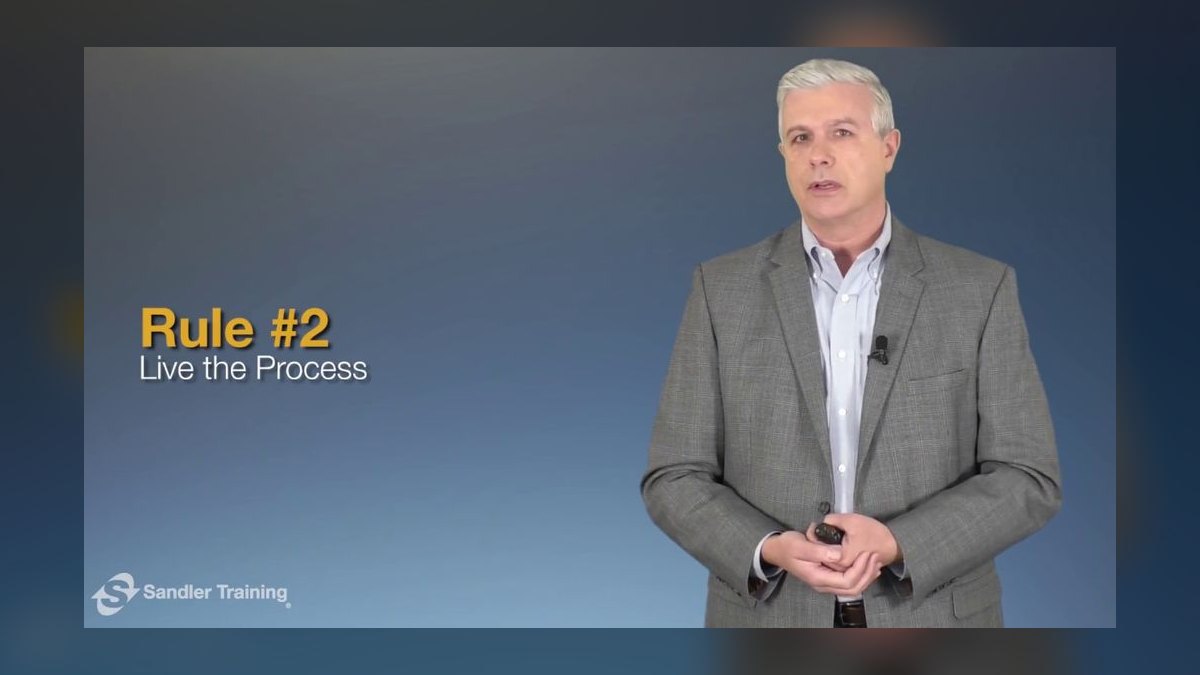
Yes, but read it fast. The lineage is direct — each leader Rule descends from a rep Rule — so a familiar reader can move quickly and focus on the coaching, hiring, and pipeline-inspection chapters, which have no real equivalent in the rep edition.
Which single Rule should a brand-new manager apply first?
Inspection. "Inspect what you expect" surfaces the real skill gaps that every other Rule depends on. Coaching without inspection means guessing what to coach, and hiring decisions made before you understand the team's actual failure pattern tend to be wrong.
Does it work for a manager of SDRs rather than closers?
Mostly. The coaching stack, standard-setting, and hiring Rules transfer directly. The pipeline Rules need translation, since SDR output is meetings and qualified opportunities rather than commit-stage deals — inspect meeting quality and conversion, not close plans.
How does it compare to Cracking the Sales Management Code?
Complementary. Jordan and Vazzana give you the measurement architecture — which activities you can actually manage versus merely report. Mattson gives you the behavioral discipline to run it. Read Jordan for the math, Mattson for the leadership habits.
FAQ
What is the main difference between this book and the original Sandler Rules?
The 2009 original was written for individual sellers — prospecting, qualifying, handling objections, closing. The 2018 leader edition takes the same 49-principle structure and rewrites it for the person managing sellers, so the subject matter becomes coaching, hiring, pipeline inspection, team standards, and managing yourself. Same DNA, entirely different job.
Does it give scripts and templates, or just principles?
Principles, with operational specificity. You get a repeatable debrief question sequence, an artifact test for commit-stage deals, and clear hiring cadence rules, but not fill-in-the-blank templates. The expectation is that you adapt each Rule to your segment, cycle length, and team culture rather than copying a script.
Is it useful for a first-time manager with no formal training?
That's the intended reader. The whole premise is the promoted top rep who was handed a team and a quota with no leadership instruction, and the book targets the predictable early failures — closing deals for your reps, avoiding hard conversations, and enforcing standards you don't personally model.
Does it cover remote and hybrid teams?
Not directly; it predates the widescale shift. The principles translate — trust, standards, accountability, and asymmetric feedback are setting-independent — but you have to rebuild the ambient mechanisms deliberately, because the informal coaching that happened by proximity in a bullpen doesn't happen by accident over video.
How long before I see results?
Reps adapt to what you consistently ask within roughly four to six weeks, so inspection behavior changes first. Forecast accuracy follows over a quarter as the artifact standard works through the pipeline. Cultural adoption — the team holding the standard without you enforcing it — is a multi-quarter effort.
Do I need to apply all 49 Rules?
No, and trying to is the common failure. Diagnose your actual problem — forecast misses, attrition, ramp failures, your own burnout — pick the three or four Rules that address it, sequence them so inspection comes before coaching, and add the next tier once the first set holds without daily enforcement.
Sources
- https://www.sandler.com/
- https://en.wikipedia.org/wiki/Sandler_Sales
- https://www.penguinrandomhouse.com/books/570994/the-sandler-rules-for-sales-leaders-by-david-mattson/
- https://www.goodreads.com/book/show/40716001-the-sandler-rules-for-sales-leaders
- https://www.mheducation.com/highered/product/sandler-enterprise-selling-winning-repeat-business-scale-mattson-sullivan/9781259643248.html
- https://www.goodreads.com/book/show/10321063-cracking-the-sales-management-code
- https://mikeweinberg.com/books/
- https://whothebook.com/
- https://www.dalecarnegie.com/en/courses/how-to-win-friends-and-influence-people
- https://hbr.org/2017/05/how-to-be-a-good-boss-in-a-bad-economy
Related on PULSE
- The Sandler Rules by David Mattson — Cliff Notes Summary
- Sandler Enterprise Selling by Mattson and Sullivan — Cliff Notes Summary
- Sandler Selling System by David Sandler — Cliff Notes Summary & Key Takeaways
- The Sandler Rules — Cliff Notes Summary
- Range by David Epstein — Cliff Notes Summary for Sales Careers
- Rework by Jason Fried and David Heinemeier Hansson — Cliff Notes Summary
This page will be disappearing soon. Save it to your device for $1 — or read it free while it is here.
@Kory-White- · if Venmo asks, the last 4 of my number are 2012
This page is gone.
This one is off the shelf now. $1 keeps it on your phone for good — the whole page, pictures and diagrams included.
 pulse-recentSandler Rule #1: What is the first concrete step to build a prospect's trust in a sales conversation in 2027?
 pulse-recentObviously Awesome by April Dunford — Top 10 Key Takeaways for Sales Leaders in 2027
 pulse-recentThe Greatest Salesman in the World by Og Mandino — Top 10 Key Takeaways for Sales Leaders in 2027
 pulse-recentThe Challenger Customer by Brent Adamson — Top 10 Key Takeaways for Sales Leaders in 2027
 pulse-recentSales Engagement by Manny Medina — Top 10 Key Takeaways for Sales Leaders in 2027
 pulse-recentThe Collaborative Sale by Keith Eades — Top 10 Key Takeaways for Sales Leaders in 2027
 pulse-recentWhat is the first concrete step in Sandler Rule #4 for a sales leader to implement in 2027?
 pulse-recentThe Sales Acceleration Formula by Mark Roberge — Top 10 Key Takeaways for Sales Leaders in 2027
 pulse-recentSelling Above and Below the Line by Skip Miller — Top 10 Key Takeaways for Sales Leaders in 2027
 pulse-recentInsight Selling by Mike Schultz and John Doerr — Top 10 Key Takeaways for Sales Leaders in 2027