


The Sandler Rules by David Mattson — Cliff Notes Summary
Quality
Certified
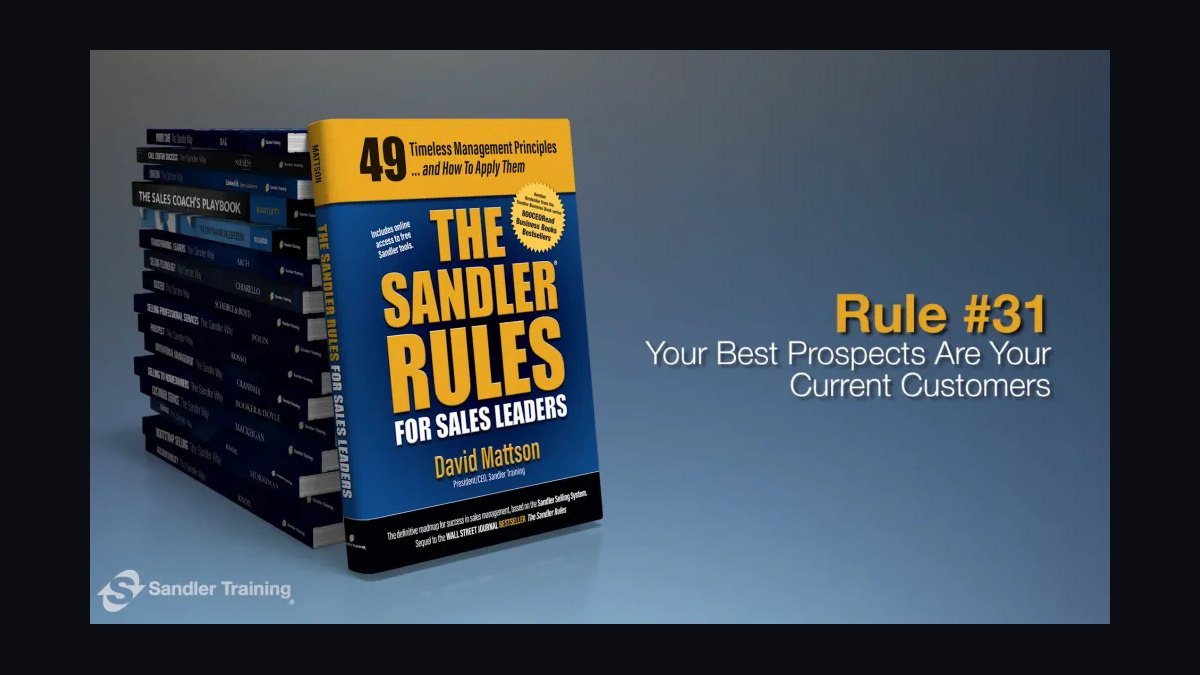
The Sandler Rules: 49 Timeless Selling Principles and How to Apply Them by David Mattson (Pegasus Media World, 2009; updated 2017) is the first printed canonization of David Sandler's verbal teaching, which had been delivered exclusively at Sandler Training seminars from 1967 onward. Mattson — CEO of Sandler Training, the global franchise with roughly 250 offices across 30+ countries — distilled four decades of oral tradition into 49 numbered Rules, each delivered as a one-line aphorism, a parable from Sandler's own selling days, a tactical application, and a self-assessment question. The book matters because it preserved a methodology that had survived only in trainer notebooks and recorded sessions, and because the Rules — "No pain, no sale," "A decision not to make a decision is a decision," "You can't sell anybody anything; they must discover they want it" — became the operating grammar for generations of Sandler-trained reps at HubSpot, Salesforce, Snowflake, and ServiceNow. The Sandler system sits alongside SPIN, Challenger, MEDDPICC, and Force Management as one of the five enduring B2B sales operating systems.
1The Mindset Rules (Rules 1-12)

1.1 Rule 1 — You Have to Learn to Fail to Win
The opening Rule sets the entire pedagogical tone. David Sandler taught that selling is a numbers game governed by emotional resilience, not technique. The parable: a young rep loses ten deals in a row, quits, and never finds out the eleventh was the breakthrough. Mattson reframes failure as paid tuition — every "no" funds the next "yes" if the rep tracks ratios. The tactical application: rate every call on a process scale (1-10) independent of the outcome, so a well-run loss still counts as a win. The misuse: managers who weaponize the Rule to excuse pipeline drought. The self-assessment: *Did I run my process today, regardless of whether I closed?*
1.2 Rule 7 — You Never Have to Like Prospecting, But You Must Love What It Does for You
The most-quoted Mindset Rule. Sandler refused the popular fiction that great sellers enjoy cold calling. Instead, he taught reps to anchor on the outcome — the commissions, the freedom, the children's tuition. Mattson tells the story of a Sandler-trained rep who hated phone work but kept a photo of his daughter's college acceptance letter taped above his desk. Jeb Blount's Fanatical Prospecting (2015) is the direct intellectual descendant — same discipline thesis, amplified for the SaaS generation.
1.3 Rule 22 — Treat the Prospect's Questions Like Landmines
Sandler taught that buyer questions are rarely innocent. A question like "Can your product integrate with Salesforce?" is operationally a filter masquerading as curiosity — answer wrong and the deal dies. The tactical application: always reverse the question first ("That's interesting — what would integration with Salesforce do for you?") to expose the buyer's actual concern before answering. This is the Rule that introduces "Reversing," the Sandler technique that has aged most controversially (see the What Has Aged section).
2The Qualification Rules (Rules 13-24)
2.1 Rule 6 — Don't Buy Back the Product or Service You Just Sold
The Rule that prevents post-sale unraveling. After verbal commitment, weak reps over-explain, re-pitch, and accidentally reopen objections the buyer had already closed. Mattson's story: a rep who, after a verbal "yes," walked the buyer through the implementation timeline in such detail that the buyer balked and asked to "think it over." The tactical application: when you get the yes, shut up, paper the deal, exit. The discipline echoes through modern revenue operations as the "shut up after yes" rule.
2.2 Rule 27 — You Can't Lose What You Don't Have

The qualification Rule that protects reps from forecast inflation. A prospect who has not committed to budget, timeline, or decision authority is not a deal — they are a suspect, not a prospect. Counting suspects in the pipeline produces forecast misses and manager pressure to "save" deals that were never alive. The tactical application: only deals with confirmed Pain, Budget, and Decision are forecast-eligible — the PBD trio that became the spine of Sandler qualification and a direct ancestor of MEDDPICC's Metrics, Economic Buyer, and Decision Process criteria.
2.3 Rule 32 — Get an IOU for Everything You Do

Every favor the rep extends — a custom demo, a reference call, a procurement document — must be explicitly traded for a commitment from the buyer. The Rule prevents one-sided escalation where the rep does free work hoping for a sale. The tactical application: before each rep-side deliverable, ask *"If I get you X by Friday, what will you commit to in return?"* The IOU becomes a written next step in the CRM, not a verbal hope. Snowflake's enterprise reps reportedly run a strict IOU log per deal — every artifact mapped to a buyer-side commitment.
3The Discovery and Pain Rules (Rules 25-34)

3.1 Rule 13 — No Pain, No Sale
The most-quoted Rule in the entire Sandler canon, and the one that has aged best. Sandler taught that buyers do not buy products — they buy relief from pain. A buyer without pain is a buyer without urgency, and a buyer without urgency does not close. The tactical application: discovery's only job is to surface pain at three layers — the surface symptom ("our pipeline is slow"), the business impact ("we'll miss the quarter"), and the personal stake ("I won't make my bonus"). Without the third layer, the deal stalls. Matt Dixon's JOLT Effect (2022) refined this Rule for the modern era by separating Indecision (pain present, action absent) from competitive loss — a direct extension of Rule 13.
3.2 Rule 17 — Professional Salespeople Are Technicians, Not Talkers
Sandler rejected the gregarious "people person" stereotype. The professional rep is a problem-solving technician who runs a repeatable process — discovery, qualification, presentation, close — with the precision of a surgeon. The tactical application: every call has a written pre-call plan (objective, three questions, two next-step options) and a post-call debrief (what advanced, what stalled). The Rule directly inspired modern call-coaching platforms like Gong and Chorus, which automated the post-call debrief.
3.3 Rule 31 — Close the Sale or Close the File
The Rule that ends zombie deals. A prospect who will not commit to a next step within a defined window is not a deal — they are a drain. The tactical application: after two failed attempts to advance, the rep proposes the Sandler "no" close: *"It sounds like this isn't the right fit right now. Can we agree to close the file?"* The buyer either revives or releases. Either outcome is better than the half-alive deal that consumes reporting attention for two quarters.
4The Up-Front Contract Rules (Rules 35-40)
4.1 Rule 9 — Every Unsuccessful Sales Call Earns Compound Interest
Sandler's framing: a call that ends without a clear next step compounds the cost of the next call. The rep must re-warm the buyer, re-establish context, and re-justify the meeting — work that would not exist if the prior call had ended with a written Up-Front Contract. The tactical application: every call ends with a UFC — the agreed agenda, outcome, and time for the next interaction, captured in writing before the parties hang up.
4.2 Rule 21 — Sell Today, Educate Tomorrow
The Rule that resists the "first call demo" instinct. Reps who lead with product education during discovery teach the buyer enough to self-solve or shop competitors. The Rule: complete the sale before you complete the education. Tactical: defer technical deep-dives until after a verbal commitment, even when the buyer asks. The "can we just see the product?" question is treated as a landmine per Rule 22 — reversed, not answered.
4.3 Rule 30 — You Can't Sell Anybody Anything; They Must Discover They Want It
The Sandler thesis on buyer psychology. Persuasion is friction — the buyer who is "sold" resents the seller and the purchase. The buyer who discovers the need owns the decision and defends it internally. The tactical application: discovery questions are designed to lead the buyer to articulate the pain in their own words, then mirror those words back during proposal. The buyer hears their own logic, not the rep's. This is the anti-Challenger Rule — where Dixon teaches the rep to reframe, Sandler teaches the rep to extract the reframe from the buyer.
5The Negotiation and Close Rules (Rules 41-46)
5.1 Rule 16 — Never Ask for the Order; Make the Prospect Give Up
The Rule that inverts the close. Sandler taught that the seller who asks for the order signals neediness and invites haggling. Instead, the seller asks terminal questions — "It sounds like this might not be a fit. Should we stop here?" — that force the buyer to either confirm interest or release. The buyer "gives up" the resistance. The tactical application: replace "Ready to move forward?" with "On a scale of 1-10, how confident are you this solves your problem?" — then probe whatever number is below 8.
5.2 Rule 24 — Product Knowledge Used at the Wrong Time Can Be Intimidating
Sandler's warning against the expert dump. A rep who unloads features in early discovery overwhelms the buyer and accidentally builds a wall of expertise the buyer cannot scale. Tactical: answer the question asked, not the question you wish was asked. Product depth is reserved for the post-Pain, post-Budget moments where the buyer is asking *how* to buy, not *whether*.
5.3 Rule 42 — A Decision Not to Make a Decision Is a Decision
The single most-cited Sandler Rule in modern pipeline-velocity coaching. Buyers who refuse to decide are deciding to maintain the status quo — and the status quo is the rep's primary competitor. The tactical application: surface the cost of inaction explicitly. *"If you do nothing for the next six months, what changes?"* The Rule directly informs Dixon's JOLT Effect Indecision framework and the Force Management Cost of Inaction discovery technique.
6The Leadership Rules (Rules 47-49)
6.1 Rule 47 — Selling Is a Broadway Play Put on by a Psychiatrist
The Rule that frames the rep as performer plus diagnostician. The Broadway half: every call is a rehearsed scene — opening, beats, climax, close — performed with energy. The psychiatrist half: the rep is constantly diagnosing the buyer's emotional state beneath the literal words. The Rule is the philosophical bridge from Eric Berne's Transactional Analysis (the psychology Sandler studied in the 1960s) into modern selling.
6.2 Rule 49 — Leave Your Child in the Car
The closing Rule, and the most misunderstood. "Your child" is the needy, eager-to-please part of the rep — the part that wants the buyer's approval more than the buyer's business. Sandler taught reps to leave the child in the car before each call, and operate as the adult professional who can hear "no" without collapse. The Rule operationalizes the entire Mindset section into a single pre-call ritual: pause at the door, detach from the outcome, enter as the adult.
Frameworks at a Glance
The Sandler operating system rests on a small set of named artifacts that travel from the 49 Rules into daily practice:
- Rule 1 — You have to learn to fail to win (resilience anchor for the entire career arc).
- Rule 7 — You never have to like prospecting, but you must love what it does for you (discipline thesis amplified by Jeb Blount's Fanatical Prospecting).
- Rule 13 — No pain, no sale (the discovery gate refined by Dixon's JOLT 2022 as Indecision).
- Rule 15 — The best presentation you'll ever give, the prospect will never see (you sell during discovery, not the demo).
- Rule 16 — Never ask for the order; make the prospect give up (terminal-question close).
- Rule 27 — You can't lose what you don't have (forecast hygiene; suspects vs. prospects).
- Rule 42 — A decision not to make a decision is a decision (the foundational pipeline-velocity Rule).
- The 7-Step Submarine — Bonding, Up-Front Contract, Pain, Budget, Decision, Fulfillment, Post-Sell. The compartmentalized sales process that gives Sandler its operating spine.
- The Up-Front Contract (UFC) — the written, mutual agreement that opens and closes every interaction with agenda, outcome, and time.
What Holds Up, What Has Aged
What holds up universally in 2027:
- Rule 13 "No pain, no sale" — the gate that Matt Dixon's JOLT Effect (2022) refined as Indecision. Every modern discovery framework — MEDDPICC's Metrics, Force Management's Pain Chain, Winning by Design's SPICED — descends from this Rule.
- Rule 42 "A decision not to make a decision is a decision" — foundational to modern pipeline-velocity coaching at HubSpot, Salesforce, and Gong-coached orgs. The Cost of Inaction conversation is now standard SaaS discovery.
- Rule 7 "You must love what prospecting does for you" — the discipline thesis that Jeb Blount's Fanatical Prospecting (2015) amplified to a generation. The anti-fluff posture survives.
- Rule 49 "Leave your child in the car" — the emotional-detachment principle is now codified in modern sales psychology curricula.
What has aged:
- "Reversing" (answering questions with questions) reads as evasive in async written channels — email, LinkedIn DMs, Slack Connect. A reversed question in writing feels like a dodge. Modern reps soften it: answer briefly, then ask the reversal.
- "Negative Reverse Selling" (pushing back on a yes to test commitment) is controversial in 2027 — psychologically-safe buyers detect and resent the manipulation. Reps trained at Carta, Notion, and Linear have largely abandoned the technique.
- The 7-Step Submarine sequence has been flexed for PLG and usage-based motions at companies like Datadog and Snowflake, where the buyer self-qualifies inside the product before any rep contact. The Sandler sequence still applies, but compressed into the post-PQL motion.
- The "always close" cadence of Rule 16 conflicts with modern buyer-enablement research from Gartner showing that 77% of buyers describe complex purchases as difficult — adding seller pressure increases the indecision rate.
FAQ
Who is David Mattson and why did he write this book? Mattson is the CEO of Sandler Training, the global franchise founded by David Sandler in 1967. After Sandler's death in 1995, the methodology survived in oral tradition, trainer notebooks, and Sandler's own posthumous book *You Can't Teach a Kid to Ride a Bike at a Seminar*. Mattson wrote *The Sandler Rules* to canonize the 49 numbered aphorisms in print for the first time, creating a single referenceable artifact for the 250-office global network.
Is the Sandler system still relevant in modern SaaS selling? Yes, in modified form. The Pain-Budget-Decision (PBD) discovery sequence is now embedded in MEDDPICC. Rule 13 and Rule 42 are foundational to modern pipeline velocity coaching. But "Reversing" and "Negative Reverse Selling" have aged poorly and are routinely modified or dropped by reps at psychologically-safe companies.
How does Sandler compare to Challenger? They are opposites in seller posture. Challenger teaches the rep to reframe the buyer's assumption with a commercial insight. Sandler teaches the rep to extract the reframe from the buyer through reversed questions. Challenger is push; Sandler is pull. Modern enterprise reps often blend — Challenger insight delivery followed by Sandler pain discovery.
What is the 7-Step Submarine? The Sandler sales process, drawn as a submarine with seven sealed compartments: Bonding, Up-Front Contract, Pain, Budget, Decision, Fulfillment, Post-Sell. The metaphor: each compartment must be sealed (completed) before water (the buyer) advances to the next. Skipping compartments sinks the deal.
Is the book worth reading or is the summary enough? The book is worth reading for the parables behind each Rule — Sandler's original stories from his selling days give the aphorisms texture the summary cannot capture. Mattson's tactical applications also include self-assessment questions that work as a daily journaling prompt. The summary captures the Rules; the book captures the why behind each one.
Who at modern SaaS companies trains on Sandler? HubSpot, Salesforce, Snowflake, ServiceNow, and a long tail of enterprise SaaS companies either train Sandler directly through the franchise network or hire managers who came up through Sandler-trained orgs. The methodology's grip on the SaaS industry remains substantial despite Challenger and MEDDPICC's rise.
Bottom Line
Read this book if you sell complex B2B solutions and want a disciplined mental model that survives Mondays when every prospect is ghosting and every deal is slipping. The 49 Rules are aphorisms designed to be memorized, not studied — a rep can carry the operating system in their head and run it under pressure. The Rules that hold up universally — No pain no sale, A decision not to make a decision is a decision, You must love what prospecting does for you — belong in every modern sales playbook regardless of whether the org calls itself Sandler, Challenger, or MEDDPICC. The Rules that have aged — Reversing, Negative Reverse Selling — should be flagged and modernized, not deployed verbatim. Mattson's preservation work matters: without this book, the Sandler oral tradition would have fragmented across 250 franchise offices into 250 dialects.
Related on PULSE
- The Sandler Rules for Sales Leaders by David Mattson — Cliff Notes Summary
- The Sandler Rules — Cliff Notes Summary
- Sandler Enterprise Selling by Mattson and Sullivan — Cliff Notes Summary
- Sandler Selling System by David Sandler — Cliff Notes Summary & Key Takeaways
- Rework by Jason Fried and David Heinemeier Hansson — Cliff Notes Summary
- The Go-Giver by Bob Burg and John David Mann — Cliff Notes Summary
Sources
- Mattson, David — *The Sandler Rules: 49 Timeless Selling Principles and How to Apply Them* (Pegasus Media World, 2009; updated 2017)
- Sandler, David & Hayes, John — *You Can't Teach a Kid to Ride a Bike at a Seminar* (Sandler Sales Institute, 1995, posthumous)
- Mattson, David & Seidman, Brian — *Sandler Enterprise Selling* (McGraw-Hill, 2016)
- Sandler Training — Franchise Network Documentation (250+ offices, 30+ countries)
- Berne, Eric — *Games People Play: The Psychology of Human Relationships* (Grove Press, 1964) — the Transactional Analysis foundation Sandler drew from
- Carnegie, Dale — *How to Win Friends and Influence People* (Simon & Schuster, 1936) — the rapport lineage
- Hopkins, Tom — *How to Master the Art of Selling* (Warner Books, 1980) — the parallel close-technique canon
- Ziglar, Zig — *Secrets of Closing the Sale* (Revell, 1984) — the parallel motivational-selling lineage
- Blount, Jeb — *Fanatical Prospecting* (Wiley, 2015) — Rule 7 modernized for the SaaS generation
- Dixon, Matthew & McKenna, Ted — *The JOLT Effect* (Penguin, 2022) — Rule 13 and Rule 42 refined as Indecision research
- HubSpot Academy — Inbound Sales Methodology Documentation (Sandler-influenced curriculum)
- MEDDPICC.com — Pain / Economic Buyer / Decision Process Criteria (descendants of Sandler PBD)
This page will be disappearing soon. Save it to your device for $1 — or read it free while it is here.
@Kory-White- · if Venmo asks, the last 4 of my number are 2012
This page is gone.
This one is off the shelf now. $1 keeps it on your phone for good — the whole page, pictures and diagrams included.
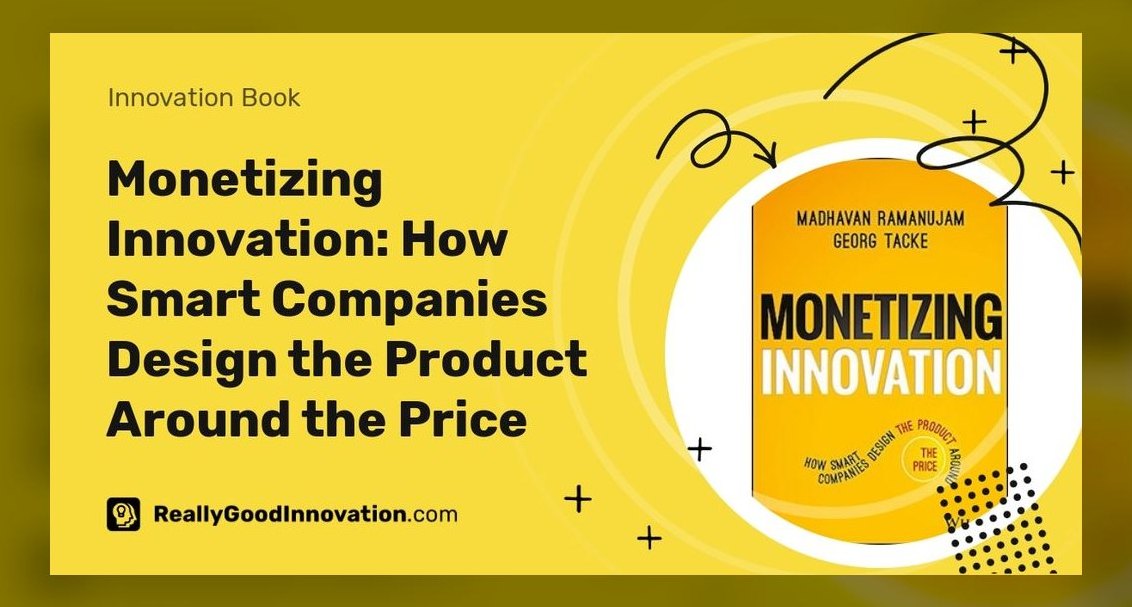 pulse-recentMonetizing Innovation by Madhavan Ramanujam — Top 10 Key Takeaways for Sales Leaders in 2027
 pulse-recentNever Split the Difference by Chris Voss — Top 10 Key Takeaways for Sales Leaders in 2027
 pulse-recentHow to Apply Strategic Selling — Step-by-Step Playbook in 2027
 pulse-recentHow I Raised Myself from Failure to Success in Selling by Frank Bettger — Top 10 Key Takeaways for Sales Leaders in 2027
 pulse-recentNever Lose a Customer Again by Joey Coleman — Top 10 Key Takeaways for Sales Leaders in 2027
 pulse-recentWhat is the first concrete step in The Sandler Rules by David Mattson for a sales leader to implement the system in 2027?
 pulse-recentWhat are the concrete steps to implement the Sandler Rules for Sales Leaders by David Mattson in 2027?
 pulse-recentHow do you implement the Sandler Rules by David Mattson in your first 30 days as a new sales manager in 2027?
 pulse-recentThe Transparency Sale by Todd Caponi — Top 10 Key Takeaways for Sales Leaders in 2027
 pulse-recentHyper Sales Growth by Jack Daly — Top 10 Key Takeaways for Sales Leaders in 2027