


The Trusted Advisor Fieldbook by Green and Howe — Cliff Notes Summary
Quality
Certified
The Trusted Advisor Fieldbook: A Comprehensive Toolkit for Leading with Trust by Charles H. Green and Andrea P. Howe (Wiley, 2011) is the practical companion to the trust framework Green co-developed with David Maister and Robert Galford in *The Trusted Advisor* (2000). The book's core premise: the Trust Equation — (Credibility + Reliability + Intimacy) / Self-Orientation — is not just theory; trust is built through specific, repeatable behaviors in every client conversation. Green and Howe wrote it because professionals kept asking "I understand the equation, but what do I actually *do* on Monday?" The Fieldbook answers with the Trust Quotient (TQ) self-test, the 14 Questions, a Difficult Conversations playbook, and the 5-Step Trust Roadmap (Engage / Listen / Frame / Envision / Commit). In the professional-services canon, it sits alongside *SPIN Selling*, *The Challenger Sale*, and *Never Split the Difference* as a tactical, exercise-driven manual. It remains the curriculum used by Trusted Advisor Associates to train partners at major consulting and accounting firms.
1Part One — The Trust Foundation (Chapters 1-4)
1.1 Chapter 1 — A Trust Primer
Green and Howe open with the Trust Equation: Trust = (Credibility + Reliability + Intimacy) / Self-Orientation. Credibility is words (what you say), Reliability is actions (what you do), Intimacy is safety (how you make people feel), and Self-Orientation is focus (whose interest is at the center). The denominator matters most — high self-orientation cancels every other variable. The authors establish the rest of the book as a tactical manual: "the Fieldbook turns the Trust Equation from theory into tactics."
1.2 Chapter 2 — Fundamental Truths
Five truths anchor the book: (1) trust requires risk-taking, (2) trust is personal, (3) trust is created in conversations, (4) trust takes time but moments matter most, (5) trust is reciprocal — you must extend it to receive it. The authors reference Stephen M.R. Covey's *The Speed of Trust* on the economic cost of low-trust environments and the Edelman Trust Barometer showing professional-service trust at all-time lows in the post-2008 financial crisis era.

1.3 Chapter 3 — The Trust Quotient (TQ) Self-Test
The TQ is Green's signature diagnostic: 20 questions scoring you 1-10 on each of the four equation variables. Sample items: "I am willing to put the client's interest above my own short-term gain" (Self-Orientation, reversed), "I follow through on every commitment, no matter how small" (Reliability), "I am willing to bring up difficult issues even when uncomfortable" (Intimacy). The test produces a TQ score 1-10. The TQ remains a free tool at trustedadvisor.com.
1.4 Chapter 4 — The Dynamics of Influence
Trust and influence are linked but not identical. The chapter walks through Robert Cialdini's six principles of influence (reciprocity, commitment, social proof, liking, authority, scarcity) and shows how each maps to the Trust Equation. Authority builds Credibility; reciprocity builds Intimacy; consistency builds Reliability. The authors warn: influence techniques without trust are manipulation.

2Part Two — The Trust Roadmap (Chapters 5-9)
2.1 Chapter 5 — Step One: Engage
"Earn the right to be heard." Engagement is not a pitch — it's a question that demonstrates you've already thought about the client's world. The script: *"I've been thinking about your business and I have a hypothesis I'd like to test with you — can I share it?"* This contrasts with the typical seller opener (*"Let me tell you about our capabilities"*), which signals high self-orientation and kills trust before the conversation starts.
2.2 Chapter 6 — Step Two: Listen
Listening "beyond words to feelings" is the chapter's mandate. The authors teach the "What I'm hearing is..." reflection technique — restating the client's statement with the emotional content named: *"What I'm hearing is that the board's pressure is making it hard to commit to a multi-year plan — is that right?"* This is the same labeling technique Chris Voss later popularized in *Never Split the Difference* (2016).
2.3 Chapter 7 — Step Three: Frame
Framing is "naming the issue, often the unspoken one." The chapter argues that the highest-leverage moment in any consultative conversation is when the advisor articulates the elephant in the room before the client does. Script: *"I sense there's a question behind the question — are you wondering whether your team can execute this without bringing in outside help?"* Framing requires Intimacy (willingness to risk discomfort) and low Self-Orientation.
2.4 Chapter 8 — Step Four: Envision
Envisioning is co-creating the future state. The advisor and client jointly describe what success looks like 12-24 months out. The authors warn against the consultant trap of presenting a fully-baked vision — the client did not co-author it, so they will not co-own it. The chapter teaches a whiteboard exercise: blank center, client speaks first, advisor adds only after the client has filled the page.
2.5 Chapter 9 — Step Five: Commit
Commitment is the agreement on action — and the chapter emphasizes that the smallest possible next step is almost always the right one. A first meeting should end with "I'll send a one-page memo by Friday" not "let's launch a six-month engagement." Small, reliable commitments compound into Reliability scores; oversized commitments that slip destroy trust faster than anything else.
3Part Three — The 14 Questions (Chapters 10-12)
3.1 Chapter 10 — The 14 Questions Catalog
Green's catalog of trust-building questions — the book's most-photocopied page. Representative sample: *"What would you like to be different a year from now?"* / *"What's the worst thing that could happen if we get this wrong?"* / *"Who else has a stake in this decision, and what do they care about?"* / *"What have you tried before that didn't work, and why?"* / *"If we were having this conversation a year from now, what would we be celebrating?"* The authors' instruction: "The 14 Questions work in any consultative conversation — memorize them."
3.2 Chapter 11 — When and How to Deploy Each Question
Not every question fits every moment. The chapter maps each of the 14 to the Trust Roadmap step it accelerates — *"What would you like to be different?"* is an Envision question; *"What have you tried that didn't work?"* is a Frame question. The chapter includes a wallet-card grid.
3.3 Chapter 12 — Questions That Backfire
A short chapter on what NOT to ask: leading questions (*"Don't you agree that..."*), trap questions (*"Why haven't you done X?"*), and budget-fishing questions early in the relationship (*"What's your budget for this?"*). Each backfire is explained through the Trust Equation — leading questions spike Self-Orientation; trap questions destroy Intimacy.
4Part Four — Difficult Conversations and Real-World Moments (Chapters 13-16)
4.1 Chapter 13 — The Difficult Conversations Playbook
"Difficult conversations are where trust is earned — or lost." The chapter provides verbatim scripts for the hardest moments in professional services: (1) price pushback, (2) lost deal post-mortem, (3) telling a client they're wrong, (4) admitting your firm made a mistake, (5) ethics conflict, (6) firing a bad-fit client, (7) negotiating scope creep. Each script follows a four-part structure: Name (the issue) → Normalize (it's hard to discuss) → Specify (what specifically) → Invite (their response).
4.2 Chapter 14 — Recovering From Trust Breaches
When trust breaks — missed deadline, leaked information, surprise invoice — the recovery formula is Acknowledge → Apologize (without qualifying) → Action plan → Ask. The chapter warns against the "sorry but..." trap that nullifies the apology.

4.3 Chapter 15 — Working With Difficult Clients
Some clients are not difficult — they are bad fits. The chapter teaches a diagnostic to distinguish the two: difficult clients respond to a Frame conversation; bad-fit clients do not. The authors give explicit scripts for firing a bad-fit client professionally.
4.4 Chapter 16 — Internal Trust (Trust Inside Your Own Firm)
The Trust Equation applies to colleagues, partners, and bosses, not just clients. The chapter argues that firms with low internal trust cannot deliver high external trust — clients sense the dysfunction. Specific exercises for partner meetings, team retrospectives, and 360 feedback rounds.
5Part Five — Building a Trust-Based Personal Brand (Chapters 17-19)
5.1 Chapter 17 — Trust-Aligned Content and Marketing
Personal brand is built by giving value away. The chapter teaches the "teach, don't pitch" content model — write the article that helps the prospect even if they never hire you.
5.2 Chapter 18 — Networking Without Self-Orientation
Networking events fail when attendees lead with self-orientation. The chapter teaches a four-question opener: *"What brought you here?"* → *"What are you working on that's interesting?"* → *"What's the hardest part of that?"* → *"Who else should I be asking about this?"*

5.3 Chapter 19 — Sustaining the Practice Over a Career
The final chapter: trust-based selling is a long-term compounding asset, not a quarterly tactic. Practitioners who run the Trust Roadmap on every conversation for a decade build referral networks that outlast firms, economies, and product cycles.
Frameworks at a Glance
- The Trust Equation — Trust = (Credibility + Reliability + Intimacy) / Self-Orientation
- The Trust Quotient (TQ) Self-Test — 20-item diagnostic scoring you 1-10 on each variable
- The 5-Step Trust Roadmap — Engage / Listen / Frame / Envision / Commit
- The 14 Questions — Green's catalog of trust-building questions for any consultative conversation
- The Difficult Conversations Four-Part Script — Name / Normalize / Specify / Invite
- The Trust Recovery Formula — Acknowledge / Apologize / Action plan / Ask
- The "Teach, Don't Pitch" Content Model — give value away to build trust-based personal brand
- The Networking Four-Question Opener — flips self-orientation by asking, not telling
What Holds Up, What Has Aged
What holds up. The Trust Equation is one of the most durable frameworks in professional services — 15 years later it is still taught at major consulting and accounting firms. The 14 Questions catalog remains in widespread use; many enterprise reps memorize it. The Difficult Conversations playbook has been adopted by consultative-selling training organizations. Trusted Advisor Associates still runs the same workshops.
What has aged. The 2011-era marketing chapters predate LinkedIn-as-pipeline, podcast-as-content, and AI-generated thought leadership — practitioners now layer those channels on top of Green's "teach, don't pitch" model. The TQ self-test is paper-based; modern call-intelligence platforms can score Trust Equation components from actual call audio. The book also predates the rise of asynchronous-first relationships — Loom videos, Slack Connect, async commit threads.
FAQ
Who should read The Trusted Advisor Fieldbook? Anyone in professional services — consultants, accountants, lawyers, wealth advisors, agency leaders, enterprise sales reps with complex deal sizes — where the relationship is the product and trust is the competitive advantage.
Is the Fieldbook a standalone read, or do I need The Trusted Advisor first? It is designed as a standalone tactical manual but assumes familiarity with the Trust Equation. Read The Trusted Advisor (Maister, Green, Galford 2000) for the theory, then the Fieldbook for daily practice.
What is the Trust Quotient (TQ) and where can I take it? A 20-item self-assessment scoring you 1-10 on each of the four Trust Equation variables. The free version lives at trustedadvisor.com.
What are the 14 Questions and why do they matter? Green's catalog of trust-building questions designed to surface the client's real concerns, fears, and ambitions. They work in any consultative conversation and are the single most-photocopied page of the book.
How does the Fieldbook differ from The Challenger Sale? Challenger teaches reps to push prospects with insight; the Fieldbook teaches advisors to earn the right to be heard first. Both work — Challenger fits transactional-to-complex B2B sales, the Fieldbook fits relationship-driven professional services where engagements span years.
What is the single highest-leverage exercise in the book? The TQ self-test scored honestly, followed by deliberate practice on the lowest-scoring variable for 90 days. Most professionals discover they over-index on Credibility and under-index on Intimacy — fixing that imbalance unlocks more pipeline than any new outbound tactic.
Bottom Line
If you sell, advise, or lead in any business where the relationship outlasts the transaction, The Trusted Advisor Fieldbook is the tactical manual you keep on your desk. Monday morning: take the TQ self-test honestly, memorize the 14 Questions, and run the 5-step Roadmap on your next three client conversations. It is the operating manual for the Trust Equation — and the book that turns a competent professional into a trusted advisor.
Related on PULSE
- The Trusted Advisor by Maister, Green & Galford — Cliff Notes Summary
- Trust-Based Selling by Charles Green — Cliff Notes Summary
- The SPIN Selling Fieldbook — Cliff Notes Summary
- Never Split the Difference by Chris Voss — Cliff Notes Summary
Sources
- Charles H. Green and Andrea P. Howe — *The Trusted Advisor Fieldbook: A Comprehensive Toolkit for Leading with Trust* (Wiley, 2011)
- David H. Maister, Charles H. Green, Robert M. Galford — *The Trusted Advisor* (Free Press, 2000)
- Stephen M.R. Covey — *The Speed of Trust* (Free Press, 2006)
- Robert Cialdini — *Influence: The Psychology of Persuasion* (HarperCollins, 1984)
- Chris Voss — *Never Split the Difference* (HarperBusiness, 2016)
- Matthew Dixon and Brent Adamson — *The Challenger Sale* (Portfolio, 2011)
- Neil Rackham — *SPIN Selling* (McGraw-Hill, 1988)
- Trusted Advisor Associates — https://trustedadvisor.com
- Edelman Trust Barometer — https://www.edelman.com/trust/trust-barometer
- https://hbr.org/
- https://www.mckinsey.com/
- https://www.gartner.com/
This page will be disappearing soon. Save it to your device for $1 — or read it free while it is here.
@Kory-White- · if Venmo asks, the last 4 of my number are 2012
This page is gone.
This one is off the shelf now. $1 keeps it on your phone for good — the whole page, pictures and diagrams included.
 pulse-recentWhat are the seven concrete steps to implement the Sandler Submarine technique from The Sandler Rules in 2027?
 pulse-recentConceptual Selling by Robert Miller and Stephen Heiman — Top 10 Key Takeaways for Sales Leaders in 2027
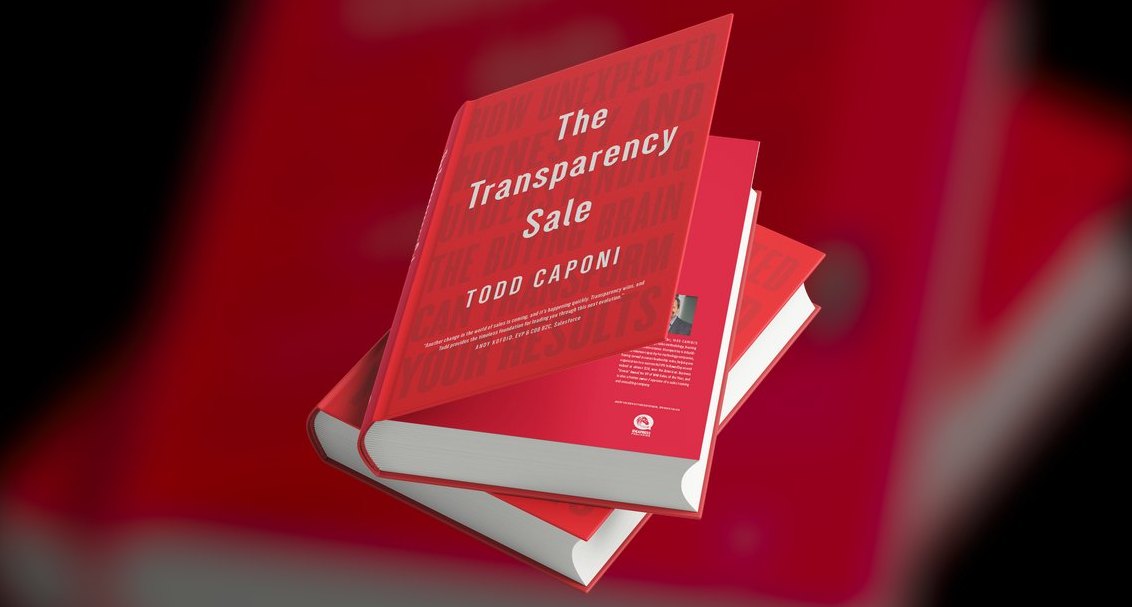 pulse-recentThe Transparency Sale by Todd Caponi — Top 10 Key Takeaways for Sales Leaders in 2027
 book-summaryLittle Red Book of Selling by Jeffrey Gitomer — Cliff Notes Summary
 pulse-recentWhat is the second concrete step in Strategic Selling by Miller Heiman for identifying a sales coach in 2027?
 pulse-recentWhat is the first concrete step in SPIN Selling by Neil Rackham for structuring a discovery call in 2027?
 pulse-recentWhat are the first three concrete steps in Sandler Rule #1 for a new sales rep in 2027?
 pulse-recentCrossing the Chasm by Geoffrey Moore — Top 10 Key Takeaways for Sales Leaders in 2027
 pulse-recentSales EQ by Jeb Blount — Top 10 Key Takeaways for Sales Leaders in 2027
 pulse-recentSPIN Selling by Neil Rackham — Top 10 Key Takeaways for Sales Leaders in 2027