


The Everything Store by Brad Stone — Cliff Notes Summary
Quality
Certified
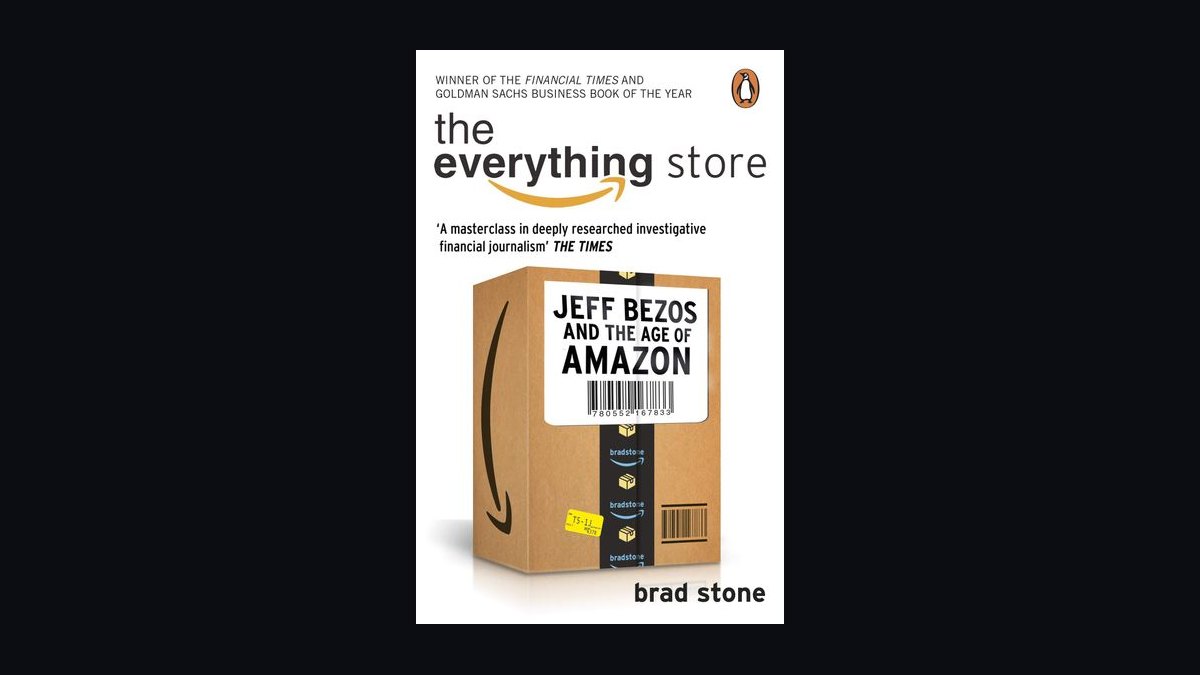
*The Everything Store* by Brad Stone is the definitive journalistic biography of Amazon's rise from a 1994 garage startup to a global retail and cloud empire, built on 300+ interviews and unprecedented access. Stone's core argument is that Amazon's success stems from a disciplined operating system—Day 1 mentality, customer obsession, long-term thinking, and the 14 Leadership Principles—rather than luck or market timing alone.
The Founding Scenario That Frames the Whole Story
To grasp what Stone documents, you need to see the decision point that started everything. In 1994, Jeff Bezos was 30 years old and already the youngest senior vice president at D.E. Shaw, a quantitative hedge fund on Wall Street. His boss, David Shaw, tasked him with investigating commercial opportunities on the emerging internet. Bezos built a spreadsheet ranking the top 20 mail-order product categories by their suitability for online sales. Books won decisively because the math was stark: roughly 3 million titles were in print globally, while even the largest physical superstore could stock only about 175,000. No physical store could ever match that selection, and no logistics network existed yet to deliver it—which meant the opportunity was wide open.
David Shaw declined to pursue the idea, and Bezos made the famous decision to leave. He told his wife MacKenzie they were driving to Seattle—chosen partly because it was close to the Ingram book distribution warehouse in Oregon and partly because Washington State had a smaller population base for sales tax purposes. He incorporated the company as "Cadabra, Inc." in July 1994, but changed the name within months when his lawyer kept mishearing it as "cadaver." The name Amazon, inspired by the river that dwarfs all others, signaled his ambition to build something that would dwarf every bookstore on Earth.
Stone's reporting on this founding period matters because it establishes the pattern he returns to throughout the book: Bezos does not invent new categories of behavior; he applies rigorous, quantifiable analysis to existing markets and then commits with unusual stubbornness. The spreadsheet was not a gimmick—it was the first instance of what would become Amazon's signature move of working backwards from customer need to operational design.

How the Operating Mechanism Actually Works
The engine Stone documents is not a single innovation but a loop of interlocking practices that reinforce each other. The loop starts with customer signal, flows through structured decision-making, and returns to customer signal through iteration.
The 6-page memo is the load-bearing wall of this system. PowerPoint was banned company-wide in 2004 because Bezos believed bullet points let people hide fuzzy thinking behind fragments. A narrative memo forces complete sentences, which force falsifiable claims, which force the author to actually know what they are talking about. Every meeting begins with 30 minutes of silent reading—no talking, no interrupting, just everyone absorbing the document. Only after the silent read does discussion begin, and the discussion is gated on the content of the memo rather than on whoever talks loudest.
Working backwards from a press release is the second pillar. Before any new product or feature gets built, a team must draft the press release that would announce it. The press release must describe the customer problem, the solution, and the customer benefit in plain language. If the team cannot write a compelling press release, the product does not get built. This forces customer-centric thinking before any engineering resources are committed.
The 2-pizza team rule keeps the loop fast. No team should be larger than what two pizzas can feed—roughly 6 to 10 people. This limits communication overhead, forces ownership, and makes bias for action possible. Larger teams spend more time coordinating and less time shipping.
The question-mark email closes the loop. Any customer complaint can be forwarded internally with a single "?" in the subject line. That email lands in a director's inbox at 6 AM and triggers a full-scale escalation that day. The director must identify the root cause, fix it, and report back. This mechanism turns customer obsession from a poster on the wall into an actual operating practice with teeth.
Real Numbers, Ranges, and Benchmarks
Stone's reporting is dense with specific figures that give the operating system its texture. The 1997 IPO valued Amazon at $438 million—modest by today's standards but significant for a money-losing online bookstore. The first shareholder letter that year codified the long-term doctrine: "It's all about the long term." Bezos reattached that letter to every annual shareholder letter for the next 24 years, a consistency that Stone argues is not sentimental but strategic.
The hyper-growth crisis of 1999-2001 nearly destroyed the company. Amazon raised $672 million in convertible bonds right before the market turned, and the warehouses were in chaos. The Fernley, Nevada distribution center was so disorganized that workers could not find products to ship. The Pets.com, Kozmo, and Living.com acquisitions were disasters that burned hundreds of millions. Stone documents the internal nickname for billion-dollar losses: "milliravi"—a Bezos coinage combining "milli" (one one-thousandth) with "Ravi" (Ravi Suri, the finance executive who first saw the projected loss). The 2000-2001 crash forced the first layoffs and the first real cost discipline.
The 2002 API Mandate is the most consequential technical decision Stone documents. Bezos issued a one-page memo decreeing that every team must expose its data and functionality through service interfaces, that there would be no other form of interprocess communication allowed, and that anyone who did not comply would be fired. The closing line was "Thank you; have a nice day!" This mandate made every Amazon team a service team, which made the entire company API-shaped, which made Amazon Web Services trivially extractable as a product four years later.
AWS launched in 2006 with S3 (Simple Storage Service) in March and EC2 (Elastic Compute Cloud) in August. Stone corrects the myth that AWS was built from "spare capacity"—Andy Jassy later clarified that it was a deliberate bet rooted in the API mandate and a 2003 retreat at Bezos's house where the team agreed Amazon's core competency was running scalable, reliable, low-margin services. Jassy wrote the original AWS narrative memo. Within five years AWS was generating $1 billion in revenue; by 2015 it was the most profitable segment of the company.
The Kindle launched in November 2007 at $399 with 90,000 titles available on day one. The internal code name was Fiona. The goal, as Bezos told the hardware team, was to "build a device so good you forget it's there"—the screen should disappear and only the book remain. The cultural blow-up between Steve Kessel's Kindle team and the legacy retail team was resolved with Bezos's response: "Yes, that's exactly the point. Better that we do it than someone else." This is Stone's purest distillation of self-cannibalization as a strategy.
By 2010 Amazon had 33,700 employees and $34 billion in revenue. The third-party Marketplace had grown to 40% of unit sales. Amazon absorbed Zappos for $1.2 billion and Quidsi/Diapers.com for $545 million after a brutal price war. Stone's reporting on the Quidsi takedown—Amazon losing $100 million or more in three months specifically to bleed Diapers.com out—became the most cited evidence in later antitrust hearings, including the FTC's 2023 complaint.
Stone closes the book in 2013 with Amazon at $74 billion in revenue and 88,000 employees, with Bezos quietly buying The Washington Post for $250 million. The trajectory since has been staggering: by 2024, Amazon was at $638 billion in revenue and 1.5 million employees, with AWS generating most of the operating profit.
Trade-Offs and Alternatives
The Amazon operating system is not free. Stone documents the costs alongside the benefits, and the trade-offs are essential for anyone trying to adopt pieces of this system.
The 6-page memo is a genuine tax on every meeting. Writing a good narrative memo takes hours, not minutes. The 30-minute silent read consumes time that other companies spend talking. But Stone's reporting suggests the tax pays for itself: the meetings are shorter overall because the discussion starts from a shared understanding, and the quality of decisions is higher because the memos force people to commit to specific claims.
The 2-pizza team rule creates duplication. Different teams build similar tools because they do not coordinate. This is inefficient in the short term, but Stone argues it is intentional: duplication is the price of ownership. Teams that own their full stack make faster decisions and feel accountable for outcomes rather than inputs.
Customer obsession has a dark side that Stone does not flinch from. The relentless focus on the customer becomes relentless pressure on vendors and sellers. Amazon's negotiation tactics with publishers and suppliers are documented in detail, and the Quidsi price war shows how customer obsession can become predatory pricing. The FTC's 2023 antitrust complaint cites exactly these behaviors.
Long-term thinking means accepting years of losses. Amazon did not generate meaningful profits until the mid-2010s. This works when you have patient capital and a founder who can hold the line, but it is not a model most public companies can replicate. The alternative—short-term profit focus—keeps investors happy but makes bets like AWS and Kindle impossible.
The main alternative to the Amazon system is the traditional top-down strategy: executives decide the roadmap, allocate resources, and track execution. This works for stable markets but struggles with the kind of rapid iteration Amazon needs. Stone's reporting suggests that Amazon's system is not better in every dimension—it is better specifically for markets where customer needs are changing fast and where speed of iteration matters more than coordination efficiency.
Common Pitfalls and How to Avoid Them
Companies that try to adopt Amazon's practices often fail because they copy the artifacts without the underlying logic. Stone's reporting surfaces several recurring mistakes.
The first pitfall is adopting the 6-page memo without the silent reading. Many companies require narrative memos but let people skim them at their desks before the meeting. This destroys the shared context that makes the discussion productive. The fix is to enforce the 30-minute silent read at the start of every meeting, with no devices and no side conversations. This is uncomfortable at first, but it forces everyone to actually engage with the material.
The second pitfall is applying the 2-pizza team rule without the ownership that makes it work. A small team that still needs approval from five layers of management is not a 2-pizza team—it is a small team with a big bottleneck. The rule only works when the team has the authority to ship its own work. The fix is to pair team size reduction with delegation of actual decision rights.
The third pitfall is using working backwards from a press release as a documentation exercise rather than a gating mechanism. If the press release is written after the product is built, it is marketing copy, not a decision tool. The fix is to make the press release the first artifact, before any code is written, and to kill projects whose press release does not convince an independent reader.
The fourth pitfall is treating the question-mark email as a customer service escalation rather than a strategic signal. The point is not to resolve the individual complaint—it is to identify systemic defects. The fix is to track question-mark emails by root cause category and to treat recurring categories as product backlog items.
The fifth pitfall is importing the 14 Leadership Principles as posters on the wall without using them in hiring and promotion decisions. At Amazon, the principles are enforced through bar raisers in every interview loop and through promotion committees that evaluate candidates against the principles. The fix is to make the principles a real gate: no hire, no promotion, no performance rating without an explicit assessment against them.
The sixth pitfall is copying the frugality without understanding its purpose. Amazon's frugality is not about being cheap—it is about forcing resource constraints that lead to creative solutions. The fix is to ask, before adding headcount or budget, what constraint would force a simpler approach.
Related questions
How did the 2002 API Mandate make Amazon Web Services possible?
The API mandate required every team to expose data and functionality through service interfaces, making the entire company API-shaped. This meant Amazon's infrastructure was already service-oriented, so extracting AWS as a standalone product was a natural extension rather than a new architecture.
What is the difference between The Everything Store and Working Backwards?
Stone's book is an outside journalist's biography; Bryar and Carr's is an inside operator's manual. Stone tells the story; Bryar and Carr explain the mechanics. Read Stone first for context, then Bryar and Carr for implementation guidance.
Did Jeff Bezos cooperate with Brad Stone on the book?

Reluctantly. Bezos sat for interviews, but his then-wife MacKenzie Scott wrote a hostile 1-star Amazon review in 2013 contesting specific scenes about Bezos's biological father. Stone's reporting draws from 300+ interviews with employees, ex-employees, family, and rivals.
What is the single most important chapter for a sales leader?
Chapter 6 covering the 2002 API Mandate. The logic applies directly to sales: every team should expose its work as a service with clear inputs, outputs, and SLAs. This is the deepest reason Amazon scales linearly while most companies bog down.
FAQ
What is The Everything Store about in one sentence?
It is the definitive journalistic account of how Jeff Bezos built Amazon from a 1994 online bookstore into a retail and cloud empire, and the operating system—Day 1 mentality, customer obsession, 6-page memos, 2-pizza teams—that made the scaling possible.
Is The Everything Store the same as Working Backwards?
No. Stone is a journalist writing an outside biography; Colin Bryar and Bill Carr were Amazon insiders writing an operator's manual. Stone tells the story of what happened; Bryar and Carr explain how to implement the practices. They are complementary, not substitutes.
What are the 14 Leadership Principles Stone documents?
Customer Obsession, Ownership, Invent and Simplify, Are Right A Lot, Learn and Be Curious, Hire and Develop the Best, Insist on the Highest Standards, Think Big, Bias for Action, Frugality, Earn Trust, Dive Deep, Have Backbone—Disagree and Commit, and Deliver Results. Amazon has since expanded to 16 principles.
Why did Bezos ban PowerPoint?
Because bullet points let people hide fuzzy thinking behind fragments. A 6-page narrative memo forces complete sentences, which force falsifiable claims, which force the author to actually know what they are talking about. The ban happened in 2004.
What is the question-mark email mechanism?
Any customer complaint can be forwarded internally with a single "?" in the subject line. It lands in a director's inbox at 6 AM and triggers a full-scale escalation that day. The director must find the root cause, fix it, and report back.
Should sales leaders adopt the 6-page memo for QBRs?
Yes. Replace the standard QBR PowerPoint with a 6-page narrative covering pipeline, named-account risk, forecast confidence, and asks. Enforce the 30-minute silent read at the start of the meeting. The discussion will gate on actual data rather than slide animation.
Sources
- Brad Stone — *The Everything Store: Jeff Bezos and the Age of Amazon* (Little, Brown, 2013)
- Brad Stone — *Amazon Unbound: Jeff Bezos and the Invention of a Global Empire* (Simon & Schuster, 2021)
- Colin Bryar and Bill Carr — *Working Backwards: Insights, Stories, and Secrets from Inside Amazon* (St. Martin's Press, 2021)
- Sam Walton with John Huey — *Made in America: My Story* (Doubleday, 1992)
- Jeff Bezos — Annual Letters to Shareholders 1997-2020 (Amazon Investor Relations)
- Steve Yegge — *Stevey's Google Platforms Rant* (October 2011)
- Federal Trade Commission v. Amazon.com, Inc. — antitrust complaint (September 2023)
- MacKenzie Scott — public 1-star Amazon review of *The Everything Store* (November 2013)
- Amazon Leadership Principles — official Amazon corporate publication
- *Harvard Business Review* — "The Institutional Yes: An Interview with Jeff Bezos" (October 2007)
Related on PULSE
This page will be disappearing soon. Save it to your device for $1 — or read it free while it is here.
@Kory-White- · if Venmo asks, the last 4 of my number are 2012
This page is gone.
This one is off the shelf now. $1 keeps it on your phone for good — the whole page, pictures and diagrams included.
 pulse-recentThe Customer Success Professional’s Handbook by Ashvin Vaidyanathan — Top 10 Key Takeaways for Sales Leaders in 2027
 pulse-recentWhat are the first three concrete steps in Sandler Rule #1 for a new sales rep in 2027?
 pulse-recentWhat are the concrete steps in Strategic Selling for building a sales plan in 2027?
 pulse-recentTraction by Gabriel Weinberg and Justin Mares — Top 10 Key Takeaways for Sales Leaders in 2027
 pulse-recentThe Transparency Sale by Todd Caponi — Top 10 Key Takeaways for Sales Leaders in 2027
 pulse-recentHow do you implement the Sandler Rules in your first 30 days as a new sales rep in 2027?
 pulse-recentWhat is the Blue Sheet from Strategic Selling by Miller Heiman and how do you fill it out in 2027?
 pulse-recentThe Sandler Rules by David Sandler — Top 10 Key Takeaways for Sales Leaders in 2027
 pulse-recentBlue Ocean Strategy by W. Chan Kim and Renee Mauborgne — Top 10 Key Takeaways for Sales Leaders in 2027
 pulse-booksRework by Jason Fried and David Heinemeier Hansson — Cliff Notes Summary