


Elite Sales Strategies — Cliff Notes Summary
Quality
Certified

*Elite Sales Strategies* (Wiley, 2022) by Anthony Iannarino argues that modern B2B sellers win by being One-Up — knowing more than the buyer about the specific decision the buyer is making, then spending that information gap as currency. Its core claim: the sales conversation itself creates value, and the rep's obligation is a recommendation, not a pitch.
One-Up versus One-Down: the two postures the book compares
The entire book pivots on a binary Iannarino sets up in chapter one, and understanding that binary is what makes the rest of the framework legible. Every rep, in every conversation, occupies one of two positions relative to the buyer: One-Up or One-Down. These are not personality traits or seniority markers. They are situational, decision-specific, and they can flip inside a single meeting.
The One-Down posture is the default state of the legacy script. The rep arrives without a point of view, opens with "tell me about your business," gathers facts so they can assemble a pitch later, and treats the buyer's stated requirements as the specification to be met. The rep is reactive. The information flows one direction — from buyer to seller — and the buyer walks away with nothing they did not already have. Iannarino calls this posture a legacy laggard approach, and his sharpest observation is that the modern buyer *reads* generic discovery as evidence the rep did not prepare. The downgrade happens in the first four minutes, before the rep has said anything substantive.
The One-Up posture inverts the flow. The rep arrives already knowing what companies in this situation typically get wrong, what the second-order costs of the buyer's current approach are, and what they would recommend even if their own product were not in the picture. Discovery still happens, but its purpose changes: it is no longer fact-gathering, it is hypothesis testing. The rep brings a diagnosis and asks the buyer to confirm, refine, or refute it. The buyer leaves the meeting understanding their own situation better than when they walked in — which is the only durable reason a busy executive takes a second meeting.

The comparison matters because most sales books present a single method and assume adoption. Iannarino presents a *state* and asks you to diagnose which one you are in. That is a meaningfully different demand. A twenty-five-year veteran who just moved into a new category is One-Down on day one. A rep eighteen months into a narrow vertical, who has run thirty cycles and logged the post-mortems, can be One-Up against a buyer with three decades of tenure — because the buyer has run this decision *once*, and the rep has watched forty companies run it.
That asymmetry is the second comparison the book draws, and it is the load-bearing one: information disparity. The buyer purchases your category roughly once every three to seven years. You transact in it every working day. Iannarino's position is that hoarding that disparity makes you a vendor, and spending it makes you a consultant. The two postures are simply what you look like on either side of that choice.
A useful third comparison the book gestures at without fully developing: product knowledge versus decision knowledge. Most enablement programs certify reps on the former — feature matrices, competitive battle cards, objection scripts. Iannarino's claim is that product knowledge is table stakes and increasingly commoditized, because the buyer can extract it from your website, a G2 grid, or an AI research agent in about ninety seconds. Decision knowledge — what happens to a company in month seven of this kind of transition, which stakeholder always blocks late, what the realistic implementation drag looks like — is not published anywhere and cannot be scraped. It lives in the rep's accumulated pattern memory. That is the asset the book tells you to build.
How to decide which posture you actually hold

Self-assessment is where most readers get this wrong, because being One-Up *feels* like confidence, and confidence is cheap. Iannarino's implicit test is more demanding: can you tell the buyer something about their own decision that they cannot get from their internal team, their peer network, or thirty minutes of research? If the answer is a Gartner statistic from your marketing deck, you are One-Down wearing a One-Up costume. A published benchmark is table stakes. A *point of view* about what this specific company should do, why, and what it costs them to wait — that is insight.
The practical decision tree runs through four checkpoints before a meeting, and the honest answer at each one tells you which posture you are entering with.
The fourth checkpoint — *would I give the same advice if we sold nothing?* — is the one that does real work. It is the difference between a consultant and a well-rehearsed vendor. If your recommendation always terminates in your own product, the buyer's committee will detect that pattern by the third conversation, and everything you said retroactively becomes marketing.
There is a second decision the book forces, which is whether this framework fits your motion at all. *Elite Sales Strategies* is built for complex B2B: six-figure annual contract value, multi-stakeholder committees, cycles measured in months. If you sell a hundred-dollar-a-month SaaS product with a two-call cycle and a self-serve trial, the framework is overweight — the preparation cost per conversation exceeds the deal value, and the buyer does not want a consultative diagnosis, they want a working signup flow. Iannarino does not say this explicitly enough, and it is the most common misapplication. The decision rule is roughly: if the cost of preparing a genuine point of view exceeds a meaningful fraction of the expected deal margin, run a lighter motion.

The adjacent question this raises — and one worth thinking through for anyone running enablement — is who on the team should be held to the One-Up standard. In practice it is rarely uniform. An SDR booking first meetings cannot be One-Up on decision specifics across forty accounts; their job is relevance and pattern-matched triggers. A senior AE on a named-account list absolutely can and should be. A solutions engineer is often the most One-Up person in the room and the least likely to be given permission to say so. Deciding where in the org chart the obligation lands is a real design choice, and it changes hiring profiles, ramp length, and territory size.
The numbers behind each posture — cycle length, ramp, and the cost of preparation
Iannarino writes in principles rather than benchmarks, which is a genuine limitation of the book. But the operational math is inferable, and thinking about it in numbers is what turns the framework from a philosophy into a resourcing decision.
Ramp cost. The book's most concrete prescription is a 180-day curriculum for reps who start One-Down: roughly 30 days of industry immersion, 60 days building a recommendation library, and 90 days of supervised live conversations with structured feedback. That is a real number and it collides with the ramp expectations most sales orgs actually run, which frequently assume productive pipeline generation inside 60 to 90 days. If you adopt the One-Up standard honestly, you are extending time-to-first-deal, and someone in finance has to agree to that. The trade is a longer ramp against a higher conversion rate and larger deals once ramped — a trade that pencils out at high ACV and does not at low ACV.
Preparation cost per conversation. Building a genuine point of view on a specific account — reading the 10-K, pulling two earnings transcripts, scanning the trade press for the sector, and reconciling it against your own deal post-mortems — is realistically a two-to-four hour exercise the first time you touch an industry, and thirty to sixty minutes per account after that, once the pattern library exists. This is why the framework is territory-shape dependent. A rep with 400 accounts cannot do it. A rep with 30 named accounts can do it for every single one. If leadership wants One-Up behavior, the lever is not a training day, it is shrinking the patch.

Recommendation library size. Iannarino suggests reps maintain a personal vault of roughly 30 to 40 reusable recommendations, indexed by buyer persona and trigger event. That number is a useful anchor. Below about fifteen, you do not have coverage — you will hit situations you have no view on. Above roughly fifty, maintenance overhead exceeds retrieval value and entries go stale. The medium matters less than the discipline; reps have built these in Notion, Obsidian, Coda, or a shared doc, and the tooling has churned constantly since 2022 while the practice has not changed at all.
The vantage ratio. The book's most quotable asymmetry: the rep has watched dozens of companies attempt the transition the buyer is facing; the buyer has attempted it once. But that ratio is not automatic — it only accrues if the rep logs what happened. A rep who runs forty cycles and never writes a post-mortem on a loss has forty experiences and roughly one unit of transferable pattern memory. This is the single highest-leverage habit in the entire book and it takes about fifteen minutes per closed deal: what did we believe going in, what was actually true, who blocked and why, what would I tell the next buyer in this situation. Do it for a year and you have an asset no competitor and no research tool can replicate.
Status quo as the real competitor. Iannarino repeatedly makes the point that "do nothing" wins more deals than any named competitor. Anyone who has run closed-lost analysis in a CRM has seen this — the "no decision" bucket routinely rivals or exceeds the losses to any single vendor. The strategic consequence is that time spent on feature-parity battle cards is often misallocated. The higher-return investment is building the case that inaction is the most expensive option on the table, which is an entirely different artifact: a cost-of-delay model, not a comparison grid.

Committee size. This is where the book has aged least well. Its framework leans on a single strong champion, and enterprise buying committees have kept growing — analyst coverage since the book's 2022 publication has consistently pushed the average committee count upward into the low double digits. A single-champion model under-resources the reality. The practical adjustment: assume you need three or four internal advocates carrying the same story, and treat champion enablement as a repeatable asset-production exercise rather than a relationship with one person.
Implementation: sequencing the shift without breaking pipeline
The failure mode when a team adopts this book is a wholesale motion change announced at a kickoff, followed by three months of degraded activity metrics and a quiet reversion. Sequencing matters more than enthusiasm. What follows is a practical order of operations that keeps pipeline alive while the capability builds.
Start with the post-mortem habit, not the conversation change. It is the cheapest input and it compounds. Institute a fifteen-minute structured debrief on every closed deal, won or lost, with four fixed fields: what we believed, what was true, who blocked and why, what I'd tell the next buyer. Do nothing else for the first month. You are building the raw material that every later step draws on, and it costs no selling time.
Then build the recommendation library from what you already know. Pull the recurring problems out of those debriefs and write a point of view on each — observation, implication, recommendation, trade-off. Iannarino's four-part structure is the format, and the trade-off line is the part everyone skips. "This will cost you a quarter of operational disruption" is what separates a consultant from an optimist. A recommendation with no stated cost reads as a pitch, because pitches never have costs.

Then change the opening, not the whole conversation. Replace "tell me about your business" with a stated hypothesis: *here is what we typically see at companies your size making this move, here is what usually goes wrong, does that match your situation?* This is a small surface-area change with a large signal change, and it is reversible if it lands badly. Reps adopt it far more readily than a whole new methodology.
Then introduce triangulation on competitive deals. Rather than attacking rivals — which makes you look small — or refusing to discuss them — which reads as evasive — lay out the three credible approaches a buyer could take, characterize each by the *type of company* it suits, and let the buyer self-select. Done honestly, including cases where you name the situation in which you are the wrong choice, this is the single most trust-generating move in the book. It also quietly reframes a feature bake-off into a fit conversation, which is a much better game to be playing.
Then work on the disagreement muscle. This is last because it is hardest and because it fails badly if attempted without the preceding groundwork. Iannarino's position is unusually strong here: refusing to disagree with a buyer who is about to make an expensive mistake is not politeness, it is a failure of the consultative obligation. But a rep with no post-mortem history and no recommendation library disagreeing with a CFO is just being difficult. Earn it in order.
The measurement problem. Do not instrument this with activity metrics, because the whole point is fewer and better conversations. Two leading indicators actually work: second-meeting conversion rate — did the buyer find the first conversation valuable enough to spend more time — and the no-decision rate, which is the direct scoreboard for whether you are beating the status quo. Both take a full cycle to move, which is why executive patience is the real prerequisite.
Champion enablement is the closing move. Iannarino's late-book pivot is easy to miss and it is arguably the most operationally valuable idea in the book: the rep who closes is not the rep who wins. The rep who wins is the one who arms the internal advocate with the language, the ROI arithmetic, and the slides to survive their own boardroom fight. Practically, that means producing a short internal-use document your champion can forward without you in the room — problem framing, options considered, why this one, what it costs, what happens if we wait. If your champion has to invent that themselves, most of them will lose.
Where the framework holds and where it has worn thin

What holds up, strongly. The information-disparity thesis is more true now than when the book was written. Widespread AI research tooling has commoditized the generic tier of information almost completely — a buyer can assemble a category overview, a vendor list, and a set of evaluation criteria in minutes. What that tooling cannot produce is operator-grade pattern memory tied to specific decisions at specific companies, because that knowledge was never written down anywhere to be trained on. It lives in reps' heads and in post-mortems. The gap between "generic information" and "decision-specific judgment" has widened, and the book's central bet was on the right side of it.
Also durable: the status-quo-as-primary-competitor framing, the observation → implication → recommendation → trade-off structure for giving advice, and selling-as-change-management. That last one — that closing is not winning, and helping the buyer survive their internal political fight is the actual job — is the idea most likely to change how a reader spends their week.
What has worn. The single-champion assumption, as noted, under-models modern committee dynamics. The book also predates the current wave of automated outbound and research tooling, which matters more than it first appears: when a machine can read the 10-K and summarize the earnings call, "read what your buyer reads" is table stakes rather than differentiation. The vantage advantage has to come disproportionately from lived deal post-mortems now, and Iannarino does not stress that hard enough because in 2022 he did not need to.

The book is also light on the procurement and legal end of the cycle. A rep can be perfectly One-Up through the entire evaluation and still lose forty days and eight points of margin in a procurement process they never planned for. That is a real gap in an otherwise thorough treatment.
How it sits against neighboring books. *Elite Sales Strategies* shares obvious DNA with *The Challenger Sale* — both argue for teaching over relationship-building — but Iannarino pushes further on the *ethical* obligation to push, framing it as something the rep owes the buyer rather than a technique that correlates with quota attainment. Read alongside Rackham's work on large-account strategy, it fills in the interpersonal layer that account-planning frameworks tend to leave abstract. And read against Bob Moesta's demand-side work, it makes an interesting contrast: Moesta says go find out what the buyer is struggling to make progress on; Iannarino says show up already knowing. Both are right at different points in the cycle, and a strong rep switches between the two postures deliberately rather than defaulting to one.
Who should read it. Carry a complex-cycle B2B quota, manage AEs at a scaling company, or advise sales orgs on retooling off feature-pitch — read it. Run a transactional or product-led motion — skim the chapters on advice-giving and skip the rest. The sharpest single takeaway, and a fair one-line Summary of the whole Anthony Iannarino argument: your job is not to close, it is to know more than the buyer about *this specific decision*, then spend that information as currency rather than hoarding it. Every tactic in *Elite Sales Strategies* is downstream of that one strategy.
Related questions
Is this book a replacement for The Challenger Sale?
No — it is a companion. *The Challenger Sale* is largely a research-derived argument that teaching-oriented reps outperform. Iannarino assumes you accept that and focuses on *how* to build the knowledge that makes teaching credible, plus the ethical obligation to disagree with buyers.
Does the One-Up framework work for SDRs and BDRs?

Partially. An SDR cannot be decision-specific One-Up across hundreds of accounts. What transfers is relevance: opening with a pattern-matched observation rather than a generic value prop. Full One-Up preparation is an AE-and-above discipline because it requires a small named-account patch.
What is the fastest way to start if I only have one week?
Write post-mortems on your last ten closed deals using four fields: what you believed, what was true, who blocked, what you would tell the next buyer. That single exercise surfaces most of your existing pattern memory and costs under three hours.
How do you disagree with a buyer without losing the deal?
Anchor the disagreement in a peer outcome rather than an assertion. State what two comparable companies did, what it cost them, and ask what the buyer is doing differently. You are supplying evidence and letting them draw the conclusion, not pronouncing judgment.
Is triangulation just a soft way of trashing competitors?
Only if done dishonestly. Real triangulation names the situation in which a competing approach is genuinely the right call — including cases where you are the wrong fit. If every path in your triangulation ends at your product, buyers detect it and you lose the trust you were trying to build.
FAQ
What makes Elite Sales Strategies different from other sales books?
It rejects script-based selling and organizes everything around a single posture question: do you know more than the buyer about this specific decision? Rather than supplying discovery questions or closing techniques, it prescribes a curriculum for building the underlying knowledge, then a structure for spending it as advice.

Is the book only useful for enterprise B2B sales?
Primarily, yes. It targets complex, multi-stakeholder, multi-month cycles at meaningful contract values. The core idea — that an informed consultant beats a well-prepared vendor — generalizes, but the preparation cost per conversation makes it a poor fit for transactional or product-led motions.
Does the book give scripts or templates?
Deliberately not. It offers structures rather than scripts: the observation → implication → recommendation → trade-off shape for giving advice, the triangulation approach for competitive situations, and a 180-day curriculum for reps starting from a One-Down position. The wording is left to the reader.
How does the framework hold up now that buyers use AI research tools?
It holds up better, not worse. Automated research has commoditized generic category information, which widens the gap between what a buyer can look up and what an experienced operator has actually watched happen. The catch is that the rep's advantage now depends more on logged deal post-mortems than on reading alone.
How long does it take a team to actually implement this?
Iannarino's own prescription is 180 days for an individual rep starting One-Down. For a team, budget a full sales cycle before leading indicators move, and sequence the change — post-mortems first, recommendation library second, conversation changes third — rather than switching the motion all at once.
What is the weakest part of the book?
The single-champion assumption. Enterprise buying committees have grown well past what a one-advocate model handles, and the book also says little about procurement and legal, where otherwise well-run deals routinely lose time and margin. Supplement it with a committee-mapping practice.
Sources
- Elite Sales Strategies — Wiley publisher page
- Anthony Iannarino — The Sales Blog
- Elite Sales Strategies on Goodreads
- Elite Sales Strategies — O'Reilly Library listing
- Elite Sales Strategies — Barnes & Noble
- Porchlight Books — Elite Sales Strategies
- Anthony Iannarino on LinkedIn
- Gartner — B2B buying journey research
- Harvard Business Review — sales and selling topic hub
Related on PULSE
- The Advantage by Patrick Lencioni — Cliff Notes Summary for Sales Leaders
- Major Account Sales Strategy by Neil Rackham: Summary, Key Lessons, and RevOps Takeaways
- Demand-Side Sales 101 by Bob Moesta: Summary, Key Lessons, and RevOps Takeaways
- Cracking the Sales Management Code by Jason Jordan and Michelle Vazzana: Summary, Key Lessons, and RevOps Takeaways
- Founding Sales by Pete Kazanjy: Summary, Key Lessons, and RevOps Takeaways
- The Sales Bible — Cliff Notes Summary
This page will be disappearing soon. Save it to your device for $1 — or read it free while it is here.
@Kory-White- · if Venmo asks, the last 4 of my number are 2012
This page is gone.
This one is off the shelf now. $1 keeps it on your phone for good — the whole page, pictures and diagrams included.
 pulse-recentWhat is the first concrete step in The Sandler Rules by David Mattson for a sales leader to implement the system in 2027?
 pulse-recentThe Customer Success Professional’s Handbook by Ashvin Vaidyanathan — Top 10 Key Takeaways for Sales Leaders in 2027
 pulse-recentTraction by Gabriel Weinberg and Justin Mares — Top 10 Key Takeaways for Sales Leaders in 2027
 book-summaryMajor Account Sales Strategy by Neil Rackham: Summary, Key Lessons, and RevOps Takeaways
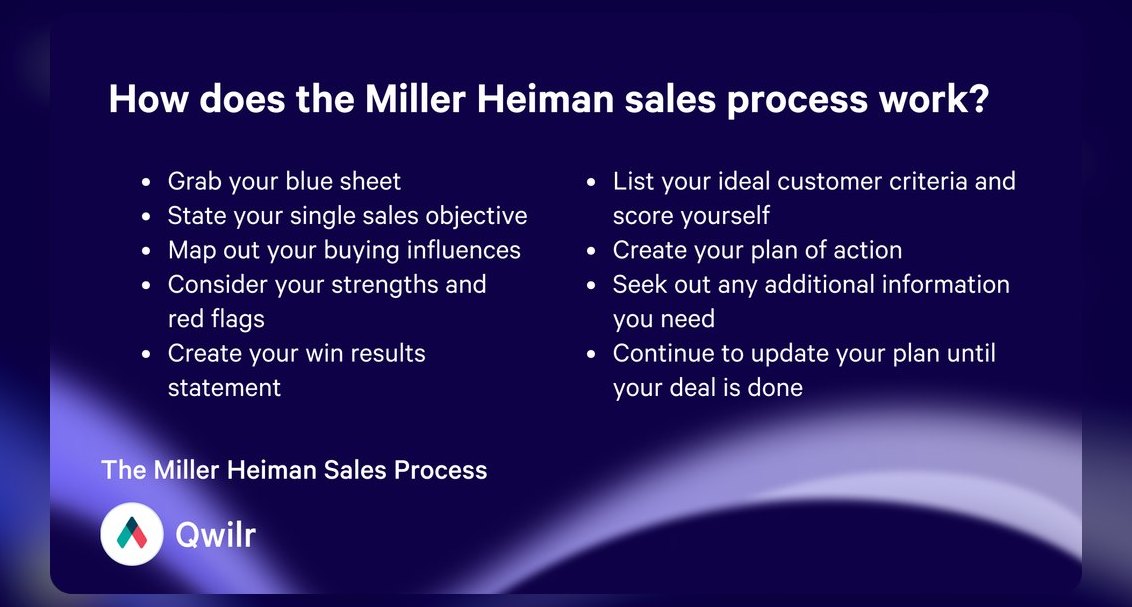 pulse-recentWhat is the step-by-step process for Strategic Selling by Miller Heiman in 2027?
 pulse-recentThe Closer’s Survival Guide by Grant Cardone — Top 10 Key Takeaways for Sales Leaders in 2027
 pulse-recentSelling Above and Below the Line by Skip Miller — Top 10 Key Takeaways for Sales Leaders in 2027
 pulse-recentStrategic Selling by Robert Miller and Stephen Heiman — Top 10 Key Takeaways for Sales Leaders in 2027
 pulse-recentWhat is the most actionable step in The Sandler Rules for Sales Leaders by David Mattson to improve discovery in 2027?
 pulse-recentSPIN Selling by Neil Rackham — Top 10 Key Takeaways for Sales Leaders in 2027