
Should I open or buy an Eggs Up Grill franchise in 2027?
 Curated byKory White · Fractional CRO · Maryland
 PULSEKNOWLEDGE LIBRARY
Quality
Certified

Buy an existing Eggs Up Grill only if you have $500,000 liquid and want cash flow in month four; open a new unit if you have SBA financing, a proven breakfast-demand site, and 12–18 months of patience. Total Item 7 investment runs roughly $500,000 to $900,000, franchise fee $35,000.
The 6 AM decision that frames the whole thing
A friend called in late 2026 with $420,000 liquid, a home-equity line he had not touched, and a signed non-binding letter of intent on a 3,100-square-foot end-cap in a Greenville, South Carolina strip center. He wanted to open an Eggs Up Grill. The landlord wanted an answer in eleven days. He had read the brand's marketing site, watched two founder interviews, and had not yet requested the Franchise Disclosure Document.
That is the actual shape of this decision for most people: a lease clock running faster than the diligence clock. And it is exactly backwards. The lease is the single most irreversible commitment in the entire deal — a ten-year triple-net obligation with a personal guarantee usually attached — and it is the one people sign first because it feels like momentum. The franchise agreement, the equipment package, the buildout contract: all of those follow the site. If the site is wrong, nothing downstream saves you.
What made his situation instructive is that he had two genuinely different paths available and did not know they were different. Path one: sign the lease, pay the $35,000 franchise fee, spend nine to fourteen months building out a shell into a full-service cafe, and open to zero customers on day one. Path two: call the franchisor's development team and ask which existing units in the Carolinas, Georgia, and Florida were listed for resale, then buy a unit that already had a Saturday morning line out the door.
Those paths have different capital requirements, different timelines, different risk profiles, and — critically — different failure modes. A new build fails slowly, bleeding six to nine months of negative cash flow while you build local awareness in a category where awareness comes from regulars, not advertising. An acquisition fails fast and loudly: you inherit a kitchen with deferred maintenance, a general manager who was loyal to the seller and quits in week three, and a customer base that notices the eggs taste different.
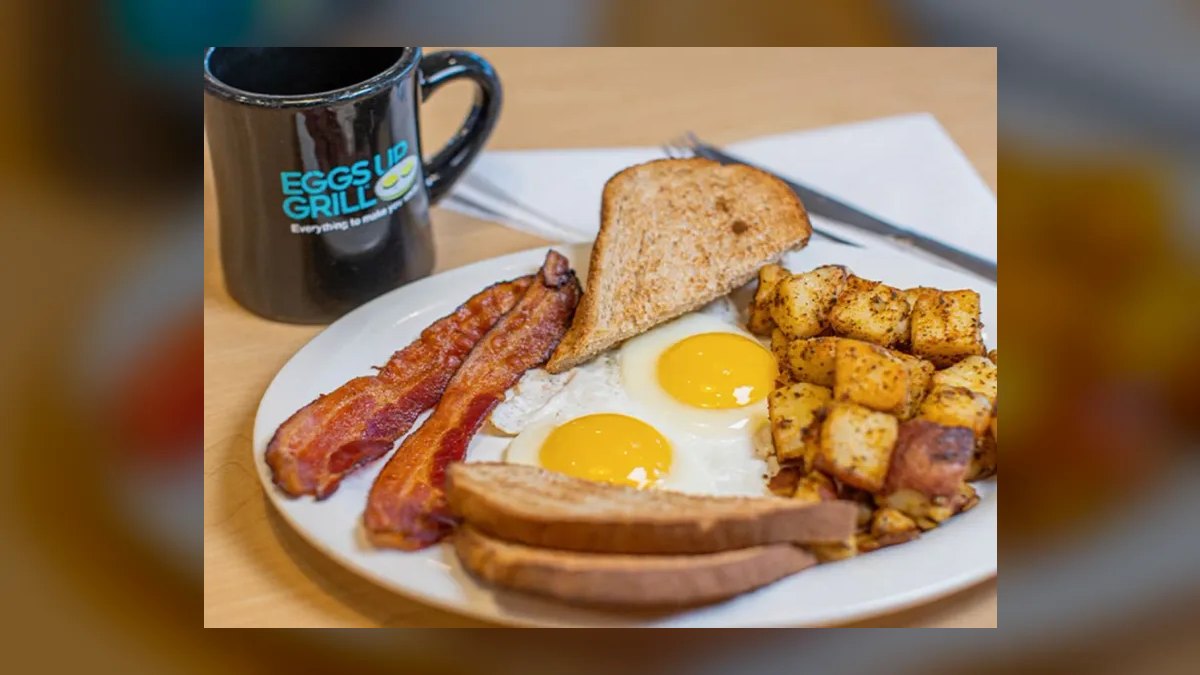
He also had a third option he had not considered, which was to do nothing in 2027 and spend the year working weekends in someone else's breakfast cafe. For a first-time restaurant operator, that option is frequently the highest-return use of twelve months. Eggs Up Grill is a full-service concept — servers, tickets, table turns, a cook line running eggs to order during a two-hour Saturday crush — not a counter-service model where the system carries an inexperienced owner. If you have never run a full-service floor at peak, the FDD numbers are a fantasy, because those numbers assume competent execution.
The framing question is not "open or buy." It is: what do I actually have — capital, operating skill, or time — and which of those three does each path consume most? New builds consume capital and time. Acquisitions consume capital and operating skill immediately, on day one, with no ramp. Waiting consumes time and builds skill. Answer that honestly and the eleven-day lease deadline stops feeling like a deadline.
How the money actually moves through a daytime-only cafe
The mechanism that makes or breaks an Eggs Up Grill franchise is compressed-daypart economics, and it behaves differently from every dinner concept you have seen modeled.
A dinner restaurant spreads revenue across roughly six operating hours and seven days with a modest weekend skew. A daytime-only breakfast and lunch cafe running approximately 6 AM to 2 PM does the opposite: it concentrates a large share of the week into a small number of hours. The concentration is the entire business model. It is why the labor lifestyle is better — nobody closes at midnight — and it is simultaneously the source of every operational failure mode in the concept.
Here is what that concentration does mechanically. Food cost in a breakfast-led menu is genuinely favorable. Eggs, batter, potatoes, and coffee carry lower ingredient cost than proteins driving a dinner check, so food cost commonly lands in the high 20s to low 30s as a percentage of sales rather than the mid-to-high 30s a steak-and-seafood concept absorbs. That is a real structural advantage and it is why the category attracts operators.
But labor moves the other direction. You are serving a full day's covers through a narrow window, which means you staff for the peak, not the average. The cook line, the servers, the host, and the dish station all have to be sized for the Saturday 9 AM rush, and there is no long slow dinner shift across which to amortize that crew. Labor as a percentage of sales therefore runs meaningfully higher than a dinner concept's — commonly in the low-to-mid 30s. Combined prime cost (food plus labor) in the high 50s to mid 60s is normal and healthy for this model. If you are running above the mid-60s on prime, you have a labor scheduling problem, not a pricing problem, and adding menu items will not fix it.
Everything left after prime cost has to cover occupancy, royalty (near 5% of gross sales), the brand advertising fee (roughly 2–3%), utilities, insurance, credit card fees, repairs, and your own compensation. Occupancy is the lever you set once and live with forever. Keep rent at or under roughly 8% of projected sales and the model works. Let it drift toward 10–12% because you fell in love with a site, and you have handed away most of your owner earnings before opening day.

Two mechanical consequences follow from that diagram and both are counterintuitive.
First, royalty and ad fee are charged on gross sales, not on profit. At a 5% royalty and a 2.5% ad fee, roughly seven and a half cents of every dollar that crosses the counter leaves before you have paid for a single egg. On a unit doing $1.2 million, that is about $90,000 a year. This is not a criticism of the brand — that is standard franchising and it buys you the system, the supply relationships, and the name — but it means the difference between a $1.0 million unit and a $1.4 million unit is not just $400,000 of revenue, it is $400,000 of revenue against a nearly fixed cost base. Volume is disproportionately valuable in this model. A high-volume unit is not linearly better than a low-volume unit; it is dramatically better.
Second, debt service sits below owner earnings, not inside operating expense. Franchisors report unit-level economics in Item 19 before financing, because financing is specific to each buyer. If you finance $600,000 of a new build at SBA 7(a) rates in the high single digits to low double digits, annual principal and interest is a very large number relative to owner earnings — enough to consume a substantial fraction of what an average unit produces. That is why the open-versus-buy question is really a financing question in disguise: the same unit economics produce a comfortable living for an all-cash buyer and a stressful one for a highly leveraged one.

Real numbers: what the FDD says and what the line items sum to
Do not take any number in this section — or from any franchise blog, including this one — as a substitute for the current Franchise Disclosure Document. Request it, read Item 5 (initial fees), Item 6 (ongoing fees), Item 7 (estimated initial investment), Item 19 (financial performance representations, if the brand makes one), and Item 20 (unit counts, openings, closures, transfers, terminations). Item 20 is the one nobody reads and it is the most honest page in the document: a brand with rising transfers and terminations is telling you something its marketing deck is not.
With that stated plainly, here is the investment structure to model.
Initial franchise fee: $35,000. This is the entry cost for a single unit. Multi-unit development agreements typically discount subsequent units, and some brands offer veteran discounts — ask.
Total estimated initial investment: roughly $500,000 to $900,000 for a new build of approximately 2,800 to 3,600 square feet. That range spans a wide set of scenarios: the low end assumes a second-generation restaurant space with usable kitchen infrastructure, a landlord contributing meaningful tenant improvement allowance, and a modest market. The high end assumes a raw shell, full mechanical and plumbing work, and a stronger real estate market. Where you land inside that range is determined almost entirely by the site, not by anything you control after signing.

The component categories that build up to that total look roughly like this, and note that these are *not additive at their extremes* — a real project does not simultaneously hit the ceiling on every line:
| Line item | Typical low | Typical high |
|---|---|---|
| Initial franchise fee | $35,000 | $35,000 |
| Buildout and leasehold improvements | $250,000 | $430,000 |
| Kitchen equipment and smallwares | $130,000 | $210,000 |
| Signage, decor, and furniture | $25,000 | $60,000 |
| Opening inventory | $10,000 | $20,000 |
| Grand opening marketing | $15,000 | $30,000 |
| Training, travel, and licensing | $12,000 | $25,000 |
| Working capital reserve | $50,000 | $90,000 |
| Approximate total | ~$527,000 | ~$900,000 |
That table is the single most-abused artifact in franchise evaluation. People read the low column, assume they will hit it, and finance to that number. Model the high column instead. If you can only fund the low column, you are not funded — you are one permit delay and one grease-trap surprise from a cash crisis in month two.

Liquidity. Expect the franchisor to require meaningful liquid capital on top of net worth — commonly a six-figure liquid requirement for a full-service concept in this investment band. The requirement exists to protect you as much as the brand.
Mature unit volumes. Established units in this category commonly gross in the seven-figure range, with a spread from roughly $1.0 million to $1.7 million across the system. Owner earnings for operator-run units commonly land in a $130,000 to $300,000 band before debt service. Understand what that spread means: the top of the range and the bottom of the range are not two versions of the same business. A $1.7 million unit is usually a high-traffic site with a strong weekend, a stable crew, and an owner on the floor. A $1.0 million unit is often a mediocre site that no amount of operating excellence fully rescues.
Break-even timing. A new build realistically takes twelve to eighteen months to reach a stable break-even — you are building trial, then repeat, then the regular-customer base that is the actual asset in a neighborhood cafe. A healthy acquisition can be cash-flow positive within three to six months, because the regulars already exist. That timing difference, multiplied by your monthly burn, is often a larger number than the difference in purchase price between the two paths.
Acquisition pricing. Existing units in this class typically trade on a multiple of seller's discretionary earnings, and small restaurant resales commonly transact in the low-to-mid two-times SDE range depending on lease term remaining, equipment condition, and how much of the earnings depend on the seller personally. Run that math both ways. If a seller claims $180,000 of SDE and is asking $500,000, you are paying roughly 2.8x — defensible only if the lease is long, the equipment is current, and the crew is staying. Ask for three years of tax returns, not a broker's recast spreadsheet.

The renovation trap. Cheap units are cheap for a reason. A distressed unit at $250,000–$350,000 that needs a kitchen refresh, new signage, a dining room refit to current brand image standards, and a full remodel triggered at transfer can easily require $100,000–$200,000 immediately after closing. Get the franchisor's remodel requirements in writing *before* you sign the purchase agreement — the transfer approval process is where that obligation surfaces, and it surfaces after your deposit is hard.
Trade-offs: open, buy, or neither
Every path here is a trade among capital, time, and control. There is no dominant strategy; there is only the strategy that matches your constraint.
Opening a new unit buys you control. You choose the site, negotiate the lease, hire every person, and set the culture from day one. You inherit nobody's bad habits and nobody's deferred maintenance. You also get new equipment with warranties, which materially reduces unplanned repair spend in years one through three. The costs are time (nine to fourteen months from lease signing to opening, longer if permitting is slow) and a long negative-cash-flow runway. You are paying rent from lease commencement, often with only a few months of free rent, while producing zero revenue.

Buying an existing unit buys you time. Revenue starts on day one. The regulars, the vendor relationships, the health department history, and — if you are lucky — a general manager who knows the Saturday rush all come with the keys. You can validate the business with real financials instead of a projection, which is an enormous risk reduction. The costs are control and unknowns: you get someone else's lease terms, someone else's equipment at whatever age it is, and a staff who did not choose you. Transfer fees apply, and the franchisor must approve you — that approval is not a formality.
Neither, in 2027 is a legitimate outcome. If your liquid capital is thin, if you have no full-service management experience, or if the only available site in your market is a compromise, waiting a year while you work in the category costs you far less than a failed unit.
Alternatives worth pricing before you commit. The all-day-breakfast full-service category is competitive and the competition is a signal that demand is real. Comparable franchised and non-franchised concepts you should walk into and study include Another Broken Egg Cafe, The Toasted Yolk Cafe, Keke's Breakfast Cafe, Metro Diner, and Broken Yolk Cafe; First Watch and Snooze operate largely or entirely as company-owned and are useful as operating benchmarks even where franchising is limited or unavailable. Also price the honest fourth option: an independent breakfast cafe with no franchise fee, no royalty, and no ad fee — you keep the roughly seven and a half points of gross that the franchise system consumes, and in exchange you build the brand, the recipes, the supply chain, and the operating manual yourself. For an experienced operator in a market where the franchise brand has no recognition anyway, that trade is genuinely close.
Multi-unit is the real prize, and it changes the entry decision. Daytime-only hours make a second and third unit far more manageable than they would be under a dinner concept, because your management team is not working split shifts and midnights. If your long-term plan is three units, negotiate development rights and territory at entry — retrofitting territory protection after you have proven a market is expensive or impossible.

Pitfalls that actually kill these units
The weekend concentration cliff. A large share of weekly revenue in a breakfast cafe arrives Saturday and Sunday morning. There is no dinner service to absorb a bad weekend. Three consecutive rainy or storm-affected weekends — entirely normal in the coastal Southeast — can remove a meaningful fraction of a month's revenue with none of your fixed costs moving. The defense is a cash reserve sized in months, not weeks: hold four to six months of operating expense in reserve beyond the working capital line in Item 7, and treat that reserve as untouchable rather than as buildout contingency.
Signing the lease before reading the FDD. Franchise law gives you a mandatory waiting period between receiving the FDD and signing the franchise agreement or paying money. That period exists so you can read the document and talk to a franchise attorney. A landlord deadline is not a reason to compress it. If a landlord will not hold a site while you complete standard diligence, that is information about the landlord.
Skipping the operator calls, or making too few of them. Item 20 of the FDD lists current and former franchisees with contact information. Call at least eight current operators and — this is the part people skip — at least three *former* ones. Ask current operators: what did the unit actually cost against Item 7, what does a slow Tuesday look like, what is your prime cost, how long did break-even take, would you buy a second unit. Ask former operators one question: what happened. The answers to that last question are the cheapest education available in this entire process.

Rent as a percentage, not as a dollar figure. A site at $18 per square foot triple-net on 2,800 square feet is roughly $50,000 a year in base rent, plus CAM, taxes, and insurance on top. Against $1.2 million in sales, that base rent is about 4% — comfortable. Against $700,000 in sales, the same lease is over 7% before CAM and is squeezing you. The lease is not affordable or unaffordable in isolation; it is affordable only relative to the volume the site can actually produce. Get real traffic counts, look at the daypart mix of neighboring tenants, and sit in the parking lot on a Saturday at 9 AM before you sign anything.
Menu creep in year one. New owners want to differentiate, so they add local specials. Every addition adds SKUs, adds training, adds prep, adds waste, and slows ticket times during exactly the two-hour window where ticket times determine your table turns. A specialty ingredient bought for a dish that sells twelve orders in three weeks becomes spoilage. Run the core menu unchanged for at least the first twelve to eighteen months. Differentiate on service and speed, which cost nothing and compound.
Absentee ownership. This model does not support it, and the FDD will likely require an operating principal. Full-service breakfast is a hospitality business where the owner recognizing regulars *is* the moat. Plan on being in the building before 5:30 AM most days for the first year. If that is disqualifying for your life, this concept is the wrong one — and knowing that before you wire $35,000 is worth far more than any spreadsheet in this article.
Underestimating the transfer approval process on an acquisition. When you buy an existing unit, you are not just buying a business from a seller — you are being approved as a franchisee by the brand, signing a current franchise agreement (which may have different terms than the seller's), possibly triggering a remodel obligation, and assuming or renegotiating the lease with the landlord's consent. Any one of those three parties can delay or kill the deal. Build the timeline and the deposit terms accordingly, and never let earnest money go hard before franchisor approval is in writing.
Related questions
How much liquid capital do I really need beyond the franchise fee?
Plan on six figures liquid in addition to whatever you finance. Model the high column of the investment table, then add four to six months of operating expense as a reserve you do not touch. Buyers who fund only the low column tend to run out of cash during permitting delays.
Is buying an existing unit always cheaper than opening one?
No. Purchase price can be lower than a new build, but you may inherit a remodel obligation, aging equipment, and unfavorable lease terms. Price the unit as purchase price plus required capital expenditure plus transfer fee, then compare that all-in figure to a new build.
What is the single most important number in the FDD?
Item 20's transfer, termination, and closure counts over the last three years. Item 19 tells you what a good unit earns; Item 20 tells you how often units stop being good. Read them together, then verify both by calling former franchisees.
Does daytime-only really improve quality of life?
The hours are better than a dinner concept and staffing a single daypart is simpler, but the early start is brutal — in the building before 5:30 AM most days. It trades late nights for early mornings rather than eliminating the grind.
Can I run an Eggs Up Grill franchise while keeping my job?
Realistically, no, at least not in year one. The concept is full-service and owner-present, and the FDD will likely require an operating principal. If you need passive income, this category is the wrong vehicle.
FAQ
What is the total investment range for a new unit?
The estimated initial investment for a new build of roughly 2,800 to 3,600 square feet runs approximately $500,000 to $900,000, inclusive of the $35,000 initial franchise fee. Where you land depends primarily on the site: a second-generation restaurant space with landlord tenant-improvement allowance sits near the low end, while a raw shell requiring full mechanical, electrical, and plumbing work pushes toward the high end. Always verify against the current FDD Item 7.
What are the ongoing fees?
Expect a royalty near 5% of gross sales plus a brand advertising contribution of roughly 2–3%. Combined, that is approximately seven and a half cents of every dollar of revenue, charged on gross sales rather than on profit. On a unit grossing $1.2 million, that is roughly $90,000 annually. Confirm exact percentages, any local marketing spend requirement, and technology fees in Item 6 of the current disclosure document.
What do mature units gross, and what does the owner keep?
Established units in this category commonly gross in the $1.0 million to $1.7 million range, with owner earnings for hands-on operators typically falling in a $130,000 to $300,000 band before debt service. Those are system-wide observations, not a projection for your unit, and the spread reflects site quality more than operator effort. If you finance heavily, subtract annual principal and interest from that band to get your actual take-home.
How long does it take to reach break-even?
A new build realistically takes twelve to eighteen months to reach stable break-even, because a neighborhood cafe's asset is its regulars and regulars accumulate slowly. A healthy acquisition can be cash-flow positive within three to six months since the customer base already exists. Multiply the difference in months by your monthly fixed cost — that number often exceeds the price gap between the two paths.
What are the operating hours, and why does that matter financially?
Locations generally run daytime only, commonly around 6 AM to 2 PM, with no dinner or late-night service. Financially, that concentrates the week's revenue into a narrow window with a heavy weekend skew, which raises labor as a percentage of sales because you staff for the peak rather than the average. It also eliminates any dinner revenue that could cushion a weak weekend.
Is this a good fit for a first-time restaurant owner?
It can be, but the concept is full-service rather than counter-service, so the system does not carry an inexperienced operator through a Saturday rush. If you have never managed a full-service floor at peak, the strongest move is often to spend a year working in the category before committing capital, or to buy an existing unit and retain the general manager through the transition.
Sources
- https://www.eggsupgrill.com/franchising/ — brand's official franchise development page, unit model and application process
- https://www.ftc.gov/business-guidance/resources/franchise-rule-compliance-guide — FTC Franchise Rule compliance guide, including required FDD disclosures and waiting periods
- https://www.sba.gov/funding-programs/loans/7a-loans — SBA 7(a) loan program terms, eligibility, and use of proceeds
- https://www.franchise.org/ — International Franchise Association, industry data and franchising standards
- https://www.franchisebusinessreview.com/ — independent franchisee satisfaction surveys and performance benchmarking
- https://www.entrepreneur.com/franchises — Entrepreneur franchise rankings and category analysis
- https://www.bls.gov/iag/tgs/iag722.htm — Bureau of Labor Statistics, food services and drinking places employment and wage data
- https://www.nrn.com/ — Nation's Restaurant News, restaurant industry operating and daypart coverage
- https://restaurant.org/research-and-media/research/ — National Restaurant Association research on industry economics and consumer trends
Related on PULSE
- Should I open or buy a Lenny's Grill & Subs franchise in 2027?
- Should I open or buy a Bibibop Asian Grill franchise in 2027?
- Should I open or buy a Luna Grill franchise in 2027?
- Should I open or buy a Pancheros Mexican Grill franchise in 2027?
- Should I open or buy a Pick Up Stix franchise in 2027?
- Should I open or buy a Stand Up Guys franchise in 2027?
This page will be disappearing soon. Save it to your device for $1 — or read it free while it is here.
@Kory-White- · if Venmo asks, the last 4 of my number are 2012
This page is gone.
This one is off the shelf now. $1 keeps it on your phone for good — the whole page, pictures and diagrams included.
 pulse-qShould I Hire a Fractional CRO If My CAC Payback Exceeds 24 Months in 2026?
 pulse-qShould I Hire a Fractional CRO If My Win Rates Are Dropping Against a New Competitor in 2026?
 pulse-qShould I open or buy a Doc Popcorn franchise in 2027?
 pulse-qHow Do I Make My Sales Goals Visible to the Whole Team in 2026?
 pulse-qShould I open or buy a 3 Day Blinds franchise in 2027?
 pulse-qShould I Hire a Fractional CRO If My Net Revenue Retention Is Below 100 Percent in 2026?
 pulse-qShould I Hire a Fractional CRO If I Am Moving From SMB to Enterprise in 2026?
 pulse-qHow Do I Get My Optical Staff to Sell Premium Lenses and Coatings in 2026?
 pulse-qShould I open or buy a The Lash Lounge franchise in 2027?
 pulse-qHow Many Employees Should I Schedule Each Shift at My Cocktail Lounge in 2026?