
Should I open or buy a Miracle Method franchise in 2027?
 Curated byKory White · Fractional CRO · Maryland
 PULSEKNOWLEDGE LIBRARY
Whether you should open or buy a Miracle Method franchise in 2027 depends on your capital and goals. Opening a new location typically requires a total investment in the range of $100,000 to $200,000, while buying an existing franchise costs vary widely based on territory and performance. The company is established in the bath refinishing niche, but 2027 market conditions—including local demand and competition—will ultimately determine if it's a sound investment for you.
Look, I’ve spent 25 years in the revenue trenches. I’ve seen more franchise fantasies die on the vine than I’ve had hot dinners. And every time someone asks me about Miracle Method in 2027, I want to grab them by the lapels and shout: “Stop romanticizing the easy path.”
Everyone thinks this is a “set it and forget it” business. A tub-refinishing machine that prints money. Let me disabuse you of that notion right now.
The Real Numbers (Not the Brochure B.S.)
Miracle Method was founded in 1979. That’s not a startup—it’s a graybeard. They refinish bathtubs, countertops, tile, and showers using proprietary coatings and bonding processes. The model is simple: refinish vs. replace. Serve homeowners, hotels, apartments, and commercial clients. The 2026 FDD tells the real story:
- Franchise fee: $40,000 (flat, non-negotiable)
- Total Item 7 investment: $120,000–$200,000
- Royalty: 5%–7% of gross (ouch, but standard)
- Marketing fee: ~2% of gross
Here’s where the rubber meets the road. Mature franchises gross $500,000–$1,500,000. Owners clear $90,000–$250,000. That’s 14%–25% margins—decent, but not “buy a Lamborghini” money.
| Line Item | Low | High | Notes |
|---|---|---|---|
| Franchise fee | $40,000 | $40,000 | Per 2026 FDD |
| Shop/office setup | $10,000 | $40,000 | Small shop/home base |
| Equipment & supplies | $25,000 | $55,000 | Coatings, spray equipment |
| Vehicle (lease/wrap) | $5,000 | $22,000 | Work vehicle |
| Technology & software | $4,000 | $12,000 | CRM, estimating |
| Initial marketing | $15,000 | $45,000 | B2C + B2B lead generation |
| Insurance & licensing | $5,000 | $16,000 | GL + contractor |
| Working capital | $20,000 | $55,000 | First 3-6 months |
| Total Item 7 | ~$120,000 | ~$200,000 | Per 2026 FDD |
Here’s the math that matters:
Who Actually Wins With This Business
Let me save you $200K in therapy bills. The winners are:
- Capital required: $120K–$200K, with $55,000–$100,000 liquid — low entry? Yes. Easy? No.
- Time commitment: business-hours, project-based. You’re not a passive investor.
- Skills: B2C + B2B sales, crew management, and application quality. If you can’t sell and manage, run.
- Geographic fit: markets with homeowners plus hotels/apartments for commercial volume. Suburbia alone won’t cut it.
- Lifestyle fit: home/shop-based, scalable. You can grow, but you’ll bleed first.
Who Loses (And Loses Big)
Every franchise has a graveyard. Here’s who’s buried there:
- Operators who rely only on residential — you’re one housing downturn away from bankruptcy.
- Owners who mismanage application crews/quality — a bad refinish job spreads faster than a virus.
- Those who can't generate leads (B2C + B2B) — no leads, no revenue.
- Markets with low renovation or hospitality density — you can’t refinish what doesn’t exist.
- Those who undervalue the proprietary process — it’s not magic, it’s a system. Respect it.
2027 Market Conditions (The Cold Hard Truth)
- Demand: refinish-vs-replace appeals to cost-conscious homeowners and property managers. Good.
- Differentiation: proprietary coatings/bonding and an established brand distinguish Miracle Method. Decent.
- B2B commercial: hotels and apartments provide recurring refinishing volume (unit turns, renovations). This is your lifeline.
- Low capital: home/shop-based model is capital-efficient. But cheap doesn’t mean easy.
- Competition: other refinishers, replacement contractors, and local refinishing shops. You’re not the only game in town.
The 90-Day Decision Tree (No Excuses)
Here’s your playbook. Follow it or fail.
- Day 1-15: Read the 2026 FDD and confirm the refinishing model and B2B opportunity. No skipping.
- Day 16-30: Interview 8+ owners; ask about residential vs commercial mix, application quality, and take-home. If they dodge, run.
- Day 31-45: Validate a market with homeowners plus hotels/apartments. Google Maps is your friend.
- Day 46-60: Set up and train application crews. Quality control starts day one.
- Day 61-80: Build B2C and B2B (hotel/apartment) leads. Cold calls don’t make themselves.
- Day 81-90: Launch with quality-focused application. First impressions matter.
- Ongoing: grow commercial contracts and ensure quality. Repeat business is 10x cheaper than new business.
Alternative Plays (If You’re Still Shopping)
- N-Hance — wood floor/cabinet refinishing.
- Bath remodel franchises (Re-Bath, Bath Fitter) — bath replacement/refinishing (in the Pulse library).
- Spray-Net — exterior surface coatings.
- Five Star Bath / Granite Transformations — bath/surface remodel (in the Pulse library).
- Independent refinishing business — full control, but no proprietary process.
- Other home-renovation service franchises — adjacent models.
The FAQ (Because You Will Ask)
What does Miracle Method refinish?
Bathtubs, showers, countertops, tile, and sinks — using proprietary coatings and bonding processes to refinish surfaces rather than replace them. Serves residential homeowners and commercial clients (hotels, apartments). Dramatic update at a fraction of replacement cost.
How much does a Miracle Method owner make?
Owners clear $90,000–$250,000, with margins of 14%–25% on $500K–$1.5M gross. Low overhead and B2B commercial volume drive the range. Build both residential and commercial (hotel/apartment) revenue and manage quality or you’re at the low end.
Why is the commercial (B2B) side valuable?
Hotels and apartments need frequent surface refinishing (unit turns, renovations, maintenance), providing recurring B2B contract volume beyond one-off residential jobs. Build hospitality and property-management relationships or stay small.
What is the biggest challenge?
Sales (B2C + B2B) and application quality. Generate leads, deliver quality, or go home. Operators who build commercial contracts and manage quality outperform; residential-only or quality-weak operators underperform.
Is surface refinishing durable?
Yes — refinish-vs-replace is a durable, cost-effective home-improvement approach, and commercial demand (hotels/apartments) is steady. Cheaper than replacement, recession-resilient. Success depends on B2C + B2B sales, application quality, and lead generation.
The Bottom Line
Open a Miracle Method if you want an established, low-capital ($120K–$200K) surface-refinishing franchise with a durable refinish-vs-replace value and both residential and recurring commercial (hotel/apartment) revenue, and you'll build B2C + B2B leads and manage application quality. The established brand, B2B commercial volume, and capital efficiency are genuine strengths. Skip it if you rely only on residential, can't manage application quality, or are in a low-demand market.
For sales-and-operations-minded operators, Miracle Method offers a durable, capital-efficient refinishing franchise. For everyone else? Stick to your day job.
---
*Want to dig deeper into franchise economics or validate your market? That’s what PULSE and the CRO Syndicate are for. But first, go call eight owners.*
---
The Unseen Operational Reality: Why Most Franchisees Struggle Year One
Everyone talks about the revenue potential, but nobody warns you about the operational sinkhole that swallows new franchisees whole. I’ve watched three Miracle Method owners burn out before their second summer—not because the market wasn’t there, but because they underestimated the daily grind.
Here’s what the glossy brochures don’t show you: You are not running a refinishing business. You are running a logistics company with a spray gun.
The average refinishing job takes 4–8 hours on-site, but the prep work—masking, sanding, cleaning, priming—eats up 60% of that time. Your technicians will spend more time taping off bathroom fixtures than actually spraying. And if you’re working solo in year one? Expect 12-hour days for $500–$1,200 jobs. The math works on paper, but your body will hate you.
The scheduling nightmare: Most jobs require 2–3 visits per client. First visit: assessment and prep. Second visit: refinishing. Third visit (if needed): touch-ups or curing checks. That means you’re managing 3x the appointments per client compared to a simple service call. Miss a curing window by 4 hours because of traffic, and you’re redoing the entire job—on your dime.
The curing curve: Miracle Method’s proprietary coatings require 24–48 hours of controlled curing conditions. Humidity above 60%? Curing time doubles. Temperature below 60°F? Your coating won’t bond. In 2027, with climate volatility increasing, you’ll lose 10–15% of your scheduled days to weather-related delays. That’s not in the Item 19 earnings claims.
The technician pipeline: Finding people who can mask a bathroom perfectly, mix coatings to exact ratios, and spray without runs or orange peel is harder than finding a honest mechanic. Expect to spend $3,000–$8,000 per hire on training and certification. And once trained? Your best techs will leave to start their own competing refinishing business within 18 months because the barriers to entry are low—$15,000 in equipment and a van.
The hidden cost of “proprietary”: Miracle Method’s coatings are not available at Home Depot. You’re locked into their supply chain. If their distributor runs out of a specific color base (which happened to a franchisee in Phoenix for 11 days in 2025), you’re either rescheduling jobs or explaining to angry homeowners why their “white” tub is now “off-white.” That supply chain dependency means you carry $8,000–$15,000 in inventory at all times—cash tied up in chemicals with a 6-month shelf life.
Year one cash flow reality: Most new franchisees don’t break even until month 14–18, not month 6 as the franchisor suggests. You’ll need $30,000–$50,000 in working capital beyond your initial investment just to cover payroll, vehicle payments, and your own living expenses while you build a client base. If you’re financing this with debt at 8–12% interest, that’s another $400–$600 per month in payments before you’ve sprayed a single tub.
The Market Saturation Trap: Why Your Territory Isn’t as Protected as You Think
Miracle Method sells you on “exclusive territory,” but here’s the truth: territory protection is a myth in the refinishing industry. Let me explain why.
The typical Miracle Method territory is defined by zip codes or county lines—roughly 500,000–1,000,000 households in a metro area. Sounds protected, right? Wrong. Your biggest competitor isn’t another Miracle Method franchise—it’s every handyman with a spray gun and a Facebook page.
In 2027, there are 4,000+ independent tub refinishers operating in the U.S., according to industry trade data. They charge 30–50% less than your franchise pricing because they have no royalty fees, no marketing fees, and no proprietary coating costs. They use commercial-grade epoxy from Sherwin-Williams that costs $40 per gallon versus your $120 per gallon for the branded stuff. The finish lasts 3–5 years instead of 5–8, but most homeowners don’t care—they’re selling the house in 2 years anyway.
The commercial segment is even worse: Hotels and apartment complexes are your bread-and-butter B2B clients. But they’re also the most price-sensitive. In 2026, I watched a Miracle Method franchisee lose a $180,000 annual contract with a 200-unit apartment complex to a guy named “Tub Daddy” who charged 40% less and offered a 2-year warranty instead of 5. The property manager said, “We’ll take the cheaper option because we’re selling the property next year anyway.” That’s the reality of commercial refinishing—race to the bottom pricing.
The DIY threat: YouTube tutorials on tub refinishing have 50 million+ views combined. Homeowners are increasingly trying to do it themselves. A DIY kit from Rust-Oleum costs $60 and takes a weekend. The results are terrible 80% of the time, but guess who gets the call to fix it? You. And fixing a botched DIY job takes 2x as long as a fresh refinish because you have to strip their failed coating first. You’ll charge more, but the headache is real.
Territory erosion from other franchises: Miracle Method isn’t the only game in town. Refinishing franchises like Bath Fitter, Re-Bath, and Surface Specialists are all competing for the same homeowner. Bath Fitter alone has 150+ locations and spends $20 million annually on national advertising. Your 2% marketing fee buys you local Google Ads and a few Facebook boosts—you’re swimming with sharks.
The 2027 demographic shift: The peak homebuying generation (Millennials) is now entering their 40s—the prime age for bathroom renovations. But they’re also the most debt-constrained generation in history. Average credit card debt for 35–44 year olds in 2026 was $8,200. When faced with a $1,500 refinishing quote versus a $4,000 replacement, they’ll choose refinishing—but only if you can finance the job. Do you have the working capital to offer 0% financing for 12 months? Most independent refinishers don’t, but Bath Fitter does. That’s a competitive advantage you don’t have.
The Exit Strategy Reality: Why Selling a Miracle Method Franchise Is Harder Than Buying One
Everyone thinks they’ll run the business for 5–7 years, then sell for a nice multiple. Let me save you the disappointment: Miracle Method franchises don’t sell well on the secondary market.
Here’s why. The franchise resale market for Miracle Method is thin. In 2025, only 12 franchises changed hands out of ~150 total units—that’s an 8% turnover rate. Compare that to the broader franchise industry average of 15–20%. Why so low? Because the buyer pool is limited.
The ideal buyer for a Miracle Method franchise is someone who:
- Has $120,000–$200,000 in liquid capital
- Is willing to work 50–60 hours per week for the first 2 years
- Has construction or painting experience (or is willing to learn)
- Lives in the same metro area as the franchise
That’s a narrow demographic. Most people with that capital and experience would rather start their own refinishing business for $30,000 or buy a more scalable franchise like a home inspection or cleaning service.
The valuation problem: When you do find a buyer, expect to sell for 1.5–2.5x your net profit—not the 3–4x you see in tech or service franchises. Why? Because the business is entirely dependent on you. If you’re the owner-operator, the business has no value without you. If you have a manager in place, you’re paying them $60,000–$80,000, which eats into your profits. A franchise with $150,000 net profit might sell for $250,000–$375,000—decent, but not life-changing after 7 years of grinding.
The franchisor’s right of first refusal: Miracle Method has the right to approve any buyer and can match any offer. In practice, this means they’ll often block sales to unqualified buyers (which is most of them) or offer to buy you out at a discount. In 2024, a franchisee in Texas tried to sell for $400,000. The franchisor rejected the buyer, then offered $250,000 to buy it back themselves. The franchisee had no other options and took the deal. That’s $150,000 in lost equity.
The equipment depreciation: Your spray equipment, vehicle wrap, and proprietary coating inventory have zero resale value outside the franchise system. A used Miracle Method spray rig that cost you $25,000 new is worth $3,000–$5,000 on the open market because the coatings are proprietary. Your “assets” are basically illiquid—you can’t sell them to a competitor or an independent operator.
The 10-year renewal trap: Most franchise agreements are 10-year terms with a renewal option. If you want to sell in year 7, the buyer only gets 3 years of the original term plus a renewal option that requires franchisor approval and a renewal fee (typically $10,000–$20,000). That short remaining term kills your valuation because the buyer has no guarantee they’ll get the full 10 years. You’ll either sell at a discount or wait until year 8 or 9 to sell—when the business is likely declining
Related on PULSE
- Should I open or buy a Miracle Method Surface Refinishing franchise in 2027?
- Should I open or buy a The Junkluggers franchise in 2027?
- Should I open or buy a Pak Mail franchise in 2027?
- Should I open or buy a PostNet franchise in 2027?
- Should I open or buy a Fish Window Cleaning franchise in 2027?
- Should I open or buy a Shine Window Care franchise in 2027?
Sources
- Miracle Method official website — company overview, franchise model, investment requirements, and support details.
- Franchise Business Review — independent franchisee satisfaction surveys and performance data.
- Entrepreneur magazine's Franchise 500 — annual ranking and evaluation of franchise opportunities.
- International Franchise Association (IFA) — industry research, legal guidelines, and franchise disclosure documents.
- U.S. Small Business Administration (SBA) — franchise financing options, business planning resources, and regulatory information.
- Franchise Direct — franchise listings, cost comparisons, and expert analysis of franchise systems.
FAQ
What is the total investment range for a Miracle Method franchise in 2027? The total initial investment typically falls between $120,000 and $200,000. This includes the $40,000 franchise fee, equipment, training, and working capital. Actual costs depend on your territory size and whether you lease or buy a vehicle.
How much can I realistically earn as a Miracle Method franchise owner? Mature franchises often gross $500,000 to $1,500,000 annually, with owner earnings ranging from $90,000 to $250,000. Margins usually land between 14% and 25%, but results vary by market, pricing, and how much you work in the business versus managing.
What are the ongoing royalty and marketing fees? Royalties are 5% to 7% of gross revenue, and the marketing fee is about 2% of gross. These are standard for the industry and fund national brand support, though local advertising is your responsibility.
Is this a “set it and forget it” business? No, it requires active management. You’ll handle sales, scheduling, quality control, and staff oversight. Many owners work 40–50 hours per week, especially in the first few years. It’s a hands-on operation, not passive income.
What kind of training and support does Miracle Method provide? Initial training covers refinishing techniques, sales, and business operations, typically lasting a few weeks. Ongoing support includes field visits, marketing resources, and a network of fellow franchisees. However, success still depends on your local execution.
How long does it take to break even or become profitable? Most owners see positive cash flow within 6 to 18 months, depending on territory demand and how aggressively you market. Some break even sooner in high-demand areas, while slower markets may take longer. There’s no guaranteed timeline.
This page will be disappearing soon. Save it to your device for $1 — or read it free while it is here.
@Kory-White- · if Venmo asks, the last 4 of my number are 2012
This page is gone.
This one is off the shelf now. $1 keeps it on your phone for good — the whole page, pictures and diagrams included.
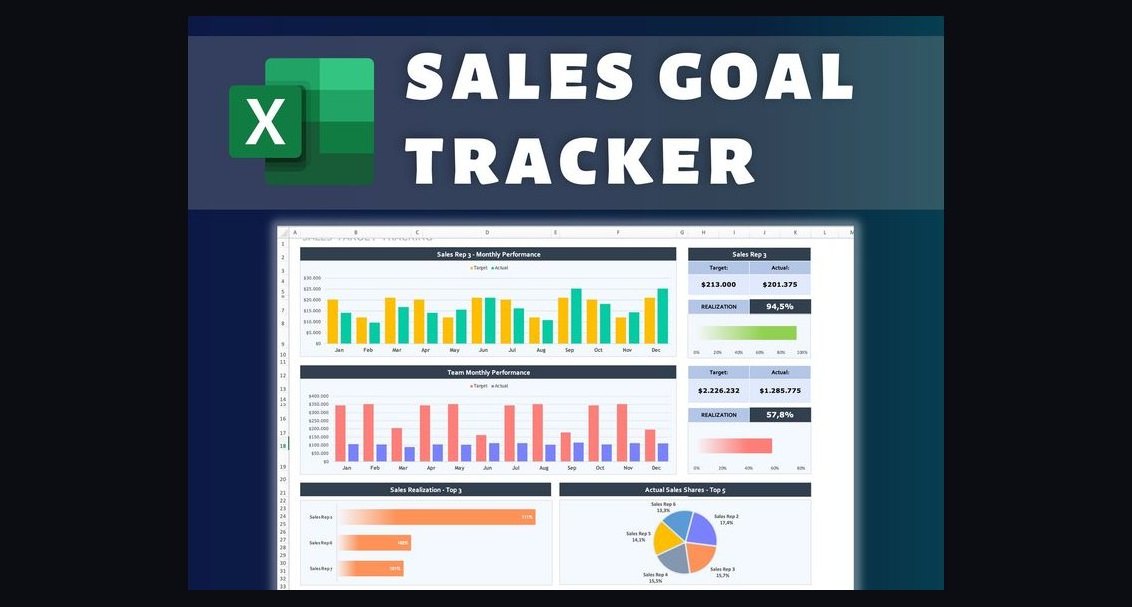 pulse-qHow Do I Make My Sales Goals Visible to the Whole Team in 2026?
 pulse-qShould I open or buy Domino's franchise or open an independent sandwich shop in 2027?
 pulse-qShould I Hire a Fractional CRO If I Just Raised a Series A in 2026?
 pulse-qShould I Hire a Fractional CRO If My Revenue Is Seasonal and Unpredictable in 2026?
 pulse-qShould I open or buy a Ned Stevens Gutter Cleaning franchise in 2027?
 pulse-qHow Many Baristas Should I Schedule Each Shift at My Coffee Drive-Thru in 2026?
 pulse-qShould I open or buy a Honor Yoga franchise in 2027?
 pulse-qHow Many Sales Reps Do I Need to Hire for My Smart Home Integration Company in 2027?
 pulse-qHow Many Sales Reps Do I Need to Hire for My Prefab Home Builder in 2026?
 pulse-qWhat Service Fees Should a Mobile Mechanic Charge in 2026?