
What Service Fees Should a Dental Practice Charge in 2026?
 Curated byKory White · Fractional CRO · Maryland
 PULSEKNOWLEDGE LIBRARY
Quality
Certified

A dental practice should charge only disclosed fees that recover a real cost or service: infection-control or sterilization fees of $10 to $20 per visit, records-transfer fees of $15 to $50, missed-appointment fees of $25 to $75, and financing or administrative fees of 3% to 6% on financed balances. Never an undisclosed surcharge.
The outcome you should expect
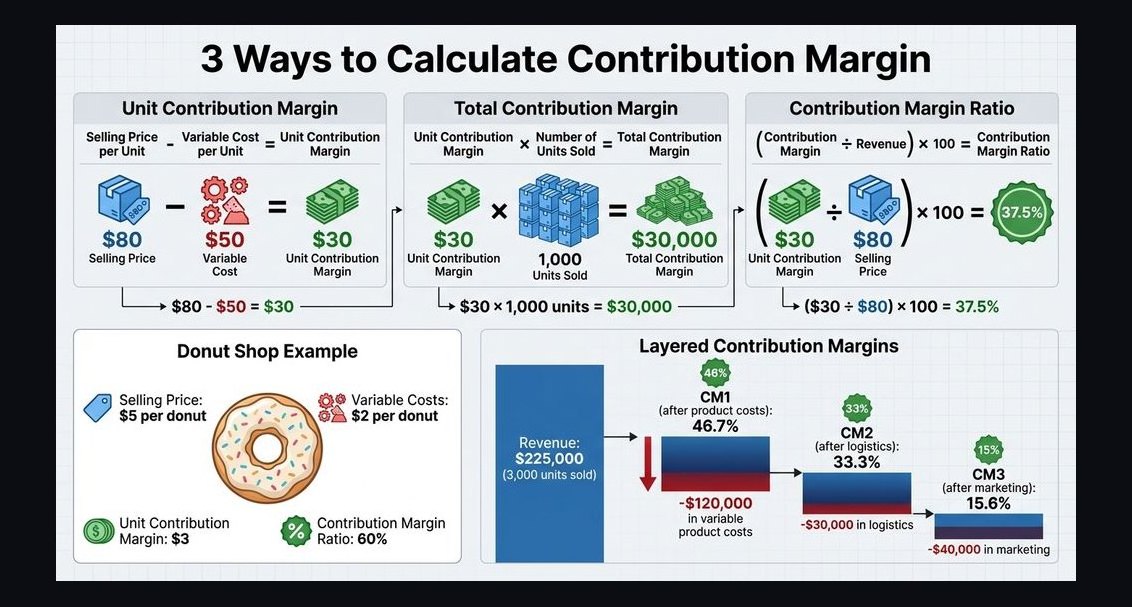
The practical outcome of a disciplined service fee schedule is a second revenue line that runs almost entirely on margin. Procedure revenue is expensive to produce: it consumes chair time, lab bills, materials, doctor hours, and hygiene capacity. A disclosed administrative fee consumes almost none of that. The incremental cost of billing a records-transfer fee is a few minutes of front-desk time and a printing or transmission cost measured in cents. That structural difference is why fee revenue routinely carries a contribution margin in the 85% to 95% range, while a restorative procedure after lab, materials, and clinical labor may land closer to 50% to 65%.
Work the arithmetic on a mid-size general practice and the outcome becomes concrete. Take a practice seeing roughly 900 patient visits per month. A disclosed $15 infection-control and sterilization fee applied to 95% of those visits produces about $12,825 per month. A $25 records-transfer fee billed to the roughly 3% of patients who request records in a given month — about 27 requests — adds another $675. A 5% financing and administrative fee on the 120 patients per month who finance an average $1,400 treatment plan contributes about $8,400. That is roughly $21,900 per month in disclosed fee revenue, and at a blended 90% margin the practice keeps about $19,710 in contribution.
What that contribution actually buys matters more than the headline number. Nearly $20,000 per month of near-pure margin funds a full-time billing coordinator and a treatment-plan coordinator without adding a single operatory, hiring a single associate, or producing one additional crown. Those two roles then feed back into production: a dedicated treatment-plan coordinator typically lifts case acceptance, and a dedicated billing coordinator shortens the accounts-receivable cycle and reduces write-offs. The fee schedule pays for the staff who make the clinical schedule more productive.

The second outcome is behavioral, and it is easy to underestimate. Fees change what patients do. A practice that consistently enforces a missed-appointment fee generally sees its no-show rate fall meaningfully within a quarter, because a slot that costs something to abandon is a slot patients treat as real. An after-hours fee reduces the volume of non-urgent evening calls, because a patient who has waited three days with a dull ache will wait until 8 a.m. rather than pay $100 for a phone triage. The fee revenue is nice; the recaptured capacity and protected staff time are frequently worth more.
The third outcome — and the one that determines whether the first two survive an audit — is compliance posture. A fee schedule built on disclosure, written consent, and consistent application is defensible to a state dental board, to a payer conducting a contract review, and to a patient filing a complaint. A fee schedule built on quiet surcharges added at checkout is not. The expected outcome of doing this correctly is not just money; it is money that stays.
What drives that outcome
Three variables drive every dollar of service fee revenue, and they multiply rather than add: attach rate, patient visit volume, and fee amount. Monthly fee revenue equals attach rate times visits per month times the fee. Fee gross profit equals that revenue times the fee margin. Practices tend to fixate on the fee amount because it is the number they choose, but attach rate is almost always the variable with the most slack in it.
Consider the difference. Raising a $15 infection-control fee to $18 is a 20% increase in fee revenue and a visible change patients will notice on every statement. Raising the attach rate on that same $15 fee from 60% to 95% is a 58% increase in fee revenue and a change no patient perceives at all, because the fee was always disclosed — it was simply being skipped at the front desk on busy days. Attach rate is an operations problem, not a pricing problem, and operations problems are cheaper to fix.
Attach rate is driven by four things in practice: whether the fee exists as a real, selectable line item in the practice-management system rather than a manual adjustment; whether the front desk has a one-sentence script for it; whether a card is on file so collection does not require a second conversation; and whether anyone reviews the attach rate monthly. Miss any of those and the fee quietly erodes. A fee that lives only in a policy binder has an attach rate near zero.
The fourth driver, less obvious, is cost linkage. A fee that maps to an identifiable cost is defensible, explainable at the front desk, and durable. Infection control maps to PPE, barriers, sterilization pouches, autoclave cycles, and instrument reprocessing labor. A records fee maps to staff time plus transmission. A financing administrative fee maps to merchant discount costs, statement generation, and collections follow-up. When a patient asks "what is this for," a linked fee has a true one-sentence answer. An unlinked fee does not, and an unlinked fee is the kind that generates board complaints.
The fifth driver is payer contract language. Participating provider agreements frequently prohibit billing the patient for anything the contract deems part of the covered service or bundled into the procedure. Infection control is the classic collision point: some payer contracts explicitly treat sterilization and PPE as inherent to the procedure and non-billable to the patient. That does not make the fee illegitimate for self-pay patients or out-of-network patients; it means the fee has to be conditioned on payer status inside the practice-management system. Practices that skip this step tend to discover the problem during a payer audit with a refund demand attached.
Benchmarks and realistic ranges
Here are the ranges a U.S. general dental practice can work from, with the caveat that state dental board rules and individual payer contracts override any national norm.
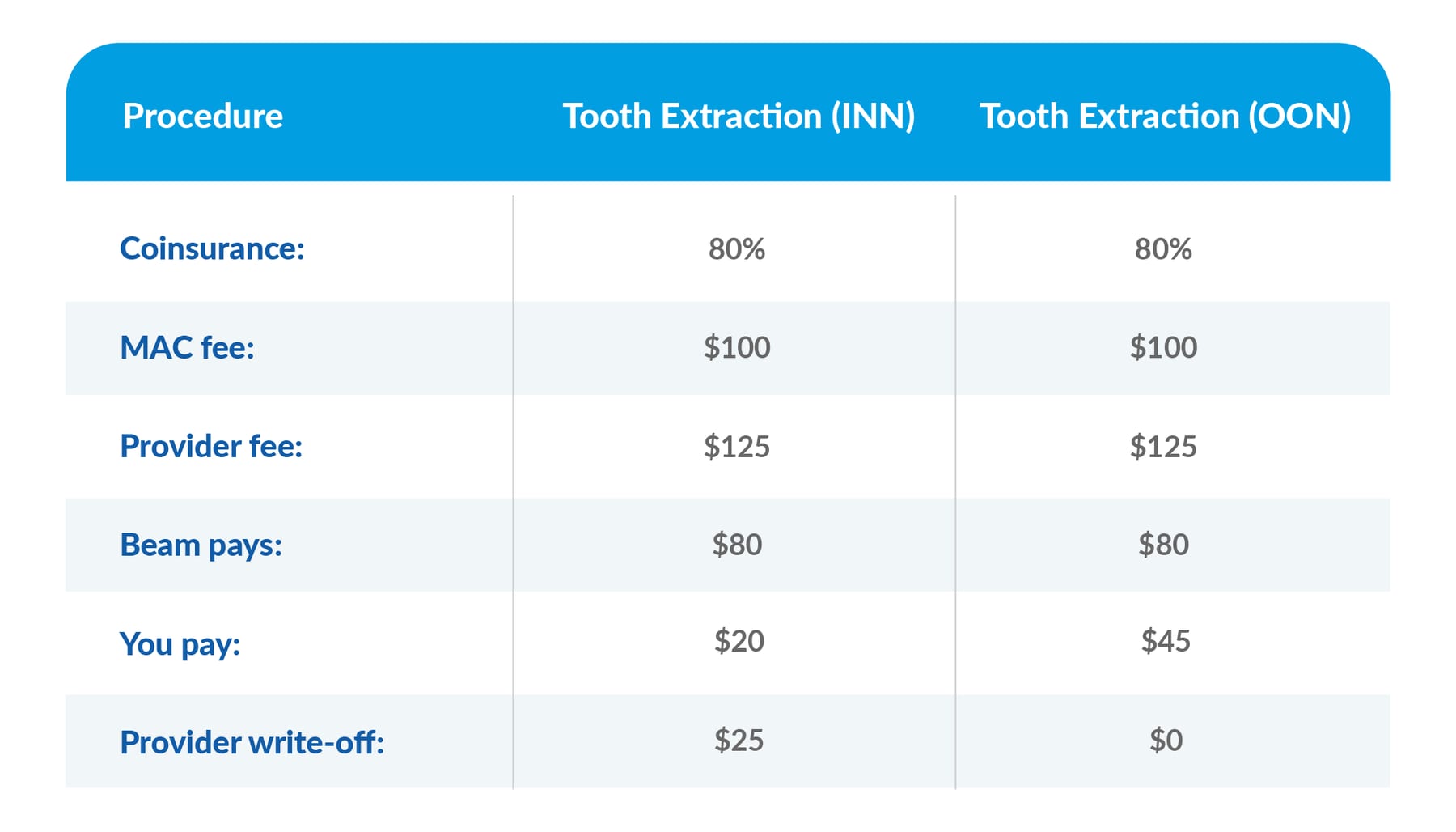
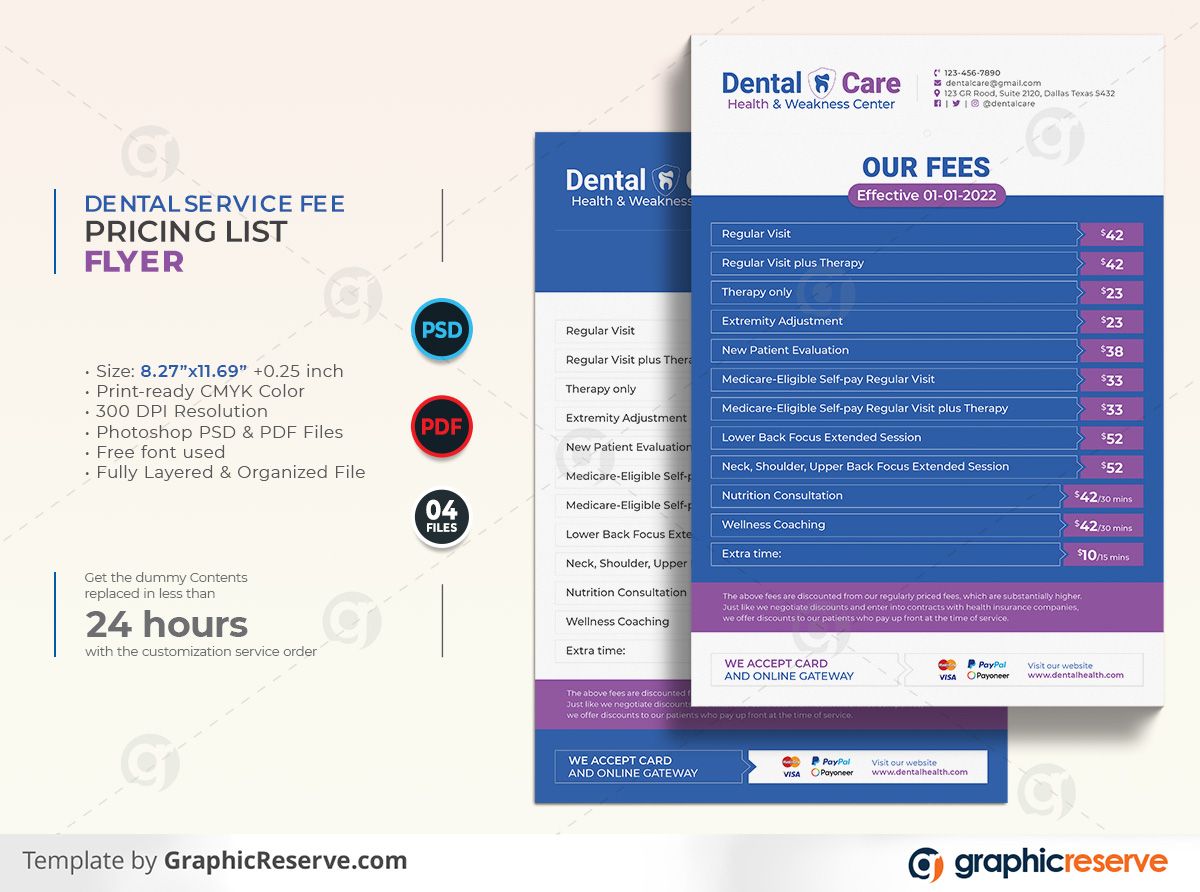
Infection control / sterilization / PPE fee: $10 to $20 per visit. This became widely disclosed after 2020 and is now common enough that patients rarely question it when it appears on a written fee schedule. It is the highest-volume fee available because it attaches to nearly every visit, which also makes it the one most likely to be scrutinized by payers. Attach rate for self-pay patients can realistically reach 90% to 95%; for in-network patients it may be contractually zero.

Records transfer or copying fee: $15 to $50. Volume is low — typically 2% to 4% of your patient base requests records in a given month — but the fee is nearly pure margin. Note that state medical-records statutes frequently cap what you may charge and sometimes require the first copy to be free, and federal rules governing a patient's own request for their records under HIPAA restrict charges to a reasonable, cost-based fee. A transfer to another provider at the patient's direction and a commercial third-party request are treated differently. Check your state's specific cap before setting this number.
Missed-appointment / late-cancellation fee: $25 to $75. No-show rates in general dentistry commonly run in the 5% to 15% band. On 1,000 scheduled appointments per month, that is 50 to 150 dead slots that still consumed scheduling time, reminder cost, and operatory prep. A $50 fee with a realistic 50% to 70% collection rate on a 10% no-show rate recovers a few thousand dollars monthly, but the enforcement effect on the no-show rate itself is the larger prize. Most practices require 24 or 48 hours' notice; the notice window must be stated in the signed policy.
Financing / payment-plan administrative fee: 3% to 6% of the financed balance. If a practice produces $150,000 per month and 30% to 40% of that volume is financed, the financed base is $45,000 to $60,000, and a 5% fee generates roughly $2,250 to $3,000 monthly. This fee must apply only to financed balances — never to cash payments and never to insurance payments — and it must be described as an administrative or facilitation fee, not as interest. Charging what functions as interest without the appropriate lending authorization is a materially different legal exposure.
After-hours / emergency fee: $75 to $250. A tiered structure works well: a lower tier for phone triage only and a higher tier for opening the office. A practice fielding 5 to 15 after-hours contacts a month at a $100 fee with a 60% to 80% collection rate is looking at a few hundred to roughly $1,200 monthly. The margin approaches 100% because you are selling protected time, not supplies.
On the systems side, expect these approximate 2027 cost ranges when you evaluate where the fee will live. Open Dental sits around $179 per month for the first provider with modest add-ons and gives full control over fee schedules and adjustment types. Curve Dental, cloud-based, runs roughly $350 to $500 per month per practice rather than per seat. Dentrix from Henry Schein One is typically a license plus a support plan around $200 to $400 per month, or roughly $300 to $500 per month per location for cloud-hosted Dentrix Ascend. Eaglesoft from Patterson Dental is license plus a support plan generally in the $150 to $350 per month range. Weave, a patient-communication and payments layer that integrates with most systems, runs roughly $199 to $399 per month and matters specifically because text-to-pay and card-on-file are what convert a billed fee into a collected fee.
For payment rails: Square charges roughly 2.6% plus $0.15 for in-person card presentation and about 2.9% plus $0.30 on invoices with no monthly base, which suits a startup or single-doctor office collecting a fee on a card immediately. Stripe Billing adds roughly 0.5% to 0.7% on recurring invoices on top of standard card processing and is the better fit for a membership or in-house savings plan with a recurring administrative component. CareCredit from Synchrony, the dominant patient-financing program in dentistry, charges the practice a merchant discount fee that varies by promotional plan length and typically lands in the high single digits to low double digits — which is precisely the cost a disclosed financing administrative fee is meant to offset. QuickBooks Online, from about $35 per month for Simple Start to roughly $235 per month for Advanced, is where you prove the margin is real by tagging each fee type to its own income account.
Risks, edge cases, and failure modes
Payer contract violation is the top risk. If your participating provider agreement bundles infection control into the procedure fee, billing the patient separately can constitute balance billing. The failure mode is not a warning letter — it is a retroactive audit, refunds to patients, and potential termination from the network. Before you turn on any per-visit fee, pull every active payer contract and read the sections on non-covered services, patient billing, and bundled components. If the language is ambiguous, get written clarification from the payer rep and keep it.
State board discipline for non-disclosure. Dental practice acts and state board rules generally require fee transparency. A fee that first appears on the statement after treatment, with no signed acknowledgment, is the pattern that generates complaints. The defense is a signed fee-disclosure form in the new-patient packet, the same schedule posted in the operatory or on the website, and a verbal mention at treatment planning for anything over a nominal amount.
Disguised interest. A financing fee that scales with the length of the payment term starts to look like interest rather than an administrative charge, which can pull the practice under state lending and disclosure requirements it is not licensed for. Keep the fee a flat percentage of the financed principal or a flat dollar setup charge — not a rate applied per month.
Records-fee overreach. Charging a patient a large fee for their own records, or conditioning release of records on payment of an outstanding balance, is a well-known trap. Many states prohibit withholding records for non-payment outright, and federal access rules constrain what you may charge a patient for their own information. Treat the records fee as a small cost-recovery item and never as leverage.
Inconsistent application. This is the most common operational failure and the most legally dangerous. If the fee is waived for some patients and enforced for others without a written rule, the practice has created a discretionary charge that is difficult to defend and easy to characterize as arbitrary. Write the waiver policy down: first-time offender waived once, documented true emergencies waived, repeat pattern enforced. Then apply the written rule.
Attach-rate decay. A fee launched with a staff meeting and enthusiasm typically shows a strong attach rate for six to eight weeks, then slides as the front desk gets busy and starts skipping it during full schedule days. Without a monthly attach-rate report, nobody notices until the fee is producing half of what it should. Build the report before you launch the fee.
Collection-rate optimism. Practices routinely model a missed-appointment fee at 100% collection. Real-world collection on a fee billed after the fact, to a patient who is already annoyed, is frequently in the 50% to 70% range and can be worse. Card-on-file at scheduling is what closes that gap; without it, model conservatively and expect write-offs.
Small-market patient attrition. In a small town with two practices, a visible new fee is a competitive event. Before launching, check what nearby practices charge — records fees in particular are locally normed. Being $30 above the local norm on a visible fee is a real attrition risk, while being at the norm generally is not.
Membership-plan collision. If you run an in-house membership or savings plan, decide explicitly whether plan members are exempt from the infection-control fee. Charging a membership fee that markets "no hidden costs" and then adding a per-visit fee is the fastest route to a chargeback and a bad review. Write the exemption into the plan documents.
A practical rollout plan
Run this over roughly 90 days rather than launching everything at once. Sequencing matters because each fee has a different disclosure requirement and a different failure mode, and launching them simultaneously makes it impossible to tell which one caused a patient complaint.
Days 1 to 14 — legal and contractual clearance. Pull your state dental board's rules on fee disclosure and records charges. Pull every active payer contract and identify which fees are contractually billable to which patient categories. Produce a one-page matrix: fee type down the side, payer category across the top, billable yes or no in each cell. This single document prevents the most expensive category of error.
Days 15 to 30 — documentation and system configuration. Draft the written fee disclosure, the missed-appointment policy with its notice window, and the payment-plan agreement language for the administrative fee. Have a healthcare attorney in your state review them; this is a few hundred dollars that prevents a board complaint. In parallel, configure each fee as a real line item in your practice-management system with its own code, and set up a matching income account in QuickBooks so you can verify the margin later.
Days 31 to 45 — one fee, one pilot. Launch a single fee. Start with the records-transfer fee: lowest volume, lowest patient friction, lowest contractual exposure. Train the front desk on a one-sentence script. Track attach rate weekly.
Days 46 to 75 — second and third fee. Add the missed-appointment fee, but only after card-on-file at scheduling is operational — collection without it is materially worse. Then add the financing administrative fee inside the payment-plan agreement, where the patient signs the disclosure at the same moment they accept the plan.
Days 76 to 90 — the highest-volume fee. Launch the infection-control fee last, conditioned on the payer matrix from week two. It touches every visit, so it is the fee most likely to surface complaints and the one you want launching into a front desk that has already practiced fee conversations twice.
Ongoing — the monthly review. Every month, pull three numbers per fee: attach rate, collection rate, and net contribution from the tagged income account. Attach rate below 80% on a fee that should attach universally is a training problem. Collection rate below 60% is a card-on-file problem. Contribution below 85% of revenue means a cost you did not model is leaking in. Fifteen minutes a month keeps the whole schedule honest.
Related questions
Can a dental practice charge an infection control fee to an in-network patient?
Often no. Many participating provider agreements bundle sterilization and PPE into the procedure fee, making a separate patient charge a balance-billing violation. Read each contract and, where language is ambiguous, get written payer clarification before billing.
What is a reasonable no-show notice window?
Twenty-four to 48 hours is the common standard. The window must be stated in the signed missed-appointment policy and echoed in automated reminders. A fee enforced against a window the patient never acknowledged in writing is difficult to defend.
Should a membership plan member pay the same service fees?
Decide explicitly and write it into the plan documents. Most practices exempt members from per-visit administrative fees, since a plan marketed as all-inclusive that adds visit fees generates chargebacks and complaints faster than any other fee misstep.
Is a financing fee the same as charging interest?
No, and the distinction matters legally. A flat percentage of the financed principal or a flat setup charge is an administrative fee. A charge that scales with the length of the payment term functions as interest and can trigger state lending and disclosure requirements.
How do I know if a fee is actually being collected?
Tag each fee to its own income account in your accounting system and compare booked revenue to collected revenue monthly. A gap between what the ledger billed and what the bank received is your write-off rate, and it is usually a card-on-file problem.
FAQ
Are service fees legal for a dental practice to charge?
Yes, when they are ethical, clearly disclosed in writing before treatment, permitted by your state dental board, and not prohibited by the applicable payer contract. Infection-control, records-transfer, missed-appointment, and financing administrative fees are all commonly charged. The illegal pattern is the undisclosed surcharge that first appears on the statement.
How much should a missed-appointment fee be?
Twenty-five to $75 is the common range, set high enough to change behavior but low enough that it does not feel punitive. The amount matters less than the enforcement structure: a signed policy with a stated notice window, automated 48-hour and 24-hour reminders, a card on file, and consistent application with a written waiver rule.
What attach rate should I expect on a per-visit fee?
A fee configured as a real line item in the practice-management system, with a front-desk script and a card on file, can realistically reach 90% to 95% on eligible visits. A fee that exists only in a policy binder and requires a manual adjustment typically drifts well below 60% within two months of launch.
Can I charge a fee on a payment plan?
Yes, if it is disclosed in writing before the patient signs the plan. Three to 6% of the financed balance, or a flat $25 to $100 setup charge, are both common structures. Apply it only to financed balances — never to cash or insurance payments — and never let it scale with the term length.
Will service fees drive patients away?
Reasonable fees, disclosed before treatment and explained in one sentence, are generally accepted. The real attrition risk is a fee that is visibly out of line with nearby practices, a fee the patient learns about at checkout, or a fee applied to some patients and waived for others with no written rule behind the difference.
What should I check before launching any new fee?
Three documents in order: your state dental board's rules on fee disclosure and records charges, every active payer contract's language on patient billing and bundled services, and your own new-patient consent packet. Build a fee-by-payer-category matrix from the first two before you configure anything in the practice-management system.
Sources
- https://www.ada.org/resources/practice/dental-practice-success — American Dental Association practice management resources
- https://www.ada.org/resources/practice/legal-and-regulatory — ADA legal and regulatory guidance for practices
- https://www.hhs.gov/hipaa/for-professionals/privacy/guidance/access/index.html — HHS guidance on patient right of access and permissible records fees
- https://www.dentaleconomics.com/ — Dental Economics, practice financial benchmarks and fee analysis
- https://www.nadp.org/ — National Association of Dental Plans, dental benefits and reimbursement data
- https://www.hfma.org/ — Healthcare Financial Management Association, revenue cycle and pricing practices
- https://www.cdc.gov/oral-health/infection-control/index.html — CDC infection prevention guidance for dental settings
- https://www.bls.gov/oes/current/oes_nat.htm — U.S. Bureau of Labor Statistics wage data for dental support staff
- https://www.dentaltown.com/ — Dentaltown, practitioner discussion on real-world fee setting
Related on PULSE
- How Do I Get My Dental Front Desk to Close Treatment Plans?
- How Many Sales Reps Do I Need to Hire for My Dental Equipment Company?
- How Many Sales Reps Do I Need to Hire for My Dental Support Organization?
- What Service Fees Should a Home Inspection Business Charge?
- What Service Fees Should a Childcare or Daycare Center Charge?
- What Service Fees Should a Mobile Mechanic Charge?
This page will be disappearing soon. Save it to your device for $1 — or read it free while it is here.
@Kory-White- · if Venmo asks, the last 4 of my number are 2012
This page is gone.
This one is off the shelf now. $1 keeps it on your phone for good — the whole page, pictures and diagrams included.
 pulse-qHow Do I Make My Sales Goals Visible to the Whole Team in 2026?
 pulse-qHow Many Sales Reps Do I Need to Hire for My Dental Equipment Company in 2026?
 pulse-qWhat Service Fees Should a Photography Business Charge in 2026?
 pulse-qHow Many Salespeople Should I Schedule Each Day on My Furniture Store Floor in 2026?
 pulse-qHow Many Employees Should I Schedule Each Shift at My Tutoring Center in 2026?
 pulse-qHow Do I Raise Contribution Margin Without Raising My Prices in 2026?
 pulse-qHow Many Employees Should I Schedule Each Shift at My Skate Park in 2026?
 pulse-qHow Many Stylists Should I Schedule Each Day at My Hair Salon in 2026?
 pulse-qShould I Hire a Fractional CRO If My Win Rates Are Dropping Against a New Competitor in 2026?
 pulse-qHow Many Employees Should I Schedule Each Shift at My Brewery Taproom in 2026?