 Pulse Reviews and Analysis
Top 10 Podcast Mixers in 2027 — Best Overall + Best Value

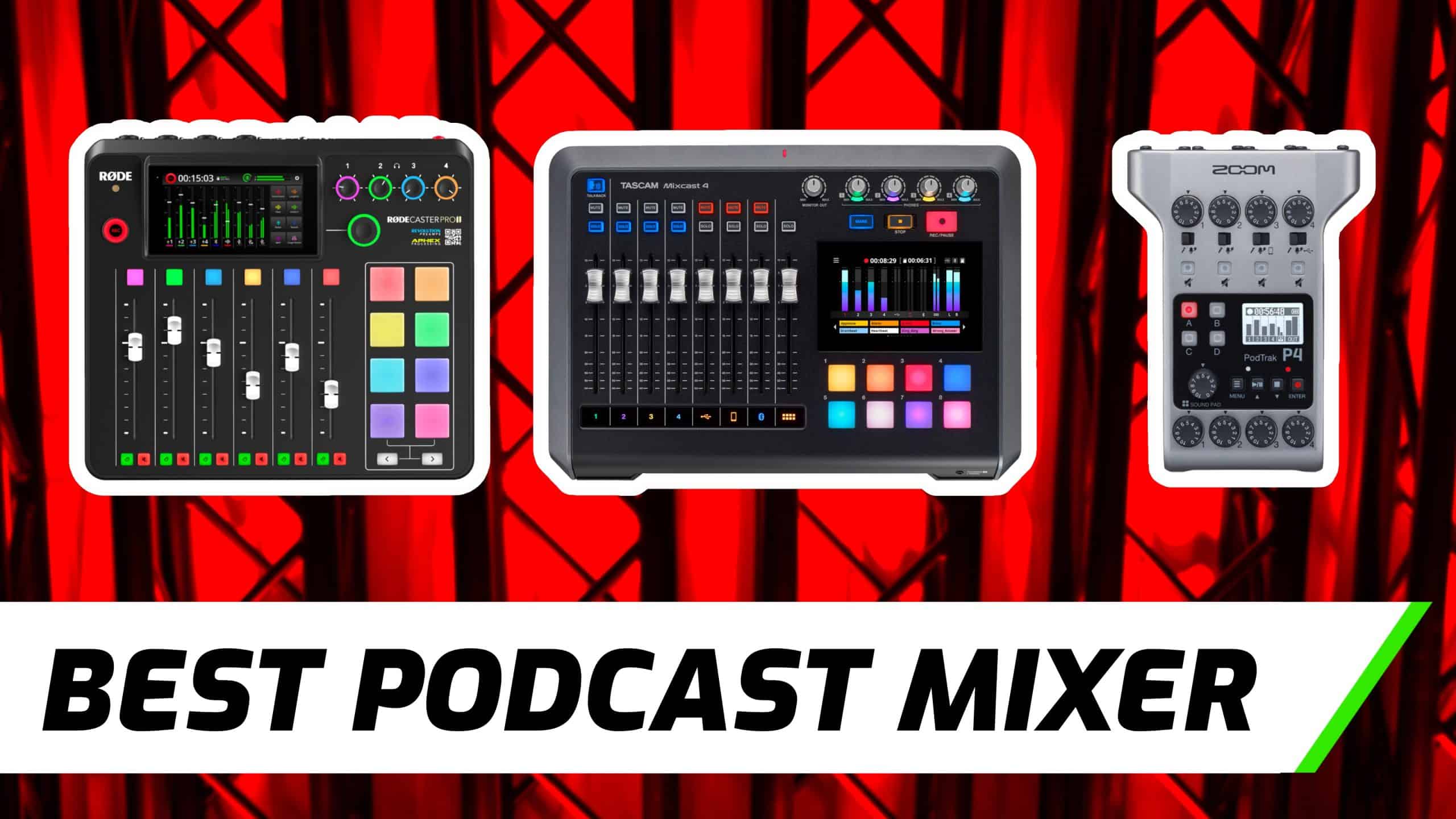
Top 10 Podcast Mixers in 2027 — Best Overall + Best Value
*Published June 23, 2026 · Updated June 23, 2026*
The best overall podcast mixer in 2027 is the RØDECaster Pro II, a four-fader all-in-one production console with broadcast-grade Revolution Preamps, a touchscreen, programmable SMART pads, and onboard multitrack recording that lets a solo host or a four-person panel produce a finished episode without a computer in the loop.
The best value is the Zoom PodTrak P4, a $199 four-XLR recorder that runs on batteries, records to microSD, doubles as a USB interface, and covers everything a new or remote podcaster actually needs.
Your real choice comes down to how many people sit at the table, whether you want physical faders, and how much onboard processing you want to skip in post. Big tables and live production push you toward the RØDECaster Pro II, the Mackie DLZ Creator, or the TASCAM Mixcast 4.
Small or mobile setups are well served by the PodTrak P4, the PreSonus Revelator io24, or the Focusrite Vocaster One. The flowchart below maps the decision.
1. RØDECaster Pro II 🏆 BEST OVERALL

Channels: 4 XLR + faders | Price: ~$699 | Key feature: Revolution Preamps + touchscreen | Best for: serious podcasters who want one box
The RØDECaster Pro II is the console most full-time podcasters end up buying. Its Revolution Preamps deliver up to 76 dB of clean gain with extremely low noise (-131.5 dBV EIN), so dynamic broadcast mics like the SM7B run loud and clean without an inline booster. A bright touchscreen, four physical faders, and eight customizable SMART pads put stingers, beds, and processing chains under your fingers.
Onboard recording to microSD or USB means you can capture multitrack stems, mix live, and walk away with a finished file. APHEX processing, a noise gate, and per-channel EQ cut your editing time sharply.
Pros:
- Cleanest preamps in the category, handles any mic
- Multitrack recording with no computer required
- Deep onboard processing reduces post work
- Polished touchscreen workflow
Cons:
- Only four physical mic channels
- Premium price for hobbyists
Verdict: If you record regularly and want professional results from one device, this is the mixer to beat.
2. Zoom PodTrak P4 💎 BEST VALUE

Channels: 4 XLR | Price: ~$199 | Key feature: battery-powered standalone recorder | Best for: new and remote podcasters
The Zoom PodTrak P4 packs four XLR inputs, four headphone outputs with independent volume, and standalone microSD recording into a palm-sized box that runs on two AA batteries. It is the cheapest credible way to seat four people and capture clean, separate audio.
Four sound pads trigger jingles, and a dedicated mix-minus phone jack pulls in a remote caller cleanly. Plug it into a computer over USB and it becomes a multitrack interface, so it grows with you from kitchen-table starter rig to a real production tool.
Pros:
- Four XLR inputs for the lowest price here
- Runs on batteries, records anywhere
- Built-in mix-minus for phone guests
- Doubles as a USB interface
Cons:
- No physical faders, knob-per-channel only
- No onboard EQ or compression
Verdict: Unbeatable value, and the device most new podcasters should buy first.
3. Mackie DLZ Creator

Channels: 4 XLR + faders | Price: ~$699 | Key feature: Mix Agent guided setup | Best for: streamers and content creators
The Mackie DLZ Creator wraps four Onyx preamps, a large touchscreen, and motor-feel faders in a console aimed squarely at creators who also stream and shoot video. Its standout is Mix Agent, a guided assistant that picks settings for beginners while leaving full manual control for pros.
Multitrack recording to SD, USB, and dual-USB streaming outputs let you feed a stream and a recorder at once. Programmable pads and onboard FX round out a live-production-ready package.
Pros:
- Mix Agent lowers the learning curve
- Strong streaming and video routing
- Large, responsive touchscreen
- Quality Onyx preamps
Cons:
- Bulky on a small desk
- Priced like the RØDECaster
Verdict: The best pick if your show is as much video and livestream as it is audio.
4. TASCAM Mixcast 4

Channels: 4 XLR/TRS | Price: ~$399 | Key feature: 8-button sound pad + touchscreen | Best for: panel shows on a mid budget
The TASCAM Mixcast 4 seats up to four hosts plus phone and Bluetooth callers, for a maximum of seven participants. A clear touchscreen, eight large sound-pad buttons, and 14-track recording to SD make it a capable studio for round-table shows at a friendlier price than the flagships.
Free TASCAM Podcast Editor software is bundled, and the unit works as a USB interface for live streaming. The combo XLR/TRS inputs accept mics and line sources alike.
Pros:
- Up to seven participants with phone and Bluetooth
- Big, satisfying sound pads
- Bundled editing software
- Strong value for a touchscreen console
Cons:
- Preamps trail the RØDE and Mackie
- No physical faders
Verdict: A smart middle path for panel podcasts that want a touchscreen without spending $700.
5. RØDECaster Duo

Channels: 2 XLR + 7-channel mixer | Price: ~$499 | Key feature: Pro II processing in a compact body | Best for: solo and duo hosts
The RØDECaster Duo brings the Pro II's Revolution Preamps, APHEX processing, and SMART pads into a narrower chassis with two combo XLR inputs and a seven-channel mixer (four faders, three virtual). It is the right RØDE for a host who works solo or with one co-host but still wants flagship sound.
Dual USB-C host ports let you connect a computer and a phone at once, and onboard recording keeps a backup of every session.
Pros:
- Flagship preamps and processing in a smaller box
- Two USB-C hosts for computer plus phone
- Excellent SMART pad workflow
- Fits tight desks
Cons:
- Only two physical mic inputs
- Costs more than four-input rivals
Verdict: The best small-footprint console for one or two voices who refuse to compromise on audio.
6. Zoom PodTrak P8

Channels: 6 XLR | Price: ~$499 | Key feature: six inputs + touchscreen | Best for: large panels and roundtables
The Zoom PodTrak P8 offers six XLR inputs, two more than the RØDECaster Pro II, which matters when you regularly host five or six people. A touchscreen, nine sound pads, and onboard SD recording give it real production chops at a mid-tier price.
It includes a mix-minus phone connection and works as a six-channel USB interface, making it a flexible hub for big-table shows that still want to stay under $500.
Pros:
- Six XLR inputs, most in this list
- Touchscreen with nine sound pads
- Standalone SD recording
- Built-in phone mix-minus
Cons:
- Knob-per-channel, no faders
- Processing is lighter than RØDE or Mackie
Verdict: The go-to for big panels that need more inputs without a flagship budget.
7. Mackie DLZ Creator XS

Channels: 2 XLR | Price: ~$499 | Key feature: compact Mix Agent console | Best for: small desks wanting Mackie's workflow
The Mackie DLZ Creator XS distills the full DLZ Creator into a compact two-XLR unit that keeps Mix Agent, the touchscreen, and the streaming-friendly routing. It trades pads and the SD recorder for a smaller footprint and easier portability.
For a solo creator or duo who likes Mackie's guided approach and dual-USB streaming, the XS hits a clean middle ground.
Pros:
- Mix Agent guidance in a tiny body
- Strong streaming routing
- Touchscreen control
- Easy to transport
Cons:
- Only two XLR inputs
- No onboard SD recorder or pads
Verdict: Pick it if you love Mackie's interface but record alone or with one guest.
8. PreSonus Revelator io24

Channels: 2 XLR | Price: ~$199 | Key feature: onboard DSP + Stream Mix loopback | Best for: solo streamers and podcasters
The PreSonus Revelator io24 is a USB-C interface with two combo inputs, built-in DSP for compression and EQ, and a Stream Mix loopback system that builds separate mixes for your recording and your stream. The onboard processing runs on the hardware, so it never taxes your computer.
It ships with Studio One Artist and Ableton Live Lite, giving a new podcaster a complete software path out of the box.
Pros:
- Onboard DSP for hands-off processing
- Stream Mix loopback for streamers
- Bundled recording software
- Low price
Cons:
- Needs a computer, no standalone mode
- Only two inputs
Verdict: The smartest cheap interface for a solo creator who also streams.
9. Focusrite Vocaster Two

Channels: 2 XLR | Price: ~$249 | Key feature: Auto Gain + Bluetooth | Best for: interview-style two-host shows
The Focusrite Vocaster Two targets interview podcasts with two XLR inputs, two headphone outputs, and Auto Gain that sets levels for each voice in seconds. Bluetooth pulls in a phone caller or background music, and the Enhance presets shape your tone without plug-ins.
It is simple, clean, and forgiving, which is exactly what a two-person show recording into a computer usually wants.
Pros:
- Auto Gain removes guesswork
- Bluetooth for callers and music
- Two headphone outs for host and guest
- Clean, quiet preamps
Cons:
- Computer required, no standalone recording
- No sound pads or faders
Verdict: The easiest interface for interview shows that record straight into a laptop.
10. Focusrite Vocaster One

Channels: 1 XLR | Price: ~$179 | Key feature: single-mic Auto Gain interface | Best for: solo podcasters on a budget
The Focusrite Vocaster One is the single-mic version of the Vocaster line, built for a host who records alone. Auto Gain, voice Enhance presets, and a clean preamp make it nearly foolproof, and it stays small enough to leave on a crowded desk.
For a solo show that wants studio-clean voice without a learning curve, it is the simplest entry point Focusrite makes.
Pros:
- Dead-simple one-mic setup
- Auto Gain and Enhance presets
- Quiet, capable preamp
- Lowest price in the lineup
Cons:
- One input only, no expansion
- No standalone recording
Verdict: The best first interface for a solo podcaster who wants quality without complexity.
Frequently Asked Questions
Do I need a mixer or just an audio interface for podcasting? A mixer gives you faders, sound pads, and often standalone recording, which speeds up live production. An interface like the Revelator io24 or Vocaster simply gets clean mic audio into a computer. Solo hosts who edit in software can save money with an interface; multi-host live shows benefit from a true mixer like the RØDECaster Pro II.
What is the best podcast mixer for a four-person panel? The RØDECaster Pro II and Mackie DLZ Creator both seat four with faders and processing, while the Zoom PodTrak P8 goes to six XLR inputs for larger tables. The TASCAM Mixcast 4 is the value pick for four hosts plus phone and Bluetooth callers.
Can I record a podcast without a computer? Yes. The Zoom PodTrak P4 and P8, RØDECaster Pro II, RØDECaster Duo, and TASCAM Mixcast 4 all record multitrack audio to SD cards on their own. The PodTrak P4 even runs on batteries for fully portable sessions.
Which podcast mixer is best for beginners? The Zoom PodTrak P4 is the easiest standalone starter, and the Focusrite Vocaster One or Vocaster Two are the simplest computer-based options thanks to Auto Gain. The Mackie DLZ Creator's Mix Agent also walks newcomers through setup.
Do these mixers work for live streaming on Twitch or YouTube? The Mackie DLZ Creator, RØDECaster Pro II, and PreSonus Revelator io24 all offer loopback or dual-USB routing built for streaming. They let you send one mix to your stream and capture a separate clean recording at the same time.
Related on PULSE
- See our Top 10 USB Podcast Microphones to pair with any mixer on this list.
- Compare Best Studio Headphones for Monitoring to hear your mix accurately.
- Browse the full Electronic Reviews pillar for more audio gear rankings.
Bottom Line
For most serious podcasters, the RØDECaster Pro II is the safest premium buy: the cleanest preamps, deep onboard processing, faders, pads, and standalone recording in one polished box. If your show is also a livestream, the Mackie DLZ Creator edges ahead on routing and guided setup.
On a budget, the Zoom PodTrak P4 delivers four real XLR inputs and battery-powered recording for $199, which is why it remains the best value in 2027. Solo hosts who record into a laptop should look at the Focusrite Vocaster One or PreSonus Revelator io24, and big panels should reach for the six-input Zoom PodTrak P8.
Match the input count and the recording style to your show, and every device here will deliver clean, broadcast-ready audio.