
Speed to lead wins. — LinkedIn Wallpaper
 Curated byKory White · Fractional CRO · Maryland
 PULSEKNOWLEDGE LIBRARY
Quality
Certified
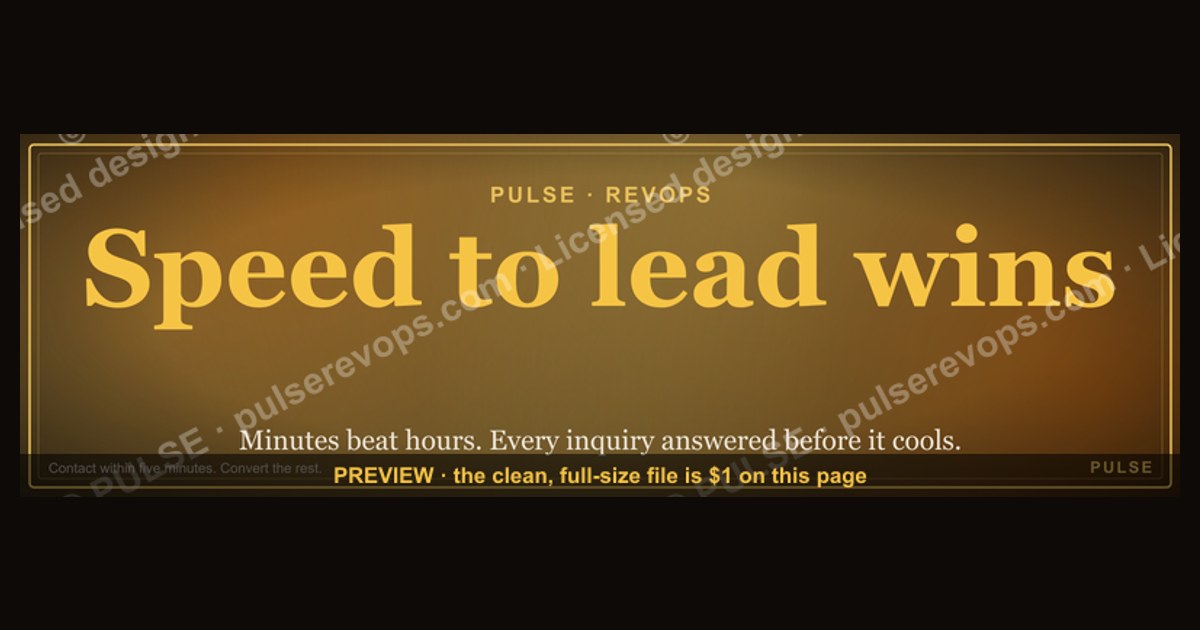
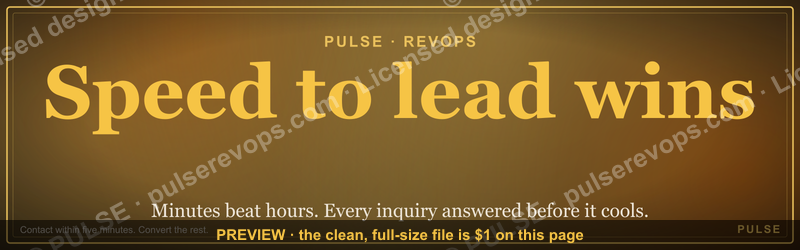
This banner is a 1600×500 px LinkedIn profile Wallpaper that reads "Speed to lead wins." in bold serif type over a dark, high-contrast background. It exists to signal a working philosophy — that a fast first response to a new lead beats a slower, more polished one — to anyone who visits your LinkedIn profile, from prospects to recruiters to your own reps.
What This Banner Is and Why the Message Matters
Strip the graphic down to its parts and there are really only three: the slogan, the type treatment, and the field it sits on. The slogan is four words — "Speed to lead wins." — set as a single confident line rather than a paragraph, because a LinkedIn Wallpaper is glanced at, not read. The type is a bold serif or heavy sans-serif, sized to remain legible when LinkedIn crops and compresses the image for both desktop and mobile profile views, which is the single biggest constraint on any Wallpaper design. The background is deliberately quiet — a single dark tone or a subtle gradient rather than a photograph or pattern — so the words carry the whole message and nothing competes with them for attention in the small window most viewers actually see (LinkedIn overlays your profile photo and name across the left third of the banner on desktop, and crops the sides more aggressively on mobile).
Why bother with a slogan banner at all, rather than a personal photo or a company logo treatment? Because a LinkedIn Wallpaper is unpaid, always-on inventory. Anyone who lands on your profile — a lead you just called, a hiring manager, a partner doing diligence before a deal — sees it before they read a single line of your headline copy. Most people use that space for a stock photo of a skyline or a conference stage, which is not information, it's decoration. A banner that states an operating principle does two things a photo cannot: it tells visitors how you work, and it holds you accountable to it in public. If your profile says "Speed to lead wins," a prospect who waits four days for a callback notices the gap between the wallpaper and the experience.

The phrase itself is a compression of a well-established idea in sales and revenue operations: the team that reaches a new lead first, while interest is warm and before a competitor's rep gets there, converts at a meaningfully higher rate than the team that responds well but slowly. "Speed to lead" is industry shorthand for the discipline of minimizing the gap between a prospect raising their hand — filling a form, requesting a demo, downloading a resource — and a human or automated system engaging them. The banner condenses years of pipeline data on that discipline into four words designed to be remembered, not analyzed. That's the whole job of a wallpaper: it's a mnemonic, not a report.
From Banner to Behavior: The Speed-to-Lead Process
A slogan on a profile page is inert until it maps to an actual workflow. The diagram below shows the process the banner is meant to represent — the sequence a lead moves through from the moment they raise their hand to the moment a rep is on the phone, and the points at which speed either compounds or gets lost.

Reading the diagram left to right: the process starts the instant a prospect signals interest, not when a rep happens to check their inbox. That routing step — getting the lead to the right owner immediately, whether through territory rules, round-robin assignment, or an always-on chatbot that books time on a calendar — is where most organizations lose the race without realizing it, because the lead sits in a queue rather than reaching a human. The branch point in the middle is the entire argument the banner is making: everything downstream of a fast first touch tends to go well, and everything downstream of a slow one tends to go poorly, even when the eventual message quality is identical. A rep who calls back in three minutes with an average pitch generally outperforms a rep who calls back in three hours with a great one, because the second call often never happens — the prospect has moved on, filled out a competitor's form, or simply lost the urgency that made them reach out.
Putting this banner on your LinkedIn Wallpaper is a visible commitment to staying on the left branch of that diagram. It also functions as an internal signal if you manage a team: a manager who wallpapers their own profile with "Speed to lead wins." and then lets leads sit unrouted for a day is advertising a gap between stated values and operating reality, which is worse than saying nothing. Used well, the graphic is a public scoreboard for a private process — it only works if the routing, the alerting, and the follow-up cadence behind it are real.

Specs, Costs, and Timelines for Using It
The banner is free to download as a PNG directly from this page, and there is no license fee or attribution requirement — treat it the same as any other image asset you'd upload to a profile. The native file is sized to LinkedIn's personal profile Wallpaper dimensions of 1600×500 px, which is the ratio LinkedIn has used for individual profile background photos; company Page banners use a different ratio (1128×191 px), so if you're placing this on a Company Page rather than a personal profile, re-export or crop before uploading, or the platform will do an automatic crop that can cut the slogan off-center. LinkedIn recompresses whatever you upload, so start from the largest, sharpest version of the file available on this page rather than a screenshot of it, which will visibly soften the type.
Swapping it onto your profile takes under two minutes: open your LinkedIn profile, click the pencil/camera icon on the existing background image, upload the new file, and use LinkedIn's built-in crop tool to center the slogan in the visible window before saving — the preview LinkedIn shows during upload is the same crop your visitors will see, so don't skip that step. There's no approval delay and no cost beyond the few minutes it takes to swap the file, which is part of the appeal: unlike a paid ad placement or a branded email signature rollout that needs IT or brand-team sign-off, a personal profile Wallpaper is something an individual rep or a whole sales floor can change today.

On the process side the banner represents, the ranges are less exact but well established as directional targets rather than hard guarantees. Conventional wisdom in sales and revenue operations pegs the ideal first-response window at under five minutes for inbound web leads — after that, connect rates and conversion begin a steep decline that continues through the first hour and flattens out after roughly a day, at which point a "fast" response no longer carries much advantage over a merely competent one. Outbound-sourced leads and referrals tolerate a longer window since the intent signal is weaker and less time-bound. None of this is a fixed law — a complex enterprise deal with a six-month cycle is not won or lost in the first five minutes — but for high-intent, self-serve inbound motions (demo requests, free-trial signups, pricing-page form fills) the window is tight and the cost of missing it compounds across every lead a team generates, not just one.
Where Teams Get the Message Wrong
The most common failure is putting the banner up without building the routing and alerting behind it — treating the slogan as a statement of intent rather than a description of a working system. A LinkedIn Wallpaper that says "Speed to lead wins." next to a lead-response process that still routes new leads through a shared inbox checked twice a day is worse than no banner at all, because it converts an internal aspiration into a public, checkable claim that isn't true. Anyone who submits a form, watches the clock, and gets a callback three days later while your profile advertises speed will register the gap, and it reads as a small credibility hit rather than a neutral miss.

A second failure is optimizing purely for speed and letting quality collapse. Racing to be first with a generic, obviously-templated response trains prospects to associate "fast" with "low-effort" — and once a lead perceives that, the speed advantage stops converting into trust. The banner's claim only holds when speed and relevance travel together: a fast response that references what the prospect actually asked about outperforms both a slow, thorough one and a fast, generic one. Teams that chase raw response-time metrics without a quality floor on the message tend to see connect rates rise briefly and then flatten as prospects learn to discount the first touch.
A third, more mundane failure is coverage gaps — after-hours, weekends, and time-zone edges where "speed" quietly means "speed during business hours in headquarters' time zone." A lead who fills out a form at 9pm on a Friday and waits until Monday morning has, in practice, experienced the exact opposite of what the banner promises, even if every daytime lead that week was handled in ninety seconds. If your funnel draws meaningful volume outside a single time zone or a single shift, the banner is a promise you can only keep with either a rotating on-call structure, an after-hours bot or scheduling tool that gets a human on the calendar even when no rep is awake, or an honest scoping of the claim to business hours in your own onboarding materials.

A fourth failure, specific to the graphic itself rather than the process it represents, is over-customizing it into illegibility — swapping in a company logo, a second slogan, or a photo background crowds out the one line that needs to survive LinkedIn's crop and compression. If you want to add a company mark, place it small and in a corner that survives the desktop crop (roughly the right two-thirds of the image, since the left third is overlaid by your profile photo and name), and keep the slogan itself untouched and centered in that surviving field.
Decision Framework: When This Banner Helps vs. Backfires
Not every seller, team, or business model should run this exact message. The framework below is a quick check for whether "Speed to lead wins." is the right public claim for your profile, or whether a different message — or no slogan wallpaper at all — fits your motion better.
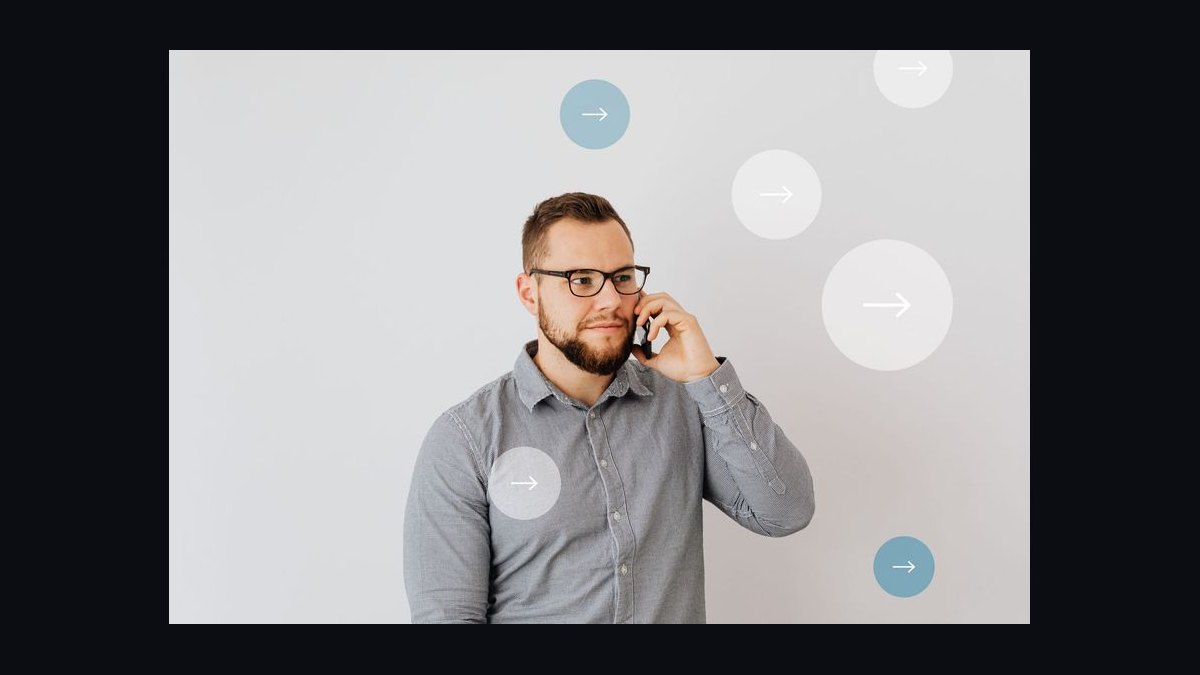
The first fork is about your funnel's shape, not your ambition. If most of your revenue comes from long enterprise cycles, warm referrals, or account-based outreach where a prospect expects a considered, multi-touch relationship rather than an instant callback, a speed-focused slogan can read as tonally off — it implies a transactional, high-velocity motion that isn't what you're selling. In that case a Wallpaper built around expertise, a specific outcome, or a quantifiable result you can stand behind will do more work for your profile than a speed claim a prospect wasn't expecting or valuing in the first place.
The second fork is the honesty check. If your funnel is the fast-decaying, self-serve kind — demo requests, trial signups, pricing inquiries — the question becomes whether your actual operating reality supports the claim. A team with disciplined lead routing, real-time alerting to reps' phones, and after-hours coverage should use the banner exactly as designed; it's a true public statement and it reinforces a genuine differentiator to anyone evaluating the team. A team that knows its response times are inconsistent should treat the mismatch as the actual problem to solve, fix the routing and alerting first, and only then put the slogan on a public profile. Wallpapering over a process gap doesn't close it — it just makes the gap visible to exactly the people you most want to impress.
Related questions
Is a LinkedIn Wallpaper the same size as a LinkedIn banner?
Yes — "Wallpaper" and "banner" refer to the same profile background image. For a personal profile it's 1600×500 px; for a Company Page it's the narrower 1128×191 px, so re-crop before reusing one asset on both.
Does speed to lead matter for outbound and referral leads too?
Less urgently. Outbound and referral leads generally carry a weaker, less time-bound intent signal, so the decay curve is shallower — a same-day response is usually fine where an inbound demo request needs minutes, not hours.
What's a realistic first-response target if five minutes isn't feasible?
Treat five minutes as the ceiling for the steepest part of the decay curve, not a hard requirement — same-business-hour response captures most of the remaining advantage, and same-day response is still far better than next-day.
Can I use this banner if I don't run a sales team?
Yes, if speed genuinely describes how you work — recruiters, support leads, and founders fielding inbound interest all face the same decay curve. If it doesn't describe your actual response pattern, pick a slogan that does.
How do I keep the slogan readable after LinkedIn compresses the upload?
Start from the largest file on this page, avoid re-saving it as a screenshot, and preview the crop LinkedIn shows before publishing — the overlay covers roughly the left third of the image on desktop.
FAQ
What does "speed to lead" mean? It's shorthand for how quickly a person or system engages a new lead after that lead signals interest — filling a form, requesting a demo, or calling in. The core finding behind the phrase is that a fast first touch converts meaningfully better than a slower one, even when the eventual message quality is similar, because prospect intent decays quickly after the initial signal.
Where should I use this banner besides my LinkedIn profile? The 1600×500 px file is sized for a personal LinkedIn profile Wallpaper, but the same PNG works as a Slack or Teams background, a slide-deck title card, or printed as office signage near a sales floor, since the aspect ratio and legibility were designed for a wide, low-height format.
Will this slogan work for a slow-moving enterprise sales motion? Probably not as-is. It's written for fast-decaying, self-serve or demo-request-driven funnels. A long enterprise cycle built on trust and multiple stakeholders is better served by a Wallpaper built around expertise or a specific outcome than a claim about response speed.
Can I change the wording while keeping the same layout? Yes — the layout (single bold line, dark quiet field, centered in the crop-safe zone) is reusable for any short operating principle. Keep it to four to six words; anything longer stops reading at a glance, which defeats the point of a Wallpaper.
Does putting this banner up actually improve my response times? No — the banner is a visible commitment, not a mechanism. It only becomes true if the routing, alerting, and after-hours coverage behind it are real. Publishing the claim without the process behind it creates a visible gap between what your profile says and what a prospect experiences.
What file format and size should I keep on hand for reuse? Keep the original PNG at 1600×500 px rather than a resized or re-compressed copy, so you can re-crop cleanly for a Company Page (1128×191 px) or another platform later without visible quality loss in the type.
Sources
- https://sproutsocial.com/insights/social-media-image-sizes-guide/
- https://www.linkedin.com/help/linkedin
- https://www.canva.com/create/linkedin-banners/
- https://blog.hubspot.com/sales/speed-to-lead
- https://www.salesforce.com/resources/articles/lead-response-time/
- https://www.gartner.com/en/sales-service
- https://www.forrester.com/
- https://business.adobe.com/blog/basics/social-media-image-sizes
Related on PULSE
- How fast should a sales rep respond to an inbound demo request?
- What is lead routing and how do you build it without adding headcount?
- Why do after-hours leads convert worse than daytime leads?
- How do you measure speed to lead across a whole sales team?
- What should a LinkedIn profile banner say if you run a long enterprise sales cycle?
- How do round-robin and territory-based lead assignment differ in practice?
This page will be disappearing soon. Save it to your device for $1 — or read it free while it is here.
@Kory-White- · if Venmo asks, the last 4 of my number are 2012
 graphicLLM Builder AI Engineer — LinkedIn Banner
 graphic"Build, don't chase." — LinkedIn Banner
 graphicBuild the revenue engine. — LinkedIn Wallpaper
 graphic“Looking for my next quota.” — LinkedIn Banner
 graphicHow do you build a Champions sell motion from scratch in 2027?
 graphic“Revenue that delights.” — LinkedIn Banner
 graphicTrust compounds. — LinkedIn Wallpaper
 graphicSIEM and Data Lake CRO — LinkedIn Banner
 graphic“Clarity closes.” — LinkedIn Banner
 graphicRenewals Manager — LinkedIn Banner