


What is the impact of the $22M revenue-share cap on college sports in 2027?
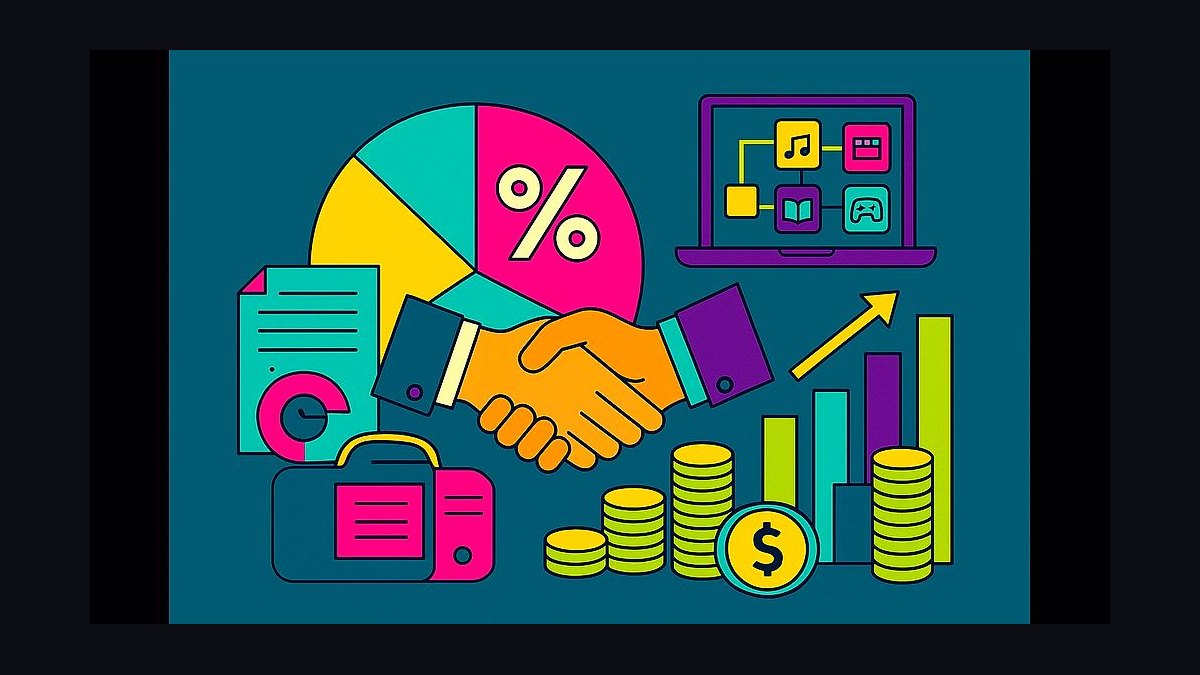
The $20.5M revenue-share cap (commonly rounded to "$22M" because year-three projections push it past $22.4M) has reshaped college sports in 2027 by centralizing athlete pay at the school level, gutting Olympic and non-revenue sports (415+ programs cut since 2024), and routing 75% of every dollar to football rosters. Power 4 schools opting in are spending the full cap; mid-majors like VCU and Wichita State are spending $2-8M and falling further behind on the field. The cap is not a ceiling on player earnings — it is a ceiling on direct school payments, and NIL collectives plus the College Sports Commission's NIL Go clearinghouse (run by Deloitte) are policing every third-party deal over $600.
1What the $22M Cap Actually Is
1.1 The math behind the number
The cap is 22% of the average of "shared revenue" across Power 4 schools — defined as media rights + ticket sales + sponsorships + post-season distributions. For the 2025-26 academic year it landed at $20.5M per opted-in school. The 2026-27 figure rose 4% to roughly $21.3M, and the 2027-28 cap is projected at $22.2M — which is why the "$22M" framing has stuck in The Athletic, On3, and Sportico reporting through spring 2027. By 2034-35 the cap is modeled to hit $32.9M.
1.2 The 10-year term and the re-set clock
The cap is not static. It carries a 4% annual escalator in years 2 and 3, then a full re-calculation every three years against fresh Power 4 revenue averages. Year 4 (2028-29) is the first re-set window, and athletic directors at Ohio State, Texas, and Georgia have publicly modeled a jump to $25-27M if the CFP's new 14-team format and the ESPN/CBS/NBC/Fox media renewals clear projections.

1.3 Opt-in vs. opt-out
All Power 4 (SEC, Big Ten, ACC, Big 12) schools opted in. Ivy League schools opted out entirely. Service academies opted out. Mid-major opt-in rates sit near 64% per Front Office Sports' spring 2027 tracker — but most are spending $2-8M, not the full cap.
2The 75/15/5/5 Allocation and Why It Broke Olympic Sports
2.1 The standard split
The non-binding industry standard that emerged after Judge Wilken's June 2025 final approval is 75% football / 15% men's basketball / 5% women's basketball / 5% everything else. At a full $22M cap, that means $16.5M to football, $3.3M to men's hoops, $1.1M to women's hoops, and $1.1M split across 18-22 other sports.

2.2 Schools going further than 75%
Tennessee, Auburn, and Texas A&M have publicly modeled 85% to football, leaving roughly $3.3M for every other sport combined. Alabama AD Greg Byrne confirmed on the Paul Finebaum Show that Crimson Tide football would clear $18M in revenue-share alone for 2026-27, with QB Ty Simpson and edge rusher Jah-Marien Latham drawing the largest individual shares.
2.3 The Olympic sports bloodbath
Per Front Office Sports and edCircuit tracking through April 2027: 415+ programs eliminated since 2024. Saint Francis dropped from D-I to D-III entirely. Cal Poly cut swimming and diving. Utah cut beach volleyball. Stanford — yes, Stanford — quietly absorbed $5.1M in cuts to its non-revenue budget. Dartmouth, which opted out, has used the bloodbath as a recruiting pitch to Olympic-track athletes.
2.4 The Title IX time bomb
Eight federal lawsuits are now active arguing that 75% of cap dollars to male football players violates Title IX. The Biden-era Department of Education January 2025 guidance (which said revenue-share counted as "athletic financial assistance" and must be proportional by gender) was rescinded by the Trump administration in February 2025. But private right of action under Title IX is still live — the Schroeder v. University of Oregon case, certified in March 2027, is the bellwether.

3How Power 4 Conferences Are Spending the Cap
3.1 SEC: spending to the cap and beyond
Every SEC school except Vanderbilt and Mississippi State is at or above $20M in 2026-27. Georgia and Texas are spending the full cap *plus* an estimated $8-12M in collective-backed deals routed through NIL Go. Arkansas brought back collective lead Tyler Smith as a school employee to run revenue-share strategy.
3.2 Big Ten: Ohio State and Michigan flexing
Ohio State has the highest publicly modeled budget — $22.5M revenue-share + $14M in approved collective deals — making the Buckeyes a roughly $36M football roster. Michigan sits at $31M. Oregon at $28M. Penn State at $26M. Northwestern and Maryland are below $20M.

3.3 ACC and Big 12: a real gap
Clemson, Florida State, and Miami are spending the full cap. The rest of the ACC averages $14M. The Big 12 is split: Texas Tech, Kansas, and Arizona State at cap; Cincinnati, West Virginia, and Houston below $12M.
3.4 The mid-major reality
Memphis is the highest-spending non-Power 4 at roughly $9M. Boise State, UConn (basketball-focused), and San Diego State sit at $5-7M. Most G5 schools are at $2-4M, and rosters are getting picked apart in the transfer portal every December and May window.

4The College Sports Commission and NIL Go
4.1 What the CSC actually does
The College Sports Commission (CSC) was stood up in July 2025 by the Power 4 as the independent enforcement arm. Bryan Seeley (former MLB executive VP for legal) is CEO. The CSC has subpoena power inside its participation agreement, runs NIL Go, and can fine schools, vacate wins, and ban coaches.
4.2 NIL Go and the $600 reporting threshold
Every NIL deal worth $600+ must be reported to NIL Go, the Deloitte-built clearinghouse. The system runs every deal through a "valid business purpose" test and a "range of compensation" test using a comp database of endorsement deals from comparable pro athletes. 70% of deals clear within 7 days; backlog hit 3,200 unprocessed deals in March 2027 per CBS Sports.

4.3 The collective workaround the CSC reversed
In fall 2025, the CSC issued guidance effectively banning collective payments that didn't tie to a real business purpose. December 2025: a Tennessee-led lawsuit forced the CSC to rescind the guidance. As of January 2026, collectives can pay athletes again — but every deal still routes through NIL Go.
4.4 Penalties starting to land
Three schools received CSC fines in Q1 2027 — names sealed under the participation agreement, but Sportico reported the fines totaled $2.4M. One Power 4 head coach received a 4-game suspension for tampering during the spring portal window.

5Roster Limits, Scholarship Expansion, and the Walk-On Death
5.1 The new roster math
The settlement replaced scholarship limits with roster limits. Football: 105 (down from 120-130 walk-ons-included rosters). Men's basketball: 15. Baseball: 34. Wrestling: 30. The trade-off: every roster spot can now be a full scholarship.
5.2 The walk-on extinction event
Roughly 6,400 walk-on roster spots evaporated in fall 2025 alone per The Athletic's Nicole Auerbach. The "Designated Student-Athlete" grandfather class — athletes who lost spots due to the new limits — was litigated through spring 2026 and most have transferred or graduated by 2027.

5.3 Coaching staff and analyst budgets
Many SEC and Big Ten programs redirected $3-5M from analyst, GA, and creative-services hires into revenue-share. Nick Saban's old Alabama staff model of 40+ off-field analysts is functionally dead at most programs.
6The Economic Ripple
6.1 Athletic department deficits
Per a Knight Commission April 2027 report, 47 of 68 Power 4 athletic departments project a deficit in 2026-27, averaging -$11M. Student fees and institutional subsidies are up 18% year over year across opted-in schools.
6.2 Private equity is circling
RedBird Capital, Arctos, and Sixth Street all have term sheets in front of multiple Power 4 athletic departments. Florida State publicly explored a $200M PE injection in January 2027, ultimately pulled by Trustees in March.

6.3 The new transfer portal economy
The December portal opens 48 hours after conference championship games. With cap dollars now codified, average QB transfer market clearing prices hit $1.8M for 2026 (Sam Leavitt to ASU benchmark) and $2.4M+ for 2027 five-stars per On3 NIL Database.
7What Comes Next: Congress, Antitrust, and 2028
7.1 The Protect College Sports Act of 2026
Introduced by Senators Ted Cruz, Cory Booker, Richard Blumenthal, and Jerry Moran in September 2026. Codifies the cap, grants antitrust immunity to the CSC, and preempts state NIL laws. Stalled in Senate Commerce as of April 2027.

7.2 The next antitrust wave
Hubbard v. NCAA II was filed in February 2027 arguing the cap itself is an unlawful restraint. Plaintiff class includes athletes earning above the per-roster average. Judge Wilken is presiding again.
7.3 The employment question
Johnson v. NCAA in the Third Circuit still pending. If athletes are ruled employees, the cap collapses overnight and collective bargaining replaces NIL Go.
FAQ
Does the $22M cap mean athletes can’t earn more than that? No. The cap applies only to what schools can pay athletes directly. Athletes can still earn unlimited amounts from third-party NIL deals, as long as those deals are vetted through the College Sports Commission’s clearinghouse. The cap is a school spending limit, not a player earnings limit.
Why are so many Olympic and non-revenue sports being cut? Schools are funneling nearly 75% of their capped revenue-share dollars into football rosters, leaving little for other sports. Since 2024, over 415 programs have been eliminated, typically sports like swimming, tennis, and wrestling that don’t generate significant revenue or fan interest.
Is every school spending the full $22M cap? No. Only Power 4 schools with large athletic budgets are spending the full amount. Mid-major programs like VCU and Wichita State are spending between $2M and $8M, widening the competitive gap. The cap is optional—schools can spend less if they can’t afford it.
How are third-party NIL deals policed under this system? The College Sports Commission’s NIL Go clearinghouse, run by Deloitte, reviews every third-party deal over $600 to ensure it’s a legitimate market-rate endorsement, not a disguised school payment. Deals that appear to be pay-for-play are flagged and can be rejected.
Does the cap apply to all Division I schools? It applies only to schools that opt into the revenue-sharing model, which most Power 4 schools have. Schools in lower divisions or those that choose not to opt in are not bound by the cap, but they also cannot offer the same level of direct athlete compensation.
Will the cap increase in future years? Yes, the cap is projected to rise. The $20.5M figure for year one is expected to exceed $22.4M by year three, which is why it’s commonly rounded to $22M. Future increases will be tied to revenue growth, but exact amounts depend on legal and financial developments.
Bottom Line
The "$22M" cap is the new center of gravity in college sports — but it is a floor for the rich, a ceiling for the broke, and a firing line for Olympic sports. Football consumes 75-85% of every dollar, NIL Go's Deloitte clearinghouse polices the rest, and Title IX plus Hubbard II could unravel the whole structure by 2028. Anyone running an NIL-side business in 2027 needs to model two scenarios: cap-stable through 2028, or employee-status collapse that replaces the cap with collective bargaining.
Related on PULSE
- What data sources are most effective for training AI models to predict next best action in complex enterprise deals?
- How does the expanding size of B2B buying committees increase the risk of vendor consolidation paralysis?
- Which vendor consolidation strategies are failing most often when integrating AI sales tools into existing stacks?
- Why are longer sales cycles now correlating with a shift from pipeline velocity to deal value predictability?
- What specific metrics are B2B RevOps teams using to measure AI's impact on lead quality in the top-of-funnel?
Sources
- On3: "College Sports Commission caps 2026-27 revenue-share number at $21.3M"
- The Athletic (Nicole Auerbach): "How the 105-player football limit killed the walk-on"
- Sportico: "Protect College Sports Act Hearing Testifies to Misplaced Priorities" (2026)
- Front Office Sports: "Olympic Sports Face Cuts in Wake of House v. NCAA Settlement" (415+ programs cut)
- CBS Sports: "College Sports Commission's NIL clearinghouse strained by surge in school-linked deals"
- ESPN: "College Sports Commission loosens prohibition on NIL collectives payments"
- 247Sports: 2027 transfer portal valuation tracker
- On3 NIL Database: QB market clearing prices, 2026 vs. 2027 cycle
- Opendorse: 2026-27 Revenue Share Distribution report
- INFLCR: NIL Go submission analytics, Q1 2027
This page will be disappearing soon. Save it to your device for $1 — or read it free while it is here.
@Kory-White- · if Venmo asks, the last 4 of my number are 2012
This page is gone.
This one is off the shelf now. $1 keeps it on your phone for good — the whole page, pictures and diagrams included.
 nilHow are college coaches contracts changing in the NIL era in 2027?
 nilHow do NIL contracts protect athletes from exploitation in 2027?
 nilWhat is the average NIL deal size for a top-100 football recruit in 2027?
 nilHow do college athletes choose their NIL agents in 2027?
 nilWhat role does social media play in college athlete NIL value in 2027?
 nilWhat are the biggest NIL brand deals of 2027 so far?
 nilHow are NCAA scholarship limits changing post-House settlement in 2027?
 nilWhat is the future of NIL through 2030 — predictions and risks in 2027?
 nilWhat is the role of On3 Sports and 247Sports in NIL valuations in 2027?
 nilWhat is the typical NIL agent commission in 2027?