
How Do I Negotiate Exclusive Loading-Dock and Storage Rights in 2026?
 Curated byKory White · Fractional CRO · Maryland
 PULSEKNOWLEDGE LIBRARY
Quality
Certified

Negotiate exclusive loading-dock and storage rights by naming the specific dock door and storage area on a lease exhibit floor plan, stating the grant is exclusive and binds successors, pricing storage at a discount to base rent, and carving dock upkeep out of your CAM share when access is shared rather than exclusive.
The Tuesday morning that costs you the quarter
Picture a 12,000-square-foot specialty foods distributor in a four-tenant flex building. The lease was signed fast because the space was priced well and the broker said the dock was "basically yours — nobody else uses it." Eighteen months in, the landlord fills the adjacent bay with a furniture retailer that receives two 53-foot trailers a week and stages inventory in the yard for days at a time. Now your 6:00 a.m. refrigerated delivery idles at the curb because a trailer is parked across the apron. Your driver calls dispatch. Dispatch calls the carrier. The carrier starts the detention clock, which for dry van runs commonly sit somewhere in the range of fifty to a hundred and fifty dollars an hour depending on lane and contract, and for refrigerated freight runs higher because the reefer unit is burning fuel while it waits.
That is the visible cost. The invisible cost is worse. Your two warehouse staff who were scheduled to receive, break down, and put away that load at 6:15 are now standing around until 8:40. Your pick-and-pack window compresses. Two orders slip to next-day. Your customer service lead spends ninety minutes on apology calls. None of that shows up on an invoice, which is exactly why it never gets negotiated. Nobody assigns a dollar figure to "the dock was busy," so nobody fights for the clause that would have prevented it.
Run the arithmetic honestly and the number gets uncomfortable. If dock conflicts cost you two hours of labor drag twice a week across two people at a fully loaded twenty-eight dollars an hour, that is roughly two hundred and twenty-four dollars a week, or something near eleven or twelve thousand dollars a year in pure labor waste — before a single detention charge, before a single missed delivery window, before the customer who quietly moves to a competitor because your ship dates stopped being reliable. Layer detention on top and you can clear twenty thousand a year in a mid-sized operation. Every dollar of that was preventable with one paragraph and one exhibit page at lease signing, when you had leverage and the landlord wanted your signature.

The same dynamic plays out in storage. A retailer takes 2,400 square feet of selling floor at thirty-two dollars per square foot and needs another 600 square feet for backstock, seasonal fixtures, and a shipping station. The landlord bundles that 600 feet into the rentable area at the same thirty-two dollars because the tenant never asked for a different rate. That is nineteen thousand two hundred dollars a year to store cardboard boxes in an unfinished room with no windows, no customer traffic, and a single bare fixture on the ceiling. The market rate for that kind of space — unfinished, below grade or back-of-house, unconditioned or minimally conditioned — is a fraction of finished rent. The tenant simply never made the landlord price it separately.
What makes both of these problems tractable is that they are not really logistics problems. They are drafting problems. The lease is the only artifact that survives a leasing agent's departure, a property sale, a management company change, or the arrival of a bigger tenant with more leverage than you. Everything you want has to live in that document, drawn on a plan, in language a stranger reading it three years from now can enforce without knowing what anyone verbally promised.
How the exclusivity mechanism actually works
Exclusive rights in a commercial lease are not a vibe. They are a specific legal structure with four load-bearing components, and if any one of them is missing the whole thing collapses under pressure.
The grant. This is the sentence that creates the right. Weak version: "Tenant shall have access to the loading area." That grants you nothing another tenant does not also have. Strong version: "Landlord hereby grants to Tenant the exclusive right to use Dock Door No. 3 and the adjacent trailer stall, as depicted on Exhibit A attached hereto, twenty-four hours per day, seven days per week, throughout the Term and any extensions thereof." The difference is that the second version identifies a thing, assigns it to one party, and states when. A right that cannot be pointed at cannot be enforced.

The exhibit. The grant references a drawing. The drawing is attached to and incorporated into the lease by reference, which is the phrase that makes it part of the contract rather than a marketing handout. The exhibit should show the dock door number, the drive apron, any trailer stalls, the storage room or cage outline with dimensions, and the path of travel between them. Cross-hatch or color the areas granted to you. If the landlord will not produce an exhibit, that is diagnostic information — it usually means the promise was never intended to survive contact with a competing tenant.
The successor clause. Buildings sell. Management changes. A right that binds only the individual who signed is a right with an expiration date nobody told you about. The lease should state that the exclusive grant runs with the land and binds the landlord's successors and assigns. Without it, a new owner can argue the arrangement was personal to the prior landlord and refuse to honor it, and you are litigating over a dock door.
The remedy. This is the component tenants skip most often, and it is the one that converts a right into leverage. A grant with no consequence for breach is an unenforceable wish. Build a ladder: written notice from tenant, a short cure period measured in business days, then an escalating consequence — abatement of a defined portion of monthly base rent for each day the breach continues, tenant self-help rights to remove an obstructing vehicle at landlord's cost, and after repeated documented breaches within a rolling twelve-month window, a termination right. The specific numbers are negotiable. The existence of the ladder is what stops the breach from happening in the first place, because now somebody at the property management company has a financial reason to enforce your rights on your behalf.

There is a fifth component that matters in shared facilities: the scheduling mechanism. If true exclusivity is not available because the building has two docks and six tenants, the substitute is a documented scheduling protocol with your window locked in. Specify the hours, specify who administers the calendar, specify what happens when someone overstays, and specify that the landlord may not lease to a new tenant whose stated delivery profile would exceed remaining dock capacity during your window. That last clause is the one that protects you eighteen months out when the furniture retailer signs.
Real numbers, ranges, and where the money actually sits
Pricing is where tenants leave the most on the table, because storage and dock rights get treated as line items rather than as negotiable economics with their own market logic.
Storage should never carry finished-space rent. The reasoning is straightforward and you can say it out loud in negotiation: you are not paying for finishes that do not exist, HVAC conditioning you do not receive, natural light, ceiling grid, customer visibility, or lobby presence. Below-grade and back-of-house storage typically prices at a meaningful discount to the building's finished rate. A useful negotiating anchor is roughly forty to sixty percent of your base per-square-foot rent for clean, dry, accessible back-of-house or mezzanine space, and materially less for raw basement with poor access, low clear height, or moisture concerns. If your finished space is thirty dollars per square foot, you are arguing for storage somewhere in the low-to-high teens, and for genuinely raw basement you can push toward single digits. The landlord's alternative is leaving that square footage entirely vacant, which is worth zero, and that asymmetry is your leverage.

Confirm the measurement basis before you argue about rate. This is the trap that costs more than a bad rate. Ask the question in writing and make them answer in writing: is the storage area included in the stated rentable square footage of the premises, or is it billed separately? Both structures are legitimate. Both structures simultaneously is a double charge. If the 600 square feet of backstock is already inside the 3,000 rentable square feet you are paying base rent on, then a separate storage fee is the landlord collecting twice for the same floor. Make them pick one and put the answer in the lease. While you are at it, understand which measurement standard the building uses and what load factor is being applied — the gap between usable and rentable square footage is real money, and storage areas are exactly where inconsistent measurement tends to hide.
Operating expenses should scale with what you actually consume. Storage space does not use the conditioned lobby, the elevator lobby finishes, the landscaping at the entrance, or the premium HVAC tonnage. Negotiate either a reduced pro-rata share on the storage square footage or exclude it from the CAM base entirely. Same logic applies inversely to docks: if the dock is common area and you are reimbursing a share of repaving, striping, dock leveler service, and seal replacement through CAM while having no guaranteed access to it, you are subsidizing someone else's logistics. Either the dock is exclusively yours and you accept a defined maintenance obligation, or it is shared and your CAM share of dock-specific costs gets capped or carved out.
Dock equipment maintenance is a real recurring line. Dock levelers, seals, bumpers, and overhead doors are mechanical systems that fail. Push for landlord responsibility as a building-system obligation with the cost treated as a capital repair rather than a CAM pass-through, particularly for leveler replacement, which is expensive and long-lived. At minimum, get a cap on what can be passed through in a single year and require that anything with a useful life beyond your remaining term be amortized rather than expensed in full.

Model the whole term, not the monthly number. Take the storage example: 600 square feet bundled at thirty-two dollars is $19,200 annually. The same 600 square feet negotiated at fifteen dollars with reduced CAM lands near $9,000. That is more than ten thousand dollars a year, and over a seven-year term with escalations it comfortably exceeds seventy-five thousand dollars. Present it to your own leadership that way. A ten-thousand-dollar annual line item is a rounding error in a budget review; a seventy-five-thousand-dollar term liability gets attention and justifies the legal spend to draft it properly.
Budget for the professionals. A tenant-rep broker who works industrial and flex product in your submarket knows what dock rights actually trade for locally, and their fee typically comes from the landlord's commission pool rather than your pocket. A real estate attorney reviewing and redlining the dock, storage, CAM, and remedy provisions is a defined cost measured in hours, and it is trivial against the term value of the provisions being drafted. The asymmetry here is extreme: a few hours of specialized review against a multi-year exposure.
Trade-offs, alternatives, and the adjacent decisions this touches
Exclusivity is not free and it is not always the right answer. The honest version of this advice includes knowing when to trade it away.
Exclusivity versus rent. A landlord who grants you a named exclusive dock door has removed inventory from the pool available to future tenants, which reduces the building's flexibility and, in their model, its value. Expect them to price that. Sometimes the trade is worth it and sometimes it is not. If you receive two deliveries a week on a predictable schedule, a guaranteed morning window may deliver ninety percent of the benefit of full exclusivity at a fraction of the cost. If you run a cross-dock operation or receive daily refrigerated freight, exclusivity is not a luxury and you should be willing to pay for it or walk.

Exclusivity versus flexibility. Locking a specific dock door to your premises can complicate your own expansion. If you take the adjacent bay in year three, is the exclusive grant portable? Write in an expansion provision that extends the dock and storage rights proportionally, or you will find yourself renegotiating from a weak position because you have already committed to the building.
Building the capacity yourself versus renting it. In some markets and some deals, the better move is a tenant improvement allowance that funds a new dock position, a dock leveler installation, or a built-out secured storage room, rather than paying monthly rent on shared infrastructure forever. Capital improvements funded through TI convert an operating expense into landlord-owned improvements that you use rent-free for the term. The math depends on term length and allowance availability, but on a seven-to-ten-year deal it frequently wins.
Third-party storage as a pressure valve. Off-site self-storage or third-party logistics warehousing is a genuine alternative for slow-moving inventory, seasonal fixtures, and archived records. It is almost always cheaper per square foot than in-line storage and it removes the landlord's leverage entirely. The trade-off is handling time and the operational tax of things not being where your team is. A reasonable pattern: keep fast-moving and daily-touch inventory on site in right-sized negotiated storage, push slow-moving and seasonal off site, and use the credible availability of that alternative as negotiating leverage. When you can honestly say the storage room is optional for you, the price comes down.

Right-sizing beats rate negotiation. Do not lease a thousand square feet of storage "to be safe." Unused storage is pure margin for the landlord and pure waste for you, and it is the single most common overcommitment in this category. Model your actual inventory position — peak season, not average — add a modest buffer, and negotiate a right of first offer on adjacent storage space so you can expand without having pre-paid for years of empty shelving.
The RevOps parallel worth borrowing. Anyone who has run revenue operations recognizes this pattern immediately, because it is the same structural problem as an undefined service-level agreement between sales and marketing. A verbal understanding that marketing will deliver qualified leads, with no definition of qualified, no volume commitment, no timing, and no consequence for missing, is exactly the same artifact as "you'll have the dock, don't worry." Both fail the moment incentives diverge or personnel change. The fix in both domains is identical: define the thing precisely, assign it to a party, attach a measurable commitment, and specify what happens when the commitment is missed. In RevOps you write it into an SLA and instrument it in the CRM. In real estate you write it into the lease and draw it on an exhibit. The discipline transfers cleanly, and framing lease negotiation as an operations problem rather than a legal problem tends to get better engagement from the operators who actually live with the consequences.
Upstream and downstream effects. Dock and storage terms ripple further than the lease. Your carrier contracts are priced partly on expected dwell time, and a facility with reliable dock access can support tighter appointment windows and better rates. Your warehouse labor model depends on predictable receiving, because unpredictable receiving forces you to over-staff for the worst case. Your inventory carrying strategy depends on how much you can hold on site at what marginal cost. And your customer-facing ship-date commitments depend on all three. Negotiating the dock is not a facilities task; it is a constraint on the entire fulfillment operation, which is why the person who signs the lease should not be the only person in the room when these clauses get drafted.

Pitfalls that keep showing up, and how to disarm each one
"First come, first served" accepted as a right. It is not a right. It is a daily race, and you will lose it during exactly the periods when losing hurts most — holiday season, product launch, end of quarter. Disarm it by insisting on either a named door or a defined window with a capacity cap on new tenants.
Verbal assurance from a leasing agent. The agent may be entirely sincere and will also very likely not be at that property in three years. Nothing they said is enforceable. Disarm it by responding to every verbal promise with the same sentence: "Great — let's get that in the lease and on the exhibit." Watch what happens. The reaction tells you whether the promise was real.
No exhibit, or an exhibit not incorporated by reference. A floor plan emailed during touring is marketing collateral. It becomes contractual only when it is attached to the lease and the lease says it is incorporated. Disarm it by checking the exhibit list in the executed document and confirming the plan you were shown is the plan attached.

Storage double-counted. Covered above, and worth repeating because it is common and expensive. Disarm it by asking the measurement question in writing and requiring a written answer before rate negotiation begins.
CAM on infrastructure you cannot use. Paying a pro-rata share of dock maintenance while queuing behind another tenant's trailer is the purest form of this failure. Disarm it with a carve-out or cap on dock-specific operating expenses when access is non-exclusive.
No relocation protection. Without a clause requiring your consent, a landlord accommodating a larger tenant can move your storage to the far corner of the basement and reassign your dock position. Disarm it by requiring comparable replacement space, landlord-funded relocation costs, and your written consent — not merely notice.
No remedy, so no leverage. A right with no consequence is a suggestion. Disarm it with the notice-cure-abatement-termination ladder described earlier.
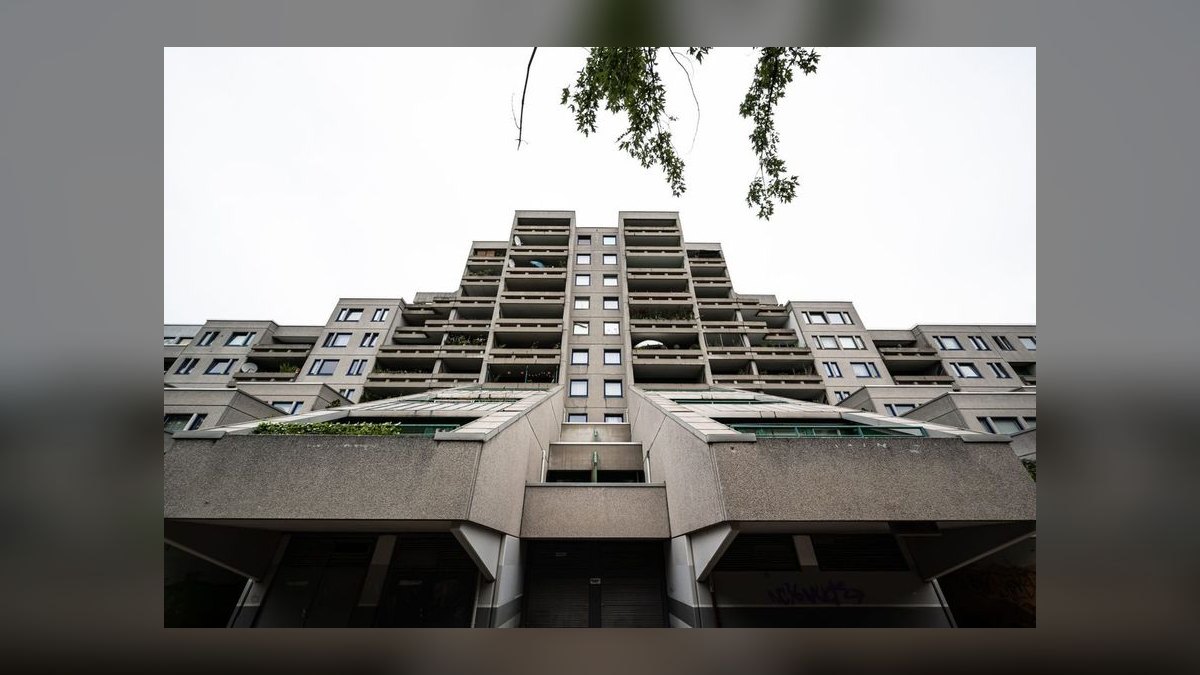
Never walking the property under real conditions. A dock apron looks fine on a Tuesday at 2 p.m. Visit at 7 a.m. on a weekday during a busy season. Watch how trucks actually maneuver. Check the turning radius for a 53-foot trailer, the apron slope, the clear height at the door, and whether the storage room actually has the dimensions the plan claims. Bring a tape measure. Bring your broker. Bring someone who will drive the truck.
Ignoring who else is in the building. Read the rent roll if you can get it, and ask directly about vacant bays and the landlord's leasing plans. A building with three empty bays and a dock you are told is "basically yours" is a building where your dock situation is going to change.
Signing before the storage exists. If the secured cage or storage room is to be built, the lease must specify completion timing, who pays, what happens if it is late, and what the finished specification is — walls, lock, lighting, power, and whether racking is included.
Related questions
Should storage square footage count toward my rentable area?
Either structure works, but never both. If storage sits inside your rentable square footage you already pay base rent on it, so a separate storage charge is a double charge. Ask in writing which basis applies, get the answer in the lease, and confirm the load factor being applied.
What if the building only has one shared dock?
True exclusivity is off the table, so negotiate priority scheduling instead: a defined daily window, a named administrator for the calendar, consequences for overstays, and a clause barring the landlord from leasing to tenants whose delivery volume would exceed remaining capacity during your window.
Can I get dock improvements paid through a TI allowance?
Frequently yes, especially on longer terms. A dock leveler, an added door, or a built-out secured storage room funded through tenant improvement dollars converts recurring rent into landlord-owned improvements you use for the term. Model it against paying monthly for shared infrastructure.
How do I prove a breach of my dock rights?
Document contemporaneously. Timestamped photographs, carrier detention invoices, driver logs, and dated written notice to the landlord build the record. Your remedy clause should require written notice anyway, so make the notice detailed and keep every copy — that file is what makes abatement or termination enforceable.
Does any of this apply to office tenants without docks?
Yes, in modified form. Office tenants negotiate freight elevator access windows, after-hours move-in scheduling, secured storage in below-grade areas, and reserved parking — structurally identical problems solved with the same grant, exhibit, successor, and remedy architecture.
FAQ
What exactly does "exclusive loading-dock rights" mean in a lease?
It means a specific, identified dock door or dock position is assigned to your tenancy and the landlord may not grant use of it to another tenant. The lease names the door, an attached exhibit shows its location, the grant states the hours it applies, and language binds the landlord's successors so a property sale does not erase it. Anything vaguer than that — "access to the loading area," "use of the dock" — grants you nothing your neighbors do not also have.
Will the landlord charge extra for exclusive dock access?
Often, because exclusivity removes inventory from the pool available to future tenants. Whether it is a separate monthly charge or folded into base rent is negotiable, and so is the amount. Your counter-argument is that you are already paying market rent and the dock is a functional requirement rather than an amenity. If a premium is unavoidable, cap its annual escalation the same way you cap base rent escalation and make sure the exclusivity is genuinely exclusive rather than merely preferential.
Can I get exclusive storage space without paying premium rent?
Usually, if you frame it correctly. Unfinished basement, mezzanine, and back-of-house space is often hard for a landlord to lease to anyone, so the alternative to renting it to you cheaply is leaving it vacant. Argue the discount on substance: no finishes, no conditioning, no light, no visibility. Get the square footage, the location, the access hours, and the lock arrangement written into a lease exhibit, and negotiate the operating-expense allocation separately from the rate.
What happens if the landlord violates my exclusive dock or storage rights?
Whatever your lease says will happen, which is why the remedy clause matters more than the grant. A workable structure is written notice from you, a short cure period, then rent abatement accruing for each day the breach continues, plus self-help rights to clear an obstruction at the landlord's expense. Repeated documented breaches within a rolling twelve-month period should trigger a termination right. Without a remedy ladder you have a promise and no leverage.
Should I hire a broker or an attorney for this?
Both, and they do different jobs. A tenant-rep broker who works your product type in your submarket knows what dock and storage terms actually trade for locally and can benchmark the landlord's ask; their compensation typically comes from the landlord's commission. An attorney drafts and redlines the exclusivity, exhibit, CAM, relocation, and remedy language. Legal review is billed hourly and is small against the multi-year value of the provisions being negotiated.
When is it smarter to skip on-site storage entirely?
When your inventory is slow-moving, seasonal, or archival, off-site self-storage or third-party warehousing is frequently cheaper per square foot and removes the landlord's leverage over you. The trade-off is handling time and the friction of things not being where your team works. A common pattern is keeping daily-touch inventory on site in right-sized negotiated storage while pushing everything slow off site — and mentioning that alternative during negotiation tends to improve the on-site rate.
Sources
- https://www.cbre.com/insights
- https://www.jll.com/en-us/insights
- https://www.cushmanwakefield.com/en/united-states/insights
- https://www.naiop.org/research-and-publications/
- https://www.boma.org/BOMA/Research-Resources/
- https://www.irem.org/resources
- https://www.fmcsa.dot.gov/regulations/hours-of-service
- https://www.sba.gov/business-guide/manage-your-business/buy-assets-equipment
- https://www.uli.org/research/
Related on PULSE
- [How Do I Negotiate Signage Rights in a Commercial Lease?](/knowledge/q13679)
- [How Do I Budget a Cold Storage Warehouse Buildout?](/knowledge/q13803)
- [How Many Sales Reps Do I Need to Hire for My Cold Storage Warehouse?](/knowledge/q15945)
- [How Many Sales Reps Do I Need to Hire for My Closet and Storage Company?](/knowledge/q15749)
- [Should I open or buy an All My Sons Moving & Storage franchise in 2027?](/knowledge/q15377)
This page will be disappearing soon. Save it to your device for $1 — or read it free while it is here.
@Kory-White- · if Venmo asks, the last 4 of my number are 2012
This page is gone.
This one is off the shelf now. $1 keeps it on your phone for good — the whole page, pictures and diagrams included.
 pulse-qShould I open or buy a Glory Days Grill franchise in 2027?
 pulse-qShould I open or buy a Restore Hyper Wellness franchise in 2027?
 pulse-qShould I open or buy a Minuteman Press franchise in 2027?
 pulse-qHow Many Employees Should I Schedule Each Shift at My Hot Pot Restaurant in 2026?
 pulse-qHow Do I Tie Commission to More Than One Product in 2026?
 pulse-qShould I open or buy a Duck Donuts franchise in 2027?
 pulse-qWho Pays for the Demising Wall Between Tenant Spaces in 2026?
 pulse-qShould I open or buy a Cookies Crumbl alternative — Insomnia Cookies — franchise in 2027?
 pulse-qShould I open or buy a Celebree School franchise in 2027?
 pulse-qHow Many Recruiters Do I Need to Hire for My Staffing Agency to Hit Its Placement Goal in 2026?