
How do you coach a rep to handle a competitor comparison objection in 2026?
 Curated byKory White · Fractional CRO · Maryland
 PULSEKNOWLEDGE LIBRARY
Quality
Certified

Coach the rep to stop the feature fight and reframe the decision. Teach one reflexive sequence: acknowledge the competitor graciously, ask a re-anchoring question about the outcome the buyer is protecting, then prove your differentiator with a named proof point. First diagnose whether the miss is skill, knowledge, will, or a genuine positioning problem.
What a competitor comparison objection actually is, and why the default rep response loses
A competitor comparison objection is any moment where the buyer introduces a named alternative into the conversation: "We're also looking at Vendor X," "X is about twenty percent cheaper," "X has native two-way sync and you don't," or the quietest and most dangerous version, "A friend at another company uses X and loves it." The words differ, but the underlying event is identical every time — the buyer has stopped evaluating whether to solve the problem and started evaluating who they buy from. That shift is good news. It means budget is real and the problem is real. The bad news is that most reps hear it as an attack on the product and respond by defending the product.
The default rep response is a feature rebuttal. The buyer says "X has native two-way sync," the rep says "well, we have a bidirectional connector too, and ours handles conflict resolution better." That answer is often factually correct and it still loses, for three structural reasons.
First, it accepts the buyer's criteria wholesale. The moment you rebut a feature, you have ratified that feature as a legitimate scoring line on the buyer's comparison matrix. You are now playing on a board someone else built, and the person who built the board — often the competitor's rep, sometimes an analyst grid, increasingly an AI-generated comparison table the buyer pasted together in ten minutes — designed it to favor the vendor who supplied it. Winning a category you didn't choose is a low-percentage game.
Second, feature rebuttals are unfalsifiable to the buyer. They have no way to verify your conflict-resolution claim, so it lands as noise. Both vendors demo well. In crowded categories, every vendor's demo works, every vendor has a customer logo wall, and every vendor claims the same three adjectives. The buyer's actual decision problem is not "which product has more capability" — it is "which of these plausible-looking options will not blow up on me." That is a risk question, and a feature rebuttal does not answer risk questions.

Third, it puts the rep on their heels. The physiology matters. A rep who is defending sounds defensive, talks faster, gives longer answers, and — the pattern you will see over and over on call recordings — volunteers a discount that the buyer never asked for. The single most expensive sentence in competitive selling is "well, I might have some flexibility on price," said unprompted, thirty seconds after a competitor's name enters the room.
Why this matters at the RevOps level rather than just the individual-deal level: competitor comparison objections are the highest-leverage coachable moment in a pipeline, because they cluster. If your team sells into a defined segment, three to five named competitors will account for the overwhelming majority of competitive losses. That means one well-built response, drilled properly, applies across a large slice of late-stage pipeline rather than to one deal. A manager who fixes the deal — jumps on the call, saves Riverside — has bought one deal. A manager who fixes the pattern has bought every competitive deal that rep runs for the rest of the year. The economics of the two activities are not close.
There is also a data problem hiding underneath the coaching problem. Most teams cannot answer "what is our win rate against Vendor X?" with any confidence, because the competitor field in the CRM is optional, free-text, or filled in after the loss by someone guessing. Before you can coach competitive objection handling seriously, you need a required, picklist-driven competitor field on opportunities, populated at the stage where competition becomes known rather than at close. Without it, every coaching conversation is anecdote versus anecdote, and you will spend a quarter drilling a competitor you rarely actually lose to.
The step-by-step process: diagnose first, then coach one sequence
Coaching starts before the 1:1, not in it. The first move is diagnosis, because the four causes of a blown competitor comparison objection have opposite fixes, and applying the wrong one is worse than doing nothing — you burn the rep's trust and reinforce that coaching is theater.

Step one: pull the recording and find the ninety seconds. Use whatever conversation-intelligence tool you have — Gong and Chorus are the common ones — and search the account's calls for the competitor's name. Do not listen to the whole call. Find the moment the competitor's name is first spoken by the buyer, and listen from thirty seconds before to sixty seconds after. Everything you need to diagnose is in that window: what the buyer actually said, what the rep said next, whether the rep asked a question or made a statement, and whether the rep's next three sentences were about the buyer or about the product.
Step two: classify the failure into one of four buckets.
*Knowledge gap.* Ask the rep, cold and without notes, to name the three reasons you win against that specific competitor and the one place that competitor is genuinely weak. If they cannot do it in under thirty seconds, you have a knowledge gap, and no amount of confidence work fixes it. The remedy is a current battlecard and a recall drill, not a pep talk.
*Skill gap.* The rep knows the differentiators — they can recite them to you in the 1:1 — but on the recording they went feature-for-feature anyway. They know the destination and cannot find the road under pressure. The remedy is repetition of exact language until it is reflexive.

*Will or confidence gap.* The tell is the unprompted concession. The rep believes, privately, that the competitor is the better product, so they pre-emptively discount, hedge, or agree too fast. Listen for "that's fair" and "you're right, they do that better than we do" without any follow-up. The remedy is a mix of evidence — actual won-deal stories against that competitor — and a hard rule about not volunteering price.
*System or positioning problem.* Sometimes the competitor is genuinely the right call for that buyer in that segment, or you have no real differentiation there. This is the diagnosis managers most want to avoid, because it means the fix is not theirs. Escalate it as product, pricing, or targeting feedback. Drilling role-plays against a losing position is how you burn out good reps.
Step three: run the 1:1 as questions, not as a download. The structure that works is goal, reality, options, commitment, and the rep should be talking roughly seventy percent of the time. Open with the destination: "On this deal they're also looking at X — what do you want the buyer to believe by the end of your next call?" That forces an outcome instead of a feature list. Then play the clip, pause at the objection, and ask what the buyer was really saying. Three readings are possible and they need different responses: a genuine feature requirement, a price test, or — most commonly in late stage — a request for help justifying a decision they have already leaned toward.
Step four: co-build the sequence rather than handing it over. The constraint that makes this work is: "If you weren't allowed to mention a single feature, how would you answer 'X is cheaper'?" Let the rep struggle for a while. What they produce under that constraint is nearly always closer to the right answer than what they said on the call, and because they produced it, it survives pressure. Then shape it into the three moves.

*Acknowledge graciously.* "X is a solid product — plenty of teams shortlist both of us, so it makes sense you're comparing." This costs nothing and buys enormous credibility. Never bash. Bashing reads as insecurity and buyers punish it, and in a world where the buyer probably already asked an AI assistant to summarize both vendors, a rep who disparages a competitor is instantly contradicted by the buyer's own research.
*Re-anchor with a question.* "When you looked at X, what's the one outcome you were most trying to protect? That's usually where the two of us actually diverge." This is the load-bearing move in the entire sequence. It moves the conversation off the comparison grid and onto the buyer's stated goal, and it gives you the criteria you need for move three.
*Prove the differentiator against that stated outcome.* "Where teams pick us is when that outcome depends on how fast the team actually adopts it — that's the reason the last two switchers moved. Want me to walk through what that looks like on your numbers?" A differentiator without a proof point is a claim; a differentiator tied to a named reference or a specific outcome is evidence.
There is a legitimate fourth move for late-stage deals: plant a due-diligence question. "One thing I'd ask any vendor in this space — how do they handle it when your data model changes mid-year? That's tripped up the last two teams who compared us." This is honest when the weakness is real and framed as something the buyer should verify themselves. It becomes bashing the moment it is a claim rather than a question, or the moment it isn't true.

Step five: close on a specific commitment. "What exactly will you say on the next call, and when is that call?" Then make them say it out loud to you before they leave the room. A rep who cannot deliver the reframe cleanly to their own manager will not deliver it to a buyer.
What this costs in time, and how long it takes to move a number
Managers routinely over-scope competitive coaching into a training event and then never do it again. The version that works is small, weekly, and boring.
Per-rep weekly time. Budget roughly thirty to forty minutes a week per rep, split three ways. Fifteen minutes on a recorded-call review, where you have pre-selected the clip in advance — the pre-work of finding the clip is yours and takes about five minutes with a decent search on the competitor's name. Ten minutes on a live role-play drill, which can and should happen standing up, mid-week, without a calendar invite. Five to ten minutes checking the behavior indicators. Your own prep is another ten to fifteen minutes per rep. On a team of eight, that is roughly six to seven hours a week of manager time, which is real and needs to displace something else on the calendar rather than be added on top.

Battlecard build and maintenance. A first competitive battlecard for one named competitor takes a focused half-day to a day to produce properly, because the sourcing is the work: pull the last ten to fifteen won and lost deals against that competitor, read the close notes, interview the two reps who have beaten them most often, and — the step teams skip — talk to two customers who switched. Refreshing it is fifteen to thirty minutes per card, and should be triggered by events rather than the calendar: the competitor changes pricing, ships a headline feature, gets acquired, or a new objection shows up in three separate calls. A stale battlecard is worse than no battlecard, because it makes a confident rep say something the buyer knows is out of date, which costs credibility for the rest of the deal.
Time to reflex. Most reps need somewhere in the range of five to ten structured repetitions before the sequence comes out cleanly under pressure, and repetitions are not conversations about the concept — they are the rep actually saying the words while someone plays a difficult buyer. Discussing the framework generates zero repetitions. A workable arc: by the end of week four, the rep can deliver the sequence verbatim in role-play against all three objection flavors. By the end of week eight, it shows up unprompted on at least some real recorded calls. Somewhere past the third month you can start looking at whether competitive win rate against that named competitor has moved, and even then the sample size is usually thin.
Sample-size honesty. This is where most competitive coaching programs quietly lie to themselves. If a rep runs forty deals a year and a third are competitive against one named vendor, that is roughly thirteen data points annually. You cannot detect a modest win-rate improvement in thirteen deals. Aggregate across the team, and be explicit that the near-term measurement is behavioral, not financial.
What to actually measure, in order of how fast it moves. Reframe adoption rate — the percentage of recorded calls containing the competitor's name where the rep asked a re-anchoring question rather than rebutting a feature — moves within two to three weeks and is taggable in most conversation-intelligence tools. Discount discipline on competitive deals, specifically average discount and the rate of unprompted concessions, moves within four to six weeks as confidence rises. Objection-to-next-step conversion — how often a call where a competitor is named still ends with a booked next meeting — moves in about the same window and is the best single leading indicator, because it captures whether the rep kept the deal alive. Competitive win rate against the named competitor is the lagging proof and needs a quarter or more plus enough volume to mean anything.

The data prerequisite. None of this measurement works without a required competitor picklist on the opportunity, set at the stage where competition is identified, plus a convention for tagging calls. Getting that instrumented is a RevOps project of a day or two, and it should happen before the coaching program starts, not after, because retrofitting competitor data onto closed deals produces garbage.
Where teams get it wrong
Coaching the deal instead of the skill. The manager hears that Riverside is at risk, joins the next call, personally executes a flawless reframe, and saves it. The deal closes and the rep learned nothing except that competitive deals get escalated. Every hour spent rescuing an individual deal is an hour not spent on the pattern that produces the next ten. Rescue when the deal is large enough to justify it, and be explicit with yourself that you are choosing revenue over development in that instance.
Handing over a script. A reframe you dictate evaporates the moment the buyer says something slightly off-script, because the rep memorized words rather than intent. A reframe the rep built under constraint — no features allowed — survives, because they understand what the move is for. The extra ten minutes of letting them struggle is the entire difference between a drill that sticks and one that does not.
Tolerating competitor bashing because it sounds like conviction. It feels strong in the room and it reads as insecure to the buyer. It also creates a specific late-stage risk: the buyer repeats the disparagement to the competitor's rep, who then corrects it with evidence, and now your rep is the one who said something untrue. Police graciousness harder than you police anything else in the sequence.

Diagnosing every rep the same way. The confident rep who doesn't know the battlecard and the well-prepared rep who folds on price need opposite interventions. Running one team-wide training on competitive objection handling gives both of them the wrong thing. Diagnose individually, then group reps who share a bucket for the drill.
Treating a positioning problem as a skill problem. If you lose consistently to one competitor in one segment and the reps who try hardest lose the same way as the reps who don't, you do not have a coaching problem. Repeated role-plays against an unwinnable position teach reps that the drills are a ritual and that leadership is not listening. Escalate it with the deal evidence attached.
No follow-through. A great 1:1 with no recorded-call check the following week means the old habit returns by Friday. The check does not need to be long — two minutes of skimming one call for whether the sequence appeared — but it has to happen, and the rep has to know it will happen.
Confusing objection volume with objection difficulty. Managers often coach the competitor whose name comes up most, which is usually the market leader that buyers mention reflexively and rarely actually buy. Coach against the competitor you lose to, which requires the CRM data mentioned above and is frequently a different vendor entirely.

Letting the battlecard become a feature grid. A comparison table with checkmarks trains the exact behavior you are trying to eliminate. A battlecard should lead with the two or three buyer outcomes where you genuinely win, the proof points attached to each, the honest gaps and how to handle them, and the due-diligence questions — with the feature comparison, if it exists at all, buried at the bottom for reference.
Choosing the right intervention: a decision framework
Not every competitor comparison objection deserves the same response, and matching the intervention to the situation is most of the manager's job.
When the objection appears early — discovery or first demo — treat it as information, not a threat. An early competitor mention is usually the buyer telling you their frame of reference. The right rep move is curiosity: what prompted them to look at X, what they liked, what they were unsure about. This is free competitive intelligence and it costs nothing to gather. Coaching emphasis here is on asking, not answering.
When the objection appears late — proposal, procurement, security review — treat it as a decision-justification request. By this stage the buyer usually has a preference and needs ammunition to defend it internally, or is using your competitor as leverage on price. The rep move shifts toward proof points, references, and the due-diligence question, and away from open exploration. Coaching emphasis is on precision and on not volunteering concessions.

When the objection is price-shaped, separate the two versions. "X is cheaper" as an opening gambit and "procurement has a number from X and I need you to meet it" are different problems. The first is a value framing problem and the rep should not touch price at all. The second is a negotiation, and the rule is that any concession trades for something — timeline, scope, term length, a reference commitment. A rep who cannot tell these apart will discount on the first one, which is the most common expensive error in the whole category.
When the objection is feature-shaped and the gap is real, coach honesty plus redirection. "That's not something we do the same way" followed immediately by "help me understand what that capability was going to let you do" is stronger than any workaround pitch. Frequently the underlying need is served differently. Occasionally it genuinely is not, and the rep should say so — losing cleanly on a real gap preserves the relationship for the next cycle far better than a stretch claim that surfaces during implementation.
When multiple reps miss the same competitor the same way, stop coaching individuals. Three or more reps failing identically is a content problem, not a skill distribution problem. Fix the battlecard and run one shared drill rather than six separate 1:1s.
When the rep is new versus tenured, invert the emphasis. A rep in their first six months almost always has a knowledge gap dressed up as a confidence gap — they don't know the wins, so they don't believe in them. Load them with won-deal stories against the named competitor before you drill language. A tenured rep who suddenly starts losing competitively is usually reacting to something real, either a competitor's genuine improvement or a change in the deals they're being assigned. Ask before you drill.
Related questions
How long should a competitive role-play drill be?
Ten minutes, done weekly, beats a ninety-minute quarterly session. The rep needs repetitions of the actual words under mild pressure, not discussion of the framework. Fire the objection in all three flavors — price, feature, social proof — and score four binary behaviors.
Should the rep ever name the competitor's weaknesses directly?
Only as a due-diligence question the buyer can verify themselves, and only when it is true. "How do they handle X?" is legitimate. "They can't handle X" is a claim the buyer will check with the competitor, and it costs you credibility if it is even slightly overstated.
What if the rep insists the competitor really is better?
Take it seriously before dismissing it. Ask for the three deals that shaped that belief. If the pattern holds, you likely have a positioning or targeting problem to escalate rather than a rep to fix. If it does not hold, you have a will gap and need won-deal evidence.
How do you handle a competitor comparison objection that came from an AI-generated comparison table?
Ask which criteria on the table the buyer actually chose versus which the tool supplied. Most generated grids weight capability breadth, not the outcome the buyer cares about. Re-anchoring on that outcome is exactly the same move as always.
FAQ
What is the first thing a rep should say when a buyer names a competitor?
Something gracious and short: "X is a solid product — a lot of teams shortlist both of us." That single sentence buys credibility, defuses the expectation of a defensive reaction, and creates room for the question that follows. The mistake is filling that space with a rebuttal before understanding what the buyer is actually asking.
How do I tell a skill gap from a will gap?
Ask the rep, in the 1:1 and away from the buyer, what the right move was. If they describe the reframe accurately but did not do it on the call, that is skill or will, and the tiebreaker is whether they conceded something the buyer never requested. Unprompted discounting is a will signal. If they cannot describe the right move at all, it is knowledge.
How many competitors should we build battlecards for?
Start with two or three — the ones your CRM data shows you actually lose to, not the ones buyers mention most. Each card takes real sourcing work to build and ongoing effort to keep current, and a team that maintains three good cards beats one with twelve stale ones. Expand only when the data justifies it.
What if we genuinely have no differentiation in that segment?
Then coaching will not fix it, and pretending otherwise damages your credibility with the team. Document the losses with specifics, escalate to product, pricing, and marketing, and in the meantime coach reps to qualify out of that segment faster so they spend their hours where they can win.
How do you keep the sequence from sounding scripted?
Drill the intent and the structure, not a memorized paragraph. The acknowledge move and the re-anchoring question should be in the rep's own words. When you role-play, deliberately go off-script as the buyer so the rep practices adapting rather than reciting, and stop them the moment they sound like they are reading.
Who owns competitive enablement — the manager, enablement, or RevOps?
Split it by artifact. RevOps owns the instrumentation: the required competitor field, call tagging, and the win-rate reporting that tells everyone which competitor matters. Enablement owns the battlecard and its refresh cadence. The frontline manager owns diagnosis, drilling, and follow-through, which is the part that cannot be outsourced.
Sources
- Gong Labs — sales research and call analysis
- Harvard Business Review — The New Sales Imperative
- RAIN Group — How to overcome sales objections
- Challenger — reframing the customer conversation
- Sandler — sales training resources
- Winning by Design — sales frameworks and resources
- Salesforce — sales enablement articles
- MindTools — the GROW coaching model
Related on PULSE
- How do you coach a rep to handle the 'it's too expensive' objection?
- How do you handle 'your competitor is 30% cheaper'?
- Which question should I ask to test a rep's understanding of the competitor landscape?
- What specific 2027 signal proves a buying committee has moved from exploration to active vendor comparison?
- How do 2027 buying committees use AI comparison tools before engaging vendors?
- How do vendors successfully navigate a buying committee that uses AI to simulate competitor negotiation tactics?
This page will be disappearing soon. Save it to your device for $1 — or read it free while it is here.
@Kory-White- · if Venmo asks, the last 4 of my number are 2012
This page is gone.
This one is off the shelf now. $1 keeps it on your phone for good — the whole page, pictures and diagrams included.
 pulse-qShould I open a yoga teaching business in 2027?
 pulse-qShould I open or buy a Woof Gang Bakery franchise in 2027?
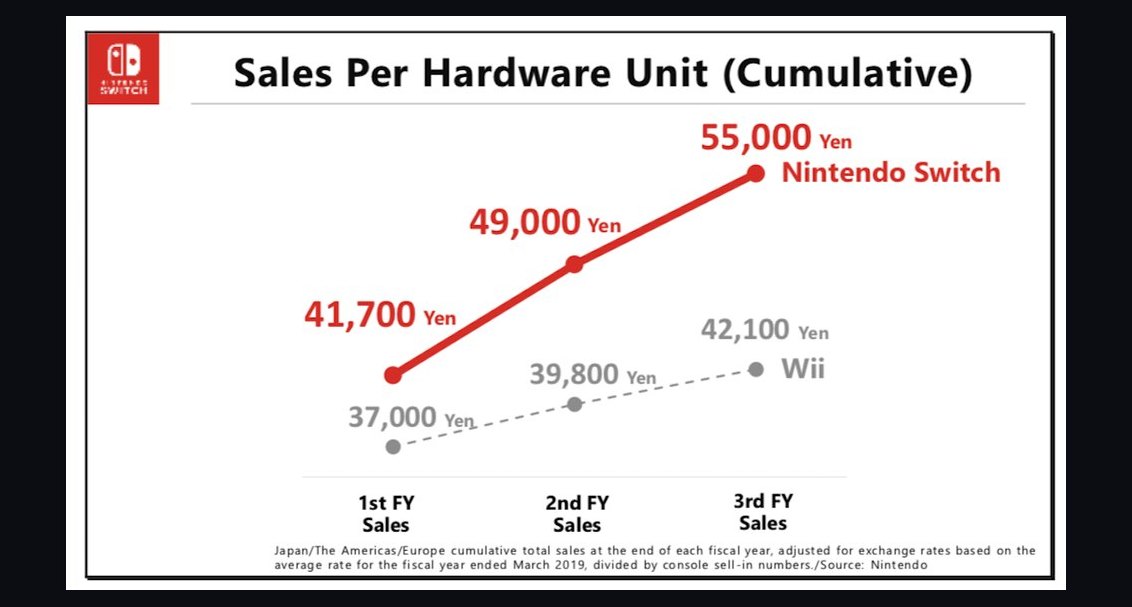 pulse-qHow Do I Set Attach Rates for My Service Fees in 2026?
 pulse-qShould I open or buy a Whataburger franchise in 2027?
 pulse-qShould I open or buy a Bio-One franchise in 2027?
 pulse-qShould I open or buy an Allegra Marketing Print franchise in 2027?
 pulse-qShould I Hire a Fractional CRO If My Deals Close Then Churn in Six Months in 2026?
 pulse-qShould I open or buy a Lee’s Famous Recipe Chicken franchise in 2027?
 pulse-qShould I open a transmission repair business in 2027?
 pulse-qShould I open or buy a Sugared + Bronzed franchise in 2027?