
Should I open or buy a K1 Speed indoor karting franchise in 2027?
 Curated byKory White · Fractional CRO · Maryland
 PULSEKNOWLEDGE LIBRARY
Quality
Certified
Only if you have $2M-$4.5M and want to own a large-format, high-barrier indoor entertainment destination — K1 Speed is the dominant indoor electric-karting brand, but it is one of the most capital-intensive franchises in this category. K1 Speed, founded in 2003 in Carlsbad, California, operates indoor electric go-kart racing centers combined with arcades, event spaces, and food/beverage. The 2026 FDD lists a franchise fee around $50,000, total Item 7 investment of roughly $1,900,000 to $4,600,000, and a royalty (commonly in the 6%-10% range) plus a marketing fee. Mature centers gross $2,000,000-$5,000,000 on arrive-and-drive racing, corporate events, and leagues, with strong unit volumes but heavy fixed costs (large real estate, electric kart fleets, facility maintenance). This is a destination-entertainment investment for well-capitalized operators, not a small-business entry.
The Real Numbers
A K1 Speed center is a large-format indoor entertainment destination: electric karts on a permanent indoor track, plus arcade, simulators, event rooms, and a café/bar. It requires a big industrial/retail building (30,000-60,000+ sq ft), a fleet of electric karts, and substantial track and electrical infrastructure.
| Line Item | Low | High | Notes |
|---|---|---|---|
| Franchise fee | $50,000 | $50,000 | Per 2026 FDD |
| Leasehold / buildout | $700,000 | $2,200,000 | Track, barriers, electrical, F&B |
| Electric kart fleet | $400,000 | $1,000,000 | Karts + charging + spares |
| Arcade & simulators | $150,000 | $500,000 | Games, sims, redemption |
| Technology & software | $30,000 | $120,000 | Timing, booking, POS |
| Initial marketing | $40,000 | $150,000 | Grand opening + corporate sales |
| Insurance & permits | $30,000 | $120,000 | Liability + build permits |
| Working capital | $150,000 | $400,000 | First 3-6 months |
| Total Item 7 | ~$1,900,000 | ~$4,600,000 | Per 2026 FDD |
| Royalty | ~6%-10% of gross | ||
| Marketing fee | ~2% of gross |
Revenue reality: mature centers gross $2M-$5M, with revenue from arrive-and-drive racing (the core), corporate events, racing leagues, arcade, and food/beverage. Volumes are strong, but rent/mortgage, kart-fleet maintenance, electricity, and labor are heavy. Net margins land 10%-22%, producing $250,000-$900,000 owner profit pre-debt at high-performing centers, with breakeven typically 24-42 months.
Who Wins With This Business
- Capital required: $1.9M-$4.6M, with $600,000-$1,500,000 liquid plus financing.
- Time commitment: full-time with a management team; large-format operations are complex.
- Skills: destination-entertainment operations, corporate-event sales, and capital management.
- Geographic fit: large metros with strong population, corporate density, and family-entertainment demand.
- Lifestyle fit: full-time, multi-department operation.
The right owner is a well-capitalized investor or multi-unit operator, often with entertainment or hospitality experience.
Who Loses With This Business
- Under-capitalized operators who can't carry the $2M+ build and 24-42 month ramp.
- Small-market locations without the population to fill a large-format destination.
- Owners who neglect corporate/event revenue, the highest-margin segment.
- Poor maintenance discipline — kart-fleet uptime is core to the experience and revenue.
- High-rent or poorly-sited buildings that crush large-format economics.
2027 Market Conditions
- Demand: experiential and family entertainment is a strong 2027 category as consumers prioritize experiences.
- Competition: Andretti Indoor Karting, Autobahn, RPM, Topgolf, Main Event, Dave & Buster's, and other eatertainment compete for the group-outing dollar.
- Barriers: very high capital and build complexity limit new entrants — a moat for established operators.
- Energy: electric kart fleets reduce emissions/ventilation costs vs gas karts but require charging infrastructure.
- Corporate events: durable B2B demand for team-building drives premium revenue.
The 90-Day Decision Tree
- Day 1-30: Read the 2026 FDD and build a detailed capital model — this is a multi-million-dollar decision requiring lender and equity planning.
- Day 31-60: Interview 8+ owners; ask about build cost overruns, ramp time, corporate revenue mix, and net profit.
- Day 61-100: Validate a large metro and secure a suitable 30,000-60,000+ sq ft building.
- Day 101+: Finance the build with substantial equity and lender confidence; construction is long.
- Install the kart fleet and track with proper safety and electrical infrastructure.
- Pre-sell corporate events and memberships before opening.
- Open and drive corporate/league revenue toward a 24-42 month breakeven.
Alternative Plays
- Andretti Indoor Karting — direct large-format karting-entertainment competitor.
- Main Event / Dave & Buster's-style eatertainment — large family-entertainment centers.
- Urban Air / Sky Zone — lower-capital family-entertainment formats (in the Pulse library).
- Bad Axe / Stumpy's — far lower-capital experiential entertainment.
- Golf-entertainment (BigShots, Five Iron) — destination formats with strong corporate revenue.
- Independent karting center — full equity, but you assume all the capital and brand risk alone.
The Hidden Economics of Kart Replacement and Facility Depreciation
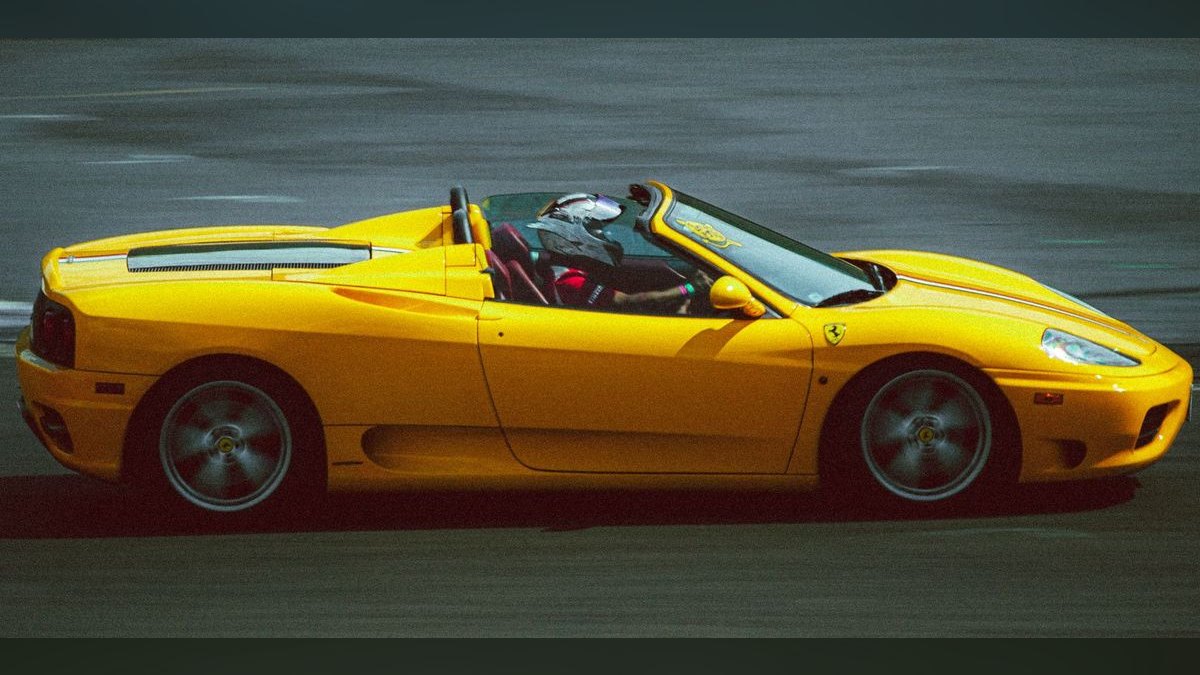
Most franchise disclosure documents (FDDs) present initial investment figures that can mislead first-time entertainment operators. With K1 Speed, the single largest ongoing capital burden is kart fleet replacement. Each center operates 12–18 electric karts, and a single high-performance electric kart costs $12,000–$18,000. Industry benchmarks suggest karts need replacement every 3–5 years depending on usage intensity (a high-traffic location may cycle through 50,000+ laps per kart annually). That means a full fleet replacement costs $150,000–$325,000 every few years, not including battery pack refurbishment ($3,000–$5,000 per kart every 18–24 months).
Beyond karts, the facilities themselves carry depreciation schedules that are brutal for resale value. A typical K1 Speed leasehold improvement runs $1.2M–$2.8M (track surface, barriers, timing systems, HVAC for indoor air quality). Track surface resurfacing alone costs $40,000–$80,000 every 5–7 years. The timing and scoring system (e.g., MyLaps or AMB) is a proprietary upgrade at $50,000–$90,000. If you sell the franchise after 7–10 years, a buyer will discount heavily for deferred kart and track maintenance. Operators who fail to budget $80,000–$150,000 annually for capital reserves often find themselves with a center that feels dated and underperforms against newer competitors.
Site Selection Risk: The 30,000-Square-Foot Trap
K1 Speed requires 25,000–45,000 square feet of leasable space with 18–22-foot minimum ceiling heights (to accommodate elevated track sections and safety netting). This eliminates most suburban strip centers and forces operators into industrial-zoned or big-box retail spaces where lease terms are 10–15 years with triple-net (NNN) costs of $6–$12 per square foot annually. A 35,000-square-foot center in a major metro area can carry $210,000–$420,000/year in NNN expenses alone — before rent.
The real trap is parking ratios. Municipal codes for entertainment venues often require 1 parking space per 200–300 square feet, meaning you need 120–175 parking spots for a typical K1 Speed. Many available industrial spaces have only 50–80 spots. Retrofitting parking costs $5,000–$15,000 per space (land acquisition, paving, striping, lighting). Operators who underestimate this have lost deposits and spent 6–12 months searching for alternative sites. In 2023–2025, K1 Speed opened 4–6 new locations annually, but franchisee sources indicate 30–40% of signed franchise agreements never open due to site acquisition failures.
The Competitive Landscape Shift: EV Racing and Alternative Formats
K1 Speed’s core advantage — electric karts with instant torque — is now being replicated by at least 5–7 competing brands (e.g., RPM Raceway, Autobahn Indoor Speedway, Pole Position Raceway, and regional independents). However, the bigger threat in 2027 is entry-level EV racing experiences from non-traditional players. Companies like Electrify America and BMW’s Urban-X have experimented with pop-up indoor e-karting concepts. More directly, Topgolf-style entertainment complexes (e.g., Puttshack, Puttery) are adding racing simulators and short-track karting to their food-and-beverage-heavy models, siphoning the corporate event and birthday party revenue that represents 35–50% of K1 Speed’s gross sales.
Additionally, autonomous karting experiences (where karts drive themselves via AI-guided tracks) are emerging in Japan and Europe. While not yet in the US market, these systems reduce labor costs (no need for track marshals) and could undercut K1 Speed’s pricing by 20–30% per race. A franchisee signing a 15-year lease in 2027 should consider whether the K1 Speed model remains premium-priced ($25–$40 per 8–10 minute race) if cheaper, tech-forward alternatives appear within 3–5 miles.
Labor Intensity and the Managerial Burnout Factor
K1 Speed centers require 15–25 employees per shift (track marshals, front desk, mechanics, F&B, party hosts, maintenance). With minimum wages rising to $15–$20/hour in many states (and $18–$22 in California where K1 is headquartered), annual payroll for a single location can exceed $600,000–$900,000. Turnover in the entertainment industry runs 100–150% annually, meaning you’ll recruit, train, and lose an entire staff every 8–12 months.
The operational complexity is high: karts need daily battery charging cycles (4–6 hours per kart), track inspections before each session, and safety certifications for marshals. Many franchisees report working 60–80 hours per week for the first 2–3 years, with net profit margins of 10–18% after all expenses — meaning a $3M revenue center may only generate $300,000–$540,000 in pre-tax profit for the operator, before debt service. For a $2M–$4.5M investment, that’s a 7–15% cash-on-cash return in a best-case scenario, which is competitive with index funds but carries far more risk and labor.
FAQ
What is the typical total investment for a K1 Speed franchise in 2027? The 2026 FDD shows a range of roughly $1.9 million to $4.6 million, including the $50,000 franchise fee. Most new builds fall between $2 million and $4.5 million, depending on location size and local construction costs.
How much can a K1 Speed franchise earn annually? Mature centers typically gross $2 million to $5 million per year. Revenue comes from arrive-and-drive racing, corporate events, leagues, arcade games, and food/beverage sales. Actual net profit varies widely due to high fixed costs.
What are the ongoing fees? Royalties are commonly 6% to 10% of gross sales, plus a marketing fee (often 1% to 3%). These are standard for large-format entertainment franchises and directly affect bottom-line margins.
How long does it take to open a K1 Speed location? Site selection, lease negotiation, construction, and permitting typically take 12 to 18 months. The process is longer than smaller franchises due to the size and complexity of indoor karting centers.
Is K1 Speed a good fit for first-time franchisees? Generally no—it requires significant capital ($2M+), experience with large real estate projects, and managing 20–40 employees. Most franchisees are multi-unit operators or investors with entertainment or hospitality backgrounds.
What are the biggest risks of owning a K1 Speed franchise? High fixed costs (rent, electric kart fleet maintenance, staffing) mean breakeven is relatively high. Economic downturns can reduce discretionary spending on racing and events. Competition from other entertainment venues is also a factor.
Bottom Line
Open a K1 Speed only if you are well-capitalized ($1.9M-$4.6M), targeting a large metro, and prepared for a 24-42 month ramp on a complex, multi-department entertainment destination. It is the dominant indoor electric-karting brand with high barriers to entry that protect established operators. Skip it if you're under-capitalized, in a small market, or seeking a simpler business — lower-capital experiential concepts (axe throwing, golf entertainment, family-entertainment centers) offer entertainment exposure at a fraction of the investment.
Related on PULSE
- [Should I open or buy an Andretti Indoor Karting franchise in 2027?](/knowledge/q15126)
- [Should I open or buy a Parisi Speed School franchise in 2027?](/knowledge/q15112)
- [How does vendor consolidation affect the speed of proof-of-concept cycles for enterprise buyers in 2027?](/knowledge/q16418)
- [How do buying committees balance speed of AI implementation versus depth of customization in vendor selection?](/knowledge/q16270)
- [Top 10 Speed and Agility Trainers for Football Recruits 2027](/knowledge/q13612)
- [In 2027, how do buying committees balance the speed of AI-generated vendor shortlists against the need for human trust in final decisions?](/knowledge/q13549)
Sources
- K1 Speed Franchise Disclosure Document (2026 filing) — Items 5, 6, 7, 19, 20
- K1 Speed official franchise site — investment range and format
- Entrepreneur / entertainment-franchise directories — K1 Speed listing
- Franchise Business Review — entertainment-franchise satisfaction data
- IBISWorld — Family & Indoor Entertainment Centers in the US, 2026 industry report
- IAAPA — global attractions and entertainment-center industry data 2026
- Statista — US family-entertainment-center revenue, 2025-2026
- International Franchise Association (IFA) — 2027 Franchise Economic Outlook
- Technomic / eatertainment market reports 2026
- US Census — metro population and corporate density data, 2025-2026
This page will be disappearing soon. Save it to your device for $1 — or read it free while it is here.
@Kory-White- · if Venmo asks, the last 4 of my number are 2012
This page is gone.
This one is off the shelf now. $1 keeps it on your phone for good — the whole page, pictures and diagrams included.
 pulse-qShould I open or buy a Golden Corral franchise in 2027?
 pulse-qShould I open or buy an It's A Grind Coffee franchise in 2027?
 pulse-qShould I open or buy a Tutor Time franchise in 2027?
 pulse-qShould I open or buy a DRYmedic franchise in 2027?
 pulse-qTop 10 Closing Coaching Techniques for Mid-Market Reps in 2027
 pulse-qShould I open or buy a Restore Hyper Wellness franchise in 2027?
 pulse-qHow Do I Budget a Chiropractic Clinic Buildout?
 pulse-qHow do you handle a rep who sandbags their pipeline to avoid quota increases in 2027?
 pulse-qHow Many Salespeople Should I Schedule on My Auto Dealership Floor Each Day?
 pulse-qShould I open or buy a Duck Donuts franchise in 2027?