
Should I open or buy a solidcore franchise in 2027?
 Curated byKory White · Fractional CRO · Maryland
 PULSEKNOWLEDGE LIBRARY
Quality
Certified
solidcore has been overwhelmingly company-owned since 2013, so before you plan to "buy" one, verify the current Franchise Disclosure Document for open territories — the more realistic 2027 play is often to franchise a comparable Lagree/reformer-pilates brand like Club Pilates or open an independent studio, budgeting $400,000-$750,000 and targeting an affluent, fitness-forward market with strong retention economics.
A Concrete Scenario That Frames The Problem
Picture a former RevOps operations manager — call her Dana — who left a SaaS company in early 2027 with a $220,000 severance and a genuine passion for Lagree-style reformer workouts after three years as a member at her local studio. She emails solidcore's corporate office asking how to buy a franchise in her mid-sized metro area, expecting the kind of structured discovery process she's seen from Orangetheory or Anytime Fitness. Instead she gets a vague response pointing her toward "growth partnerships" with no clear franchise fee schedule, no FDD, and no timeline. This is the exact fork every prospective solidcore buyer hits: the brand's operating history is corporate-store-first, and unlike fully franchised competitors, availability is inconsistent by region and by year. Dana's next move determines everything — she can spend months waiting on a maybe, or she can immediately pivot her capital and her RevOps-honed diligence process toward a peer brand or an independent build. The studios that succeed in this category are run by owners who treat the site-selection, staffing, and retention funnel with the same rigor Dana applied to a sales pipeline: qualify fast, don't chase a lead that won't close, and measure everything. That operational mindset — treating the buildout and the first 18 months like a funnel with stages, conversion rates, and drop-off points — is what separates the studios that hit $900,000 in year-two revenue from the ones that quietly close. The scenario also illustrates why so many searches for "solidcore franchise" actually resolve into decisions about Club Pilates, YogaSix, or an independent studio instead — the underlying demand for a premium reformer experience is real and growing, even when the specific brand name isn't the vehicle that gets built.
How The Mechanism Actually Works
The reason solidcore stayed corporate-owned while competitors like Club Pilates franchised aggressively comes down to a capital-allocation decision every boutique-fitness brand faces: franchise royalties (typically 6-8% of gross revenue) generate steady, low-risk income for a franchisor, but 100% corporate ownership captures the full unit economics of a business with unusually strong retention. Because premium reformer studios can sustain $200-$300/month memberships with churn well below typical gym averages, a parent company weighing "franchise it out" versus "keep it and scale corporate capital" often chooses the latter when it has the balance sheet to fund buildouts directly. This is the same build-versus-buy logic you'd apply in a RevOps context when deciding whether to build a feature in-house or license it from a vendor — you keep control (and margin) when the unit economics are strong enough to justify the capital outlay yourself. For a prospective owner, this mechanism has a direct consequence: you cannot assume brand-name availability just because the concept is hot. You have to run a parallel-path diligence process — verify the specific brand's FDD status, and simultaneously price out the peer-franchise and independent routes — so you're never stalled waiting on one closed door.
Real Numbers, Ranges, And Benchmarks
Because the "buy a solidcore franchise" path may simply not exist in a given market or year, every serious buyer should underwrite the comparable premium reformer-studio model, since that's the economic reality regardless of which sign goes on the door. Total initial investment runs $400,000-$750,000 for an independent build, or $500,000-$900,000 if you're franchising a peer brand once you layer in the $35,000-$60,000 franchise fee and higher-spec build standards many franchisors require. Equipment is a meaningful line item on its own: Lagree-style reformer machines run $12,000-$18,000 per unit, and a studio needs 10-14 machines to run a full class, meaning equipment alone can consume $120,000-$280,000 of your budget before you've paid a dollar of rent. Leasehold improvements for a 1,500-3,000 square foot space run $130,000-$350,000, heavily dependent on whether you're converting existing retail or building from a bare shell — and reformer studios have unusual HVAC demands given the heat and humidity load of a full class, often adding $15,000-$30,000 beyond a standard buildout estimate. On the revenue side, a well-run studio in an affluent market grosses $500,000-$1,200,000 annually, driven by membership pricing of $200-$300/month plus class packages, with the top of that range reserved for urban locations with dense, high-income populations. Instructor labor typically consumes 25-32% of revenue, since Lagree-certified instructors command $35-$60 per class plus tips and are in tight supply, while rent should be held to 10-15% of projected gross revenue — on $800,000 in revenue that's a ceiling of roughly $80,000-$120,000 per year, or $6,700-$10,000 per month. After instructor costs, rent, marketing (5-12% of revenue depending on stage), and royalties if franchised (6-8% plus a 1-2% marketing fund contribution), owners typically clear $80,000-$250,000 in net profit on a mature single-unit studio. Break-even generally lands between 12 and 24 months, with the fastest timelines belonging to studios that pre-sold founding memberships aggressively before opening day rather than waiting to build a client base organically post-launch.
Trade-Offs And Alternatives
The independent-versus-franchise decision is really a trade of margin against momentum, and it plays out differently depending on how much brand-building experience you bring. Going independent means you keep 100% of revenue after expenses — on $800,000 in annual revenue with a 15-25% margin, that's $120,000-$200,000 net, with zero royalty drag — but you're starting from zero brand awareness and will likely spend 8-12% of revenue on marketing in year one, dropping to 5-8% once you've built a local reputation. Franchising a peer brand like Club Pilates trades that margin for a proven playbook: standardized instructor training, national marketing funded by your fee, and instant brand recognition that shortens the pre-sale runway, but royalties and marketing fund contributions of roughly 7-10% combined mean your net margin compresses to 10-18%, or $80,000-$144,000 on the same $800,000 in revenue. Exit strategy differs too — an independent studio with a strong local following typically sells for 2-3x annual net profit ($300,000-$600,000 after five to seven years of operation), while a franchise resells faster because of brand equity but at a lower 1.5-2.5x multiple ($200,000-$450,000), since the buyer inherits the same royalty obligation you did. If solidcore itself becomes available in your market, it sits somewhere between these two poles — you'd get brand recognition without the decade of franchise-system maturity that Club Pilates has already built out, which is itself a trade-off worth underwriting carefully before you commit capital. The clearest parallel from a RevOps lens is choosing between building a proprietary sales process versus adopting a category-tested playbook from a market leader: the proprietary route has higher ceiling and higher risk, the proven playbook trades some upside for materially lower execution risk.
Common Pitfalls And How To Avoid Them
The single most common mistake is assuming brand availability without confirming it — prospective owners lose months chasing a solidcore territory that was never actually open for franchising in their metro area, capital sitting idle while a Club Pilates territory in the same submarket gets claimed by a faster-moving buyer. Avoid this by running your FDD verification and your peer-brand diligence in parallel from day one, never sequentially. A second pitfall is under-capitalizing the equipment and HVAC lines specifically — generic boutique-fitness buildout estimates don't account for 10-14 reformer machines at $12,000-$18,000 each or the elevated ventilation demands of a high-heat, high-humidity class format, and owners who budget off a generic fitness-studio template routinely run 15-20% over on these two lines alone. Third, retention-weak studios fail even in hot markets: because premium pricing of $200-$300/month only works if the member experience justifies it, inconsistent instructor quality is the fastest way to erode the retention that makes this category's unit economics attractive in the first place — invest in instructor development and certification standards before you invest in marketing spend. Fourth, wrong-market selection kills otherwise well-run studios: target areas with median household income of $100,000-$200,000+, at least 30,000-50,000 people within a 1-2 mile radius skewing toward women aged 25-45, and no more than two competing reformer or Pilates studios within two miles — saturated markets compress the pricing power the entire model depends on. Finally, owners frequently under-budget the pre-revenue period: allow four to eight months for permitting, construction, and equipment installation, and plan for two to three months of rent with zero revenue during that window, since running out of working capital before opening day is a preventable failure that shows up in the financials long before it shows up in foot traffic.
Related Questions
Is solidcore currently franchising anywhere in 2027?
Availability is inconsistent by region and changes year to year since the brand has historically been corporate-owned; always request the current FDD directly rather than relying on outdated online claims.
How does Club Pilates franchising compare to an independent studio?
Club Pilates offers a proven training and marketing system for a $35,000-$60,000 fee plus 6-8% royalty, trading margin for a faster, lower-risk path to opening compared to building an independent brand from scratch.
What's the minimum population density needed to support a reformer studio?
Aim for 30,000-50,000 people within a 1-2 mile radius with median household income above $100,000, since premium pricing requires a dense, affluent customer base to sustain retention.
How much should I budget for reformer equipment alone?
Plan for $120,000-$280,000 across 10-14 machines at $12,000-$18,000 each, plus ongoing maintenance, since equipment is one of the largest single line items in the buildout.
What break-even timeline should I plan for?
Most studios break even in 12-24 months, with pre-selling founding memberships before opening being the single biggest lever for shortening that runway.
FAQ
Is solidcore actually offering franchises in 2027? solidcore has historically been company-owned, and its franchising program is limited or not widely available. You must check the current Franchise Disclosure Document to confirm if any territories are open, since the brand may still be expanding primarily through corporate locations.
What is the total investment range to open a premium Lagree-style studio like solidcore? A comparable studio typically costs between $400,000 and $750,000 to build out, including equipment, leasehold improvements, and initial marketing, with franchised builds sometimes running to $900,000 once fees and brand-standard finishes are included.
How much revenue can a premium reformer studio expect to generate? Gross revenue typically falls between $500,000 and $1,200,000 annually, driven by membership retention and class pricing, with higher-end urban locations reaching the top of that range.
What are the main alternatives if solidcore franchises aren't available? You can franchise a comparable Lagree or reformer-pilates brand such as Club Pilates that does offer franchises, or open an independent Lagree studio under your own name, both requiring similar capital and operational expertise.
How long does it take to break even on a premium reformer studio? Break-even timelines typically range from 12 to 24 months depending on membership ramp-up, local competition, and how aggressively you pre-sell memberships before opening.
What are the key risks of opening a solidcore-style studio in 2027? Risks include limited franchise availability, high upfront investment, potential market saturation in popular areas, and the need for strong local marketing and retention discipline to justify premium pricing.
Sources
- https://www.entrepreneur.com/franchises
- https://www.franchisebusinessreview.com
- https://www.ibisworld.com
- https://www.ihrsa.org
- https://www.statista.com
- https://www.franchise.org
- https://www.grandviewresearch.com
- https://www.sfia.org
Related on PULSE
- Should I open or buy an Oxi Fresh Carpet Cleaning franchise in 2027?
- Should I open or buy an Oil Can Henry's franchise in 2027?
- Should I open or buy a KidStrong franchise in 2027?
- Should I open or buy a Premier Garage franchise in 2027?
- Should I open or buy a Jazzercise franchise in 2027?
- Should I open or buy a Nekter Juice Bar franchise in 2027?
This page will be disappearing soon. Save it to your device for $1 — or read it free while it is here.
@Kory-White- · if Venmo asks, the last 4 of my number are 2012
This page is gone.
This one is off the shelf now. $1 keeps it on your phone for good — the whole page, pictures and diagrams included.
 pulse-qShould I open or buy a Goddard School franchise in 2027?
 pulse-qShould I open or buy a Bio-One franchise in 2027?
 pulse-qHow Do I Get My Furniture Reps to Sell Protection Plans in 2026?
 pulse-qShould I open or buy a Golden Corral franchise in 2027?
 pulse-qShould I open or buy a Pollo Tropical franchise in 2027?
 pulse-qShould I open or buy a Hunt Brothers Pizza franchise in 2027?
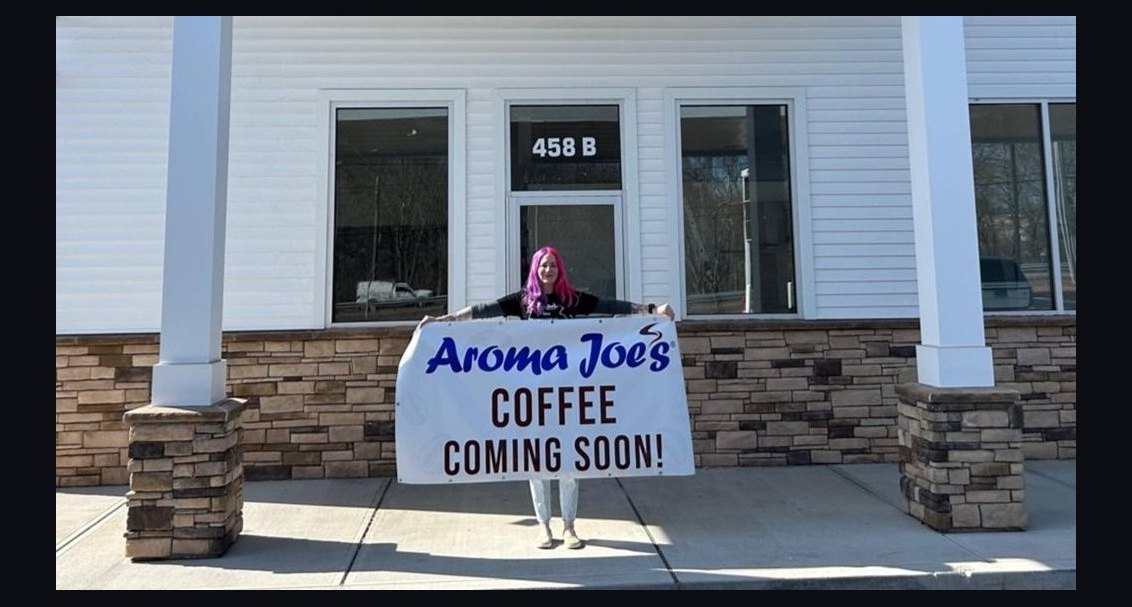 pulse-qShould I open or buy an Aroma Joe's Coffee franchise in 2027?
 pulse-qShould I open or buy a Floyd's 99 Barbershop franchise in 2027?
 pulse-qShould I Hire a Fractional CFO Before Renewing My Commercial Insurance Policy in 2027?
 pulse-qShould I open or buy a Buca di Beppo franchise in 2027?