
Should I open or buy a Buca di Beppo franchise in 2027?
 Curated byKory White · Fractional CRO · Maryland
 PULSEKNOWLEDGE LIBRARY
Quality
Certified
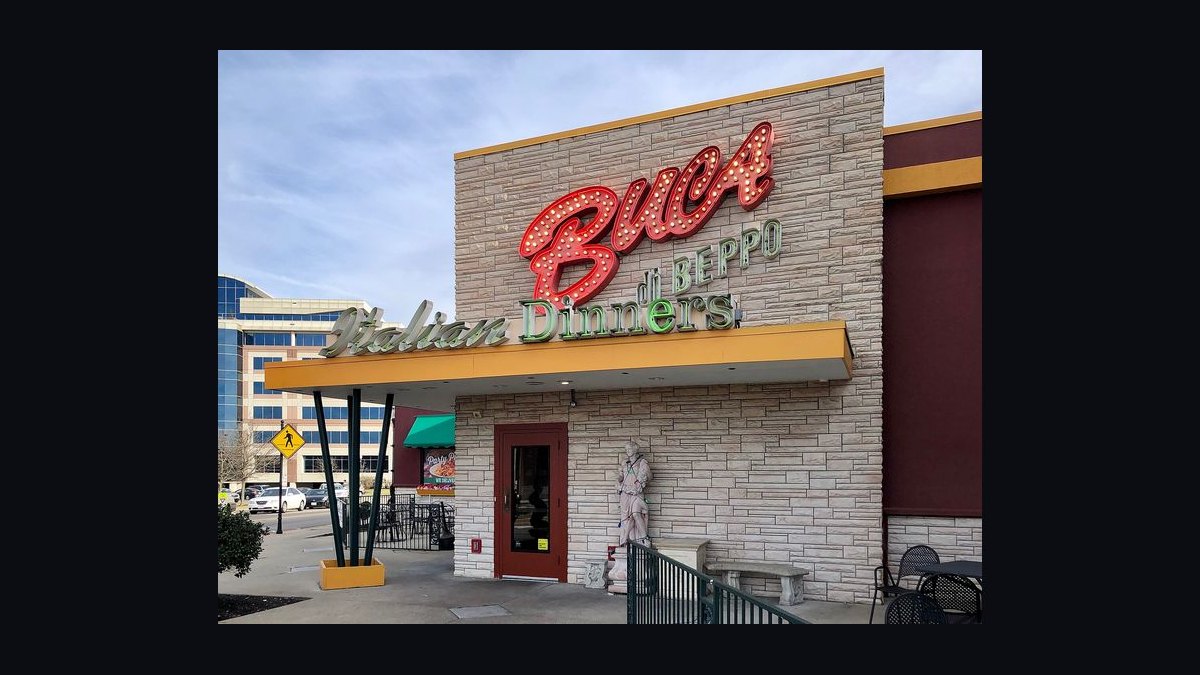
You cannot realistically buy a Buca di Beppo franchise in 2027. The chain is essentially company-owned, never ran a broad franchise program, and filed Chapter 11 in 2024 before closing dozens of locations. If you want family-style Italian, franchise a healthier full-service brand or open a differentiated independent concept instead.
What a Buca di Beppo franchise would actually be — and why the brand is not selling one
Buca di Beppo is a family-style Italian casual-dining chain built on a specific and unusual premise: platters sized for a table rather than plates sized for a person, priced so a group of four to six splits the check, served inside a deliberately cluttered, kitschy dining room full of photographs, saint statuary, and Rat Pack memorabilia. The "Pope Room" — a private table with a bust of the Pope in the middle — is the brand's single most-recognized asset. That format made the chain a default choice for birthdays, team dinners, graduations, and holiday parties, and the catering arm that grew out of it was for years the healthiest part of the business.
The thing an aspiring operator needs to understand is that this concept was never distributed through franchising the way a Subway or a Great Clips is. Buca grew as a company-operated chain. It went public, was acquired, passed through private-equity-style ownership, and ended up under Earl Enterprises, the restaurant group associated with Planet Hollywood and Bertucci's. Company ownership was a strategic choice — the concept depends on a large footprint, a big kitchen, a full liquor program, and a decor package that is expensive and hard to police across independent owners. None of that lends itself to a franchise sales program.
That matters concretely. A franchise you can actually buy has an FDD — a Franchise Disclosure Document, the federally mandated 23-item disclosure a franchisor must give a prospect at least 14 days before taking money. Item 7 gives you the estimated initial investment range. Item 19 gives you the Financial Performance Representation, if the franchisor chooses to make one. Item 20 gives you unit counts, openings, closures, transfers, and terminations for the last three years. Item 21 gives you audited financial statements for the franchisor entity. If a brand does not file an FDD in the registration states, there is no franchise to buy — not "hard to get," not "invitation only," simply nonexistent as a purchasable asset.
Buca then filed for Chapter 11 bankruptcy protection in 2024. The filing was not a surprise to anyone tracking the category. It followed years of same-store traffic decline, a debt load carried over from prior ownership, a portfolio heavy with mall-adjacent and tourist-corridor real estate, and a pandemic that hit large-format dine-in group occasions harder than almost any other restaurant format. Dozens of locations closed during the restructuring, and the company rejected leases on underperforming sites — which is what Chapter 11 is for.
.jpg)
So a 2027 prospect faces two stacked problems, not one. The first is structural: there is no franchise program to join. The second is reputational: even if a program appeared, you would be buying into a trademark that a meaningful share of the dining public last saw as a shuttered storefront in their local retail center. Brand equity in casual dining is fundamentally about default choice — the restaurant a group names without debating. A bankruptcy headline and a closed neighborhood location damage exactly that. Rebuilding it takes years of consistent operation, and a new franchisee would be paying a royalty for the privilege of doing that rebuilding on the franchisor's behalf.
There is a third thing worth naming, because it costs people money: any website presenting itself as a Buca di Beppo franchise portal, quoting a franchise fee, and asking for a deposit or a "qualification" payment should be treated as fraudulent until you have an FDD in hand from a verifiable corporate contact. Franchise-lead-generation scams cluster around distressed and defunct brands precisely because the name is recognizable and the corporate switchboard is chaotic. Never wire money against a brand you have not verified in a state franchise registry.
Even inside a RevOps or business-operations frame — where the instinct is to model unit economics, payback period, and cohort retention before committing capital — the analysis terminates early here. You cannot underwrite a deal that has no legal instrument behind it. The useful question is not "should I buy this franchise" but "what is the best way to enter family-style Italian in 2027," and the rest of this page answers that.
The step-by-step process for entering family-style Italian without the Buca name
The practical path splits into two branches early, and almost every downstream decision follows from which branch you take: franchise a stable full-service Italian brand, or build an independent concept that captures the shareable-platter occasion on your own trademark.
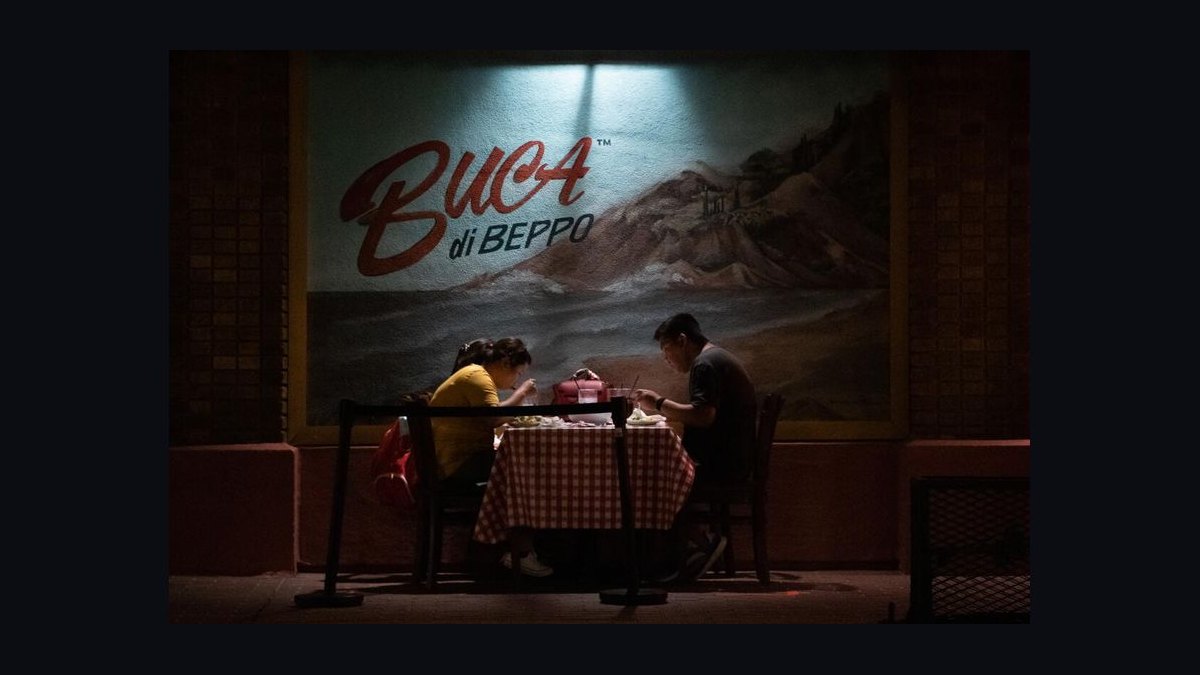
Step one — verify the brand actually franchises. Before any emotional attachment, confirm the brand files an FDD. Check the state franchise registries that publish filings publicly — California's DFPI, Wisconsin's DFI, and Minnesota's Department of Commerce all maintain searchable databases. If nothing appears, stop. This step alone eliminates Buca di Beppo and several other names people ask about.
Step two — request and read the FDD cover to cover. Budget a week. Item 7 tells you the low-high investment range the franchisor believes is realistic. Item 6 lists every fee you will owe beyond royalty — technology fees, marketing fund contributions, transfer fees, renewal fees, local advertising minimums. Item 20 exhibits list current and former franchisees with contact information. Item 19 either shows unit-level revenue data or explicitly declines to; a brand that declines to make any financial performance representation is telling you something.
Step three — call former franchisees, not just current ones. The Item 20 exhibit includes operators who left the system in the prior fiscal year. They are the highest-value phone calls you will make and the ones prospects skip. Ask why they exited, what the actual buildout cost versus the FDD estimate, and what the franchisor did when a unit underperformed.
Step four — hire a franchise attorney and a restaurant-specialist CPA. Expect roughly $3,000 to $8,000 for FDD review and franchise agreement negotiation, and a similar range for a financial model and entity structuring. On a $2 million project this is rounding error and it is the cheapest insurance available.
.jpg)
Step five — site selection, which in full-service Italian outranks nearly everything else. Target a freestanding building or a strong end-cap with dedicated parking, 4,000 to 6,000 square feet, visible pylon signage, and a trade area with genuine group-dining demand — suburban family density, a nearby corporate corridor for weekday catering and team dinners, or an entertainment district with pre- and post-event traffic. Avoid interior mall positions. The mall-anchored footprint is widely cited as one of the structural drags on legacy Buca real estate, because you inherit the mall's declining traffic and its parking behavior.
Step six — capital stack and lender conversations. Full-service restaurants with liquor are financeable but not casually so. SBA 7(a) loans are the common instrument, typically requiring 10% to 30% equity injection depending on the lender and whether the project is new construction or an existing-restaurant acquisition. Expect a personal guarantee. Expect the lender to want a signed LOI on the site, a full pro forma, and — if franchising — the brand on the SBA Franchise Directory.
Step seven — permits, liquor license, and buildout, which is where timelines die. Liquor licensing varies enormously by jurisdiction: some states issue on application for a few thousand dollars, while quota-license markets can require buying an existing license on the secondary market for a materially larger sum. Start this before you sign the lease, not after.
Step eight — hire the general manager and executive chef early, ideally 60 to 90 days before opening, so they participate in hiring the line and running the training schedule. In full-service, the GM is the single largest determinant of whether the unit survives year two.
.jpg)
Step nine — open soft, then loud. Two to three weeks of limited-capacity friends-and-family and soft-open service to break in the kitchen, then a grand opening with real local marketing spend.
Costs, timelines, and the ranges a full-service Italian project actually runs
The numbers below describe a comparable full-service Italian restaurant — the asset you would build if you wanted the Buca occasion without the Buca name. They are ranges, not promises, and the spread inside each line is driven mostly by market, landlord contribution, and whether you take a second-generation restaurant space or build from a shell.
Leasehold improvements: $700,000 to $1,800,000. A second-generation restaurant space with usable hoods, grease interceptor, and existing gas and electrical service can land near the bottom of that range. A raw shell requiring new utilities, a full kitchen exhaust system, and ADA-compliant restrooms lands at the top or above it. Negotiate a tenant improvement allowance — landlords commonly contribute, and on a strong credit tenant that contribution meaningfully changes your equity requirement.
Kitchen equipment and POS: $300,000 to $650,000. Ranges, combi ovens, pasta cookers, walk-in cooler and freezer, dish machine, prep tables, smallwares, bar equipment, and the technology stack. Used equipment from restaurant auctions can cut this by 30% to 40%, at the cost of no warranty and unknown remaining service life on compressors.
Decor, signage, and furniture: $40,000 to $150,000. A themed dining room is more expensive than a plain one. Buca's decor package was genuinely part of the product; if you are competing on the same occasion you cannot open into white walls.
Initial inventory: $25,000 to $60,000. Food, and a full-service bar with wine, which carries a much heavier opening inventory than a beer-and-wine license.
Grand opening marketing: $30,000 to $80,000. Independents should skew to the high end because you have no brand awareness to draw on.
Working capital: $120,000 to $350,000. Three months minimum. Six is safer. Undercapitalized working capital is the most common cause of failure among restaurants that had a perfectly good concept.
Franchise fee, if applicable: roughly $40,000 to $60,000 for full-service casual-dining brands, plus ongoing royalty typically in the 4% to 6% range and a marketing fund contribution around 1% to 2% of gross sales.
Total: roughly $1.5 million to $3 million for an independent, and generally $1.8 million to $4.5 million for a franchised full-service unit once fees and brand-standard buildout requirements are layered in.
On the revenue side, a well-located full-service Italian restaurant typically grosses $2 million to $4 million annually. The cost structure that eats it is predictable: food and beverage cost at 28% to 35% of sales, labor at 30% to 38%, occupancy at 6% to 10%, and marketing plus other operating expense at roughly 15% to 20%. What survives is a net margin in the 5% to 15% band before debt service. On $2.8 million in sales, a well-run unit clears somewhere near $250,000 to $350,000 pre-debt — and if you financed $1.8 million on a ten-year SBA note, a substantial share of that goes to principal and interest before you take a dollar.
Timelines: 3 to 6 months from decision to signed lease if you are disciplined about site criteria. 4 to 9 months from lease signature to opening, driven almost entirely by permitting speed in your jurisdiction and by liquor licensing. Budget 12 to 18 months of negative or breakeven cash flow after opening for an independent building word of mouth; a franchised unit with brand recognition typically ramps faster. Break-even on total investment realistically lands at 18 to 36 months for a strong independent and 24 to 48 months for a franchise, where royalty drag slows payback even though traffic starts higher.
One number that deserves its own line: rent. Signing a lease above 8% of your realistic sales forecast is how good restaurants die slowly. If the landlord wants $18,000 a month, you need roughly $2.7 million in annual sales for that to sit at 8%. If your trade area cannot plausibly produce $2.7 million, the deal is wrong regardless of how much you like the building.
Where operators get this wrong
Chasing a distressed brand because the name is cheap. The instinct is understandable — a recognizable trademark seems like free marketing. But acquiring rights to a name that recently generated closure headlines means paying for awareness that is net negative in the trade areas where a location shut down. Awareness and preference are different metrics. Buca has the first and has damaged the second.
Believing an online "franchise opportunity" listing. Aggregator sites republish stale data and, in some cases, outright fabricate availability for brands that have never franchised. The FDD test is the only test. If you cannot find the filing, the opportunity does not exist.
Copying the format without copying the discipline. Buca's oversized portions were not a gimmick — they were a specific cost-and-throughput system: fewer SKUs, high-yield pasta and braise-based dishes, and a check average built on party size rather than per-person spend. Operators who imitate the giant platters without the purchasing discipline and menu engineering behind them end up with 38% food cost and no way out.
Taking mall or dead-corridor real estate because it is cheap. Cheap rent in a trade area without group-dining demand is not a bargain; it is a slow lease-length obligation to a location that will never produce volume. The legacy Buca footprint is a case study.
Under-modeling labor. A full-service Italian restaurant with a bar runs a large team — servers, bussers, bartenders, hosts, line cooks, prep, dish, a GM, and usually two assistant managers. In markets with rising minimum wages and tight hiring, 38% labor is achievable by accident. Model your schedule at real local wage rates before you sign anything, not at national averages.
Ignoring the catering channel. Buca's catering and large-party business was consistently among its strongest revenue lines, and it is the piece most independents underbuild. Catering carries better margins than dine-in because you are not paying for the dining room seat-turn, and it smooths the Tuesday-night problem that plagues full-service. Build a catering menu, a dedicated phone line, and a corporate outreach motion from month one.
Assuming the segment is stable. Italian casual dining has been contracting. Multiple legacy chains in the space have gone through closures, restructurings, or ownership changes over the last decade. Consumers have shifted spend toward fast-casual formats with lower check averages and toward delivery-optimized menus. A large dine-in-centric format with a $20 to $30 per-person average is running against that current. That does not make it impossible — it makes differentiation mandatory rather than optional.
Skipping the former-franchisee calls. This is free, takes an afternoon, and is the highest-signal diligence available. Prospects skip it because the answers might change their mind. That is exactly the point.
Decision framework: which Italian path fits which operator
The honest answer depends on three variables: how much capital you control, how much prior full-service operating experience you have, and whether you want equity in a brand or equity in a system.
If you have $1.8 million or more, want a proven playbook, and have limited full-service experience: franchise an established full-service Italian brand that actually files an FDD. Carrabba's Italian Grill, under Bloomin' Brands, has historically offered franchising in select markets. You pay a royalty and give up menu control; you receive a supply chain, a training program, a build spec, and national brand awareness that fills seats from opening week. For a first-time full-service operator, the system is worth the royalty.
If you have $1.5 million to $3 million and genuine operating experience: build the independent concept. You keep 100% of the upside, you can adapt the menu to local taste, and you can position precisely — family-style platters with a modern wine list, a real gluten-free pasta program, and a delivery-optimized secondary menu that travels well. This is the highest-ceiling path and it demands that you be the operator, not an absentee investor.
If you have $300,000 to $800,000: do not attempt full-service. Look at fast-casual Italian formats — the QSR and fast-casual end of the category, where brands like Fazoli's operate at a fraction of the buildout cost, with no liquor license, a much smaller team, and a simpler kitchen. Lower ceiling, dramatically lower risk, faster payback.
If you want restaurant exposure but not restaurant hours: buy an existing profitable full-service restaurant with a proven P&L and a general manager already in place, rather than building new. You pay a multiple of EBITDA instead of construction costs, and you skip the 12-to-18-month ramp entirely. Diligence the trailing three years of tax returns, not the seller's spreadsheet.
If none of the above fits: the correct decision is to walk. Casual-dining Italian in 2027 is a capital-heavy, thin-margin, operationally punishing category in structural contraction. "I did not open a restaurant" is a legitimate and frequently correct outcome of this analysis, and it is the one Buca di Beppo's own bankruptcy most directly supports.
Related questions
Did Buca di Beppo ever franchise at all?
The chain operated overwhelmingly as a company-owned system throughout its history. A small number of franchised or licensed locations existed at various points, including internationally, but there was never a broad domestic franchise sales program, and the 2024 restructuring further consolidated the footprint.
Is Buca di Beppo still open in 2027?
The brand emerged from its 2024 Chapter 11 process with a substantially smaller footprint after dozens of closures and rejected leases. Surviving locations continue to operate. Check the brand's own location finder for current openings in your market rather than relying on third-party listings.
Could I buy an individual Buca location as a business?
Only if the company chose to divest it, which is not a public program. Acquiring a corporate unit of a chain requires the parent to be a willing seller of that specific asset, and Chapter 11 asset sales run through the court process, not a franchise portal.
What full-service Italian brands actually franchise?
Carrabba's Italian Grill has historically franchised in select markets. Beyond that, the franchised end of Italian dining skews toward fast-casual and QSR formats. Verify any brand's current status through its FDD in a state franchise registry before spending money on diligence.
How long until a new Italian restaurant is profitable?
Plan for 12 to 18 months of negative or breakeven cash flow while you build word of mouth, and 18 to 48 months to recover total invested capital depending on whether you franchised, how strong the site is, and how heavy the debt service is.
FAQ
Can I buy a Buca di Beppo franchise in 2027?
Realistically, no. The chain does not run a broad franchise sales program, operates almost entirely as company-owned units, and went through Chapter 11 bankruptcy in 2024 followed by dozens of closures. Without a Franchise Disclosure Document available in state registries, there is no franchise to purchase. Treat any online listing offering one as unverified until proven otherwise.
What does it cost to open a comparable family-style Italian restaurant?
Roughly $1.5 million to $3 million as an independent, covering leasehold improvements, kitchen equipment and POS, decor and signage, opening inventory, grand-opening marketing, and three to six months of working capital. A franchised full-service unit typically runs higher — often $1.8 million to $4.5 million — once the franchise fee and brand build standards are included.
What revenue and margin should I model?
A well-located full-service Italian restaurant commonly grosses $2 million to $4 million annually. Model food and beverage at 28% to 35% of sales, labor at 30% to 38%, occupancy at 6% to 10%, and remaining operating expense at 15% to 20%. That leaves a net margin of roughly 5% to 15% before debt service, which is thin and unforgiving of a weak site.
Why did Buca di Beppo run into trouble?
The public record points to a combination: years of declining same-store traffic, debt carried from prior ownership, a real estate portfolio weighted toward mall-adjacent and tourist-corridor sites, and a large-format dine-in model that was hit unusually hard when group occasions collapsed. The broader Italian casual-dining segment has been contracting alongside it.
Are there safer ways into Italian dining with less capital?
Yes. Fast-casual and QSR Italian formats such as Fazoli's require a fraction of the buildout, no liquor license, a much smaller team, and a simpler kitchen — typically a few hundred thousand dollars rather than a few million. The revenue ceiling is lower, but so is the risk and the payback period.
How do I verify a franchise opportunity is real before sending money?
Search the public state franchise registries — California, Wisconsin, and Minnesota all publish filings — for the brand's current FDD. Then request the FDD directly from a verified corporate contact, read Items 6, 7, 19, 20, and 21, call former franchisees from the Item 20 exhibit, and have a franchise attorney review the agreement. Never wire a deposit before that document is in hand.
Sources
- https://www.ftc.gov/business-guidance/resources/franchise-rule-compliance-guide
- https://www.sba.gov/funding-programs/loans/7a-loans
- https://www.uscourts.gov/court-programs/bankruptcy/bankruptcy-basics/chapter-11-bankruptcy-basics
- https://www.restaurantbusinessonline.com/
- https://www.nrn.com/
- https://restaurant.org/research-and-media/research/
- https://dfpi.ca.gov/franchise-investment-law/
- https://www.franchise.org/
- https://www.bucadibeppo.com/
- https://www.bloominbrands.com/
Related on PULSE
- [Should I open or buy an Oxi Fresh Carpet Cleaning franchise in 2027?](/knowledge/q15521)
- [Should I open or buy an Oil Can Henry's franchise in 2027?](/knowledge/q15520)
- [Should I open or buy a KidStrong franchise in 2027?](/knowledge/q15519)
- [Should I open or buy a Premier Garage franchise in 2027?](/knowledge/q15518)
- [Should I open or buy a Jazzercise franchise in 2027?](/knowledge/q15517)
- [Should I open or buy a Nekter Juice Bar franchise in 2027?](/knowledge/q15516)
This page will be disappearing soon. Save it to your device for $1 — or read it free while it is here.
@Kory-White- · if Venmo asks, the last 4 of my number are 2012
This page is gone.
This one is off the shelf now. $1 keeps it on your phone for good — the whole page, pictures and diagrams included.
 pulse-qShould I open or buy a 7 Brew Coffee franchise in 2027?
 pulse-qShould I open or buy a Blo Blow Dry Bar franchise in 2027?
 pulse-qShould I open or buy a Restore Hyper Wellness franchise in 2027?
 pulse-qShould I open or buy a Body20 franchise in 2027?
 pulse-qShould I open or buy a Roof Maxx franchise in 2027?
 pulse-qHow do you rebuild a sales team's trust in the forecast after a mid-year CRM migration corrupts historical pipeline data in 2027?
 pulse-qHow Many Employees Should I Schedule Each Shift at My Phone Repair Shop?
 pulse-qHow Many Salespeople Should I Schedule Each Day at My Sporting Goods Store?
 pulse-qHow Many Agents Do I Need to Recruit for My Real Estate Brokerage to Grow Production?
 pulse-qShould I open or buy a Duck Donuts franchise in 2027?