
Should I open or buy a Creamistry franchise in 2027?
 Curated byKory White · Fractional CRO · Maryland
 PULSEKNOWLEDGE LIBRARY
Quality
Certified
Probably not without exceptional local evidence. Creamistry's liquid-nitrogen ice cream concept boomed in the mid-2010s, then cooled as the theatrical novelty wore off, and the system has contracted through closures. Expect roughly $300,000–$600,000 all-in against $300K–$700K mature unit volumes. Validate brand health and demand ruthlessly, or choose a more durable dessert franchise.
The scenario most buyers walk into
Picture a buyer — call him a former regional sales manager with a severance check and a lease broker's phone number. He takes his kids to a Creamistry on vacation in a beach town, watches the nitrogen fog roll over the counter, sees the line out the door on a 91-degree Saturday in July, and decides this is the business. He gets home to a landlocked suburb in the Midwest, finds a 1,400-square-foot endcap in a lifestyle center at $34 per square foot triple-net, and starts running numbers on a napkin.
This is the single most common failure pattern in novelty-dessert franchising, and it has almost nothing to do with Creamistry specifically. The buyer sampled the concept at its absolute best-case moment — peak season, peak foot traffic, a vacation crowd with vacation wallets and no price sensitivity — and is now underwriting a location that will experience none of those conditions. The beach-town unit he saw might genuinely gross $700,000. His suburban endcap, with a five-month strong season and a December where daily sales fall 70 percent from July, is underwriting toward $340,000. Those are radically different businesses wearing the same sign.
The second thing that scenario hides is time. He saw the store in year three of its life, staffed, systematized, with a regular customer base already trained to come. What he's buying is month zero: an empty shell, a general contractor bid that came in 18 percent over the franchisor's construction estimate, a permitting office that takes eleven weeks on a change-of-use application because he's adding a cryogenic gas storage area, and a nitrogen supply contract he hasn't negotiated yet. The gap between "the store I visited" and "the store I will operate for the first 18 months" is where most of the money disappears.

There's a third layer, and it's the one that separates a hard business from a bad one: the category itself has aged. Liquid-nitrogen ice cream was a genuine phenomenon around 2014–2017. The smoke, the made-to-order customization, the Instagram moment — it pulled people in because they had never seen it. In 2027, most of your target customers have seen it. The theater still delights kids and still converts tourists, but it no longer does the heavy lifting of customer acquisition that it did a decade ago. Concepts that survive category maturation do so on product quality, price-value, and habit — not on spectacle. That means you now have to win the same fight a Cold Stone or a Handel's fights, but with a higher equipment burden, slower ticket times, and a smaller brand.
Run the scenario honestly before you run the pro forma. Where did you encounter this brand? Was it in season? Was it in a market that resembles yours? How old was that unit? Would you have walked in if the nitrogen had nothing to do with it? A buyer who cannot answer those four questions with something other than "it was cool" has not started diligence yet.
How the unit economics actually work
Strip away the fog and a Creamistry is a small-format food retail box with an unusually theatrical production step. The mechanism that determines whether you make money is not complicated, and it runs the same way in every dessert shop: traffic count × conversion × average ticket, minus a cost stack that is roughly 30 percent product, 25–30 percent labor, 10–15 percent occupancy, and 7–8 percent brand fees before you touch utilities, insurance, credit card processing, or repairs.

What makes the nitrogen model distinctive is where friction enters that chain. Each order is made to order, which is the selling point and the throughput ceiling simultaneously. Preparation runs roughly two to five minutes per order depending on complexity and operator skill. In a traditional scoop shop, a competent server clears a customer in under 60 seconds. That difference doesn't matter at 2 p.m. on a Tuesday. It matters enormously at 8 p.m. on a Friday in July, which is precisely when a seasonal dessert business earns the money that carries it through February. If your peak-hour line balks — if people see eleven groups ahead and walk to the frozen yogurt place — you have lost the exact revenue the whole year depends on. Throughput engineering (parallel stations, pre-batched bases, a runner taking orders in line, mobile ordering with a pickup shelf) is not optional. It is the core operating discipline of this format.
The supply chain adds a second distinctive mechanism. You need food-grade liquid nitrogen delivered on a schedule, stored in dewars or a bulk tank, from an industrial gas supplier. That means a supply contract, possible tank rental, delivery minimums, and boil-off. Nitrogen evaporates continuously from storage — that's physics, not vendor malfeasance — so a portion of what you buy is never served. Operators commonly describe a single-digit percentage of monthly gas spend lost to waste and boil-off, and the number gets worse when volume is low, because the same tank sits longer between deliveries. This creates a nasty second-order effect: your worst-margin months are also your slowest months, because your fixed gas losses spread over fewer sales.
Cryogenic handling also changes your labor profile. Liquid nitrogen at roughly -320°F causes severe cold burns on contact and displaces oxygen in enclosed spaces. That means documented staff training, proper PPE, ventilation, and an insurance conversation that a yogurt shop never has. In a category where you're staffing teenagers at close to minimum wage with heavy turnover, "documented cryogenic training for every new hire" is a real recurring management cost, not a checkbox.
The last mechanism worth understanding is the fee stack's leverage. A royalty near 6 percent of gross plus a marketing contribution around 1–2 percent means roughly seven to eight cents of every dollar leaves before you pay yourself. On $500,000 that's $35,000–$40,000 a year. That's fine when the brand delivers customer acquisition worth more than $40,000 annually — national awareness, app traffic, media buys, supply leverage. It is a straight tax when the brand is contracting and the marketing fund is thin. The single sharpest question to ask existing franchisees is not "are you profitable" but "what did the marketing fund actually buy you last year, and can you point to traffic from it?"
Adjacent context is useful here. This is the same arithmetic that governs any small-format experiential retail box — a boba shop, a cookie shop, a nitro coffee bar, a paint-your-own studio. The pattern repeats: theater drives trial, product and price drive repeat, and throughput determines whether peak demand converts to peak revenue. Anyone who has run a RevOps funnel will recognize the structure immediately — top-of-funnel volume, a conversion rate, a capacity constraint in the middle, and a fixed cost of sale skimming every closed deal. The difference is that in a dessert shop the funnel resets every single day and the capacity constraint is a person holding a mixing bowl.
Real numbers, ranges, and benchmarks
Start with the investment stack. The 2026 disclosure points to a franchise fee in the $35,000–$45,000 range and total Item 7 initial investment of roughly $300,000 to $600,000. Broken out the way a lender will want to see it, that's approximately:

- Franchise fee: $35,000–$45,000
- Buildout and leasehold improvements: $130,000–$320,000
- Equipment, nitrogen system, POS: $70,000–$160,000
- Signage and decor: $15,000–$45,000
- Opening inventory (ingredients, nitrogen, packaging): $8,000–$22,000
- Grand-opening marketing: $12,000–$32,000
- Training and travel: $8,000–$22,000
- Working capital, first three months: $22,000–$60,000
Two line items deserve suspicion. First, buildout: a $190,000 spread between low and high is the franchisor telling you honestly that this number is almost entirely a function of your specific space. A second-generation restaurant space with existing grease interceptor, three-phase power, and adequate HVAC lands near the bottom. A cold vanilla shell in a new development where you're paying for the storefront glass, the HVAC drop, the ADA restroom, and the electrical service lands at or above the top. Get two independent GC bids on your actual space before you sign anything, and add a 15 percent contingency on top of the winning bid — construction overruns in small food retail are the norm, not the exception.
Second, working capital. Three months is thin for a seasonal dessert concept, and it is dangerously thin if you open in the wrong month. An August opening in a four-season market gives you roughly eight good weeks and then a five-month descent into a winter where you may not cover rent. Model six months of working capital at minimum, and if you're opening outside the shoulder of spring, model nine. The single most common cause of first-year franchise failure across every category is not bad sales — it's adequate sales arriving two months after the cash ran out.

On revenue: mature units gross roughly $300,000–$700,000. That range is wide enough to be nearly useless as a planning number, which is itself the message. Do not average it. Instead, work Item 19 hard: ask for the distribution, not the mean. How many units are in the top quartile? What's the median, not the average? What do units in their first full year do versus units in year four? How many of the reporting units are in tourist or resort markets? If the disclosure won't segment it, existing franchisees will — that's what the validation calls are for.
Run the math at the bottom of the range, because that's where a mediocre site lands. At $350,000 gross: product and nitrogen at 30 percent is $105,000; labor at 28 percent is $98,000; occupancy at 13 percent is $45,500; royalty and marketing at 7.5 percent is $26,250; other operating costs (utilities, insurance, card fees, supplies, repairs) at 10 percent is $35,000. That leaves roughly $40,000 before debt service. Now layer an SBA 7(a) loan on $400,000 at prevailing rates over ten years — several thousand dollars a month — and the owner is working full time to fund the bank. That is not a hypothetical worst case. That is the arithmetic of a below-median unit, and below-median units are, by definition, half of them.
Now run $600,000: product $180,000, labor $162,000 (labor percentage tends to improve slightly with volume but not dramatically in a made-to-order format), occupancy $65,000 flat because rent doesn't scale, fees $45,000, other $55,000 — roughly $93,000 in owner earnings before debt. Serviceable, and genuinely good if you're also drawing a manager's wage as the operator. The lesson in comparing the two scenarios is that this business has enormous operating leverage on the top line and almost none on the bottom. Occupancy and equipment are fixed. Everything hinges on volume, and volume hinges on site.

Benchmark yourself against the category, not the brand. Ice cream and frozen dessert shops as a class run thin net margins in the high single digits to low teens for well-run independents, with seasonality swings of 3:1 or worse between peak and trough months in northern markets. If a projection hands you a 20 percent net margin on a nitrogen concept with slower ticket times and a gas contract, the projection is wrong.
Trade-offs, alternatives, and the territory question
The honest framing is that you are choosing among three things: this brand, a different dessert brand, or an independent shop. Each has a distinct risk profile.
Choosing Creamistry buys you a recognizable-if-niche name, a proven equipment package, a training program, and a supply relationship. It costs you roughly 7.5 percent of gross forever, restricts what you can sell and how, and — critically — ties your resale value to the franchisor's trajectory. That last point is the one buyers systematically underweight. When you exit a franchised unit, you are not selling a business to whoever wants it; you are selling to a buyer the franchisor approves, on terms the franchise agreement dictates, in a market where the brand's unit count is the first thing any sophisticated buyer checks. If the system has been shrinking for three to five years, your exit multiple compresses regardless of how well your specific store performs. Check the FDD's Item 20 tables — openings, closures, transfers, terminations, non-renewals, by year. A pattern of closures and transfers outpacing openings is the loudest signal in the entire document, and it is right there in a table anyone can read.
Territory is the second trade-off. Ask whether you're granted an exclusive protected area with a defined radius or zip list, or a non-exclusive site license. Many dessert systems have drifted toward looser protection, and non-exclusive terms mean the franchisor can place another unit close enough to split your customer base. Request the current list of operating and committed locations in your state. If there are units within a five- to ten-mile drive of your proposed site, map the drive times, not the straight-line miles — a unit four miles away across a river with one bridge is not a competitor, and a unit seven miles away on the same arterial is. Also read any right-of-first-refusal language, which can constrain both your expansion and your eventual sale.
The alternatives are worth taking seriously rather than dismissing. Sub Zero Nitrogen Ice Cream occupies the same technical niche and faces the same category maturation, so switching there changes the brand but not the underlying bet. Established scoop brands — Cold Stone, Carvel — and premium frozen dessert operators like Andy's Frozen Custard or Handel's trade novelty for durability: lower theater, higher habitual repeat, and generally deeper systems. Cookie and treat concepts like Crumbl or Cinnaholic have their own crowding dynamics but sit in a category that hasn't peaked-and-cooled the way nitrogen did. And an independent shop gives you full menu control, no royalty, and no exit constraint, in exchange for building brand, recipes, and supply from zero — which is a real job, not a free lunch.
One more adjacent trade-off: the multi-unit question. Small-format food economics almost always improve at unit two and three, because you can spread a district manager, share inventory, and negotiate better gas and dairy pricing. But multi-unit only makes sense in a growing system with a healthy pipeline. Signing a three-unit development agreement in a contracting brand converts a recoverable mistake into an unrecoverable one — you've obligated yourself to open stores two and three on a schedule, in a category you may want to exit. If a franchisor pushes development agreements at you early in the conversation, that is worth noticing as a signal about their own growth needs.

Pitfalls, diligence, and the exit you haven't planned yet
Underwriting from a vacation memory. Covered above, but it bears repeating as a checklist item: never model your unit on the store you visited unless that store's market, season, and age match yours. Ask the franchisor for the Item 19 breakdown by market type if one exists.
Skipping the closure history. Item 20 is boring and decisive. Count openings, closures, terminations, and transfers for each of the last three to five years. Then go further: search the brand's location list from an archived version of the website two and three years ago and compare it to today's. Units that quietly vanish from a store locator without appearing as "terminations" tell you something the tables sometimes soften. This takes an afternoon and it is the highest-return afternoon in the entire process.
Calling too few franchisees, and calling only the ones on the list. The FDD includes current franchisees and, importantly, a list of those who left the system in the past year. Call the leavers. They have nothing to sell you. Ask them what their first full year grossed, what their winter looked like, what the nitrogen supply cost per month, whether the franchisor's support showed up, and — the question that gets the truest answers — "knowing what you know now, would you sign again?" Ten calls is the floor for a healthy brand. In a contracting one, make it fifteen and make sure at least five are former operators.

Treating nitrogen as a commodity. Get your gas supply quoted before you sign the franchise agreement, not after. Ask about tank rental, delivery minimums, fuel surcharges, and what happens to pricing if your volume comes in under projection. Ask existing operators their nitrogen consumption per gallon of finished product and their actual monthly gas invoice. If the franchisor has negotiated preferred pricing, get it in writing with the terms, not as a verbal assurance.
Ignoring seasonality in the lease. A five-year triple-net lease at a fixed rate is a bet that your slow months can carry the rent. Negotiate for what you can: a percentage-rent structure, a reduced base in the first year, a co-tenancy clause if you're in a center anchored by a traffic driver, and above all a personal guarantee that burns off after two or three years rather than running the full term. The personal guarantee is where a failed dessert shop turns into a failed household balance sheet. Landlords negotiate this more often than first-time operators expect, and it costs nothing to ask.
Planning no exit. Before you buy, look at what units resell for. Search franchise resale marketplaces and business-for-sale listings for the brand and for comparable dessert concepts. Note how long units operate before listing, and how asking prices compare to original investment. Multiple units listed below their build cost is a market telling you what it thinks. Then read the transfer terms: transfer fees are commonly a meaningful percentage of the sale price, the buyer must qualify under current standards, and the franchisor may hold a right of first refusal. If you cannot construct a plausible path to recovering your capital within five to seven years — through owner earnings plus a sale — the deal doesn't clear.

Confusing effort with fixability. This is the pitfall that catches capable people. A strong operator can fix labor scheduling, throughput, waste, merchandising, and local marketing. A strong operator cannot fix a matured category, a shrinking system, a bad trade area, or a lease signed at 2019 rents. Sort your risks into fixable and structural before you commit, and refuse to buy a structural problem on the theory that you'll outwork it.
Letting sunk diligence cost drive the decision. By the time you've spent $8,000 on legal review, travel to discovery day, and a market study, walking away feels like waste. It isn't. It's the cheapest possible outcome of a bad deal. Decide your walk-away criteria in writing — specific thresholds on unit counts, Item 19 medians, rent as a percentage of projected sales — before you get emotionally invested, and hold yourself to them the way a disciplined RevOps team holds a deal to exit criteria in a stage gate.
If, after all of that, the numbers hold — a genuinely high-traffic site in a warm or tourist-heavy market, a franchisor whose unit count is stable, franchisees who'd sign again, six to nine months of working capital, and a lease you can survive a bad winter in — then this can work. The theater is real, the product is genuinely customizable, and a well-located dessert shop in a strong trade area is a legitimate small business. The bar is simply higher than it was in 2016, and the honest answer for most buyers in most markets is that a more durable dessert concept clears that bar with less evidence required.
Related questions
How much liquid cash do I need beyond the franchise fee?
Plan on $120,000–$200,000 in genuinely liquid funds before financing, plus a net worth most SBA lenders will want in the high six figures. Lenders typically require 20–30 percent injection on a startup food concept, and they will not count your working capital as collateral.
Is nitrogen ice cream still a draw in 2027?
In tourist corridors, entertainment districts, and near universities, yes — the spectacle still converts first-time visitors. In ordinary suburban trade areas where the local population has already seen it, the theater no longer drives repeat traffic, and you compete on product and price like any other shop.
How long does it take to open a unit?
Six to twelve months from signing to opening is realistic. Site selection and lease negotiation eat two to four months, permitting for a change of use with cryogenic storage can add six to twelve weeks, and buildout runs eight to sixteen weeks depending on the condition of the space.
Should I buy an existing unit instead of building new?
Often yes, if the price is right — you get real sales history instead of projections, and you skip construction risk. But underwrite why the seller is leaving, verify the numbers against tax returns and POS exports rather than a spreadsheet, and confirm the franchisor will approve the transfer and the remaining term.
What kills a dessert franchise fastest?
Undercapitalization meeting seasonality. Adequate sales that arrive in month nine cannot save an operator who budgeted three months of working capital and opened in September. Cash runway, not sales volume, is the proximate cause of most first-year failures in this category.
FAQ
Is a Creamistry franchise profitable in 2027?
It can be, but the range is wide enough that "profitable" depends almost entirely on your site. Mature units gross roughly $300,000 to $700,000. At the bottom of that range, owner earnings before debt service land near $40,000 — effectively a job. At the top, closer to $90,000 plus your operator wage. Build the model on your own trade area's traffic and season length, never on a system average.
What does it actually cost to open?
Total initial investment runs roughly $300,000 to $600,000, including a franchise fee of $35,000 to $45,000. Buildout is the swing factor: a second-generation food space can save you six figures versus a cold shell. Add a 15 percent contingency to your general contractor's bid, and budget six to nine months of working capital rather than the three the disclosure assumes.
What are the ongoing fees?
A royalty near 6 percent of gross sales plus a marketing contribution of roughly 1 to 2 percent, so about seven to eight cents of every dollar. On $500,000 in sales that's $35,000 to $40,000 annually. Ask current franchisees what the marketing fund demonstrably bought them last year — in a contracting system, that fee can function as a pure tax rather than customer acquisition.
How risky is handling liquid nitrogen?
Manageable with discipline, but not trivial. Liquid nitrogen is roughly -320°F and causes severe cold burns on skin contact, and it displaces oxygen in poorly ventilated spaces. You need documented staff training, proper PPE, adequate ventilation, and an insurance policy written with the exposure in mind. In a high-turnover teenage labor pool, that training becomes a recurring management task, not a one-time setup step.
Does the franchisor provide financing?
Direct financing is not typical for this kind of system; expect a list of approved or familiar lenders instead. Most buyers use SBA 7(a) loans, which means a personal guarantee, a substantial equity injection, and often a lien on your home. Get pre-qualified before you sign a lease, not after — a signed lease with no approved loan is the worst position in the process.
What's the single most important diligence step?
Read Item 20 and count units. Openings, closures, transfers, terminations, and non-renewals for each of the last three to five years, compared against the current store locator. A system where closures and transfers outpace openings is telling you about your future resale value more reliably than any projection, any discovery day, and any conversation with a franchise development rep.
Sources
- https://www.ftc.gov/business-guidance/resources/consumers-guide-buying-franchise
- https://www.sba.gov/funding-programs/loans/7a-loans
- https://www.franchise.org/
- https://www.entrepreneur.com/franchises
- https://www.ibisworld.com/united-states/market-research-reports/ice-cream-stores-industry/
- https://www.osha.gov/chemicaldata/659
- https://www.cdc.gov/niosh/npg/npgd0463.html
- https://www.nrn.com/
- https://www.franchisebusinessreview.com/
- https://www.bls.gov/iag/tgs/iag722.htm
Related on PULSE
- Should I open or buy an Oxi Fresh Carpet Cleaning franchise in 2027?
- Should I open or buy an Oil Can Henry's franchise in 2027?
- Should I open or buy a KidStrong franchise in 2027?
- Should I open or buy a Premier Garage franchise in 2027?
- Should I open or buy a Jazzercise franchise in 2027?
- Should I open or buy a Nekter Juice Bar franchise in 2027?
This page will be disappearing soon. Save it to your device for $1 — or read it free while it is here.
@Kory-White- · if Venmo asks, the last 4 of my number are 2012
This page is gone.
This one is off the shelf now. $1 keeps it on your phone for good — the whole page, pictures and diagrams included.
 pulse-qShould I open or buy a Tutor Time franchise in 2027?
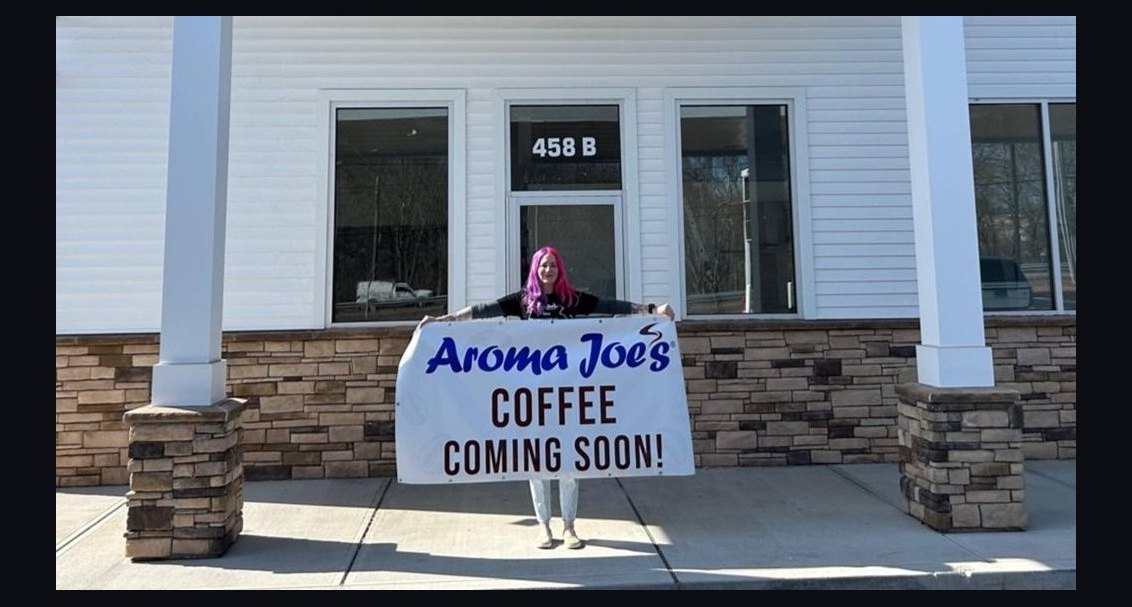 pulse-qShould I open or buy an Aroma Joe's Coffee franchise in 2027?
 pulse-qHow Many Agents Do I Need to Recruit for My Real Estate Brokerage to Grow Production in 2026?
 pulse-qHow Do I Budget a Chiropractic Clinic Buildout in 2026?
 pulse-qShould I open or buy a solidcore franchise in 2027?
 pulse-qHow Many Employees Should I Schedule Each Shift at My Martial Arts Studio in 2026?
 pulse-qShould I open or buy a World Gym franchise in 2027?
 pulse-qHow Do I Get My Reps to Follow the Sales Process in 2026?
 pulse-qShould I open or buy a Woof Gang Bakery franchise in 2027?
 pulse-qHow do you rebuild a sales team's trust in the forecast after a mid-year CRM migration corrupts historical pipeline data in 2027?