
How Do I Build a Quota-Relief and Ramp Policy for New Reps in 2027?
 Curated byKory White · Fractional CRO · Maryland
 PULSEKNOWLEDGE LIBRARY
To build a quota-relief and ramp policy for new reps in 2027, give new hires a graduated quota that rises in steps over their ramp period instead of a full number on day one, and pair it with a draw or guarantee that protects income while they have little pipeline to earn from. A new rep cannot close at full capacity before they have learned the product, built pipeline, and moved deals through a sales cycle, so charging them full quota immediately guarantees a missed number, a demoralized hire, and often early attrition. A fair policy defines the ramp length tied to your sales cycle, a stepped quota schedule (a fraction of full quota each month until full attainment), a recoverable or non-recoverable draw to stabilize pay, and clear milestones that mark readiness. The aim is to set new reps up to succeed, retain them through the unproductive early months, and forecast their contribution honestly rather than booking pipeline they cannot yet produce.
Why New Reps Need Quota Relief
Sales productivity is not instant. A new rep must learn the product and ICP, build a pipeline from zero, and then wait out the sales cycle before any deal closes. If your cycle is several months, a rep starting today literally cannot produce a full month's quota for a while no matter how good they are. Loading full quota on day one therefore measures the calendar, not the rep — and the predictable result is a discouraging early scoreboard, gamed or pulled-forward deals, and avoidable attrition of people who would have succeeded with a fair ramp.
Quota relief fixes this by aligning expectations with the biological reality of a sales cycle: ramp the number up as the rep's pipeline matures.
Set Ramp Length From Your Sales Cycle
The ramp period should be derived from your average sales cycle plus learning time, not a round number picked arbitrarily. A short-cycle transactional business ramps faster; a long-cycle enterprise business ramps slower because the first self-sourced deals simply take longer to close. Define it explicitly and consistently so every new hire and every manager works from the same plan.
Design the Stepped Quota Schedule
Instead of zero-then-full, ramp the quota in steps. A common shape is a small fraction of full quota in the first month, rising each month until the rep carries full quota at the end of ramp. This both motivates (there is a real target each month) and protects (the target is achievable given pipeline maturity).
Protect Income With a Draw
Because variable pay is thin while pipeline builds, use a draw or ramp guarantee so new reps earn a stable income during ramp. A recoverable draw is an advance the rep pays back from later commissions; a non-recoverable draw is a guarantee that is not clawed back. Non-recoverable draws aid retention and recruiting but cost more; recoverable draws protect the company but can pressure new reps. Choose based on market competitiveness and how much you need to de-risk the hire's income. Define the draw amount, duration, and recovery terms in writing.
Tie Ramp to Milestones, Not Just Time
Strengthen the policy with readiness milestones — certification on product and pitch, first qualified meetings booked, first opportunity created, first deal closed. Milestones let managers coach against leading indicators and identify a struggling ramp early, rather than waiting for an end-of-ramp quota miss to reveal a problem.
Forecast and Capacity Implications
Quota relief must flow into capacity and forecast planning: a new rep contributes a ramped fraction of pipeline, so plans that assume full productivity from day one will overstate coverage. Bake the ramp curve into the capacity model. Tools such as Salesforce or HubSpot for quota and attainment tracking, Xactly or CaptivateIQ for managing draws and commission, and an enablement/onboarding platform (e.g., Mindtickle or Highspot) for milestone certification operationalize the policy. RevOps owns wiring the ramp curve into both comp and the forecast.
Common Pitfalls
- Full quota on day one. Guarantees an early miss and drives avoidable attrition.
- Arbitrary ramp length. Ramp must reflect your actual sales cycle, not a round number.
- No income protection. Thin early pay drives good hires to competitors.
- Time-only milestones. Without readiness checkpoints, struggling ramps surface too late.
- Ignoring ramp in capacity plans. Assuming full productivity overstates pipeline coverage.
Why a One-Size-Fits‑All Ramp Fails in 2027’s Selling Environment
The ramp policy you design in 2027 must account for how selling has changed. The average B2B sales cycle has lengthened to 8–12 months for enterprise deals, and even mid-market purchases now require 4–7 months from first touch to closed-won. A ramp of three months—common in previous years—simply doesn’t give a new rep enough time to build pipeline, qualify opportunities, and carry a deal to signature. If you set a full quota at month four, you are asking a rep to close deals they sourced entirely in months two and three, which is mathematically impossible for most products.
Beyond cycle length, the buying committee has expanded. In 2027, the typical enterprise purchase involves 11–14 stakeholders, each with a separate set of concerns. A new rep must not only learn your product but also map decision-makers, navigate procurement, and handle security reviews—skills that take 3–6 months to develop. A stepped quota that reaches full attainment only after 9–12 months aligns with this reality. For example, a rep might carry 20% of full quota in months 1–3, 40% in months 4–6, 60% in months 7–9, and 100% from month 10 onward. This pattern prevents the early-ramp burnout that leads to 30–40% turnover rates among new hires in companies that use flat, short ramps.
Another factor unique to 2027 is the prevalence of AI-assisted selling tools. While these tools accelerate some tasks—prospecting emails, call summaries, forecasting—they also require training and adjustment. A new rep may spend their first two weeks just configuring their tech stack and learning how to interpret AI-generated signals. Your ramp policy should treat this onboarding period as non-commissionable time, with a full draw or base salary covering those weeks. Treating tool training as part of the ramp, not as a separate pre-ramp phase, avoids the confusion of “when does my quota start?” and keeps the rep focused on learning, not on clock-watching.
Finally, consider territory assignment. In 2027, territories are often dynamic, reshaped quarterly by AI-driven account scoring. A new rep might inherit a territory that has been picked over by previous reps or one that is under-penetrated. A fair ramp policy includes a territory quality review at the 90-day mark: if the rep’s assigned accounts are significantly below the company average in terms of past deal size or recent engagement, you adjust the ramp schedule downward (e.g., extend the stepped period by two months) or provide a one-time quota credit. This prevents the demoralizing scenario where a rep fails not because of their ability but because of an unbalanced territory map.
How to Structure a Draw That Protects Income Without Creating a Payout Trap
A draw—either recoverable or non-recoverable—is the financial backbone of any ramp policy. The goal is to give the rep a predictable income during months when their earned commission is near zero, while not leaving the company on the hook for a huge liability if the rep underperforms long-term. In 2027, the best practice is to use a non-recoverable draw for the first 3–4 months, then switch to a recoverable draw for the remainder of the ramp period.
A non-recoverable draw means the company pays the rep a fixed amount each month (say, $6,000–$8,000 for a mid-market rep, or $10,000–$15,000 for an enterprise rep) regardless of what they earn in commission. If the rep’s earned commission is less than the draw, the company eats the difference. The rep never has to pay it back. This gives the rep psychological safety to focus on learning and pipeline-building rather than chasing small, unqualified deals just to cover their draw. The cost to the company is predictable: you budget the draw amount times the number of ramp months, and you accept that some of that money will not be recouped. For a typical 9-month ramp, the total draw cost per rep might be $54,000–$135,000, which is a fraction of the cost of replacing a rep who quits after three months due to financial stress.
After month 4, switch to a recoverable draw. Here, the company advances the rep a monthly amount (often the same dollar figure), but any excess of earned commission over the draw in future months is used to pay back the advance. For example, if the rep earns $2,000 in commission in month 5 but the draw was $7,000, the company pays the rep $7,000, and the $5,000 difference becomes a “debt” that the rep must repay from future over-earnings. If the rep earns $10,000 in month 6, the company deducts the $5,000 debt and pays the rep $5,000. This structure protects the rep from a sudden income cliff while ensuring the company eventually recovers its advance if the rep ramps successfully. The recoverable period should last until the rep has hit full quota for two consecutive months, at which point the draw ends and the rep moves to standard commission-only or base-plus-commission.
A common mistake is to make the entire ramp period non-recoverable. This creates a payout trap: the rep gets used to the guaranteed income and may lack urgency to build pipeline. When the non-recoverable period ends, they face a sudden drop in pay if their pipeline hasn’t matured. By switching to recoverable, you maintain the safety net while introducing a gentle accountability mechanism. Also, set a cap on the total recoverable debt—typically 2–3 months of draw—so that if a rep is clearly not ramping, you cut the draw rather than letting the debt balloon to $30,000 or more. This cap protects the company and gives you a clear trigger for performance conversations.
How to Define Milestones That Trigger Quota Steps and Ramp Extensions
A ramp policy without clear milestones is just a timeline with numbers. Reps need to know exactly what they must achieve to move from one quota step to the next, and managers need objective criteria to decide whether a rep is on track or needs an extension. In 2027, the most effective milestones are a mix of activity-based, pipeline-based, and skill-based metrics, each tied to a specific month.
For month 1, the milestone is completion of onboarding: product certification, tool setup, and a shadowed call with a senior rep. No quota is assigned; the rep is in pure learning mode. For month 2, the milestone is 10–15 qualified meetings booked (depending on your average deal size and close rate) and a completed territory plan. At this point, the rep starts carrying 20% of full quota. For month 3, the milestone is 3–5 opportunities created in your CRM with a minimum deal size (e.g., $50,000 for enterprise) and a demo score of 4 out of 5 or higher from a peer review. The quota steps up to 40%. For month 4, the milestone is a first closed-won deal, even if it’s a small upsell or a discount deal. This gives the rep a psychological win and proves they can navigate the full cycle. Quota moves to 60%.
For months 5–7, the milestone shifts to pipeline coverage: the rep must have 3x their cumulative quota target in qualified pipeline. For example, if their cumulative quota through month 7 is $300,000, they need $900,000 in pipeline. This ensures they are building enough future business to sustain full quota. Quota steps to 80% in month 7. For month 8, the milestone is a second closed-won deal and a forecast accuracy of within 20% for the next quarter. Quota reaches 100% in month 9.
If a rep misses a milestone by more than 30%, you have two options: extend the ramp by one month (keeping the same step) or keep the timeline but reduce the next quota step by 10–20%. For example, if the rep misses the month 3 milestone, you might extend the 40% step through month 4 and delay the 60% step to month 5. This prevents a demoralizing failure while still holding the rep accountable. Document the extension in writing, with a clear review date. If the rep misses two consecutive milestones, it’s a signal that either the ramp is too aggressive, the rep is a poor fit, or the territory is broken. In that case, hold a formal performance review with the rep, their manager, and a senior sales leader to decide whether to adjust the ramp (e.g., extend by 3 months with a lower final quota) or part ways.
These milestones also serve as a forecasting tool. If you have 10 new reps starting in Q1, you can predict that only 6–8 will hit their month 4 milestone, and you can adjust your revenue forecast downward accordingly. This prevents the common mistake of booking full quota attainment for new hires in your annual plan. By tying quota steps to observable, objective milestones, you turn the ramp from a vague hope into a manageable, measurable process.
FAQ
What is the typical ramp length for a new sales rep in 2027? Ramp length is usually tied to the length of your full sales cycle, often ranging from 3 to 9 months. Shorter cycles (like transactional SaaS) might use 3–4 months, while enterprise deals with 6–9 month cycles require 6–9 months of ramp.
How should quota steps be structured during the ramp? A common approach is to start at 0–20% of full quota in month one, then increase by 20–30% each month until reaching 100% by the end of the ramp. For example, a 5-month ramp might use 20%, 40%, 60%, 80%, then 100% in the final month.
What is a draw or guarantee, and is it recoverable or non-recoverable? A draw is a minimum income guarantee paid to the rep during ramp, typically set at 50–80% of their expected on-target earnings. Recoverable draws are repaid from future commissions, while non-recoverable draws are not—most companies use non-recoverable draws for new hires to avoid debt stress.
Should ramp policies differ for experienced vs. junior hires? Yes, experienced hires often get shorter ramps (2–4 months) and higher starting quotas (e.g., 50% in month one), while junior hires may need longer ramps (4–8 months) with lower initial steps. The key is to adjust based on their prior industry knowledge and sales cycle familiarity.
How do you measure when a rep is ready for full quota? Readiness is typically assessed through milestones like completing product training, building a pipeline of 3–5x their quota, closing at least one deal, and demonstrating consistent activity metrics. Managers should review these monthly rather than relying solely on time elapsed.
What happens if a rep doesn’t hit their stepped quota during ramp? Most policies extend the ramp by 1–2 months or adjust the steps lower, rather than penalizing the rep. The goal is retention and skill-building, so companies often provide additional coaching or a performance improvement plan before considering termination.
Sources
- The Bridge Group — sales rep ramp time and quota benchmark research.
- WorldatWork — sales compensation, draw, and guarantee design principles.
- Xactly and CaptivateIQ — commission, draw, and quota management documentation.
- Mindtickle and Highspot — sales onboarding and readiness-milestone documentation.
- Salesforce — quota, attainment, and capacity planning documentation.
Related on PULSE
- How do you build discount governance that actually sticks — what combination of policy, tooling, and incentive alignment prevents reps from circumventing rules through bundling tricks?
- How do I build a comp clawback policy that's enforceable and fair?
- What's the right CRM hygiene policy that reps actually follow?
- How do RevOps leaders measure pipeline health when AI agents automatically disqualify leads based on hidden vendor policy shifts in 2027?
- How Do I Design a Sales Commission Clawback and Draw Policy in 2027?
- How do you design a discount governance policy that protects margin in 2027?
This page will be disappearing soon. Save it to your device for $1 — or read it free while it is here.
@Kory-White- · if Venmo asks, the last 4 of my number are 2012
This page is gone.
This one is off the shelf now. $1 keeps it on your phone for good — the whole page, pictures and diagrams included.
 revopsAre longer sales cycles in 2027 forcing RevOps to redefine the 'MQL-to-revenue' attribution model?
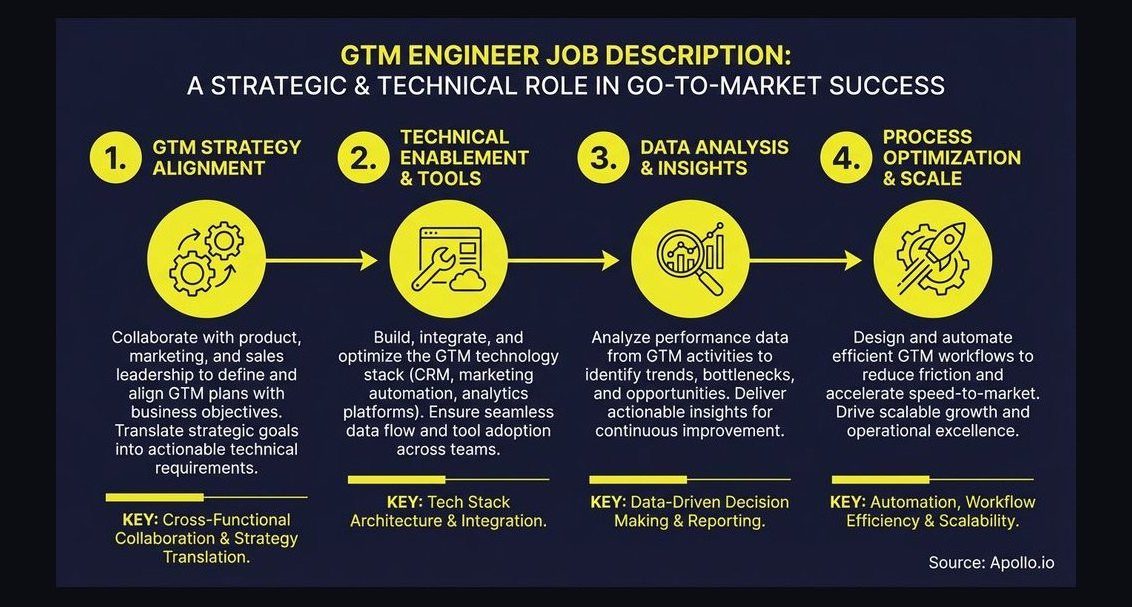 revopsWhat is a GTM engineer and why is the role exploding in 2027?
 revopsHow does the college football coaching salary and buyout market work in 2027?
 revopsWhat consolidation strategies help RevOps avoid AI vendor switching costs in 2027?
 revopsCan AI in the funnel effectively replace human-led qualification for enterprise buying committees in 2027?
 revopsWhy are 2027 sales cycles 40% longer for AI-native product launches?
 revopsAre 2027 enterprise buyers demanding AI-driven total cost of ownership models?
 revopsHow can RevOps use AI in the funnel to identify stalled deals before the buying committee loses interest in 2027?
 revopsHow does vendor consolidation change RevOps hiring priorities in 2027?
 revopsHow Do I Reconcile Competing Sales Forecasting Methods in 2027?