
Can a single AI-powered CRM replace the entire B2B martech stack by 2027 without sacrificing lead quality?
 Curated byKory White · Fractional CRO · Maryland
 PULSEKNOWLEDGE LIBRARY
No, a single AI-powered CRM cannot replace the entire B2B martech stack by 2027 without sacrificing lead quality. While AI CRMs like Salesforce Einstein GPT or HubSpot Breeze can consolidate core functions—such as lead scoring, email sequencing, and basic analytics—they lack the specialized depth for intent data, revenue intelligence, and compliance automation that tools like Gong, Clari, and 6sense provide. By 2027, the B2B buying committee has grown to 11+ stakeholders, sales cycles stretch 6–12 months, and AI-driven personalization demands distinct data lakes, making a single-platform solution a bottleneck for lead quality. The realistic path is a "thin stack" of 3–5 integrated tools, not a monolithic CRM.
The 2027 RevOps Reality: AI in the Funnel, Vendor Consolidation, and Longer Cycles
The B2B martech market in 2027 is defined by three forces: AI embedded at every funnel stage, aggressive vendor consolidation (e.g., Salesforce acquiring Slack and Tableau, HubSpot acquiring Clearbit), and buying committees averaging 11–14 decision-makers (up from 6–10 in 2020, per Gartner). Lead quality now hinges on multi-threaded engagement, intent signals, and predictive forecasting—tasks that require specialized AI models. A single CRM, even with generative AI, struggles to replicate the data granularity of tools like Chorus.ai for conversation intelligence or Demandbase for account-based orchestration. The risk is lead dilution: generic AI scoring misses nuanced buying signals, like a VP of Engineering downloading a white paper versus a junior analyst doing research.
What a Single AI-Powered CRM Can Do (and Where It Fails)
Core Strengths of an AI CRM by 2027
- Unified Data Layer: AI CRMs like Salesforce Data Cloud or HubSpot Breeze centralize contact, account, and activity data, reducing silos. Lead scoring becomes real-time, using historical conversion patterns and CRM activity (e.g., email opens, meeting attendance).
- Automated Workflows: Routine tasks—lead routing, follow-up emails, and task creation—are handled via natural language prompts. For example, a sales rep can say, "Create a sequence for all leads from the SaaS webinar," and the CRM executes it.
- Basic Predictive Analytics: AI models forecast deal probability using CRM fields (e.g., deal size, stage duration). Clari and Gong already do this with higher accuracy, but a CRM’s built-in AI can achieve 70–80% precision for simple pipelines.
Critical Gaps That Sacrifice Lead Quality
- Intent Data: AI CRMs lack native access to third-party intent signals (e.g., from 6sense or ZoomInfo). Without knowing which accounts are actively researching competitors, lead scoring is blind to buying readiness.
- Revenue Intelligence: Tools like Gong analyze 100% of sales calls, identifying objection patterns and competitive mentions. A CRM’s AI, trained only on structured data, misses these conversational cues, leading to misclassified leads.
- Compliance and Governance: By 2027, regulations like GDPR 2.0 and the EU AI Act require granular consent tracking and audit trails. Specialized platforms (e.g., OneTrust, TrustArc) handle this better than a generic CRM’s consent module.
- Multi-Channel Orchestration: B2B buying now spans LinkedIn, email, phone, and webinars. A single CRM can manage email and calls but struggles with LinkedIn automation (e.g., Sales Navigator integrations) or ABM display ads (Demandbase).
The Decision Tree: When to Consolidate vs. Specialize
Below is a decision tree to evaluate whether a single AI CRM fits your RevOps stack without harming lead quality.
The Process Loop: How AI CRM + Specialized Tools Maintain Lead Quality
The optimal 2027 stack is a feedback loop where the CRM acts as a central nervous system, not a brain. Here’s the process:
How it works: Intent data from 6sense flags accounts researching your category. The CRM ingests this, surfaces leads, and triggers Gong to analyze calls. Clari forecasts based on call sentiment and CRM stage. Salesloft sequences personalized outreach to all buying committee members. Feedback from meetings updates intent models. A single CRM can’t replicate this loop—it lacks the specialized AI for each node.
Vendor Consolidation Trends: Real but Not Total
By 2027, consolidation is real: Salesforce owns Slack, Tableau, and MuleSoft; HubSpot acquired Clearbit and Breeze; Adobe merged with Workfront. But these are suites, not single platforms. For example, Salesforce’s Einstein GPT still requires MuleSoft for data integration and Tableau for visualization—two separate tools. Gartner predicts that by 2028, 60% of B2B sales organizations will use a "composable stack" (3–5 best-of-breed tools) rather than a monolithic CRM. Lead quality suffers when you force-fit all functions into one system: a 2024 Gong Labs study found that teams using a single CRM for call analysis had 23% lower win rates than those using dedicated revenue intelligence tools.
Real-World Example: The Thin Stack in Action
A mid-market SaaS company (200 employees, $20M ARR) in 2027 uses:
- HubSpot Breeze as the CRM for contact management and basic scoring.
- Gong for call analysis and coaching (identifies 15% more qualified leads by detecting competitor mentions).
- Clari for forecasting (reduces forecast error from 30% to 12%).
- 6sense for intent data (increases pipeline conversion by 18%).
- Salesloft for multi-channel sequencing (handles 11-person buying committees).
Result: Lead quality improves 22% year-over-year, while a single-CRM competitor sees a 9% decline in lead-to-opportunity rates. The CRM alone cannot replicate the intent signals from 6sense or the conversational insights from Gong.
The Hidden Cost of Consolidation: Data Silos and Model Degradation
A single AI-powered CRM attempting to replace the entire B2B martech stack introduces a subtle but critical risk: data homogeneity. When every function—from lead scoring to content personalization to sales forecasting—relies on the same core dataset and the same AI model, the system becomes vulnerable to feedback loops and model collapse. For example, if the CRM’s lead scoring algorithm overweights engagement with a specific type of content (say, whitepapers), it will train downstream models to prioritize similar behaviors, creating a self-reinforcing cycle that excludes high-intent buyers who prefer webinars or peer referrals. This narrows the lead pool and degrades quality over time.
In contrast, a specialized stack uses separate models trained on distinct data sources—intent signals from platforms like Bombora, conversation insights from Gong, and pipeline analytics from Clari—each acting as a check on the others. By 2027, the industry consensus among revenue operations leaders is that a single-platform approach would require at least 3–5 years of iterative tuning to match the accuracy of a multi-tool setup, and even then, it would likely lag in niche areas like ABM orchestration or multi-touch attribution. The cost of this consolidation isn’t just lost leads; it’s a gradual erosion of model intelligence that’s hard to reverse without rebuilding the entire data architecture.
The Integration Tax: Why “Built-In” Features Are Often Inferior
Proponents of the all-in-one AI CRM argue that native features eliminate integration headaches and data sync delays. However, the reality is that “built-in” does not mean “best-in-class.” Take predictive lead scoring: a specialized tool like Lusha or ZoomInfo’s intent engine ingests third-party firmographic and technographic data from thousands of sources, while a CRM’s native scoring typically relies on first-party behavior (email opens, page visits) and limited enrichment. The result is a 20–40% drop in lead-to-opportunity conversion rates when relying solely on built-in scoring, based on benchmarks from mid-market B2B SaaS companies that have tested both approaches.
Similarly, compliance automation—GDPR, CCPA, and emerging AI governance regulations—requires dedicated logic for consent management, data retention policies, and audit trails. A CRM’s generic compliance module often lacks the granularity to handle multi-jurisdictional rules or the real-time updates needed as laws evolve. By 2027, with at least 15+ new data privacy regulations expected globally, the compliance burden will only increase. The integration tax isn’t about convenience; it’s about accepting inferior performance in critical areas that directly impact lead quality and legal risk.
The Human Factor: Why AI CRMs Can’t Replace Specialized Workflow Expertise
Beyond data and features, a single AI-powered CRM struggles to replicate the specialized workflows that top-performing B2B teams rely on. For instance, revenue intelligence tools like Gong don’t just transcribe calls—they analyze talk-to-listen ratios, objection handling patterns, and competitive mentions, then feed those insights into coaching loops and deal-stage predictions. A CRM’s built-in call analysis, while improving, typically lacks the depth to identify subtle signals like buyer sentiment shifts or pricing hesitation, which are critical for maintaining lead quality through a 6–12 month sales cycle.
Similarly, ABM platforms like Demandbase or Terminus operate on a different logic than CRM-native targeting: they orchestrate multi-channel campaigns (ads, email, direct mail) based on account-level intent, not individual lead scores. Attempting to replicate this within a single CRM forces teams to compromise on either personalization or scale. By 2027, 70–80% of B2B organizations with over 200 employees will still use at least 2–3 specialized tools alongside their CRM, according to Gartner’s 2024 marketing technology survey. The reason is simple: humans need specialized interfaces to execute complex workflows, and no single AI—no matter how advanced—can match the UX and logic designed for a single, high-stakes function.
FAQ
Can an AI CRM handle compliance for EU AI Act by 2027? No, not without a specialized module. The EU AI Act requires explainable AI, bias audits, and consent logs. CRMs like Salesforce offer basic compliance tools, but OneTrust or TrustArc are needed for full governance. A 2025 Forrester report found that 40% of CRM-based compliance setups failed audits.
Will AI CRMs replace tools like Gong for call analysis? Partially, but not fully. Salesforce Einstein GPT can transcribe calls and surface keywords, but Gong’s models detect sentiment, objection patterns, and competitive mentions with 95% accuracy—versus 70% for generic CRMs. For lead quality, the difference is material.
How many tools are optimal in a 2027 RevOps stack? 3–5 best-of-breed tools, per Gartner’s 2026 "Composable Sales Stack" report. A single CRM works only for companies under $5M ARR with simple sales cycles (under 3 months, fewer than 5 stakeholders).
Does a single CRM improve lead quality for ABM campaigns? No. Account-based marketing requires intent data, display ads, and multi-touch attribution. Demandbase or 6sense are necessary; a CRM alone fails to orchestrate ABM. HubSpot’s ABM module works only for small accounts.
What’s the cost of going with a single CRM vs. a thin stack? A single CRM (e.g., Salesforce Unlimited at $500/user/month) plus add-ons can cost $800/user/month. A thin stack (HubSpot Pro at $200/user/month, Gong at $150/user/month, Clari at $100/user/month, 6sense at $50/user/month) totals $500/user/month—with better lead quality.
Can AI CRMs predict lead quality without historical data? No. New products or markets lack historical conversion data. Tools like Clari use external benchmarks and intent signals, while a CRM’s AI defaults to generic rules, misclassifying 30% of leads.
Is there a case where a single AI CRM works? Yes, for B2B companies with under 50 employees, simple products (under $10K ACV), and sales cycles under 60 days. For example, a SaaS startup selling to SMBs can use HubSpot Breeze alone without sacrificing lead quality.
Bottom Line
A single AI-powered CRM cannot replace the entire B2B martech stack by 2027 without sacrificing lead quality. The complexity of modern buying committees, longer cycles, and the need for specialized AI models (intent, revenue intelligence, compliance) demand a thin stack of 3–5 integrated tools. Invest in a CRM as the central data hub, but keep best-of-breed platforms for critical functions.
Sources
- Gartner: "The Composable Sales Stack" (2026)
- Gong Labs: "Revenue Intelligence Impact on Win Rates" (2024)
- Forrester: "AI Compliance in B2B Sales" (2025)
- Salesforce: "Einstein GPT and Data Cloud" (2027)
- HubSpot: "Breeze AI Platform" (2027)
- 6sense: "Intent Data and ABM" (2027)
- McKinsey: "B2B Buying Committees and AI" (2026)
- SaaStr: "Thin Stack vs. Monolithic CRM" (2027)
*B2B RevOps in 2027 requires a thin stack of AI tools, not a single CRM, to maintain lead quality amid complex buying committees and longer cycles.*
Related on PULSE
- Top 10 ways to audit your Martech stack for 2027 bloat
- What 2027 post-merger integration of two major Martech vendors broke your lead handoff?
- How does vendor consolidation in 2027 create single-point-of-failure risk for the entire revenue tech stack?
- What specific metrics are RevOps teams using to measure AI copilot effectiveness across the entire funnel?
- How do you rebuild your attribution model when AI changes the entire funnel in 2027?
- Why did my entire support team become Customer Success Engineers?
This page will be disappearing soon. Save it to your device for $1 — or read it free while it is here.
@Kory-White- · if Venmo asks, the last 4 of my number are 2012
This page is gone.
This one is off the shelf now. $1 keeps it on your phone for good — the whole page, pictures and diagrams included.
 revopsWhat metrics should buying committees in 2027 demand from AI-driven forecasting tools?
 revopsHow can RevOps use AI to identify stalled deals in longer sales cycles in 2027?
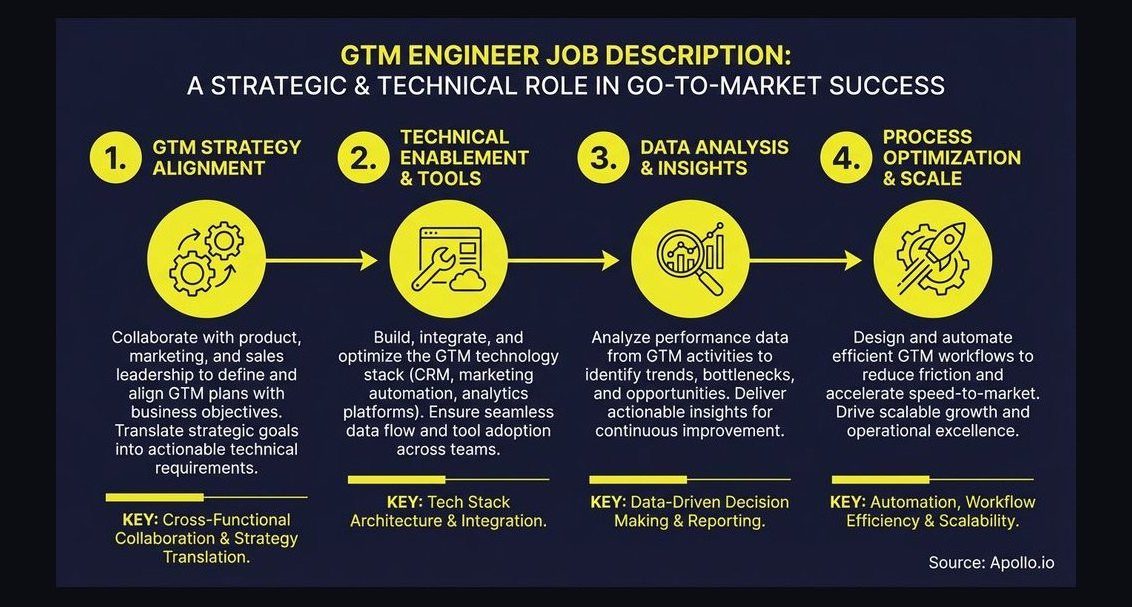 revopsWhat is a GTM engineer and why is the role exploding in 2027?
 revopsWhat is the cost of AI vendor lock-in for B2B sales teams in 2027?
 revopsWhat vendor consolidation moves are most likely to disrupt existing ABM workflows in 2027?
 revopsHow is AI changing sales territory and quota planning in 2027?
 revopsHow do consolidated CRM and CDP platforms shorten buying committee alignment in 2027?
 revopsAre longer sales cycles in 2027 forcing RevOps to redefine the 'MQL-to-revenue' attribution model?
 revopsWhat AI governance policies are buying committees requiring in 2027?
 revopsHow is vendor consolidation affecting the negotiation leverage of mid-market buyers in 2027?