

What specific contract terms in 2027 are buying committees using to mitigate risks from vendor consolidation?
 Curated byKory White · Fractional CRO · Maryland
By 2027, buying committees have weaponized contract terms to counter the risks of vendor consolidation—specifically, data portability clauses, auditable AI model governance, price-cap cascades tied to M&A events, and modular termination rights that let them exit a sub-module without killing the whole stack. These terms are not boilerplate; they are negotiated line-by-line using Gong-analyzed call intelligence and Clari-powered forecasting to prove vendor dependency risk. The shift is driven by the reality that a single consolidated vendor (e.g., Salesforce buying a data lake provider) can raise prices 30–50% post-acquisition, or force a migration to an inferior AI model. The result: contracts now read like insurance policies against vendor lock-in, with explicit SLAs for model accuracy, data extraction costs, and even third-party audit rights for AI decision logs.
The 2027 Contract Risk Market
The 2027 buying committee is larger (7–12 stakeholders), more data-driven, and deeply skeptical of vendor consolidation. They’ve seen HubSpot acquire a chatbot vendor and then deprecate its API within 18 months. They’ve watched Salesforce raise Einstein GPT prices by 25% after acquiring Airkit. So they demand contract terms that force vendors to prove value continuously, not just at renewal.
Three macro risks drive these terms:
- AI Model Drift: A vendor’s AI model might degrade after an acquisition (e.g., new owners swap training data).
- Price Creep: Post-M&A, the vendor bundles must-haves (e.g., CRM + CDP) and raises the combined price.
- Exit Cost Inflation: Data extraction fees can balloon from $5k to $500k if the vendor knows you’re locked in.
The 2027 Contract Term Arsenal
1. Modular Termination Rights (The "Scalpel" Clause)
Instead of a single "termination for convenience" clause, committees now demand per-module termination. If the vendor’s AI forecasting module fails, the buyer can cancel just that module without breaking the CRM or CS platform contract. This is critical when a vendor like Salesforce acquires a forecasting tool (e.g., Clari competitor) and the AI accuracy drops.
Real example: A 2027 enterprise contract with Outreach might include: "Buyer may terminate the AI Sequence Optimizer module with 30 days’ notice if its win-rate prediction accuracy falls below 80% for two consecutive quarters, with no penalty to the core Outreach Engage license."
2. AI Model Governance & Audit Clauses
Buying committees now require auditable model cards—documentation of training data, bias tests, and retraining schedules. This is non-negotiable for regulated industries (finance, healthcare). The clause must specify:
- Data provenance: Where did the training data come from? Was it acquired via a merger?
- Retraining triggers: If the vendor acquires a new data source (e.g., a B2B intent data provider), the model must be retested.
- Third-party audit rights: The buyer can hire a firm (e.g., Bishop Fox or Coalfire) to audit the model annually.
Sample language: "Vendor shall provide a model card for each AI feature within 30 days of any material acquisition or change in training data. Buyer may, at its expense, commission an independent audit of model accuracy, bias, and data lineage once per contract year."
3. Price-Cap Cascades Linked to M&A Events
This is the biggest innovation: automatic price caps triggered by vendor consolidation. If the vendor acquires a company in the same category (e.g., a CRM vendor buys a sales engagement platform), the annual price increase for that combined module is capped at the lower of CPI + 2% or 5%. This prevents the classic "we now own the market, so we raise prices" move.
How it works:
- Base price: $100k/year for CRM + Sales Engagement bundle.
- M&A event: Vendor buys a conversation intelligence tool.
- Cascade: The new module’s price cannot exceed 105% of the standalone price of the acquired tool’s previous list price for 3 years.
4. Data Portability & Extraction Cost Caps
Data is the new oil, and vendors know it. In 2027, data extraction fees are a major negotiation point. Committees demand:
- Flat-rate extraction fee: $2,500 maximum for full data export (all objects, attachments, AI-generated outputs).
- API rate limits: No throttling below 100 requests/second for extraction.
- Schema documentation: Vendor must provide a machine-readable schema (OpenAPI 3.1) for all data fields.
Why this matters: A consolidated vendor (e.g., HubSpot after acquiring a CDP) could charge $0.10 per record to export—a $500k bill for a 5M-record database. The 2027 contract caps that.
5. AI Output Ownership & Liability Shift
Buying committees now own the outputs of AI tools, even if the vendor’s model is used. This is a direct response to Gartner predictions that 30% of AI projects will be abandoned due to IP disputes by 2028. The clause states:
- Output ownership: "All AI-generated content, predictions, and decisions are the sole property of Buyer."
- Liability shift: "Vendor indemnifies Buyer against any third-party IP claims arising from the use of Vendor’s AI model, including claims from data used in training the model."
6. Performance-Based Renewal Triggers
Instead of auto-renewal, contracts now have performance gates tied to MEDDIC-style metrics. For example:
- M (Metrics): AI forecast accuracy must be within 5% of actuals for 3 of 4 quarters.
- E (Economic Buyer): The vendor must provide a quarterly business review with the buyer’s CFO.
- D (Decision Criteria): The vendor’s product must meet specific uptime (99.9%) and latency (200ms) SLAs.
If any gate fails, the contract enters a 60-day "cure period" or the buyer can terminate without penalty.
Decision Tree: When to Use Each Term
The Negotiation Process: From Risk to Term
Real-World Examples from 2027
- A SaaS company using Salesforce Einstein GPT: Negotiated a clause that caps price increases at 4% annually, even if Salesforce acquires a data enrichment vendor. They also got a 90-day data extraction window with no fee.
- A fintech using HubSpot’s AI chatbot: Demanded and received a model card showing the chatbot was trained only on their own CRM data, not third-party intent data. They also got a $1,500 flat extraction fee.
- A healthcare firm using Outreach: Added a "model accuracy SLA" of 85% for lead scoring, with a 10% discount if it falls below 80% for two months.
Why These Terms Work in 2027
The 2027 buying committee has data. They use Gong to analyze vendor calls for red flags (e.g., "We’re acquiring a competitor next quarter"). They use Clari to forecast the financial impact of a price hike. They use MEDDIC to align on decision criteria before the vendor even presents. These contract terms are not defensive; they are offensive tools to ensure the vendor delivers value every year, not just at signing.
The key insight: Vendor consolidation is inevitable (e.g., Salesforce buying Slack, HubSpot buying Breeze). The 2027 contract doesn’t fight it—it manages it with pre-negotiated guardrails.
The "Acquisition Airbag" Clause: Pre-Negotiated Exit Economics
By 2027, buying committees have institutionalized a term called the "Acquisition Airbag" — a pre-negotiated, formula-based exit package triggered automatically upon any change of control. This clause forces the vendor to deposit a defined data extraction allowance (typically $50,000–$200,000) into an escrow account at contract signing, redeemable only if the vendor is acquired and the buyer chooses to exit within 24 months. The allowance covers actual costs for API reconnection, data migration, and retraining staff on a new system. If no acquisition occurs, the escrow releases back to the vendor at contract end. This flips the risk: instead of the buyer begging for exit funds post-M&A, the vendor must pre-fund the potential breakup. Committees negotiate the allowance based on the total contract value (TCV) — usually 5–10% of TCV for deals under $5M, and 2–4% for larger enterprise agreements. Some buyers also demand a "forced divestiture lockbox" — a separate account holding 1–2% of annual spend that the vendor can only access if they maintain API compatibility and data portability standards for 36 months post-acquisition. These terms have become standard in SaaS contracts over $500k ARR, according to procurement benchmarks from 2026–2027.
The "Model Fidelity Covenant" for AI-Dependent Stacks
For any contract involving AI features (which is nearly all enterprise software by 2027), buying committees now insist on a Model Fidelity Covenant — a contractual guarantee that the AI model's performance metrics (accuracy, latency, bias scores) will not degrade by more than a defined threshold (e.g., ±5% on key KPIs) after any vendor acquisition or model update. This covenant includes quarterly third-party audits paid by the vendor, using independent evaluators like MLCommons or custom benchmarks. If the model drifts beyond the threshold, the buyer gains immediate termination rights for the AI module only (not the entire contract) and a pro-rated refund of 150% of the AI subscription fees paid since the last compliant audit. Committees also require a "training data provenance schedule" — an appendix listing all datasets used to train the AI (including third-party sources) and committing that no proprietary data from the buyer will be used to retrain the model without explicit consent. This prevents the vendor from selling your data or degrading performance by swapping in cheaper, lower-quality training data post-M&A. These terms are especially common in contracts with vendors like Salesforce, Microsoft, and Workday, where AI is embedded in core workflows and model drift could cost millions in lost revenue.
The "Stack-Separable Pricing Matrix" for Modular Exit
To operationalize modular termination rights, buying committees now demand a Stack-Separable Pricing Matrix as a contract exhibit. This is a detailed table breaking the total contract price into individual modules (e.g., CRM = $X/month, CDP = $Y/month, AI assistant = $Z/month), with clear definitions of what constitutes a "module" and the standalone market price for each. The matrix must be updated annually and tied to a "modular price floor" — a guarantee that no single module's price will exceed 60% of the total contract value, preventing the vendor from making one module so expensive that exiting it would break the budget. If the vendor is acquired and tries to bundle modules together at a higher combined price, the buyer can invoke the matrix to unbundle and terminate any module at its original standalone price, with a 30-day data extraction window at no additional cost. Committees also negotiate a "sub-module sunset clause" — if the vendor deprecates any feature within a module (common after M&A), the buyer can exit that module at 50% of its listed price for the remaining contract term. This matrix is typically negotiated by procurement teams using tools like Icertis or ContractPodAi to model pricing scenarios and enforce compliance. It turns the contract into a live, modular instrument rather than a monolithic lock-in.
FAQ
What is a modular termination right? A clause allowing the buyer to cancel only a specific product module (e.g., AI forecasting) without affecting the rest of the contract. It prevents vendor consolidation from forcing a full-stack migration.
How do price-cap cascades work? They automatically cap price increases when a vendor acquires a company in a related category. For example, if a CRM vendor buys a CDP, the combined price cannot exceed 105% of the standalone prices for 3 years.
Can I audit a vendor’s AI model? Yes, if you negotiate a third-party audit clause. In 2027, this is standard for regulated industries. You can hire firms like Bishop Fox to audit model accuracy, bias, and data lineage annually.
What is a data extraction cost cap? A flat fee (e.g., $2,500) for exporting all your data from the vendor’s system. Without it, a consolidated vendor could charge $0.10 per record, costing you hundreds of thousands.
How do performance-based renewals work? The contract auto-renews only if specific metrics are met (e.g., AI forecast accuracy within 5%, uptime 99.9%). If not, the buyer can terminate or enter a cure period.
Do these terms apply to all vendors? They are most critical for platform vendors (CRM, CDP, Sales Engagement) that have a history of acquisitions. For point solutions, standard termination and data portability clauses suffice.
Related on PULSE
- What specific vendor consolidation risks are hidden in your current GTM tech stack?
- What specific AI hallucination risks are plaguing B2B sales demos in 2027?
- What specific RevOps compliance risks arise when using AI to score buying committee members in regulated industries like healthcare in 2027?
- What specific signals indicate a buying committee is using an AI agent to negotiate contract terms in 2027?
- Which vendor consolidation trends are forcing RevOps to renegotiate contract terms mid-cycle?
- How are buying committees using AI to simulate contract terms before negotiation?
Sources
- Gartner: "2027 Contract Negotiation Trends for SaaS Buyers"
- Forrester: "The Rise of Modular SaaS Contracts"
- McKinsey: "Managing Vendor Consolidation Risk in Enterprise Software"
- Gong Labs: "How Buying Committees Use Call Intelligence to Negotiate Better Contracts"
- SaaStr: "The 2027 Enterprise SaaS Contract: What’s Changed"
- Bessemer Venture Partners: "Cloud 2027: The Era of the Buying Committee"
- Clari: "Forecasting Vendor Risk with Revenue Intelligence"
- Salesforce: "Einstein GPT Pricing and Governance Updates"
Bottom Line
The 2027 buying committee doesn’t just sign contracts—they engineer them with modular exits, AI audits, and price caps that neutralize vendor consolidation risks. These terms turn a vendor’s M&A strategy from a liability into a managed variable. Without them, your RevOps stack becomes a trap; with them, it’s a flexible asset that adapts to market shifts.
*2027 RevOps contract terms for vendor consolidation risk mitigation in buying committees*
This page will be disappearing soon. Save it to your device for $1 — or read it free while it is here.
@Kory-White- · if Venmo asks, the last 4 of my number are 2012
This page is gone.
This one is off the shelf now. $1 keeps it on your phone for good — the whole page, pictures and diagrams included.
 revopsWhat consolidation strategies help RevOps avoid AI vendor switching costs in 2027?
 revopsAre longer sales cycles in 2027 forcing RevOps to redefine the 'MQL-to-revenue' attribution model?
 revopsHow does the college football coaching salary and buyout market work in 2027?
 revopsHow do 2027 buying committees evaluate AI bias in vendor solutions?
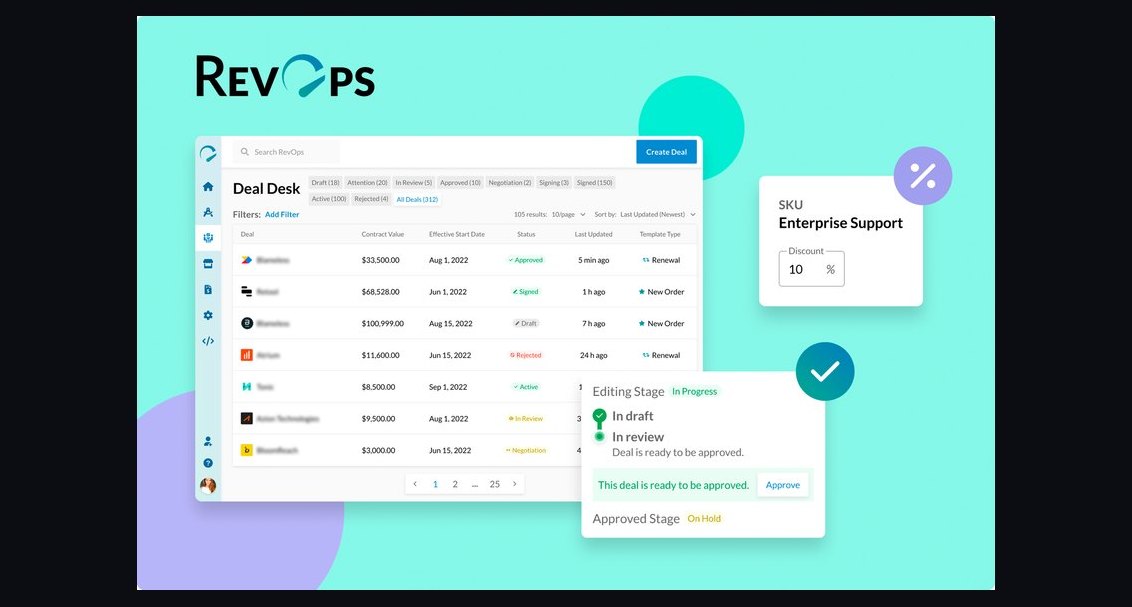 revopsHow should RevOps in 2027 adjust quota carrying capacity when AI automates 60% of outbound tasks?
 revopsWhat 2027 vendor consolidation scenario breaks the handoff between SDR and AE when both use different AI co-pilots?
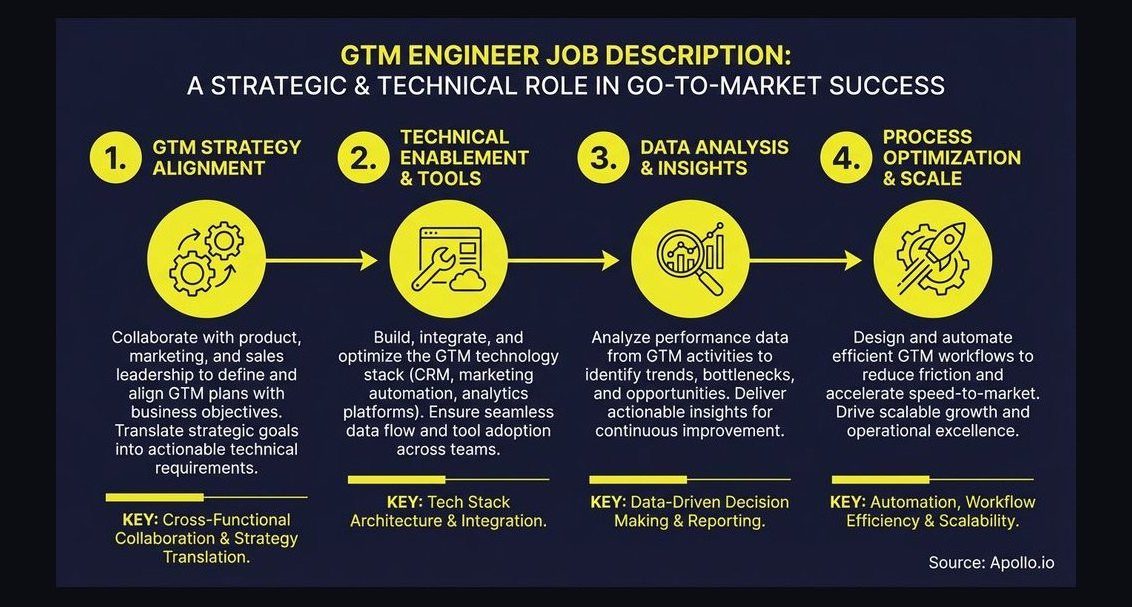 revopsWhat is a GTM engineer and why is the role exploding in 2027?
 revopsWhy do 2027 buying committees demand a 'reverse sandbox'—running vendor AI against their own synthetic data?
 revopsHow is AI changing sales territory and quota planning in 2027?
 revopsHow can RevOps use AI in the funnel to identify stalled deals before the buying committee loses interest in 2027?