


Grit by Angela Duckworth — Cliff Notes Summary for Sales Leaders
Quality
Certified

Grit by Angela Duckworth argues that passion plus perseverance sustained over years predicts high achievement better than talent or IQ. Its core equation — talent × effort = skill, skill × effort = achievement — means effort counts twice. For sales leaders, grit explains who survives year-one ramp and compounds into a top producer.
What the book actually claims and why sales leaders should care
*Grit: The Power of Passion and Perseverance* (Scribner, 2016) is Angela Duckworth's synthesis of roughly two decades of field research at the University of Pennsylvania, where she is a psychology professor and a MacArthur Fellow. Her biography matters to how the book reads: she left a consulting job at McKinsey to teach seventh-grade math in public schools, noticed that her hardest-working students consistently outperformed her highest-aptitude students, and went back for a PhD specifically to find out why. The book is that answer, written for a general audience but built on peer-reviewed studies rather than anecdote.
The central claim is narrow and testable. Duckworth defines grit as the combination of two things: consistency of interest — caring about the same goal for years rather than months — and perseverance of effort — continuing to work at that goal through setbacks, plateaus, and boredom. She is explicit that grit is not the same as intensity, enthusiasm, or working long hours in a burst. Enthusiasm is common; endurance is rare. A rep who works ninety-hour weeks for three months and then rotates to a different company, a different segment, and a different methodology is not gritty by her definition, no matter how hard those three months felt.

The empirical spine runs through settings that have almost nothing in common except a hard, measurable washout event. At West Point, roughly one in twenty cadets who survive an extraordinarily selective admissions process still quit during Beast Barracks, the initial summer training. West Point's own Whole Candidate Score — a composite of SAT scores, class rank, athletic performance, and leadership assessments — is excellent at predicting who gets admitted and poor at predicting who stays. Duckworth's 12-item Grit Scale, administered in her 2007 study with Christopher Peterson, Michael Matthews, and Dennis Kelly, predicted completion better. The same scale predicted advancement in the Scripps National Spelling Bee, completion of Green Beret special forces selection, and on-time graduation among Chicago public school students.
For a revenue organization, the structural parallel is exact. Sales hiring runs its own Whole Candidate Score: pedigree logos on the resume, a polished interview presence, a strong quota attainment number from a prior role that may or may not have been achievable in the first place. Those signals predict who gets hired. They are much weaker at predicting who is still carrying a number in year three. Ramp is the Beast Barracks of a sales career — a period where the rep is measured against a quota they cannot yet reasonably hit, with pipeline that has not matured, in a territory they do not yet understand. The rep who reads that period as evidence of personal inadequacy leaves. The rep who reads it as a known, temporary stage stays and compounds. That difference is what Duckworth is measuring.
The strategy implication for a sales leader is not "hire gritty people and stop coaching." It is that the two highest-leverage decisions in a revenue org — who you let in, and what you do with them in the first four quarters — are both governed by a variable most hiring processes do not measure at all. The book's second half is dedicated to arguing that this variable is developable, which is what turns it from a screening curiosity into an operating manual.
The four stages, step by step

Duckworth's practical model is a sequence, not a checklist, and the order matters. Skipping a stage is the most common failure mode when a manager tries to install this on a team. The four stages are Interest, Practice, Purpose, and Hope.
Interest comes first, and Duckworth spends a full chapter dismantling the idea that passion arrives as a lightning strike. In her interviews with high achievers — chef Marc Vetri and animator Hayao Miyazaki among them — the pattern is discovery, then development, then deepening, typically over several years of low-stakes exposure before anything resembling obsession appears. Nobody in her sample knew at nineteen. They stumbled in, found one thread interesting enough to pull again, and built the passion through repetition. The hiring translation is direct: asking a candidate whether they are "passionate about sales" tests interview preparation, not grit. Asking what they have gone deep on — any domain, a sport, an instrument, a game, a side business — tests whether they possess the capacity to develop interest at all, which is the transferable trait.
Practice is where Duckworth leans hardest on external research, specifically K. Anders Ericsson's work on deliberate practice. Ericsson's four conditions are unambiguous: a clearly defined stretch goal slightly beyond current ability, full concentration without multitasking, immediate and informative feedback, and repetition with refinement rather than repetition alone. She profiles spelling-bee champion Kerry Close, who won by spending long solo hours with a dictionary rather than doing the more enjoyable group quizzing that most competitors preferred. The defining quality of deliberate practice is that it feels bad — effortful, isolating, and often boring. This is precisely why most reps do not do it. Making a hundred dials is repetition; listening back to five of your own recorded calls with a specific behavioral target and a manager who names exactly what to change on the next one is deliberate practice. The first builds tolerance, the second builds skill.

Purpose is the connection between the daily work and something beyond the self. Duckworth invokes the old bricklayers parable — three workers asked what they are doing answer "laying bricks," "building a wall," and "building a cathedral" — and reports that the cathedral answer predicts both longer tenure and higher effort. Her claim is specific: once a person crosses a basic competence threshold, purpose becomes the strongest predictor of sustained engagement. In sales this is routinely under-managed. Compensation supplies extrinsic motivation reliably for one to two years and then flattens; the rep who cannot articulate why the customer outcome matters beyond the commission is the rep who stalls in year three, not year one.
Hope is the fourth stage and, for a manager, the most controllable. Duckworth is careful that she does not mean optimism-as-wishing. She means the growth-mindset belief, drawn from Carol Dweck's Stanford research, that effort produces improvement — combined with Martin Seligman's learned-optimism finding that explanatory style is teachable. Whether a person reads a setback as permanent and pervasive ("I can't sell to enterprise") or temporary and specific ("I mishandled the multithreading on that one deal") determines whether they try again. Duckworth tells her own story of nearly failing advanced neurobiology at Harvard before a professor reframed effort as the lever rather than a signal of inadequate talent.
The sequence is directional for a reason. Deliberate practice imposed on a rep who has no interest in the domain produces compliance and resentment, not skill. Purpose framing offered to a rep who is failing at the mechanics reads as a dodge. Hope-building debriefs delivered to someone with no practice ritual have nothing concrete to reset toward. When a grit program fails on a sales team, it is nearly always because a manager entered at stage three or four and skipped the foundation.
The math, the measurement, and realistic timelines

Duckworth's arithmetic argument is the most quotable part of the book and worth stating precisely. Talent × Effort = Skill. Skill × Effort = Achievement. Effort appears twice: once to convert raw aptitude into capability, and again to convert capability into results. Substitute numbers and the asymmetry is stark. Hold talent constant at 1 for two people. Give one an effort value of 1 and the other an effort value of 2. Their skill scores are 1 and 2 — a doubling. Their achievement scores are 1 and 4 — a quadrupling. Now give the first person twice the talent, talent 2 with effort 1, against talent 1 with effort 2: skill is 2 in both cases, but achievement is 2 versus 4. The less talented, harder-working person wins outright. That is the whole thesis in one line of algebra.
The pottery-class anecdote makes the same point experimentally: a ceramics teacher graded one half of the class purely on the volume of pots produced and the other half on a single perfect pot, and the volume-graded group produced the best pots. Output is a function of reps, not gifts.
The Grit Scale itself is twelve self-report statements rated 1 to 5, six phrased positively ("I finish whatever I begin") and six reverse-scored ("My interests change from year to year"). Reverse-score the six, average all twelve, and you get a score between 1.0 and 5.0. Above 4.0 is high; below roughly 2.5 is low. The free version is hosted at Character Lab, Duckworth's nonprofit. Two practical cautions before anyone wires this into a hiring process: it is a self-report instrument, which means a motivated candidate can game it, and it was validated as a research tool on populations with a clean binary outcome, not as an employment-selection instrument. Using it as a scored gate in hiring is a legal and methodological stretch. Using its content as an interview-question generator is not.

On timelines, the book is honest that nothing here is fast. Duckworth reports that grit scores rise with age in cross-sectional data — the average person in their sixties scores higher than the average person in their twenties — which implies decades of drift, not weeks of training. Deliberate practice research generally frames elite performance in terms of years of accumulated hours, not months. The realistic expectation for a manager deliberately installing the four stages on an existing rep is that behavior change becomes durable over roughly a year or more of consistent ritual, not a quarter. That is an uncomfortable number in a business that reviews performance every ninety days, and pretending otherwise is how these programs get abandoned in month four.
The cost side is mostly manager time rather than budget. A weekly one-on-one that includes a genuine call review with a named behavioral target, a structured post-loss debrief on every significant lost deal, and a quarterly conversation about purpose costs a front-line manager a meaningful slice of the week across a team of six to eight reps. There is no software line item that substitutes for it. The trade-off a leader is actually making is between that recurring manager investment and the cost of replacing reps who wash out — which includes the recruiting cycle, the ramp period already paid for, and the pipeline the departing rep leaves half-built.
Where sales teams get grit wrong
The most common misapplication is using grit as a moral judgment rather than a diagnostic. A manager who concludes that an underperforming rep "just isn't gritty" has converted a developmental model into a disposal justification, which is the opposite of what the book's second half argues. Duckworth's entire Part II and Part III exist to establish that grit grows — from the inside out through the four stages, and from the outside in through parenting, coaching, and culture. If the model only ever gets used to explain why someone deserved to fail, it is being used backward.

The second error is confusing grit with tolerance for a bad system. Duckworth's own conclusion is careful on this point: grit is necessary but not sufficient, and structural conditions, fairness, and luck shape outcomes profoundly. A rep grinding through an unachievable quota, a broken territory, a product that does not fit the ICP, or a comp plan that punishes the right behavior is not demonstrating grit — they are absorbing an organizational defect. Asking for more perseverance in that situation is asking a person to compensate for a management failure. The honest test is whether the obstacle is inherent to hard work in the domain, or manufactured by the org. The first is a grit problem. The second is a leadership problem wearing a grit costume.
The third error is skipping stages, discussed above, and it usually looks like a purpose offsite. A company hosts a mission-and-values session, reps leave energized, and nothing changes because there was never a deliberate-practice ritual underneath it to be energized about. Purpose amplifies existing practice; it does not substitute for it.
The fourth is misreading the Hard Thing Rule. In Duckworth's own household the rule has three parts: everyone in the family, parents included, does one hard thing that requires deliberate practice; you may quit, but not on a bad day and not in the middle of a season; and you get to choose your own hard thing. Managers who adopt this often keep clause two and drop clause three, which turns a persistence-building device into a retention trap. The autonomy of choosing is what makes the no-quitting-on-a-bad-day clause tolerable. Translated to a team, the workable version is a boundary rule — a rep does not abandon a territory, an ICP, or a coaching plan mid-quarter, and at the quarter boundary they get full agency to renegotiate any of it.
The fifth is the post-loss debrief, which is where hope is either built or destroyed and where most managers default to the wrong question. "Whose fault was it" produces defensive, permanent, personal explanations — exactly the explanatory style Seligman's research identifies as corrosive. "What did we learn, and what will we do differently on the next one that looks like this" produces temporary, specific, actionable explanations. The words are a small change; the accumulated effect over a hundred losses across a team is not.

There is also a legitimate academic critique that a leader should know before quoting the book in a board meeting. A 2017 meta-analysis by Marcus Credé, Michael Tynan, and Peter Harms argued that grit overlaps heavily with conscientiousness — one of the Big Five personality traits — and that the perseverance factor does most of the predictive work while the consistency-of-interest factor contributes relatively little. Duckworth has engaged with this critique in subsequent academic work and has shifted her public emphasis toward the developmental four-stage model rather than the score-on-a-test framing. That shift is actually good news operationally: the coachable part of the construct is the part that survived scrutiny best.
Choosing the right intervention for the situation
The decision a sales leader faces is rarely "should we care about grit." It is which lever to pull for a specific rep in a specific situation, and the four stages map cleanly onto a diagnostic tree. The wrong intervention applied to the right problem wastes a quarter.
Reading the tree top to bottom: always clear the system question first, because every downstream intervention is invalid if the quota is unachievable. Then work up the stages in order, because each depends on the one before it. A rep who is engaged, practicing deliberately, purpose-connected, and explaining setbacks constructively but still missing does not have a grit problem at all — that rep needs air cover, better pipeline, or fewer distractions, and the correct managerial move is to remove obstacles rather than add development programming.

The same logic runs in reverse for hiring. Rather than screening for grit with a scored instrument, generate interview questions from the four stages. Ask about a multi-year commitment the candidate saw through when they wanted to quit, and listen for whether the story has specific detail or generic shape. Ask what they are currently working to get better at outside of work and how they know they are improving — the presence of a feedback mechanism is the tell for genuine deliberate practice. Ask what they do the week after a bad quarter. The answers to those three questions carry more signal about year-three performance than the logo on the resume, and unlike a Grit Scale score they cannot be answered correctly by someone who simply guessed which way to lean.
Culture is the cheapest lever, and it is the subject of the book's twelfth chapter, which draws on Pete Carroll's "compete every day" operating philosophy with the Seattle Seahawks and on the KIPP charter school network's "work hard, be nice" code. Duckworth's argument is that gritty individuals are largely produced by gritty environments — you become what you are repeatedly immersed in. For a revenue organization, this means the recurring rituals do most of the work: the standing pipeline review, the loss debrief that always asks the learning question, the visible celebration of the rep who ground out a nineteen-month enterprise cycle rather than only the rep who caught an inbound whale. Those cost nothing and set the ambient standard against which every individual's effort is calibrated. Also worth noting for anyone building a 2026 sales strategy: AI tooling accelerates the talent term in Duckworth's equation — research, drafting, and preparation get faster for everyone — but it does not supply the effort term, which keeps the compounding human differentiator exactly where the book put it.
Related questions
Is grit the same thing as conscientiousness?
Largely overlapping. Meta-analytic work, notably Credé and colleagues in 2017, found grit correlates strongly with conscientiousness and questioned whether it is a fully independent construct. Duckworth's distinct contribution is less the measurement and more the developmental sequence that makes perseverance coachable rather than merely observable.
Can grit be developed in an adult sales rep, or is it fixed?

It can be developed, but slowly. Duckworth's cross-sectional data shows grit rising with age, and the four stages provide the curriculum. Realistic expectation is roughly a year of consistent ritual before behavior change is durable — not a single quarter, which is why most programs get abandoned prematurely.
Should I use the Grit Scale as a hiring filter?
No. It is a self-report research instrument, easily gamed by motivated candidates and never validated as an employment-selection tool. Use its content to generate behavioral interview questions about multi-year commitments and current deliberate practice, and score the specificity of the stories instead.
What is the single most actionable idea for a front-line manager?
The post-loss debrief. Replace "whose fault was it" with "what did we learn and what changes next time." That one substitution shifts explanatory style from permanent-and-personal toward temporary-and-specific, which is the mechanism by which hope — Duckworth's fourth stage — either accumulates or erodes across a season.
How does Grit relate to Dweck's Mindset and Ericsson's Peak?
They interlock. Ericsson's deliberate practice supplies Duckworth's second stage, and Dweck's growth mindset supplies the fourth. Grit is best read as the integrating framework that sequences those two bodies of research into a developmental path rather than as a competing theory.
FAQ
Who should read Grit?
Anyone whose results compound over years rather than months: sales managers, CROs, founders hiring their first reps, and enablement leaders designing ramp. It is a short, readable book — the value for a leader is concentrated in the four-stage model in Part II and the culture chapter in Part III, so a time-constrained reader can start there and back-fill Part I.
What exactly is the Grit Scale and how is it scored?

Twelve statements rated 1 to 5, split between consistency of interest and perseverance of effort. Six negatively-worded items are reverse-scored, then all twelve are averaged for a result between 1.0 and 5.0. A free version is hosted by Character Lab, the nonprofit Duckworth founded. Treat the output as a conversation starter, not a verdict.
Why does the book say effort counts twice?
Because it appears in both equations: talent × effort produces skill, and skill × effort produces achievement. Mathematically, doubling effort while holding talent constant quadruples achievement, whereas doubling talent while holding effort constant only doubles it. That asymmetry is the book's central quantitative argument.
How does the Hard Thing Rule translate to a sales team?
As a boundary rule rather than a lock-in. A rep does not abandon a territory, an ICP, or a coaching plan mid-quarter; at the quarter boundary they get genuine agency to renegotiate. The autonomy clause is not optional — dropping it converts a persistence-building device into a retention trap that breeds resentment.
What is the strongest criticism of the book?
That grit overlaps heavily with the established personality trait conscientiousness, raising the question of whether it adds explanatory power or renames something already measured. A secondary criticism is that the 2016 text sometimes reads as though perseverance can overcome structural obstacles, a framing Duckworth has since qualified with caveats about inequity and luck.
Does grit still matter when AI handles research and drafting?
Arguably more. AI compresses the talent term — preparation, research, and first drafts get faster for everyone, which erodes that source of differentiation. It does not supply sustained effort across a long enterprise cycle or the willingness to re-enter after a loss, so the human variable Duckworth measured becomes a larger share of what separates performers.
Sources
- https://angeladuckworth.com/grit-book/
- https://characterlab.org/
- https://www.apa.org/monitor/2013/04/grit
- https://en.wikipedia.org/wiki/Angela_Duckworth
- https://www.macfound.org/fellows/class-of-2013/angela-duckworth
- https://www.westpoint.edu/
- https://spellingbee.com/
- https://www.simonandschuster.com/books/Grit/Angela-Duckworth/9781501111112
- https://www.ted.com/talks/angela_lee_duckworth_grit_the_power_of_passion_and_perseverance
- https://psycnet.apa.org/record/2007-07951-009
Related on PULSE
- The Advantage by Patrick Lencioni — Cliff Notes Summary for Sales Leaders
- Difficult Conversations by Stone, Patton & Heen — Cliff Notes Summary for Sales Leaders
- The First 90 Days by Michael Watkins — Cliff Notes Summary for Sales Leaders
- The Sandler Rules for Sales Leaders by David Mattson — Cliff Notes Summary
- Scaling Up by Verne Harnish — Cliff Notes Summary for Sales Leaders
- Traction by Gino Wickman — Cliff Notes Summary for Sales Leaders
This page will be disappearing soon. Save it to your device for $1 — or read it free while it is here.
@Kory-White- · if Venmo asks, the last 4 of my number are 2012
This page is gone.
This one is off the shelf now. $1 keeps it on your phone for good — the whole page, pictures and diagrams included.
 pulse-recentStrategic Selling by Robert Miller and Stephen Heiman — Top 10 Key Takeaways for Sales Leaders in 2027
 pulse-recent$100M Offers by Alex Hormozi — Top 10 Key Takeaways for Sales Leaders in 2027
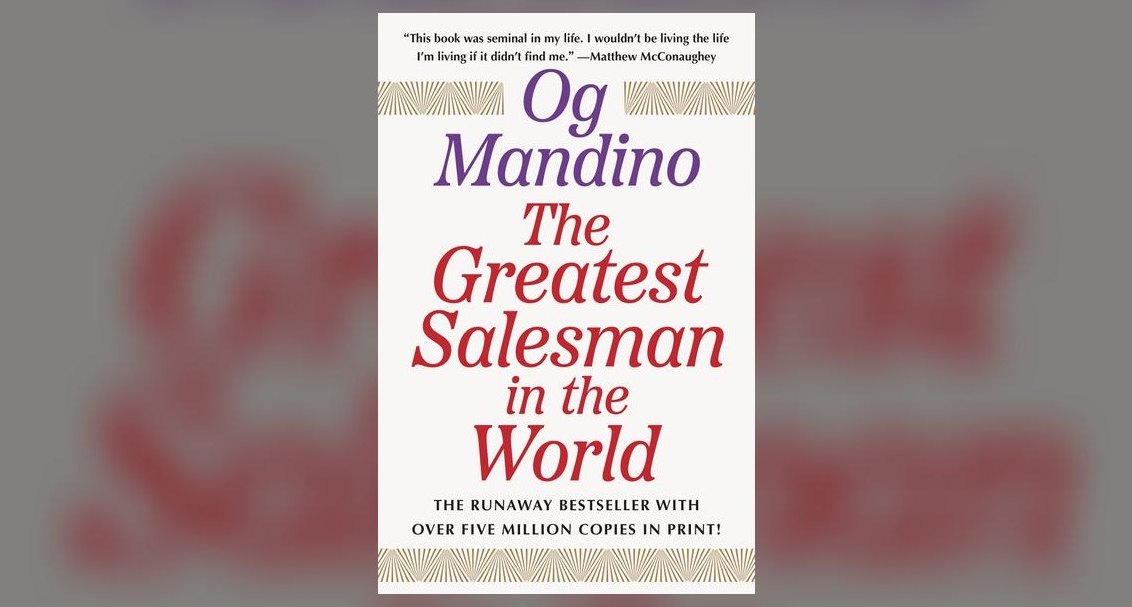 pulse-recentThe Greatest Salesman in the World by Og Mandino — Top 10 Key Takeaways for Sales Leaders in 2027
 pulse-recentWhat is the first concrete step in Sandler Rule #4 for a sales leader to implement in 2027?
 pulse-recentWhat is the first concrete step in The Sandler Rules by David Mattson for building a sales plan in 2027?
 pulse-recentThe Challenger Customer by Brent Adamson — Top 10 Key Takeaways for Sales Leaders in 2027
 pulse-recentThe Customer Success Professional’s Handbook by Ashvin Vaidyanathan — Top 10 Key Takeaways for Sales Leaders in 2027
 pulse-recentThe Collaborative Sale by Keith Eades — Top 10 Key Takeaways for Sales Leaders in 2027
 pulse-recentObviously Awesome by April Dunford — Top 10 Key Takeaways for Sales Leaders in 2027
 pulse-booksWhat are the most common mistakes in Book Summaries in 2027?