


Performance-Based Hiring by Lou Adler — Cliff Notes Summary
Quality
Certified
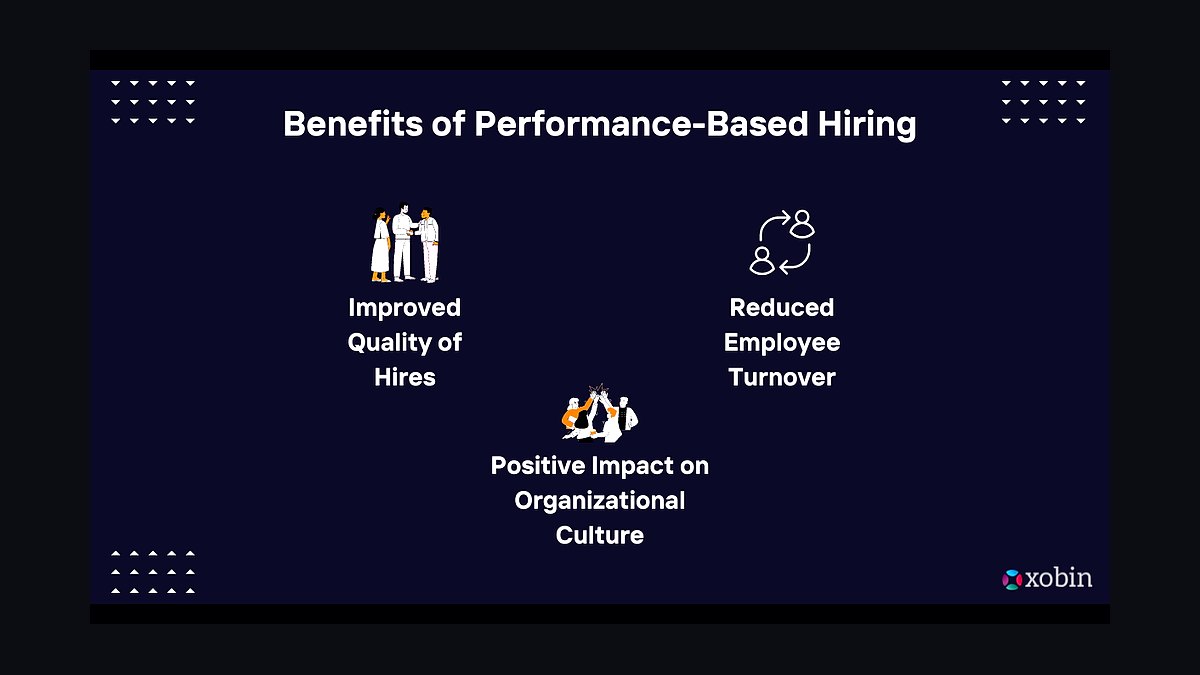
Performance-Based Hiring is Lou Adler's system for hiring on evidence of results instead of resume keywords. You replace the job description with a one-page Performance Profile of 5-7 measurable 12-month outcomes, then test candidates against it with the Most Significant Accomplishment interview and a structured, evidence-scored debrief.
What it is and why it matters
Lou Adler spent four decades in search and recruiter training before consolidating his method into three books — *Hire With Your Head* (Wiley, first edition 1998, now in its fourth edition), *Performance-Based Hiring* (McGraw-Hill, 2007), and *The Essential Guide for Hiring & Getting Hired* (Workbench Media, 2013). The through-line is one argument, repeated until it sticks: most job descriptions repel A-players and attract C-players, because they describe the *person* the company imagines rather than the *work* the company needs done.
Think about how a typical requisition gets written. A hiring manager opens the last version of the same role, changes the title, adjusts a salary band, and adds two lines about tools the team started using. What comes out is a shopping list — eight years of experience, a degree, four named platforms, "excellent communication skills." Nothing in that list describes an outcome. A candidate reading it learns what they must already have, not what they will get to build. Adler's claim is that this filter fails in two directions at once: it screens out unconventional high performers whose paths don't map to the keywords, and it screens *in* people who are excellent at matching keywords and mediocre at delivering results.
The fix is the Performance Profile — a one-page spec containing the role's purpose, five to seven measurable performance objectives for the first twelve months, the competencies that each objective actually requires, and the hiring manager's own commitments (budget, access, decision rights) that make delivery possible. Instead of "manage customer success," you write "reduce logo churn from 12% to 8% within four quarters by rebuilding the QBR motion for the top 50 accounts." Every objective carries a verb, a measurable target, and a time horizon. That's the structural test, and it's ruthless: an objective that fails it is a job-description line in disguise.

Why this matters beyond the recruiting function is worth stating plainly, because it's the part most teams miss. A Performance Profile is a planning artifact, not just a hiring artifact. Writing one forces a manager to answer questions they have usually been avoiding — what specifically is broken, what "fixed" looks like numerically, what resources they will actually hand over. Sales leaders discover mid-draft that they cannot name the number the new AE must hit in month nine. RevOps leaders discover that "clean up the data" has no owner, no baseline, and no definition of done. The profile surfaces that ambiguity before a person is hired into it, which is the cheapest possible moment to find it.
It also travels downstream. Because the profile is written in outcomes, it becomes the onboarding plan, the 90-day check-in agenda, and the first performance review with almost no rewriting. The scorecard the interviewers used and the scorecard the manager uses at six months are the same document. In organizations where hiring and performance management are run by different functions with different vocabularies, that continuity is the single most valuable side effect of the method — arguably more valuable than the interview technique it's famous for. The adjacent discipline here is the same one behind good sales-comp design: define the outcome you want first, and the behavior follows the definition.
Adler's lineage puts him inside a broader structured-hiring canon. Brad Smart's *Topgrading* (1999) supplied the chronological career walkthrough and the A-player vocabulary. Geoff Smart and Randy Street's *Who* (2008) compressed it into a scorecard-plus-four-interviews method. Adler's contribution is the front half: the artifact that defines what you're hiring *for*, and a job posting built to attract people who are not currently looking. Reading any one of the three without the others leaves a gap. Read together, they're one system with three authors.
The step-by-step process

The mechanics are linear and repeatable, which is why the method survives handoffs between recruiters. Here's the full sequence, with the practitioner detail that determines whether it works.
Step one — write the Performance Profile before you write anything else. Block 45 to 60 minutes with the hiring manager. Ask what has to be *true* twelve months after this person starts for the hire to be considered obviously successful. Capture the answers, then convert each into a verb-target-horizon sentence. Five to seven objectives is the working range; three means you haven't thought it through, ten means you've merged two roles into one requisition. Rank them, because you will need to know which objective matters most when two finalists split the scorecard.
Step two — convert the profile into a performance-based job description. This is the public artifact. Lead with a one-sentence career-impact hook, publish three to five representative objectives, describe the growth trajectory honestly, and push the skills checklist to the bottom or drop it. Adler's argument is that a posting written this way pulls dramatically higher response from passive candidates, because it answers the only question a happily-employed high performer cares about: *what will I accomplish, learn, and become if I take this?* Whether your own lift is 2x or 5x depends on the market, but the direction is consistent enough that it's worth measuring in your own ATS.
Step three — source rather than post. A-players are, by definition, mostly employed and mostly not browsing job boards. Adler's sourcing chapter leans on Boolean search, referral activation, and career-trajectory mapping — identifying people one or two levels below the target title at comparable companies and building relationships long before they'd consider moving. The 2026 caveat: a single-channel LinkedIn InMail strategy is a much weaker instrument than it was when the book was written. Serious sourcing teams now triangulate across professional networks, community platforms, public work (GitHub, Substack, conference talks), and the warm-referral graph, and treat the first outreach as the start of a relationship rather than a pitch.

Step four — run the Most Significant Accomplishment interview. Ask the candidate to describe the single accomplishment in their career most similar to the top objective on your Performance Profile. Then walk it chronologically — beginning, middle, end — for 30 to 45 minutes. The anchor probes that turn this from a conversation into a fact-finding session:
- When did this start, and what was the situation when you walked in?
- Who else was on the team, and what was your specific role in it?
- What were the biggest obstacles, and how exactly did you get past them?
- What was the measurable outcome, and how do you know that number?
- What would you do differently if you ran it again?
The skill is in slowing the candidate down. Strong candidates volunteer names, dates, constraints, and numbers unprompted, and they name their own mistakes without being asked. The fabrication tells are consistent: vague timelines, disappearing collaborators, credit that expands as the story goes on, and an outcome with no baseline. You are not trying to catch anyone out. You're testing whether the story has the texture that only comes from having actually lived it.
Step five — add the projection question. Adler's compressed "2-Question Interview" pairs the MSA with "how would you approach this objective if you started here in January?" The second question tests whether the candidate can transfer the pattern from their past environment into yours. A candidate with a genuine accomplishment usually answers it by asking you questions first — about the data, the team, the constraints — which is itself signal.

Step six — score against the profile, then debrief with evidence. Each interviewer rates each objective-linked factor 1-5 and, critically, writes the evidence that produced the rating. The debrief is a structured conversation about that evidence, not an average of numbers and not a show of hands. Adler is blunt that the thumbs-up/thumbs-down debrief is the largest single source of bad hires in corporate hiring, and the mechanism is easy to see: the loudest interviewer sets the anchor, and everyone recalibrates toward it.
Step seven — close on the career, not the comp. The offer conversation frames the decision as a comparison between two career arcs — staying versus taking the role — rather than a negotiation over a package. This is consultative enterprise selling with different nouns, and Adler says so directly. If you have sold complex deals, you already know the move: the buyer closes themselves once the future state is vivid and credible.
Costs, timelines, and typical ranges
The honest accounting starts with the time you must spend up front. A first Performance Profile takes a manager who has never written one somewhere between 60 and 120 minutes, including a round of revision. By the fourth or fifth, it's 30 to 45 minutes, because the manager has internalized the verb-target-horizon pattern and stops writing skills lists by reflex. If your organization runs 40 requisitions a year, you are buying roughly 20 to 40 hours of manager time annually — real, but small next to the cost of the mis-hires it prevents.
Interview time shifts rather than grows. The MSA runs 30 to 45 minutes per accomplishment, and most loops cover one or two. Teams adopting the method typically find they can cut a panel round, because the evidence produced by a well-run MSA makes the fourth conversation redundant. The net is usually flat-to-shorter loop time with substantially better documentation — and shorter loops matter commercially, since the candidates you most want are the ones most likely to have a competing offer inside two weeks.

On the cost of a bad hire, be careful with the numbers you repeat. Adler and Smart both use the 5-15x-salary framing for total compounded cost, and that range is a rhetorical device built from a stack of contributors — severance, recruiter fees, lost productivity during a slow ramp, the manager hours spent managing a struggling hire out, opportunity cost on the work that didn't get done, and the morale drag on a small team. It's a defensible order-of-magnitude argument, not a measured statistic. If you need to make the business case internally, build your own version from numbers you can source: your actual fully-loaded comp, your actual ramp period, your actual replacement cycle. A locally-built estimate that comes out at 2x salary will persuade a CFO far more than a borrowed 15x.
Timeline for adoption follows a predictable curve. One team, one requisition, one profile is a two-week experiment. A function-wide rollout — recruiters trained, hiring managers coached, templates in the ATS — is a quarter. Organization-wide standardization, where the profile is a required field before a req opens, is typically a year, and stalls the same way every process change stalls: senior leaders exempt themselves, and everyone below them notices.
Adjacent costs worth budgeting: someone has to own the template library, or profiles drift back into job descriptions within two hiring cycles. Someone has to review scorecards for evidence quality, or the free-text evidence fields fill with "great culture fit." And interviewer calibration needs refreshing — a half-day session at rollout and a short recalibration whenever a cohort of new managers arrives. None of this is expensive. All of it is the difference between a method and a memo.
Where teams get it wrong
The most common failure is cosmetic adoption: renaming the job description file "Performance Profile" while keeping a skills list inside it. You can spot this instantly — the "objectives" have no numbers and no dates. "Own the sales operations function" is a responsibility. "Cut lead-to-opportunity handoff time from six days to two by end of Q2" is an objective. If a stranger cannot tell whether the objective was met, it isn't one.
The second failure is writing objectives the company cannot support. A profile that demands a 40% pipeline increase from a team with no marketing budget and no headcount isn't ambitious, it's a trap — and good candidates recognize it during the interview. This is exactly why Adler includes hiring-manager commitments in the profile. If the objective requires two analysts and a data warehouse migration, that belongs on the page. Candidates who see the commitment section take the objectives more seriously, and the manager who wrote it has effectively pre-negotiated the resources.

Third: MSA interviews that stay shallow. The interview only works if the interviewer drives the chronology and refuses to let the candidate summarize. A 45-minute MSA that produced no names, no dates, no obstacles, and no numbers wasn't an MSA — it was a candidate's rehearsed highlight reel with a new label on it. Train for this specifically. The most useful drill is having two interviewers run the same MSA on the same practice candidate and compare the facts each extracted; the gap is usually shocking and instructive.
Fourth: scorecards without evidence. Ratings alone recreate the exact bias the system was designed to remove, because a 4 from an enthusiastic interviewer and a 4 from a skeptical one mean entirely different things. The evidence line is the mechanism. Make the field mandatory and reject debriefs that arrive without it.
Fifth — and this is where the 2013 book most needs modernizing — the chronological-accomplishment format can quietly disadvantage candidates with non-linear careers. Someone who took two years for caregiving, changed countries, or switched industries may have a most-significant accomplishment that predates their most recent role, or one that came from volunteer or contract work. The method handles this well *if* you let it: the profile asks for evidence of a capability, not evidence of continuous employment. State explicitly that the accomplishment can come from any context, and calibrate interviewers to weigh what the candidate did rather than where they were sitting when they did it. Left unstated, the format defaults to rewarding conventional paths, which is precisely the bias Adler set out to break.
Sixth: reintroducing keyword matching through automation. AI-assisted screening tools can genuinely help with volume, but a screening layer trained to rank on resume-keyword similarity is the skills-and-experience trap rebuilt in software, sitting upstream of a hiring process specifically designed to avoid it. If you use automated screening, audit what it's actually scoring, and check whether the candidates it advances would have advanced on the Performance Profile.
Finally: abandoning the profile after the hire. The team that treats the profile as a hiring document throws away half the value. Hand it to the new hire on day one. Use it as the 30/60/90 structure. Revisit it at six months. That's where the compounding return lives.
Decision framework: when to choose what

Not every requisition justifies the full apparatus, and pretending otherwise is how good methods die of overhead. A useful triage: how reversible is the hire, and how well-defined is the work?
For high-stakes, well-defined roles — a first RevOps hire, a regional sales leader, a founding engineer — run the complete method. The profile, the sourcing effort, the full MSA, the evidence debrief. These are the hires where a mistake costs quarters, and where the profile's planning value is highest because the role is new enough that nobody has thought it through yet.
For volume roles with a repeatable ramp — an SDR pod, a support tier — write the profile once for the role rather than once per requisition, and keep the MSA but shorten it. Entry-level objectives are learning and activity milestones rather than revenue targets: "reach full quota-carrying capacity within 90 days" or "independently qualify inbound leads by week six." Adler's argument that the method scales down holds, provided you accept that a 22-year-old's most significant accomplishment may come from a sport, a side project, or a campus organization. That's fine. You're testing for the pattern of setting a hard goal and driving to it, not for a corporate résumé.
For highly ambiguous roles — a strategy hire where the first six months are genuinely discovery — the profile is hardest to write and most necessary. Write objectives about the *discovery process* itself: "deliver a validated market-entry recommendation with a costed plan by end of Q2." If you truly cannot write a single measurable outcome, that is diagnostic information: you are not ready to hire, you are ready to scope.

For internal moves and promotions, the profile is the cleanest artifact available, because the evidence is already in the building. You skip sourcing entirely and run a shortened MSA against work you can independently verify with the people who witnessed it.
The comparison against neighboring methods is straightforward. If your problem is *defining what you're hiring for*, Adler's Performance Profile is the strongest single answer published. If your problem is *interview rigor across a full career history*, Topgrading's chronological in-depth interview goes deeper, at meaningfully higher time cost. If your problem is *installing a simple repeatable process in a small company fast*, the scorecard-and-four-interviews structure in *Who* is the easiest to teach in an afternoon. These are complements. The common strategy across all three — and the reason they've outlasted a generation of hiring fads — is that they force you to write down what success means *before* you meet anyone, then hold the process to that written standard.
Related questions
What is a Performance Profile in one sentence?
A one-page role spec listing five to seven measurable outcomes the new hire must deliver in twelve months, the competencies each outcome requires, and the resources the hiring manager commits to provide — replacing the traditional skills-and-experience job description.
How long should an MSA interview take?
Thirty to forty-five minutes for a single accomplishment, walked chronologically. Shorter than 30 minutes usually means the interviewer accepted a summary instead of driving the timeline. Two accomplishments across a loop is typical for senior roles.
Can job seekers use Performance-Based Hiring?
Yes — Adler writes for both sides. Candidates restructure resumes and interview answers around measurable accomplishments rather than duties, and ask interviewers what success looks like at twelve months, which surfaces poorly-scoped roles before accepting an offer.
Which Adler book should I read first?

*Hire With Your Head* (Wiley, fourth edition) is the fullest current treatment of the methodology. *The Essential Guide for Hiring & Getting Hired* is the more compact practitioner version and covers the candidate side more directly.
Does this replace reference checks?
No. The MSA generates specific, checkable claims — names, dates, numbers — which makes reference calls sharper. You stop asking "was she good?" and start asking "she said she cut onboarding from 14 days to 7; what was your view of that project?"
FAQ
How is a Performance Profile different from a regular job description?
A job description lists inputs — degrees, years of experience, tools, traits. A Performance Profile lists outputs: five to seven measurable things the hire will accomplish in twelve months, each with a verb, a target, and a deadline. The practical difference shows up immediately in the candidate pool. Outcome language attracts people who want to build something and filters out people optimizing for a title, while the exercise of writing it forces the hiring manager to define success before rather than after the hire arrives.
Does the MSA interview actually beat standard behavioral questions?
Adler argues it does, and the structural reason is credible: a chronological walkthrough of one real accomplishment is much harder to fabricate than a series of disconnected "tell me about a time" answers, which candidates can rehearse. The MSA produces names, dates, obstacles, and numbers that can be independently verified in reference calls. The dependency is interviewer skill — an untrained interviewer who lets the candidate summarize gets a polished story and no evidence, which is worse than a structured behavioral guide.
How does this compare to Topgrading and Who?

All three sit in the same structured-hiring lineage and share the core premise that you define success first and interview against it. Topgrading goes deepest on full-career chronological interviewing and costs the most time. *Who* is the fastest to install — a scorecard and a four-interview sequence a small company can adopt in a week. Adler's distinctive contribution is the front end: the Performance Profile itself and the performance-based job posting built to attract candidates who aren't looking. Most teams end up borrowing from more than one.
Does Performance-Based Hiring work for entry-level roles?
Yes, with adjusted objectives. Junior objectives are learning and capability milestones — reaching independent qualification by week six, hitting full ramp by day 90 — rather than revenue outcomes. The accomplishment a junior candidate walks you through will often come from school, sport, a side project, or a first internship, and that is legitimate source material. You are assessing the pattern of setting a difficult goal, hitting obstacles, and driving through them, which shows up well before someone's first corporate role.
What are the real drawbacks?
Three. It front-loads work onto hiring managers who are already busy, and adoption fails wherever that work doesn't happen. It requires genuine interviewer training — the MSA is a skill, not a script, and an untrained loop degrades to conversation. And the chronological-accomplishment format can disadvantage candidates with non-linear careers unless you explicitly widen what counts as an accomplishment. All three are addressable, but a team that adopts the templates without the training gets the paperwork and none of the benefit.
Is the Performance Profile useful after the hire is made?
That's arguably where it earns most of its return. The profile becomes the onboarding plan, the structure for 30/60/90 check-ins, and the basis of the first performance review with no rewriting. Because interviewers and the manager score against the same objectives, there's continuity between what the candidate was promised and what they're measured on — which is one of the more reliable predictors of whether a hire stays past the first year.
Sources
- https://www.wiley.com/en-us/Hire+With+Your+Head%3A+Using+Performance+Based+Hiring+to+Build+Great+Teams%2C+4th+Edition-p-9781119808886
- https://www.linkedin.com/in/louadler/
- https://business.linkedin.com/talent-solutions/resources
- https://hbr.org/2014/06/21st-century-talent-spotting
- https://www.shrm.org/topics-tools/tools/toolkits/interviewing-candidates-employment
- https://www.topgrading.com/
- https://whothebook.com/
- https://www.mhprofessional.com/performance-based-hiring-9780071408196
- https://hbr.org/2016/05/how-to-interview-a-job-candidate
- https://www.dol.gov/agencies/odep/program-areas/employers/recruitment-and-retention
Related on PULSE
- Topgrading by Brad Smart — Cliff Notes Summary for Sales Hiring
- Who: The A Method for Hiring by Geoff Smart — Cliff Notes Summary
- The Ideal Team Player by Patrick Lencioni — Cliff Notes Summary for Sales Hiring
- How to build a sales onboarding plan that ramps reps faster
- What should a RevOps hiring scorecard actually measure?
This page will be disappearing soon. Save it to your device for $1 — or read it free while it is here.
@Kory-White- · if Venmo asks, the last 4 of my number are 2012
This page is gone.
This one is off the shelf now. $1 keeps it on your phone for good — the whole page, pictures and diagrams included.
 pulse-recentHow to Apply Strategic Selling — Step-by-Step Playbook in 2027
 pulse-recentWhat is the first concrete step in the Sandler Selling System for handling a prospect's initial brush-off in 2027?
 pulse-recentThe Sales Acceleration Formula by Mark Roberge — Top 10 Key Takeaways for Sales Leaders in 2027
 pulse-recentNever Split the Difference by Chris Voss — Top 10 Key Takeaways for Sales Leaders in 2027
 pulse-recentHyper Sales Growth by Jack Daly — Top 10 Key Takeaways for Sales Leaders in 2027
 pulse-booksWhat are the most common mistakes in Book Summaries in 2027?
 pulse-recentThe Transparency Sale by Todd Caponi — Top 10 Key Takeaways for Sales Leaders in 2027
 pulse-recentHow do you implement the Sandler Rules in your first 30 days as a new sales rep in 2027?
 book-summaryLittle Red Book of Selling by Jeffrey Gitomer — Cliff Notes Summary
 pulse-recentSales EQ by Jeb Blount — Top 10 Key Takeaways for Sales Leaders in 2027