


Sprint by Jake Knapp — Cliff Notes Summary for Sellers
Quality
Certified
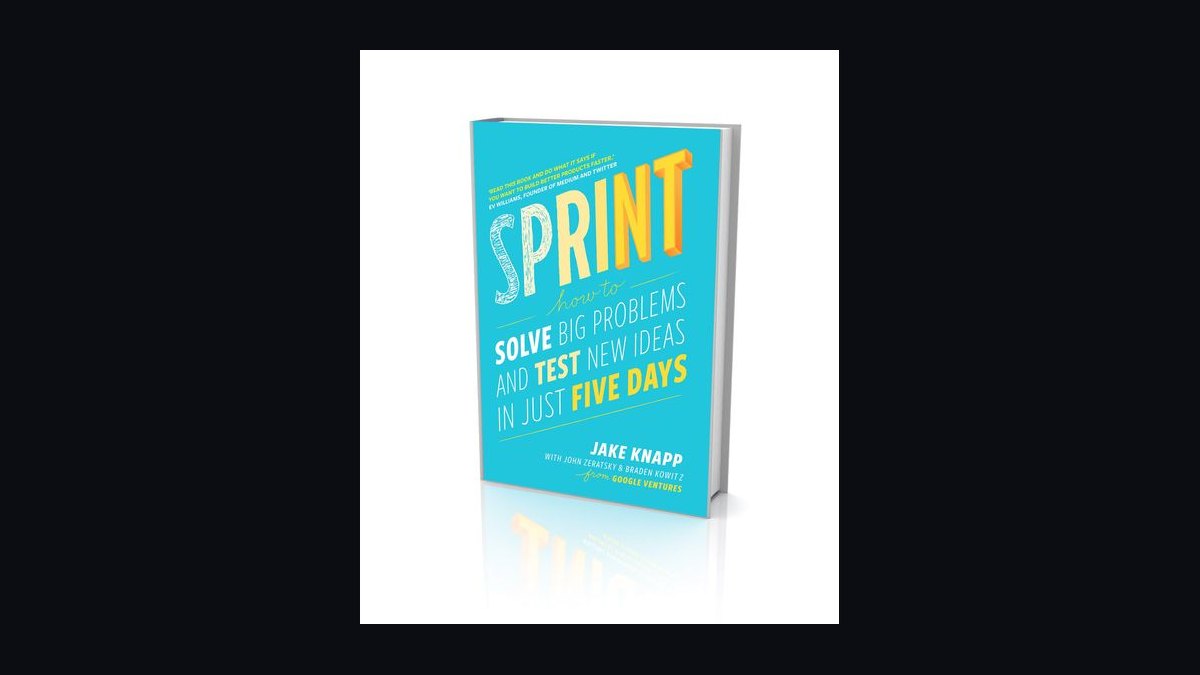
*Sprint* by Jake Knapp (with John Zeratsky and Braden Kowitz, 2016) compresses months of debate into five days: Monday map the problem, Tuesday sketch solutions alone, Wednesday decide with a single Decider, Thursday build a realistic-but-fake prototype, Friday test it on five customers. Sellers use the same week to pressure-test pricing, cadences, and territory strategy.
What the book actually argues, and why sellers keep picking it up
Knapp's origin story is unglamorous. At Google in 2009 he was handed inbox prioritization for Gmail, watched the team burn month after month in meetings that produced opinions instead of shipped code, and ran a one-week experiment out of frustration — a compressed, structured, calendar-blocked week where the team was forbidden from doing anything else. That week produced Priority Inbox. He carried the format to Google Ventures in 2012 and refined it across more than a hundred portfolio sprints, including work with Slack, Blue Bottle Coffee, Nest, and 23andMe.
The argument underneath the process matters more than the schedule. Knapp claims organizations default to two failure modes and almost never a third. The first is endless debate — a standing meeting about the same strategic question, running for a quarter, generating decks and no decisions. The second is just build it — engineering or ops capacity spent constructing the thing before anyone confirmed a customer wants it. Both are expensive. Debate burns calendar; building burns capital and, worse, creates sunk-cost commitment to an unvalidated idea. The Sprint is the third path: decide first, prototype second, test third, all inside one week, at a cost of roughly 35 person-hours per participant.
For a revenue team the parallel is uncomfortably exact. Pricing changes sit in committee for two quarters. A new outbound motion gets debated across four leadership meetings, then launched to the full team with no small-scale validation, then quietly abandoned when reply rates disappoint. An ICP rewrite gets assigned to marketing, comes back as a slide, and nobody in sales changes a single call. A sprint format forces the same question to a tested answer inside five business days.
The reason this Summary for Sellers is worth reading rather than skimming is that the book is written for consumer product teams and never once addresses a quota-carrying org directly. The mapping is real but you have to do it yourself: the "customer journey map" becomes the buying-committee map; the "prototype" becomes a proposal mockup, a pricing page, a demo script, or a fake landing page for a new segment; the "five users" become five buyers from the target segment, ideally split across won, lost, and never-engaged. Knapp gives you the machinery. The strategy translation is on you.

The two options compared: run the full five-day sprint or run a compressed variant
Almost every team that adopts this book faces the same fork in the road, and the book itself only argues one side of it. Option A is the canonical five-day sprint exactly as Knapp prescribes it. Option B is a compressed variant — three or four days, or a series of half-days spread across two weeks. The compressed variants have proliferated since 2016; AJ&Smart's widely-circulated "Design Sprint 2.0" cut the week to four days by moving user recruiting and some mapping into pre-work, and remote-first teams have pushed further.
Option A — the full five days. All five days protected, 10am to 5pm, one room (physical or a persistent video room), phones and laptops closed during working sessions. The Decider present at minimum for Monday's map and Wednesday's decision. Five customer interviews booked before Monday begins.
*What it buys you.* The full week is the only version where the "decide-prototype-test" chain is uninterrupted. Nobody drops back into their inbox and returns with new opinions from a stakeholder who wasn't in the room. Knapp's strongest empirical claim from the GV portfolio is that scope discipline predicts sprint outcomes better than team talent — and scope discipline collapses the moment participants leave the room for two days and come back re-loaded with pet ideas. The full week also protects Thursday, which is where most compressed sprints die: the prototype gets thinner, and a thin prototype produces mushy Friday feedback that no one trusts enough to act on.
*What it costs.* Seven people × five days is roughly 245 person-hours. For a sales org that is five days of a top rep not selling, five days of a sales engineer not supporting deals, five days of a RevOps lead not closing the month. In a 22-business-day month that is 23% of a quota-carrying person's capacity. This is a genuine cost and the honest reason most revenue teams balk.
Option B — the compressed variant. Three or four consecutive days, with mapping and expert interviews moved into a pre-work packet, and the prototype day shortened by using existing assets (real pricing pages, real slide templates, real sequences in the SEP) as the raw material rather than building from blank.
*What it buys you.* Roughly 40-50% less person-hour cost and a dramatically easier calendar sell. It also fits the natural rhythm of a sales org better — a Tuesday-through-Thursday block avoids Monday pipeline reviews and Friday close-outs.
*What it costs.* Two specific things break. First, the pre-work packet is almost never read, so Monday's shared understanding is fake — half the room is operating from the packet and half from memory, and the map produced is a compromise nobody actually believes. Second, and more damaging: compressed sprints are where the Friday customer test gets cut. Knapp is blunt that this is the one step you cannot remove. A sprint without the five interviews is a fast opinion, not a validated decision — and a fast wrong opinion is more dangerous than a slow one because it carries the credibility of "we sprinted on it."
The honest middle. The variant that survives contact with a sales org most reliably is a four-day sprint that keeps all five customer interviews on the final day, cuts Thursday's prototype build to a half-day by starting from existing collateral, and moves expert interviews to a recorded pre-read that the facilitator summarizes live on Monday morning rather than assuming anyone read it. That preserves the two load-bearing pieces — the binding decision and the customer test — and cuts the two that compress cleanly.
One more consideration the book doesn't cover: sequencing multiple sprints. A single sprint answers one question. Revenue teams usually have three or four stuck questions simultaneously (pricing, ICP, outbound motion, packaging). Running them as four sequential sprints across a quarter, each with the same facilitator but rotating subject-matter seats, is far more effective than trying to solve all four in one week. Knapp's scope-discipline finding is the reason: a sprint that targets four questions targets none.
How to decide between them
The choice is not about team size or budget. It's about three variables: whether the Decider can actually clear five days, whether the question is genuinely stuck or merely unstarted, and whether you can book five real buyers for a single Friday.
Test one: is the Decider available for the full week, or only two days? If the Decider — the person who can unilaterally approve the pricing change or the territory rewrite — can only give you Monday and Wednesday, run the compressed variant and structure it so those two days are the ones they attend. A sprint where the Decider phones in the supervote from an airport is a sprint that produces a recommendation nobody ships. This is the single most common failure and it is a calendar problem, not a method problem.
Test two: is the question stuck or unstarted? Sprints are expensive medicine for a specific illness: a question that has been circling without resolution, where the team has more opinion than evidence. If nobody has ever seriously looked at the problem, a sprint is overkill — do two weeks of ordinary discovery first, because the sprint's Monday assumes the room already contains the relevant knowledge. Knapp's expert interviews only work if there are experts with real answers in the building.
Test three: can you book five buyers? In consumer product you recruit five users off a Craigslist ad in a day. In B2B, five qualified buyers from a named segment, available on the same Friday, is a two-week recruiting job. If you cannot fill five slots, you can run a modified test with three — Nielsen's original finding was that the marginal return drops steeply after five, not that four is worthless — but you must lower your confidence accordingly and say so out loud in the readout.
Concrete numbers behind each option
The book is specific about quantities, and those numbers are what make the method reproducible rather than a vibe. Worth listing them plainly, because most teams that "run a sprint" have quietly violated three of them.
Team size: seven, hard cap. Knapp is rigid. More than seven and decision latency rises sharply — every additional voice adds discussion time to every convergence step, and the Wednesday decision stretches past the day. Fewer than five and you lose perspective diversity. The composition: one Decider (binding authority over the outcome), one Facilitator (owns the clock and the process, deliberately does not weigh in on content), and five cross-functional seats. For a revenue sprint those five seats are typically a top-performing AE, a sales engineer or solutions person, a RevOps or analytics owner who holds the data, a marketer who owns the messaging, and a customer-success rep who hears post-sale reality.
Hours: 10am to 5pm, five days. Not 9-to-6. Knapp deliberately starts late so participants can clear urgent email, and ends at 5 to preserve energy across the week. Two breaks: mid-morning and lunch. The late start is not a soft touch — it's the mechanism that makes a full-day ban on phones and laptops survivable.
Monday's map: 5 to 15 steps. The customer journey drawn on the whiteboard should be five to fifteen steps end to end. Fewer than five and you haven't decomposed the problem. More than fifteen and the map is a process diagram nobody can hold in their head. For a B2B revenue map, expect the upper half of that range — first touch, research, internal champion identified, discovery call, technical evaluation, security review, procurement, signature, onboarding.
Expert interviews: 15 to 30 minutes each. Monday afternoon. Four to six of them. Each interviewee gets a short window, the room takes notes exclusively as "How Might We" questions on individual sticky notes, and then the room dot-votes to surface the highest-leverage HMWs. The tight time box is deliberate: a 45-minute expert interview becomes a presentation, and presentations don't generate HMWs.
Crazy 8s: 8 sketches, 8 minutes, one sheet folded into 8 panels. One minute per variation. The constraint is the point — the first two ideas are the obvious ones, ideas three through five are worse, and six through eight are where the interesting variants appear because you've exhausted the obvious.
Solution sketch: three panels, 30 to 90 minutes, anonymous. Three panels because you're storyboarding a sequence, not drawing a screen. Anonymous because Wednesday's heat map should react to the idea, not the person's rank.
Storyboard: 10 to 15 panels. Wednesday afternoon. This is the literal build spec for Thursday. Every panel Thursday's makers don't have is a panel they'll invent badly at 4pm.
Friday: five customers, 60 minutes each, back to back. Knapp cites Jakob Nielsen's 2000 Nielsen Norman Group finding that five users surface roughly 85% of usability problems, with users six through eight mostly repeating what the first five already showed. One facilitator runs all five interviews; the rest of the team watches a live stream from the sprint room and fills a grid — one column per customer, one row per sprint question. The grid is what makes pattern-spotting mechanical rather than argumentative at 4pm Friday.
Total cost, plainly stated. Seven people, five days, seven working hours = 245 person-hours. At a blended fully-loaded rate that's a real line item, and it is still cheaper than one quarter of a five-person committee meeting weekly for 90 minutes (about 97 hours) that produces no decision, and vastly cheaper than shipping a pricing change to the full field that gets rolled back in six weeks.
What the compressed variant actually saves. Four days instead of five is 196 hours, a 20% cut. Moving expert interviews to pre-work saves maybe 12 hours of room time but adds facilitator prep. The bigger savings come from shrinking the team to six, not from shrinking the week — and shrinking the team is the safer cut, because it doesn't touch the decide-prototype-test chain.
Implementation details and sequencing
The day-by-day mechanics, with the sales translation attached to each.
Pre-sprint, one to two weeks out. Three jobs, in order. First, secure the Decider's calendar in writing — not "I'll try to join," an accepted block. Second, recruit and confirm the five Friday interviewees, with incentives sent and calendar holds accepted; over-recruit to six because one always cancels. Third, write the challenge statement in one sentence and get the Decider to agree to it before Monday, so Monday morning isn't spent renegotiating the question.
Monday — Map. Morning: write the long-term goal ("in two years, what does success look like if this works?") and then the sprint questions — the assumptions that, if wrong, sink the goal. Phrase them as questions: "Can a mid-market buyer understand the tiered pricing without a rep walking them through it?" These become Friday's grid rows. Afternoon: build the map, run the expert interviews, capture HMWs, dot-vote, and then the Decider picks one customer segment and one moment on the map as the target. That last step is where most sprints are won or lost. Targeting "the whole funnel" is targeting nothing.
Tuesday — Sketch. Morning: lightning demos. Each person spends three minutes walking the room through an existing product, page, or process — from any industry — that solved an analogous problem well. Note what to steal. Afternoon: the Four-Step Sketch, done alone and silent. Notes (20 min), Ideas (20 min), Crazy 8s (8 min), Solution Sketch (30-90 min). The silence is load-bearing. Group brainstorming reliably produces worse output than independent ideation followed by group evaluation — this is one of the better-supported claims in the group-creativity literature, and it is exactly backwards from how most sales offsites run.
Wednesday — Decide. Morning is the Sticky Decision, five steps: Art Museum (tape every sketch to the wall), Heat Map (silent dot-stickering of compelling parts, no talking), Speed Critique (three minutes per sketch, facilitator narrates, artist stays quiet until the end), Straw Poll (one vote each), Supervote (the Decider's binding vote). If two ideas represent genuinely different bets, the Decider can call a Rumble — prototype both, test both Friday, let the buyer choose. Afternoon: build the 10-15 panel storyboard. Assign Thursday roles before anyone leaves.
Thursday — Prototype. The book's most counterintuitive chapter argues for a realistic-looking facade rather than working software: slides in Keynote, screens in Figma, a printed one-pager, a fake pricing page. The logic is that buyers react to the surface of an experience, and a facade built in a day produces the same signal as a build that took three months — with the enormous advantage that you can throw it away without grief. Four roles: two Makers building the pieces, a Stitcher assembling them into one end-to-end flow, a Writer drafting the on-screen copy (in B2B the copy carries most of the meaning — it is not a placeholder), and an Asset Collector sourcing logos, screenshots, and sample data. Build only the happy path in the storyboard. No error states, no edge cases. End of day: a 30-minute trial run where the Decider plays the buyer and bugs get flagged.
Friday — Test. Five 60-minute interviews on the hour. Each follows a five-act script: friendly welcome (make clear you're testing the design, not them), context questions (who they are, what they do today), introduce the prototype honestly as a work in progress, tasks and nudges (let them drive; ask "what are you thinking?" and never lead), quick debrief (what worked, what confused, what would they tell a colleague). After the fifth, the room reads across the grid rows and sorts everything into ship, fix, kill. Most sprints produce all three.
The Monday after. The book is thin here and it's where sales sprints leak. Assign an owner and a date to each ship/fix/kill item before the room breaks on Friday. A sprint that ends with "great week, let's regroup" has converted five days into a very expensive workshop.
What holds up, what has aged, and where sellers should adapt it
Still load-bearing. The five-day structure remains the most reliable published protocol for turning a stuck question into a tested artifact. The Decider-with-binding-vote is the piece most teams want to soften and the piece they should protect hardest — consensus is precisely the failure mode the method exists to defeat. The realistic-but-fake prototype principle has aged extremely well; it's now the default assumption in product-led companies and translates directly to sales assets, where a mocked pricing page or a fake proposal costs an afternoon and answers a question that would otherwise sit in committee for a quarter.
Aged. The in-person-room assumption broke in 2020 and has not fully returned; modern sprints run on video plus a shared canvas, with the facilitator managing breakout rooms instead of physical whiteboards. Knapp's team published remote-sprint guidance in 2020 to address this. Thursday has compressed hardest — AI-assisted design and code tools now produce in a few hours what took a full day of Keynote slides, and sometimes produce working code rather than a facade, which reintroduces the risk the facade principle was designed to avoid: falling in love with the artifact.
Where the book is silent and sellers must extend it. *Sprint* frames everything through consumer product examples. It says nothing about buying committees, nothing about multi-threaded deals, nothing about the fact that in B2B the person you test with may not be the person who signs. Three adaptations are worth making. First, recruit across the committee, not one persona — two economic buyers, two practitioner users, one procurement or security voice, because a pricing page that delights users and terrifies procurement is a failed test that a single-persona panel would score as a win. Second, split your five between won-deal buyers and lost-deal buyers; lost-deal interviews carry more signal per minute than any other input a revenue team can buy. Third, treat the sprint question as a bet with a revenue number attached — "if this pricing structure works we expect X% higher mid-market win rate" — so Friday's readout can be argued against a number rather than a feeling.
The neighboring literature is worth knowing. The method sits downstream of design thinking practice from the 1990s and alongside Lean Startup's build-measure-learn loop; Knapp and Zeratsky's follow-up, *Make Time*, applies the same attention-protection logic to individual calendars. Decision-rights frameworks like RACI and its variants pair naturally with the Decider role for organizations that find a single binding vote culturally hard — they preserve the decisive-individual principle while distributing input gathering.
The one-sentence takeaway. Pick the single revenue question that has been circling for a quarter, block the next available week, put the Decider in the room, and book five buyers for Friday before you start Monday. Everything else in the book is scaffolding around those four commitments.
Related questions
Can a sprint work if the Decider refuses to attend?

No. A sprint without binding authority in the room produces a recommendation that dies in the follow-up meeting — exactly the outcome the method exists to prevent. If the Decider won't commit, postpone the sprint and solve the sponsorship problem first. That's the real blocker, not the calendar.
What should a sales team prototype on Thursday?
Whatever the buyer will actually encounter: a pricing page, a proposal template, a first-call deck, a landing page for a new segment, or a scripted demo flow. Build only what the storyboard covers, keep it to the happy path, and make the copy real — in B2B the words carry most of the meaning.
Is five customers really enough for a B2B decision?
Five surfaces most usability and comprehension problems, which is what Friday tests. It does not size a market or validate willingness to pay at statistical confidence. Use the sprint to kill bad ideas fast and shape good ones; use a larger sample later for pricing elasticity or forecast inputs.
How is this different from an agile sprint?
Entirely different things that share a word. An agile sprint is a two-week development iteration that builds and ships increments of real software. A design sprint is a five-day validation exercise that deliberately avoids building anything real, ending in customer feedback rather than shipped code.
Can you run consecutive sprints on different questions?
Yes, and it's usually better than cramming multiple questions into one week. Run them sequentially across a quarter with the same facilitator and rotating subject-matter seats. Scope discipline is the strongest predictor of outcome, so one question per sprint beats four questions in one.
FAQ
How is a design sprint different from a regular brainstorming session?
A brainstorm is open-ended, verbal, and ends with ideas. A sprint is time-boxed with prescribed activities per day, does its ideation silently and individually, forces a binding decision by Wednesday, and ends with a prototype that five real customers have reacted to. The deliverable is evidence, not enthusiasm.
Do I need designers and engineers on the team?
No. You need a Decider with real authority, a Facilitator who owns the process and stays out of content decisions, and five cross-functional seats. For a revenue sprint that's typically an AE, a sales engineer, a RevOps owner, a marketer, and a customer-success rep. Diverse perspective matters more than design credentials.
What if we can't build a working prototype by Friday?
You aren't supposed to. Knapp's Thursday chapter argues explicitly for a realistic-looking facade — slides, mockups, a printed page, a scripted walkthrough — because buyers react to the surface, and a facade you built in a day can be discarded without anyone defending it. Working software on Thursday is a failure mode, not a stretch goal.
How much preparation does the week require?
Plan one to two weeks of pre-work: lock the Decider's calendar in writing, recruit and confirm five customer interviews for Friday (over-recruit to six, one always cancels), gather existing research, and agree the challenge statement in a single sentence before Monday starts.
Can we shorten it to three or four days?
Many teams do, and a four-day version survives fine if you cut the right things. Compress the expert interviews into a facilitator-summarized pre-read and shorten Thursday by starting from existing collateral. Never cut Friday's customer test — a sprint without it produces a fast opinion, which is more dangerous than a slow one.
Does the method transfer to B2B revenue work?
Yes, with adaptation the book doesn't provide. Map the buying committee rather than a single user journey, recruit your five across economic buyer, practitioner, and procurement voices, split them between won and lost deals, and attach a revenue hypothesis to the sprint question so Friday's readout argues against a number.
Sources
- https://www.thesprintbook.com/
- https://www.nngroup.com/articles/why-you-only-need-to-test-with-5-users/
- https://www.gv.com/sprint/
- https://designsprintkit.withgoogle.com/methodology/overview
- https://www.ideou.com/blogs/inspiration/what-is-design-thinking
- https://www.interaction-design.org/literature/topics/design-thinking
- https://www.nngroup.com/articles/design-sprints/
- https://hbr.org/2008/06/design-thinking
- https://www.atlassian.com/team-playbook/plays/design-sprint
Related on PULSE
- Sprint by Jake Knapp — Cliff Notes Summary for B2B Sales
- The 12 Week Year by Brian Moran and Michael Lennington — Cliff Notes Summary for Sellers
- Contagious by Jonah Berger — Cliff Notes Summary for Sellers
- The Tipping Point by Malcolm Gladwell — Cliff Notes Summary for Sellers
- Exactly What to Say by Phil M. Jones — Cliff Notes Summary for Sellers
- Antifragile by Nassim Taleb — Cliff Notes Summary for Sellers
This page will be disappearing soon. Save it to your device for $1 — or read it free while it is here.
@Kory-White- · if Venmo asks, the last 4 of my number are 2012
This page is gone.
This one is off the shelf now. $1 keeps it on your phone for good — the whole page, pictures and diagrams included.
 pulse-recentSales EQ by Jeb Blount — Top 10 Key Takeaways for Sales Leaders in 2027
 pulse-recentWhat are the concrete steps to implement the Sandler Rules for Sales Leaders by David Mattson in 2027?
 pulse-recentStrategic Selling by Robert Miller and Stephen Heiman — Top 10 Key Takeaways for Sales Leaders in 2027
 book-summaryLittle Red Book of Selling by Jeffrey Gitomer — Cliff Notes Summary
 pulse-recentWhat is the step-by-step process for Strategic Selling by Miller Heiman in 2027?
 pulse-recentTraction by Gabriel Weinberg and Justin Mares — Top 10 Key Takeaways for Sales Leaders in 2027
 pulse-recentThe Sandler Rules by David Sandler — Top 10 Key Takeaways for Sales Leaders in 2027
 pulse-recentThe Customer Success Professional’s Handbook by Ashvin Vaidyanathan — Top 10 Key Takeaways for Sales Leaders in 2027
 pulse-recentHyper Sales Growth by Jack Daly — Top 10 Key Takeaways for Sales Leaders in 2027
 pulse-recentGetting to Yes by Roger Fisher and William Ury — Top 10 Key Takeaways for Sales Leaders in 2027