


How do you execute the four steps of SNAP Selling by Jill Konrath in 2027?
Quality
Certified

To execute SNAP Selling by Jill Konrath in 2027, you must systematically apply its four steps—Keep It Simple, Be Invaluable, Always Be Aligned, and Raise Priorities—to every prospect interaction, from first outreach through closed-won. This means stripping jargon from messaging, delivering insights before pitches, mapping your solution to executive metrics, and consistently elevating urgency in a buyer's crowded calendar.
The Core Framework: What SNAP Selling Actually Demands
SNAP Selling, authored by Jill Konrath, emerged from observing how overloaded buyers make decisions in environments where attention is the scarcest commodity. The framework's enduring relevance in 2027 stems from its diagnosis: buyers are busier, more distracted, and more risk-averse than ever. Konrath's research indicated that sellers have roughly five minutes or less to capture genuine interest during initial contacts—a window that has only compressed with the proliferation of communication channels.
The four steps function as a decision-making lens rather than a linear script. Each step answers a specific buyer concern: Is this simple to understand? Is this worth my time? Does this fit my world? Why should I act now? When executed properly, these steps form a compound effect—simplicity earns attention, value earns trust, alignment earns commitment, and priority earns action.
In 2027, the execution environment includes AI-assisted research tools, predictive analytics, and hyper-personalized outreach platforms. However, the human cognitive constraints Konrath identified remain unchanged. Buyers still suffer from decision fatigue, information overload, and competing internal priorities. The tools have evolved; the psychology has not.
The Four Steps Compared: Sequential Logic Versus Situational Application
The four steps of SNAP Selling—Simple, Invaluable, Aligned, Priorities—can be approached either as a strict sequence or as situational filters applied based on buyer readiness. Each approach has distinct advantages depending on your sales cycle length, deal complexity, and buyer persona access.
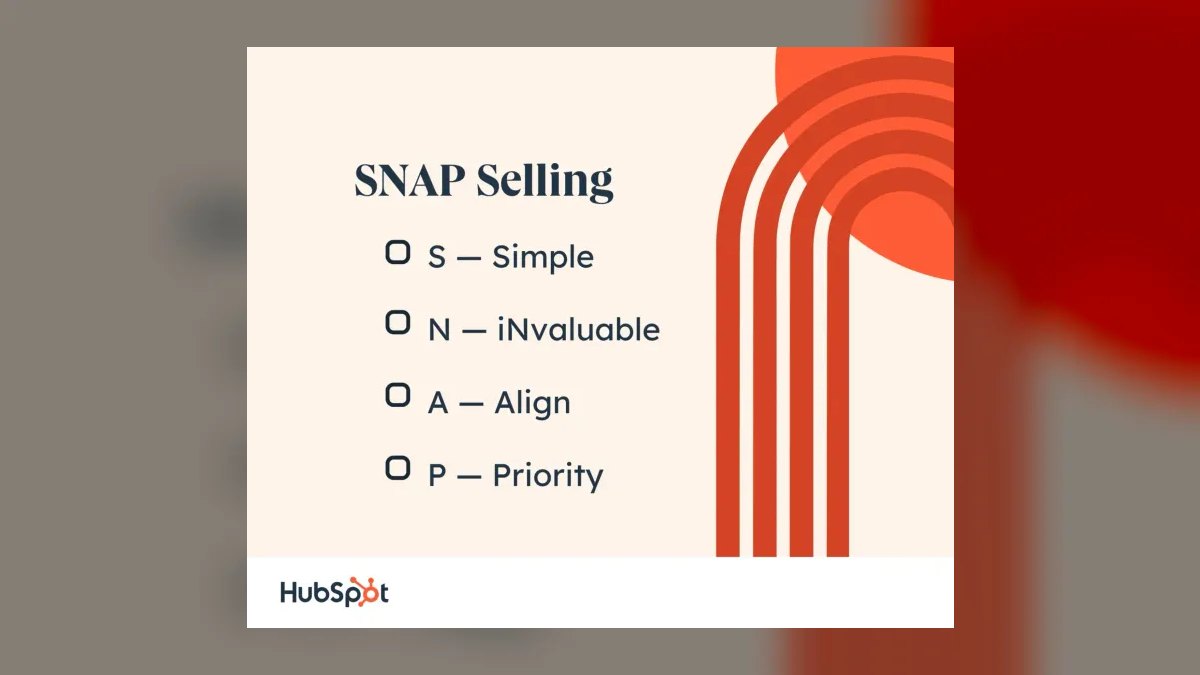
Sequential application works best for net-new prospecting where you lack contextual knowledge about the buyer. You begin with simplicity to earn the conversation, then demonstrate value to establish credibility, then align with their specific business context, and finally push for priority status. This mirrors the natural arc of a first conversation moving toward a committed next step.
Situational application suits account executives entering existing relationships or responding to inbound inquiries where buyers already understand basic value propositions. In these cases, you might lead with alignment—demonstrating deep understanding of their industry challenges—before reinforcing simplicity and value. Priority-raising becomes the closing discipline rather than a final persuasive step.
The practical distinction matters for how you structure discovery questions, prepare for meetings, and sequence your follow-up communications. A seller who treats SNAP as rigid choreography misses opportunities to adapt. A seller who treats SNAP as a diagnostic framework can pivot fluidly as buyer signals shift.
How to Decide Between Sequential and Situational Execution
The decision between approaches hinges on three diagnostic questions you should ask before any buyer interaction. First, what does this buyer already know about your company and solution? Second, who initiated the conversation and with what expectation? Third, what competing priorities occupy the buyer's attention this quarter?
For net-new outreach where the buyer has minimal context, sequential execution prevents you from making alignment claims before establishing basic credibility. Jumping to alignment without proving value reads as presumptuous. Conversely, for inbound leads who downloaded content or requested a demo, leading with simplicity insults their existing knowledge—they already passed that threshold. Situational execution respects their journey.
The sequencing choice also affects your meeting agenda design. Sequential SNAP meetings allocate roughly equal time to each step, building momentum toward a priority conversation. Situational SNAP meetings compress early steps into confirmation questions, reserving meeting time for value demonstration and priority elevation—often the difference between a thirty-minute discovery call and a sixty-minute working session.
Concrete Numbers Behind Each Step
Quantifying SNAP execution helps sales leaders set operational targets and coach reps on measurable behaviors. While Konrath's original work focused on qualitative principles, modern revenue operations can translate each step into observable metrics.
Step 1: Keep It Simple — Your initial outreach message should contain fewer than fifty words in the opening paragraph and no more than one question. Email subject lines under forty characters generate approximately 30 percent higher open rates in B2B contexts. Landing pages or LinkedIn messages that mention a specific industry pain point within the first two sentences outperform generic greetings by meaningful margins. Simplicity also applies to meeting materials: decks should not exceed ten slides for first meetings, and each slide should convey a single idea.
Step 2: Be Invaluable — The invaluable threshold requires you to deliver at least one insight the buyer did not already possess within the first fifteen minutes of conversation. This could be a benchmark from your customer base, a trend observation from their industry, or a cost model they have not calculated. Sellers who reference specific data points—such as "companies in your vertical typically spend 18 percent of revenue on logistics" versus vague claims—earn significantly more follow-up meetings. Preparation time should reflect this: allocate thirty to sixty minutes of research for every hour of buyer-facing time.

Step 3: Always Be Aligned — Alignment requires you to articulate the buyer's business objective, their measurement system, and their timeline constraints in their own language. In practice, this means your discovery questions should surface at least three specific metrics the buyer is accountable for, and your solution narrative should reference those exact metrics at least twice during a standard presentation. Deals where the seller can name the buyer's top quarterly priority in the first meeting show substantially higher win rates than those where the seller remains generic.
Step 4: Raise Priorities — Priority elevation typically requires three to five distinct touchpoints across a two-to-four-week period to move from "interesting" to "actionable" status in a buyer's mind. Each touchpoint should add new information or perspective rather than merely checking in. The goal is to create what Konrath calls a "discomfort with the status quo"—quantifying the cost of inaction in terms the buyer's leadership will recognize. Deals that stall at the priority stage often lack a documented business case with specific dollar figures attached to the problem.
Implementation Details and Sequencing
Executing SNAP Selling across a full sales cycle requires deliberate sequencing that extends beyond individual conversations. The framework should govern your entire engagement strategy, from initial prospecting through negotiation and close.
First thirty days: Prospecting phase. Your outreach sequence should embody Step 1 (Simple) through concise, relevant messaging that references specific triggers—recent funding announcements, leadership changes, regulatory shifts, or earnings reports. Each touchpoint should also plant seeds of Step 2 (Invaluable) by sharing a relevant insight or resource. The objective is to earn a conversation, not to present your full value proposition.

Days thirty through sixty: Discovery and qualification. Once you secure conversations, shift emphasis to Step 3 (Aligned). Your discovery process should map the buyer's current state, desired future state, and the gap between them. Document their decision criteria, evaluation timeline, budget parameters, and stakeholder landscape. This information becomes the raw material for demonstrating alignment in subsequent presentations.
Days sixty through ninety: Solution development and presentation. As you build your proposal, Steps 1 and 2 resurface. Your solution documentation must remain simple—executives should grasp your approach within five minutes of reading. Your presentation should deliver invaluable insights specific to their situation, referencing their metrics and constraints. This is where you differentiate from competitors who offer generic capabilities.
Days ninety through close: Priority elevation. The final phase demands relentless Step 4 execution. You must help the buyer build an internal business case, identify economic buyers, and navigate procurement processes. Your role shifts from educator to advocate, providing the ammunition the buyer needs to champion your solution internally. Regular checkpoints should quantify progress and address emerging objections before they become deal-killers.
Post-close: Reinforcement. SNAP Selling does not end at signature. The framework applies to implementation and expansion conversations. Keep implementation simple for end users, deliver invaluable insights through business reviews, align your solution to evolving company priorities, and raise the priority of expansion opportunities at appropriate intervals.
Common Execution Failures and How to Avoid Them

The most frequent failure in SNAP execution is treating the steps as a one-time sequence rather than a continuous discipline. Sellers who successfully apply SNAP in initial prospecting often abandon the framework during later stages, reverting to feature-focused presentations and generic follow-ups. This inconsistency undermines the trust built during early interactions.
Failure 1: Simplicity devolves into oversimplification. Some sellers interpret "Keep It Simple" as dumbing down their message to the point of meaninglessness. True simplicity requires distilling complex value propositions into clear, memorable language—not eliminating substance. Test your messaging by asking whether a busy executive could explain your value proposition to a colleague after a single conversation. If they cannot, your simplicity has failed.
Failure 2: Invaluable becomes self-referential. Sellers often mistake product demonstrations for invaluable insights. While demos have their place, they primarily showcase your solution rather than educating the buyer about their own situation. True invaluable content teaches buyers something about their market, their operations, or their competitors that they did not previously know. This requires research and perspective that goes beyond your product documentation.
Failure 3: Alignment stays at the surface level. Superficial alignment involves using the buyer's industry buzzwords without understanding their specific operational context. Deep alignment requires knowing their organizational structure, their internal politics, their historical challenges, and their future aspirations. This depth comes from asking probing questions and listening more than speaking during discovery conversations.

Failure 4: Priority-raising lacks urgency. Some sellers hesitate to push for priority status, fearing they will appear pushy or aggressive. However, Konrath's framework recognizes that buyers genuinely need help prioritizing among competing demands. Raising priority is not manipulation—it is providing the business justification that helps buyers make defensible decisions internally. Without this step, deals languish in "interesting but not now" territory indefinitely.
Failure 5: Ignoring the buyer's buying process. SNAP Selling focuses on the seller's approach, but execution must account for the buyer's internal processes. In 2027, most B2B purchases involve multiple stakeholders, formal procurement requirements, and security or compliance reviews. Your SNAP execution must map to these realities, ensuring your simplicity, value, alignment, and priority messaging resonates with each stakeholder type.
Adapting SNAP Selling for Modern Sales Environments
The 2027 sales landscape includes AI-powered buyer research, asynchronous video communication, and increasingly distributed decision-making units. These changes affect how you execute each SNAP step without altering the underlying principles.
AI-assisted research and personalization. Modern sellers can leverage AI tools to research prospects at scale, identifying triggers, priorities, and communication preferences before the first outreach. This enables more precise alignment from the very first message. However, AI-generated content risks feeling generic if not customized with genuine insight. The invaluable step now requires human judgment to select and frame insights that AI surfaces.
Asynchronous communication. Video messages, personalized landing pages, and recorded presentations extend your reach but challenge simplicity. Buyers consume asynchronous content in fragments, often on mobile devices. Your messaging must work in isolation—each touchpoint should be self-contained and compelling without relying on previous interactions. This raises the bar for clarity and conciseness.
Distributed buying committees. Modern B2B purchases often involve six to ten stakeholders across functions and geographies. Each stakeholder has different priorities and evaluation criteria. Executing SNAP Selling in this context requires tailoring your message for each audience while maintaining consistency across your overall narrative. The alignment step becomes particularly complex, as you must understand how your solution serves different departmental objectives simultaneously.
Buyer enablement expectations. Buyers increasingly expect sellers to provide resources that help them sell internally—business cases, ROI calculators, competitive comparisons, and implementation timelines. This expectation aligns naturally with the priority-raising step, as these resources help buyers justify their decisions to internal stakeholders. Sellers who provide these materials proactively accelerate their deals.
Remote and hybrid selling. Video-based selling has become standard, which affects how you read buyer signals and build rapport. Simplicity in virtual settings means shorter presentations, more interactive elements, and deliberate pauses for questions. Invaluable insights must be visually compelling to hold attention across screens. Alignment requires asking more direct questions since you cannot read body language as effectively. Priority-raising requires more explicit asks since casual hallway conversations no longer occur.
Measuring SNAP Selling Effectiveness
Revenue operations teams should track specific metrics to evaluate SNAP execution quality and identify coaching opportunities. These measurements connect the framework to business outcomes.
Message-level metrics. Track response rates to initial outreach, meeting show rates, and content engagement. Low response rates suggest simplicity failures—your messaging is too complex, too generic, or too self-focused. Meeting no-shows indicate priority failures—the buyer did not consider the conversation important enough to protect on their calendar.

Conversation-level metrics. Analyze discovery call recordings for alignment quality. Are sellers asking about business metrics, or jumping to product features? Are they referencing buyer-specific context, or delivering generic pitches? Are they quantifying the cost of inaction, or assuming urgency? These qualitative assessments reveal SNAP execution gaps.
Pipeline-level metrics. Compare win rates, cycle lengths, and average deal sizes across sellers who demonstrate strong SNAP execution versus those who do not. While correlation does not prove causation, consistent patterns suggest the framework's effectiveness. Also track stage-to-stage conversion rates—deals that stall at specific pipeline stages may indicate alignment or priority failures at those points.
Buyer feedback metrics. Post-decision surveys and win-loss analysis provide direct insight into what influenced buyer choices. Ask buyers whether they found the seller's communication clear, whether they received valuable insights, whether the seller understood their business, and whether the seller helped them justify the purchase internally. These responses map directly to the four SNAP steps.
Coaching and development metrics. Track how many reps complete SNAP training, how frequently managers reference SNAP concepts in coaching sessions, and how consistently sellers apply the framework across opportunities. Sales enablement should reinforce SNAP principles through role-play, message reviews, and deal inspections.
Related Questions
How does SNAP Selling differ from other sales methodologies like SPIN Selling or Challenger Sale?
SNAP Selling focuses on simplifying the buyer's decision process and addressing their overload, while SPIN emphasizes questioning techniques and Challenger focuses on teaching and tailoring. SNAP is more adaptable to modern, distracted buyers and can complement other methodologies rather than replace them.
What is the ideal prospecting sequence length for SNAP Selling?

Most effective SNAP-based prospecting sequences run five to eight touches across two to three weeks. Each touch should add new value or insight rather than merely following up. The sequence should stop when the buyer responds or clearly indicates disinterest.
How do you apply SNAP Selling to enterprise deals with multiple stakeholders?
For enterprise deals, apply SNAP at each stakeholder level—simplify messaging for each role, deliver role-specific insights, align to each department's metrics, and raise priority for each individual's decision criteria. Maintain consistency across all stakeholder communications.
Can SNAP Selling work for inside sales and self-serve models?
SNAP principles apply to inside sales through concise messaging and valuable content. For self-serve models, embed SNAP concepts into website copy, product tours, and automated emails—simplify navigation, demonstrate value through case studies, align to use cases, and create urgency through limited-time offers.
FAQ
What is the core premise of SNAP Selling?
SNAP Selling addresses the reality that modern buyers are overwhelmed, distracted, and risk-averse. Konrath argues that sellers must adapt to buyers' constraints rather than expecting buyers to accommodate traditional sales processes. The framework provides four filters—Simple, Invaluable, Aligned, Priorities—for every buyer interaction.
How is SNAP Selling different from other sales training programs?

Most sales methodologies focus on seller behavior—questioning techniques, presentation skills, or closing tactics. SNAP Selling shifts focus to buyer psychology and decision-making constraints. It acknowledges that buyers have limited attention and competing priorities, requiring sellers to earn attention through relevance and value.
Do I need to follow the SNAP steps in order?
The steps work best in sequence for new relationships, but experienced sellers often apply them situationally. The key is ensuring all four elements are present in your overall engagement strategy, regardless of the order in which you emphasize them for a specific interaction.
How long does it take to master SNAP Selling?
Most sellers need sixty to ninety days of deliberate practice to internalize SNAP principles. Mastery requires consistent application across multiple deals, feedback from managers and peers, and willingness to adapt based on results. Like any skill, proficiency comes from repetition and reflection.
Can SNAP Selling be combined with other sales methodologies?
Yes. Many organizations integrate SNAP with MEDDIC for qualification, Challenger for content development, or SPIN for discovery. SNAP serves as an overarching communication framework while other methodologies provide specific tools for particular sales activities.
Does SNAP Selling work for complex B2B sales with long cycles?
SNAP Selling is particularly effective for complex sales because it addresses the challenges of multiple stakeholders, lengthy evaluations, and competing priorities. The framework helps sellers maintain relevance and urgency throughout extended sales cycles.
Sources
https://hbr.org/2012/08/defeating-the-eight-common-objections-to-b2b-selling https://www.forbes.com/sites/forbesbusinesscouncil/2021/06/16/the-new-rules-of-b2b-selling/ https://www.gartner.com/en/sales/insights/b2b-buying-journey https://www.salesforce.com/resources/articles/sales-methodology/ https://hbr.org/2017/05/what-top-sales-teams-do-differently https://www.mckinsey.com/capabilities/growth-marketing-and-sales/our-insights/the-new-b2b-sales-imperative https://blog.hubspot.com/sales/snap-selling
Related on PULSE
- How to Build a Modern Sales Playbook Around Buyer Psychology
- Measuring Sales Methodology Adoption with Revenue Analytics
- Designing Discovery Calls That Uncover Executive Priorities
- Aligning Sales Enablement Content with the Buyer's Journey
- Coaching Reps on Value Communication and Insight Delivery
- Integrating Multiple Sales Frameworks into One Revenue Engine
This page will be disappearing soon. Save it to your device for $1 — or read it free while it is here.
@Kory-White- · if Venmo asks, the last 4 of my number are 2012
This page is gone.
This one is off the shelf now. $1 keeps it on your phone for good — the whole page, pictures and diagrams included.
 pulse-recentThe Customer Success Professional’s Handbook by Ashvin Vaidyanathan — Top 10 Key Takeaways for Sales Leaders in 2027
 pulse-recentGetting to Yes by Roger Fisher and William Ury — Top 10 Key Takeaways for Sales Leaders in 2027
 pulse-recentThe Challenger Customer by Brent Adamson — Top 10 Key Takeaways for Sales Leaders in 2027
 pulse-recentThe Closer’s Survival Guide by Grant Cardone — Top 10 Key Takeaways for Sales Leaders in 2027
 pulse-recentWhat is the first concrete step in The Sandler Rules by David Mattson for building a sales plan in 2027?
 pulse-recentWhat are the concrete steps in Strategic Selling for building a sales plan in 2027?
 pulse-recentThe Collaborative Sale by Keith Eades — Top 10 Key Takeaways for Sales Leaders in 2027
 pulse-recentWhat are the first three concrete steps in Sandler Rule #1 for a new sales rep in 2027?
 pulse-recentSandler Rule #1: What is the first concrete step to build a prospect's trust in a sales conversation in 2027?
 pulse-recentHow do you implement the Sandler Rules in your first 30 days as a new sales rep in 2027?