


The Sales Bible by Jeffrey Gitomer — Top 10 Key Takeaways for Sales Leaders in 2027
Quality
Certified

Jeffrey Gitomer's *The Sales Bible* distills into ten durable Takeaways for Sales Leaders: people buy for their own reasons, not the seller's; attitude and preparation outperform scripts; testimonials and referrals beat cold outreach; and follow-up — not the pitch — closes most deals. It's a relationship-first buyer-psychology strategy manual, not a rigid step-by-step sales methodology.
A sales floor stuck on scripts
Picture a 14-person SaaS sales team in early 2027. Quota attainment has slipped to 58% over two quarters, and the VP of Sales pulls call recordings to find out why. Every rep is reciting the same feature-dump pitch from the onboarding deck: pricing tiers, integration list, uptime SLA — in that order, every time. The moment a prospect raises a soft objection ("we're happy with our current vendor"), the call ends within ninety seconds. There's no testimonial offered, no question asked about what "happy" actually means, no attempt to reframe the objection as a request for more information. Reps are selling facts about the product instead of surfacing buying facts — the specific reasons *this* buyer, in *this* situation, would actually purchase.
This is the exact failure mode Jeffrey Gitomer wrote *The Sales Bible* to fix, and it's why the book keeps getting handed to new Sales Leaders three decades after its first printing. Gitomer's central claim is blunt: nobody wants to be sold, but everybody loves to buy. A script-driven team is optimized for selling. A team trained on Gitomer's Takeaways is optimized for making buying easy — which means diagnosing what the buyer values before ever describing the product. For the VP in this scenario, the fix isn't a new deck; it's retraining reps to ask five buying-fact questions before they say a single selling fact, and to treat the first "no" as the start of a conversation rather than the end of a call.

The VP's rebuild plan runs over three weeks. Week one: strip the deck-recitation habit by banning any mention of pricing or features in the first five minutes of a discovery call, forcing reps to lead with questions instead. Week two: mandate that every rep collect one testimonial from an existing happy customer, to be used as social proof on the next ten calls. Week three: institute a follow-up cadence log so managers can see, deal by deal, whether a rep gave up after one no-response email or pushed through to a fifth touch. None of this requires new tooling or budget — it's a behavior change grounded entirely in the philosophy Gitomer lays out, and it's the kind of low-cost intervention a struggling Sales Leader can run without waiting on a quarter of CRM re-instrumentation.
How Gitomer's buying-not-selling mechanism works
The mechanical core of *The Sales Bible* is the Know-Like-Trust chain, sometimes shortened to KLT in sales-training shorthand. Gitomer's argument is that trust is the actual currency of a sale, and trust is earned in a fixed sequence: a prospect has to know you exist and know something credible about you, then has to like you enough to stay engaged, and only then will they trust you enough to buy. Skipping straight to a pitch before "know" and "like" are established is why cold, feature-first selling converts so poorly. The book's most-cited tactical device — the 30-second personal commercial, a tight answer to "what do you do?" that leads with the buyer's outcome instead of the seller's job title — exists specifically to accelerate the "know" stage without triggering a defensive reaction.

The second working part of the mechanism is Gitomer's treatment of objections. Rather than teaching a rebuttal script, *The Sales Bible* reframes an objection as unresolved information, not refusal. A rep hears "it's too expensive" and, instead of discounting, is trained to ask what "expensive" is being measured against — which almost always surfaces a buying fact (a budget ceiling, a competing quote, a past bad experience) that a script would never have uncovered. Testimonials and referrals are the third gear: Gitomer treats third-party proof as trust transferred wholesale from someone the buyer already trusts, which is why the book insists on collecting testimonials systematically rather than opportunistically.
A fourth, quieter piece of the mechanism is attitude as an input variable rather than a personality trait. Gitomer treats a rep's morning mental state, preparation level, and self-talk before a call as controllable inputs that directly shift close rates — a rep who walks into a call rattled from the last rejection carries that tone into the opening thirty seconds, undermining the "like" stage before a single question is asked. *The Sales Bible* prescribes a pre-call reset ritual (reviewing the prospect's public information, rehearsing the 30-second commercial out loud, and consciously resetting tone) as a mandatory step, not an optional nicety, precisely because attitude leaks into voice and pacing in ways a prospect senses within the first fifteen seconds of a call.

For a Sales Leader rebuilding a team's approach in 2027, this mechanism translates into three concrete coaching moves: audit every call for whether "know" and "like" were established before any selling fact was stated, require a testimonial or case reference in every proposal, and retrain objection handling as a diagnostic question rather than a rebuttal line. A fourth move worth adding on top of Gitomer's original text: score call recordings specifically for attitude signals — tone, pacing, energy in the first sixty seconds — since that's the leading indicator the book treats as foundational but doesn't give leaders an easy way to measure directly.
Real numbers, ranges, and benchmarks
*The Sales Bible* is built around a small set of numeric anchors that Gitomer repeats deliberately, because he wants reps to internalize them as operating rules rather than trivia. The book's "12.5 Commandments of Sales Success" is itself a number chosen for memorability — twelve rules plus a half-rule about humor, framed so reps remember there's always one more principle than they expect. More operationally useful for a Sales Leader is Gitomer's follow-up doctrine: the book repeatedly cites the pattern, widely referenced across sales-training literature, that a large share of sales require five or more touches after the initial contact, while most reps abandon the prospect after one or two attempts. Whatever the exact study behind any single version of that statistic, the durable, actionable range for a modern sales floor is this — treat anything under five follow-up attempts as an incomplete sales process, and build a cadence (call, email, social touch, referral ask, value-add share) that reaches that number before a lead is marked dead.

Referrals get their own benchmark treatment in the book: Gitomer argues a referred prospect converts dramatically faster and at a materially higher rate than a cold lead, because the "know" and "like" stages of KLT are already satisfied by the referring party. Sales organizations that formalize a referral ask into every closed-won handoff — not as an occasional favor request but as a scripted, mandatory step — consistently see referral-sourced pipeline convert at multiples of cold-outreach pipeline, which is why Gitomer treats "ask for a referral within 24-48 hours of a completed sale" as a hard rule, not a suggestion.
The book's networking guidance carries a similar numeric discipline: Gitomer's "rule of 25" pushes reps to identify a working list of roughly two dozen high-value relationships — centers of influence, past customers, referral partners — and to make consistent, low-frequency contact with that list rather than chasing volume with strangers. For a 2027 Sales Leader managing a team on LinkedIn and other social channels, the modern equivalent is a maintained CRM segment of 20-30 relationship contacts per rep, touched on a fixed monthly cadence, separate from active pipeline.
A useful benchmark for measuring adoption of the book's principles rather than just quoting them: track testimonial-collection rate (target at least one new testimonial per rep per month), referral-ask rate (target 100% of closed-won deals, not a sampled subset), and follow-up completion rate against a five-touch minimum (target 80%+ of active opportunities reaching touch five before being marked dead). None of these appear as named KPIs in the original text, but they're the direct operationalization of the numbers Gitomer does give, and they let a Sales Leader turn a qualitative philosophy into something a dashboard can track weekly.
Trade-offs and alternatives

Gitomer's strategy is deliberately light on formal qualification mechanics — there's no scoring rubric, no mandatory discovery checklist, no forecast category framework built into *The Sales Bible*. That's a trade-off, not an oversight, and Sales Leaders evaluating the book against frameworks like SPIN Selling, MEDDIC, or the Challenger Sale need to weigh it directly. SPIN Selling gives reps a structured question sequence (Situation, Problem, Implication, Need-payoff) built for longer, more technical sales cycles. MEDDIC gives revenue leaders a qualification checklist (Metrics, Economic Buyer, Decision Criteria, Decision Process, Identify Pain, Champion) built for enterprise deals with multiple stakeholders and long approval chains. The Challenger Sale pushes reps to lead with a disruptive insight that reframes the buyer's own understanding of their problem, which works especially well against status-quo bias in mature markets.
*The Sales Bible*, by contrast, is optimized for attitude, relationship durability, and high-frequency selling motions — outside sales, SMB and mid-market deals, and any environment where the rep is the primary trust vehicle rather than a multi-stakeholder buying committee. Its strength is that it's fast to teach and produces visible behavior change within weeks (better opening lines, more testimonials collected, disciplined follow-up), whereas MEDDIC or SPIN typically take a full quarter of coaching and CRM instrumentation to show up in win rates. Its weakness is that it offers little structural help for a $200K, nine-stakeholder enterprise deal where the blocker isn't the rep's likability but a missing economic buyer or an undefined decision process.
The pragmatic move most Sales Leaders land on by 2027 isn't choosing one camp — it's segmenting: run Gitomer's attitude-and-referral playbook for transactional and SMB motions, and layer a formal qualification framework on top for anything enterprise, using *The Sales Bible* mainly to fix the human, relational half of the process that pure methodology frameworks tend to skip. A concrete example: a mid-market team might run Gitomer's follow-up cadence and referral-ask policy for every deal under $25K, while requiring a full MEDDIC qualification pass before any deal above that threshold enters forecast — using the book's principles as the floor everyone operates on, and process frameworks as the additional layer for complexity.
Common pitfalls and how to avoid them
The most common misapplication of the book is treating charisma as a substitute for discovery. Gitomer's emphasis on attitude, humor, and likability gets misread by some reps as permission to skip hard qualifying questions because "the relationship will carry the deal." It won't, past a certain deal size — a Sales Leader needs to pair KLT coaching with a minimum discovery bar (confirmed budget signal, timeline, and decision process) so likability supplements diagnosis instead of replacing it.
A second pitfall is over-reading the book's "there's no such thing as a final no" philosophy as license to ignore genuine disqualification. Gitomer's point is that a reflexive, early objection is rarely the buyer's true final answer — but a Sales Leader who trains reps to treat every "no" as negotiable risks burning hours on genuinely dead leads and inflating a pipeline with zombie opportunities that never close, which distorts forecast accuracy.

A third pitfall is collecting testimonials inconsistently. The book is explicit that testimonials need to be gathered as a mandatory step at the moment of highest customer satisfaction — right after a win — not requested months later when the champion has moved roles or the goodwill has faded. Teams that leave testimonial collection to individual rep initiative end up with a handful of stale quotes instead of a living library mapped to buyer personas and objections.
A fourth pitfall is applying the "rule of 25" and networking guidance too literally in a digital-first environment, mistaking connection-request volume on LinkedIn for the low-frequency, high-value relationship-building Gitomer actually describes. Sending 200 cold connection requests a week is the opposite of the rule of 25's intent — the point is depth and consistency with a small deliberate list, not breadth.
Finally, some of the book's tactics — printed business cards as a networking currency, in-person Rolodex-style relationship building — need translation for a 2027 selling environment dominated by LinkedIn, video prospecting, and inbound-intent signals. A Sales Leader should preserve the underlying strategy (consistent low-frequency touches with a defined high-value list, referral asks as policy, testimonials as proof) while swapping the specific 1990s-era channel tactics for their modern digital equivalents rather than discarding the principle because the original delivery mechanism looks dated.
Related questions
Is The Sales Bible still relevant for a 2027 sales team?
Yes — the psychology (KLT, objection reframing, follow-up discipline) doesn't age, though the specific networking tactics need updating for digital and social-selling channels rather than being applied literally.
How does The Sales Bible differ from Gitomer's Little Red Book of Selling?

*The Sales Bible* is the broader, comprehensive foundation text; the *Little Red Book* series distills a narrower set of principles into a faster, more tactical read for reps already familiar with the core philosophy.
Can The Sales Bible replace a formal sales methodology like MEDDIC?
No — it strengthens the relational and attitudinal half of selling but doesn't provide the qualification, forecasting, or multi-stakeholder structure enterprise deals need alongside it.
What's the fastest single takeaway to implement this quarter?
Mandatory referral asks within 24-48 hours of every closed-won deal, paired with systematic testimonial collection at the same moment — both are low-cost, high-conversion changes.
How should a Sales Leader measure whether the book's principles are actually being adopted?
Track testimonial-collection rate, referral-ask completion on closed-won deals, and the share of opportunities reaching a five-touch follow-up minimum before being marked dead.
FAQ
Who is Jeffrey Gitomer and why does his book matter to Sales Leaders? Gitomer is a long-tenured sales trainer and author whose central contribution is reframing selling as helping people buy for their own reasons; *The Sales Bible* is the foundational text where he lays out that full philosophy and its supporting tactics.

What are the core Takeaways from The Sales Bible in one sentence each? Buyers act on buying facts, not selling facts; attitude and preparation outsell scripts; objections are requests for information, not refusals; testimonials and referrals transfer trust; and follow-up, sustained past the point most reps quit, is where most sales actually close.
Does the book give a specific sales process or script? No — it deliberately avoids a rigid step-by-step script, focusing instead on principles (KLT, the 30-second commercial, the rule of 25) that a rep adapts to their own voice and market.
Is The Sales Bible better suited to B2B or B2C selling? It was written primarily from a relationship-driven, high-frequency B2B and SMB selling context, though its buyer-psychology principles generalize reasonably well to B2C environments with a direct salesperson-to-buyer relationship.
What's the single biggest mistake teams make applying this book? Treating likability as a substitute for real discovery and qualification, which works for small transactional deals but breaks down on larger, multi-stakeholder opportunities.
How should a Sales Leader introduce this book to a struggling team? Pick two or three Takeaways — typically the follow-up cadence and the referral-ask policy — and coach those to visible habit change before introducing the rest of the strategy, rather than assigning the whole book at once and expecting behavioral change.
Sources
- https://www.gitomer.com
- https://www.amazon.com
- https://www.goodreads.com
- https://www.forbes.com
- https://www.linkedin.com
- https://www.barnesandnoble.com
- https://www.sellingpower.com
- https://hbr.org
Related on PULSE
- The Challenger Sale — Top 10 Key Takeaways for Sales Leaders
- SPIN Selling — how the discovery framework compares to relationship-first selling
- Building a referral-generation system that doesn't rely on rep memory
- Designing a follow-up cadence that survives past the fifth touch
- MEDDIC qualification for enterprise sales teams
- How to train reps on objection reframing instead of rebuttal scripts
This page will be disappearing soon. Save it to your device for $1 — or read it free while it is here.
@Kory-White- · if Venmo asks, the last 4 of my number are 2012
This page is gone.
This one is off the shelf now. $1 keeps it on your phone for good — the whole page, pictures and diagrams included.
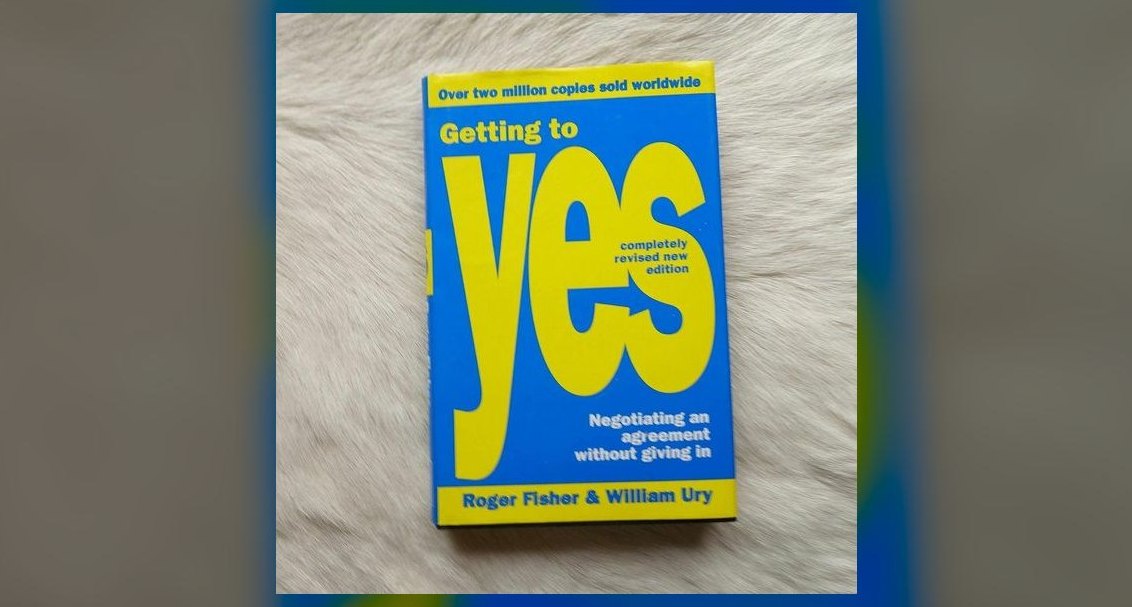 pulse-recentGetting to Yes by Roger Fisher and William Ury — Top 10 Key Takeaways for Sales Leaders in 2027
 pulse-recentThe Challenger Customer by Brent Adamson — Top 10 Key Takeaways for Sales Leaders in 2027
 pulse-recentWhat is the first concrete step in SPIN Selling by Neil Rackham for structuring a discovery call in 2027?
 pulse-recentSell or Be Sold by Grant Cardone — Top 10 Key Takeaways for Sales Leaders in 2027
 pulse-recentWhat are the concrete steps in Sandler Rule #7 for handling a prospect's budget objection in 2027?
 book-summaryWhat factors drive the price of Book Summaries up or down in 2027?
 pulse-recentThe Collaborative Sale by Keith Eades — Top 10 Key Takeaways for Sales Leaders in 2027
 pulse-recentThe Customer Success Professional’s Handbook by Ashvin Vaidyanathan — Top 10 Key Takeaways for Sales Leaders in 2027
 book-summaryMajor Account Sales Strategy by Neil Rackham: Summary, Key Lessons, and RevOps Takeaways
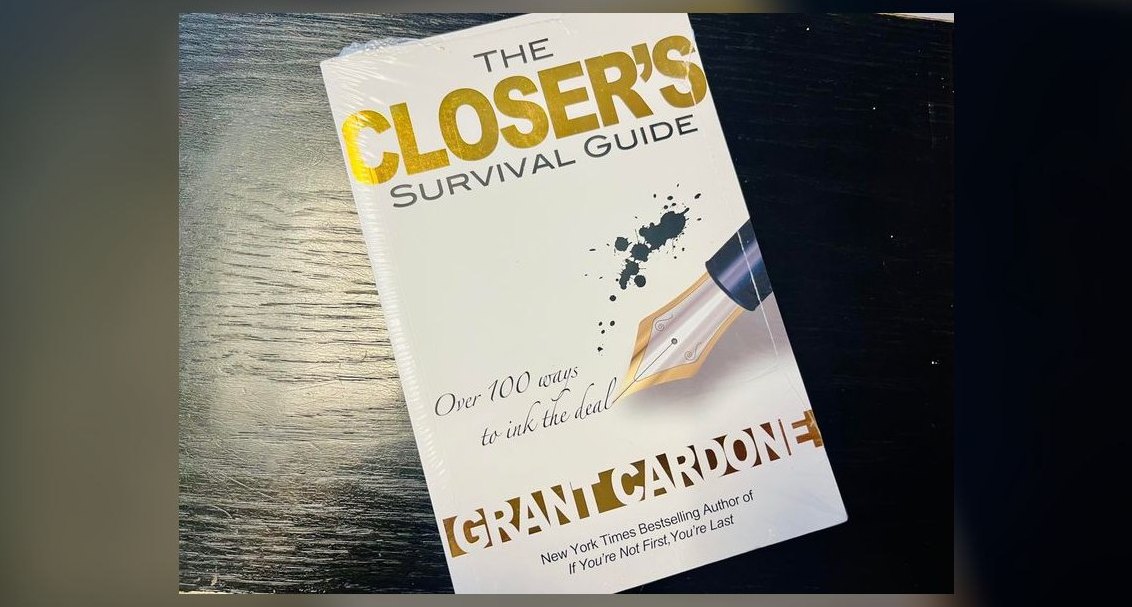 pulse-recentThe Closer’s Survival Guide by Grant Cardone — Top 10 Key Takeaways for Sales Leaders in 2027