


Outbound Sales No Fluff by Rex Biberston — Top 10 Key Takeaways for Sales Leaders in 2027
Quality
Certified
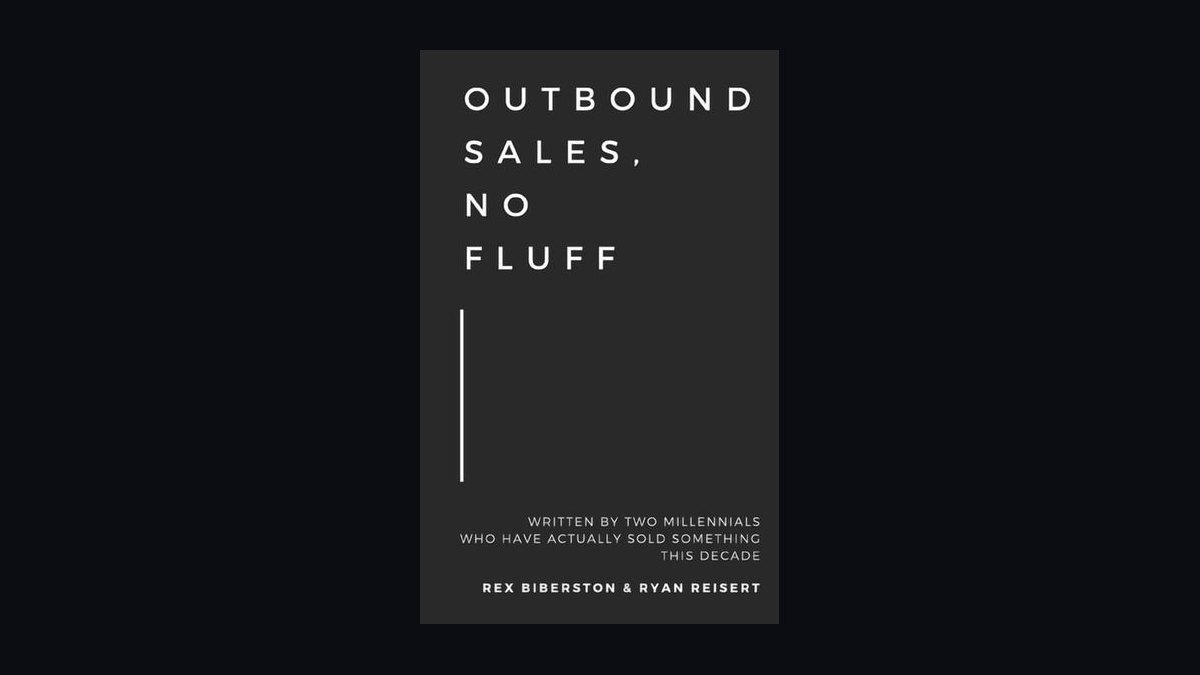
Rex Biberston's "No Fluff" outbound philosophy tells sales leaders to strip filler from every prospecting touch: open calls and emails with a specific, researched reason for reaching out, ask direct qualifying questions instead of pitching features, and coach reps on call structure and objection handling rather than raw dial volume. The strategy trades scripted politeness for blunt, efficient conversations that respect the buyer's time.
The two outbound philosophies compared
Most outbound sales organizations run on one of two philosophies, and the tension between them is the real subject behind Rex Biberston's Top 10 Key Takeaways for sales leaders. The first is volume-first outbound: reps work long call lists and generic email sequences, the manager's dashboard tracks activity — dials made, emails sent, sequences started — and the underlying bet is that enough touches will statistically produce enough meetings. Talk tracks in this model are written once, memorized, and repeated verbatim across every account regardless of industry, size, or trigger event. Personalization, when it exists, is a first-name merge field and a line about the company's recent funding round pulled from a data enrichment tool, not genuine research into the prospect's actual problem.
The second philosophy — the one Biberston's material argues for under the "no fluff" banner — is quality-first Outbound: fewer touches, each one built around a specific, verifiable reason the prospect should care right now. A no-fluff cold call opens with a direct statement of why the rep is calling this account today, not a scripted rapport-building question ("How's your week going?") that both parties know is filler. A no-fluff email replaces the three-paragraph company pitch with two sentences: an observed trigger and a direct ask. The underlying bet is that buyers have learned to filter out generic outbound instantly, so the only way to get a response is to prove, in the first five seconds of a call or the first line of an email, that this outreach was built specifically for them.

The practical differences show up in four places. First, in research time per account: volume-first reps spend under a minute per prospect before dialing; no-fluff reps spend three to five minutes reviewing a company's recent news, job postings, or public complaints before making contact, and Leaders who adopt this model have to budget for lower daily account counts in exchange for higher connect quality. Second, in call structure: volume-first scripts move through rapport, company pitch, and a soft ask for time; no-fluff scripts move through a direct reason-for-calling statement, a pointed diagnostic question, and an explicit next step, compressing what used to be a five-minute pitch into a ninety-second qualifying conversation. Third, in objection handling: volume-first reps are trained to overcome objections with rebuttal scripts ("I understand, but..."); no-fluff reps are trained to take objections at face value and disqualify fast rather than argue a prospect into a meeting they don't want. Fourth, in what gets measured: volume-first management reviews activity counts in a CRM dashboard; no-fluff management reviews call recordings and email replies for signal quality — did the prospect engage with the actual content of the message, or did they just reply "not interested."
Neither philosophy is universally correct, and treating "no fluff" as a wholesale replacement for volume is itself a misreading of the strategy. Biberston's takeaways are pitched specifically at outbound motions where the average deal size and sales cycle justify the extra research time — mid-market and enterprise Outbound, where a single closed deal covers the cost of a rep spending an extra hour a day on account research. In a transactional, high-velocity SMB motion with a $500 average contract value, the math often still favors volume, because the per-account research investment no-fluff requires doesn't pay back at that price point. The skill for a sales leader is knowing which model matches the business, not picking a side based on which framework is trending.
How to decide which philosophy fits your team

The decision hinges on four variables: average deal size, sales cycle length, total addressable market size, and rep tenure. A larger deal size and longer cycle justify the research investment that no-fluff outbound requires, because the cost of a wasted meeting is higher and the value of a well-qualified one is larger. A small, dense TAM — where a rep can realistically know every account in their patch by name — also favors the no-fluff model, since burning through the list with generic touches poisons the well for a re-approach eighteen months later. Conversely, a large, undifferentiated TAM with a short cycle and a low price point favors volume, because there are enough total accounts that a percentage-based approach still produces a full pipeline even with a lower per-touch quality bar.
Rep tenure matters because the no-fluff model demands judgment: knowing which trigger events are actually relevant, which questions cut to a real pain point versus which sound diagnostic but are actually filler, and when to disqualify rather than push. A team of six-month-tenure SDRs following a rigid, well-tested volume script will often outperform the same team attempting a no-fluff motion without enough reps or enough coaching to develop that judgment. Sales Leaders introducing this framework to a junior team typically need to run it as a coached pilot with their most experienced two or three reps first, prove it out on a subset of accounts, and only then roll the talk tracks and qualifying questions out to the full team.

The most common real-world answer for a team with a mixed book of business is the hybrid path shown above: apply the no-fluff strategy to a defined list of named target accounts — the top 20% by potential value — while running a lighter-touch, higher-volume motion against the remaining long tail of smaller prospects. This avoids forcing every rep to make an all-or-nothing bet on one philosophy and lets a sales leader measure the two approaches against each other with real pipeline data before committing the whole team to either model.
Concrete numbers behind each approach
Volume-first outbound programs typically run reps at 60 to 100 dials per day, with connect rates on cold outbound in the 5% to 10% range and meeting-booked rates of roughly one meeting per 100 to 150 dials once voicemail, gatekeeper, and no-answer attempts are factored in. Cold email sequences in this model commonly see open rates in the 30% to 45% range (heavily inflated by tracking-pixel blocking in many inboxes) and reply rates in the 1% to 3% range, with positive-reply rates — a prospect actually agreeing to talk — often under 1% of total sends.
No-fluff, research-heavy outbound trades volume for a materially higher per-touch conversion rate, at the cost of throughput. Reps following this model typically work 15 to 30 targeted accounts per day rather than 100-plus, but connect-to-meeting conversion on those calls commonly runs two to four times higher than the volume-first baseline because the opener is specific enough to earn thirty more seconds of attention before the prospect decides to hang up. Email reply rates on tightly personalized, trigger-based messages commonly land in the 8% to 15% range — five to ten times the volume-first baseline — though total email volume per rep per day drops from 100-plus generic sends to 10 to 20 researched ones.

The trade-off shows up clearly in weekly meeting output. A volume-first rep dialing 400 times a week at a 1-in-125 meeting rate books roughly three to four meetings weekly. A no-fluff rep working 100 to 150 targeted accounts a week at a 1-in-25 to 1-in-35 conversion rate books a comparable three to five meetings — similar raw output, but the no-fluff meetings tend to show up further along in buying intent, because the qualifying question embedded in the no-fluff talk track has already filtered out prospects with no real trigger. Leaders tracking this should compare not just meetings booked but meeting-to-opportunity conversion and opportunity-to-close rates, since the real argument for the no-fluff strategy is a healthier funnel further downstream, not a raw meeting-count win at the top.
Coaching cadence numbers differ too. Volume-first management structures often review activity dashboards daily and hold a single weekly one-on-one focused on pipeline coverage. No-fluff programs require more frequent qualitative coaching — commonly two or three short call-review sessions per rep per week, each covering two to three recorded calls, because the skill being built (judgment about what counts as a real trigger, how to phrase a direct opener without sounding rude) develops through repetition and specific feedback rather than through volume alone.
Implementation sequencing for rolling out a no-fluff outbound motion
Rolling out this strategy in the wrong order is the most common reason it fails. Sales Leaders who mandate new talk tracks before building the research process underneath them end up with reps reciting a "no fluff" script that still opens with generic rapport-building, because nobody gave them the account intelligence needed to say something specific. The sequencing that works starts with the research infrastructure, then the talk track, then the coaching loop, and only then scales to the full team.

Step one is defining what counts as a valid trigger for this specific business — a job posting for a role your product supports, a leadership change, a public complaint about a competitor, a funding announcement, an expiring contract window — and building a lightweight process for reps to surface two or three of these per target account before making contact. Step two is rewriting the talk track around that trigger: a fifteen-second opener that states the specific reason for the call, followed by one diagnostic question designed to confirm or kill the hypothesis fast, followed by a direct ask for a next step. Step three is recording every call in this pilot and reviewing them within 24 to 48 hours, specifically checking whether the opener actually referenced something real about the account or defaulted back to a generic line under pressure. Step four is expanding from the pilot group of two or three senior reps to the wider team only after the pilot shows a measurable lift in connect-to-meeting conversion over a four-to-six-week sample, not after a single good week.
Two implementation details determine whether this holds up past the pilot. The first is tooling: reps need fast access to trigger data — a CRM enrichment feed, news alerts on target accounts, a shared doc of recent job postings — or the research step becomes too slow to sustain at scale, and reps quietly revert to generic outreach under quota pressure. The second is manager discipline: if leadership keeps reporting on raw dial counts alongside the new quality metrics, reps will optimize for the number that gets reviewed loudest, which is almost always volume. Sales leaders serious about this strategy need to change the scorecard — tracking connect-to-meeting rate and meeting-to-opportunity rate as the headline numbers — before they can expect reps to change behavior, because activity metrics and quality metrics pull in opposite directions when a rep is deciding between one more researched call and five more quick dials before end of day.
Related questions

What is a "no fluff" cold call opener?
A direct, fifteen-second statement of the specific, researched reason the rep is calling this account today — a trigger event or observed problem — followed immediately by one diagnostic question, skipping generic rapport-building small talk entirely.
How many touches should an outbound cadence include?
Volume-first cadences often run 8 to 12 touches across calls, emails, and social over two to three weeks. No-fluff cadences trade touch count for relevance, often running 5 to 7 tightly sequenced, trigger-based touches instead.
How do you coach SDRs without micromanaging dial counts?
Shift the scorecard to connect-to-meeting and meeting-to-opportunity conversion, review two to three recorded calls per rep weekly for specific, actionable feedback, and treat raw activity numbers as a floor, not the goal.
Does the no-fluff approach work for SMB and transactional sales?
Rarely as a wholesale replacement — the research time per account only pays back when deal size and cycle length are large enough. SMB motions usually keep a volume-first base and apply no-fluff tactics only to top-tier accounts.
FAQ
Who is Rex Biberston and what is he known for in outbound sales? Rex Biberston is a sales development practitioner and trainer known for blunt, tactical outbound coaching under a "no fluff" framing — talk tracks and cold-calling advice built around cutting scripted filler in favor of direct, researched openers and qualifying questions.

What does "no fluff" actually mean in a sales context? It means removing scripted padding — generic rapport questions, feature-dump pitches, soft asks — from calls and emails, and replacing it with a direct, specific reason for contact backed by real research, so the prospect isn't wasting time decoding what the rep actually wants.
Is the no-fluff strategy the same as just being rude or overly aggressive? No — directness is not aggression. The framework asks reps to be specific and efficient with a prospect's time, not pushy. A no-fluff call can end in a polite disqualification just as easily as a booked meeting; the goal is respecting the buyer's time, not forcing an outcome.
How long does it take to see results after switching to a no-fluff outbound motion? Most teams need a four-to-six-week pilot with a small group of experienced reps before the data is reliable enough to judge, since call-quality skills take repeated coaching cycles to develop and a single strong or weak week isn't a valid sample.
What's the single biggest mistake sales leaders make implementing these takeaways? Rewriting the talk track before building the research process underneath it, so reps recite a "no fluff" opener without any real account-specific trigger behind it — which just produces a different-sounding version of the same generic outreach.
Can experienced reps and new SDRs run the same no-fluff playbook? Not immediately. The judgment required to spot a real trigger and phrase a direct opener without sounding abrupt develops with coaching and repetition, so most teams pilot the strategy with senior reps first and extend it to newer hires only after the process is proven.
Sources
- https://www.gong.io/blog/
- https://www.outreach.io/resources
- https://blog.hubspot.com/sales
- https://www.cognism.com/blog
- https://www.salesloft.com/resources
- https://www.close.com/blog
- https://www.g2.com/categories/sales-engagement
Related on PULSE
- How to structure a cold call opener that earns the next ten seconds
- Building a trigger-based account research checklist for outbound reps
- Setting SDR coaching cadence: how often to review recorded calls
- Volume vs. quality: choosing an outbound cadence for your ICP
- Metrics that matter more than dial count for outbound teams
This page will be disappearing soon. Save it to your device for $1 — or read it free while it is here.
@Kory-White- · if Venmo asks, the last 4 of my number are 2012
This page is gone.
This one is off the shelf now. $1 keeps it on your phone for good — the whole page, pictures and diagrams included.
 pulse-recentTo Sell Is Human by Daniel Pink — Top 10 Key Takeaways for Sales Leaders in 2027
 pulse-recentNever Split the Difference by Chris Voss — Top 10 Key Takeaways for Sales Leaders in 2027
 pulse-recentSell or Be Sold by Grant Cardone — Top 10 Key Takeaways for Sales Leaders in 2027
 pulse-recentGetting to Yes by Roger Fisher and William Ury — Top 10 Key Takeaways for Sales Leaders in 2027
 pulse-recentWhat are the first three concrete steps in Sandler Rule #1 for a new sales rep in 2027?
 pulse-recentSandler Rule #1: What is the first concrete step to build a prospect's trust in a sales conversation in 2027?
 pulse-recentSales Engagement by Manny Medina — Top 10 Key Takeaways for Sales Leaders in 2027
 pulse-recentThe Sales Acceleration Formula by Mark Roberge — Top 10 Key Takeaways for Sales Leaders in 2027
 pulse-recentWhat is the first concrete step in The Sandler Rules by David Mattson for building a sales plan in 2027?
 pulse-recentSelling Above and Below the Line by Skip Miller — Top 10 Key Takeaways for Sales Leaders in 2027