


Aligning Strategy and Sales by Frank Cespedes — Top 10 Key Takeaways for Sales Leaders in 2027
Quality
Certified
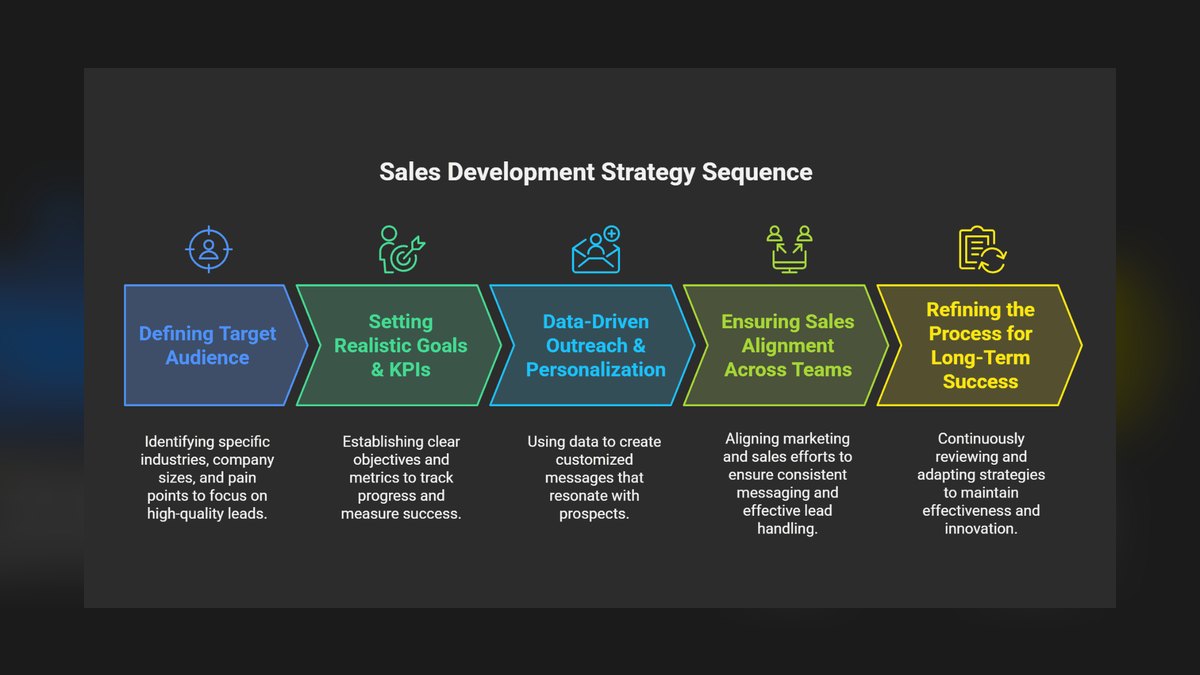
Frank Cespedes' *Aligning Strategy and Sales* argues that sales execution is not a downstream afterthought to strategy — it is where strategy actually gets tested. His core takeaways for sales leaders: treat the sales force as a strategic asset, align hiring, compensation, and metrics to how customers actually buy, choose channels deliberately rather than by habit, and measure leading activities instead of lagging revenue alone.
The two views of sales: cost center vs. strategic asset
Cespedes' central argument in Aligning Strategy and Sales rests on a fork most companies never consciously choose between. The first path treats the sales organization as a cost center — a necessary expense to be minimized, standardized, and measured almost entirely on trailing revenue. Under this view, sales leaders inherit a strategy formulated elsewhere (by product, marketing, or the executive team) and are judged on how efficiently they execute a plan they had no hand in shaping. Headcount is a line item to control, compensation plans get copied from competitors or industry surveys, and CRM dashboards exist mainly to report what already happened rather than to inform what should happen next.
The second path — the one Cespedes spends most of the book building a case for — treats the sales force as a strategic lever that shapes which markets a company can actually win, not just how fast it grows revenue in markets it has already chosen. In this view, the sales organization is a feedback mechanism: reps and channel partners sit closer to the customer's actual purchase process than anyone in headquarters, and their day-to-day choices about which deals to chase, which features to emphasize, and which objections to escalate constitute real-time strategy formation, whether or not leadership acknowledges it. Cespedes' framing is blunt — a strategy that isn't reflected in how salespeople spend their time, what they get paid to do, and which accounts they're told to prioritize isn't really a strategy at all; it's a slide deck. The practical difference shows up in resourcing decisions: cost-center thinking asks "how do we cut sales expense as a percent of revenue," while strategic-asset thinking asks "which accounts, channels, and selling motions would let us capture disproportionate share, and how much should we invest there even if near-term efficiency dips." Sales leaders in 2027 who are still running cost-center playbooks against markets that have shifted toward complex, multi-stakeholder buying will keep losing deals to competitors who redesigned selling motions around the customer's actual decision process rather than an inherited org chart.
How to decide between them
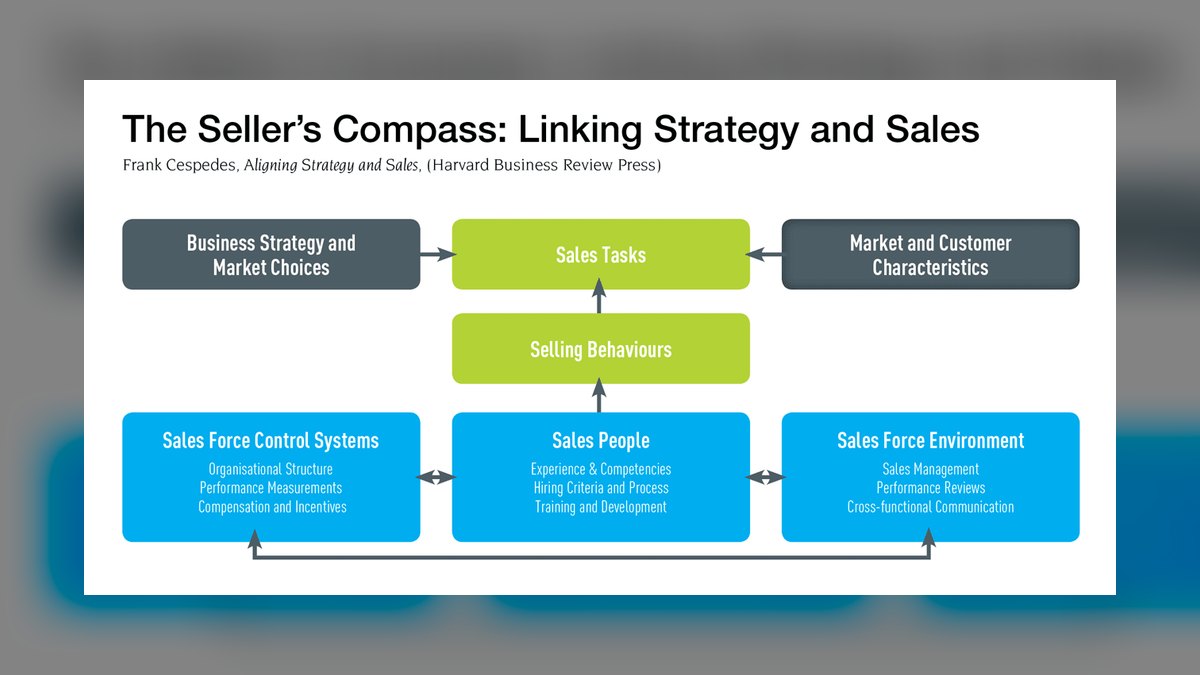
Deciding which model fits a given sales organization is not a philosophical choice — Cespedes ties it to concrete, observable conditions: deal complexity, the number of stakeholders in a typical purchase, how commoditized the offering is, and how much of the buying journey happens before a prospect ever talks to a rep. A cost-center posture is defensible when the product is well-understood, the buying process is short and largely price-driven, and switching costs are low; in that world, efficiency genuinely is the strategy. A strategic-asset posture becomes necessary when deals involve multiple decision-makers with conflicting incentives, when the product requires configuration or consultative framing to map to a specific customer's workflow, or when the company is trying to move upmarket into accounts that have never bought from it before.
The decision is not permanent — Cespedes is explicit that companies drift between these postures as they scale, and the drift is often invisible until pipeline conversion quietly erodes. A common failure pattern he documents: a company built its early growth on a strategic-asset model with founder-led, highly consultative selling, then layered on cost-center metrics (calls per day, activity quotas) as it scaled headcount, without ever revisiting whether the underlying deals still required that consultative depth. The result is a sales force punished for doing the thing that made the early deals work. The decision framework he offers boils down to three diagnostic questions leaders should re-ask at least annually: Has the buyer's default path to purchase changed (more self-service research, more procurement involvement, more technical evaluators)? Has the competitive set changed (more undifferentiated alternatives argue for cost-center efficiency; more complex alternatives argue for strategic depth)? And has the account mix shifted toward larger, multi-threaded deals that a transactional motion structurally cannot close? Leaders who skip this re-diagnosis end up with a sales model calibrated to the market of three years ago.
Concrete numbers behind each option

Cespedes grounds Aligning Strategy and Sales in figures that recur across the sales-effectiveness literature he draws on, and sales leaders planning 2027 budgets should treat these as directional benchmarks rather than universal constants. On compensation structure, the widely cited range for base-to-variable pay splits runs roughly 60/40 for complex, long-cycle enterprise selling (where a rep's judgment and account stewardship matter more than raw closing velocity) down to 40/60 or even 30/70 for high-volume transactional selling, where near-term output should dominate the pay mix. Quota attainment is a second recurring benchmark: industry surveys Cespedes references consistently show that fewer than half of quota-carrying reps hit target in a typical year — a figure that should reframe how leaders read a single rep's "underperformance," since it is often a sign of miscalibrated quota-setting across the whole team rather than an individual skill gap.
On the buyer side, Cespedes cites research showing that a substantial share of the B2B purchase journey — commonly estimated in the 50-70% range — happens before a prospect engages a salesperson directly, through independent research, peer references, and self-serve content. That number alone reshapes headcount and channel decisions: if most of the early funnel is self-directed, pouring incremental headcount into top-of-funnel outbound has diminishing returns compared to investing in the content, product-led touchpoints, and inside-sales triage that meet buyers where they already are. On cost structure, customer acquisition cost comparisons across channels are stark — a self-service or inside-sales motion can acquire a customer at a fraction of the cost of field sales, but field sales motions routinely produce multiples-higher average contract value and retention, which is why Cespedes insists CAC can never be evaluated in isolation from deal size, gross margin, and customer lifetime value. Sales turnover is the final figure worth budgeting around: replacing a quota-carrying rep — factoring recruiting, ramp time (commonly six to twelve months to full productivity in complex B2B selling), and lost pipeline continuity — is frequently estimated at 1.5 to 2 times the rep's annual compensation, which is the economic argument Cespedes uses to justify investing more in selection and onboarding rather than treating hiring as a volume game.

Implementation details and sequencing
The mechanics of putting Cespedes' framework into practice follow a deliberate sequence, and leaders who reverse the order tend to create the same misalignment the book warns against. The starting point is not compensation design or territory carving — it is defining the actual buying journey for the specific product and segment, stage by stage, including who is involved at each stage and what information they need to move forward. Only once that journey is mapped does it make sense to design the selling motion (inside vs. field, specialist vs. generalist reps, how marketing hands off qualified opportunities) around it. Compensation and quota design come third, because pay plans should reward the behaviors that actually move deals through the mapped journey — not generic activity metrics borrowed from a different business. Hiring profiles and training curricula come fourth, built around the competencies the selling motion actually requires (technical fluency, multi-stakeholder navigation, negotiation) rather than generic "hunter" archetypes. Metrics and CRM instrumentation come last, deliberately, because Cespedes argues that measuring before the process is defined just entrenches whatever ad hoc behavior already exists.
Sequencing this correctly matters because each layer constrains the one below it: a compensation plan built before the selling motion is defined ends up rewarding whatever reps were already doing, and a metrics dashboard built before compensation is aligned ends up tracking numbers nobody is actually incentivized to move. Cespedes also flags the coordination failure that undermines even well-sequenced rollouts — marketing and sales operating on different definitions of a "qualified lead," different account priorities, and different success metrics, so that even a well-designed selling motion gets starved of the right pipeline or flooded with the wrong kind. His prescription is a shared, written service-level agreement between marketing and sales that specifies lead criteria, response-time commitments, and a joint review cadence — not a one-time kickoff meeting but a standing forum, because buyer behavior and competitive dynamics shift continuously and the alignment has to be re-earned, not just declared once at a strategy offsite. For a 2027 rollout, that means building the review cadence into the calendar from day one rather than treating "alignment" as a project with an end date.
Related questions
What is Frank Cespedes' main argument in Aligning Strategy and Sales?
That sales execution is where strategy is actually tested and often silently rewritten — pay plans, hiring criteria, and account priorities function as the real strategy, regardless of what the strategy document says.
How should sales comp differ between transactional and complex B2B selling?
Transactional motions should lean variable-heavy (40/60 to 30/70 base/variable) to reward volume; complex enterprise motions should lean base-heavy (60/40 or higher) to reward judgment, account stewardship, and longer cycles.
Why do most companies misalign marketing and sales?

They use different definitions of a qualified lead and different success metrics, so even good leads get dropped or mishandled at the handoff without a shared, written service-level agreement.
How often should a sales strategy be reassessed?
At minimum annually, and immediately after a shift in buyer research behavior, competitive set, or account mix — waiting for a formal strategy cycle lets the model drift out of sync with the market.
FAQ
Who is Frank Cespedes and why does his view on sales strategy carry weight? Cespedes is a senior lecturer at Harvard Business School who has spent decades researching go-to-market execution; Aligning Strategy and Sales draws on that research plus direct consulting work with B2B sales organizations across industries.
Is Aligning Strategy and Sales still relevant for 2027 sales leaders? Yes — its core argument, that execution choices like hiring, comp, and metrics constitute real strategy, applies regardless of era; only the specific channels and tools (AI-assisted selling, more self-serve research) have changed, not the underlying alignment problem.
What's the biggest mistake sales leaders make according to this framework? Designing compensation and metrics before clearly defining the buyer's actual purchase journey, which locks in whatever ad hoc selling behavior already exists instead of the behavior the market actually rewards.
Does the book favor inside sales or field sales? Neither by default — it favors matching the selling motion to deal complexity and buyer behavior; the mistake is defaulting to one model out of habit rather than diagnosing which one fits the current market.
How does buyer self-service research change sales headcount planning? Since a majority of the early buying journey often happens before a rep is engaged, over-investing in top-of-funnel outbound headcount has diminishing returns compared to investing in content, product-led touchpoints, and fast inside-sales triage.
What role does sales turnover play in strategy decisions? High turnover is expensive enough (often 1.5-2x annual comp per departure once ramp time and lost pipeline are counted) that it functions as a strategic constraint, pushing leaders toward better selection and onboarding rather than high-volume hiring.
Sources
- https://hbr.org
- https://www.harvardbusiness.org
- https://www.hbs.edu/faculty/Pages/profile.aspx?facId=6415
- https://www.amazon.com/Aligning-Strategy-Sales-Behaviors-Effective/dp/1422196052
- https://www.forbes.com
- https://www.kirkusreviews.com
- https://www.publishersweekly.com
- https://www.gartner.com
- https://www.mckinsey.com
Related on PULSE
- How does sales compensation design change as deal complexity increases?
- What separates a sales-led motion from a product-led growth motion?
- How should marketing and sales define a qualified lead together?
- What is the real cost of sales rep turnover and ramp time?
- How do you diagnose whether your sales org is a cost center or a strategic asset?
This page will be disappearing soon. Save it to your device for $1 — or read it free while it is here.
@Kory-White- · if Venmo asks, the last 4 of my number are 2012
This page is gone.
This one is off the shelf now. $1 keeps it on your phone for good — the whole page, pictures and diagrams included.
 pulse-recentWhat are the concrete steps to implement the Sandler Rules for Sales Leaders by David Mattson in 2027?
 pulse-recentThe Transparency Sale by Todd Caponi — Top 10 Key Takeaways for Sales Leaders in 2027
 book-summarySPIN Selling by Neil Rackham — Cliff Notes Summary
 pulse-recentHyper Sales Growth by Jack Daly — Top 10 Key Takeaways for Sales Leaders in 2027
 pulse-recentWhat is the first concrete step in SPIN Selling by Neil Rackham for structuring a discovery call in 2027?
 pulse-recentThe Challenger Customer by Brent Adamson — Top 10 Key Takeaways for Sales Leaders in 2027
 book-summaryWhat factors drive the price of Book Summaries up or down in 2027?
 pulse-recentSell or Be Sold by Grant Cardone — Top 10 Key Takeaways for Sales Leaders in 2027
 pulse-recentHigh-Profit Prospecting by Mark Hunter — Top 10 Key Takeaways for Sales Leaders in 2027
 pulse-recentCoaching Salespeople into Sales Champions by Keith Rosen — Top 10 Key Takeaways for Sales Leaders in 2027