


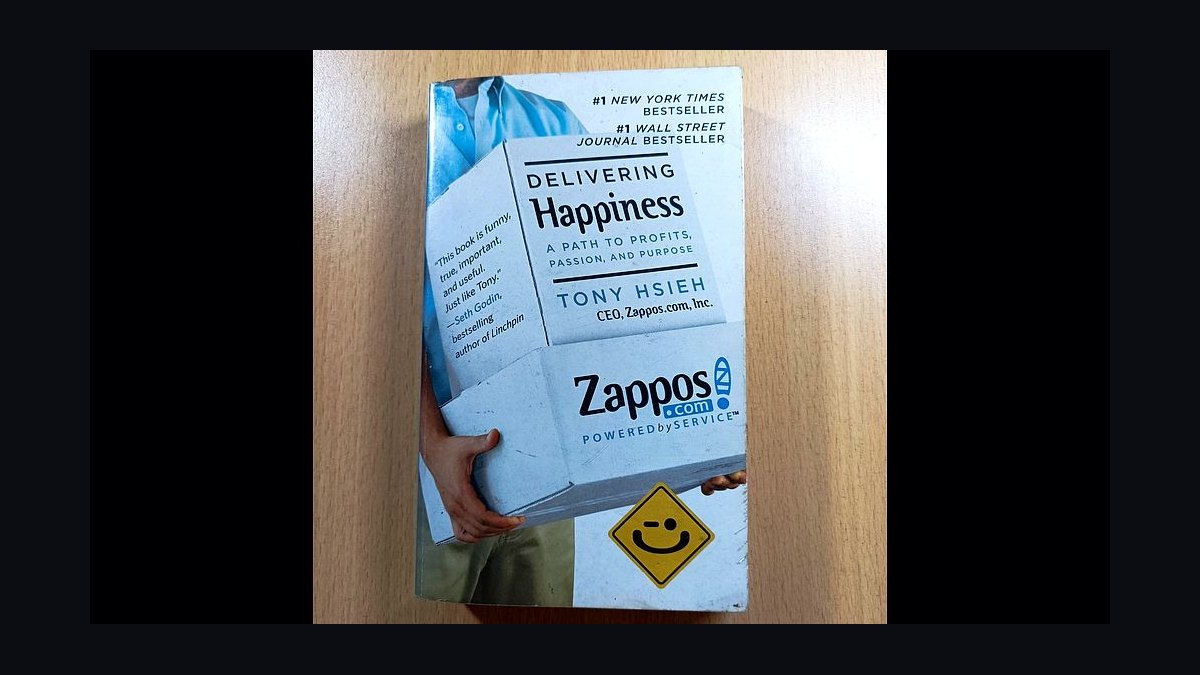
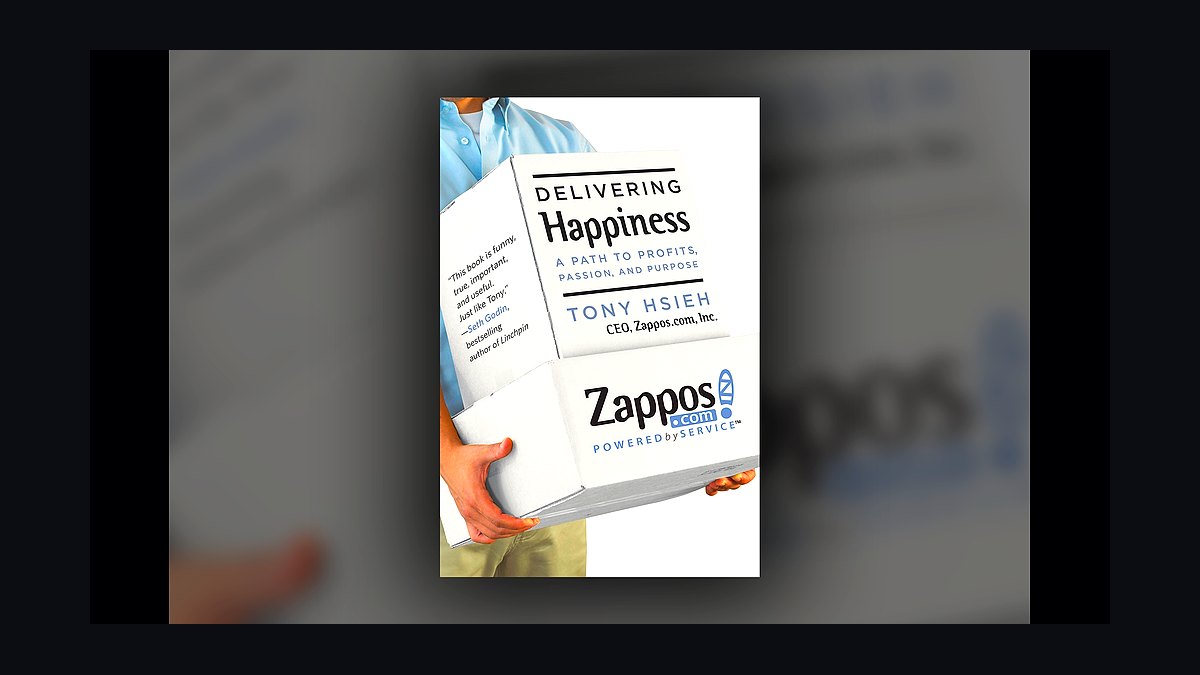
Delivering Happiness by Tony Hsieh — Top 10 Key Takeaways for Sales Leaders in 2027
Quality
Certified
Tony Hsieh's *Delivering Happiness* argues that a values-driven culture, not commissions alone, produces durable sales performance. For sales leaders in 2027, the ten core Takeaways are: lead with purpose, hire for culture fit, empower frontline reps, invest in career development, build customer-centric incentives, measure more than quota, protect team well-being, communicate radically, learn from failure, and treat happiness as a compounding strategy.
What it is and why it matters
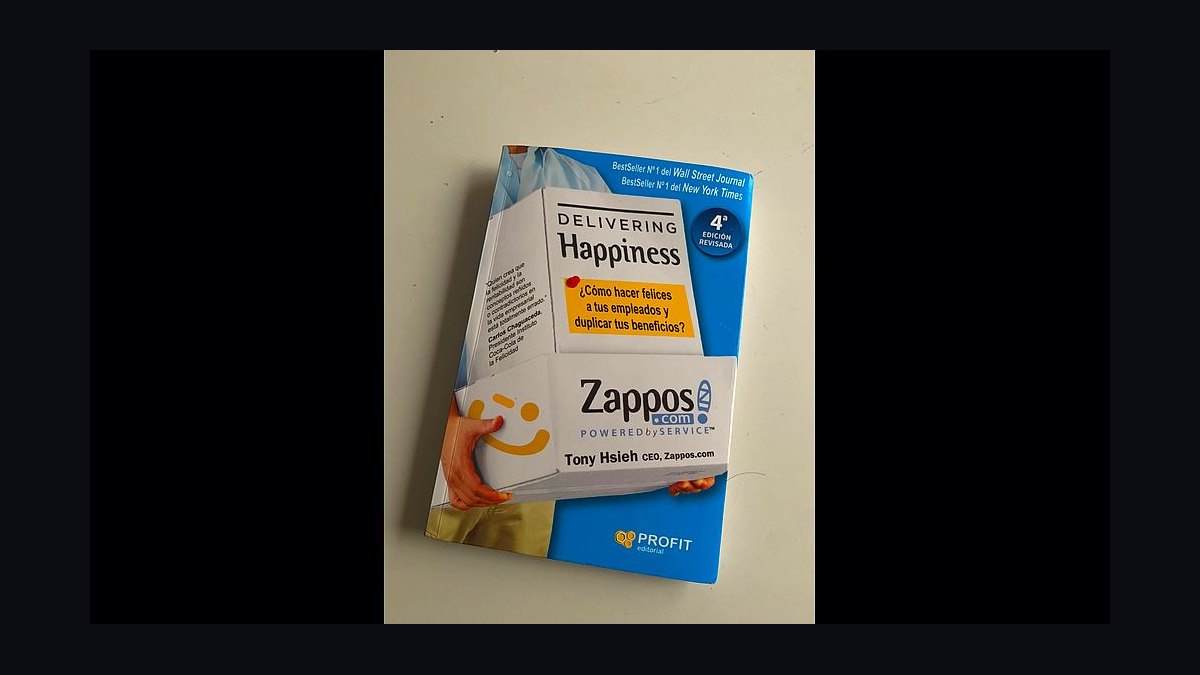
*Delivering Happiness* is Tony Hsieh's 2010 book chronicling how he built Zappos into a customer-service icon and sold it to Amazon for roughly $1.2 billion. It is not a sales tactics manual. It is an operating philosophy: that a company's culture — deliberately designed, measured, and defended — is the real engine behind revenue. For sales Leaders in 2027, that thesis matters more than it did in 2010, because the selling environment has changed in ways that punish purely transactional playbooks.
Three shifts make the book newly relevant. First, buying committees are larger and more informed; buyers arrive with research already done, so the rep's job has moved from information delivery to judgment and trust-building. Second, remote and hybrid selling removed much of the ambient culture that used to socialize reps informally — a sales floor, a manager walking by, a peer celebrating a win. Culture now has to be engineered on purpose. Third, rep tenure is short and expensive to replace. Fully loaded cost of turning over a mid-market account executive commonly runs into six figures once you count recruiting, ramp time, and lost pipeline, so retention is a financial issue, not a soft one.
Hsieh's central claim — that if you get culture right, the financial results follow — is a direct challenge to the quota-first orthodoxy most sales orgs still run. The book's ten Takeaways, read through a 2027 lens, form a coherent alternative: purpose attracts better sellers, culture fit reduces churn, empowerment shortens deal cycles, development creates promotable bench strength, customer-centric incentives reduce discounting, multi-dimensional measurement prevents gaming, well-being protects long-term capacity, transparent communication speeds decisions, failure tolerance accelerates learning, and happiness compounds into brand.

The practical reason to care is that these are not ten separate initiatives. They are one system. A sales leader who adopts only the "hire for culture" Takeaway without the "empower the frontline" Takeaway will hire collaborative people and then micromanage them. The Takeaways work as a set, and the rest of this page treats them that way.
The step-by-step process
Applying the *Delivering Happiness* Takeaways to a sales organization is a sequenced effort, not a values poster. The order matters because each step creates the conditions for the next. Attempting step five before step two produces cynicism.
Step 1 — Define your sales culture in observable behaviors. Hsieh's approach at Zappos was to write down ten core values and then hire and fire against them. For a sales team, "we value customer obsession" is unusable. "A rep will spend unbudgeted time solving a customer problem that has no immediate revenue attached, and will be recognized for it" is usable. Aim for five to seven values, each with two or three observable behaviors. Time: two to three workshops over four to six weeks.

Step 2 — Rewrite the hiring process around those behaviors. Structured interviews with behaviorally anchored questions, a peer panel, and a scored rubric. The single highest-leverage change is adding a culture-interview conducted by someone outside the hiring manager's chain, with veto power. Cost: near zero beyond time. Impact: the largest single reduction in early attrition.
Step 3 — Redesign the incentive plan so it does not contradict the culture. If you claim to value customer retention but pay 100% on new logo bookings, you have told your team what you actually value. Typical 2027 enterprise sales comp splits run somewhere between 50/50 and 70/30 base-to-variable, with an increasing share of variable tied to multi-year value, renewal, or expansion rather than first-year bookings. Rebalancing is a multi-quarter change because you must grandfather existing plans.
Step 4 — Push decision rights down. Define a band within which a rep can commit discount, term, or service concession without approval. Common starting bands are 5–10% off list for reps, 15–20% for managers. Empowerment is the Takeaway most often claimed and least often implemented, because it requires managers to give up control.
Step 5 — Build a development ladder that is not just "promote to manager." Individual-contributor tracks, specialist tracks, and enablement tracks. Hsieh's book is explicit that growth is a retention lever; a rep who cannot see a next step in eighteen months starts taking recruiter calls.
Step 6 — Change what you measure in the weekly cadence. Add leading indicators and health metrics alongside pipeline and bookings: discovery-to-proposal conversion, multi-threading depth, discount distribution, customer satisfaction or NPS on closed deals, and rep-level engagement pulse. Review them monthly, not weekly, to avoid knee-jerk reactions.

Step 7 — Institutionalize failure review. A blameless post-mortem on every significant loss above a threshold, with the output being a process change, not a performance note.
Step 8 — Close the loop with measurement. Track the outcomes the whole system is supposed to produce: voluntary attrition, ramp time to first and full quota, average discount, net revenue retention, and internal promotion rate. If those five are not improving over four to six quarters, the culture work is decorative.
A realistic sequencing note: steps one through three can run in parallel in a single quarter. Steps four through six need a full quarter each. Step seven and eight are permanent operating rhythms. Total elapsed time to a visibly different organization is typically four to six quarters — which is precisely why most sales leaders abandon it, and why the ones who don't get a durable advantage.
Costs, timelines, and typical ranges
Sales leaders evaluating this work want numbers. The honest answer is that most of the cost is time, and the range is wide because it depends on team size and how far the current culture is from the target.
Direct spend. Culture and enablement work rarely requires large software purchases. Realistic annual line items for a 25–100 person sales org: structured interview training for hiring managers, roughly $500–$2,000 per manager for a reputable program; an engagement survey tool, often bundled into an existing HR platform; a recognition and rewards budget, typically 0.5–2% of total sales compensation; and enablement content or facilitation if you bring in outside help, commonly $10,000–$60,000 for a multi-quarter engagement at this team size. Total incremental direct spend usually lands between 1% and 3% of the sales payroll.
Time cost, which is the real number. Expect the sales leadership team to spend 10–15% of its collective time on this for the first two quarters, dropping to 3–5% as a permanent operating rhythm. That time comes out of deal coaching and forecasting, and leaders who do not plan for that trade-off quietly abandon the work in month three.
Timeline expectations by outcome. Hiring-process changes show measurable impact on early attrition within two to three hiring cycles, so roughly six to nine months. Comp plan changes show behavior change one to two quarters after the plan year starts, meaning nine to fifteen months from decision. Empowerment shows up in cycle time within one to two quarters if decision bands are genuinely honored. Career-ladder impact on retention typically takes twelve to eighteen months because reps need to see the ladder actually used before they believe it. Culture-driven brand effects on inbound candidate quality take two to three years.
Typical ranges for the outcome metrics. These vary enormously by segment, so treat them as directional. Voluntary sales attrition in healthy mid-market orgs commonly sits in the 15–25% annual range; distressed orgs run 30%+. Time to full quota for a mid-market AE is often six to nine months. Average discount off list in negotiated B2B software frequently runs 15–30%. Net revenue retention for strong SaaS businesses is commonly cited above 100%, with best-in-class operations above 120%. If your numbers are materially worse than these bands, the culture work has room to pay for itself.
The cost of doing nothing. Replacing a single mid-market AE — recruiting fees, management time, ramp, and the pipeline that goes cold — is routinely estimated in the range of 50% to 200% of that person's annual salary. At a 20-person team with 30% attrition, that is several full-time-equivalent salaries burned annually on replacement. That figure, not the training budget, is the business case.
Where teams get it wrong
The *Delivering Happiness* Takeaways are widely quoted and rarely implemented, and the failure modes are consistent enough to name.
Treating values as marketing copy. The most common error is writing aspirational values that no one can observe or violate. If a value cannot be used to make a difficult hiring or firing decision, it is decoration. The test: name a person you would not hire because of this value. If you cannot, rewrite it.
Adopting culture language while keeping a purely transactional comp plan. This is the fatal contradiction. A team told to prioritize long-term customer relationships while being paid exclusively on this-quarter bookings will follow the money every time, and will correctly conclude that leadership does not mean what it says. Every subsequent culture message is discounted.
Confusing happiness with comfort. Hsieh's argument is not that people should be shielded from hard feedback or ambitious targets. It is that people perform better when they have purpose, autonomy, growth, and connection. Sales leaders who interpret the book as "be nice" end up with underperformance and no accountability, then blame the philosophy. High standards and high support are not opposites.
Rolling it out as a program with an end date. Culture work that runs for two quarters and then stops reverts within a year. The organizations that sustain it embed the practices in hiring rubrics, comp plans, promotion criteria, and the weekly operating cadence — the places where behavior is actually determined.
Empowerment in name only. Leaders announce that reps can make judgment calls, then override those calls in deal reviews. Two or three overrides and the empowerment is dead. If you are not willing to live with a rep's occasional wrong call inside the band, do not announce the band.
Measuring only quota attainment. A team measured solely on bookings will optimize for bookings, including through discounting, sandbagging, and selling to poor-fit customers who churn. Multi-dimensional measurement is not softness; it is how you prevent the sales org from borrowing from next year to hit this quarter.
Ignoring the manager layer. Culture is transmitted primarily by front-line managers. Investing in rep experience while leaving managers untrained, over-spanned, and measured only on their team's number produces a bottleneck. Manager span of control above roughly eight to ten reps in a complex sale is a common structural failure.
Copying Zappos literally. Zappos sold shoes with a legendary customer-service model and famously offered new hires a cash bonus to quit. That specific tactic works because it is unusual, expensive, and matched to a high-volume, low-complexity, brand-driven business. A six-figure enterprise sales motion with eighteen-month cycles needs different expressions of the same principles. Copy the logic, not the artifacts.
Decision framework: when to choose what
Not every organization should start in the same place. The right entry point depends on what is actually broken. Use the following framework to sequence the Takeaways against your situation.
If your problem is early attrition and bad hires. Start with hiring and culture definition. This is the highest-return, lowest-cost entry point and it compounds. Do not start with comp.
If your problem is discounting and margin erosion. Start with incentive redesign and decision bands. Culture language will not fix a comp plan that pays for volume at any price.
If your problem is slow deal cycles and bottlenecked approvals. Start with empowerment and decision rights. Measure approval turnaround time before and after.
If your problem is a thin bench and no internal promotions. Start with the career ladder and development investment. Expect twelve to eighteen months before retention effects appear.
If your problem is burnout and capacity. Start with well-being practices and manager span. This is often the fastest visible win because it removes a structural cause rather than adding a program.
If your problem is that nothing is measurably wrong but growth has plateaued. Start with purpose and customer-centricity work, plus multi-dimensional measurement. This is the hardest case because there is no burning platform, and it is where the full set of Takeaways matters most.
Two cross-cutting rules apply regardless of entry point. First, never launch a culture message in the same quarter you are making a comp change that contradicts it — sequence the comp change first or simultaneously, never after. Second, always define the outcome metric and the review date before you start, because culture initiatives without a measurement plan are the first thing cut in a soft quarter.
A note on the 2027 context specifically: AI-assisted selling tools have absorbed much of the administrative and research work that used to occupy a rep's day. That raises the relative value of the human elements the book is about — judgment, trust, relationship continuity, and the willingness to do the unprofitable right thing for a customer. The Takeaways are not a nostalgic alternative to modern selling. They describe the part of selling that automation makes more valuable, not less.
Related questions
What is the single most important Takeaway from Delivering Happiness for a sales leader?
Culture is the operating system, not a side project. If you fix hiring, incentives, and empowerment so they reinforce each other, retention, cycle time, and expansion tend to improve together. Isolated culture messaging without those structural changes produces cynicism rather than results.
How long before these Takeaways show measurable sales results?
Hiring changes show up in six to nine months. Comp changes take nine to fifteen months. Empowerment affects cycle time within one to two quarters. Retention and bench-strength effects need twelve to eighteen months. Plan for four to six quarters before declaring the system working.
Do these ideas work for enterprise sales, or only high-volume consumer businesses?
They work in both, but the expressions differ. Enterprise sales needs longer ramp support, multi-threading, and decision bands calibrated to deal size. The underlying principles — purpose, autonomy, growth, connection — are not segment-specific.
What is the biggest risk of adopting this approach?
Adopting the language without changing the comp plan or decision rights. Reps follow the money and the approval chain. If those two things contradict the culture message, the message loses every time and future culture efforts are discounted.
How do you measure whether it is working?
Track five numbers over four to six quarters: voluntary attrition, ramp time to full quota, average discount off list, net revenue retention, and internal promotion rate. If those are not moving, the culture work is decorative.
FAQ
Is Delivering Happiness still relevant for sales Leaders in 2027?
Yes, and arguably more so. Buying committees are larger, rep tenure is shorter, and remote work removed the informal culture that used to socialize teams. The book's core argument — that deliberately designed culture drives durable performance — addresses exactly the problems that hybrid selling created.
What are the ten Takeaways in plain terms?
Lead with purpose, hire for culture fit, empower the frontline, invest in development, build customer-centric incentives, measure more than quota, protect well-being, communicate transparently, learn from failure, and treat happiness as a compounding strategy. They function as one system rather than ten separate initiatives.
How is this different from standard sales enablement?
Enablement usually targets skills and process: pitch training, CRM hygiene, deal reviews. The *Delivering Happiness* Takeaways target the conditions that determine whether skilled people stay, use judgment, and go the extra mile. Skills without those conditions decay quickly through turnover.
Should we copy Zappos's specific practices, like paying new hires to quit?
No. That tactic works because it is unusual, costly, and matched to a high-volume consumer business. The transferable idea is that you should be willing to pay a real price to protect culture fit. The specific mechanism should be designed for your sales motion and deal complexity.
How do we handle top performers who do not fit the culture?
This is the hardest case and the one that determines whether the work is real. The consistent answer in the book is that tolerating a culture mismatch because of their number teaches the whole team that the values are optional. Handle it deliberately, with clear expectations and a defined window, rather than either ignoring it or acting abruptly.
What if leadership will not change the comp plan?
Then be honest about what is achievable. You can still improve hiring, development, and manager quality, and those produce real gains. But do not run a culture campaign on top of a comp plan that contradicts it — that combination reliably produces more cynicism than doing nothing.
Sources
- Delivering Happiness — official book site
- Tony Hsieh, Zappos CEO, Dies at 46 — The New York Times
- Zappos' core values — Zappos Insights
- Amazon closes Zappos acquisition — TechCrunch
- Harvard Business Review — articles on sales compensation and culture
- Salesforce — State of Sales research
- Gartner — sales research and insights
- Gallup — employee engagement and retention research
Related on PULSE
- Building a sales culture that survives hybrid and remote work
- Sales compensation design: balancing new logo, renewal, and expansion
- Reducing sales rep attrition: diagnosing the real causes
- Empowerment and decision rights: how much discount authority should reps have?
- Multi-dimensional sales measurement beyond quota attainment
- Manager span of control and its effect on coaching quality
This page will be disappearing soon. Save it to your device for $1 — or read it free while it is here.
@Kory-White- · if Venmo asks, the last 4 of my number are 2012
This page is gone.
This one is off the shelf now. $1 keeps it on your phone for good — the whole page, pictures and diagrams included.
 pulse-recentWhat is the most actionable step in The Sandler Rules for Sales Leaders by David Mattson to improve discovery in 2027?
 pulse-recentGetting to Yes by Roger Fisher and William Ury — Top 10 Key Takeaways for Sales Leaders in 2027
 pulse-recentWhat are the first three concrete steps in Sandler Rule #1 for a new sales rep in 2027?
 pulse-recentHow does *The New Strategic Selling* define the first step in qualifying an opportunity in 2027?
 pulse-recentProActive Selling by Skip Miller — Top 10 Key Takeaways for Sales Leaders in 2027
 pulse-recentSales Engagement by Manny Medina — Top 10 Key Takeaways for Sales Leaders in 2027
 book-summaryThe Lean Startup by Eric Ries — Cliff Notes Summary
 pulse-recentThe Sales Acceleration Formula by Mark Roberge — Top 10 Key Takeaways for Sales Leaders in 2027
 pulse-recentConceptual Selling by Robert Miller and Stephen Heiman — Top 10 Key Takeaways for Sales Leaders in 2027
 pulse-booksRework by Jason Fried and David Heinemeier Hansson — Cliff Notes Summary