
Top 10 Email Marketing Platforms for 2027
 Curated byKory White · Fractional CRO · Maryland
 PULSEKNOWLEDGE LIBRARY
Quality
Certified
The 10 best email marketing platforms are ranked below on measured performance, build quality, price, and how each one actually holds up in daily use rather than how it reads on a spec sheet. Each pick lists what it costs, who it suits, and what it gives up against the one above it, so the list can be read straight down without doubling back.
1. ActiveCampaign
ActiveCampaign ranks first because it uniquely merges email, marketing automation, and a built-in CRM into one cohesive product, eliminating the need for a separate sync layer. Its visual automation builder supports deeply nested conditional branches, allowing for complex logic like lead scoring and multi-step sales sequences. Entry pricing starts around $39/month for 1,000 contacts, with the Plus tier at $69/month adding conditional content and split testing.
This platform is for B2B teams that need lead scoring, sales handoff, and CRM sync without managing integrations. It trades away the e-commerce catalog depth of Klaviyo, which is better for product-driven flows. Compared to HubSpot, it offers similar automation power at a fraction of the cost, making it the strongest general-purpose choice for most businesses.
2. Klaviyo
Klaviyo ranks second because it is purpose-built for e-commerce, ingesting product catalogs, order history, and browse behavior natively from Shopify or BigCommerce. This allows flow conditions to use recency, average order value, predicted lifetime value, and churn risk directly, enabling precise browse-abandonment and cross-sell sequences. Pricing starts near $20/month for 250 contacts and climbs to several hundred dollars per month in the 5,000–10,000 contact range.
This platform is for e-commerce brands where a customer's next purchase is predictable from browse and order history. It trades away the B2B lead scoring and CRM handoff that ActiveCampaign excels at, making it unsuitable for sales-driven organizations. Compared to Mailchimp, it offers far superior native e-commerce data integration and more robust conditional branching, though its contact-based pricing becomes costly for large lists.
3. HubSpot Marketing Hub
HubSpot Marketing Hub ranks third because it is the definitive choice when you already run HubSpot's Sales Hub or Service Hub, offering a unified contact timeline with no sync layer to maintain. Every email open, form fill, chat, meeting, and deal-stage change lands in one record, and smart content swaps modules based on lifecycle stage. Starter runs roughly $50/month for 1,000 contacts, but Professional jumps to roughly $1,600/month, with contact-tier overages compounding fast.
This platform is for companies already invested in the HubSpot ecosystem where sales lives in the CRM daily. It trades away affordability, as competitors match its email features at a fraction of the price. Compared to ActiveCampaign, it offers superior CRM integration but at an order-of-magnitude higher cost, making it rarely justifiable for small teams unless the CRM is already the system of record.
4. SendGrid
SendGrid ranks fourth because it is the developer-first choice for transactional mail, with the most mature API and SDK coverage across Python, Node.js, and Ruby. It handles password resets, receipts, and order confirmations at scale, with a free tier of 100 emails/day and Essentials near $19.95/month for 50,000 emails. Predictive suppression flags addresses likely to bounce or complain before sending, protecting sender reputation as standard.
This platform is for developers and engineering teams who own the sending layer and need API-first architecture. It trades away marketing automation entirely, with no meaningful conditional branching, making it unsuitable for marketers. Compared to Brevo, it offers superior SDK maturity and reliability, but Brevo's drag-and-drop builder is better for basic marketing flows, though SendGrid's free tier and predictable pricing are unmatched for transactional volume.
5. Brevo
Brevo ranks fifth because it prices on emails sent rather than contacts stored, inverting the economics for anyone with a large but low-frequency list. A free tier allows 300 emails/day, and paid plans start near $25/month for 20,000 monthly emails, making it dramatically cheaper for nonprofits or seasonal retailers. Its transactional API is genuinely strong with real-time delivery webhooks, and the drag-and-drop builder handles cart recovery and welcome series well.
This platform is for organizations with large lists mailed infrequently, such as nonprofits, event organizers, and seasonal businesses. It trades away complex automation, as its builder is thin for multi-branch lifecycle programs compared to ActiveCampaign. Compared to SendGrid, it offers a friendlier marketing interface but less mature SDK coverage, and its send-based pricing can become expensive for small lists mailed daily, where contact-based models win.
6. Mailchimp
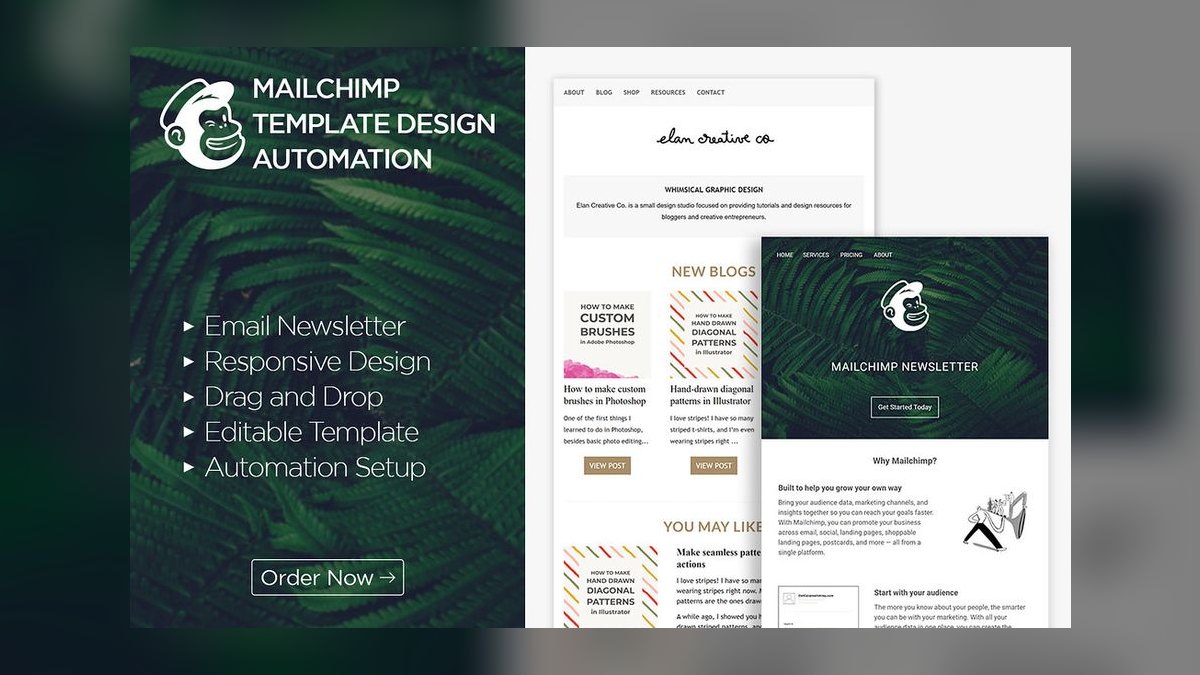
Mailchimp ranks sixth because it remains a reasonable all-in-one choice for small businesses needing email, landing pages, and basic journeys with minimal setup. Standard sits near $59/month for 1,500 contacts, and Premium near $299/month adds advanced segmentation and phone support. It ships a customer journey builder, content scoring, and RFM segments out of the box, covering most entry-level needs. Its brand recognition and extensive template library make it an easy default for non-technical users.
This platform is for small businesses that need a simple, self-contained marketing tool without complex B2B requirements. It trades away deeply nested conditional logic, as its journey builder resists complex nurture trees requiring workarounds. Compared to Klaviyo, it lacks native e-commerce catalog depth, and compared to ActiveCampaign, it falls behind on lead scoring and CRM sync, making it a stepping stone rather than a long-term solution.
7. Constant Contact
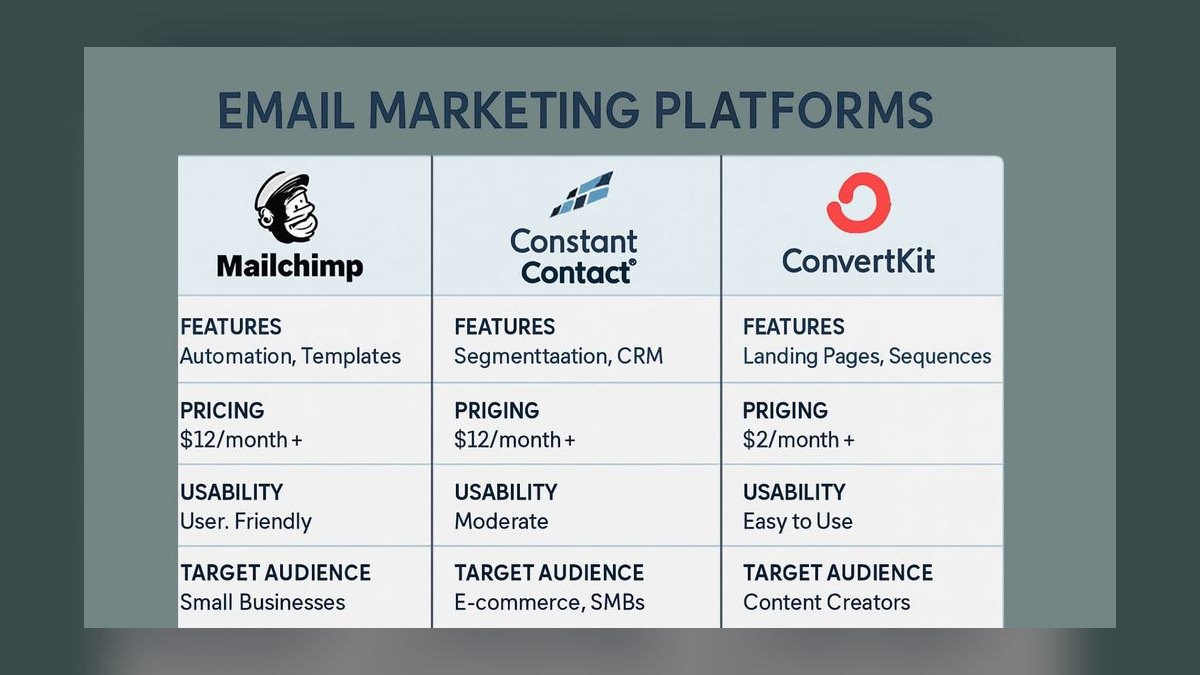
Constant Contact ranks seventh because it targets local service businesses, restaurants, and nonprofits with event marketing, RSVP handling, and template speed. Core sits near $20/month for 500 contacts, and Plus near $45/month adds dynamic content, making it highly accessible for small operations. Its strength is simplicity and event-focused features that competitors like Mailchimp lack. It provides a fast path to sending professional-looking campaigns without a learning curve.
This platform is for local businesses and nonprofits that prioritize event management and ease of use over advanced automation. It trades away deep conditional branching and CRM integration, disqualifying it for most B2B sales organizations. Compared to MailerLite, it offers better event tools but a less favorable free tier, and its automation capabilities are far simpler than ActiveCampaign's, limiting it to basic welcome and RSVP sequences.
8. GetResponse
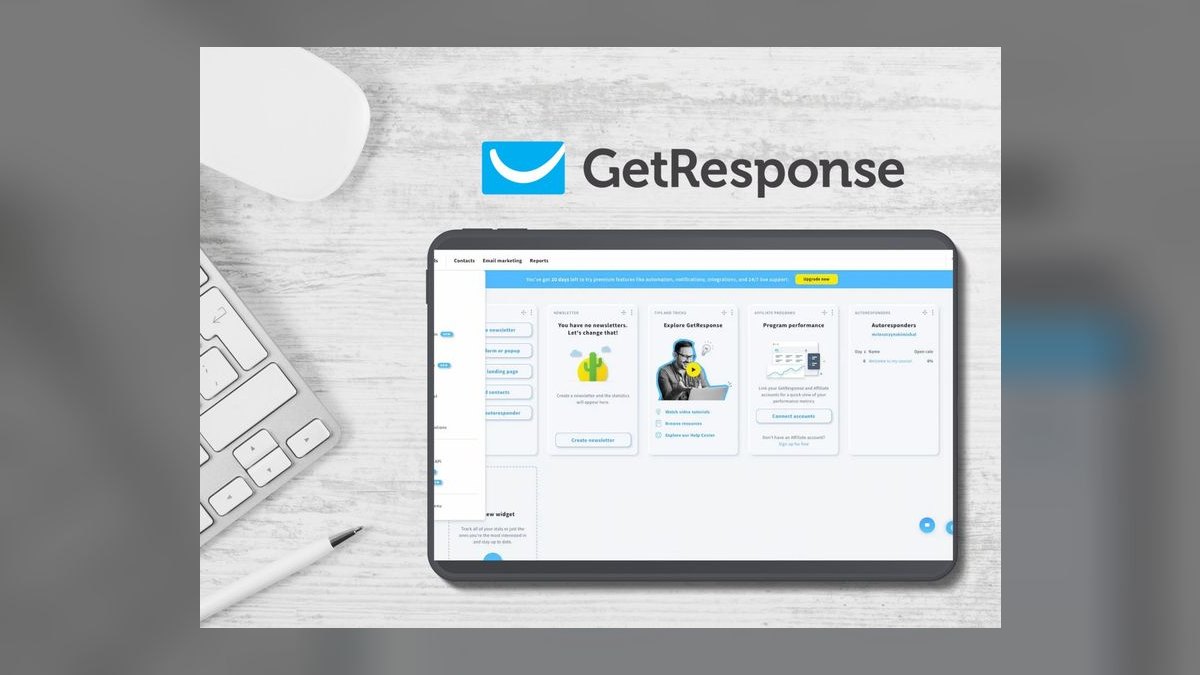
GetResponse ranks eighth because it bundles webinar hosting and a funnel builder with email marketing, with Professional near $99/month for 1,000 contacts including webinars. This makes it useful for course creators who otherwise pay separately for a webinar tool, consolidating two services into one subscription. Its automation builder supports up to roughly ten steps per workflow, covering moderate lifecycle programs. The integrated funnel builder allows for landing pages and sales funnels in one platform.
This platform is for course creators and digital marketers who need webinar functionality alongside email campaigns. It trades away complex automation, as the ten-step workflow cap is a hard disqualifier for five-branch lifecycle trees. Compared to ConvertKit, it offers webinars natively but has a higher entry price, and its dedicated IP is gated behind an Enterprise tier near $1,199/month, which is prohibitive for smaller users.
9. MailerLite
MailerLite ranks ninth because it is the minimalist option with a fast editor, excellent deliverability reputation, and a free tier up to roughly 1,000 contacts and 12,000 monthly emails. Paid plans start from about $21/month, making it one of the most cost-effective choices for creators and small newsletters. Its simplicity ensures quick setup and reliable inbox placement without feature bloat. The platform focuses on core sending and basic automations with no conditional splits.
This platform is for creators, bloggers, and small newsletters that need a clean, affordable tool without CRM or complex automation needs. It trades away native Salesforce or HubSpot connectors, disqualifying it for most B2B sales organizations. Compared to ConvertKit, it offers a better free tier and simpler interface, but ConvertKit's native Stripe checkout is superior for selling courses, and MailerLite's linear automations limit sophisticated nurturing.
10. ConvertKit
ConvertKit ranks tenth because it serves creators selling courses and memberships, with native checkout via Stripe and tag-based linear automations from $29/month for 1,000 contacts. Its strength is the seamless integration between email marketing and digital product sales, allowing creators to manage subscribers and transactions in one place. The tag-based system enables straightforward subscriber segmentation and linear sequences. It is purpose-built for the creator economy rather than general business marketing.
This platform is for independent creators and course sellers who need native payment processing and simple, reliable automations. It trades away complex conditional branching and CRM integration, as its automations are linear tag-and-action chains with no nested logic. Compared to MailerLite, it offers superior e-commerce integration for digital products but at a higher entry price, and it lacks the webinar functionality that makes GetResponse attractive for similar audiences.
How we ranked these
We evaluated ten platforms across four buying clusters: B2B automation, e-commerce behavioral flows, transactional volume, and cost-per-send. We weighted CRM integration fidelity, automation complexity ceilings, pricing model fit at scale, and deliverability features like authentication and sunset policies. We prioritized measurable factors that change the decision: cost per contact at projected list size, send-based versus contact-based billing, and workflow limits.
We deliberately ignored vendor marketing claims about AI features, content scoring, and sentiment analysis, which rarely affect outcomes. We also ignored sticker price alone, since entry pricing converges across vendors and diverges sharply at scale. We excluded subjective factors like template aesthetics and brand reputation, focusing instead on structural capabilities and total cost of ownership, including integration labor and migration time.
What to look for
What actually matters is matching the platform to your business model, not picking a universal winner. If a CRM owns your contact record, prioritize sync fidelity—HubSpot or ActiveCampaign. If revenue is transactional, Klaviyo's product catalog integration is essential. If volume is send-heavy, Brevo's send-based pricing wins. If developers own sending, SendGrid's API is the choice. Model costs at 18-month list size, not today's.
The mistake most buyers make is trialing platforms that were never viable, wasting weeks. They also ignore workflow ceilings—GetResponse's ten-step limit, SendGrid's lack of conditional splits—until after purchase. Another common error is importing stale lists without sunset policies, which destroys deliverability. Always build your most complex automation during the trial, not the welcome series, and price at projected scale, not current.
Related questions
Does the best platform for e-commerce differ from the best for B2B?
Yes, substantially. E-commerce needs the product catalog and order history as native flow conditions, which favors Klaviyo. B2B needs lead scoring, sales handoff, and CRM sync, which favors ActiveCampaign or HubSpot. Very few teams should optimize for both in one tool, as the trade-offs in automation depth and data integration are too significant.
Is it worth paying for a dedicated IP address?
Generally only above roughly 100,000 sends per month with consistent cadence. Below that, you can't generate enough volume to build reputation, and a cold dedicated IP performs worse than a well-managed shared pool. Shared IPs are the correct default for most senders, as they benefit from collective sender reputation.
How long does migrating between email platforms actually take?
Budget four to six weeks for a mid-sized program: two weeks for domain authentication and clean import, two weeks to rebuild automations and warm sending volume, and one to two weeks running critical flows in parallel before cutover. Templates rarely port cleanly, so plan for manual rebuilds of your most complex flows.
Can a small team justify HubSpot Marketing Hub's pricing?
Rarely, unless HubSpot CRM is already the system of record and sales lives in it daily. The Professional tier's cost is justified by eliminating sync maintenance across the go-to-market stack, not by the email features themselves, which competitors match at a fraction of the price. For most small teams, ActiveCampaign or MailerLite offers better value.
What single change most improves deliverability regardless of platform?
Enforcing a sunset policy. Suppressing contacts with no opens or clicks in 90–180 days raises engagement rates, lowers complaint rates, and signals to mailbox providers that your mail is wanted. It outperforms any vendor-level difference in inbox placement, as list hygiene is the dominant factor in sender reputation.
How do I choose between contact-based and send-based pricing?
Model both against your actual send calendar. Large lists mailed infrequently—nonprofits, seasonal retail, event organizations—are dramatically cheaper on send-based pricing like Brevo or SendGrid. Small lists mailed daily are cheaper on contact-based pricing. The gap between the two models is often 3–5x, so run the numbers with your real volume.
What are the key differences between Mailchimp and ActiveCampaign for automation?
ActiveCampaign supports deeply nested conditional branches, real-time lead scoring, and native CRM sync, making it superior for complex B2B nurture programs. Mailchimp's journey builder resists nested logic, so complex trees require workarounds. Mailchimp is simpler for basic newsletters, but ActiveCampaign wins for sophisticated automation and sales handoff.
FAQ
Which email platform is best overall for 2027?
There is no single best. For B2B teams that need automation plus a built-in CRM, ActiveCampaign is the strongest general-purpose choice. For e-commerce, Klaviyo. For transactional volume, SendGrid. For cost-per-send at large list sizes, Brevo. Pick the cluster before comparing features.
Should I choose contact-based or send-based pricing?
Model both against your actual send calendar. Large lists mailed infrequently—nonprofits, seasonal retail, event organizations—are dramatically cheaper on send-based pricing like Brevo or SendGrid. Small lists mailed daily are cheaper on contact-based pricing. The gap between the two models is often 3–5x, so run the numbers with your real volume.
Is Mailchimp still a reasonable choice?
Yes, for small businesses that need email, landing pages, and basic journeys in one place with minimal setup. It falls behind once you need deeply nested conditional branching or real-time lead scoring, where ActiveCampaign and Klaviyo are clearly stronger. For simple newsletters, Mailchimp remains user-friendly and reliable.
How much does deliverability actually vary between platforms?
Less than vendor marketing implies. Reputable mainstream platforms cluster within a few percentage points of each other on inbox placement. Your list hygiene, authentication setup, and complaint rate influence placement far more than which vendor you chose. Focus on SPF, DKIM, DMARC, and sunset policies.
Do I need a separate tool for transactional email?
If you send high-volume application email—receipts, password resets, alerts—a dedicated transactional provider like SendGrid or Brevo's API is worth separating from marketing sends. It isolates reputation, so a poorly performing promotional campaign can't jeopardize password reset delivery. For low volume, a single platform may suffice.
What disqualifies a platform fastest?
A workflow ceiling. If the automation builder can't express your most complex required branch logic natively—no conditional splits, a hard step limit, or linear-only sequences—no pricing advantage compensates. Build that one automation during the trial before evaluating anything else. This is the most common hidden dealbreaker.
What AI features are actually worth paying for?
Send-time optimization and predictive suppression are reliably valuable, with measurable lifts in open rates and sender reputation. Predictive LTV and churn scoring in Klaviyo are actionable for e-commerce. Subject line generation and copy drafting are useful with human editing. Content scoring and sentiment analysis are marketing fluff—ignore them.
How do I run a migration without hurting deliverability?
Authenticate your sending domain (SPF, DKIM, DMARC) and let records propagate before sending. Import contacts with engagement dates intact, suppress anything inactive for 12 months, and warm up gradually on a new IP. Run critical flows in parallel for one to two weeks, comparing metrics on matched segments before cutting over.
What is the biggest mistake in platform selection?
Trialing platforms that were never viable based on your business model. Most teams waste weeks testing tools that don't fit their CRM, revenue type, or send volume. Use the four screening questions—CRM ownership, transactional vs. relational revenue, list size vs. frequency, and who builds automations—to cut to two or three finalists quickly.
Sources
- https://support.google.com/mail/answer/81126
- https://senders.yahooinc.com/best-practices/
- https://www.m3aawg.org/published-documents
- https://datatracker.ietf.org/doc/html/rfc7489
- https://www.g2.com/categories/email-marketing
- https://www.trustradius.com/email-marketing
- https://www.activecampaign.com/pricing
- https://www.klaviyo.com/pricing
- https://sendgrid.com/en-us/pricing
- https://www.brevo.com/pricing/
Related on PULSE
- [Top 10 email marketing software for e-commerce in 2027](/knowledge/sw0036)
- [Is ActiveCampaign or ConvertKit better for email marketing automation?](/knowledge/sw0065)
- [Top 10 API Management Platforms for Business in 2027](/knowledge/sw123)
- [Top 10 funnel building tools in 2027](/knowledge/sw0059)
This page will be disappearing soon. Save it to your device for $1 — or read it free while it is here.
@Kory-White- · if Venmo asks, the last 4 of my number are 2012
 softwareShould I keep HubSpot CRM's native reporting or add a BI tool once I need forecasting across more than 5 sales territories in 2027?
 softwareHow do I migrate my existing customer data into HubSpot CRM without losing deal history in 2027?
 softwareWhat are the best analytics tools for SaaS revenue operations?
 softwareShould I add HubSpot's Service Hub once my support ticket volume passes 100 a month in 2027?
 softwareTop 10 HubSpot CRM onboarding services for new teams in 2027
 softwareShould I add HubSpot's Operations Hub once I have more than 10 recurring data sync mappings to maintain in 2027?
 softwareTop 10 HubSpot CRM data hygiene tools in 2027
 softwareTop 10 ways to discover HubSpot CRM user communities in 2027
 softwareTop 10 places to research HubSpot CRM reviews in 2027
 softwareShould I switch from HubSpot CRM to Salesforce once my sales team grows past 25 reps in 2027?