
A Gracious Award Acceptance Speech
 Curated byKory White · Fractional CRO · Maryland
 PULSEKNOWLEDGE LIBRARY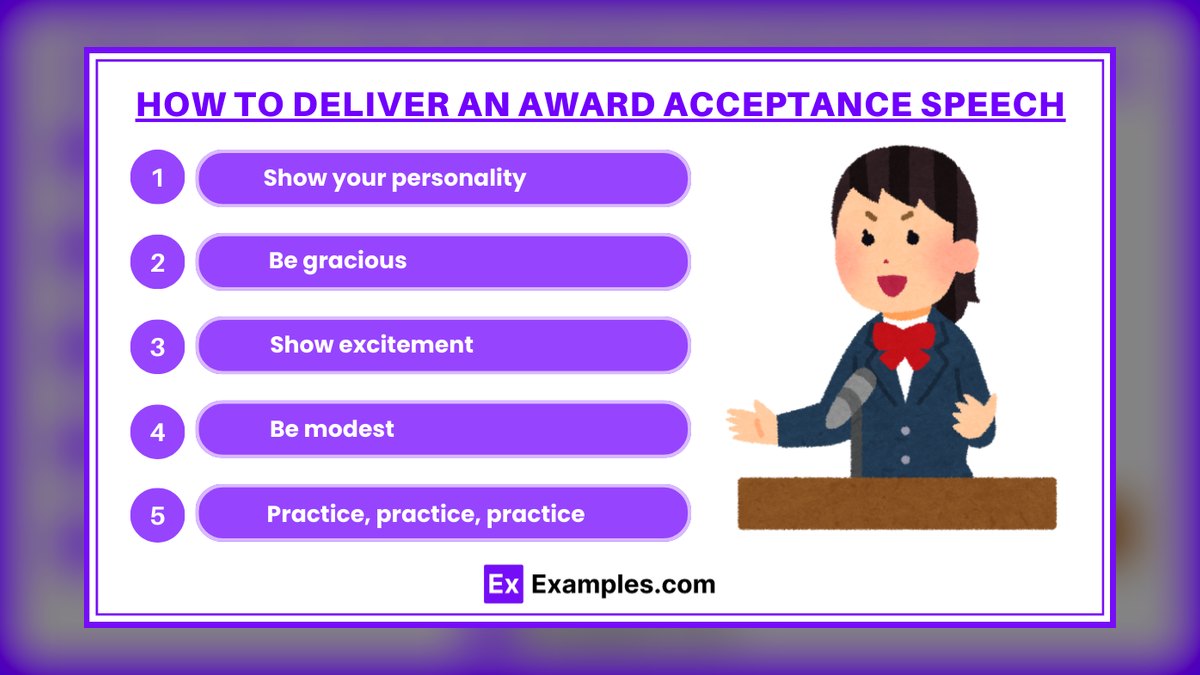
A gracious award acceptance speech thanks the presenting organization, names two or three specific people with a concrete detail about what they did, states briefly what the recognition means, and closes forward. Keep it 60 to 90 seconds at a formal ceremony, two to three minutes at a small one, and stay warm, humble, and specific.
The outcome you should expect
Set your expectations correctly before you write a word, because most people aim at the wrong target. A gracious award acceptance speech is not a performance that wins the room, and it is not a summary of your career. The realistic outcome of a good one is that the audience leaves feeling included in the recognition rather than lectured at, that the people who actually helped you feel seen by name, and that the presenting organization feels its choice was validated. Those three outcomes are achievable in ninety seconds. Anything beyond them — laughter, a standing ovation, a viral clip — is a bonus you should never design for.
The second thing to expect is that you will feel far worse about the delivery than the audience felt about it. Speakers routinely walk offstage convinced they rushed, forgot someone, or sounded flat, while the audience registered a warm, competent ninety seconds. This gap is normal and predictable. It exists because you experience the internal noise — the pounding heart, the dry mouth, the half-second pause that felt like ten seconds — while the audience experiences only the output. Knowing this in advance keeps you from over-correcting mid-speech, which is where real damage happens: the speaker who senses they are "losing the room" starts talking faster, adds unplanned material, and turns a clean ninety seconds into a rambling four minutes.
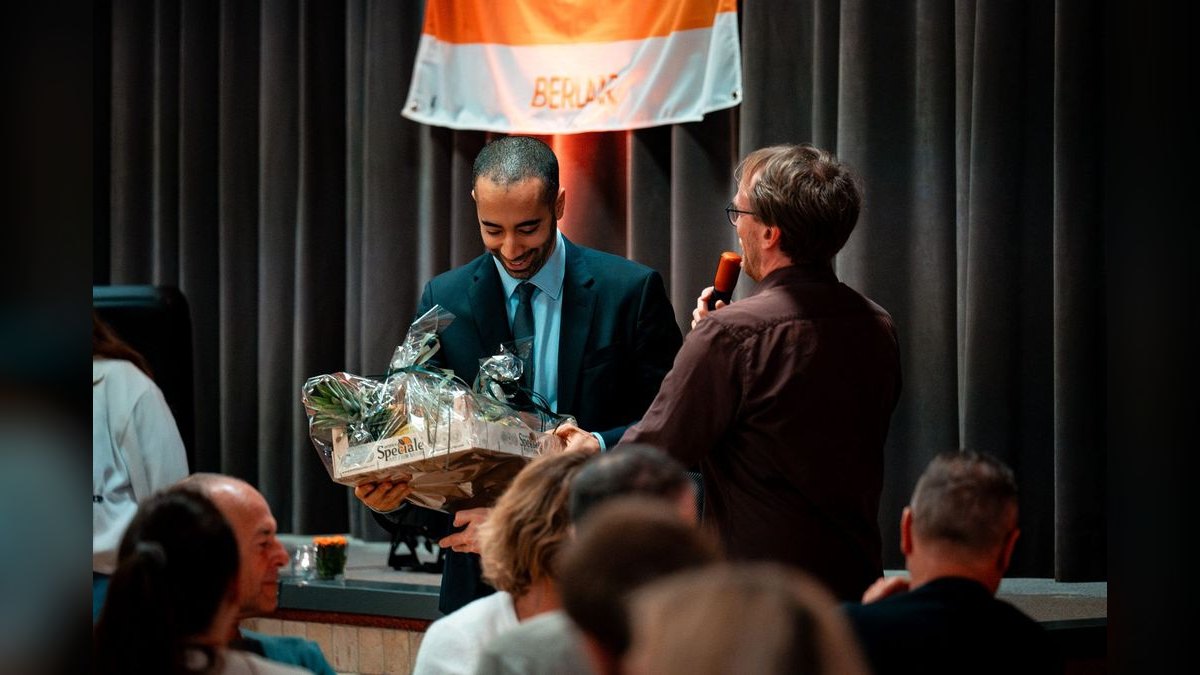
Third, expect the thank-you list to be the part people actually remember, and expect it to be the part you are most likely to get wrong. Generic gratitude evaporates instantly. "I want to thank my whole team" is heard as a formality; nobody on that team feels named. One concrete sentence about one person — what they did, when, and why it mattered — lands with everyone in the room, including people you did not mention, because it demonstrates that you notice contribution rather than perform humility. The practical trade-off is coverage versus depth. You cannot both name fifteen people and say anything meaningful about any of them in ninety seconds. Pick depth. Name two or three, describe one action each, and cover the rest with a single honest sentence that acknowledges the group without pretending to enumerate it.
Fourth, expect a measurable secondary effect if the award is professional rather than personal. Industry recognition tends to travel: the organization posts it, colleagues share it, and the clip or photo circulates in exactly the circles where your credibility matters. In a revenue-facing role that visibility is a real asset, and a speech that names your team well is far more repostable than one that centers you. That is a reason to be gracious that survives even a purely strategic reading — grace is also the version that gets shared.
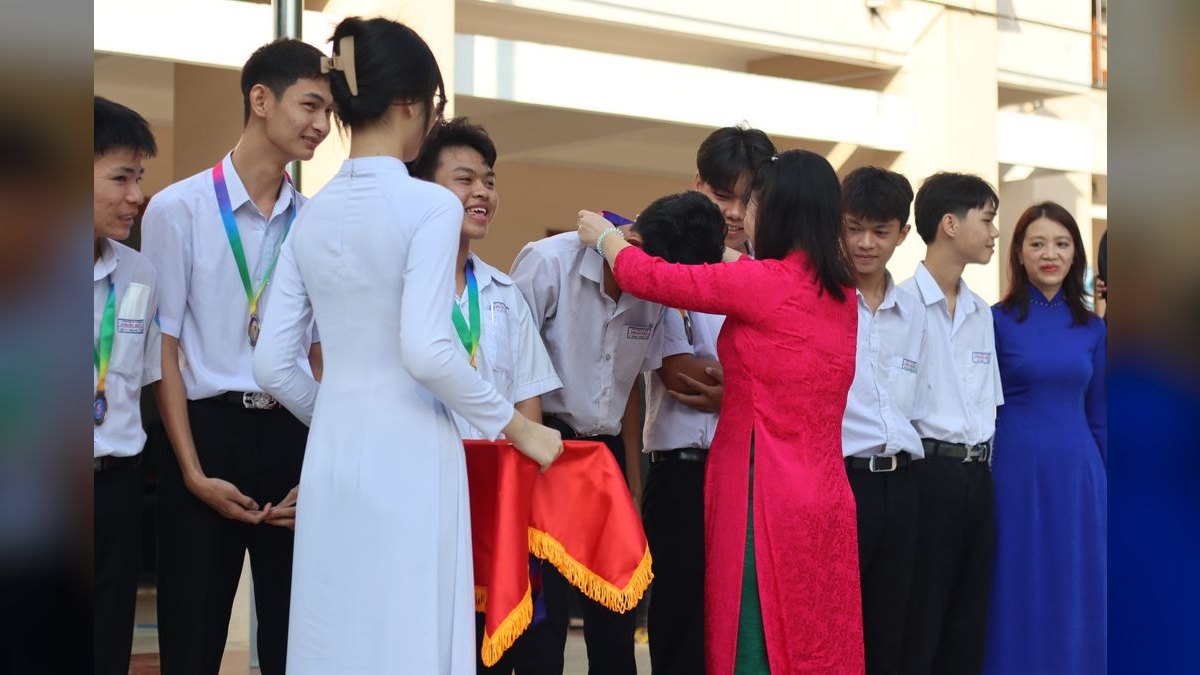
Finally, expect that the ceremony does not belong to you. It belongs to the organizers, the other honorees, and the audience who gave up an evening. The single most reliable marker of a gracious recipient is respect for the run of show. Going long is not enthusiasm; it is taking time from the next person on the program. If you internalize only one expectation, make it this one: your job is to be genuinely grateful, specifically appreciative, and finished on time.
What drives that outcome
Four things drive whether an acceptance speech reads as gracious: structure, specificity, pacing, and length discipline. Everything else — humor, storytelling, polish — is optional decoration on top of those four.
Structure is what keeps you from freezing. A speech with a known shape gives your brain a rail to run on when adrenaline strips out your working memory. The reliable shape is five beats: open with a pause and a plain thank-you; name the presenting organization by its full formal title once; thank two or three people with one concrete detail each; say in one or two sentences what the recognition means or what it is really recognizing; close forward. That sequence works because each beat cues the next. If you blank in the middle, you can ask yourself "which beat was I on?" and recover in two seconds rather than twenty.

Specificity is what makes gratitude land. The mechanism is simple: a specific detail is evidence that you were paying attention, and evidence cannot be faked with warmth of tone. Compare "thanks to my team for all their hard work" with "when the numbers wouldn't reconcile three days before the deadline, Priya rebuilt the model from scratch and had it back to me by morning." The second sentence takes six seconds longer and does roughly ten times the work. It also protects you from the most common failure mode, which is a long list of names that sounds like a credit roll.
Pacing is what separates a speech that sounds composed from one that sounds panicked, and it is almost entirely about deliberate silence. Three pauses do the heavy lifting: one before your first word, one after each name you thank, and one before your closing line. The opening pause — a genuine full breath while you look at the audience — signals control and gives the room time to settle. The pause after a name gives that name weight and, if the person is present, gives you a beat to look at them. The pause before the closing line tells the audience the ending is coming, which is what produces a clean applause cue instead of an awkward trailing-off.
Length discipline is what makes all of the above possible. The constraint is not arbitrary. At roughly 130 to 150 words per minute of comfortable spoken delivery, a 90-second speech is about 200 to 220 words. That is enough for the five beats and nothing else. Every additional idea you add forces you to cut a pause or rush a name, which degrades the two things that actually matter. Write to the word count, not to the time, because you cannot reliably estimate time while writing but you can count words exactly.
Benchmarks and realistic ranges
Use concrete numbers so you are not guessing on the night.
Length by context. Formal gala or televised-style ceremony with a packed program: 60 to 90 seconds, which is roughly 130 to 220 spoken words. Industry association dinner or conference award: 90 to 120 seconds, about 200 to 290 words. Internal company event, department meeting, or nonprofit luncheon: two to three minutes, roughly 260 to 450 words. Virtual ceremony: treat it as the formal case, 60 to 90 seconds, but deliver at about ninety percent of your normal pace because remote audiences lose comprehension on rushed audio and you get no live laughter or applause to pace against. If the organizer gives you a time, honor it exactly; if they give you none, ask, and if you cannot reach them, default to 90 seconds. Nobody has ever been criticized for a gracious speech that ended early.
Name count. Two to four named individuals is the working range for a 60 to 90 second speech. Five or more and you are reading a list. If the number of people who genuinely helped exceeds four — and it usually does — use one sentence that names the group honestly rather than trying to compress fifteen names into ten seconds. "There are about twenty people who touched this work, and every one of them knows which part was theirs" covers the room without pretending.
Concrete details. One per named person, one sentence long, ideally with a time marker (when it happened), an action (what they did), and a stake (why it mattered). Three components, one sentence, six to nine seconds of airtime.
Preparation time. Drafting a strong 90-second acceptance takes most people 45 to 90 minutes: about 20 minutes to list who genuinely contributed and what each did, 20 minutes to draft, 20 minutes to cut it to word count, and a few passes of rehearsal. Rehearse aloud four to six times, standing, with a timer. Fewer than three and the pauses will not be there under pressure; more than about ten and it starts to sound recited.
Notes. Three bullets on one card, in reading-distance type. Not a script. A full script pulls your eyes down and kills the eye contact that carries the whole thing; three bullets are enough to restart you if you blank and short enough that a glance costs half a second.
Overrun risk. The single most common measurable failure is going over time, and it usually comes from unplanned additions rather than slow delivery. If you rehearse at 85 seconds, budget for roughly 15 to 25 percent expansion on the night from pauses, emotion, and audience reaction. Rehearsing at your exact time limit means overrunning it live. Rehearse at about 75 percent of the ceiling.
Risks, edge cases, and failure modes
Going long. The dominant failure. It is read by organizers as inconsiderate no matter how heartfelt the content. Mitigation: write to word count, rehearse at 75 percent of the limit, and pre-commit to cutting a whole beat — usually the reflection sentence — if you sense you have run past your window.
Omitting someone who mattered. This is the risk that keeps people awake afterward, and it is unavoidable at speed. Mitigation is structural, not memory-based: build in one honest catch-all sentence, and follow up individually within 24 to 48 hours. A short personal note to someone you did not name repairs it completely; a longer speech would not have.
Emotion arriving unannounced. Your voice may shake or you may tear up, often triggered by looking at a specific person rather than by the award itself. This is not a failure; audiences respond well to visible genuine feeling. The mitigation is a plan, not suppression: pause, take one slow breath, and use a prepared bridging line such as "this means a great deal to me" while you recover. Avoid apologizing for the emotion — an apology redirects attention onto your composure and makes the room self-conscious on your behalf. If you know a particular name will get you, put it early while your voice is still steady, or look at the back wall rather than at the person while you say it.
The blank. Adrenaline can wipe your next line entirely. The two-second recovery is: stop, breathe, look at your card or ask yourself which of the five beats you were on. Silence reads as composure far more often than it reads as failure — a two-second pause is inaudible as a mistake to an audience that does not know your script.

Ambush awards. You did not know you were nominated, or the category is announced live. There is a universal fallback: thank the organization by name, name one person, say one honest sentence about what the work meant, thank the room, stop. Roughly thirty seconds, and it is more gracious than a rambling ninety.
Self-deprecation that goes too far. A light admission of nerves builds connection; sustained "I don't deserve this" undermines the judges who chose you and makes the audience manage your discomfort. One beat of humility, then move on.
Accepting on someone's behalf. Say immediately and clearly whose award it is and why they are absent, deliver any message they gave you as their words rather than your paraphrase, keep it short, and do not add your own reflections. The recipient's voice, not yours.
Jokes that misread the room. Humor is high-variance and context-dependent. At a memorial-adjacent, charitable, or serious-cause award, skip it entirely. If you use it, put it early, keep it self-directed, and never at the expense of other nominees or the organization.

Naming a competitor or fellow nominee. Generally a class move — one brief line acknowledging the other nominees costs three seconds and reads well. The edge case is a contentious category or a public rivalry, where a pointed acknowledgment can read as a dig. When in doubt, keep it generic and warm.
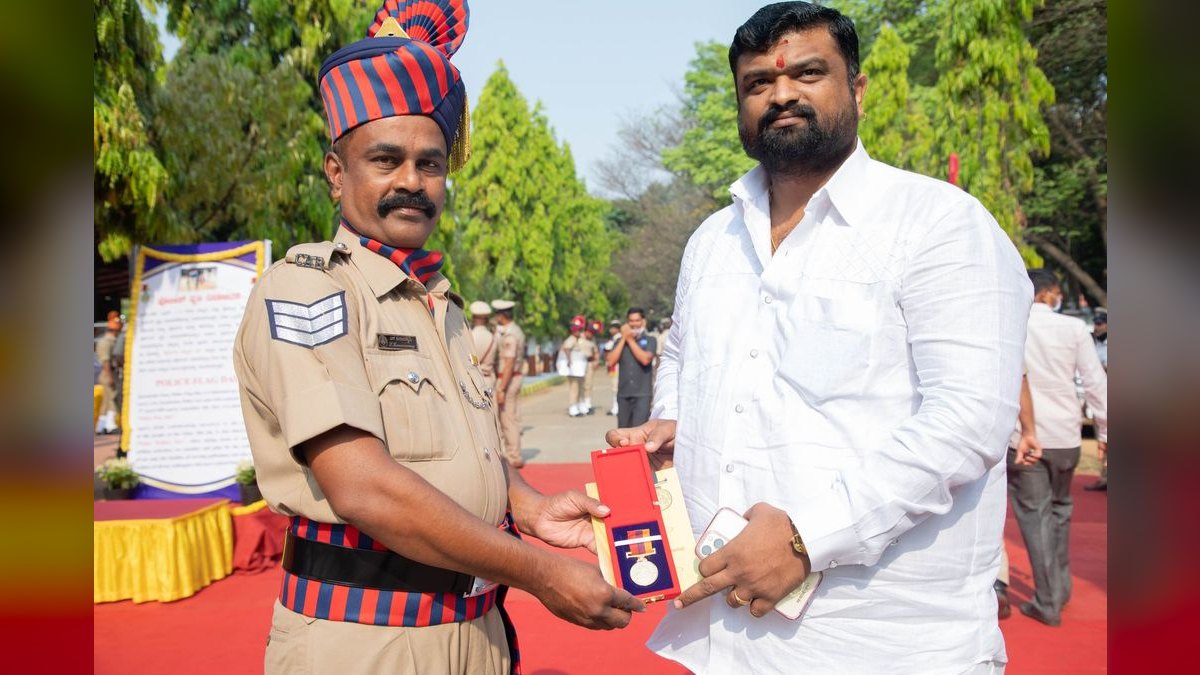
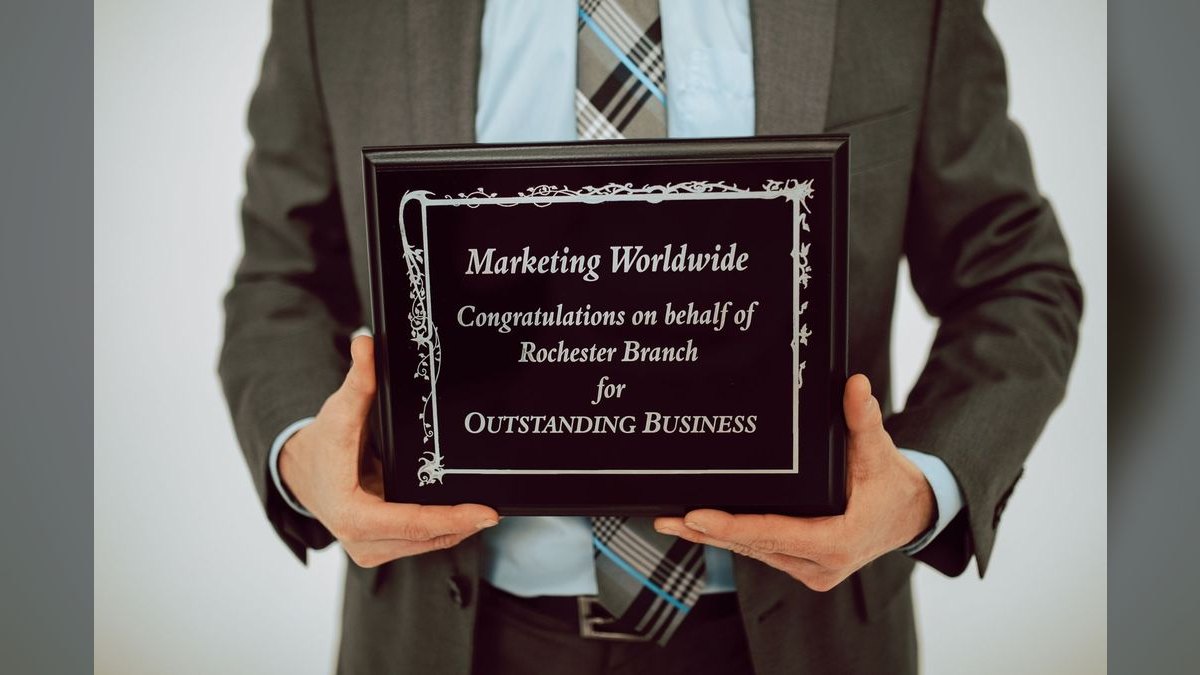
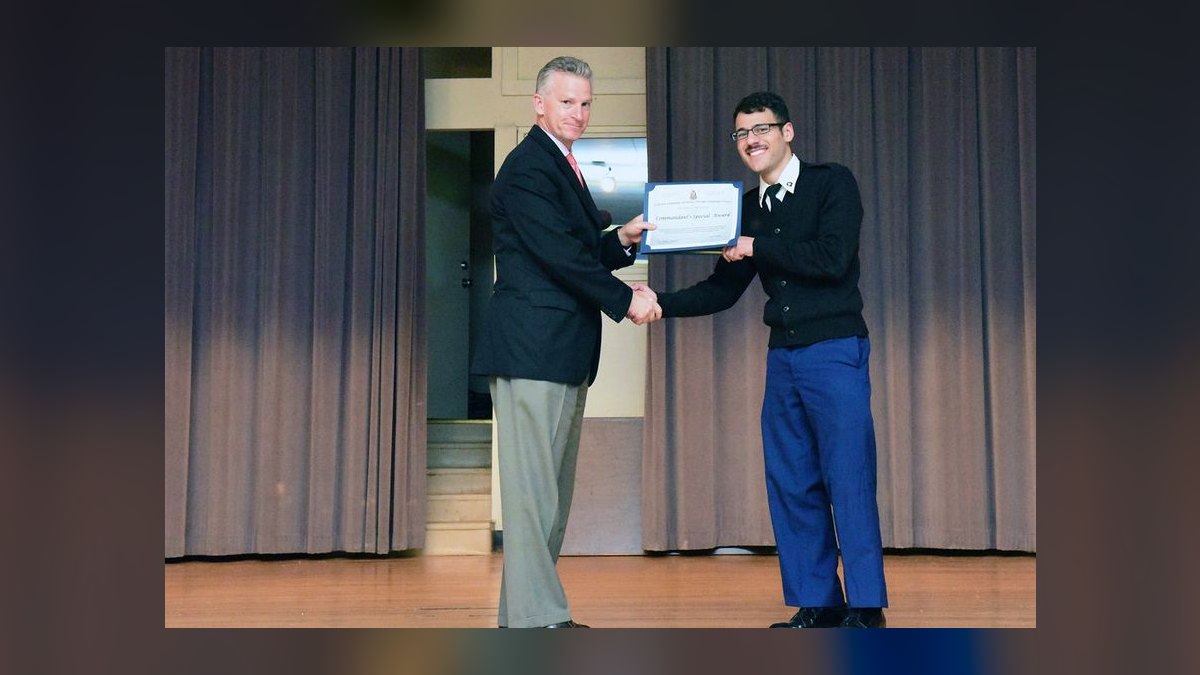
Props and hands. Holding the trophy at chest height blocks your body and tires your arm; the fix is to set it on the podium or hold it loosely at your side. If there is a microphone on a stand, adjust it before you start speaking, not during your first sentence.
Commercial overreach. If the award is professional, there is a strong temptation to convert stage time into a pitch. Resist it. Referencing revenue results, quotas hit, or your company's product mid-acceptance reads as opportunistic and cancels the goodwill the award created. Let the recognition carry the business value implicitly — it does that better than any pitch would.
Virtual-specific failures. Muted mic on the first sentence, camera framing that cuts off your face, background noise, and the dead-air feeling of no applause. Mitigation: join five minutes early, test audio, frame yourself with your eyes on the upper third of the frame, and consciously pause after key points even though nothing fills the silence.
A practical rollout plan
Work backward from the ceremony date. This sequence takes about two hours of total effort spread over a week and eliminates nearly every failure mode above.
One week out — gather. Write down every person who genuinely contributed, without editing. Beside each name, write the single most concrete thing they did: a specific night, a specific save, a specific decision. This list will be too long, and that is correct — you are collecting raw material, not drafting. Separately, confirm the logistics with the organizer: expected speech length, whether you speak from a podium or in place, whether there is a microphone or a lavalier, whether the award is handed to you before or after you speak, and whether it is being recorded.
Five days out — select and draft. Choose two to four names from the list using one filter: whose contribution would the audience not otherwise know about? Draft the five beats in order. Do not polish. Get the whole shape on the page, then count the words. First drafts routinely run 400 to 600 words for a 90-second slot.

Four days out — cut to count. Reduce to your target word count. Cut in this order: your own backstory first, then adjectives, then any name whose contribution you cannot describe concretely, then the reflection sentence if you are still over. Protect the concrete details and the closing line — those are the two things that do the work.
Three days out — write the closing line exactly. This is the only sentence worth memorizing verbatim. It should look forward rather than back and, ideally, redirect toward the group or the work. Say it aloud ten times until it comes out without thought, because it is the sentence you will deliver with the least available attention.
Two days out — rehearse aloud with a timer. Standing, at full volume, four to six times. Time every run. If you are averaging above 75 percent of your limit, cut more. Mark your three pauses physically on the card so they are visible.

One day out — make the card. Three bullets, large type, one side. Beat one: organization name. Beat two: the names. Beat three: the closing line's first three words. Put it in the pocket you will actually be able to reach while holding a trophy.
Day of — the last ten minutes. Read the card once, then put it away. Locate two friendly faces on opposite sides of the room during the earlier part of the program so you already know where to look. Drink water. Do not rehearse in the final minutes; late repetition raises anxiety without improving delivery.
On stage. Walk, set the award down or hold it low, breathe, look up, then speak. Hit the beats. If you blank, pause. If you feel emotion, pause. Land the closing line, say thank you, and step back — the physical step back is the cleanest applause cue available.
Within 48 hours — close the loop. Send short individual notes to everyone who mattered and was not named, and to the organizers. This is the part almost nobody does, and it is where the graciousness of a Gracious Award Acceptance Speech is actually completed. The speech is ninety seconds; the follow-up is what people remember a month later.
Related questions
How do you start an award acceptance speech?
Pause, breathe, make eye contact, then say a plain thank-you and name the presenting organization in full. Skip openers that undercut the moment — heavy self-deprecation or a joke that has not been tested. A calm opening buys you credibility for everything after it.
What should you never say in an acceptance speech?
Avoid sustained "I don't deserve this," apologies for emotion, anything at the expense of other nominees, and any pitch for your product or revenue results. Also avoid open-ended lists that start with "and I also want to thank" — that phrase is where speeches go long.
How many people should you thank?
Two to four named individuals for a 60 to 90 second speech, each with one concrete detail. Cover everyone else with a single honest group sentence, then send individual notes within 48 hours to the people you could not name.
What if you are called up without warning?
Use the thirty-second fallback: thank the organization by name, name one person, say one true sentence about what the work meant, thank the room, stop. Short and specific beats long and improvised every time.
Should you acknowledge the other nominees?
Usually yes — one brief warm line costs about three seconds and reads as class. Keep it generic rather than singling anyone out, especially in a contentious category where a pointed mention can read as a dig.
FAQ
What is the ideal length for an award acceptance speech?
Sixty to ninety seconds at a formal ceremony, which is roughly 130 to 220 spoken words. Two to three minutes is appropriate at smaller internal or community events. Ask the organizer for the expected length; if you cannot reach them, default to ninety seconds and rehearse at about seventy-five percent of that to leave room for pauses and applause.
Should I memorize my speech or use notes?
Neither extreme. Memorize only the closing line verbatim, and carry three bullets on a single card for the rest. A full script pulls your eyes down and destroys the eye contact the speech depends on; pure memorization is fragile under adrenaline. Three bullets restart you in half a second if you blank.
How do I handle a mental blank on stage?
Stop and breathe. Silence that feels endless to you is about two seconds to the audience, and they cannot hear the line you skipped because they never knew it was coming. Glance at your card, identify which of the five beats you were on, and continue. Do not apologize for the pause.
Is it okay to cry or show emotion?
Yes, and audiences generally respond warmly to it. Have a plan rather than trying to suppress it: pause, take one slow breath, and use a prepared bridging line such as "this means a great deal to me" while you compose yourself. Do not apologize — apologizing shifts the room's attention onto your composure.
How do I thank a large team in ninety seconds?
Do not attempt to list them. Name two to four people whose specific contributions the audience would not otherwise know about, then use one honest sentence for the group. Follow up individually within 48 hours with short personal notes — that follow-up does more for relationships than a longer list on stage ever would.
What do I do with the trophy and my hands?
Set it on the podium if there is one, or hold it loosely at your side. Clutching it at chest height blocks your body, tires your arm, and reads as nervous. Adjust the microphone before your first sentence rather than during it, and step back from the podium at the end as a clean applause cue.
Sources
- Toastmasters International — Public Speaking Resources
- Harvard Business Review — Communication
- Purdue Online Writing Lab — Public Speaking
- National Speakers Association
- Academy of Motion Picture Arts and Sciences
- MIT Comparative Media Studies/Writing — Communication Resources
- University of North Carolina Writing Center
- BBC News
Related on PULSE
- [A Speech for an Award Ceremony](/knowledge/sp0193)
- [A Gracious Concession or Handover Speech](/knowledge/sp0088)
- [A Speech for Accepting an Industry Award](/knowledge/sp0207)
- [An Employee of the Year Acceptance Speech](/knowledge/sp0074)
- [A Gracious Farewell Speech When You Leave a Job](/knowledge/sp0049)
@Kory-White- · if Venmo asks, the last 4 of my number are 2012
 pulse-moviesTop 10 Movies on Netflix 2027
 pulse-moviesTop 10 Movies on Max 2027
 pulse-moviesTop 10 Fantasy Movies of All Time in 2027
 pulse-moviesTop 10 Documentaries of All Time in 2027
 pulse-moviesTop 10 Superhero Movies of All Time in 2027
 pulse-moviesTop 10 Romance Movies of All Time in 2027
 pulse-moviesTop 10 Westerns of All Time in 2027
 pulse-moviesTop 10 Musical Movies of All Time in 2027
 pulse-moviesTop 10 Thriller Movies of All Time in 2027
 pulse-moviesTop 10 Crime Movies of All Time in 2027