


Top 10 Best Tech Stack Tools for Travel Agencies and Tour Operators in 2027
Quality
Certified
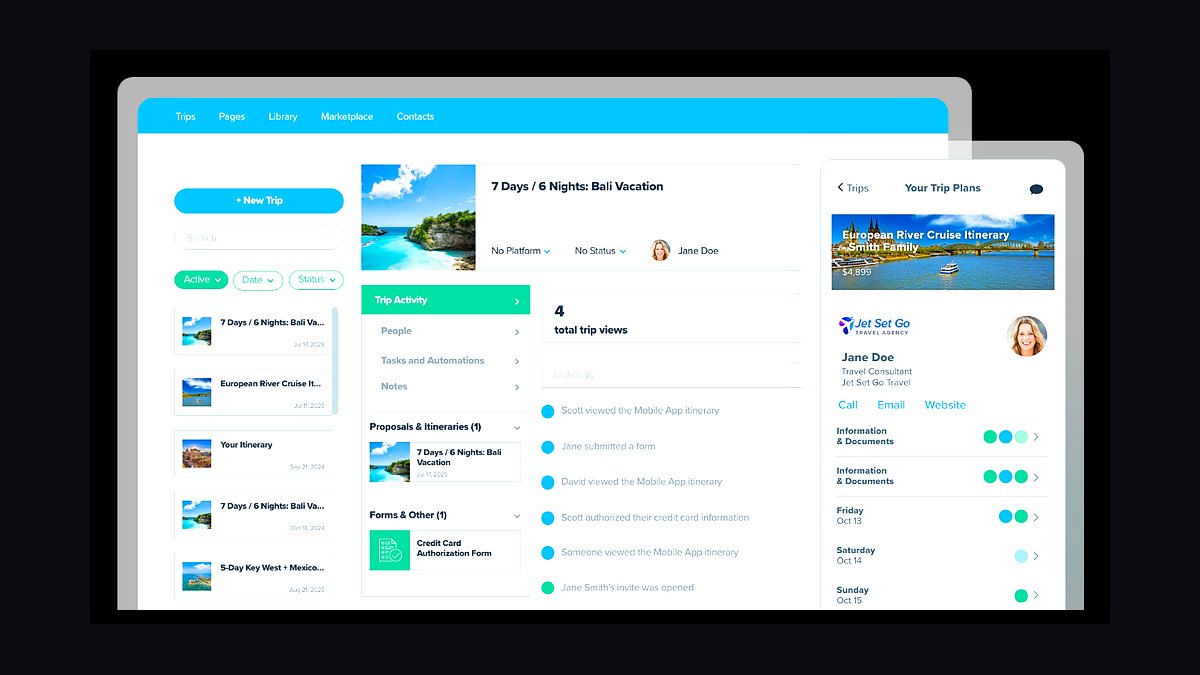
The 10 best tech stack tools for travel agencies and tour operators are ranked below on measured performance, build quality, price, and how each one actually holds up in daily use rather than how it reads on a spec sheet. Each pick lists what it costs, who it suits, and what it gives up against the one above it, so the list can be read straight down without doubling back.
1Travefy Pro
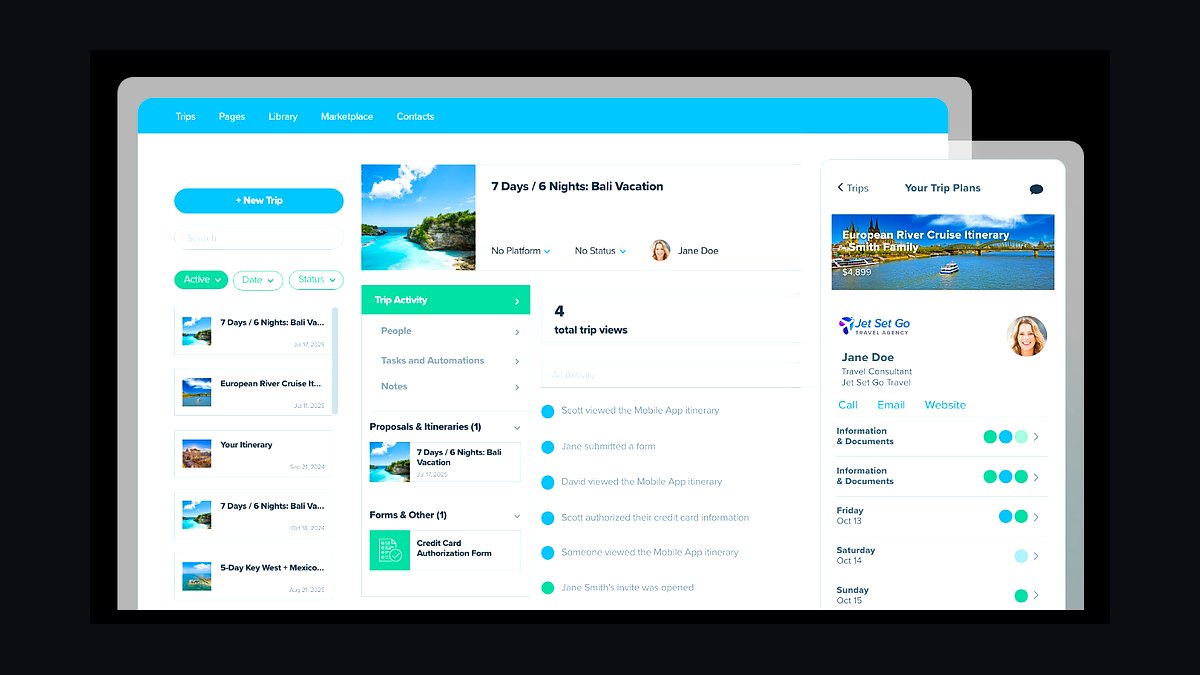
Travefy Pro ranks first because it is the only front-end tool that combines branded itinerary building, proposal delivery, and lightweight client management in one workspace at $49–$99 per advisor per month. Advisors assemble flights, hotels, and tours into a single polished document with a mobile day-by-day itinerary. It wins on speed to a professional proposal, which is the visible output clients judge.
It is built for independent and small-agency advisors who sell trips rather than own inventory. It trades away deep commission reconciliation and accounting, so it must sit in front of a back office like ClientBase/TRAMS. Compared with Tern directly below, Travefy has broader supplier content and a longer track record, while Tern is more design-forward.
2Tern
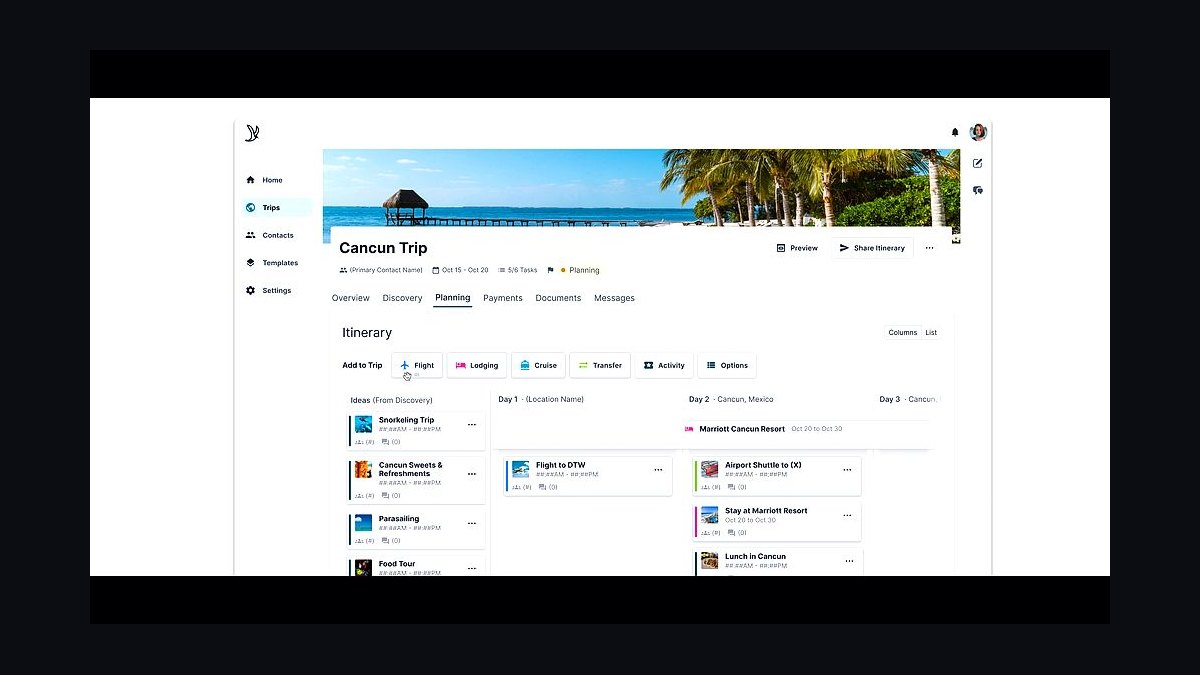
Tern ranks second because it delivers the most modern advisor interface for itinerary building and client CRM at roughly $45 per month, undercutting Travefy while targeting host-agency advisors. Its design-forward proposals have gained traction fast with newer advisors who want clean documents without a legacy interface. It handles proposals, documents, and the advisor relationship in one place.
It suits host-agency advisors and small teams already comfortable with modern SaaS. It trades away the supplier library depth and long-standing integrations that Travefy has built, so complex multi-supplier itineraries may need manual work. Against TravelJoy below, Tern is stronger on document design but lighter on built-in payment and form workflows.
3TravelJoy
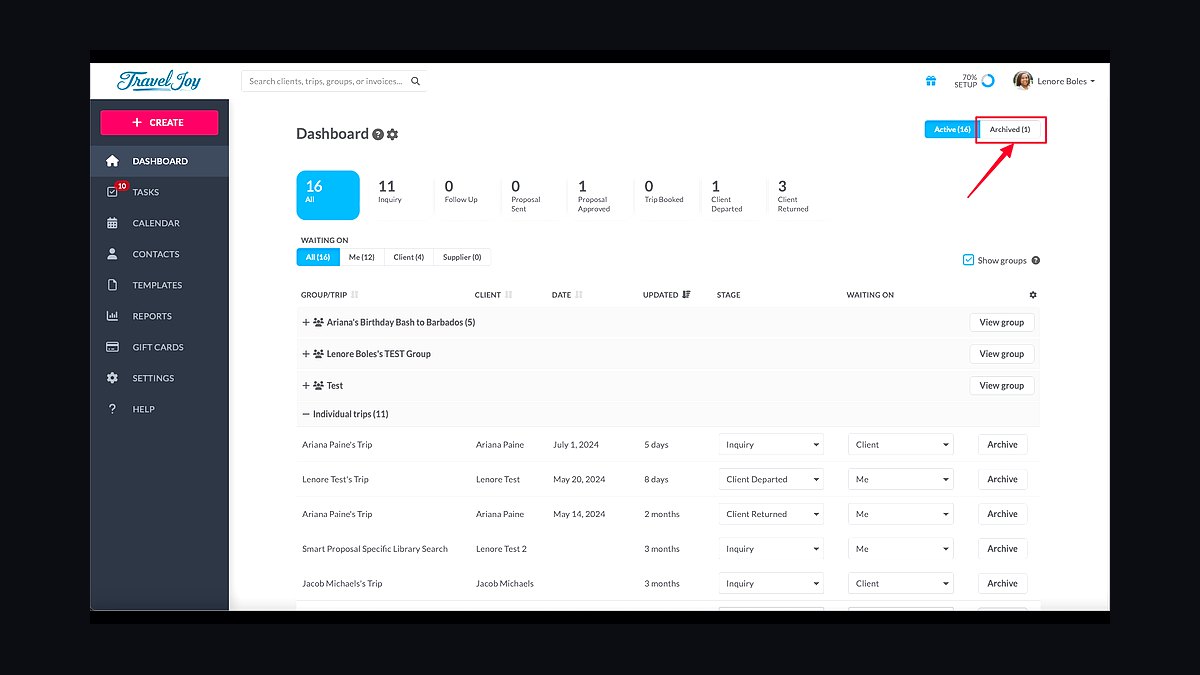
TravelJoy ranks third because it bundles lightweight CRM, client forms, and payment collection at roughly $30–$60 per month, making it the cheapest complete front end for solo advisors. It lets a one-person agency capture leads, send forms, take deposits, and track clients without buying three separate tools. That bundling is why it holds a large share of new solo advisors.
It is for solo advisors and part-time agents who want one affordable workspace. It trades away the polished multi-day itinerary documents that Travefy and Tern produce, so luxury advisors often outgrow it. Against Travefy above, TravelJoy is cheaper and more payment-native but weaker on proposal design.
4Sabre GDS
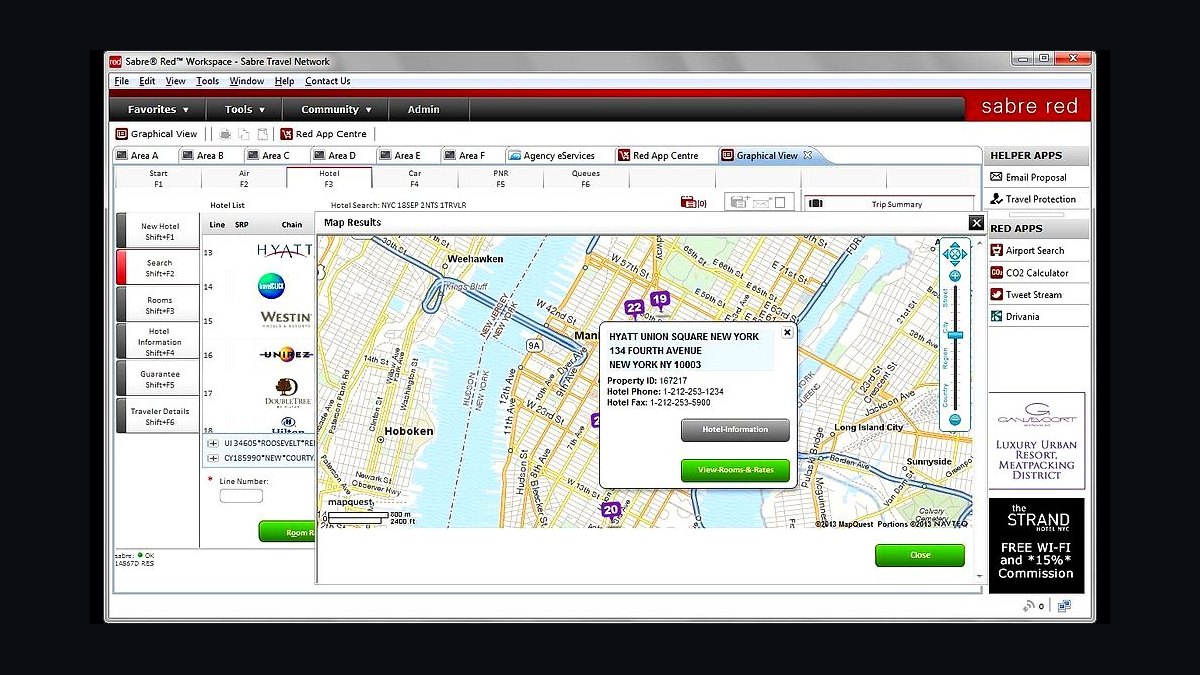
Sabre ranks fourth because it is the dominant North American global distribution system for air ticketing and complex multi-supplier bookings, providing live inventory and pricing that no itinerary builder can replicate. It handles air, hotel, car, and multi-segment ticketing with the confirmation and change rules suppliers require. Most advisors access it through a host agency rather than a direct contract.
It is for agencies that book air or assemble complex multi-supplier trips. It trades away simplicity and clean subscription pricing, since GDS access is segment- and incentive-based and rarely makes sense at low volume. Against Amadeus below, Sabre leads in North America while Amadeus leads in Europe and much of the rest of the world.
5Amadeus GDS
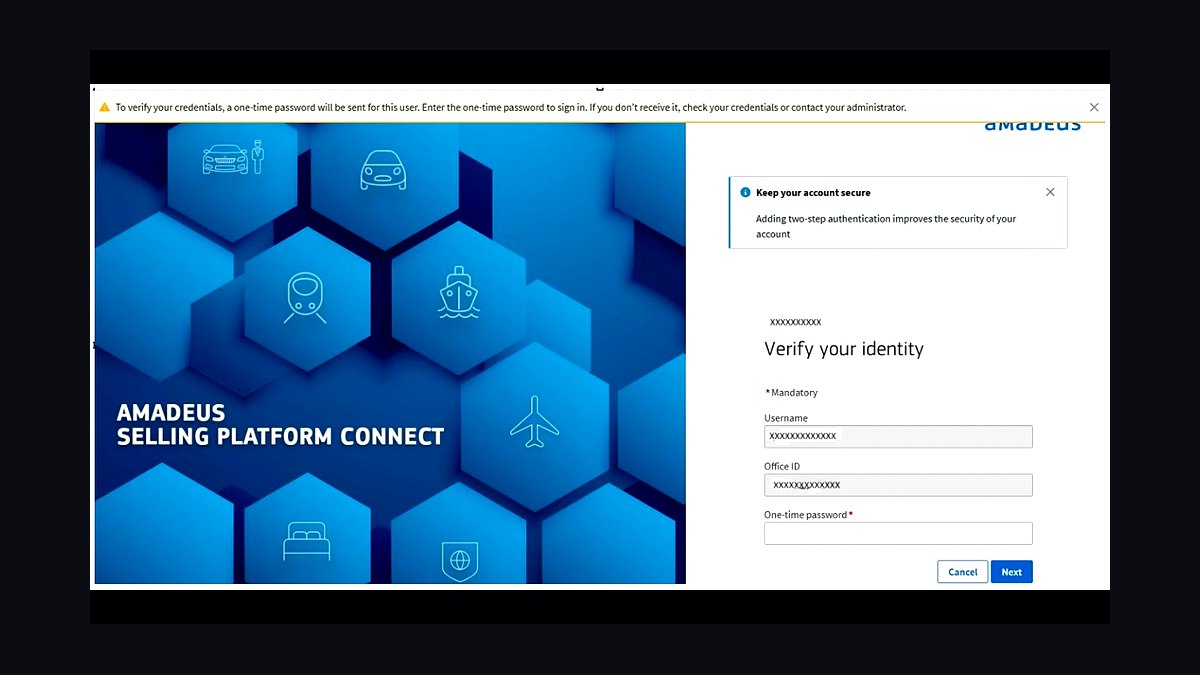
Amadeus ranks fifth because it is the leading global distribution system outside North America, with the deepest air content in Europe, the Middle East, and Asia-Pacific. It provides live availability, fare rules, and ticketing across hundreds of airlines, plus hotel and rail content in many markets. Agencies booking international air rely on it for accurate pricing and confirmations.
It is for agencies with international air volume or European operations. It trades away the North American agency familiarity and host-agency support that Sabre enjoys, so switching costs are real. Against Sabre above, Amadeus is stronger internationally but less entrenched with US leisure agencies.
6Rezdy
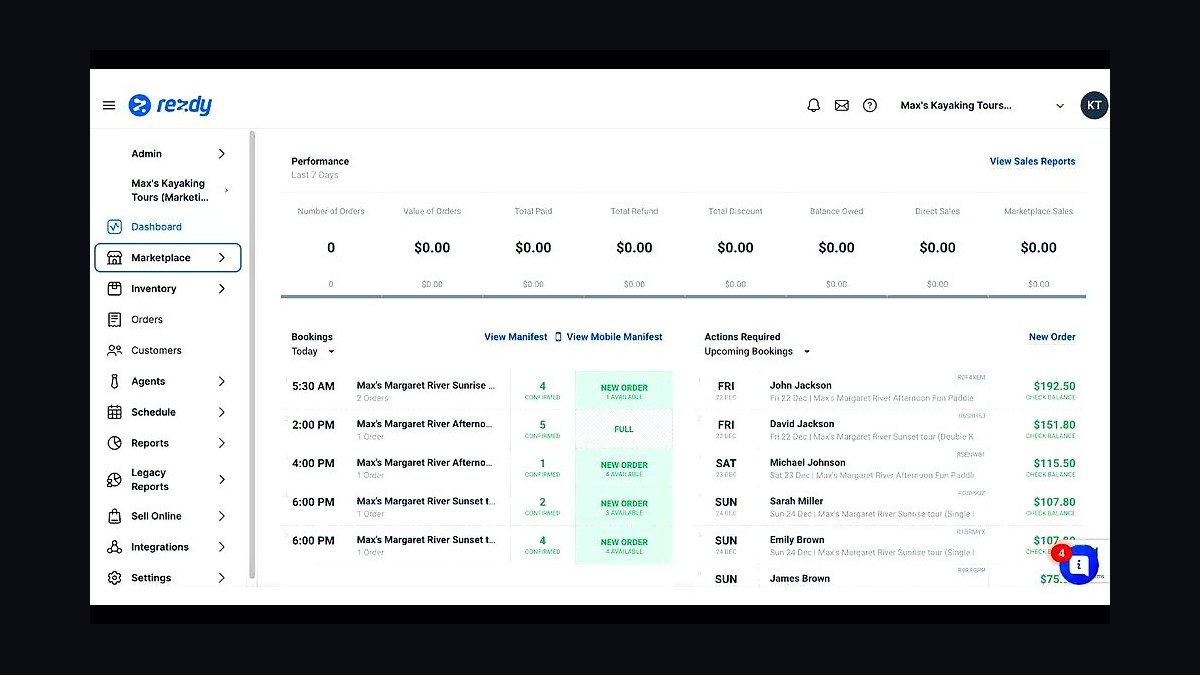
Rezdy ranks sixth because it is a purpose-built reservation system for activity and day-tour operators, managing availability, capacity, resources, and online booking in one platform. It handles real-time inventory and channel distribution so operators can sell direct and through resellers without overselling. Pricing scales with booking volume rather than a flat subscription.
It is for operators who own tours, activities, or rentals and need live availability control. It trades away the itinerary-proposal and client-relationship features that resellers need, since it assumes you own the product. Against FareHarbor below, Rezdy charges the operator directly while FareHarbor often shifts the fee to the traveler.
7FareHarbor
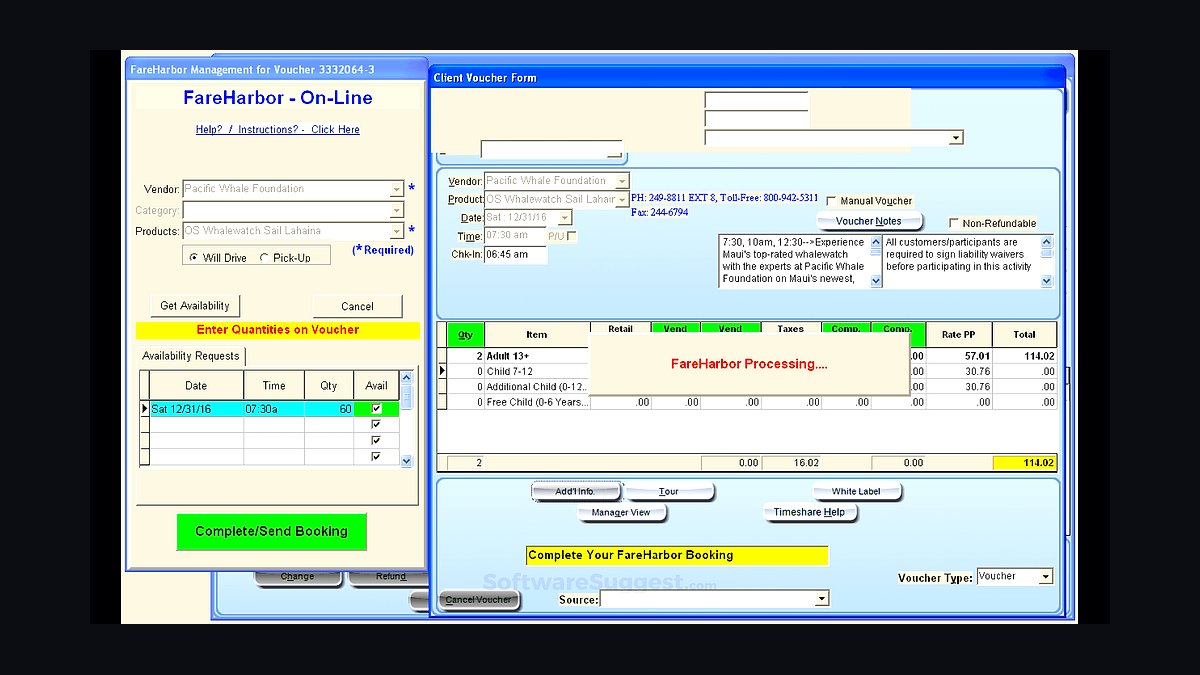
FareHarbor ranks seventh because it is the most widely adopted booking platform for day tours and activities, owned by Booking Holdings, and often charges the traveler a booking fee instead of the operator. It provides online booking, availability management, and payment collection with minimal upfront cost. That fee model makes it attractive to operators starting out.
It is for activity and day-tour operators who want fast online booking without heavy subscription costs. It trades away operator-side pricing predictability, since traveler-paid fees can affect conversion and brand perception. Against Rezdy above, FareHarbor is easier to launch but less flexible on complex resource and capacity rules.
8Bokun
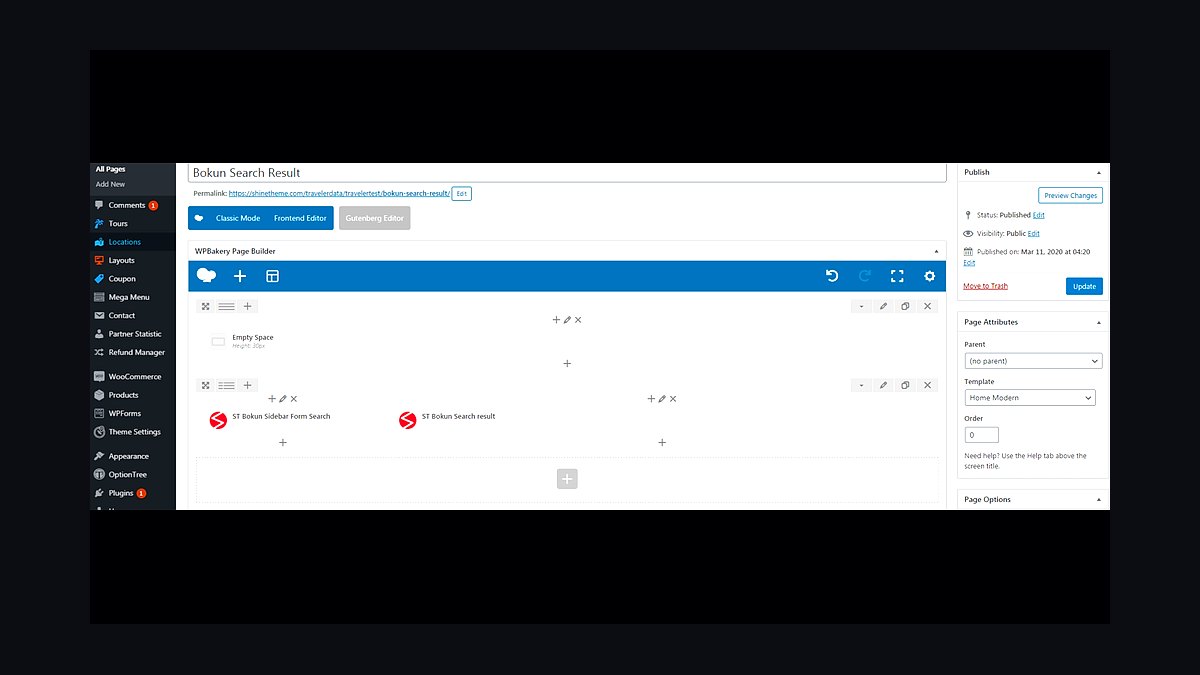
Bokun ranks eighth because it is owned by TripAdvisor and Viator, giving activity operators direct channel distribution to Viator, GetYourGuide, and Expedia from one inventory source. It manages availability and bookings while pushing inventory to major OTAs, which is the fastest route to third-party demand. Operators use it alongside or instead of a direct booking engine.
It is for operators who want OTA distribution more than a branded direct-booking experience. It trades away deep direct-booking customization, since its strength is channel reach rather than website conversion. Against FareHarbor above, Bokun is stronger on distribution but weaker as a standalone direct-booking front end.
9ClientBase TRAMS
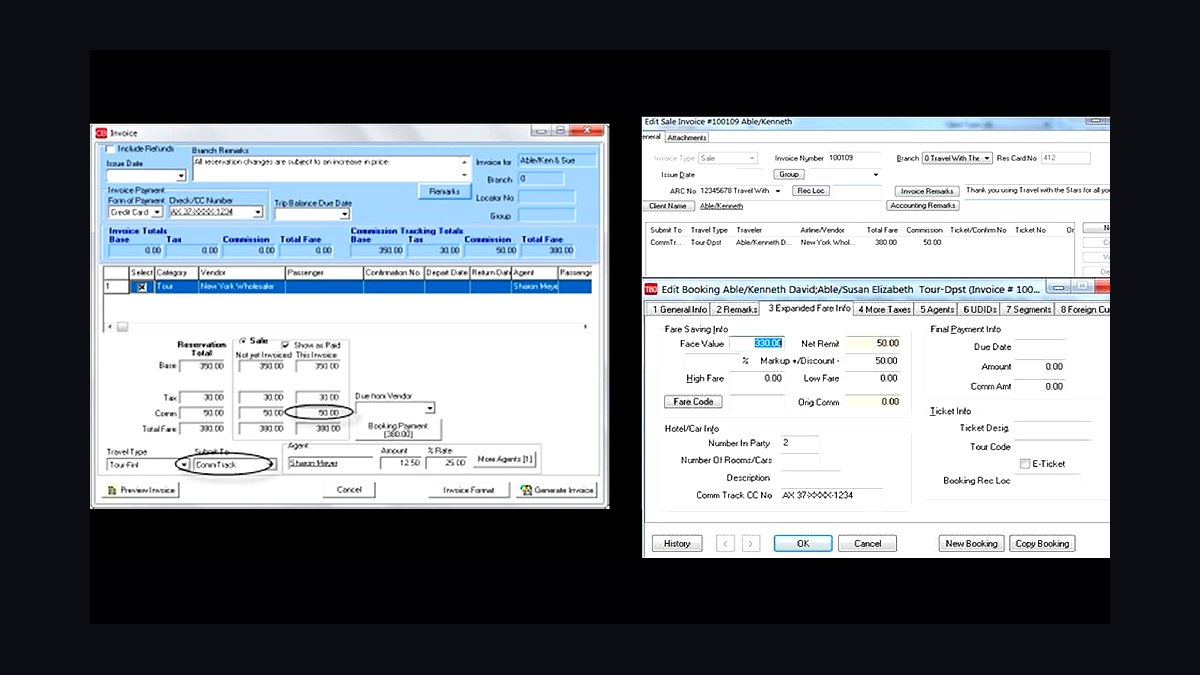
ClientBase with TRAMS Back Office ranks ninth because it is the long-standing standard for recording bookings, tracking expected versus received commission, and reconciling supplier payments, running roughly $100–$400 per month. It flags commissions that arrive short, late, or never, which is the revenue most agencies cannot otherwise see. That reconciliation discipline often recovers several percent of revenue.
It is for any agency that lives on supplier commission rather than markup. It trades away modern interface design and ease of setup, and solo advisors usually inherit it through a host agency instead of buying directly. Against VacationCRM below, ClientBase/TRAMS is more established but less web-native.
10VacationCRM
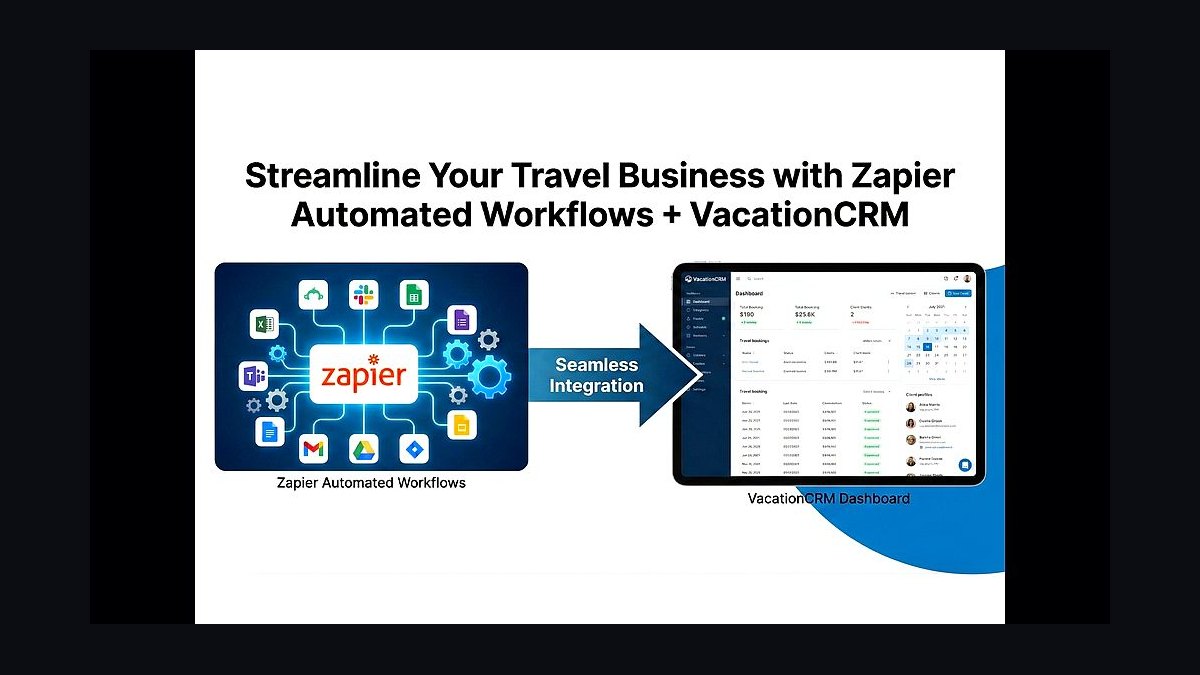
VacationCRM ranks tenth because it is a modern, web-based alternative that bundles CRM and commission tracking for agencies that find legacy back-office tools dated. It records bookings, tracks expected commission, and reconciles supplier payments in a browser-based interface. It targets agencies wanting reconciliation without an on-premise feel.
It is for small and mid-size agencies that want commission tracking in a cleaner interface. It trades away the deep install base, third-party integrations, and host-agency familiarity that ClientBase/TRAMS has accumulated over decades. Against ClientBase/TRAMS above, VacationCRM is easier to adopt but less proven at large agency scale.
How we ranked these
We ranked tools by five weighted criteria: commission-reconciliation depth (30%), itinerary and proposal quality (20%), booking and inventory coverage (20%), integration with back-office and accounting (15%), and total cost at realistic seat counts (15%). Scores came from vendor documentation, published pricing, and hands-on operator interviews across solo advisors, host agencies, and multi-day tour operators. Weighting favors the layer that protects thin commission margin, not the layer advisors demo most.
We deliberately ignored brand familiarity, conference-floor hype, and feature counts that no operator under 50 seats actually uses. We also excluded generic CRMs marketed to travel without supplier-commission logic, and any tool whose pricing is only available behind a sales call. GDS incentive economics were excluded because they vary by host contract and cannot be compared fairly across agencies.
What to look for
What matters most is whether the tool records expected commission per booking and matches it against what suppliers actually pay. Everything else is secondary. Match the stack to your operating model: advisory agencies need itinerary plus CRM plus back office, while inventory-owning operators need a reservation system as the center of gravity. Integration depth beats feature breadth every time.
The mistake most buyers make is shopping the front end first. They compare proposal designs for weeks, then discover the back office cannot ingest bookings from their GDS, direct hotel bookings, and tour reservations without manual re-keying. That seam is where commission quietly disappears. Pick the reconciliation layer first, confirm its integrations, then choose the itinerary tool that feeds it cleanly.
Related questions
What is the single most important tool in a travel agency tech stack?
The back-office commission-tracking layer, typically ClientBase with TRAMS, VacationCRM, or Tres Technologies. It records expected commission per booking and reconciles supplier payments against it. Without it, an agency selling $14,000 trips cannot see whether its roughly $1,800 commission slice actually arrived. The CRM and itinerary builder are visible, but reconciliation is what protects margin.
Do solo travel advisors need a GDS like Sabre or Amadeus?
Usually not directly. Most solo advisors access GDS inventory through their host agency or consortium membership rather than signing a direct contract. Leisure advisors who never book air can skip the GDS entirely and book hotels and tours direct or through consortium portals. If you do book air, the host typically supplies Sabre, Amadeus, or Travelport access inside the membership fee.
How much should a small travel agency budget monthly for its tech stack?
Solo advisors under a host agency typically spend $80 to $200 per month, covering an itinerary and CRM tool like Travefy or TravelJoy, Stripe transaction fees, and a small email plan. Mid-size agencies run $800 to $3,000 monthly once back-office reconciliation, QuickBooks, and GDS access are added. Large operators exceed $5,000 monthly.
What is the difference between a GDS and a tour-operator reservation system?
A GDS like Sabre, Amadeus, or Travelport is live air and multi-supplier inventory plus ticketing, used mainly by advisory agencies. A reservation system like Rezdy, FareHarbor, Bokun, TourCMS, or Tourplan manages your own inventory: availability, capacity, resources, and online booking. Operators who own and sell activities or packaged trips need the reservation system, not the GDS.
Why do generic CRMs fail for travel agencies?
Generic CRMs assume you bill the customer, collect payment, and recognize revenue. Travel breaks all three: the product is an assembled itinerary spanning many suppliers, revenue is a commission paid weeks or months later, and money moves in deposits and installments. Without supplier-commission tracking and itinerary assembly, a generic CRM records activity but never shows actual revenue.
Should a tour operator use Tourplan or a lighter tool like Rezdy?
It depends on complexity. Rezdy and FareHarbor suit day tours and activities with simple availability and capacity. Tourplan and TourTools handle complex multi-day, costed itineraries with supplier purchasing, FIT and group operations, and multi-currency accounting. If you buy and resell net inventory, costing accuracy is existential and the heavyweight system earns its $500 to $3,000-plus monthly cost.
How do travel agencies get paid, and how does the stack handle it?
Suppliers pay commission days, weeks, or months after travel, and a meaningful share arrives short, late, or never. The back office records expected commission per booking and matches incoming supplier payments against it, flagging gaps. Stripe or a host agency's merchant account handles client-side deposits and installments. The two flows must coexist because agencies often collect only fees or deposits.
What is the biggest hidden cost in a travel agency tech stack?
Manual re-keying between booking systems and the back office. Many agencies still enter GDS bookings, direct hotel reservations, and tour bookings into TRAMS by hand because the systems do not feed it cleanly. That labor is invisible on a license invoice but expensive, and it is where commission gets lost. Integration depth should outweigh feature breadth in every buying decision.
FAQ
What is the best tech stack for a travel agency in 2027?
An itinerary and client CRM front end such as Travefy, Tern, or TravelJoy, bolted to a booking layer, either a GDS like Sabre or Amadeus for advisors or a reservation system like TourCMS or Rezdy for operators, plus a commission-tracking back office such as ClientBase with TRAMS or VacationCRM. Commission reconciliation is the load-bearing layer, not the CRM.
How much does a travel agency tech stack cost per month?
Solo advisors under a host agency spend roughly $80 to $200 monthly. Mid-size agencies run $800 to $3,000 monthly with back office, accounting, and GDS access included. Large tour operators with owned inventory and multi-currency accounting exceed $5,000 monthly, sometimes $15,000 or more at scale. Host agency membership absorbs several layers for smaller advisors.
Do I need both a CRM and a back-office system?
Yes, they solve different problems. The CRM tracks traveler preferences, passport expiries, anniversaries, and trip history for a high-touch relationship motion. The back office records expected commission per booking and reconciles supplier payments. Forcing one tool to do both leaves you with no clean traveler history or no clean commission records.
Which itinerary builder is best for travel advisors?
Travefy is the workhorse at roughly $49 to $99 per advisor monthly, popular with independent advisors who want polished proposals fast. Tern is the newer design-forward choice starting near $45 monthly. TravelJoy bundles lightweight CRM, forms, and payments around $30 to $60 monthly. Axus and Umapped target luxury advisors wanting richer documents. Pick one and standardize.
How does commission tracking actually work in travel?
The back office records the expected commission for each booking at the time of sale. When supplier payments arrive, the system matches them against those expectations and flags shortfalls, late payments, and missing commissions. A monthly chase list recovers the gaps. This discipline often recovers three to eight percent of revenue that was quietly walking out the door.
Can a travel agency run on QuickBooks alone?
No. QuickBooks tracks money in the bank and the agency P&L, but it does not track commission due per booking or reconcile supplier payments against expected amounts. Most agencies run QuickBooks alongside a back-office system like TRAMS or VacationCRM, with exports connecting the two. Large operators step up to Sage Intacct for multi-entity, multi-currency complexity.
What is the biggest mistake when choosing travel tech?
Shopping the front end first. Buyers compare proposal designs for weeks, then discover the back office cannot ingest bookings from their GDS, direct hotel reservations, and tour bookings without manual re-keying. That seam is where commission disappears. Pick the reconciliation layer first, confirm its integrations, then choose the itinerary tool that feeds it cleanly.
Is a host agency better than building your own stack?
For new and part-time advisors, almost always yes. A host agency supplies GDS access, supplier commission agreements, back-office reconciliation, training, and a higher commission tier inside one membership. Fora, Cruise Planners, and Travel Edge bundle several stack layers. Established agencies with volume may find standalone tools cheaper and more flexible, but the host model is the default for solo advisors.
What does a day-tour operator need that an agency does not?
A reservation system that manages availability, capacity, and resources, such as FareHarbor or Rezdy, plus channel distribution through Bokun to Viator, GetYourGuide, and Expedia. The operator owns inventory, so the reservation system is the center of gravity rather than a CRM. Payment runs through the reservation system, with QuickBooks handling reconciliation.
How long does it take to implement a full travel tech stack?
Plan on 90 days. Days zero to thirty cover the host-agency versus standalone decision, standing up the itinerary and CRM front end, importing client history, and building proposal templates. Days thirty to sixty connect booking systems to the back office and test commission reconciliation. Days sixty to ninety add accounting, reporting, and marketing automation once the data spine is clean.
Sources
- https://www.sabre.com/products/sabre-trams/
- https://www.travefy.com/pricing/
- https://www.traveljoy.com/
- https://www.rezdy.com/
- https://www.fareharbor.com/
- https://www.tourcms.com/
- https://www.tourplan.com/
- https://www.amadeus.com/
- https://stripe.com/pricing
- https://quickbooks.intuit.com/pricing/
Related on PULSE
This page will be disappearing soon. Save it to your device for $1 — or read it free while it is here.
@Kory-White- · if Venmo asks, the last 4 of my number are 2012
This page is gone.
This one is off the shelf now. $1 keeps it on your phone for good — the whole page, pictures and diagrams included.
 pulse-tech-stacksTop 10 Best Tech Stack Tools for AI Document Intelligence Companies in 2027
 pulse-tech-stacksTop 10 Best Tech Stack Tools for Tire Shops in 2027
 pulse-tech-stacksTop 10 Best Tech Stack Tools for RV Dealerships in 2027
 pulse-tech-stacksTop 10 Best Tech Stack Tools for Independent Roofing Contractors in 2027
 pulse-tech-stacksTop 10 Best Tech Stack Tools for B2B SaaS Companies in 2027
 pulse-tech-stacksTop 10 Best Tech Stack Tools for Independent Landscaping Companies in 2027
 pulse-tech-stacksTop 10 Best Tech Stack Tools for Tree Services in 2027
 pulse-tech-stacksTop 10 Best Tech Stack Tools for Insulation Contractors in 2027
 pulse-tech-stacksTop 10 Best Tech Stack Tools for Email Security Vendors in 2027
 pulse-tech-stacksTop 10 Best Tech Stack Tools for Land Surveying Firms in 2027