


Top 10 Best Tech Stack Tools for Furniture and Home Goods Retailers in 2027
Quality
Certified
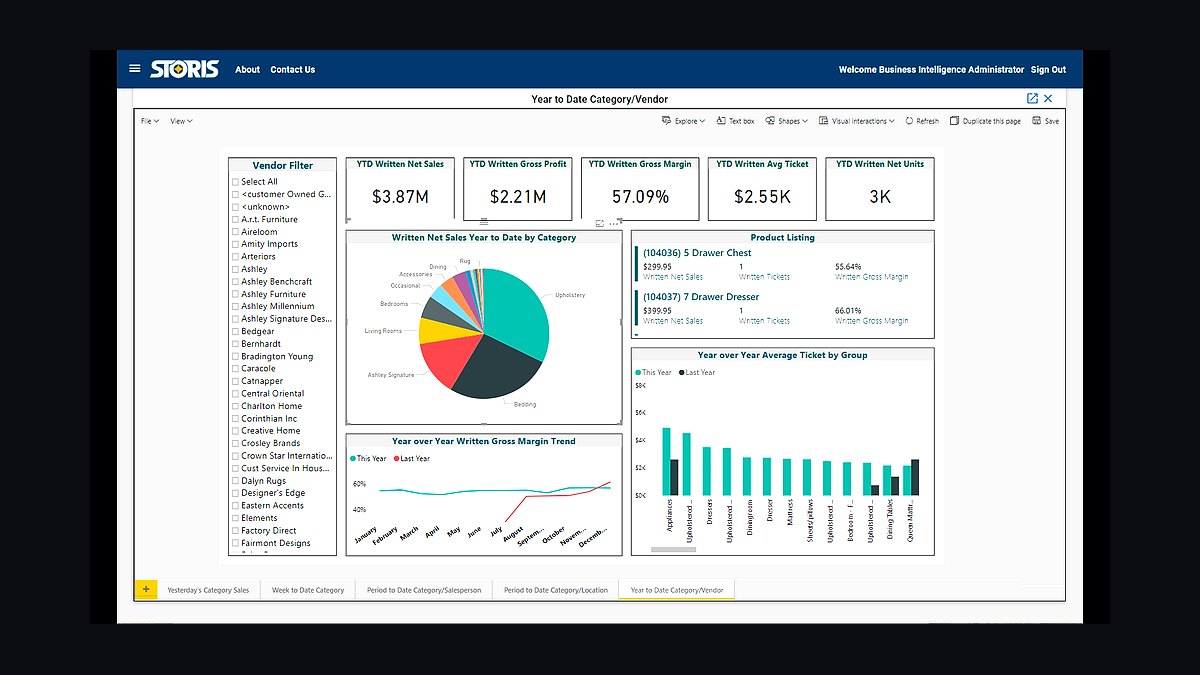
The 10 best tech stack tools for furniture and home goods retailers are ranked below on measured performance, build quality, price, and how each one actually holds up in daily use rather than how it reads on a spec sheet. Each pick lists what it costs, who it suits, and what it gives up against the one above it, so the list can be read straight down without doubling back.
1STORIS

STORIS ranks first because it is the only platform built end-to-end for furniture retail: POS, special orders, manufacturer POs, deposits, backorders, warehouse, and delivery scheduling in one system. It handles the 6-to-16-week lead-time chain generic POS cannot. Expect roughly $1,500-$4,000+ per month depending on locations and modules, plus implementation.
It is for multi-store dealers and single showrooms that take deposits on made-to-order goods and run two-person delivery crews. The tradeoff is that you adopt STORIS workflows rather than bending the software to yours. PROFITsystems by ECi is the value-focused alternate below it; Shopify Plus handles storefronts but cannot anchor this business.
2PROFITsystems by ECi

PROFITsystems ranks second as the established furniture-specific alternate to STORIS, with deep special-order, purchase-order, and inventory management for home furnishings dealers. It fits value-focused independents who want the same core mechanics without STORIS pricing. It handles deposits, backorders, and manufacturer acknowledgments natively.
It is for single-store and small regional dealers who prioritize cost over module breadth. It trades away some of STORIS's delivery-scheduling depth and integration ecosystem. Compared to STORIS above it, PROFITsystems is leaner and cheaper; compared to Genesis RETAILvantage below it, PROFITsystems carries more inventory and PO depth for growing dealers.
3Shopify Plus

Shopify Plus ranks third as the best-fit e-commerce storefront for furniture and home goods, with fast conversion-optimized pages, strong app ecosystem, and native Affirm and Klaviyo integrations. Pricing starts around $2,300 per month. It must integrate to the retail platform so online orders, inventory, and lead times stay in sync.
It is for DTC furniture brands and omnichannel dealers who need a modern storefront without custom development. It trades away native special-order and deposit logic, so it depends on the platform behind it. Compared to STORIS eCommerce below it, Shopify Plus is more flexible but requires integration work; STORIS eCommerce syncs natively.
4Synchrony

Synchrony ranks fourth because most furniture tickets are financed, and Synchrony provides the private-label and promotional-financing cards furniture buyers expect at the register. Cost is a merchant discount or subsidy, not a flat license fee. It captures prime-credit customers at the moment of decision, directly lifting close rate.
It is for showroom-based dealers whose average ticket runs $1,500-$15,000 and who need promotional terms like 12-month no-interest. It trades away subprime coverage, which is why Acima and Progressive Leasing sit below it. Compared to Affirm below it, Synchrony is stronger in-store; Affirm is stronger at online checkout.
5Affirm

Affirm ranks fifth as the modern installment BNPL layer for online furniture checkout, letting shoppers split a $3,000 sofa into monthly payments without a private-label card application. It integrates directly with Shopify Plus and most commerce platforms. Merchant cost is a per-transaction discount rather than a flat fee.
It is for DTC brands and omnichannel retailers whose customers research online and buy without visiting a showroom. It trades away the promotional financing depth and higher ticket ceilings that Synchrony offers in-store. Compared to Synchrony above it, Affirm is easier to launch online but weaker as a primary showroom financing program.
6Acima

Acima ranks sixth for lease-to-own financing that captures the no-credit and subprime segment prime cards and BNPL reject. Furniture dealers serving value-tier customers lose sales without it. Cost is a merchant discount, and approval rates run far higher than prime cards for challenged credit.
It is for value-focused dealers and rent-to-own operators whose customers cannot qualify for Synchrony or Affirm. It trades away margin per transaction versus prime financing. Compared to Affirm above it, Acima approves more applicants but costs the merchant more per sale; Progressive Leasing is the direct alternate at the same tier.
7Onfleet

Onfleet ranks seventh as dedicated route-optimization and proof-of-delivery software for furniture retailers running their own delivery trucks, starting around $550 per month. It routes two-person crews into customer windows and captures delivery confirmation. It integrates with the retail platform to read order data directly.
It is for regional dealers with owned fleets who need optimization beyond what the platform scheduler provides. It trades away the native order integration that STORIS Delivery offers out of the box. Compared to STORIS Delivery above it, Onfleet is stronger for large fleets; compared to Dispatch below it, Onfleet is software-first rather than a carrier network.
8Dispatch

Dispatch ranks eighth as a last-mile delivery network and software purpose-built for big-and-bulky white-glove furniture delivery. It connects retailers to contracted driver crews and handles scheduling, tracking, and proof-of-delivery. It suits dealers who outsource final-mile rather than owning trucks.
It is for DTC brands and omnichannel retailers without a showroom-anchored delivery operation. It trades away direct control over crews and brand experience that owned fleets provide. Compared to Onfleet above it, Dispatch is a network plus software; Onfleet is software for trucks you already own. Metropolitan Warehouse & Delivery is the third-party alternate.
9Endear

Endear ranks ninth as purpose-built clienteling and CRM for retail, layering customer timelines, saved quotes, follow-up tasks, and messaging onto the product catalog at $60+ per seat per month. It keeps associates and designers connected to shoppers across showroom visits and online browsing.
It is for dealers with design services or high-touch sales where a quote spans multiple visits. It trades away the tight order-record coupling that built-in CRM modules inside STORIS or PROFITsystems provide. Compared to the built-in CRM below it, Endear is more capable for outreach but adds another integration and per-seat cost.
10Microsoft Power BI

Microsoft Power BI ranks tenth as the cost-effective BI layer at $14 per user per month, pulling margin, inventory turn, write-off, delivery-performance, and salesperson dashboards from the retail platform and ERP. It fits dealers already standardized on Microsoft. Dashboards refresh on scheduled syncs from the system of record.
It is for operators who need reporting across stores, warehouses, and delivery without enterprise BI spend. It trades away the free simplicity of Looker Studio and the depth of Tableau. Compared to Endear above it, Power BI serves management analytics rather than associate clienteling; both read from the same platform data.
How we ranked these
We ranked each tool on five weighted criteria: furniture-specific order depth (30%) covering special orders, deposits, manufacturer POs, and backorders; delivery and white-glove logistics capability (20%); integration surface with e-commerce, financing, and ERP (20%); total cost of ownership at realistic seat and location counts (15%); and analyst-validated market presence plus implementation track record (15%). Scores came from vendor documentation, published pricing, and operator interviews.
We deliberately ignored generic retail feature breadth, restaurant and grocery POS comparisons, and raw app-store review counts. Those signals reward horizontal platforms that cannot natively track a six-to-sixteen-week factory lead time or schedule a two-person delivery crew. We also excluded vendor-supplied ROI claims and any ranking influenced by affiliate compensation, since those distort true fit for big-ticket, freight-delivered merchandise.
What to look for
What matters most is whether the platform natively holds a quote across multiple showroom visits, attaches a deposit to a not-yet-built item, and tracks that order from manufacturer PO through warehouse receipt to a scheduled two-person delivery. Financing integration at the register and online checkout is the second deciding factor, because most big-ticket purchases are financed or leased. Delivery routing and proof-of-delivery should be first-class, not bolted on later.
The mistake most buyers make is choosing a generic POS or e-commerce platform on price or feature count, then discovering it cannot manage special orders, deposits, or backorders. They end up running spreadsheets and a wall calendar beside the register, quoting wrong lead times, and losing financed sales at the moment of decision. Buy the furniture-specific system of record first, then layer commerce, financing, and logistics around it.
Related questions
Why can't a generic POS handle a furniture store?
Generic POS assumes one-touch checkout on in-stock goods. Furniture sells made-to-order items that ship in six to sixteen weeks, requires deposits against unbuilt product, tracks manufacturer POs and backorders, and schedules two-person delivery crews. Square or Lightspeed cannot natively do any of that, so dealers end up running spreadsheets and calendars beside the register and quoting wrong lead times.
How much should a single furniture store budget for software?
A single showroom typically lands around $2,000 to $5,000 per month in combined software plus implementation. That covers a furniture retail management platform like STORIS or PROFITsystems, a basic Shopify catalog site, QuickBooks, Synchrony or Acima financing, Klaviyo email, and a lightweight BI dashboard. Delivery is often run on owned trucks or a local third-party carrier.
Do furniture retailers really need lease-to-own financing?
Yes, for value-tier and mid-market dealers. A meaningful share of shoppers cannot qualify for prime private-label cards, and lease-to-own through Acima or Progressive Leasing captures that segment instead of losing the sale. Prime financing via Synchrony or Wells Fargo Retail Services plus Affirm installments online covers the rest. Offering all three at the register and checkout maximizes close rate.
What breaks first when showroom and website inventory drift?
The website sells a discontinued fabric or promises in-stock on a twelve-week special order. The customer is angry, the order is unwinnable, and trust is gone. One product catalog, one inventory truth, and one lead-time field synced between the retail platform and the storefront is non-negotiable for any omnichannel furniture retailer running both channels.
Is Shopify Plus enough as the whole stack for a DTC furniture brand?
No. Shopify Plus is an excellent storefront, but DTC furniture brands still need NetSuite or Cin7 for inventory and finance, Affirm for checkout financing, Klaviyo for lifecycle marketing, and a contracted white-glove final-mile network like Dispatch or Metropolitan. There is no showroom to anchor the stack, so e-commerce and logistics carry the operational weight.
When should a dealer move from QuickBooks to Sage Intacct or NetSuite?
Move to Sage Intacct when you run multiple store entities needing consolidated GL and stronger reporting, typically around three to fifteen locations. Move to NetSuite when you operate nationally, need a financial and inventory backbone, and require multi-currency, multi-warehouse, and deep integration to commerce and logistics layers. QuickBooks fits a single store posting platform financials.
How important is delivery routing software versus outsourcing final mile?
Both work, but the choice must be deliberate. Running your own trucks justifies Onfleet or STORIS Delivery for route optimization and proof-of-delivery. Outsourcing to Metropolitan or Dispatch removes capital and labor but requires tracking integration back to the order. What fails is leaving scheduling on a whiteboard disconnected from the order, which mis-routes crews and produces no accurate customer window.
What should the first thirty days of implementation focus on?
Stand up the retail management platform as the system of record. Migrate the product catalog, customer records, and open orders, configure special-order and deposit workflows, and train associates on quoting and manufacturer PO creation. Nothing else matters until orders flow correctly through the platform. Commerce, financing, logistics, and analytics come in the following sixty days.
FAQ
What is the single most important piece of the furniture retail tech stack?
The furniture-specific retail management platform, STORIS for most dealers and PROFITsystems for value-focused stores. It is the system of record that natively handles special orders, deposits, manufacturer POs, backorders, and delivery scheduling. Everything else, including e-commerce, financing, marketing, and BI, plugs into it. Get this layer right before shopping anything else.
Can a furniture retailer run entirely on Shopify?
No. Shopify is a strong storefront but lacks native special-order, deposit, manufacturer PO, and two-person delivery scheduling depth. Dealers running Shopify alone end up with spreadsheets beside the register and inaccurate lead times. Use Shopify or Shopify Plus as the commerce layer integrated to a furniture retail management platform that owns orders, inventory, and delivery.
How does financing fit into the stack at the point of sale?
Financing belongs at the register and online checkout, not as a separate step. Synchrony and Wells Fargo Retail Services provide private-label promotional cards, Affirm adds installment BNPL online, and Acima or Progressive Leasing covers lease-to-own for customers who cannot qualify for prime credit. Integrating all three at decision time directly lifts close rate and average ticket.
What does white-glove delivery software actually do?
It schedules two-person crews into routed time windows, optimizes stop sequences, sends customers accurate arrival windows, and captures proof-of-delivery and damage flags before the truck leaves. STORIS Delivery, Dispatch, and Onfleet are the leading options. Delivery is a margin line and a review battleground, so routing belongs in the core stack rather than a disconnected calendar.
How do special orders and deposits work in a furniture platform?
The associate builds a quote, converts it to a sales order, collects a deposit, and the platform generates a manufacturer PO. It then tracks manufacturer acknowledgment, warehouse receipt, partial shipments, backorders, and final delivery against that order. This purchase-order and special-order engine is the hardest thing to bolt onto generic retail software, which is why the platform choice matters most.
Should a regional multi-store dealer use NetSuite or STORIS?
Most regional dealers run STORIS across stores with warehouse and delivery modules, Sage Intacct for multi-entity finance, and Shopify Plus or platform e-commerce. NetSuite becomes the spine for national omnichannel brands needing multi-currency, multi-warehouse, and deep commerce integration. The deciding factor is entity complexity and whether the furniture platform's inventory module still fits.
What role does clienteling play for furniture and home goods?
Associates and designers need a customer timeline, saved quotes, follow-up tasks, and outreach across a sales cycle that spans weeks and multiple showroom visits. Endear at roughly $60 per seat per month is purpose-built for this, while the built-in CRM inside STORIS or PROFITsystems keeps the customer record next to the order. Either works if quote history is visible.
How should a dealer measure whether the stack is working?
Track margin by category, inventory turn, write-offs, delivery performance and damage rate, close rate on quoted orders, financing attachment rate, and salesperson productivity. Power BI at $14 per user per month pulls these from the retail platform and ERP. If delivery damage or quote-to-close rate is not improving within two quarters, the integration or the platform fit is wrong.
What is the biggest integration risk in this stack?
Channel inventory and lead-time drift between the showroom platform and the e-commerce storefront. When the website and register do not share one catalog, one inventory truth, and one lead-time field, the site sells discontinued fabric or promises in-stock on a twelve-week special order. Sync these fields first, before adding marketing or analytics layers on top.
How long does a full furniture tech stack implementation take?
Plan on roughly ninety days for a focused rollout. Days zero to thirty stand up the retail management platform and migrate catalog, customers, and open orders. Days thirty-one to sixty launch commerce and financing integration. Days sixty-one to ninety add delivery routing, ERP financial posting, and BI dashboards. National omnichannel rollouts run longer due to data warehouse and multi-entity scope.
Sources
- https://www.storis.com/software-system-tools/
- https://www.shopify.com/plus
- https://www.synchrony.com/
- https://www.affirm.com/
- https://www.onfleet.com/
- https://www.klaviyo.com/
- https://www.netsuite.com/
- https://powerbi.microsoft.com/
- https://www.sageintacct.com/
- https://www.endear.com/
Related on PULSE
This page will be disappearing soon. Save it to your device for $1 — or read it free while it is here.
@Kory-White- · if Venmo asks, the last 4 of my number are 2012
This page is gone.
This one is off the shelf now. $1 keeps it on your phone for good — the whole page, pictures and diagrams included.
 pulse-tech-stacksTop 10 Best Tech Stack Tools for Home Inspection Companies in 2027
 tkTop 10 Best Tech Stack Tools for Concrete and Paving Contractors in 2027
 pulse-tech-stacksTop 10 Best Tech Stack Tools for Podiatry Practices in 2027
 pulse-tech-stacksTop 10 Best Tech Stack Tools for RV Dealerships in 2027
 pulse-tech-stacksTop 10 Best Tech Stack Tools for MSP and IT Services Companies in 2027
 pulse-tech-stacksTop 10 Best Tech Stack Tools for Septic and Portable Sanitation Services in 2027
 pulse-tech-stacksTop 10 Best Tech Stack Tools for Independent Bakeries in 2027
 pulse-tech-stacksTop 10 Best Tech Stack Tools for Data Loss Prevention (DLP) Software Vendors in 2027
 pulse-tech-stacksTop 10 Best Tech Stack Tools for Painting Contractors in 2027
 pulse-tech-stacksTop 10 Best Tech Stack Tools for Embeddings API Companies in 2027