


Top 10 Best Tech Stack Tools for Embeddings API Companies in 2027
Quality
Certified
The 10 best tech stack tools for embeddings api companies are ranked below on measured performance, build quality, price, and how each one actually holds up in daily use rather than how it reads on a spec sheet. Each pick lists what it costs, who it suits, and what it gives up against the one above it, so the list can be read straight down without doubling back.
1NVIDIA Triton Inference Server
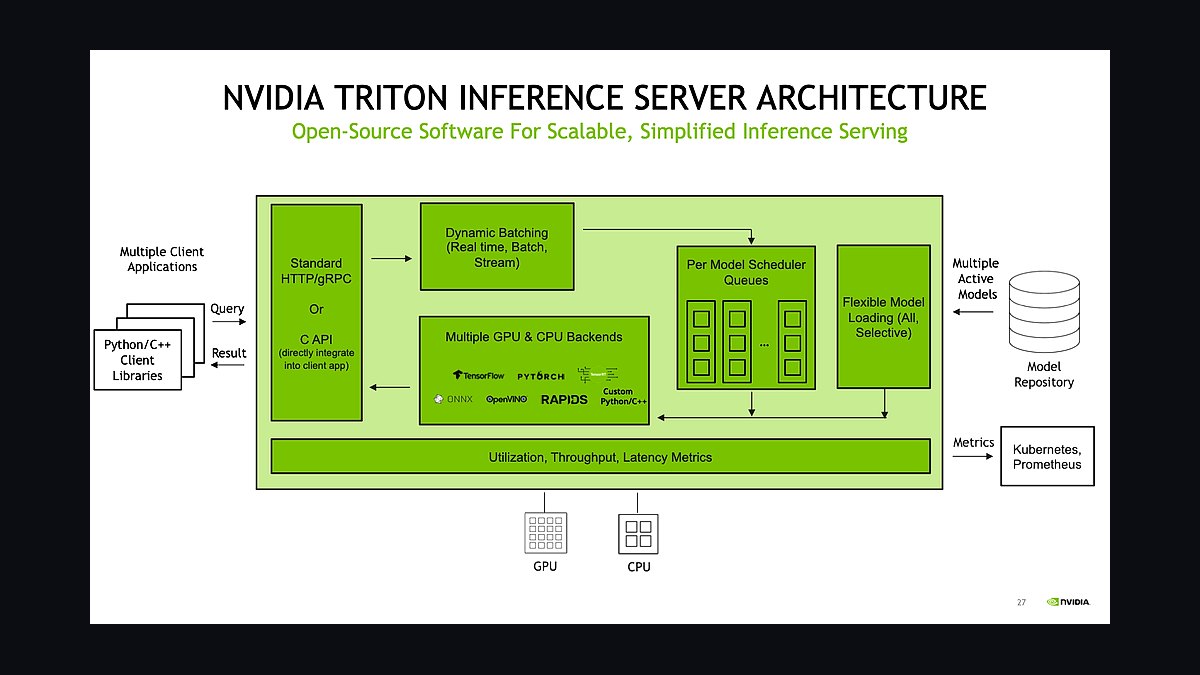
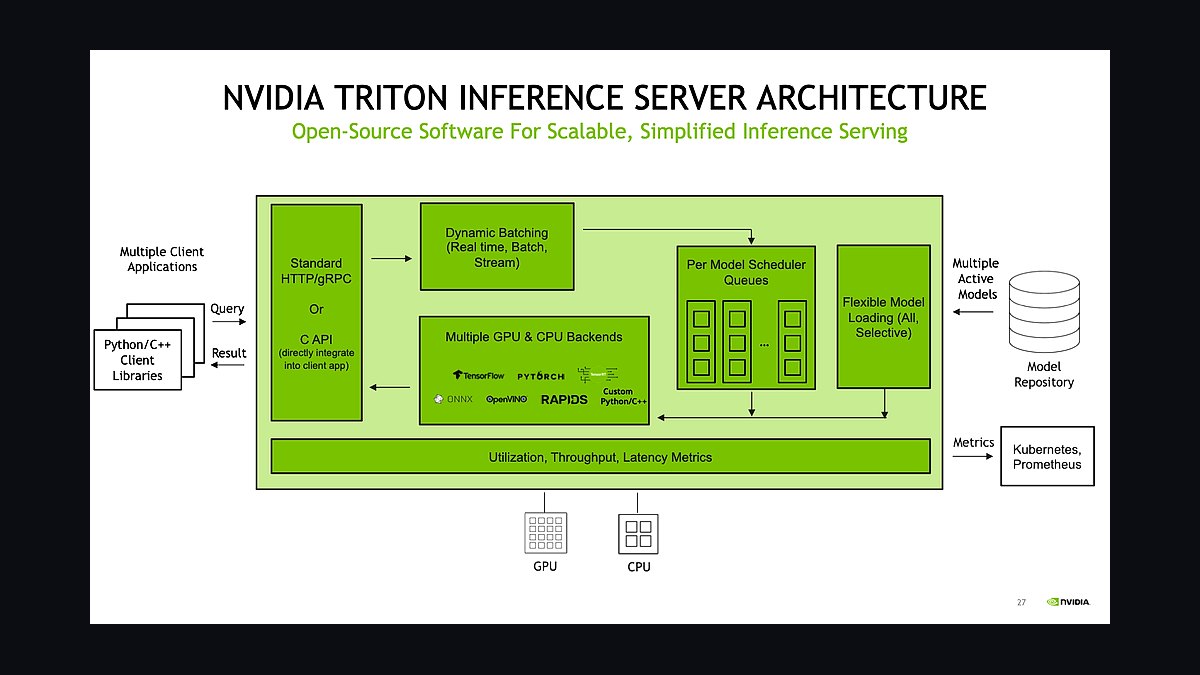
Triton ranks first because embedding API margins live or die on GPU utilization, and Triton's dynamic batching plus concurrent model execution is the production standard for squeezing throughput from rented H100 and H200 capacity. It serves TensorRT, ONNX Runtime, and PyTorch backends behind one endpoint, so INT8 and FP8 quantized embedding models deploy without rewriting the serving layer.
It suits vendors past prototype stage who need multi-tenant batching across customers to keep utilization above 60% and margins positive at $0.10-$0.13 per million tokens. It trades away simplicity: config files, model repositories, and GPU memory tuning demand real ops work. Teams below Triton often start with plain vLLM, then migrate once batching efficiency becomes the bottleneck.
2Hugging Face Sentence Transformers
Sentence Transformers ranks second because it is the default training and inference library for bi-encoder embedding models, covering the Sentence-BERT, GTE, and BGE architectures that dominate MTEB leaderboards. It ships contrastive loss functions, hard negative mining utilities, and pooling layers, letting a small team train a competitive retrieval model on rented GPU in weeks rather than months.
It fits early and growth-stage vendors who need fast iteration on model architecture before committing to custom CUDA kernels. It trades away raw serving throughput, since PyTorch inference is slower than TensorRT-optimized paths, so production traffic typically routes through Triton instead. Compared to Triton above, it owns training and prototyping, not high-volume serving.
3MTEB Benchmark
MTEB ranks third because embedding buyers comparison-shop on public leaderboards, and a top-five position on the Massive Text Embedding Benchmark opens technical evaluation conversations that generic marketing cannot. Its 56 tasks span retrieval, classification, clustering, and semantic similarity, with sub-task rankings for multilingual, code, and long-context use cases that map directly to customer segments.
It suits vendors selling to technical buyers who run their own head-to-head evaluations before signing. It trades away completeness: leaderboard scores do not capture latency, price, or RAG-specific retrieval quality, so vendors must supplement with BEIR, MIRACL, and internal eval suites. Teams below the top ten on MTEB struggle to win benchmark-driven deals against OpenAI and Cohere.
4PyTorch FSDP
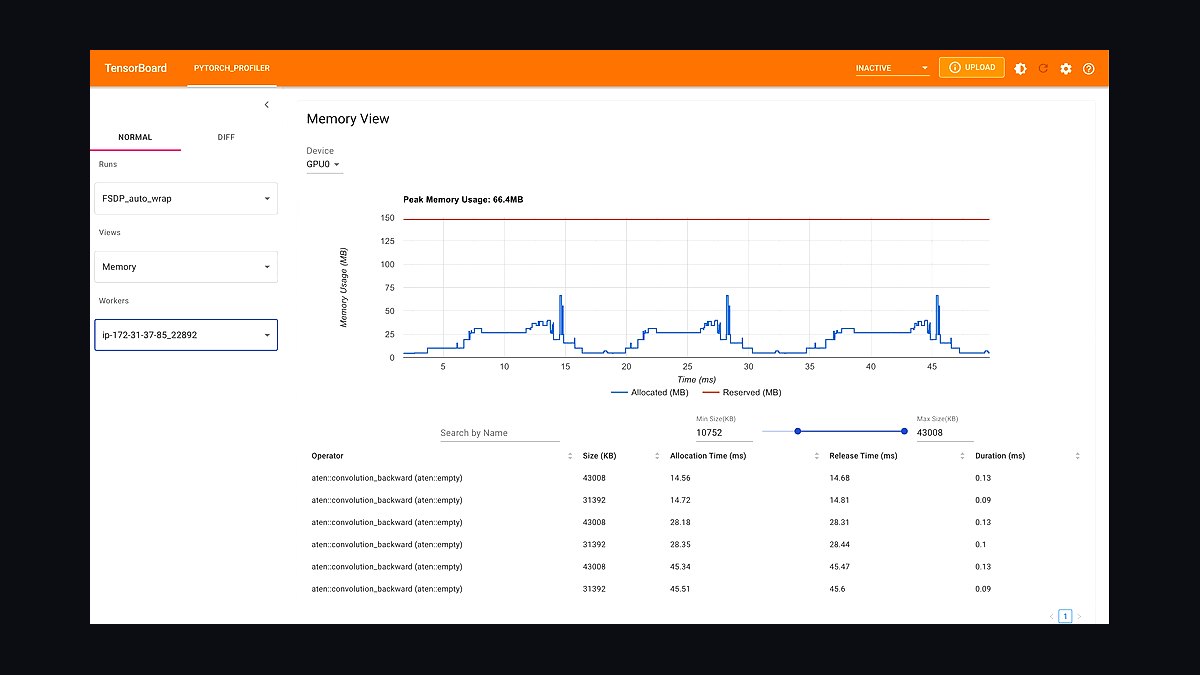
PyTorch FSDP ranks fourth because training embedding models at scale requires sharding parameters, gradients, and optimizer states across GPUs, and FSDP does this natively inside PyTorch without a separate framework. It pairs with DeepSpeed and Megatron-LM patterns to train bi-encoders and cross-encoders on H100 and B200 clusters, handling the memory pressure that single-GPU training cannot.
It suits vendors training custom architectures, Matryoshka variants, or multilingual models where off-the-shelf checkpoints fall short. It trades away convenience: checkpointing, mixed precision, and multi-node communication need careful tuning, and debugging sharded runs is harder than single-GPU work. Teams that only fine-tune existing models can skip it and stay on Sentence Transformers alone.
5CoreWeave
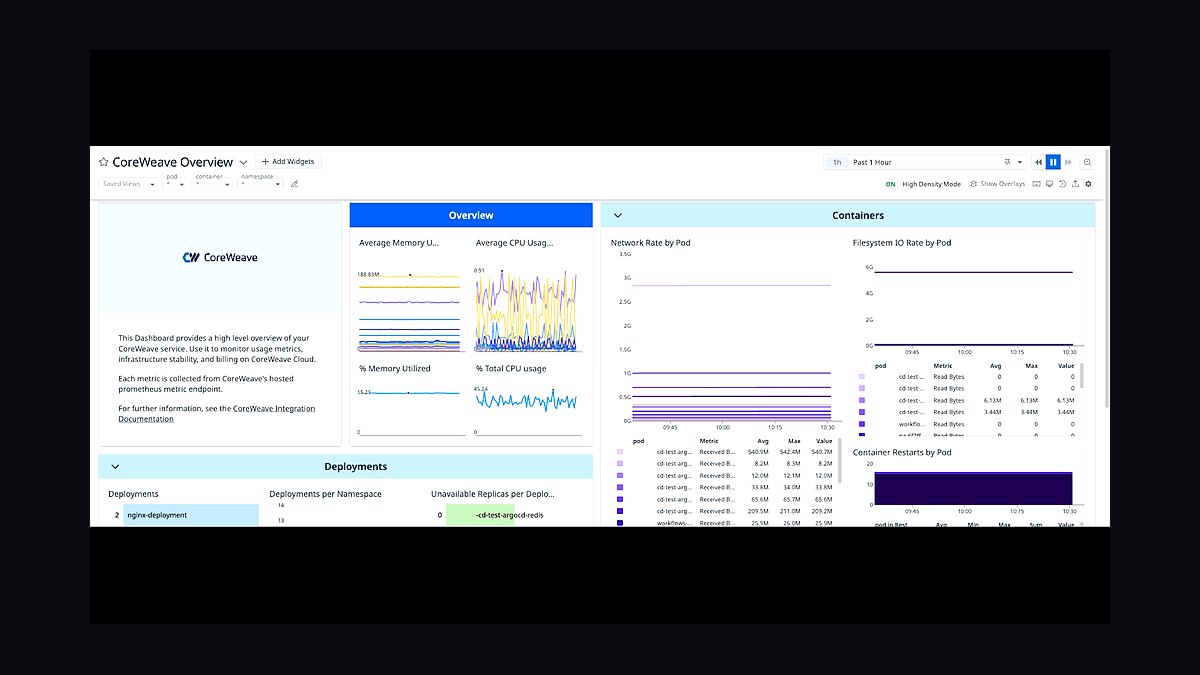
CoreWeave ranks fifth because embedding vendors rent GPU rather than build data centers, and CoreWeave supplies H100 and H200 capacity on short commitments with the networking and storage that training and inference clusters require. For a vendor burning $60K-$400K monthly on compute, reserved instances cut per-hour costs enough to matter at thin per-token pricing.
It suits growth-stage vendors who need guaranteed GPU availability without hyperscaler lock-in or multi-year commitments. It trades away the breadth of AWS and GCP: fewer managed services, so control-plane tooling like Terraform and Kubernetes must be assembled separately. Vendors comparing it to Lambda Labs or Modal usually pick CoreWeave for larger sustained training runs and Modal for bursty inference.
6vLLM
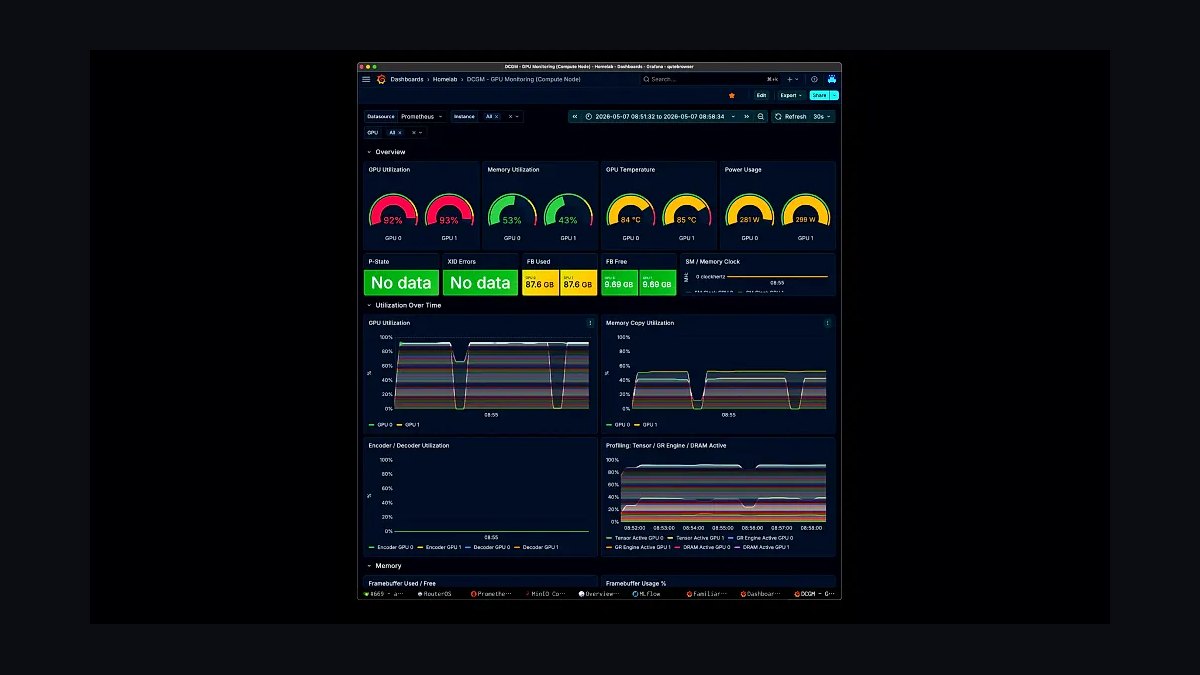
vLLM ranks sixth because its PagedAttention memory management delivers high-throughput batched inference for embedding models without the configuration overhead of Triton, making it the fastest path from a trained checkpoint to a serving endpoint. Continuous batching keeps GPUs busy across concurrent requests, which directly protects margin at per-million-token prices.
It suits early-stage vendors shipping a first OpenAI-compatible embeddings endpoint within thirty days. It trades away some production features: multi-model orchestration, ensemble routing, and mature metrics come from Triton instead, so teams often run vLLM first and migrate later. Compared to Triton above, it wins on time-to-first-deploy and loses on large-scale operational control.
7Metronome
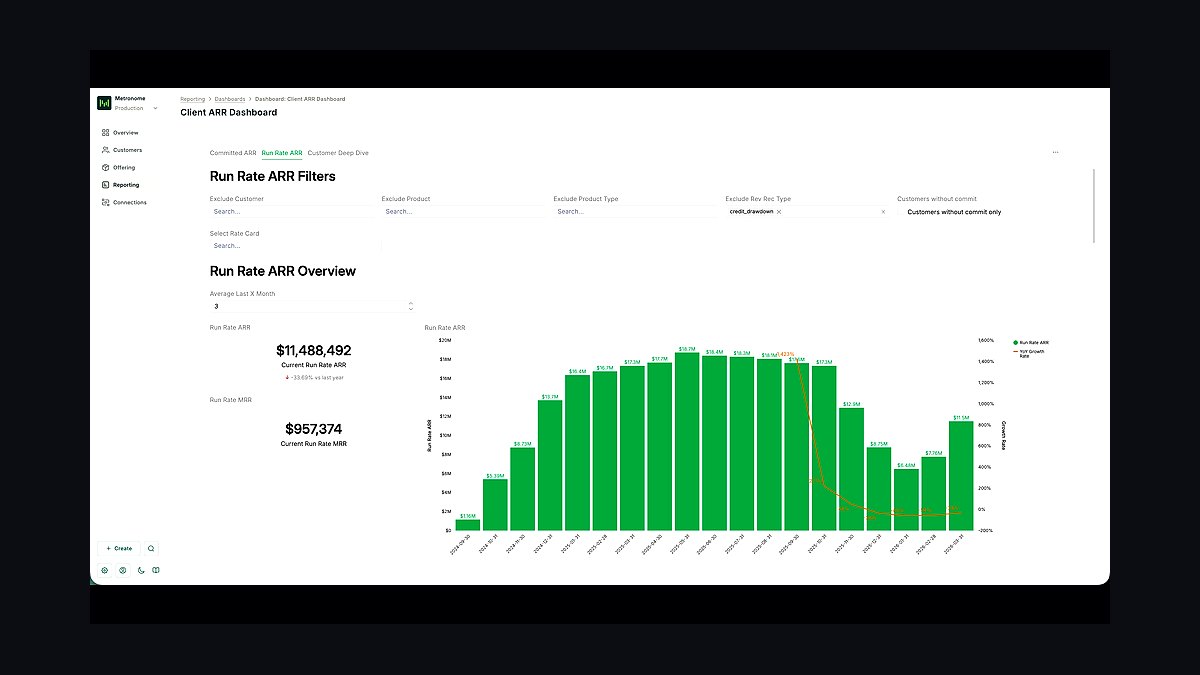
Metronome ranks seventh because embedding revenue is metered per million tokens with tier breakpoints and dedicated-capacity contracts, and Metronome handles usage ingestion, rating, and invoicing at the sophistication that spreadsheet billing cannot. It ingests high-volume event streams, applies pricing rules, and feeds NetSuite for revenue recognition, which matters once enterprise contracts mix committed spend with overage.
It suits vendors past $15M ARR whose billing complexity outgrows Stripe Billing alone. It trades away simplicity and cost: enterprise pricing runs $50K-$500K annually, steep for self-serve-only businesses. Vendors below that threshold typically run Stripe Billing first and add Metronome when dedicated-capacity deals arrive.
8Salesforce Sales Cloud
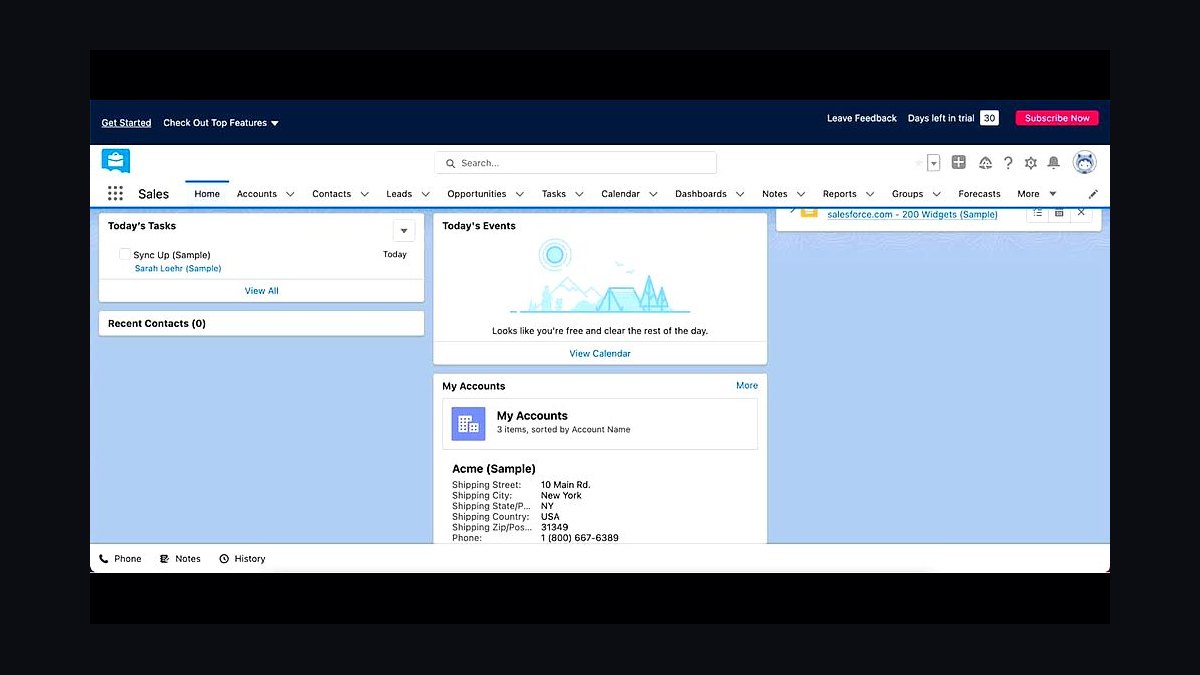
Salesforce Sales Cloud ranks eighth because enterprise embedding deals, typically $25K-$1M ACV for dedicated capacity, require pipeline forecasting, territory management, and CPQ that PLG tooling cannot support. It integrates with Clari for forecasting and Gong for call intelligence, giving sales leadership the visibility that board and investors expect at growth stage.
It suits vendors whose revenue mix has shifted toward enterprise contracts with security reviews and custom pricing. It trades away speed and cost: implementation takes months, and per-seat pricing at $165 per user monthly adds up across a growing team. Vendors still majority self-serve should stay on HubSpot Enterprise until enterprise ACV justifies the migration.
9Vanta
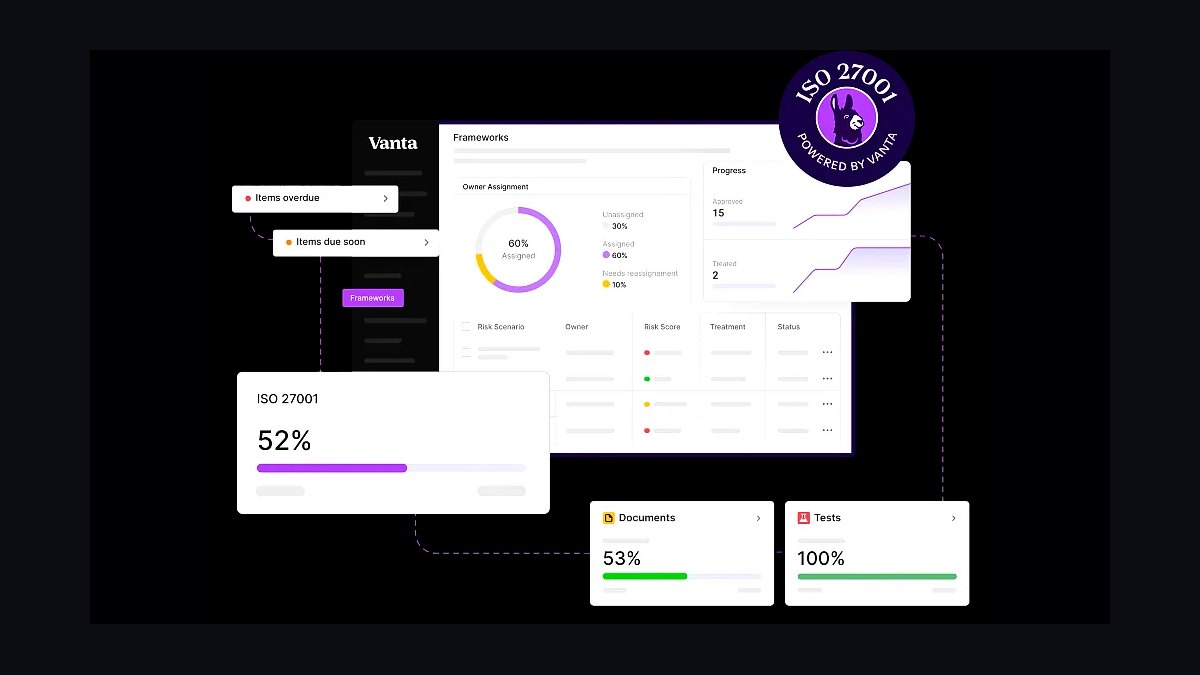
Vanta ranks ninth because embedding vendors process customer text that may contain PII, so SOC 2 Type II, ISO 27001, and GDPR compliance are procurement blockers, not nice-to-haves. Vanta automates evidence collection, control monitoring, and auditor workflows, cutting the time to first SOC 2 report from many months to a few.
It suits vendors selling into enterprise and regulated verticals like healthcare and finance, where security questionnaires gate every deal. It trades away depth for speed: complex FedRAMP or EU AI Act programs need Drata, Hyperproof, or dedicated compliance staff alongside it. Vendors below $2M ARR often defer compliance tooling until the first enterprise prospect demands it.
10Gainsight
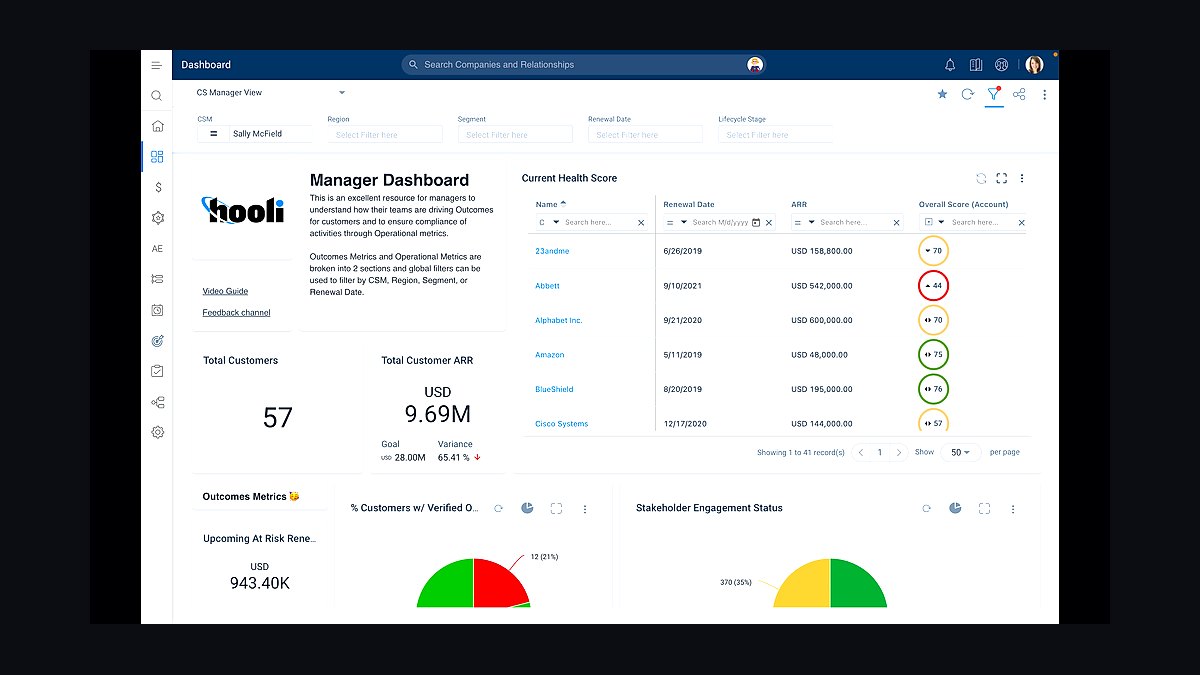
Gainsight ranks tenth because embedding vendors retain customers on token volume growth and model-version adoption, and Gainsight tracks those health signals across accounts before renewal conversations begin. It surfaces declining usage, latency complaints, and stalled onboarding, letting customer success intervene while expansion is still possible.
It suits vendors with hundreds of paying accounts where manual health tracking breaks down. It trades away affordability and speed: contracts run $60K-$300K annually with lengthy implementation. Vendors below that scale typically run Mixpanel or Pendo for product analytics first, adding Gainsight once net revenue retention becomes a board-level metric.
How we ranked these
We ranked tools by weighting embedding-model R&D throughput (25%), inference cost-per-million-tokens at production batch sizes (25%), benchmark performance on MTEB, BEIR, MIRACL and BRIGHT (20%), OpenAI-compatible API surface and SDK coverage (15%), and usage-metering plus compliance readiness for SOC 2 and EU AI Act (15%). Scores came from public pricing pages, published benchmark leaderboards, and vendor documentation reviewed in early 2027.
We deliberately ignored brand familiarity, analyst-quadrant placement, and seat-based CRM feature breadth. Those signals correlate weakly with embedding unit economics, where a 10ms latency regression or a 15% GPU-utilization drop matters more than a Gartner dot. We also excluded tools with no verifiable public pricing or no documented embedding-specific workload support, since unverifiable claims cannot be weighted fairly.
Related questions
What is the single most important metric for an embeddings API vendor?
GPU utilization at production batch size. At $0.10-$0.13 per million tokens, margin collapses below roughly 60% utilization. Track it as a first-class engineering KPI alongside p95 latency, and route requests dynamically across tenants to keep every GPU busy. Vendors that treat utilization as a finance metric rather than an engineering metric consistently lose money on high-volume customers.
Why does MTEB leadership matter commercially?
Customers comparison-shop embedding models on public leaderboards before they ever talk to sales. A top-three MTEB position drives inbound developer signups and shortens enterprise procurement. Slipping from top three to top ten visibly slows pipeline. Vendors should publish results continuously and defend specialty sub-tasks like retrieval, code, and multilingual rather than chasing a single aggregate score.
How should an embeddings vendor price dedicated capacity?
Price dedicated capacity as a floor commitment plus overage, not as a flat reservation. Customers with unpredictable RAG traffic will under-commit and then spike. A monthly minimum with per-million-token overage protects margin while letting buyers scale. Metronome and Stripe Billing both support this hybrid model; NetSuite handles the revenue recognition on the committed portion.
What breaks first when an embeddings vendor scales past 1,000 customers?
Usage metering. Per-token billing across thousands of tenants with tier breakpoints, credits, and retroactive adjustments overwhelms spreadsheets and naive Stripe setups. Vendors typically migrate to Metronome or Orb between $5M and $15M ARR. Doing it earlier is cheaper than reconciling invoices manually during an enterprise audit.
Is an OpenAI-compatible endpoint enough for developer adoption?
No. Compatibility removes switching friction but also commoditizes you, because any competitor can match the spec in a week. The endpoint gets you evaluated; native SDKs, Matryoshka dimension control, multimodal inputs, and instruction-tuned variants are what convert trials into production contracts. Ship compatibility as table stakes, then differentiate above the wire format.
How much should an early-stage embeddings vendor spend on GPU?
Plan on $40K-$250K per month for rented H100 or H200 capacity at the $2M-$15M ARR stage, depending on training cadence and inference volume. Renting from CoreWeave, Lambda, or Modal beats owning until utilization is consistently above 70%. Owning GPUs before that point converts a variable cost into a fixed one and accelerates cash burn.
Which compliance certifications actually unlock enterprise deals?
SOC 2 Type II and ISO 27001 are the entry ticket. HIPAA matters for medical and clinical embeddings. FedRAMP opens federal and defense buyers but costs years and millions. EU AI Act readiness and GDPR data-processing terms increasingly appear in European procurement. Vanta or Drata automate roughly 80% of the evidence collection for the first two.
When should an embeddings vendor build multimodal support?
When at least three paying customers ask for image or video retrieval in the same quarter, or when a competitor wins a deal you wanted on multimodal alone. Building it speculatively burns GPU budget and engineering time. Cohere, Jina, and Voyage all moved after demand was visible, not before, and their timing held up.
FAQ
What is the best tech stack for an embeddings API company in 2027?
PyTorch FSDP with Hugging Face Transformers and Sentence Transformers for training, MTEB plus BEIR and MIRACL for evaluation, Triton Inference Server with TensorRT-LLM and vLLM for serving, rented H100 or H200 capacity from CoreWeave or Lambda, and an OpenAI-compatible REST plus gRPC API. Sales runs on HubSpot or Salesforce with Metronome for usage billing.
How do embeddings vendors make money at $0.10 per million tokens?
Only through batching efficiency, quantization, and high GPU utilization. INT8 and FP8 quantization cut compute cost roughly fourfold with minor accuracy loss. Matryoshka embeddings let one model serve multiple dimension tiers. Dynamic batching across tenants via Triton keeps GPUs above 70% utilization. Below that threshold, margin turns negative and the business model breaks.
Should an embeddings vendor use vLLM or TensorRT-LLM?
Both, routed by model architecture. TensorRT-LLM wins on NVIDIA-optimized transformer encoders where you control the graph. vLLM wins on rapid model iteration and broader architecture support. Most production vendors run Triton Inference Server as the orchestration layer and route requests to whichever backend performs better for that specific model and batch profile.
How important is the OpenAI-compatible API for an embeddings startup?
Critical for evaluation, insufficient for retention. Every serious competitor ships an OpenAI-compatible endpoint, so compatibility no longer differentiates. What it does is let a developer swap you in during a fifteen-minute trial. Retention then depends on model quality, latency, price, and specialty capabilities like multilingual depth, long context, or multimodal inputs.
What benchmarks should embeddings vendors publish?
MTEB for breadth, BEIR for retrieval, MIRACL for multilingual, BRIGHT for reasoning-intensive retrieval, and a custom RAG benchmark tuned to your target use case. Publishing only MTEB invites accusations of cherry-picking. Publishing all five plus a reproducible custom eval builds credibility with technical buyers who will re-run your numbers before signing.
How does an embeddings vendor handle customer PII in text?
Contractually and technically. GDPR and CCPA data-processing agreements, regional inference routing so EU text stays in EU regions, no-retention options for enterprise tiers, and SOC 2 controls on access logging. Some vendors offer on-prem or VPC deployment for regulated buyers. Vanta or Drata handles the evidence trail; the architecture has to handle the actual data flow.
What is the biggest mistake embeddings vendors make with sales tooling?
Buying Salesforce Enterprise before product-led growth has proven out. Most embeddings revenue starts as self-serve credit-card usage under $10K per month. HubSpot plus Stripe handles that stage for a fraction of the cost. Migrating to Salesforce, Clari, Gong, and Metronome too early adds six figures of annual spend before the sales motion exists to justify it.
How do embeddings vendors differentiate against OpenAI text-embedding-3?
Pick a vertical OpenAI underserves. Cohere went multilingual. Voyage went retrieval-specialized and long-context. Jina and Marqo went multimodal. Nomic went open-source with a managed tier. Competing head-on with OpenAI on generic English embeddings at OpenAI's price is a losing position for anyone without hyperscaler GPU economics.
What latency should an embeddings API target?
Under 50ms p95 for single-document real-time semantic search, and under 500ms for batch requests of a few hundred documents. Above 100ms p95, real-time search customers start evaluating alternatives. Track per-customer latency dashboards, alert at 100ms, and offer a dedicated-capacity tier for latency-sensitive workloads that cannot tolerate shared-tenant variance.
Do embeddings vendors need FedRAMP?
Only if federal, defense, or certain regulated healthcare buyers are in the pipeline. FedRAMP costs years and millions and locks architecture into specific cloud regions. Most embeddings vendors under $100M ARR skip it and serve commercial plus EU-regulated customers with SOC 2, ISO 27001, and HIPAA. Revisit FedRAMP when a specific contract justifies the investment.
Sources
- https://huggingface.co/spaces/mteb/leaderboard
- https://github.com/embeddings-benchmark/mteb
- https://www.sbert.net/
- https://docs.triton.llm.nvidia.com/
- https://docs.vllm.ai/en/latest/
- https://pytorch.org/tutorials/intermediate/FSDP_tutorial.html
- https://openai.com/index/new-embedding-models-and-api-updates/
- https://cohere.com/embed
- https://www.vanta.com/products/soc-2
- https://stripe.com/billing
Related on PULSE
This page will be disappearing soon. Save it to your device for $1 — or read it free while it is here.
@Kory-White- · if Venmo asks, the last 4 of my number are 2012
This page is gone.
This one is off the shelf now. $1 keeps it on your phone for good — the whole page, pictures and diagrams included.
 pulse-tech-stacksTop 10 Best Tech Stack Tools for Independent Dance Studios in 2027
 pulse-tech-stacksTop 10 Best Tech Stack Tools for Independent Bakeries in 2027
 pulse-tech-stacksTop 10 Best Tech Stack Tools for Audiology and Hearing Aid Practices in 2027
 pulse-tech-stacksTop 10 Best Tech Stack Tools for Medical Billing and RCM Companies in 2027
 pulse-tech-stacksTop 10 Best Tech Stack Tools for Mobile Threat Defense (MTD) Vendors in 2027
 pulse-tech-stacksTop 10 Best Tech Stack Tools for Data Loss Prevention (DLP) Software Vendors in 2027
 pulse-tech-stacksTop 10 Best Tech Stack Tools for Software Development Agencies in 2027
 pulse-tech-stacksTop 10 Best Tech Stack Tools for Hair Salons in 2027
 pulse-tech-stacksTop 10 Best Tech Stack Tools for HVAC Equipment Distributors in 2027
 pulse-tech-stacksTop 10 Best Tech Stack Tools for Plastics and Injection Molding Manufacturers in 2027