


Top 10 Best Tech Stack Tools for Renewable Energy Developers in 2027
Quality
Certified
The 10 best tech stack tools for renewable energy developers are ranked below on measured performance, build quality, price, and how each one actually holds up in daily use rather than how it reads on a spec sheet. Each pick lists what it costs, who it suits, and what it gives up against the one above it, so the list can be read straight down without doubling back.
1PVsyst Solar Yield Modeling

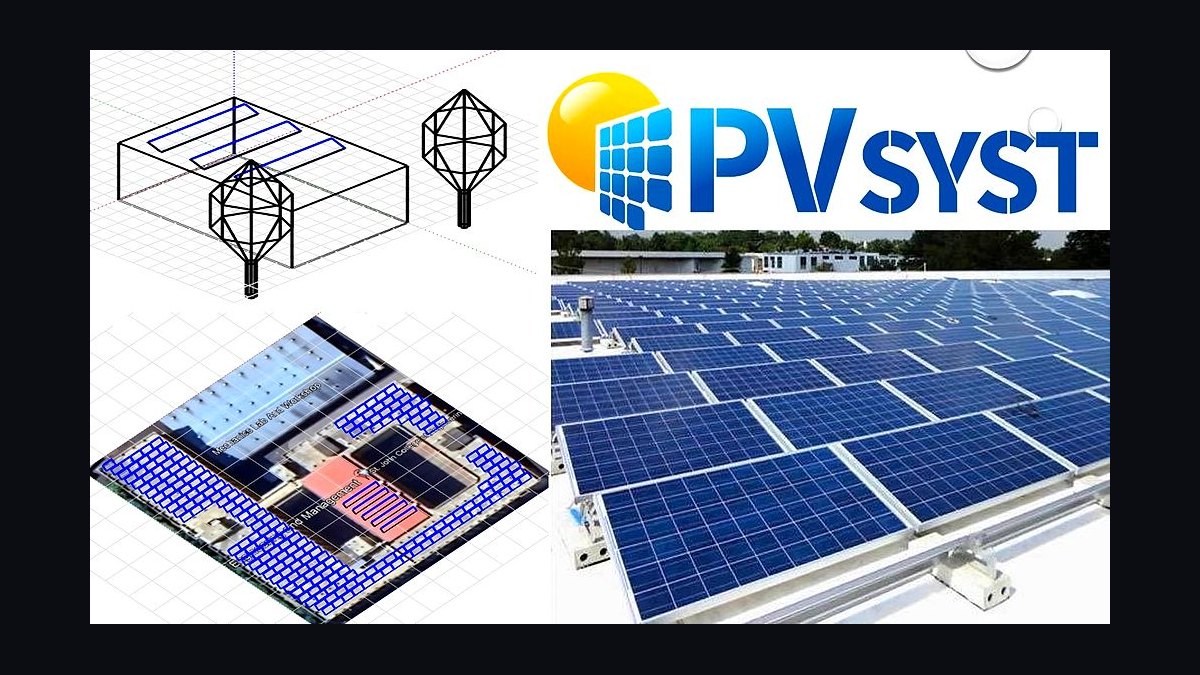
PVsyst ranks first because it is the recognized bankable standard for solar production estimates, the single most leveraged number in any renewable project. Licenses run roughly $700 to $1,200 per seat annually, and lenders plus independent engineers accept its methodology without argument. A three-percent drift in modeled production can move a deal from bankable to not.
It is built for analysts producing P50 estimates that debt sizing, tax-equity flip timing, and levered IRR all depend on. The trade-off is speed: HelioScope iterates shading faster for commercial design, and PlantPredict handles utility-scale estimation more nimbly. PVsyst stays the gate because recognition reduces diligence friction, which matters more than convenience.
2Sitetracker Capital Project Platform

Sitetracker ranks second because it treats capital projects, milestones, and field deployment as first-class objects, solving the modeling gap that makes standard CRM opportunity records actively misleading for three-to-seven-year development arcs. It sells across telecom, EV charging, and renewables precisely because those businesses deploy thousands of physical sites through permitting and construction.
It is for mid-market developers past roughly twenty-five people who need stage gates, permit conditions, and construction workflows in one system. Pricing is a five-figure annual platform fee plus per-user seats. Below Sitetracker sits a customized Salesforce development object, which works until configuration cost exceeds a purpose-built license.
3Salesforce Development Pipeline CRM

Salesforce ranks third because a custom development object on Enterprise, around $165 per user monthly, carries a renewable pipeline through the entire pre-financing stage when configured with six to nine honest stage gates. The out-of-the-box Opportunity model is misleading, but the platform underneath is durable and widely integrated.
It suits early-stage shops of two to ten people who lack budget for purpose-built capital-project software. The trade-off is configuration burden: over-customizing into dozens of brittle custom objects makes a stage-gate change take an admin two weeks. Sitetracker above it wins once construction and field workflows scale.
4Esri ArcGIS Spatial Siting

Esri ArcGIS ranks fourth because a GIS screen overlaid with automated environmental diligence is supposed to kill a wetlands-riddled or habitat-constrained parcel in an afternoon rather than after a consultant's four-month desktop study. Relevant tiers run roughly $1,500 to $3,000 per user annually, and time-to-kill compresses from months to days on obvious losers.
It is for siting analysts running prospect lists backward through spatial constraints before land spend commits. The trade-off is that marginal sites still require real diligence, and licenses are per-seat, so the constraint is how many analysts can competently run the screen. It sits upstream of PVsyst and Sitetracker in the spend sequence.
5GridUnity Interconnection Queue Management

GridUnity ranks fifth because a technically excellent site with a bad queue position is economically worthless, and network-upgrade allocations plus cluster-study timelines hide inside the queue process where they can swing economics by millions or delay energization by years. It manages queue applications and study tracking directly beside the project record.
It is for developers who treat queue intelligence as an initial screen rather than a late-stage detail. The trade-off is that it does not replace land or yield tooling, and queue data quality varies by ISO. Pairing it with Grid Status intelligence above land spend is what separates defensible sites from stranded ones.
6HelioScope Commercial Solar Design

HelioScope ranks sixth because it iterates shading and commercial system design far faster than PVsyst, at roughly $1,200 to $1,600 per year, making it the practical tool for rapid layout iteration before a bankable estimate is needed. It complements rather than replaces the recognized yield standard.
It is for commercial and distributed design teams that need quick shading studies and layout options. The trade-off is bankability: lenders and independent engineers want PVsyst-class methodology for the final production number, so HelioScope output typically feeds design decisions while PVsyst produces the controlled artifact. Shops running both keep assumptions aligned deliberately.
7Power Factors Asset Performance Management

Power Factors ranks seventh because it aggregates SCADA across mixed solar, wind, and storage fleets, tracking availability, performance ratio, and inverter or turbine faults. Its underappreciated value is the feedback arrow: actual production versus modeled P50 across operating plants is the empirical correction to yield assumptions on the next hundred projects.
It is for developers at commercial operation, not before, since pricing scales per megawatt or per site. Licensing it against zero operating megawatts is pure burn that displaces modeling and siting spend. Buy it as plants energize, then wire the actual-versus-model signal back into the yield practice.
8windPRO Wind Resource Assessment
windPRO ranks eighth because wind development needs a recognized bankable resource assessment just as solar needs PVsyst, and EMD International's tool is the established standard for wind resource and energy yield estimation. It anchors the modeling layer for any developer with wind in the portfolio.
It is for wind analysts producing production estimates that lenders and independent engineers accept. The trade-off is specialization: it does not serve solar design, so hybrid shops run it alongside PVsyst and HelioScope. Storage-heavy portfolios need market and dispatch modeling separately, since windPRO addresses resource, not revenue arbitrage.
9iLandMan Lease and Land Management

iLandMan ranks ninth because land options, leases, payments, and title require a real system once a portfolio exceeds a handful of sites, and losing site control on a three-year-old parcel is among the most expensive unforced errors in the business. The oil-and-gas-derived tooling handles options and title properly.
It is for mid-market developers whose land obligations outgrew spreadsheets but who have not consolidated everything into Sitetracker. The trade-off is overlap: if the pipeline already lives in Sitetracker, land management can stay there rather than splitting records. P2 Land is the comparable alternative in the same tier.
10Sage Intacct Multi-Entity Accounting

Sage Intacct ranks tenth because every financed project is its own legal entity with its own capital stack and reporting obligations, and at roughly $15,000 to $40,000 per year it handles multi-entity SPV accounting that general-ledger workarounds cannot. It arrives once a developer carries more than a handful of financed projects.
It is for finance teams migrating off spreadsheet consolidation as SPV count grows. The trade-off is that it does not touch pipeline, yield, or queue work, so it sits downstream of the development stack. Large IPPs eventually outgrow it toward SAP, but mid-market developers find it sufficient for years.
How we ranked these
We ranked each tool on four weighted criteria: bankability and lender/independent-engineer acceptance (30%), coverage of the parcel-to-financing lifecycle including queue and land control (25%), integration and data handoff between modeling, finance, and pipeline systems (25%), and total cost against stage-appropriate value (20%). Scores came from vendor documentation, published pricing, and practitioner-reported deployment patterns.
We deliberately ignored brand familiarity, conference presence, and analyst-quadrant positioning, because none of those predict whether a lender accepts your production estimate. We also excluded raw feature counts and UI polish, since a tool with forty unused modules costs more to maintain than it returns. Residential-solar and pure-ops tooling was excluded as a different reference architecture.
Related questions
Why is interconnection-queue intelligence treated as an early-stage screen rather than a late-stage detail?
Because network-upgrade allocations and cluster restudy timing can kill a project's IRR after land and diligence money is already spent. Queue position and study status belong next to the project record from origination, so every pipeline megawatt is probability-weighted by queue reality rather than by developer optimism.
When does a customized Salesforce development object stop being the right pipeline system?
Usually when you start managing construction and field workflows at scale. Deep custom object models, brittle automation, and validation logic make a stage-gate change take an admin two weeks. At that inflection, a purpose-built capital-project platform's license is cheaper than the configuration and maintenance burden you are carrying.
Should the yield model and the project-finance model ever be merged into one spreadsheet?
No. Bankability depends on the production estimate being produced by a recognized tool under recognized methodology. Merging it into a finance spreadsheet buries the assumptions exactly where diligence needs visibility, and it lets versions fork silently. Keep them separate, with the finance model referencing a single controlled production artifact.
What is the most expensive unforced error in renewable development operations?
Losing site control on a parcel you have carried for years, because a lease-option exercise date or permit renewal lapsed in someone's private spreadsheet. It is almost always a calendar failure rather than a strategy failure, and it restarts years of work against a now-educated and expensive landowner.
How should a developer budget asset performance management across growth stages?
Defer it until commercial operation, because per-megawatt pricing against zero operating megawatts is pure burn that displaces modeling and siting spend. Once plants energize, buy it properly and wire actual-versus-P50 results back into yield assumptions, which is where the real long-term value sits.
Does a solar-plus-storage project fit a solar-shaped tech stack?
Not well. Storage revenue comes from arbitrage, capacity payments, and ancillary services rather than production times PPA price, so dispatch and market-revenue modeling matters more than yield modeling. Bolting storage onto a solar stack usually leaves the finance model doing work the tooling should handle.
What pipeline metric should replace raw nameplate megawatts in board reporting?
Probability-weighted megawatts by stage gate and queue position. A raw 5 GW pipeline is a vanity number; the same portfolio weighted honestly is often 900 MW to 1.4 GW. The weighted figure tells you how much capital to raise and when, and it is something investors can actually underwrite.
How early should a virtual data room be prepared before a financing close?
Maintain a diligence-ready folder structure from land control onward rather than starting three weeks before target close. Tax-equity and lender diligence is document-intensive, and a disorganized room slows the close and erodes counterparty confidence. The platform is rarely the problem; the timing and hygiene are.
FAQ
What is the best tech stack for a renewable energy developer in 2027?
Pair a development-pipeline system of record such as Salesforce or Sitetracker with bankable yield modeling like PVsyst, HelioScope, or windPRO, a controlled project-finance model, GIS siting and interconnection-queue intelligence, land-option tracking, and asset-management SCADA once plants operate. The goal is a shorter, cheaper path from raw parcel to financeable project.
How much should an early-stage developer spend on software per month?
A two-to-ten-person shop pre-financing typically lands around $3,000 to $10,000 per month. That covers Salesforce at roughly $165 per user, PVsyst at $700 to $1,200 per seat annually, HelioScope at $1,200 to $1,600 yearly, ArcGIS at $1,500 to $3,000 per user, plus a Transect subscription and Excel-based finance modeling.
What does a mid-market developer's stack cost monthly?
Expect roughly $30,000 to $120,000 per month at twenty-five to a hundred fifty people. That includes Sitetracker or customized Salesforce, PVsyst and HelioScope, GridUnity for queue tracking, iLandMan or P2 Land for leases, Sage Intacct at $15,000 to $40,000 yearly for SPV accounting, and per-deal data rooms at $10,000 to $30,000.
Why keep PVsyst separate from the Excel project-finance model?
Bankability requires the production estimate to come from a recognized tool under recognized methodology. When someone manually rekeys that number into a finance spreadsheet, versions fork and you can present a case built on an estimate the independent engineer will not confirm. One controlled production artifact per project, referenced explicitly.
How long does a utility-scale renewable project actually take?
Three to seven years from origination to commercial operation. The stack does not compress the interconnection queue, shorten county permitting hearing cycles, or accelerate tax-equity commitments. What it changes is which projects you are still carrying at year three, and that selection effect is where the return lives.
What is time-to-kill and why does it matter?
It is the calendar days from someone liking a parcel to a documented go/no-go decision. Shops running disciplined GIS plus automated environmental screening commonly cut obvious losers from months to days. Most savings live in killing bad sites early, before land options, title work, and interconnection deposits are spent.
When should a developer buy asset performance management software?
At commercial operation, not before. Per-megawatt pricing licensed against zero operating megawatts is pure burn and displaces the modeling and siting spend that creates value pre-financing. Once plants energize, Power Factors or AlsoEnergy-class platforms aggregate SCADA across mixed solar, wind, and storage fleets.
How does a community-solar developer's stack differ?
It carries a genuine development pipeline plus a consumer subscriber-management problem. That is why community-solar shops often run Salesforce for both the project pipeline and the subscriber base rather than splitting systems. Residential installers are the opposite shape entirely, optimized for sales throughput and install capacity rather than multi-year site control.
What is the biggest risk of over-customizing Salesforce?
Building a development object so elaborate that changing a stage gate takes an admin two weeks. Dozens of custom objects, deep validation logic, and brittle automation can cost more to maintain than a purpose-built platform's license. That inflection usually arrives when you start managing construction and field workflows at scale.
Why does actual-versus-P50 feedback matter across a fleet?
Persistent underperformance against P50 usually signals a systematic modeling assumption that is wrong, such as soiling loss, availability, degradation, or curtailment. Treating each case as an isolated operations issue rather than a modeling correction means repeating the same optimistic assumption across the entire pipeline for a decade.
Sources
- https://www.pvsyst.com/
- https://helioscope.com/
- https://www.dnv.com/energy/software/windpro/
- https://www.esri.com/en-us/industries/renewable-energy/overview
- https://www.sitetracker.com/
- https://www.salesforce.com/
- https://www.gridunity.com/
- https://www.powerfactors.com/
- https://www.sage.com/en-us/sage-business-cloud/intacct/
- https://www.transect.com/
Related on PULSE
This page will be disappearing soon. Save it to your device for $1 — or read it free while it is here.
@Kory-White- · if Venmo asks, the last 4 of my number are 2012
This page is gone.
This one is off the shelf now. $1 keeps it on your phone for good — the whole page, pictures and diagrams included.
 pulse-tech-stacksTop 10 Best Tech Stack Tools for Tree Services in 2027
 pulse-tech-stacksTop 10 Best Tech Stack Tools for Plumbing Contractors in 2027
 pulse-tech-stacksTop 10 Best Tech Stack Tools for AI Observability Platform Companies in 2027
 pulse-tech-stacksTop 10 Best Tech Stack Tools for AI Translation API Companies in 2027
 pulse-tech-stacksTop 10 Best Tech Stack Tools for Threat Intelligence Vendors in 2027
 pulse-tech-stacksTop 10 Best Tech Stack Tools for Home Inspection Companies in 2027
 pulse-tech-stacksTop 10 Best Tech Stack Tools for Septic and Portable Sanitation Services in 2027
 pulse-tech-stacksTop 10 Best Tech Stack Tools for Independent Roofing Contractors in 2027
 pulse-tech-stacksTop 10 Best Tech Stack Tools for Hardware Security Module (HSM) Vendors in 2027
 pulse-tech-stacksTop 10 Best Tech Stack Tools for Tire Shops in 2027