


Top 10 Best Tech Stack Tools for Welding and Metal Fabrication Shops in 2027
Quality
Certified

The 10 best tech stack tools for welding and metal fabrication shops are ranked below on measured performance, build quality, price, and how each one actually holds up in daily use rather than how it reads on a spec sheet. Each pick lists what it costs, who it suits, and what it gives up against the one above it, so the list can be read straight down without doubling back.
1JobBOSS² by ECI

JobBOSS² earns the top slot because it is the system of record for custom job-shop quoting, job costing, scheduling, and purchasing, and it is the longest-standing default for North American fab shops. Expect roughly $15,000–$40,000 first-year implementation plus $100–$300 per user per month. Its estimating and shop-floor data collection are battle-tested, which is why it anchors the stack.
It fits high-mix, low-volume weldment and general fabrication shops that win work on quote turnaround. It trades away deep structural-steel piece-mark tracking that STRUMIS provides, so structural fabricators often outgrow it. Compared with Global Shop Solutions below, JobBOSS² is the safer small-to-mid pick; Global Shop scales further.
2Global Shop Solutions ERP
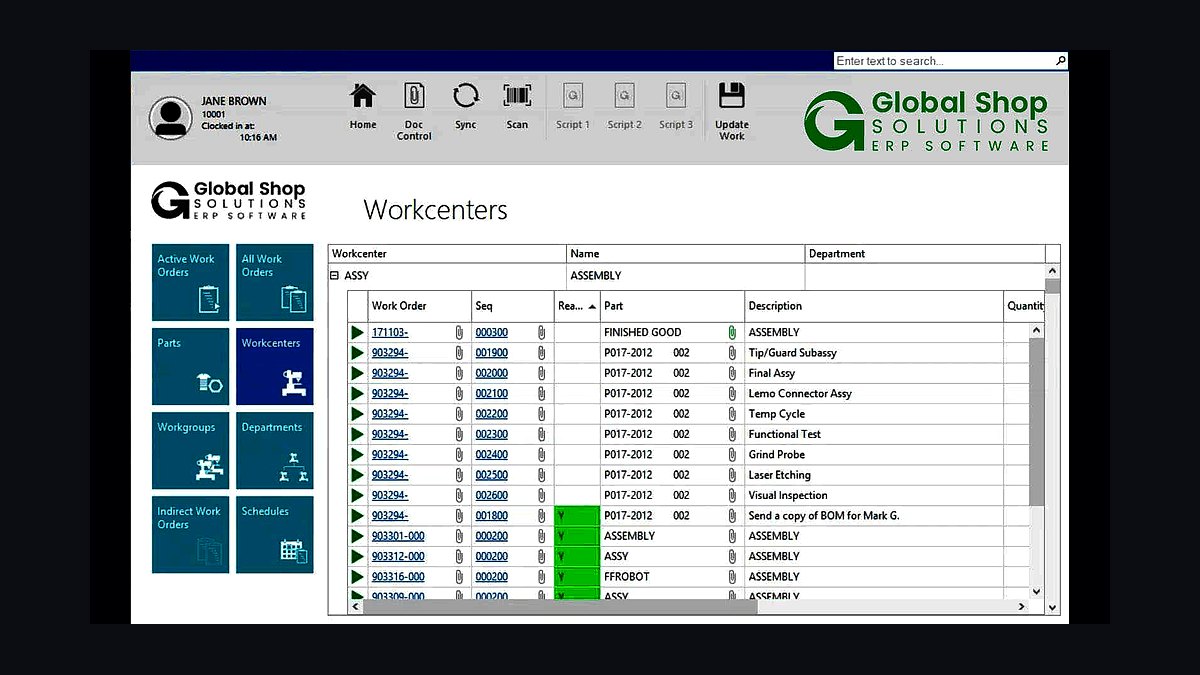
Global Shop Solutions ranks second because it scales further than JobBOSS² for larger fabrication operations while still owning quoting, routings, job cost, and scheduling in one system. It is a full manufacturing ERP with native quality and data-collection modules, so shops avoid bolting on separate tools. Pricing is quote-based and typically runs above JobBOSS² at implementation.
It suits mid-size fabricators with 10–60 employees that need more depth in scheduling and financials than a small-shop ERP delivers. It trades away the fast, lightweight usability smaller shops prefer in Fulcrum. Against JobBOSS² above, Global Shop is the heavier, more configurable platform; below it, STRUMIS is the structural-steel specialist.
3STRUMIS Steel Fabrication Management
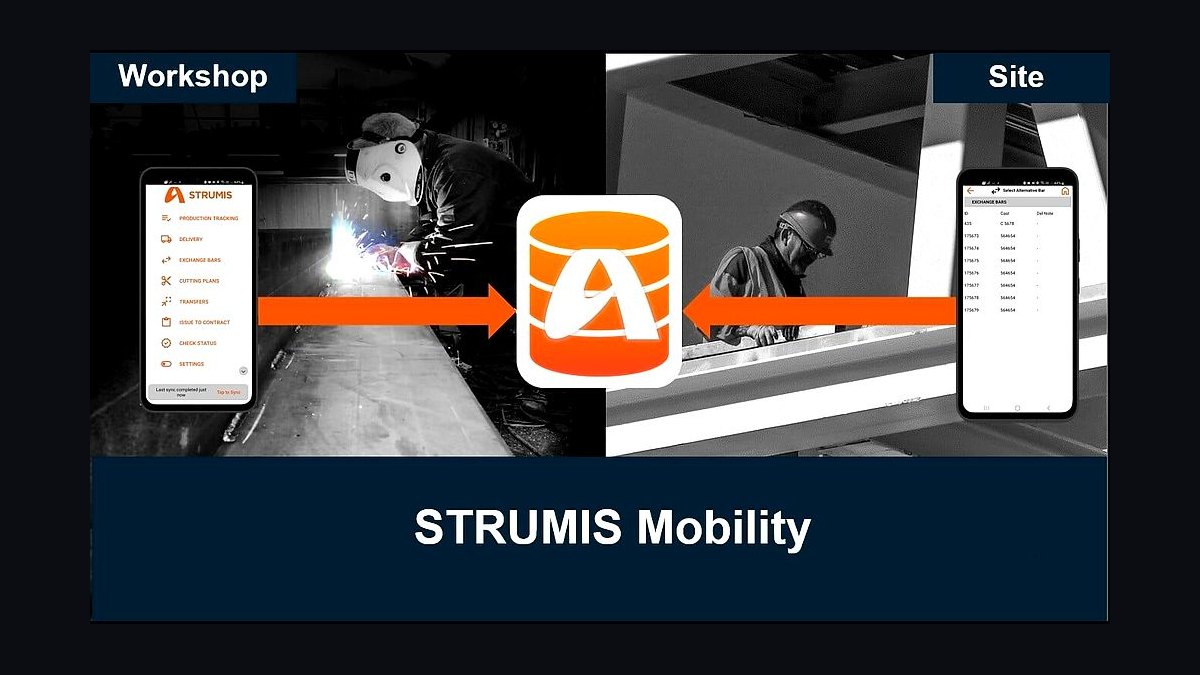
STRUMIS takes third because structural-steel fabricators need purpose-built steel estimating, advanced linear and plate nesting, procurement against mill certs, and production tracking by piece-mark — none of which a generic job-shop ERP handles natively. Pricing is quote-based, commonly $20,000–$60,000+ depending on stations and modules. It is the standard for AISC-certified building-construction work.
It is for structural fabricators buying and tracking tons of beam, plate, and tube, not general weldment shops. It trades away the broad job-shop flexibility of JobBOSS² and Global Shop, and it costs more to implement. Against Global Shop above, STRUMIS is narrower but far deeper on steel-specific nesting and traceability.
4Tekla Structures
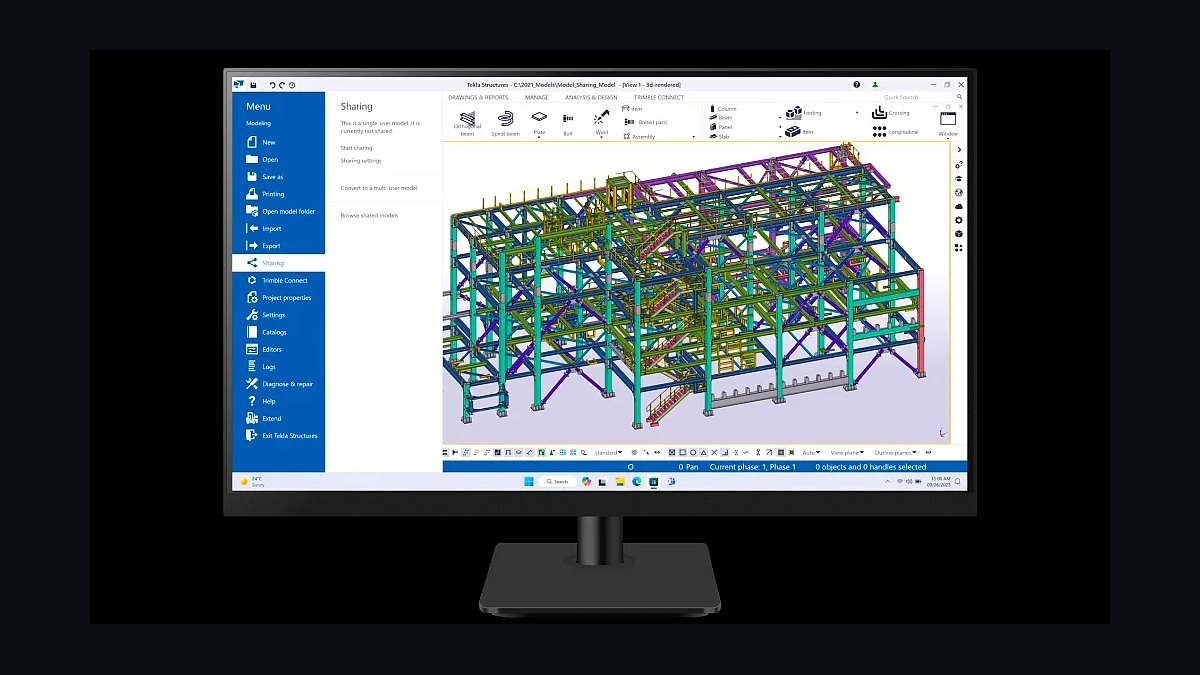
Tekla Structures ranks fourth because it is the dominant 3D model and detailing tool for structural-steel fabrication, producing connection details, shop drawings, and the CNC/DSTV data the cutting line consumes. Subscription runs roughly $3,000–$8,000 per seat per year. Its model-to-machine output is what makes the drawing drive the cut program without re-keyed geometry.
It is for structural detailers and fabricators who need DSTV output and piece-mark accuracy, not general sheet-metal shops. It trades away the weldment-modeling breadth of SolidWorks and costs more per seat. Against STRUMIS above, Tekla is the detailing layer; against SolidWorks below, it is the structural specialist rather than the generalist.
5SolidWorks
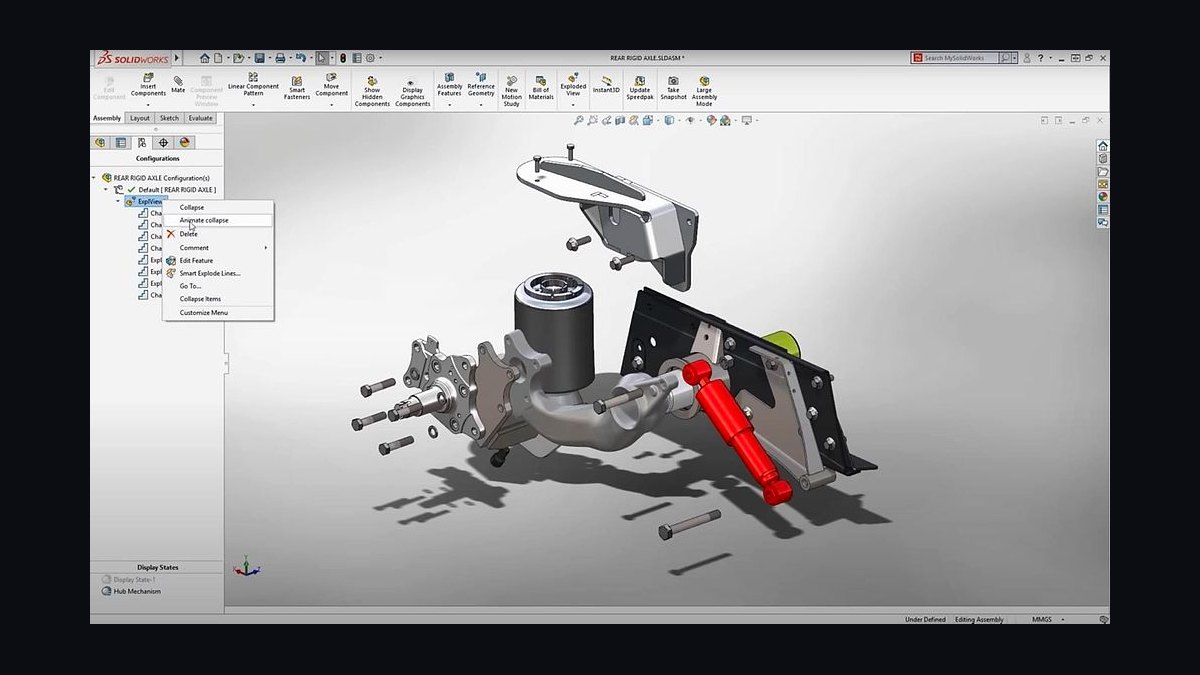
SolidWorks ranks fifth because it is the practical 3D CAD choice for general and custom fab shops modeling weldments, sheet-metal parts, and assemblies, at about $2,400 per seat per year plus maintenance. It feeds nesting engines and produces the flat patterns and weldment drawings most job shops need daily. Its installed base and training ecosystem are unmatched.
It is for high-mix weldment and sheet-metal fabricators, not structural-steel detailers needing DSTV. It trades away Tekla's steel-specific connection detailing and CNC output. Against Tekla above, SolidWorks is broader but less structural; against Advance Steel below, it is the more general and widely supported modeling platform.
6SigmaNEST
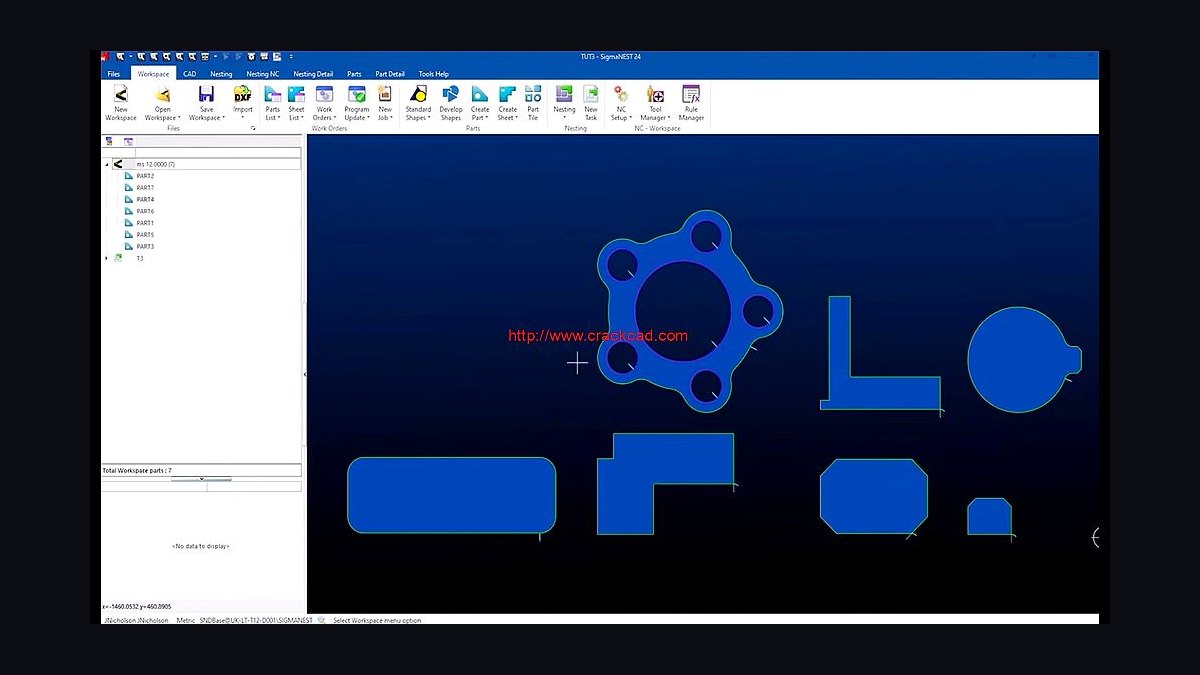
SigmaNEST ranks sixth because it is the heavyweight nesting engine for high-mix plate and sheet, with aggressive material-yield optimization and broad machine support across plasma, laser, and waterjet. Seats run roughly $5,000–$15,000 plus annual maintenance. On plate-intensive work, yield gains alone can justify the license within a year.
It is for shops cutting varied parts where material yield and machine flexibility drive margin, not single-table operations with tight vendor integration. It trades away some of ProNest's tight Hypertherm plasma coupling. Against ProNest below, SigmaNEST wins on high-mix nesting breadth; against Tekla above, it is the cut-program layer, not the detailing layer.
7ProNest by Hypertherm
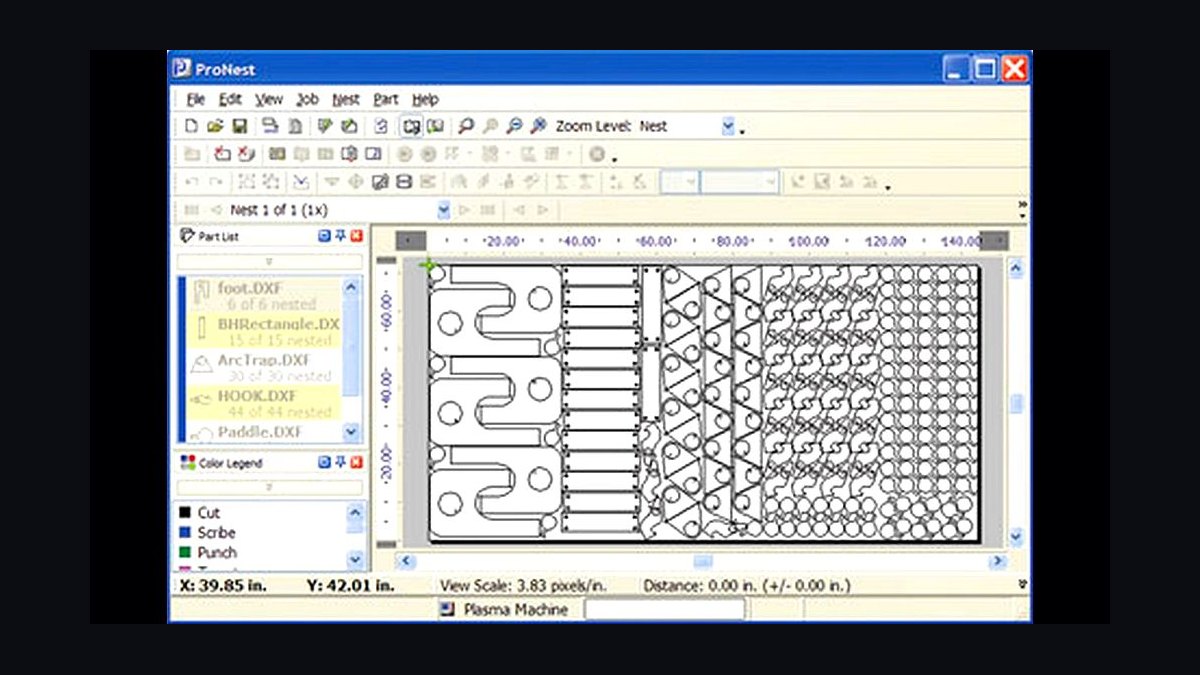
ProNest ranks seventh because it ships closely tied to Hypertherm plasma and laser tables, making it the natural nesting pick where the cutting table is Hypertherm-driven. It posts cut programs with tight machine integration and handles common sheet and plate nesting well. Pricing is comparable to SigmaNEST at roughly $5,000–$15,000 per seat.
It is for shops running Hypertherm tables that want integration depth over maximum nesting flexibility. It trades away some of SigmaNEST's high-mix yield optimization and broad machine support. Against SigmaNEST above, ProNest is the tighter-integration choice; against ShopVue below, it is the cutting layer rather than the shop-floor visibility layer.
8ShopVue MES
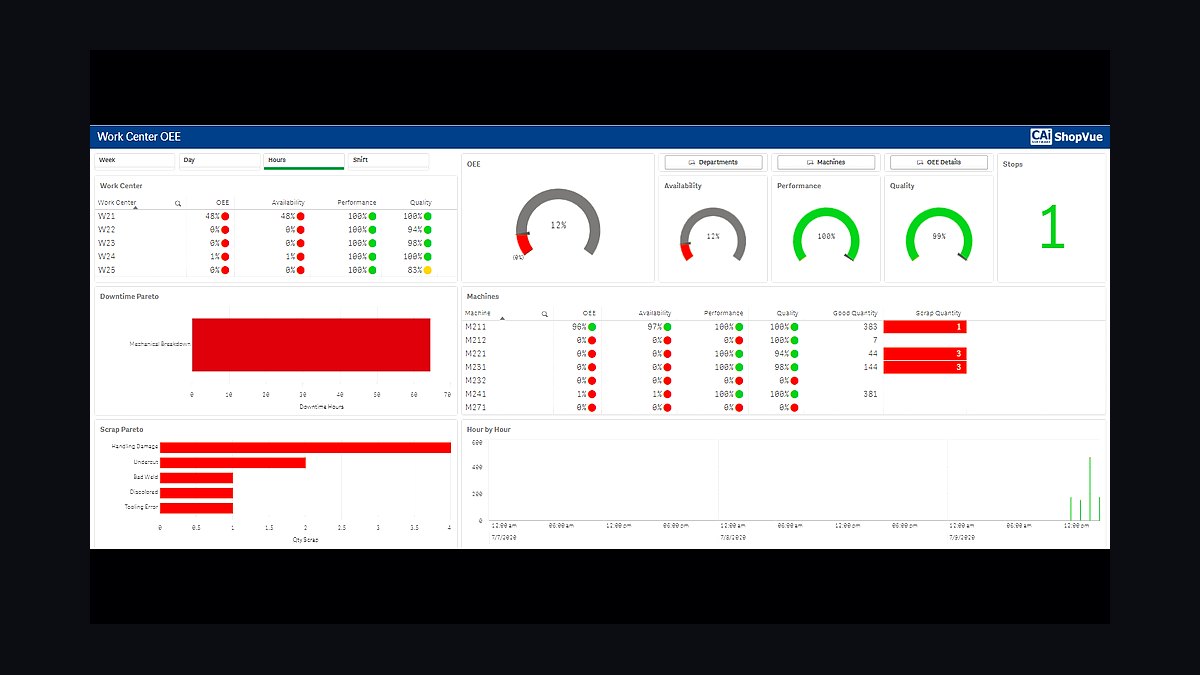
ShopVue ranks eighth because it delivers real-time WIP, labor capture at the station, and dispatch lists so the floor and scheduler see the same job status. Budget $8,000–$30,000 for terminals and scanners plus per-seat or per-terminal licensing. It turns the weld bay — usually the constraint — into a visible, schedulable resource.
It is for mid-size and larger shops where the weld bay is an unschedulable bottleneck, not small shops that get by on ERP data collection. It trades away simplicity and adds hardware and licensing cost. Against JobBOSS² data collection above, ShopVue is the dedicated MES; against Power BI below, it captures the data rather than reporting it.
9Microsoft Power BI
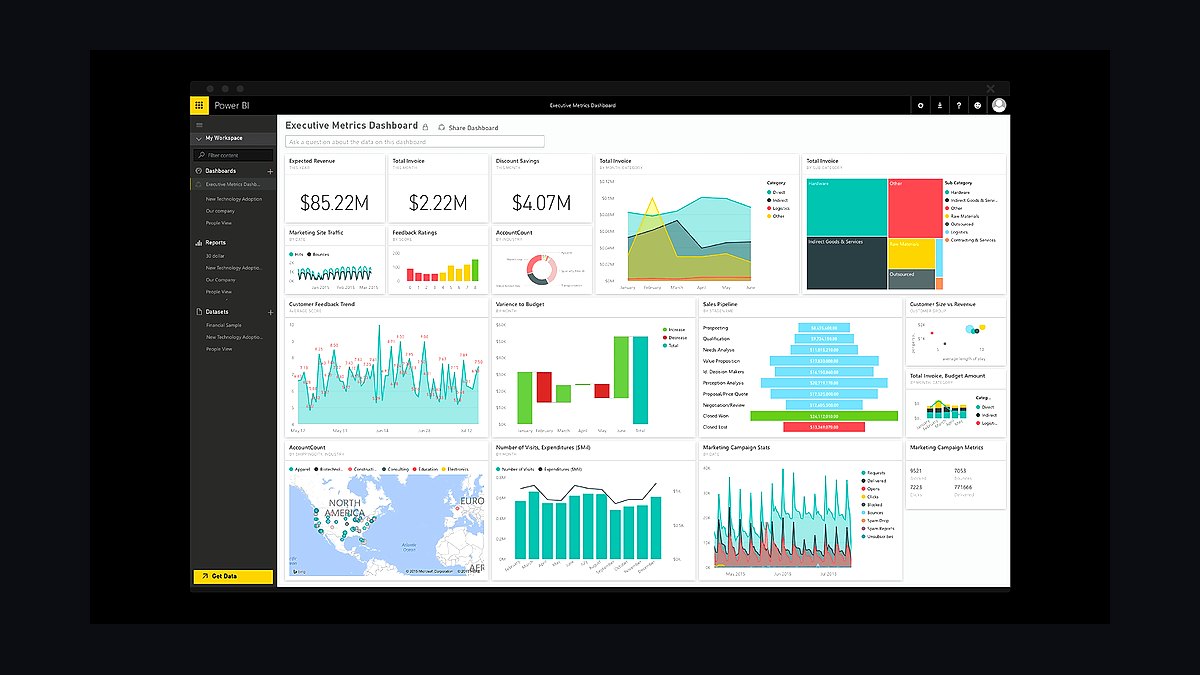
Power BI ranks ninth because it puts margin-by-job, on-time delivery, weld-bay utilization, and scrap rate in one dashboard at roughly $10–$20 per user per month, and most shops already run Microsoft 365. It reads from the ERP and MES without heavy custom development. Large fabricators feed it from a small data warehouse so tons, hours, and dollars reconcile.
It is for owners and managers who need near-real-time visibility across jobs and stations, not for shops content with ERP-native reports. It trades away some prebuilt manufacturing analytics that ERP dashboards include. Against ShopVue above, Power BI reports the data; against HubSpot below, it is the internal analytics layer rather than the sales pipeline.
10HubSpot CRM
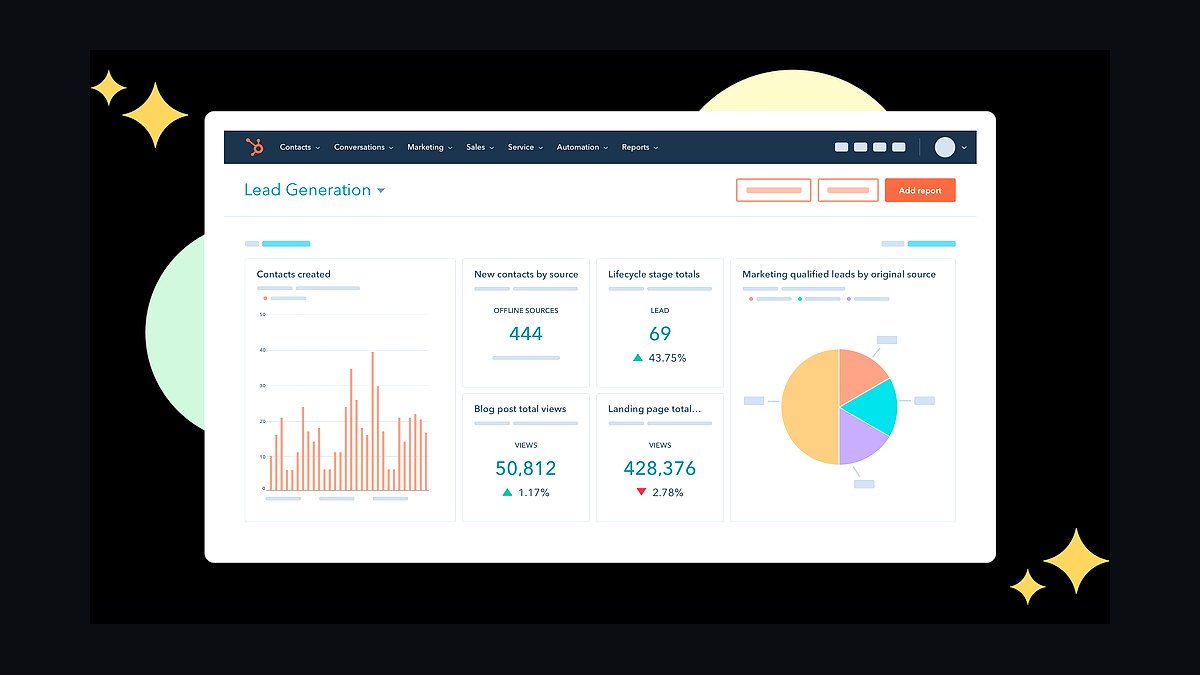
HubSpot ranks tenth because custom fab shops selling to GCs, OEMs, and contractors benefit from tracking bids, following up on quotes, and forecasting backlog, at roughly $20–$100 per user per month. It is light to deploy and integrates with email and quoting workflows. For shops with an active bid pipeline, it prevents quotes from falling through the cracks.
It is for fabricators with real sales activity, not shops that simply use the ERP's customer and quoting module. It trades away native job-cost linkage unless integrated, and adds per-seat cost. Against Power BI above, HubSpot is outward-facing sales tracking; against the ERP core at the top, it is optional rather than foundational.
How we ranked these
We ranked each tool on five weighted criteria: fit for custom job-shop quoting (25%), drawing-to-cut integration depth (20%), shop-floor WIP visibility (20%), material and weld traceability (20%), and total cost of ownership over three years (15%). Scores came from vendor documentation, published pricing, and operator interviews across structural, custom, and production fabrication shops. Tools that only served machining or catalog manufacturing were excluded from scoring entirely.
We deliberately ignored feature-count checklists, analyst quadrant placement, and mobile-app polish, because none of those predict whether a fab shop can quote a one-off job fast or trace a heat number to a shipment. We also ignored vendor claims about AI and automation without a named reference customer, and we excluded any tool whose pricing could not be verified from a public source or a documented quote range.
What to look for
What matters most is whether the tool owns the quote-versus-actual loop. A fabrication ERP that estimates custom jobs and then tracks real labor and material against that estimate is worth more than any add-on module, because margin leaks show up there first. Second, check the drawing-to-nest path: if detailing and nesting are not connected, you will re-key geometry and scrap plate. Third, confirm traceability is native, not bolted on.
The mistake most buyers make is shopping the long tail of niche tools before fixing the core. They buy a nesting package, a weld-cert app, and a CRM, then still quote in spreadsheets, so nothing reconciles. Pick the ERP first, verify it can carry mill certs and WPS records, then add CAD, nesting, and MES only where the ERP genuinely cannot reach.
Related questions
What ERP do most welding and metal fabrication shops actually run?
JobBOSS² (E2 by ECI) is the long-standing default for North American job shops and small-to-mid fabricators, largely because its quoting and shop-floor data collection are battle-tested. Global Shop Solutions scales further for larger operations, and Fulcrum is the modern cloud-native alternate smaller shops pick for usability. Structural-steel fabricators often run STRUMIS instead, since it handles steel estimating, nesting, and piece-mark tracking natively.
Do I really need a separate MES if my ERP has data collection?
Not always. Smaller shops lean on JobBOSS data collection rather than buying a standalone MES, and that is usually the right call under roughly twenty employees. A dedicated MES like ShopVue or Steel Projects earns its cost when the weld bay is the constraint and the scheduler needs station-level WIP in real time. The test is simple: if you cannot see which jobs are stacked at weld right now, you need one.
How does mill-cert traceability actually work in practice?
At receiving, the heat number from the mill cert is captured against the purchase order and tied to the specific plate, beam, or tube. That heat number then follows the material through nesting, cutting, and fit-up onto the piece-mark, and finally onto the shipment record. Done inside the fabrication ERP, traceability becomes a byproduct of normal receiving and cutting rather than a reconstruction project when a GC or inspector asks.
What is a WPS and why does my shop need to track it?
A Welding Procedure Specification documents the qualified parameters — process, filler, amperage, position, preheat — for a given joint, backed by a Procedure Qualification Record. Under AWS D1.1 and similar codes, welds must be made to a qualified WPS by a welder certified for that procedure. Tracking which welders hold which certifications and when they expire is what keeps coded work defensible and prevents a rejected weld.
Can I run a fabrication shop on QuickBooks alone?
For a small welding and repair shop with no production line, QuickBooks plus spreadsheets for quoting and invoicing is a legitimate starting point, and many shops operate that way for years. It breaks down when custom quoting volume rises, because quoted hours never reconcile against actual job cost. The upgrade path is a job-shop ERP for quoting and job cost, with QuickBooks retained for AP, AR, and GL.
How long does a fabrication ERP implementation actually take?
A small shop running Fulcrum or JobBOSS² can be live on quoting and job tracking in thirty to sixty days if they load a clean material price book and labor rates up front. Mid-size shops adding nesting, MES, and traceability should plan on ninety days to first real value and six months to full adoption. The delays almost always come from dirty material data and estimating habits, not from the software.
Is Tekla Structures overkill for a general fab shop?
Usually yes. Tekla Structures is built for structural-steel connection detailing and produces the shop drawings and DSTV data a cutting line consumes, which is exactly what a structural fabricator needs and mostly wasted on a shop doing weldments and sheet metal. A general or custom fab shop is better served by SolidWorks for 3D part and weldment modeling, at roughly a third of the per-seat cost.
What does a realistic software budget look like for a ten-person shop?
Expect roughly $2,000 to $4,000 per month all-in. That typically covers a job-shop ERP like Fulcrum or JobBOSS², one or two CAD seats, a nesting package tied to a single plasma table, QuickBooks, and a simple weld-certification log. The priority at this size is fast accurate quoting and AWS cert tracking, not MES or a data warehouse, both of which can wait until the weld bay becomes a visible constraint.
FAQ
What is the single most important tool in a fabrication shop tech stack?
The job-shop fabrication ERP, because it owns quoting, job tracking, material costing, and scheduling for custom and low-volume work. Everything else — CAD, nesting, MES, traceability — either feeds it or reads from it. If the ERP is wrong, no amount of nesting optimization or shop-floor data collection fixes the margin problem, because quoted hours never reconcile against actual job cost.
Should I buy nesting software before or after the ERP?
After. Nesting only pays back when it is fed by real detailed geometry from a real job, and that job lives in the ERP. Shops that buy nesting first often end up re-keying parts by hand because detailing and the ERP are not connected, which destroys the yield benefit. Stand up the ERP, connect CAD to it, then add SigmaNEST or ProNest on the cutting line.
How do I choose between SigmaNEST and ProNest?
ProNest is the natural pick when your cutting tables are Hypertherm-driven, because the integration is tightest and the vendor supports both. SigmaNEST is the stronger generalist for high-mix plate and sheet nesting across mixed machine brands, with deeper material-yield optimization. If you run Bystronic or TRUMPF lasers, evaluate those vendors' native programming software first, since table integration usually beats a third-party nest.
What is the biggest hidden cost in a fabrication software rollout?
Dirty material data and undisciplined receiving. Every traceability promise depends on capturing heat numbers correctly at the dock and barcoding material as it moves, and that is labor, not license cost. Shops that budget for software but not for the receiving discipline end up with an ERP full of unusable traceability records and fall back to paper, which defeats the entire investment.
Do structural fabricators need a different stack than custom fab shops?
Yes, meaningfully. Structural fabricators need steel-specific estimating, linear and plate nesting, piece-mark tracking, and erection-sequence awareness, which is why STRUMIS and FabSuite exist alongside Tekla Structures. Custom and general fab shops doing weldments, sheet metal, and repair are better served by a job-shop ERP like JobBOSS² plus SolidWorks, because structural overhead adds cost without matching their work.
How do I know when it is time to add an MES?
When the weld bay becomes the constraint and you cannot see which jobs are stacked there without walking the floor. That is the signal that station-level labor capture and real-time WIP will pay for themselves. Before that point, ERP data collection is usually sufficient, and buying an MES early adds licensing and hardware cost without changing a single scheduling decision.
What reporting should an owner actually look at weekly?
Margin by job, on-time delivery, weld-bay utilization, and scrap rate. Those four cover the commercial and operational health of a fabrication shop, and Power BI can pull all of them from the ERP and MES for roughly ten to twenty dollars per user per month. Anything beyond that is usually vanity reporting unless you are running a multi-plant structural operation with a data warehouse.
Can I skip a CRM if I already have quoting in my ERP?
Often yes. Many fabrication shops use the quoting and customer module inside JobBOSS², Global Shop, or STRUMIS and never buy a standalone CRM. A light CRM like HubSpot earns its cost when you actively sell to GCs, OEMs, and contractors and need to track bids, follow up on quotes, and forecast backlog. If your backlog is full and quotes close on relationship, skip it.
How much should a small shop spend on weld-certification tracking?
A few hundred to a few thousand dollars a year for a standalone weld-procedure and welder-continuity tracker, or nothing extra if you use the quality module inside JobBOSS² or Global Shop. The real cost of getting it wrong is a rejected weld and a re-shoot, plus the risk of losing a coded structural job. For AWS D1.1 work, this is the last place to economize.
What is the fastest way to see ROI from a fabrication ERP?
Move all estimating into the ERP quoting module within the first thirty days and enforce quote-versus-actual review on every closed job. Most shops find their quoted labor hours were optimistic by a consistent percentage, and correcting that single number lifts margin across every subsequent bid. Nesting yield and MES visibility deliver real returns too, but they take longer to wire up and adopt.
Sources
- https://www.ecisoftware.com/jobboss/
- https://www.globalshopsolutions.com/
- https://www.fulcrumapp.com/
- https://www.strumis.com/
- https://www.tekla.com/products/tekla-structures
- https://www.solidworks.com/
- https://www.sigmanest.com/
- https://www.hypertherm.com/pro-nest/
- https://www.shopvue.com/
- https://aws.org/
Related on PULSE
This page will be disappearing soon. Save it to your device for $1 — or read it free while it is here.
@Kory-White- · if Venmo asks, the last 4 of my number are 2012
This page is gone.
This one is off the shelf now. $1 keeps it on your phone for good — the whole page, pictures and diagrams included.
 pulse-tech-stacksTop 10 Best Tech Stack Tools for Movie Theaters in 2027
 pulse-tech-stacksTop 10 Best Tech Stack Tools for Insulation Contractors in 2027
 pulse-tech-stacksTop 10 Best Tech Stack Tools for Independent Driving Schools in 2027
 pulse-tech-stacksTop 10 Best Tech Stack Tools for Mobile Threat Defense (MTD) Vendors in 2027
 pulse-tech-stacksTop 10 Best Tech Stack Tools for MSP and IT Services Companies in 2027
 pulse-tech-stacksTop 10 Best Tech Stack Tools for Embeddings API Companies in 2027
 pulse-tech-stacksTop 10 Best Tech Stack Tools for AI Document Intelligence Companies in 2027
 pulse-tech-stacksTop 10 Best Tech Stack Tools for Pilates Studios in 2027
 pulse-tech-stacksTop 10 Best Tech Stack Tools for Bars and Pubs in 2027
 pulse-tech-stacksTop 10 Best Tech Stack Tools for Appliance Repair Services in 2027