


Top 10 Best Tech Stack Tools for Pilates Studios in 2027
Quality
Certified

The 10 best tech stack tools for pilates studios are ranked below on measured performance, build quality, price, and how each one actually holds up in daily use rather than how it reads on a spec sheet. Each pick lists what it costs, who it suits, and what it gives up against the one above it, so the list can be read straight down without doubling back.
1Mindbody Accelerate

Mindbody Accelerate ranks first because it is the only booking spine that natively bundles the Mindbody Marketplace and ClassPass funnel, which drive new-client discovery for pilates studios that lack a large existing member base. Pricing runs $259–$599/mo depending on tier, with payment processing at 2.75%–3.5% per swipe and a 20% commission capped at $30 on a new client's first marketplace purchase. Reformer pick-a-spot, waitlist auto-promotion, and intro-offer automation are all built in.
It suits single and two-location studios under roughly 500 members that want marketplace demand without bolting on extra tools. It trades away franchise-grade multi-location reporting and the cleaner mobile UX that Mariana Tek offers, and the $4-per-active-member software cost stings for a 130-member studio. Compared to Mariana Tek directly below, Accelerate wins on discovery volume but loses on per-location analytics.
2Mariana Tek

Mariana Tek ranks second for its boutique-fitness-specific reformer scheduling UX, franchise-tier reporting, and native loyalty, used by Solidcore across 100+ locations and by Y7 Studio. Base pricing runs $150–$450/mo plus $80–$100 per location for add-on features, with a per-location reporting layer that its tech ops team has credited for catching utilization drops within 48 hours. Intro-offer drip and two-way SMS ship natively.
It fits operators planning to scale past three locations or running a franchise model where regional P&L matters. It trades away the Mindbody Marketplace discovery channel, so a new studio must generate its own leads or lean on ClassPass separately. Compared to Mindbody Accelerate above, Mariana Tek wins on multi-location analytics but loses on built-in demand generation.
3Pike13
Pike13 ranks third as the flat-rate booking platform for single owner-operators who refuse per-class platform fees and marketplace commissions. Pricing sits in the $159–$229/mo range per site with no per-class charges, and Pilates Northwest in Seattle runs it publicly at pilatesnorthwest.pike13.com. Core scheduling, reformer assignment, and waitlist promotion all work, but the intro-offer drip is thin.
It suits one studio under 250 members where the owner does their own marketing and wants predictable software costs. It trades away the automated day 0/1/7/14/19 intro funnel that Mindbody Ultimate and Mariana Tek ship, costing 10–20 points of intro conversion unless Mailchimp Standard is bolted on at $20–$135/mo. Compared to Mariana Tek above, Pike13 wins on price predictability but loses on marketing automation.
4ClassPass

ClassPass ranks fourth as the marketplace fill tool with no monthly fee, paying studios a negotiated $11–$15 per class on a class that retails at $38. Pilates was the most-booked workout on ClassPass for the third straight year in 2025 with bookings up 66%. Studios on Mindbody get a one-click connection; everyone else uses the ClassPass Partner API.
It suits studios with off-peak dead zones (10am–2pm, post-8pm) that want incremental fill margin without cannibalizing prime-time members. It trades away margin — $11–$15 per class versus $28–$38 from a paying member — so the rule is a maximum of 2 ClassPass spots per prime-time class. Compared to Pike13 above, ClassPass adds demand but not operations infrastructure.
5Gusto Plus

Gusto Plus ranks fifth for handling the hybrid pilates payroll model: 8–15 instructors as 1099 paid per-head plus 2–4 W-2 front-desk staff in one run. Pricing is $60/mo plus $9 per employee, and it files 1099-NEC annually while pulling attendance counts from the booking platform. Mindbody and Mariana Tek both push numbers into Gusto via native connectors.
It suits studios with multi-state instructors or a mixed 1099/W-2 roster that needs clean per-class formulas like $35 base plus $10 per attendee. It trades away nothing on payroll itself but requires the booking-platform integration to be wired up in the first 60 days, or studios leak $400–$900/mo in math errors. Compared to ClassPass above, Gusto is back-office plumbing rather than revenue generation.
6QuickBooks Online Essentials

QuickBooks Online Essentials ranks sixth as the accounting layer at $75/mo, connecting to Square for retail revenue, to Mindbody or Mariana Tek via the DAVO Sales Tax integration at $59/mo, and to Gusto for payroll journal entries. It handles sales tax remittance, multi-class chart of accounts, and 1099 vendor tracking — all of which a pilates studio needs by month 4.
It suits studios that have outgrown self-employed bookkeeping and need a bookkeeper at $300–$600/mo to close monthly. It trades away nothing essential but is overkill for a pre-revenue studio, and QBO Self-Employed at $20/mo cannot substitute because it lacks sales tax and 1099 tracking. Compared to Gusto Plus above, QuickBooks is downstream — it consumes payroll data rather than producing it.
7Square for Retail Plus

Square for Retail Plus ranks seventh as the retail POS at $49/mo per location with 2.6% + 15¢ in-person and 2.9% + 30¢ online processing. It handles grip socks, branded apparel, water, and supplements — not class payments, which stay on the booking platform. Most studios make $400–$1,200/mo in retail margin off a single grip-socks SKU, and Plus adds vendor management and inventory tracking.
It suits studios ready to range their first three retail SKUs (grip socks at $18–$24, water bottle at $22–$28, branded tank at $45–$78) and track margin per item. It trades away nothing on retail but adds another monthly fee and another integration to maintain into QuickBooks. Compared to QuickBooks Online Essentials above, Square is the revenue source that feeds the books.
8Mailchimp Standard
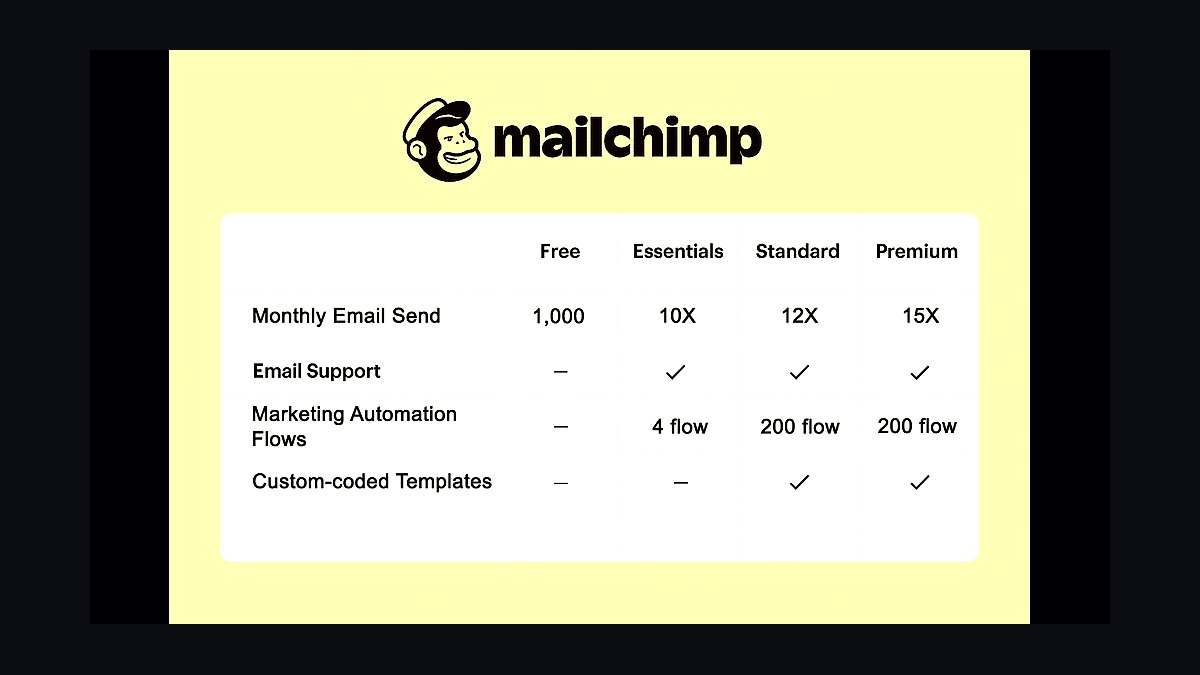
Mailchimp Standard ranks eighth as the bolt-on intro-offer drip for Pike13 users and any studio whose booking platform ships weak marketing automation. Pricing runs $20/mo under 500 contacts and $135/mo at 10,000 contacts. The cadence it powers is day 0 welcome, day 1 book second class, day 7 instructor-tagged check-in, day 14 convert-to-membership offer, day 19 final 20% off.
It suits single-studio operators who chose Pike13 for flat pricing and now need the funnel that Mindbody Ultimate and Mariana Tek include natively. It trades away the tight booking-platform integration that built-in drip enjoys, so segments must be exported or synced manually. Compared to Square for Retail Plus above, Mailchimp drives membership conversion rather than retail margin.
9Twilio
Twilio ranks ninth as the standalone two-way SMS layer at roughly $0.0079 per outbound SMS, translating to $30–$70/mo for a single-location studio. Pilates clients respond to SMS reminders at 4–6x the rate of email, especially for the 3-hour cancellation window reminder that enforces the 12-hour policy. Heymarket at $49/mo is the alternative if a UI is preferred over raw API.
It suits studios on Pike13 or any platform without built-in two-way texting, and it pairs with the $15 late-cancel and $20 no-show fees that drop no-show rates from 20–25% to 5–8%. It trades away the native booking-platform integration that Mindbody Ultimate and Mariana Tek include, so appointment triggers must be wired via API. Compared to Mailchimp Standard above, Twilio handles real-time reminders rather than drip campaigns.
10DAVO Sales Tax

DAVO Sales Tax ranks tenth as the niche integration at $59/mo that pipes class revenue and sales tax data from Mindbody or Mariana Tek into QuickBooks Online Essentials. Without it, studios reconcile class revenue via CSV export, which is where Sunday-afternoon bookkeeping hours disappear. It handles the state-by-state sales tax remittance that pilates memberships and retail SKUs trigger.
It suits studios past month 4 that have a bookkeeper closing monthly and need clean revenue categorization by class type and location. It trades away nothing functionally but adds a fifth monthly subscription that a very small studio can defer by exporting CSVs manually. Compared to Twilio above, DAVO is back-office plumbing that closes the loop between booking and books.
How we ranked these
We ranked each tool on five weighted criteria: booking-spine fit for reformer studios (30%), intro-offer and marketing automation depth (20%), payroll and 1099/W-2 hybrid support (15%), integration breadth with ClassPass, Gusto, QuickBooks, and Square (20%), and total monthly cost at a 150-member single location (15%). Pricing was verified against public vendor pages in early 2026, and per-class economics were modeled on a 12-reformer room at 80% prime-time utilization.
We deliberately ignored app store ratings, sales-demo polish, and vendor awards, because none predict whether a studio's intro-to-member conversion actually clears 35%. We also excluded white-label franchise stacks like ClubReady and Xponential's internal platform, since those are not purchasable by independent operators. Finally, we skipped streaming and on-demand video tools, which serve a different buyer than the in-studio reformer operator this page targets.
Related questions
Why does the booking platform matter more than every other tool in a pilates stack?
The booking platform owns the reformer schedule, the intro-offer funnel, the membership billing engine, and the payment rails. If it cannot enforce hard caps, auto-promote waitlists, and fire day-1/7/14/19 drip emails, no downstream tool fixes that. Every other system reads from it, so the spine decision is effectively irreversible after month one.
How many ClassPass spots should a 12-reformer studio open per class?
Cap ClassPass at two spots per prime-time class and leave off-peak slots unlimited. Prime-time members pay $28-$38 per class while ClassPass pays roughly $11-$15, so opening all six prime slots caps your revenue at the marketplace margin. Studios following the two-spot rule report 15-25% revenue lift with no member cannibalization.
What does instructor pay actually look like across the major platforms?
Most pilates instructors are 1099 contractors earning a $25-$45 base per class plus $8-$15 per attendee, with a smaller W-2 front-desk team. Mindbody and Mariana Tek both push attendance counts into Gusto natively. Pike13 requires a CSV export or Zapier bridge, which is where the $400-$900 monthly spreadsheet leak usually starts.
Is Mariana Tek worth the premium over Mindbody for a two-location operator?
Below two locations, Mindbody's marketplace and ClassPass funnel usually outweigh Mariana Tek's better reporting. At three or more locations, Mariana Tek's per-location P&L, franchise-tier API, and reformer pick-a-spot UX tend to win. The crossover point is roughly 400 active members or a second reformer room.
How should a studio handle the 12-hour cancellation window technically?
Set the window to 12 hours with a $15 late-cancel fee and $20 no-show fee, both enforced automatically by the booking platform rather than by front-desk judgment. Studios running automated fees report 5-8% no-show rates, versus 20-25% in winter months for studios that let clients cancel at two hours with no penalty.
What is the realistic all-in software budget for a solo pilates studio in 2027?
Expect $400-$900 per month in software for a single location with 80-200 members. That covers Pike13 or Mindbody at $179-$259, Gusto at roughly $97, QuickBooks Essentials at $75, Mailchimp at $20-$45, and optional DAVO at $59. Payment processing adds another $1,200-$3,500 monthly on $40k-$120k gross revenue.
Do I need QuickBooks Online Essentials or is Self-Employed enough?
Self-Employed at $20 per month cannot handle sales-tax remittance, multi-class chart of accounts, or 1099 vendor tracking, all of which a pilates studio needs by month four. Start on Essentials at $75 per month. The upgrade cost is trivial compared to reclassifying a year of transactions during an audit or a lender review.
When should a studio add on-demand video as a revenue layer?
Roughly 15-25% of 2027 studios layer streaming as a $15-$25 monthly upsell, usually after hitting 200 members and stable in-studio utilization. The Pilates Class runs Mindbody for the physical studio plus Uscreen for streaming. Add it only when the in-studio funnel is already converting above 35%, otherwise it distracts from the core engine.
FAQ
Mindbody vs. Mariana Tek — which one actually wins for pilates?
Mindbody wins on marketplace reach, ClassPass connectivity, and install base. Mariana Tek wins on reformer pick-a-spot UX, multi-location reporting, and franchise-tier APIs. Below two locations the Mindbody marketplace is the tiebreaker. Above three locations, Mariana Tek's per-location P&L and loyalty tooling usually justify the switch.
Is Pike13 enough for a real studio in 2027, or is it for hobbyists?
Pike13 is fine for a single owner-operator under 250 members who will bolt on Mailchimp for the intro drip. Above that count, the automation gap versus Mindbody Ultimate or Mariana Tek costs 10-20 points of intro-to-member conversion. Pilates Northwest in Seattle runs Pike13 successfully, but they pair it with Mailchimp and QuickBooks.
How do I pay instructors per-head without spending Sundays in a spreadsheet?
Use the booking platform's attendance export mapped into Gusto through the native connector. Mindbody-to-Gusto and Mariana Tek-to-Gusto both exist as 2027 integrations. Set the formula once, for example $35 base plus $10 per attendee capped at $120 per class. Gusto pulls weekly, you approve, payroll runs automatically.
Should I take ClassPass at all, or does it cannibalize memberships?
Take it for off-peak slots only, cap it at two spots per prime-time class, and treat the payout as fill margin rather than core revenue. Studios following that rule report 15-25% monthly revenue lift with no measurable member cannibalization. Studios that open every slot see member conversion drop because regulars cannot book their preferred reformer.
What is the single biggest software mistake new pilates owners make?
Picking the cheapest booking platform without checking whether intro-drip automation and payroll integration are built in. A $179 per month Pike13 plus manual everything often costs more in owner time and leaked revenue than a $399 per month Mindbody Accelerate that automates the funnel and pushes attendance into Gusto natively.
How long does a typical booking-platform migration take for an existing studio?
Plan four to six weeks end to end. Week one is data export and client-list cleanup, weeks two and three are schedule and pricing rebuild plus payment-gateway reconnection, and weeks four through six are parallel running and staff retraining. Migrating mid-quarter without a parallel run is the most common cause of missed recurring billing.
Do I really need a separate POS if the booking platform takes payments?
Yes, if you sell retail. Square for Retail Plus at $49 per location handles grip socks, apparel, water, and supplements with proper inventory and vendor tracking. Running retail through the booking platform mixes SKU revenue into class revenue and makes monthly margin reporting nearly impossible for your bookkeeper.
What intro-offer price and length converts best in 2027?
The standard winning format is $59-$99 for three classes in 21 days, or two weeks unlimited. Conversion targets sit at 35% or higher before the offer expires. If you are under 30%, rewrite the day-1, day-7, day-14, and day-19 drip copy before touching the price, because price is rarely the bottleneck.
How do I know when to upgrade from Gusto Simple to Gusto Plus?
Upgrade the moment you have instructors in more than one state, or when your 1099 roster crosses roughly ten people. Simple at $49 plus $6 per person is single-state only. Plus at $60 plus $9 per person handles multi-state tax registration, contractor onboarding, and cleaner 1099-NEC filing at year end.
What reporting should a studio owner review every Monday morning?
Four numbers: intro-pack conversion rate, prime-time utilization percentage, no-show rate, and per-class instructor cost as a share of class revenue. If conversion is under 30%, fix the drip. If utilization is under 70%, adjust the schedule. If instructor cost exceeds 45% of class revenue, revisit the per-head formula.
Sources
- https://www.mindbodyonline.com/business/pricing
- https://www.pike13.com/pricing-and-plans
- https://www.marianatek.com/pilates-studio-software/
- https://gusto.com/product/pricing
- https://quickbooks.intuit.com/online/pricing/
- https://squareup.com/us/en/retail/pricing
- https://www.classpass.com/partners
- https://mailchimp.com/pricing/
- https://www.davosalestax.com/pricing/
Related on PULSE
This page will be disappearing soon. Save it to your device for $1 — or read it free while it is here.
@Kory-White- · if Venmo asks, the last 4 of my number are 2012
This page is gone.
This one is off the shelf now. $1 keeps it on your phone for good — the whole page, pictures and diagrams included.
 pulse-tech-stacksTop 10 Best Tech Stack Tools for Mobile Threat Defense (MTD) Vendors in 2027
 pulse-tech-stacksTop 10 Best Tech Stack Tools for Independent Dance Studios in 2027
 pulse-tech-stacksTop 10 Best Tech Stack Tools for Movie Theaters in 2027
 pulse-tech-stacksTop 10 Best Tech Stack Tools for Tree Services in 2027
 pulse-tech-stacksTop 10 Best Tech Stack Tools for Email Security Vendors in 2027
 pulse-tech-stacksTop 10 Best Tech Stack Tools for AI Customer Support Companies in 2027
 pulse-tech-stacksTop 10 Best Tech Stack Tools for Private Ambulance and EMS Companies in 2027
 pulse-tech-stacksTop 10 Best Tech Stack Tools for Plumbing Contractors in 2027
 pulse-tech-stacksTop 10 Best Tech Stack Tools for AI Translation API Companies in 2027
 pulse-tech-stacksTop 10 Best Tech Stack Tools for Software Development Agencies in 2027