


Top 10 Best Tech Stack Tools for Appliance Repair Services in 2027
Quality
Certified
The 10 best tech stack tools for appliance repair services are ranked below on measured performance, build quality, price, and how each one actually holds up in daily use rather than how it reads on a spec sheet. Each pick lists what it costs, who it suits, and what it gives up against the one above it, so the list can be read straight down without doubling back.
1ServicePower
ServicePower ranks first because it is the only platform that handles both warranty dispatch-network assignments and field scheduling in one system, which matters when half or more of an appliance shop's schedule arrives from outside. It runs roughly $80–$140 per technician per month depending on modules, and it ingests jobs from ServiceBench and manufacturer portals without manual rekeying. For warranty-heavy servicers, that integration is the core money flow.
It suits shops where warranty volume is a meaningful share of the schedule and claim turnaround drives revenue. The trade-off is cost and complexity: a retail-only independent will pay for network connectivity it never uses. Housecall Pro, ranked second, is cheaper and cleaner for COD-focused shops, but it cannot match ServicePower's warranty-dispatch depth.
2Housecall Pro
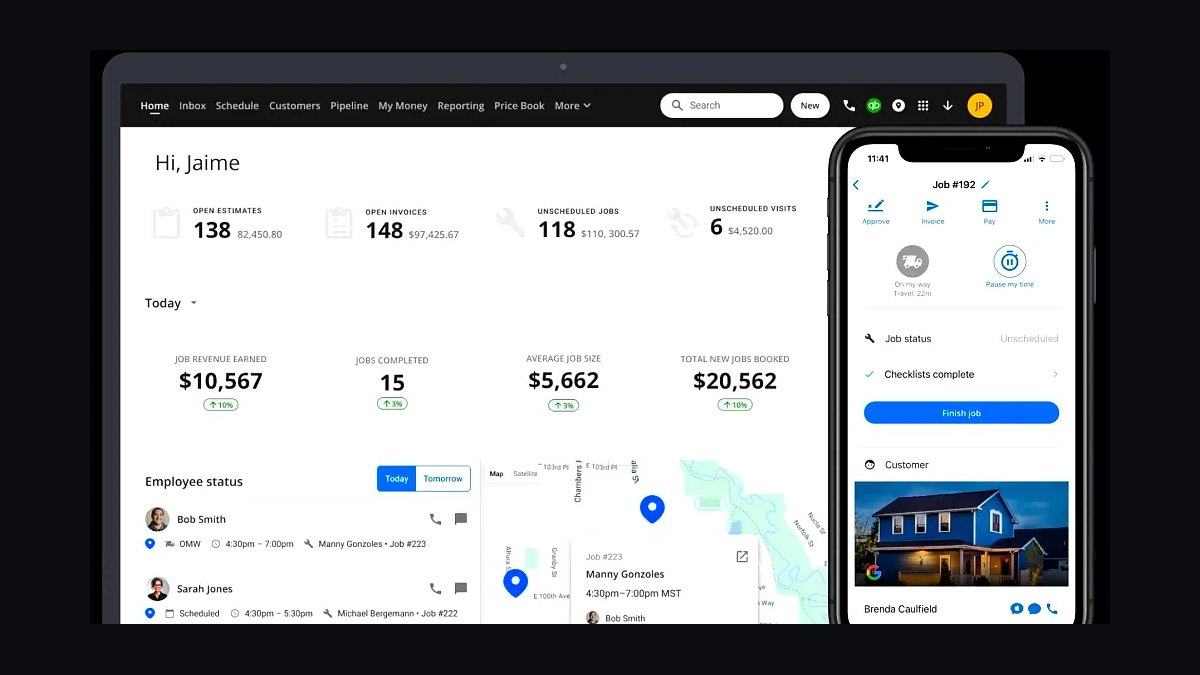
Housecall Pro ranks second because it is the best-fit FSM for retail and cash-on-delivery appliance repair, with flat tiers from $69 to $300 per month plus per-user add-ons. It handles scheduling, dispatch, door-side card payments, and consumer-facing booking without the warranty-network overhead a pure retail shop never needs. Built-in payments process at roughly 2.6%–2.9% plus a fixed fee.
It is built for independents who generate their own demand and want tighter appointment windows and review capture. What it trades away is deep warranty-network integration, so a shop with heavy manufacturer-assigned volume will outgrow it. ServicePower, ranked first, costs more but plugs directly into dispatch networks Housecall Pro handles less natively.
3ServiceBench
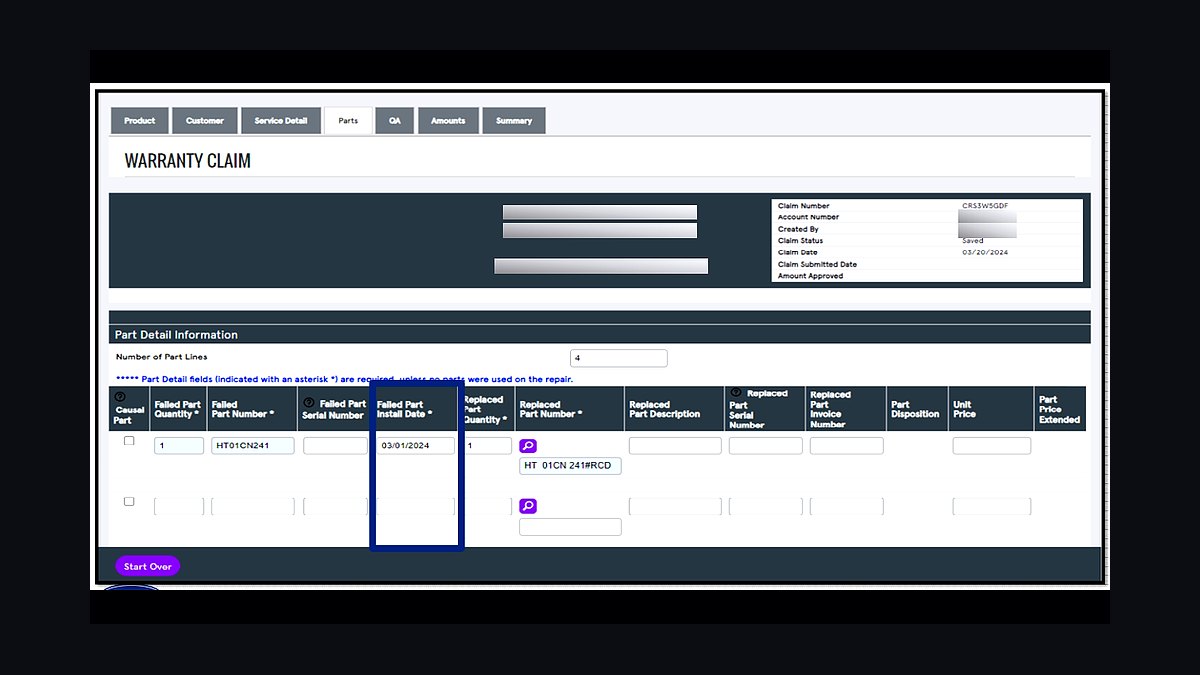
ServiceBench ranks third because it is the dispatch network that actually delivers manufacturer and warranty-administrator job assignments to appliance servicers, making it the layer that distinguishes this trade from generic home services. It is typically provided through the warranty or manufacturer relationship rather than priced as a standalone subscription, and it carries the claim authorization and reimbursement data with each job.
It is essential for any shop doing warranty work and irrelevant to a pure retail operation. The trade-off is that it is a network, not an FSM, so it must be integrated with ServicePower or another platform to avoid manual rekeying. ServicePower, ranked first, is the natural pairing because it operates its own dispatch network alongside FSM.
4Marcone MarconeTech/SamuraiTech
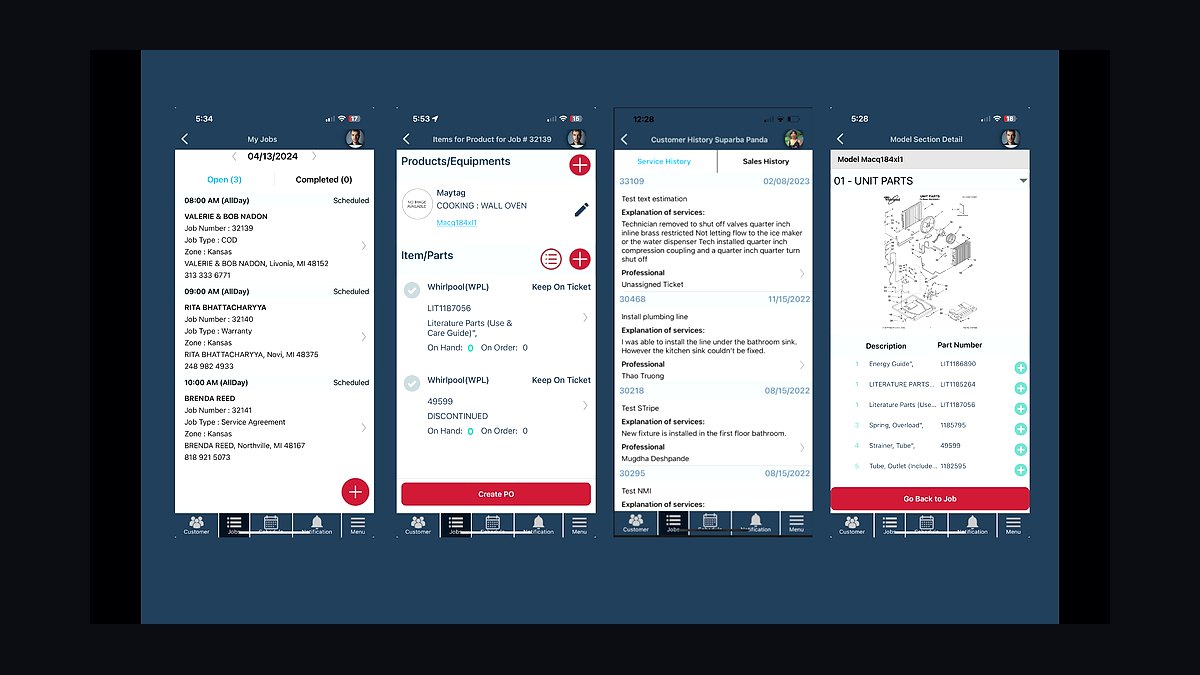
Marcone MarconeTech/SamuraiTech ranks fourth because it is where appliance technicians actually look up model-keyed tech sheets, wiring diagrams, fault codes, and correct part numbers before ordering. Marcone is the largest appliance parts distributor in North America, and access to MarconeTech and SamuraiTech is generally tied to a distributor account rather than a separate fee. That diagnostic-to-parts loop is the daily repair workflow.
It is for any shop that wants the right part identified on the first lookup instead of juggling browser tabs in a customer's kitchen. The trade-off is that it is a resource tied to a parts account, not a standalone platform. ServiceBench, ranked third, feeds the job; MarconeTech tells the tech what to do with it.
5Encompass
Encompass ranks fifth because it provides OEM appliance parts breadth and model-keyed lookup that competes directly with Marcone on catalog coverage, giving shops a legitimate second account for price and availability comparison. It is free with a distributor account and supports next-day delivery or branch pickup, which matters when a part determines whether the repair finishes on visit one.
It suits shops that want redundancy in their parts pipeline rather than depending on a single distributor. The trade-off is that its technician diagnostic resources are thinner than MarconeTech's, so many techs still keep Marcone open for tech sheets. Marcone MarconeTech/SamuraiTech, ranked fourth, pairs better with diagnostics; Encompass pairs better with pure parts sourcing.
6Podium

Podium ranks sixth because appliance repair lives on the appointment window and the follow-up review, and Podium handles two-way text, confirmations, review requests, and webchat at roughly $300–$600+ per month by tier. Review volume is the lever for ranking in local search on the retail side, and proactive text updates serve warranty consumers who expect status without calling.
It is for shops that want to convert completed repairs into visible local reputation and reduce no-shows through automated reminders. The trade-off is price: it is one of the more expensive layers for a small shop. Encompass, ranked fifth, keeps the truck stocked; Podium keeps the phone quiet and the reviews coming.
7Google Local Services Ads
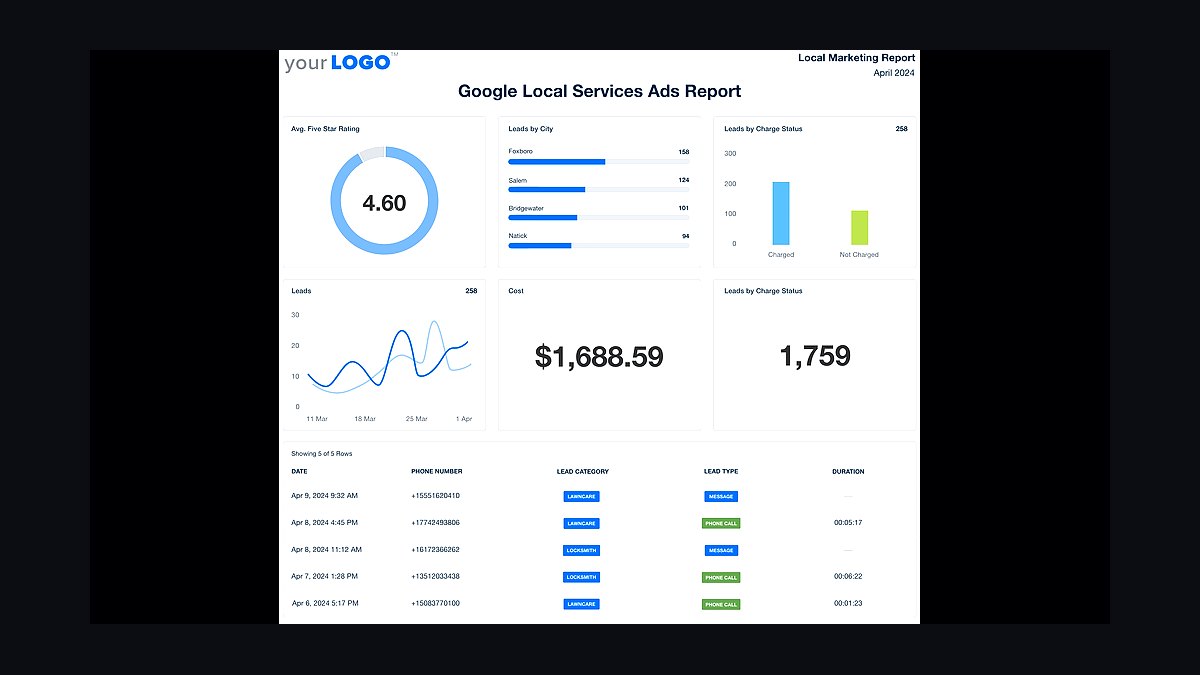
Google Local Services Ads ranks seventh because it is the primary lever for self-generated retail demand, putting appliance repair shops at the top of local search with the Google Guaranteed badge on a pay-per-lead model commonly $15–$40 per lead. For a margin-focused independent, controlling demand is what separates a price-taker from a business that sets its own diagnostic fee.
It is for retail and COD-leaning shops and irrelevant to a pure-warranty operation that receives assignments instead of hunting them. The trade-off is that lead quality varies and costs scale with volume. Podium, ranked sixth, captures the review that makes LSA convert; LSA brings the click that starts the job.
8QuickBooks Online
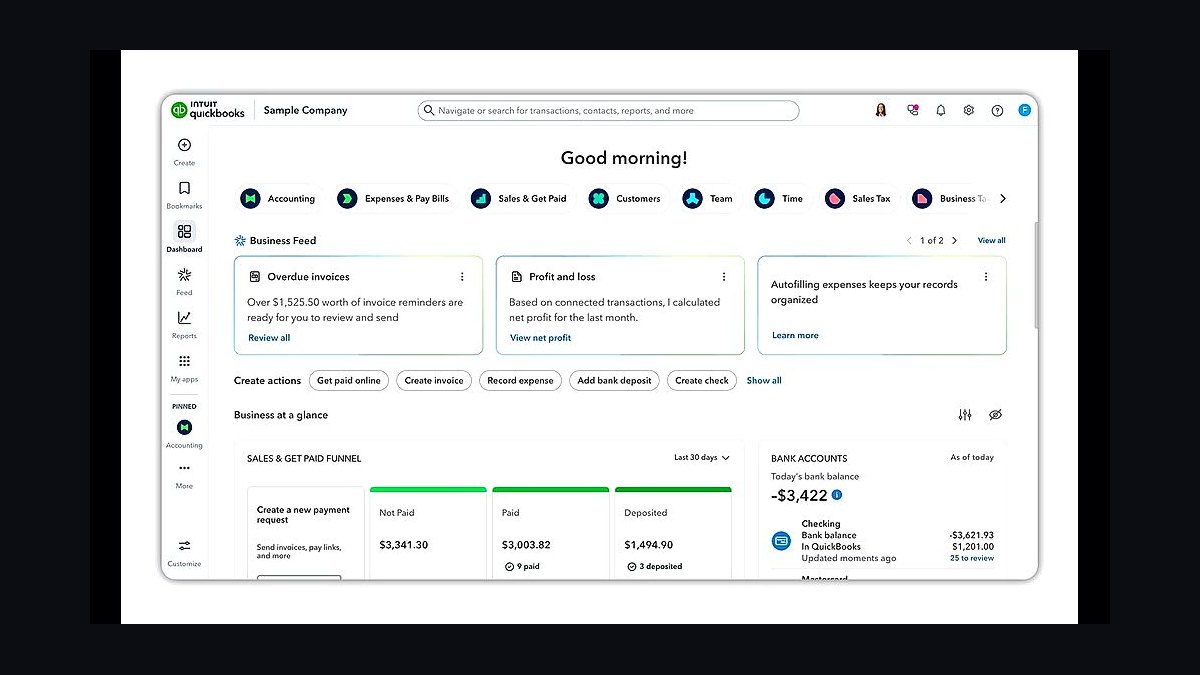
QuickBooks Online ranks eighth because it is the default accounting layer for job costing, parts COGS, payroll, and reconciling warranty reimbursements against retail revenue, priced from $35 to $235 per month. Most FSM platforms sync to it, so job revenue and parts cost land in the books without manual entry. That reconciliation is how a shop knows which demand stream actually pays.
It is for every appliance repair business regardless of warranty-versus-retail mix, from solo tech to multi-truck operator. The trade-off is that it is general-purpose accounting, not service-trade-specific, so job costing takes some setup. Google Local Services Ads, ranked seventh, generates the revenue QuickBooks then tracks.
9Power BI
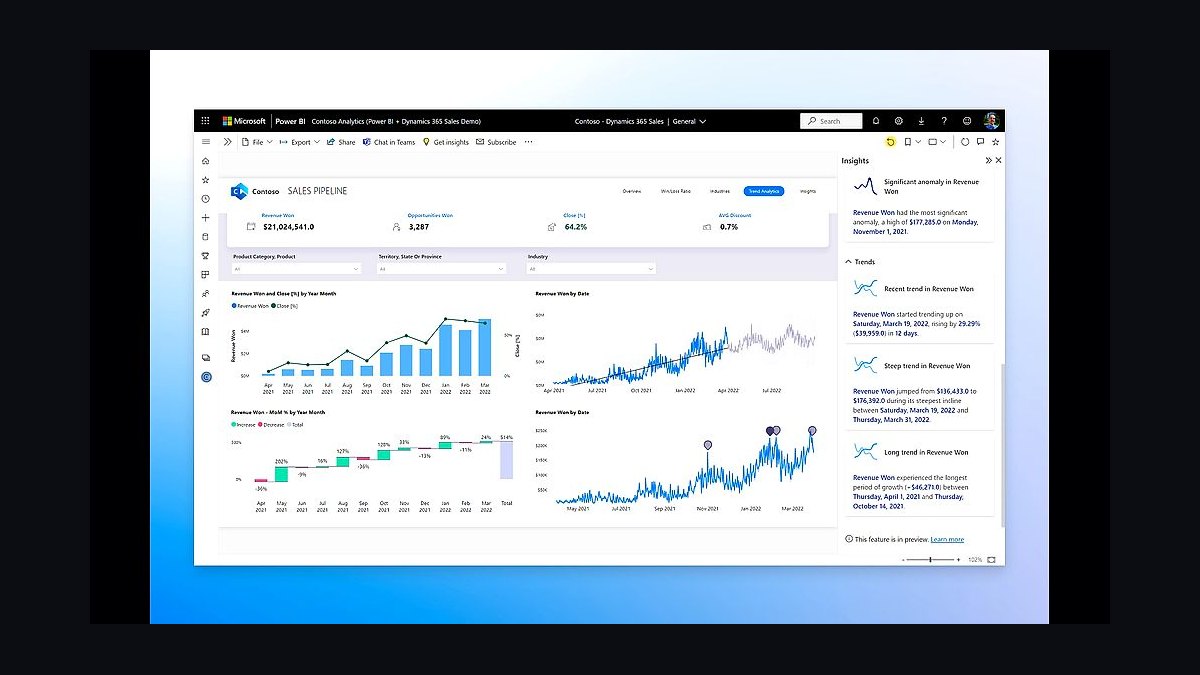
Power BI ranks ninth because once a shop tracks first-time-fix-rate, warranty-versus-retail margin, and parts-order cycle time, Power BI at $14 per user per month turns it into operator dashboards. It lets a multi-truck company see profitability by job type and first-time-fix-rate by technician, which is impossible from a single blended revenue number.
It is for shops running multiple trucks that need to spot which technicians and which job types are actually profitable. The trade-off is that smaller shops live fine on the FSM's built-in reporting and do not need the BI layer at all. QuickBooks Online, ranked eighth, holds the financial truth; Power BI turns it into decisions.
10CallRail
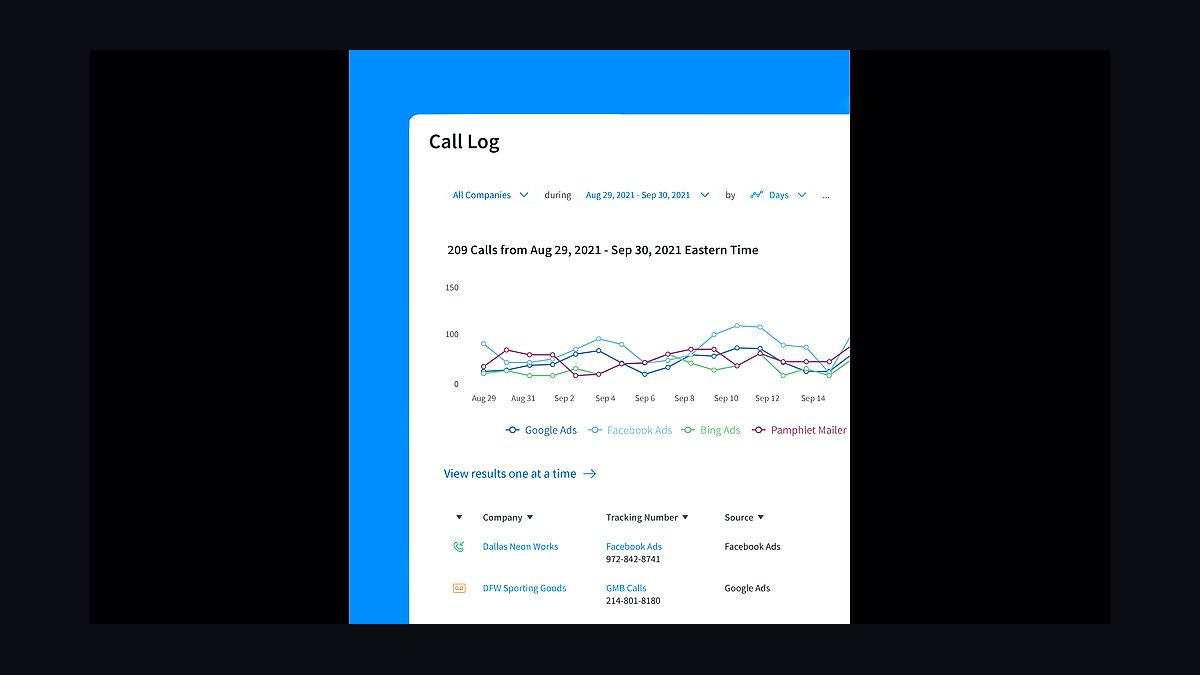
CallRail ranks tenth because it tracks which ads and pages drive booked appliance repair calls, starting around $45 per month, so a shop stops guessing where its retail lead spend actually works. It attributes calls to Google Local Services Ads, website pages, and other sources, closing the loop between marketing spend and booked jobs.
It is for shops already running paid lead generation that need attribution before scaling spend further. The trade-off is that it is a measurement layer, not a demand generator, so it does nothing for a shop with no retail marketing running. Power BI, ranked ninth, shows the margin; CallRail shows which channel produced the call.
How we ranked these
We ranked each tool on five weighted criteria: warranty-dispatch network integration depth (30%), model/serial diagnostics and parts-lookup coverage (25%), first-time-fix-rate support via truck inventory and reorder logic (20%), total cost of ownership at 2–10 technicians (15%), and retail/COD demand generation plus review capture (10%). Scores came from vendor documentation, published pricing, integration directories, and operator interviews across warranty-heavy and retail-heavy shops.
We deliberately ignored feature-count checklists, mobile app store ratings, and generic AI marketing claims because none predict repair-day outcomes. We also excluded enterprise ERP suites and multi-trade platforms that force appliance workflows into HVAC or plumbing molds, since the two-trip problem and warranty claim rails are unique. Vendors without verifiable pricing or live dispatch-network integrations were dropped rather than estimated.
What to look for
Match the stack to your demand mix first, not to the demo. If warranty-assigned jobs exceed roughly 40% of your schedule, ServicePower plus ServiceBench integration is close to mandatory, because rekeying claims destroys margin. If you are retail and COD focused, Housecall Pro with Google Local Services Ads and Podium will outperform a heavier warranty platform on both cost and booked-job rate.
The mistake most buyers make is choosing an FSM on scheduling features alone, then discovering it cannot ingest ServiceBench assignments or sync per-truck parts inventory. That forces manual claim entry and memory-based truck stocking, which quietly kills first-time-fix-rate. Buy for the integration rails and the parts loop, then negotiate price. Feature breadth is the least predictive variable in this category.
Related questions
What is the best tech stack for an appliance repair service in 2027?
The core is three load-bearing systems: an FSM platform like ServicePower or Housecall Pro for dispatch and mobile work orders, a warranty-dispatch integration such as ServiceBench that feeds assigned manufacturer jobs, and a model/serial diagnostics and parts pipeline through Marcone or Encompass. Around that sit truck inventory, COD payments, Podium reviews, Google LSA lead generation, and QuickBooks.
Do appliance repair companies really need warranty dispatch network integration?
If warranty-assigned work is a meaningful share of your schedule, yes. ServiceBench, ServicePower, and manufacturer servicer portals deliver the job, model and serial, claim authorization, and reimbursement. Without integration, a technician rekeys every dispatch by hand and claims age past deadlines. For pure retail shops, this layer is optional and often skipped entirely.
How does the two-trip problem affect appliance repair tech stack choices?
The two-trip problem is the single biggest cost driver: diagnose on visit one, discover the part is not stocked, order it, return on visit two. That doubles windshield time and annoys customers. Your stack must track per-truck inventory against actual job usage and trigger reorder, so common parts stay on the van and repairs finish on the first trip.
What should a solo appliance technician actually pay for software?
A solo tech typically runs Housecall Pro or Repair-CRM on the lightest tier, a Marcone parts account, built-in card payments, and QuickBooks. Realistic software spend is roughly $150–$400 per month plus payment processing. No warranty network and no BI layer are needed at one van, since the whole stack is three tools and a parts account.
Is ServicePower or Housecall Pro better for appliance repair?
ServicePower fits warranty-heavy servicers because it handles both FSM and dispatch-network connectivity, running roughly $80–$140 per technician monthly. Housecall Pro suits retail and COD-focused independents at $69–$300 monthly flat tiers, with cleaner consumer scheduling and payments. The deciding variable is your warranty-versus-retail demand mix, not raw feature counts.
How do model and serial numbers change the repair workflow?
You cannot fix a refrigerator without the exact model and serial, because they determine the wiring diagram, tech sheet, fault codes, and correct part number. Capturing model and serial at booking lets the tech pre-pull the right part before rolling. MarconeTech, SamuraiTech, and Encompass are where that lookup happens daily.
What role does Google Local Services Ads play for appliance repair shops?
Google Local Services Ads generate self-generated retail demand, which protects margin against lower warranty reimbursements. Pay-per-lead costs commonly run $15–$40 per appliance-repair lead, and the Google Guaranteed badge lifts local trust. CallRail at $45+ monthly tracks which ads drive booked calls. Pure warranty shops can skip this layer entirely.
Why is first-time-fix-rate the key metric for appliance repair software?
First-time-fix-rate measures how often a repair completes on the first visit, and it directly controls drive cost, labor utilization, and customer satisfaction. Every second trip doubles windshield time and erodes margin. The stack levers that move it are per-truck inventory tracking, automatic reorder, and model/serial diagnostics captured before dispatch.
FAQ
What is the best FSM software for appliance repair in 2027?
ServicePower is the strongest fit for warranty-heavy appliance servicers because it combines FSM with dispatch-network connectivity, running roughly $80–$140 per technician monthly. Housecall Pro is better for retail and COD-focused independents at $69–$300 monthly. ServiceTitan is the enterprise option but is heavier and pricier than most appliance shops need unless running large multi-trade operations.
How much does an appliance repair tech stack cost per month?
A solo tech runs roughly $150–$400 monthly in software plus payment processing. A small shop with two to four vans typically spends $400–$1,200 monthly across FSM, reviews, lead generation, and accounting. Warranty-heavy operations add network integration costs indirectly through claim volume rather than standalone subscription fees.
Can I run an appliance repair business without warranty network integration?
Yes, if you focus on retail and cash-on-delivery work. Many independents deliberately skip warranty networks because reimbursement rates are lower and acceptance metrics are strict. They generate demand through Google Local Services Ads, charge diagnostic fees plus parts and labor, and keep healthier margins. The tradeoff is that you must own demand generation entirely.
What parts distributors should appliance repair shops integrate with?
Marcone is the largest appliance parts distributor in North America and anchors most stacks through its ordering portal plus MarconeTech and SamuraiTech diagnostics. Encompass offers strong OEM breadth and model-keyed lookup. Reliable Parts and V&V Appliance Parts are solid regional alternatives. Most shops run two accounts for coverage on backordered parts.
How do I improve first-time-fix-rate in appliance repair?
Track per-truck inventory against actual job usage, set automatic reorder thresholds for common parts, and capture model and serial at booking so techs pre-pull the correct part. Review first-time-fix-rate by technician monthly in your FSM or Power BI. Most shops see measurable improvement within one quarter of disciplined truck stocking.
Is Podium worth it for a small appliance repair company?
Podium runs roughly $300–$600+ monthly depending on tier, which is steep for a solo tech but defensible once you have two or more vans and rely on reviews for retail lead flow. Birdeye is a close alternate with stronger multi-location reporting. If retail demand is not a priority, skip this layer and use your FSM's built-in review requests.
What accounting software pairs best with appliance repair FSM platforms?
QuickBooks Online at $35–$235 monthly is the default because most FSM platforms sync to it and it handles job costing, parts COGS, payroll, and warranty reimbursement reconciliation. Xero is capable but has a thinner US service-trade integration ecosystem. Choose QuickBooks unless you have an existing accountant relationship that dictates otherwise.
Do appliance repair shops need Power BI or is FSM reporting enough?
Smaller shops live fine on built-in FSM dashboards. Power BI at $14 per user monthly matters once you run multiple trucks and need profitability by job type, first-time-fix-rate by technician, and parts-order cycle time in one view. The BI layer is a scaling tool, not a starting requirement.
How should warranty and retail jobs be tracked differently?
Tag job type at intake so warranty-assigned and self-generated retail work report separately. Warranty pays fixed lower reimbursement and competes on acceptance rate and turnaround; retail charges diagnostic plus parts and labor at healthier margins. Mixing them in one undifferentiated report hides which work actually makes money and lets warranty volume quietly subsidize itself.
What is the biggest mistake when buying appliance repair software?
Choosing an FSM on scheduling features alone, then discovering it cannot ingest ServiceBench assignments or sync per-truck parts inventory. That forces manual claim entry and memory-based truck stocking, which kills first-time-fix-rate. Buy for integration rails and the parts loop first, then negotiate price. Feature breadth is the least predictive variable in this category.
Sources
- https://www.servicepower.com/
- https://www.housecallpro.com/
- https://www.marcone.com/
- https://www.encompassparts.com/
- https://www.podium.com/
- https://quickbooks.intuit.com/
- https://ads.google.com/local-services-ads/
- https://powerbi.microsoft.com/
- https://www.servicetitan.com/
- https://www.birdeye.com/
Related on PULSE
This page will be disappearing soon. Save it to your device for $1 — or read it free while it is here.
@Kory-White- · if Venmo asks, the last 4 of my number are 2012
This page is gone.
This one is off the shelf now. $1 keeps it on your phone for good — the whole page, pictures and diagrams included.
 pulse-tech-stacksTop 10 Best Tech Stack Tools for Bars and Pubs in 2027
 pulse-tech-stacksTop 10 Best Tech Stack Tools for API Security Vendors in 2027
 pulse-tech-stacksTop 10 Best Tech Stack Tools for HVAC Equipment Distributors in 2027
 pulse-tech-stacksTop 10 Best Tech Stack Tools for Septic and Portable Sanitation Services in 2027
 tkTop 10 Best Tech Stack Tools for Concrete and Paving Contractors in 2027
 pulse-tech-stacksTop 10 Best Tech Stack Tools for Online Travel Agencies (OTAs) in 2027
 pulse-tech-stacksTop 10 Best Tech Stack Tools for RV Dealerships in 2027
 pulse-tech-stacksTop 10 Best Tech Stack Tools for Window Cleaning Services in 2027
 pulse-tech-stacksTop 10 Best Tech Stack Tools for HOA and Community Association Management Companies in 2027
 pulse-tech-stacksTop 10 Best Tech Stack Tools for AI Music Generation Companies in 2027