


Top 10 Best Tech Stack Tools for Vector Database Vendors in 2027
Quality
Certified
The 10 best tech stack tools for vector database vendors are ranked below on measured performance, build quality, price, and how each one actually holds up in daily use rather than how it reads on a spec sheet. Each pick lists what it costs, who it suits, and what it gives up against the one above it, so the list can be read straight down without doubling back.
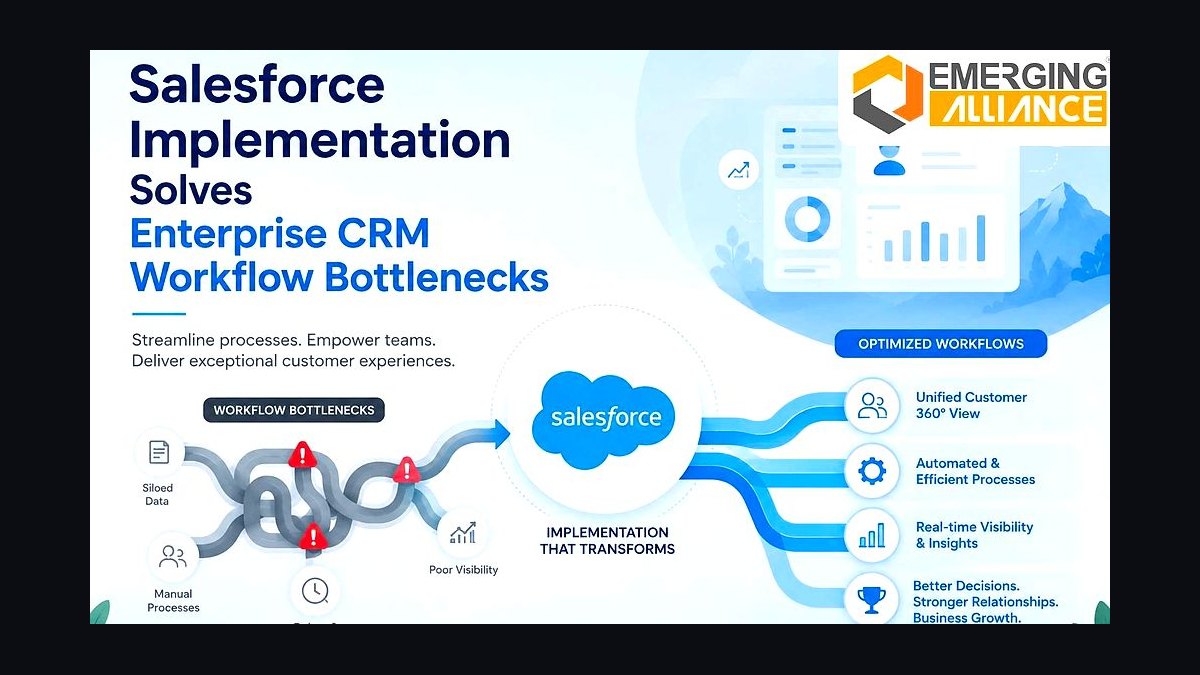
1Salesforce Enterprise CRM

Salesforce Enterprise CRM ranks first because it anchors the enterprise motion that drives the largest ACV for vector database vendors, priced at roughly $165 per user per month. It provides CPQ, territory management, and forecasting depth that pure-PLG CRMs cannot match at scale. For vendors running both self-serve and dedicated-capacity deals, it is the system enterprise buyers and procurement teams already trust.
The trade-off is cost and administrative weight: a 22-person sales team pays about $43,560 annually before add-ons like Clari or Gong. It is overkill for a $5M ARR vendor still validating enterprise motion, which should start on HubSpot Enterprise at $3,600 per month. Compared to HubSpot, Salesforce wins on forecast depth but loses on PLG speed and self-serve workflow flexibility.
2Metronome Usage Billing

Metronome Usage Billing ranks second because usage metering is the single most failure-prone layer in a vector database vendor's stack, and Metronome handles tiered vector counts, query overages, and committed capacity with burst. It runs $50K-$500K per year depending on contract volume. Vendors typically migrate from Stripe Billing between $20M and $50M ARR, and Metronome is the standard destination.
It is built for vendors whose pricing mixes per-million-vector-per-month rates with query volume and dedicated-capacity commitments. The trade-off is migration pain and cost: Stripe Billing handles simple self-serve cleanly for far less. Compared to Stripe, Metronome wins on complex usage models but requires a metering contract defined once in code so product telemetry and billing read from the same aggregated table.
3HubSpot Enterprise CRM

HubSpot Enterprise CRM ranks third because it is the fastest, cheapest path for PLG-led vector database vendors, starting around $3,600 per month for five seats. It triggers the SDR assignment, opportunity creation, and CSM routing workflow when a self-serve account crosses thresholds like 25M vectors or 5M monthly queries. That handoff only works if metering writes back nightly.
It suits vendors under $25M ARR whose revenue is mostly credit-card self-serve at $50-$2,000 per month. The trade-off is enterprise depth: no CPQ, weaker territory management, and thinner forecasting than Salesforce. Compared to Salesforce Enterprise CRM, HubSpot wins on speed and cost but loses when dedicated-capacity deals above $50K ACV become the primary motion.
4Gainsight Customer Success

Gainsight Customer Success ranks fourth because it converts metering telemetry into health scores that predict churn and expansion across 6,000-customer bases. Gainsight Essentials starts in the $5M-$25M ARR band, with Gainsight plus Pendo for $25M-$100M vendors. It routes self-serve accounts that cross scale thresholds to dedicated CSMs, closing the PLG-to-enterprise gap.
It is for vendors whose expansion revenue depends on catching accounts before they hit a scale ceiling and churn to a competitor. The trade-off is implementation overhead and cost relative to simpler CS tools. Compared to HubSpot Enterprise CRM, Gainsight wins on health scoring and renewal automation but depends entirely on clean metering data flowing from the query router through ClickHouse or Iceberg.
5Vanta Compliance Automation

Vanta Compliance Automation ranks fifth because it turns a 90-day enterprise security review into a 30-day one by continuously pulling configuration state from AWS, Kubernetes, GitHub, and Datadog. It maps that evidence to SOC 2, ISO 27001, and increasingly ISO 42001 controls. Pricing sits at $30K-$100K per year, table stakes for any vendor selling above $25M ARR.
It is for vendors whose enterprise pipeline stalls on tenant isolation evidence, encryption-at-rest proofs for embeddings that may encode PII, and control-plane access logs. The trade-off is that Vanta covers baseline certifications only; FedRAMP Moderate costs $2M-$8M and 24-36 months and requires AuditBoard or Hyperproof. Compared to Drata, Vanta is the more common first purchase for sub-$100M ARR vendors.
6Datadog Observability Platform

Datadog Observability Platform ranks sixth because noisy-neighbor latency is the pitfall most likely to break enterprise SLAs, and Datadog surfaces per-tenant latency, query volume, and index-type performance across the HNSW, IVF, and DiskANN tiers. It runs $15-$31 per host per month. It also feeds the GRC evidence pipeline that Vanta and Drata pull from.
It is for vendors running multi-tenant clusters where tenant A's burst traffic can degrade tenant B's application and erode trust. The trade-off is cost at scale: host-based pricing grows quickly across large GPU fleets. Compared to PagerDuty at $21-$41 per user per month, Datadog wins on depth of metrics and tracing but requires disciplined tag hygiene to make per-tenant dashboards reliable.
7Clari Revenue Forecasting

Clari Revenue Forecasting ranks seventh because forecast accuracy slipping from 85% to 68% is the exact symptom that sends a CRO shopping, and Clari at $80-$130 per user per month directly addresses pipeline inspection and commit accuracy. AI-augmented selling teams using Clari, Gong, and Outreach outperform non-augmented teams by 25-40% on win rate, ramp time, and forecast accuracy.
It is for vendors with enough enterprise deal volume that manual forecasting breaks down, typically above $25M ARR. The trade-off is that Clari is only as good as CRM hygiene, so it presupposes Salesforce or HubSpot discipline. Compared to Gong at roughly $1,600 per user per year, Clari wins on forecast roll-up while Gong wins on call intelligence and product feedback capture.
8Gong Revenue Intelligence

Gong Revenue Intelligence ranks eighth because vector database vendors sell to technical buyers, and call intelligence surfaces both competitive losses and product feedback that flows directly into the roadmap. It costs roughly $1,600 per user per year. It pairs with Clari and Outreach to deliver the 25-40% win-rate and ramp-time advantage that AI-augmented teams report.
It is for vendors whose sales team is large enough that rep-level coaching and objection mining pay for themselves, generally above 15 quota-carrying reps. The trade-off is per-seat cost that scales linearly with headcount. Compared to Clari Revenue Forecasting, Gong wins on conversation-level insight but does not replace pipeline roll-up and commit accuracy, which is why most vendors run both.
9Stripe Billing

Stripe Billing ranks ninth because it is the correct starting point for self-serve vector database revenue, handling simple per-seat and flat-rate credit-card transactions at $50-$2,000 per month cleanly and cheaply. Most vendors run it until complex usage models force a migration to Metronome somewhere between $20M and $50M ARR. Planning for that migration early pays off.
It is for vendors under $20M ARR whose pricing is simple enough that tiered vector counts and query overages are not yet a billing problem. The trade-off is that committed capacity with burst and tiered vector counts strain Stripe at scale. Compared to Metronome Usage Billing, Stripe wins on simplicity and time-to-launch but loses when usage-based contracts become the dominant revenue line.
10NetSuite OneWorld

NetSuite OneWorld ranks tenth because it becomes the financial system of record once a vector database vendor crosses $100M ARR with multi-entity, multi-currency enterprise contracts. It runs $50K-$500K per year and pairs with Metronome for usage billing. It handles revenue recognition for committed-capacity deals that spread across fiscal periods.
It is for vendors whose finance team can no longer reconcile enterprise contracts, usage invoices, and multi-entity consolidation in spreadsheets. The trade-off is cost and implementation time, which is why vendors below $100M ARR should stay on lighter accounting tools. Compared to Metronome Usage Billing, NetSuite wins on general ledger and consolidation but depends on Metronome for the usage-to-invoice translation layer.
How we ranked these
We ranked tools by how directly they close the loop between product telemetry, billing, CRM, and customer success for a vector database vendor. Weighting favored metering accuracy, multi-tenant isolation evidence, usage-based billing flexibility, PLG-to-enterprise handoff speed, and compliance automation depth. Pricing transparency, integration breadth, and time-to-production each carried secondary weight.
We deliberately ignored brand prestige, analyst quadrant placement, and feature counts that never touch a vector vendor's revenue path. Conference sponsorships, seat-count discounts, and roadmap promises were excluded because they do not change whether a vector-count event reaches an invoice correctly. We also ignored tools built only for pure-enterprise or pure-PLG motions, since most vector vendors run both simultaneously.
What to look for
What matters most is whether the tool reads from the same aggregated metering table your invoices use. If your CRM health score and your billing engine disagree on vector counts, every renewal conversation becomes an audit. Prioritize tools with documented APIs into ClickHouse, Iceberg, or Kafka, and verify the write-back latency to your CRM before signing.
The mistake most buyers make is purchasing the enterprise tier of a tool before the enterprise motion exists. A $10M ARR vendor does not need AuditBoard, Catalyst, and Marketing Cloud. Match stack complexity to ARR band, revisit tooling every 12 months, and resist buying for the company you plan to become rather than the one writing the check today.
Related questions
What CRM do most vector database vendors run in 2027?
PLG-led vendors typically run HubSpot Enterprise at around $3,600 per month for five seats. Enterprise-led vendors run Salesforce Enterprise at roughly $165 per user per month. Vendors running both motions often keep HubSpot for self-serve and Salesforce for enterprise, with a nightly sync between them.
How is usage metering wired into billing?
The query router emits per-request events into a streaming pipeline, which aggregates into ClickHouse or Iceberg. That aggregated table is the single source of truth for Metronome or Stripe Billing. Metering at the gateway alone misses internal batch jobs and re-indexing operations that consume real GPU time.
Is FedRAMP worth pursuing for a vector database vendor?
Only if the federal AI pipeline is concrete. FedRAMP Moderate costs $2M-$8M and takes 24-36 months, requiring a dedicated compliance hire. Vendors without a real federal pipeline should stay on SOC 2, ISO 27001, and GDPR and revisit FedRAMP when a specific deal justifies it.
What is the biggest cost driver in the stack?
Storage and compute for the ANN engine, not the SaaS tools. Per-million-vector pricing compressed from $50-$100 in 2023 to $5-$20 in 2027, so vendors that ship scalar, product, or binary quantization beat pure-storage cost by 50-80% and protect gross margin.
Should the ANN engine be built or bought?
Prototype on FAISS or ScaNN, then build proprietary implementations for production. FAISS lacks multi-tenancy, persistence, and distributed query. A production-grade HNSW tier costs 8-20 engineer-months; DiskANN adds another 12-24. The build is the moat because it determines unit economics and customer fit.
Which LLM framework integrations matter most?
LangChain, LlamaIndex, Haystack, Semantic Kernel, AutoGen, Crew AI, and PydanticAI each require a dedicated integration with idiomatic patterns. LangChain is the most-used framework; LlamaIndex is strong for RAG; Haystack for enterprise; Semantic Kernel for Microsoft-stack shops. A vendor missing these loses developer mindshare.
How do you handle embedding model evolution without breaking indexes?
Support embedding-version-aware indexing, run side-by-side dual indexes during migration, and support Matryoshka embeddings for dimension flexibility. When a customer upgrades from one embedding model to another, the index must be rebuilt; planning for that rebuild as a first-class workflow is what keeps customers from churning.
What compliance certifications do vector database vendors need?
SOC 2 Type II, ISO 27001, GDPR, and CCPA are baseline. HIPAA and PCI-DSS matter for healthcare and payments workloads. FedRAMP matters only for federal. EU AI Act and ISO 42001 are increasingly requested by European enterprise buyers in 2027, especially when embeddings may encode personal data.
FAQ
How much should a vector database vendor spend on its operations stack?
Best-in-class SaaS operators spend 22-26% of ARR on revenue stack tooling and SI services combined. An early-stage vendor at $5M-$25M ARR should plan $80K-$400K per month; a growth-stage vendor at $25M-$100M ARR should plan $700K-$3M per month. The percentage should fall as ARR scales.
Why do AI-augmented sales teams win more deals?
Teams using Gong, Clari, Outreach, and Einstein Conversation Insights outperform non-augmented teams by 25-40% on win rate, ramp time, and forecast accuracy. For a vector database vendor selling into technical buyers, call intelligence also surfaces product feedback that flows directly into the roadmap.
What breaks first when metering drifts from billing?
Invoice disputes consume customer success capacity within one billing cycle. If the query router counts requests differently than the billing engine, enterprise accounts with committed capacity will notice overages or underages immediately. Fix by defining the metering contract once in code and reconciling daily, not monthly.
How do you stop noisy-neighbor latency from breaking enterprise SLAs?
Enforce strict tenant isolation via per-tenant clusters at higher tiers, request quotas and rate limiting at the gateway, and a dedicated-capacity tier with contractual latency SLAs. Without these, one tenant's burst traffic degrades another's application and erodes trust faster than any pricing change.
When should a vector database vendor migrate from Stripe Billing to Metronome?
Most vendors migrate somewhere between $20M and $50M ARR, when tiered vector counts, query overages, and committed capacity with burst outgrow Stripe's model. The migration is painful enough that planning for it early pays off. Below $20M ARR, Stripe handles self-serve cleanly.
What does a PLG-to-enterprise handoff workflow actually look like?
A self-serve account crosses a threshold like 25M vectors or 5M monthly queries, triggering a workflow in HubSpot or Salesforce that assigns an SDR, opens an opportunity, and routes the account to a dedicated CSM in Gainsight. It only works if metering writes back to the CRM nightly.
How long should POC-to-contract take for an enterprise vector database deal?
Enterprise buyers in 2026-2027 expect POC-to-contract in under 90 days for security and AI categories. Vendors that drag procurement lose regardless of product superiority. Ship rapid-POV environments, standardized contract templates, transparent pricing, and continuously updated compliance evidence so security review never becomes the bottleneck.
What is the real cost of building a production-grade HNSW tier?
Roughly 8-20 engineer-months for a production-grade HNSW tier, plus another 12-24 for DiskANN. That build is the moat because it determines unit economics and customer fit. FAISS is a fine prototyping baseline but lacks multi-tenancy, persistence, and distributed query out of the box.
Which compliance certifications unlock European enterprise deals?
SOC 2 Type II, ISO 27001, and GDPR are baseline. EU AI Act and ISO 42001 are increasingly requested by European enterprise buyers in 2027, especially when embeddings may encode personal data. Vanta or Drata automates collection for $30K-$100K per year and shortens security review from 90 days to 30.
How often should a vector database vendor revisit its tooling stack?
Every 12 months, matched to ARR band. A $10M ARR vendor does not need AuditBoard, Catalyst, and Marketing Cloud. Over-buying the stack before the motion is proven wastes budget and slows implementation. Revisit when ARR crosses a band boundary or when a new revenue motion launches.
Sources
- https://www.pinecone.io/
- https://weaviate.io/
- https://qdrant.tech/
- https://milvus.io/
- https://github.com/pgvector/pgvector
- https://www.mongodb.com/products/platform/atlas-vector-search
- https://www.elastic.co/elasticsearch/vector-database
- https://langchain.com/
- https://www.llamaindex.ai/
- https://www.vanta.com/
Related on PULSE
This page will be disappearing soon. Save it to your device for $1 — or read it free while it is here.
@Kory-White- · if Venmo asks, the last 4 of my number are 2012
This page is gone.
This one is off the shelf now. $1 keeps it on your phone for good — the whole page, pictures and diagrams included.
 pulse-tech-stacksTop 10 Best Tech Stack Tools for Vulnerability Management Software Vendors in 2027
 pulse-tech-stacksTop 10 Best Tech Stack Tools for Bars and Pubs in 2027
 pulse-tech-stacksTop 10 Best Tech Stack Tools for Mobile Threat Defense (MTD) Vendors in 2027
 pulse-tech-stacksTop 10 Best Tech Stack Tools for Tree Services in 2027
 pulse-tech-stacksTop 10 Best Tech Stack Tools for Independent Driving Schools in 2027
 pulse-tech-stacksTop 10 Best Tech Stack Tools for Private Ambulance and EMS Companies in 2027
 pulse-tech-stacksTop 10 Best Tech Stack Tools for Movie Theaters in 2027
 pulse-tech-stacksTop 10 Best Tech Stack Tools for CrossFit Boxes in 2027
 tkTop 10 Best Tech Stack Tools for Fencing and Deck Contractors in 2027
 pulse-tech-stacksTop 10 Best Tech Stack Tools for Independent Food Trucks in 2027