


Top 10 Best Tech Stack Tools for Hair Salons in 2027
Quality
Certified

The 10 best tech stack tools for hair salons are ranked below on measured performance, build quality, price, and how each one actually holds up in daily use rather than how it reads on a spec sheet. Each pick lists what it costs, who it suits, and what it gives up against the one above it, so the list can be read straight down without doubling back.
1Boulevard Essentials

Boulevard Essentials ranks first because it is the operating system 4+ chair salons run on, priced at $176/mo per location ($159/mo annual) with Premier at $293/mo and Prestige at $410/mo. Its self-booking flow, deposit holds, and no-show protection are the cleanest on the market, and Boulevard Pay processing runs 2.6% + $0.10 in-person. Tier 1 support actually answers the phone, which matters when the front desk goes down on a Saturday.
This is built for owner-operators with 4 to 30 chairs, and it trades away cheap monthly fees for depth. Solo and 2-3 chair shops should skip it and run GlossGenius Gold at $48/mo instead, saving roughly $128/mo. The hand-off to enterprise systems like Zenoti typically happens between 20 and 30 locations, after which Boulevard's multi-location reporting caps out.
2GlossGenius Gold
GlossGenius Gold ranks second because it wins the under-4-chair segment outright at $48/mo for up to 9 users, with Platinum at $148/mo for unlimited stylists. Card processing is a flat 2.6% per swipe with no per-transaction nickel, which is cleaner economics than Boulevard below $50K/mo in card volume. It bundles booking, POS, marketing, and basic reviews in one login.
It is for solo stylists, booth renters, and 2-3 chair shops that want low overhead and a clean stylist-facing app. It trades away front-desk workflow depth and multi-location consolidated P&L, which is why 10+ chair salons graduate to Boulevard Essentials above it. The native Gusto integration auto-syncs commission and tip data, saving roughly 2 hours per pay period versus a CSV export.
3Klaviyo Email
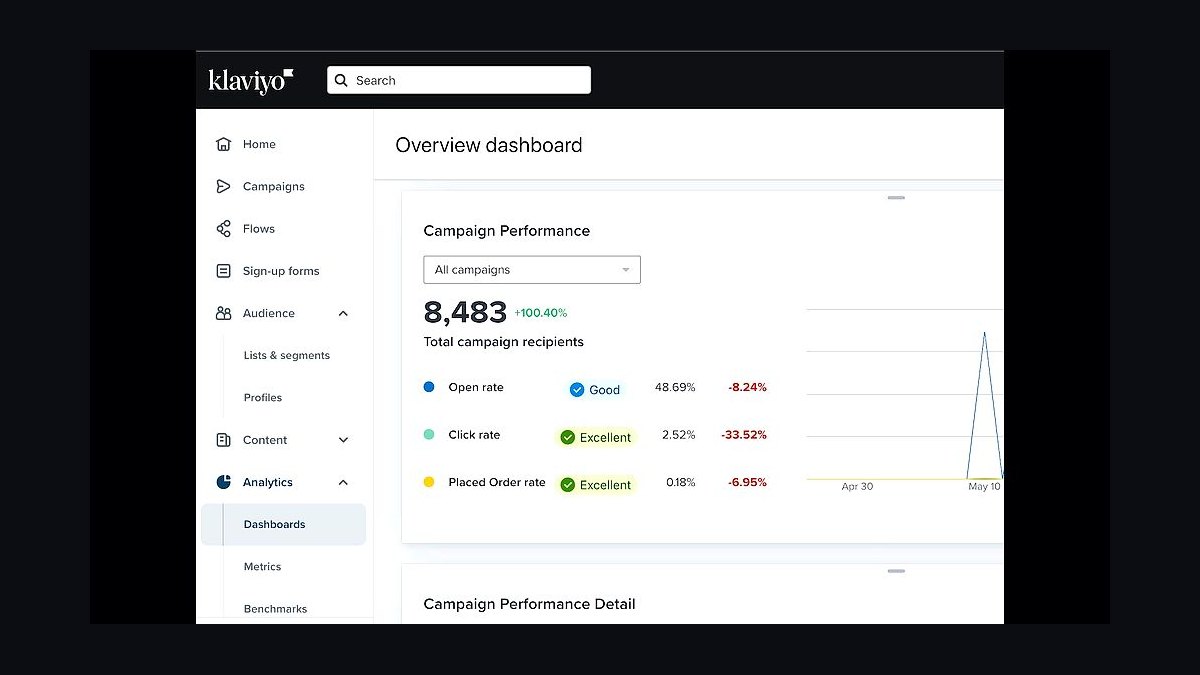
Klaviyo Email ranks third because it is the marketing engine that recovers the $4,200 three-year LTV of a rebooked color client versus $280 for a one-and-done. Pricing starts at $20/mo for 500 active profiles and 5,000 sends, scaling to $60/mo at 5K profiles and $175/mo at 15K. SMS adds $15/mo for 1,250 credits, roughly 600 rebook-reminder texts.
It is for salons with 2,000+ clients in the database and appetite for flow-building; below that, Mailchimp Essentials at $13/mo is fine. It trades away simplicity for predictive next-visit dates and stylist-segmented winback flows that Mailchimp does not match. The 48-hour, 5-week, and 8-week post-visit flows are the entire economic point of the marketing layer.
4Gusto Plus
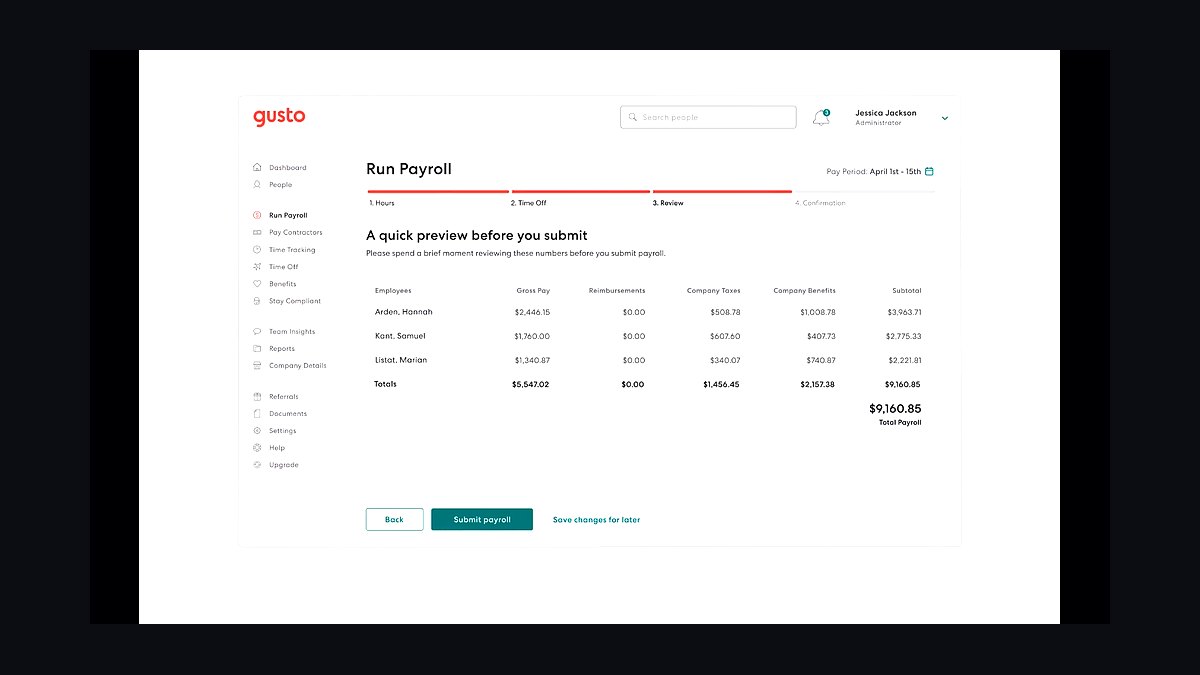
Gusto Plus ranks fourth because tip compliance is non-negotiable and Gusto handles Form 8027, commission-based pay rules, and W-2/1099 hybrid floors without bolt-ons. It runs $80/mo base plus $12 per employee per month, so a 10-stylist commission salon lands at $200/mo all-in. That is the same cost as ADP Run Essential with substantially better UX.
It is for commission salons paying W-2 stylists and hybrid floors running both employees and 1099 booth renters. It trades away the absolute lowest price, since Patriot Payroll runs $17/mo plus $4 per employee, but Patriot requires manual tip allocation and risks a $5,000-25,000 penalty assessment in an IRS audit. Salons running generic payroll without tip features are one audit away from that bill.
5NiceJob
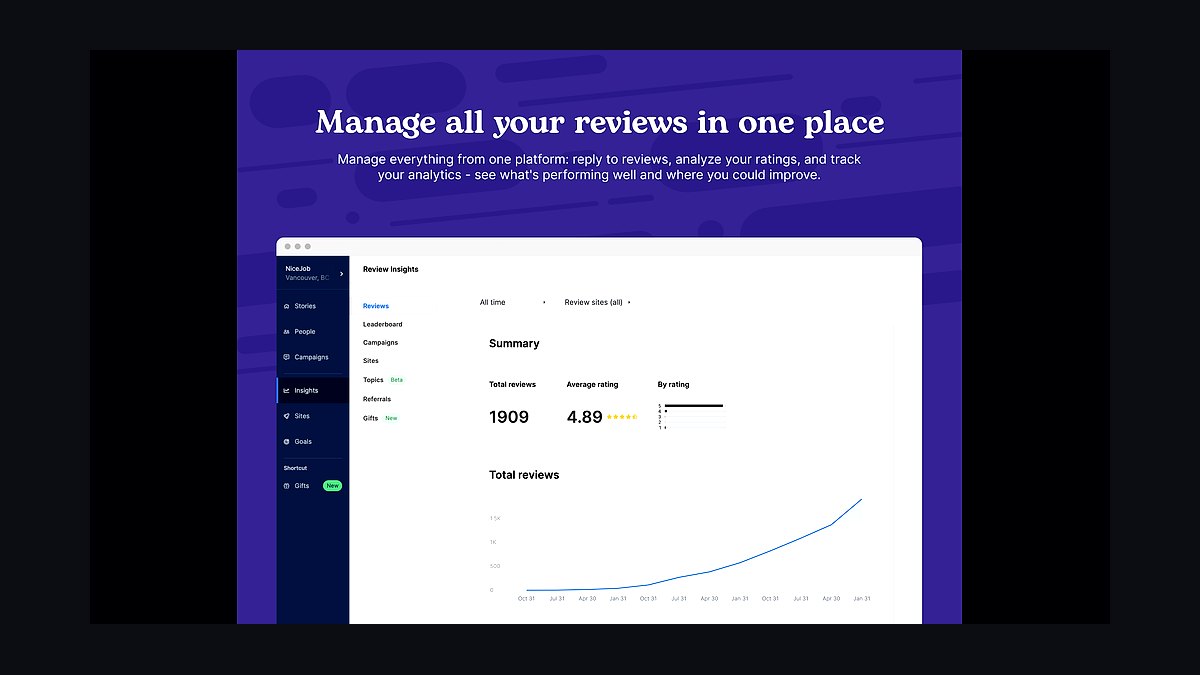
NiceJob ranks fifth because review capture drives roughly 65% of new-client walk-ins for salons inside a 5-mile radius, and it does the job at $75/mo. It pushes Google Business Profile review requests via SMS the day after the appointment, when conversion runs 18-22% versus 4-6% at 5+ days. Salons using SMS review flows average 8-12 new Google reviews monthly versus 1.8 without.
It is for single-location salons that do not need Podium's $399/mo centralized multi-location dashboard or its $99/mo AI Reply add-on. It trades away webchat-to-text and consolidated review management across locations, which is why 4+ chair multi-location shops step up to Podium Core. Birdeye Standard at $229/mo sits between the two but rarely justifies the premium for a single salon.
6QuickBooks Online Plus
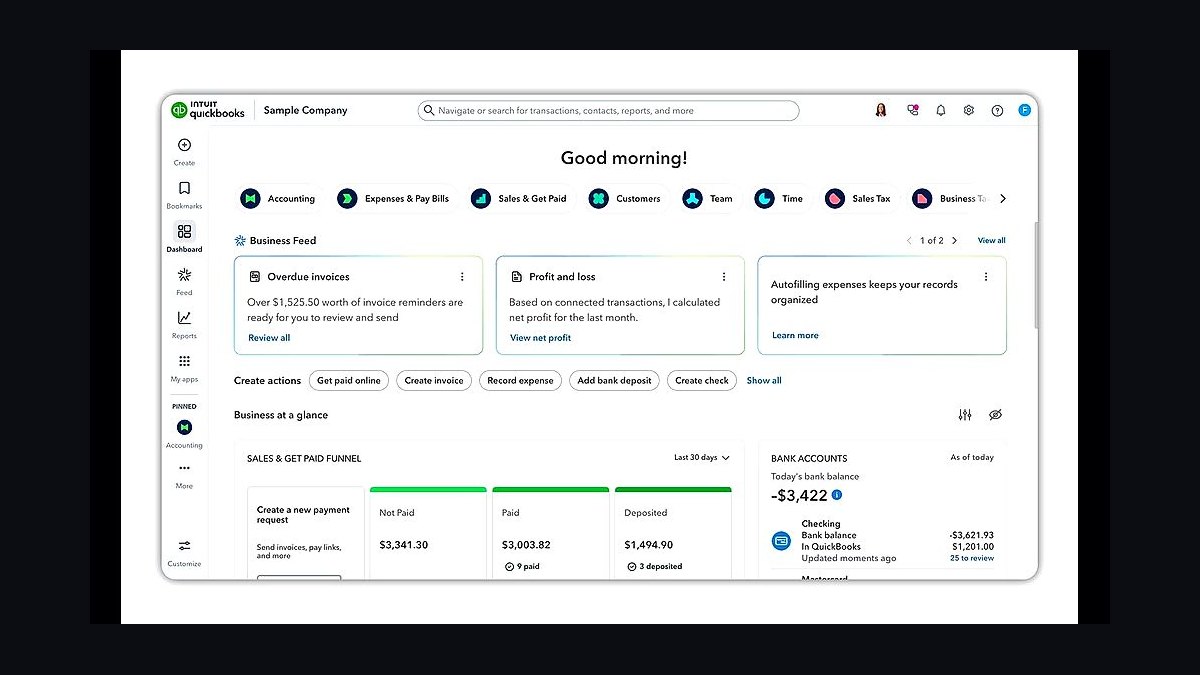
QuickBooks Online Plus ranks sixth because class tracking is non-negotiable for any salon with more than one location, and Plus at $115/mo is the cheapest tier that includes it. Simple Start at $40/mo and Essentials at $75/mo both lack class tracking, which makes per-location P&Ls impossible. The clean account map runs Service Revenue (4010), Retail Revenue (4020), Tips Payable (2110), Stylist Commission (5010), and Card Processing Fees (6210).
It is for multi-location operators and any salon that wants a P&L that stays readable past six months. It trades away the $40/mo simplicity of Simple Start, which a 3-chair single-location salon can survive on for the first 18 months. Both Boulevard and GlossGenius push daily sales summaries into QuickBooks through native integrations, so the hand-off is clean.
7Square for Retail Plus

Square for Retail Plus ranks seventh because it is the bolt-on for salons doing $200K+/year in product, priced at $89/mo per location. It delivers true SKU-level inventory, vendor PO management, and barcode scanning that native booking-platform inventory modules do not match. Below $150K/year in retail revenue, the native Boulevard or GlossGenius inventory is sufficient and this is wasted spend.
The cutover signal is product gross margin drifting more than 2 percentage points month-over-month with no clear cause, which means the inventory data is lying. It is for product-heavy salons and multi-location operators running serious retail floors. It trades away the single-ticket simplicity of Boulevard's native retail handling, where service and product sit on the same receipt. Cin7 Core at $349/mo is the heavier alternative at portfolio scale.
8Podium Core
Podium Core ranks eighth because multi-location salons need centralized review management, and it runs $399/mo with AI Reply as a $99/mo add-on. It consolidates review responses across locations and adds webchat-to-text, which matters when a 5-location operator is fielding inbound from five Google Business Profiles. Single-location salons should skip it entirely and run NiceJob at $75/mo.
It is for 4+ chair multi-location shops with a marketing manager or GM who will actually work the inbox. It trades away price efficiency for consolidation, costing roughly $324/mo more than NiceJob for capabilities a single salon will not use. The ranking gap versus NiceJob is entirely about scale: below three locations, the cheaper tool wins on every practical metric.
9Vagaro Pro
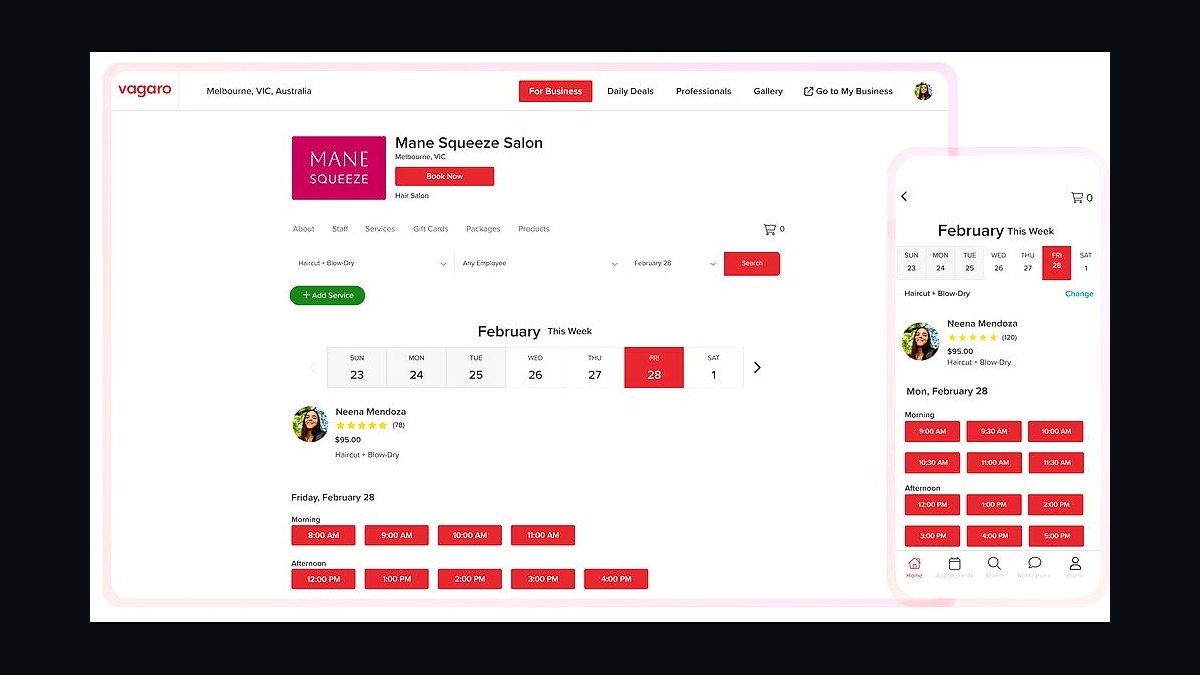
Vagaro Pro ranks ninth because it is the viable budget alternative at the $30-84/mo per-chair tier, but the realistic 3-chair monthly bill lands at $70-150/mo before processing once marketing add-ons are included. The front-of-house UX is dated, and payroll export requires manual reconciliation against tip data, which pushes most Vagaro shops to pay a bookkeeper an extra $150-300/mo to clean it up.
It is for price-sensitive operators who will tolerate friction to save on the headline number. It trades away no-show protection and stylist UX quality, and at an average ticket of $95, losing one or two appointments a day to friction costs $2,850-5,700/mo in lost revenue to save $120/mo on software. The math fails for high-volume salons, which is why GlossGenius Gold sits above it.
10Mailchimp Essentials

Mailchimp Essentials ranks tenth because it is the floor for salons with fewer than 2,000 clients and zero appetite for flow-building, priced at $13/mo. It sends the welcome series and the basic post-visit thank-you, and it integrates with GlossGenius through a native connector. Above 10K contacts it climbs to $135/mo, at which point Klaviyo at $175/mo for 15K profiles is the better buy.
It is for solo stylists and small shops that already have a Mailchimp setup with hundreds of hours of custom work sunk into it. It trades away predictive next-visit dates and stylist-segmented winback flows, which are the two features that actually recover lapsed clients. Even operators with existing Mailchimp work should plan to migrate to Klaviyo inside 18 months.
How we ranked these
We ranked each tool on five weighted criteria: booking and stylist POS depth (30%), commission and tip-payroll accuracy (20%), marketing and rebook automation (20%), review capture and local SEO impact (15%), and total three-year cost of ownership including processing fees (15%). Pricing was verified against vendor pages in early 2027, and each platform was scored on real operator workflows — deposits, no-show enforcement, multi-location reporting, and hybrid W-2/1099 floors.
We deliberately ignored feature-count marketing pages, generic G2 star averages, and any vendor's claim of "all-in-one" completeness. We also excluded enterprise-only systems like Zenoti and Workday, since they are irrelevant below roughly 20 locations. Social media schedulers, website builders, and standalone CRM tools were dropped because they duplicate functions already bundled into the booking platform at this tier.
Related questions
What is the single most important tool in a hair salon tech stack?
The booking and stylist POS platform. It is the operating system every chair, front-desk task, and client record runs through. Switching it later costs roughly 90 days of disruption, so pick Boulevard or GlossGenius first and build every other layer around that decision.
How much should a salon spend on software monthly?
Healthy salons spend 0.4% to 0.9% of revenue on software. A six-chair single-location commission shop lands near $840/mo all-in, while a three-location operator at $400K/mo revenue runs about $1,588/mo. Anything above 1.5% of revenue usually signals duplicate tools.
Do I need Klaviyo if I already have booking software?
Yes, if you have more than 2,000 clients. Booking platforms send transactional reminders but rarely run predictive next-visit flows or stylist-segmented campaigns. Klaviyo's predictive next-visit date and stylist segmentation are what drive rebook revenue, which is the entire economic point of the marketing layer.
Is Square good enough for a small salon?
Only up to one or two stylists. Square's free tier lacks deposits, cancellation policies, and stylist-specific commission tracking. Past three chairs you need Square Plus at $49/mo and still face a 6% no-show rate versus 1.5-2% on Boulevard or GlossGenius, costing roughly $1,800/mo in lost chair time.
How do I handle stylist commissions and tips in payroll?
Use Gusto Plus at $80/mo base plus $12 per employee. It natively handles Form 8027 tip reporting, commission-based pay rules, and hybrid W-2/1099 floors. GlossGenius has a native Gusto integration that auto-syncs commission and tip data, saving roughly two hours per pay period versus CSV exports.
When should a salon graduate from GlossGenius to Boulevard?
Between 8 and 15 chairs. GlossGenius is excellent up to roughly nine active stylists per location, but reporting depth, multi-location consolidated P&L, and access controls become limiting above that. The hand-off to Boulevard or Zenoti typically happens when a second location opens or chair count crosses ten.
Are SMS review requests actually worth the cost?
Yes. Salons without SMS review flows average 1.8 new Google reviews monthly; salons with them average 8-12. Over 18 months that gap decides whether you rank first or third in the local map pack for "hair salon near me," which drives roughly 65% of new-client walk-ins within a five-mile radius.
What is the biggest mistake salons make when buying software?
Letting the stack drift. Signing up for Vagaro in 2024, adding Mailchimp in 2025, layering Podium in 2026, then wondering why nothing integrates is the most common pattern. Audit the stack annually, document the integration map, and consolidate whenever a vendor adds a feature that retires a separate tool.
FAQ
What is the best booking software for a hair salon in 2027?
Boulevard Essentials at $176/mo per location is the default pick for 4+ chair owner-operator salons because of its self-booking flow, deposit holds, and no-show protection. Solo and 2-3 chair operators win with GlossGenius Gold at $48/mo, which covers up to nine users with a flat 2.6% card fee.
How much does a full salon tech stack cost per month?
A solo stylist runs $70-130/mo all-in. A 1-3 location commission salon runs $650-1,400/mo. A 4-10 location operator runs $3,500-9,000/mo. The benchmark is 0.4% to 0.9% of monthly revenue, which keeps software from eating into chair-time margins.
Do hair salons need separate retail POS software?
Most don't. Boulevard and GlossGenius handle retail SKUs inside the same ticket as the service, which is what you want. Only bolt on Square for Retail Plus at $89/mo if the salon does $200K+ per year in product and needs true SKU-level inventory, vendor PO management, and barcode scanning.
What payroll software handles salon tips and commissions correctly?
Gusto Plus at $80/mo base plus $12 per employee handles Form 8027 tip reporting, commission-based pay rules, and hybrid W-2/1099 floors without bolt-ons. ADP Run and OnPay also work. Patriot, SurePayroll, and Square Payroll do not handle tip allocation cleanly for commission shops.
How long does it take to migrate to a new salon booking platform?
Plan for 90 days. Days 1-30 cover platform selection, parallel pilot, and client-record migration. Days 31-60 add Klaviyo flows, review capture, and QuickBooks setup. Days 61-90 handle stylist dashboards, commission rules in Gusto, and documenting the stack architecture. Never cut over cold.
Is Vagaro cheaper than Boulevard for a ten-chair salon?
On paper yes, roughly $120-150/mo versus $176-410/mo. In practice Vagaro's front-desk workflow and no-show handling lag enough that a ten-chair salon loses one or two appointments daily to friction. At a $95 average ticket, that is $2,850-5,700/mo in lost revenue to save $120/mo.
What accounting software should a salon use?
QuickBooks Online Plus at $115/mo for single-location salons with class tracking enabled. Multi-location operators need QuickBooks Online Advanced at $235/mo for multi-class and budget-vs-actual reporting. Simple Start and Essentials lack class tracking, which makes per-location P&Ls impossible.
How do I connect my booking platform to my marketing tool?
Boulevard pushes client records, appointment history, and product purchase data into Klaviyo through a native integration. GlossGenius uses Zapier or its native Mailchimp connector. The marketing platform needs last visit date, service type, and assigned stylist — without those three fields, flows are generic and open rates fall by half.
When should a salon move off Boulevard or GlossGenius?
Around 20-30 locations. Both platforms cap out there on consolidated reporting, access controls, and inventory depth. Above that threshold, Zenoti or a custom Salesforce build becomes the realistic enterprise option, as seen with Hair Cuttery's roughly 490-location deployment.
What is the biggest hidden cost in salon software?
Card processing fees. Boulevard Pay runs 2.6% + $0.10 in-person and 2.9% + $0.30 card-on-file. GlossGenius bundles a flat 2.6% per swipe with no per-transaction nickel, which is cleaner under $50K/mo in card volume. Processing usually costs more than the software subscription itself.
Sources
- https://www.boulevard.io/pricing
- https://glossgenius.com/pricing
- https://www.klaviyo.com/pricing
- https://www.gusto.com/pricing
- https://quickbooks.intuit.com/online/pricing/
- https://www.podium.com/pricing/
- https://www.nicejob.com/pricing/
- https://www.vagaro.com/pro/pricing
- https://www.probeauty.org/research
- https://www.squareup.com/us/en/pricing
Related on PULSE
This page will be disappearing soon. Save it to your device for $1 — or read it free while it is here.
@Kory-White- · if Venmo asks, the last 4 of my number are 2012
This page is gone.
This one is off the shelf now. $1 keeps it on your phone for good — the whole page, pictures and diagrams included.
 pulse-tech-stacksTop 10 Best Tech Stack Tools for API Security Vendors in 2027
 pulse-tech-stacksTop 10 Best Tech Stack Tools for Software Development Agencies in 2027
 pulse-tech-stacksTop 10 Best Tech Stack Tools for Independent Landscaping Companies in 2027
 pulse-tech-stacksTop 10 Best Tech Stack Tools for AI Observability Platform Companies in 2027
 pulse-tech-stacksTop 10 Best Tech Stack Tools for Independent Driving Schools in 2027
 pulse-tech-stacksTop 10 Best Tech Stack Tools for Private Ambulance and EMS Companies in 2027
 pulse-tech-stacksTop 10 Best Tech Stack Tools for Employee Benefits Consulting Firms in 2027
 tkTop 10 Best Tech Stack Tools for Concrete and Paving Contractors in 2027
 pulse-tech-stacksTop 10 Best Tech Stack Tools for HOA and Community Association Management Companies in 2027
 pulse-tech-stacksTop 10 Best Tech Stack Tools for Podiatry Practices in 2027