


Top 10 Best Tech Stack Tools for Plastics and Injection Molding Manufacturers in 2027
Quality
Certified
The 10 best tech stack tools for plastics and injection molding manufacturers are ranked below on measured performance, build quality, price, and how each one actually holds up in daily use rather than how it reads on a spec sheet. Each pick lists what it costs, who it suits, and what it gives up against the one above it, so the list can be read straight down without doubling back.
1DELMIAWorks Plastics ERP
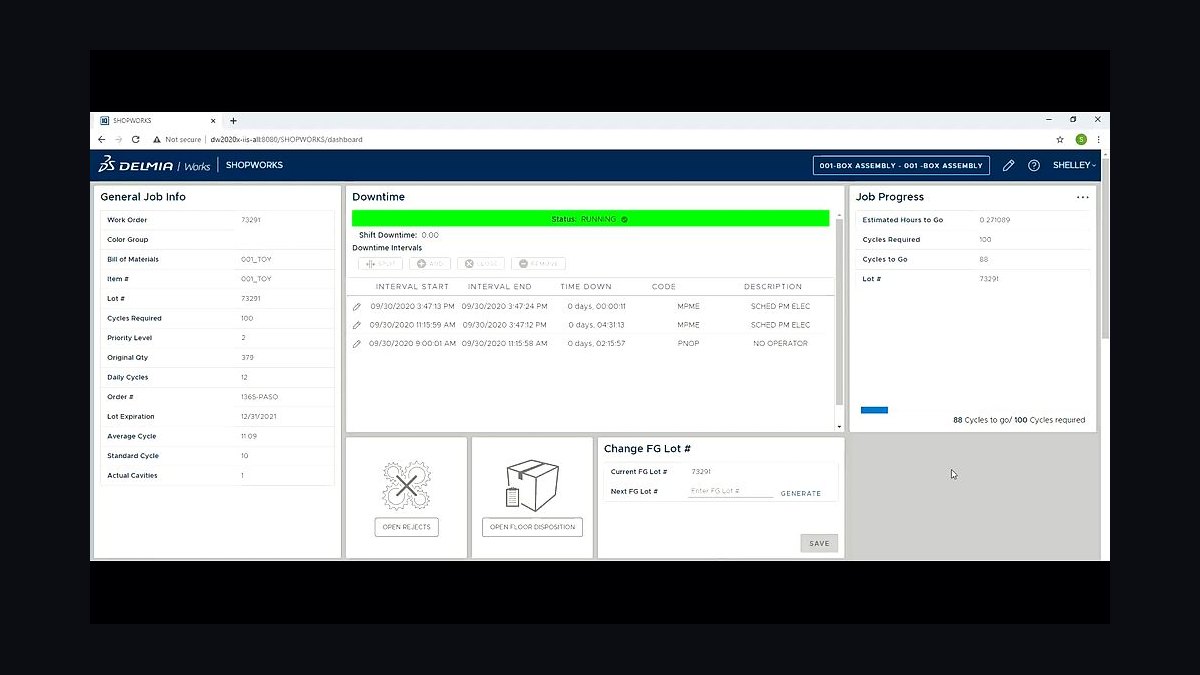
DELMIAWorks ranks first because it is the only mainstream platform built for injection molding as a single ERP with native MES, so schedule, press, mold, shot count, and job cost share one database. RealTime/Mattec monitoring runs on every press, capturing cycle time and scrap-at-cavity without a bolt-on reconciliation layer.
Mid-size custom molders with 10–40 presses are the core buyer, typically spending $150,000–$400,000 in year one plus $4,000–$8,000 per concurrent user. It trades away cheap deployment and fast go-live; expect three to nine months. Compared with Plex directly below, DELMIAWorks carries deeper native tooling and mold-asset logic.
2Plex by Rockwell
Plex ranks second as the cloud-native alternate to DELMIAWorks, strongest where automotive and IATF 16949 discipline dominates the customer base. It runs ERP, MES, and quality in one multi-plant tenant, so a molder with several sites sees consolidated OEE and PPAP status without a private data center.
It suits larger automotive and captive molders rather than job shops, and it trades away some plastics-specific depth that DELMIAWorks carries natively in tooling and cavitation logic. Against MachineMetrics below, Plex is a full enterprise replacement, not a monitoring add-on you can bolt onto an existing ERP.
3RJG eDART CoPilot

RJG eDART and CoPilot rank third because cavity pressure, not machine settings, is what actually controls part quality in injection molding. The system monitors the melt physics inside the tool and automatically contains shots that fall outside the validated pressure window before they reach a box, which is decisive on PPAP and IATF tools.
It is for molders shipping automotive or medical parts where a bad lot is catastrophic, budgeted around $25,000–$45,000 per monitored press including sensors. It trades away broad coverage; you instrument critical tools, not every press. Compared with Moldflow below, RJG runs live in production while Moldflow predicts before the tool is cut.
4Autodesk Moldflow
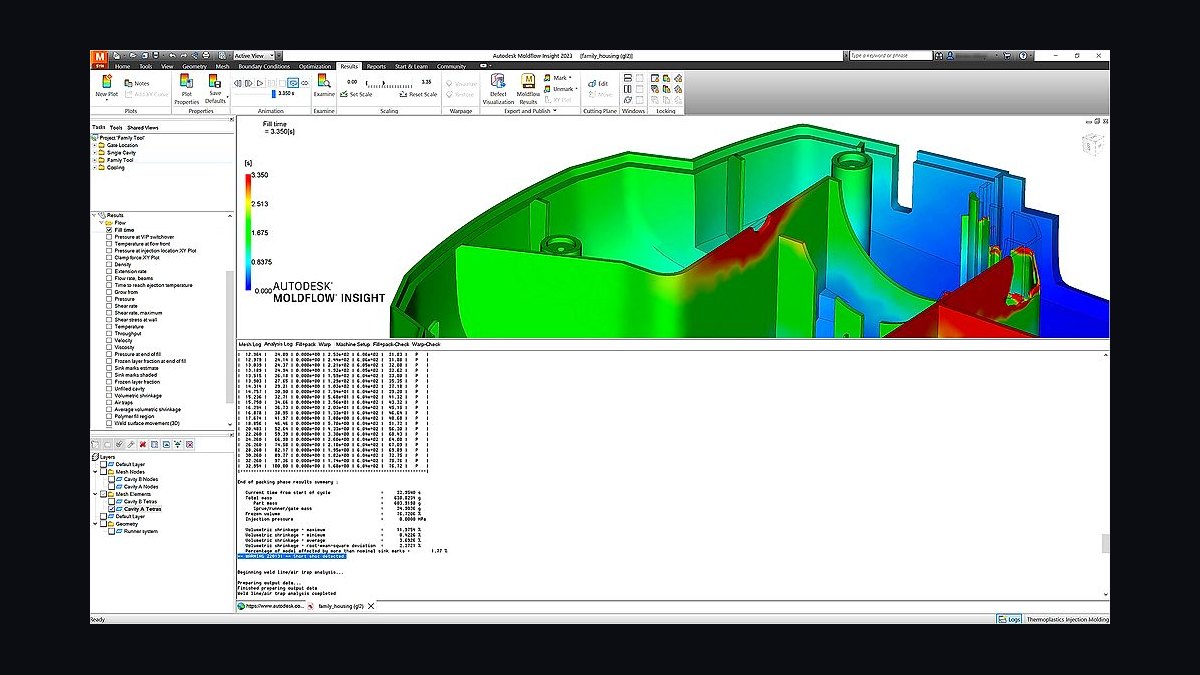
Autodesk Moldflow ranks fourth because it prevents bad tooling before steel is cut, simulating fill, packing, warpage, weld lines, and cooling so the mold is designed right the first time. Licensed roughly $15,000–$25,000 per seat per year, it pays back on a single avoided tool rework.
It is for tooling engineers and mold designers at custom molders running new programs, not for the production floor. It trades away real-time control; Moldflow is a design-time prediction, not a live process monitor. Compared with Moldex3D and SolidWorks Plastics, Moldflow is the deepest solver, while SolidWorks Plastics is the cheaper in-CAD option.
5InfinityQS SPC Platform
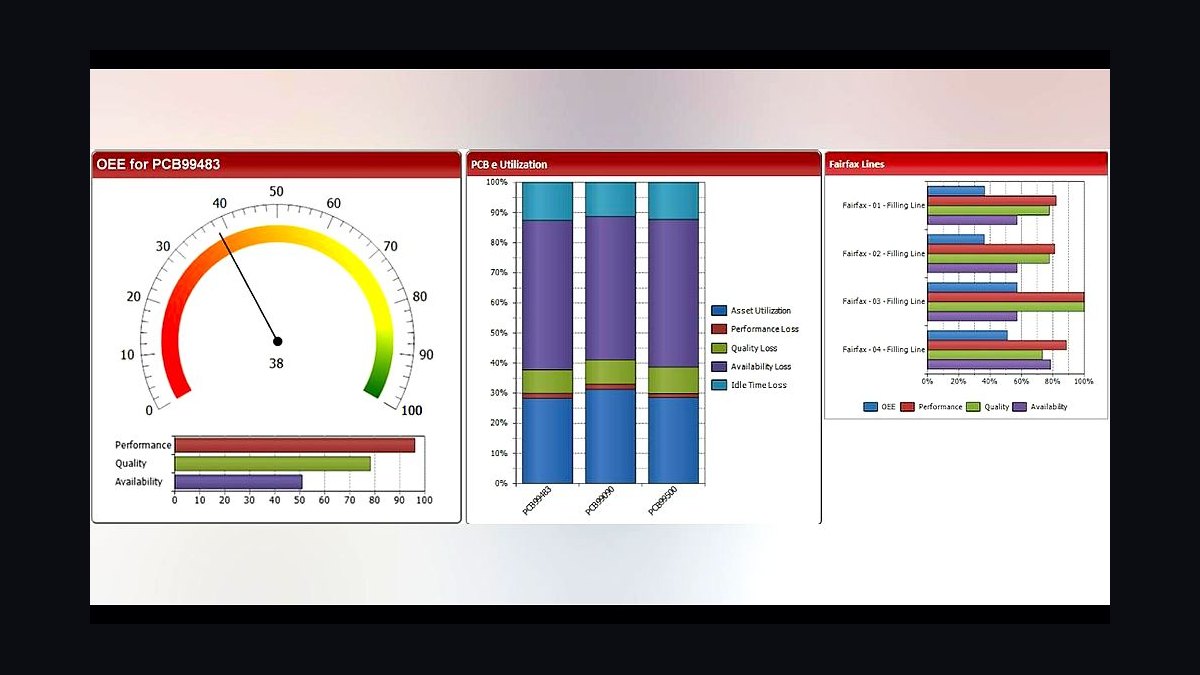
InfinityQS ranks fifth because automotive and medical molders must prove SPC capability and produce PPAP packages, and InfinityQS is the leading dedicated platform for that proof. Pricing runs roughly $10,000–$40,000 per year by site, with control charts, capability studies, and audit-ready records tied to cavity-level data.
It is for quality managers at regulated molders, not for shops with no PPAP obligation. It trades away the tight ERP integration that DELMIAWorks and Plex carry natively, so data feeds must be built. Compared with ETQ below, InfinityQS is statistical process control while ETQ is enterprise QMS, CAPA, and document control.
6MachineMetrics Monitoring
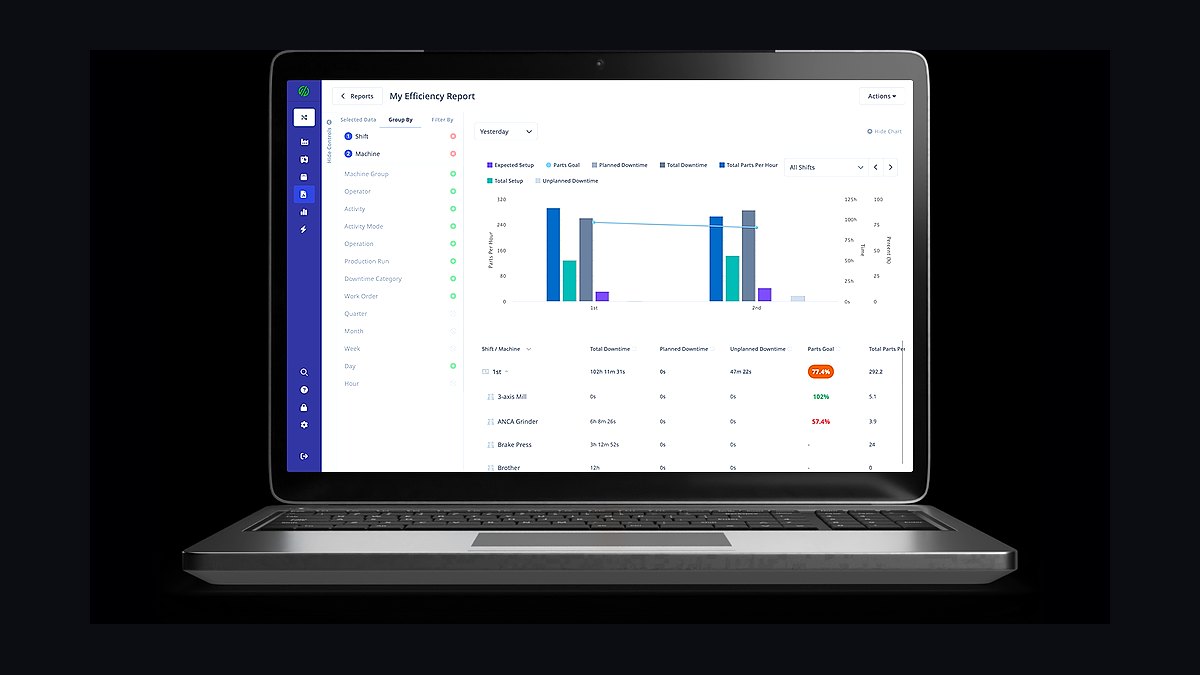
MachineMetrics ranks sixth because it is the vendor-agnostic way to get real-time press monitoring before replacing an ERP, pulling cycle time, downtime reasons, and OEE off mixed press fleets for roughly $50–$120 per machine per month. It installs on old presses that a full MES rollout would skip.
It is for small and mid-size molders running E2/JobBOSS or an older ERP who need floor visibility now. It trades away native ERP-MES unity, so part counts still need reconciling against the work order. Compared with DELMIAWorks RealTime/Mattec, MachineMetrics is a monitoring layer, not a scheduling and costing spine.
7Progressive Components CVe

Progressive Components CVe ranks seventh because mold preventive maintenance scheduled on calendar dates rather than actual shots is fiction. The mold-mounted counter tracks real cycle counts, feeding the ERP so PM fires at the right shot count and remaining tool life stays visible, at roughly $150–$400 per mold.
It is for any molder running customer-owned tools with finite life, especially multi-shift shops where calendar PM badly under- or over-serves a tool. It trades away being software; CVe is hardware that must be read and integrated. Compared with a full CMMS, it supplies the cycle data the CMMS needs to schedule correctly.
8Moldex3D Simulation
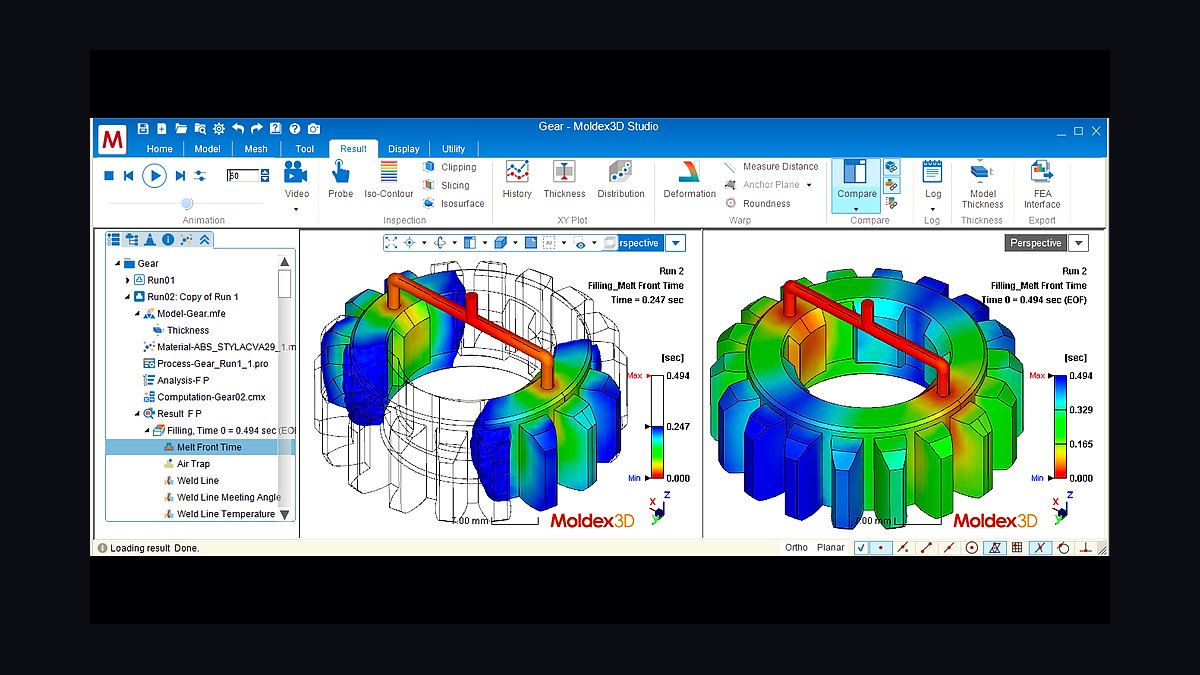
Moldex3D ranks eighth as the credible competitor to Moldflow, with strong 3D flow, warpage, and cooling analysis for complex geometries and thick-wall parts. It is widely chosen by molders in Asia and by shops whose tooling groups already standardized on its solver and meshing workflow.
It is for tooling engineers running new-tool simulation on demanding parts, and it trades away Moldflow's broader ecosystem and third-party integration. Compared with SolidWorks Plastics, Moldex3D is a dedicated high-end solver rather than an in-CAD convenience. Pricing sits in the same range as Moldflow per seat per year.
9ETQ Reliance QMS
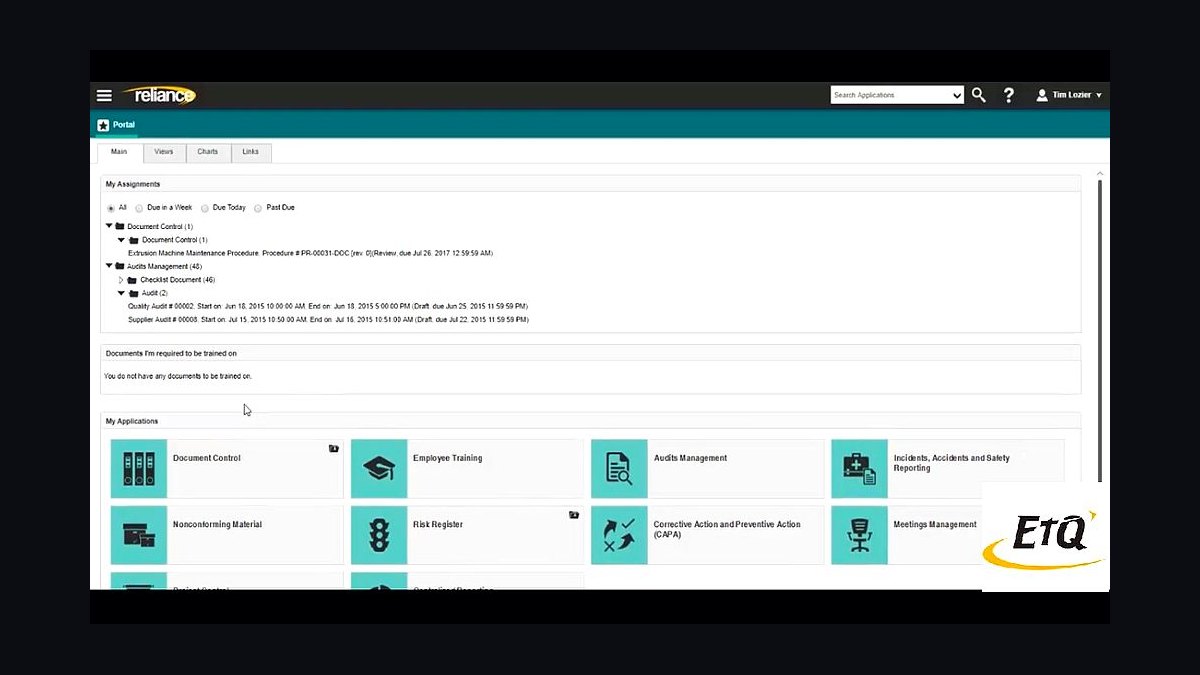
ETQ Reliance ranks ninth because medical-device and regulated molders need CAPA, document control, and audit management under ISO 13485, which SPC software alone does not provide. It centralizes nonconformance, corrective action, and validation records so the cavity-pressure evidence RJG produces lives inside a controlled quality system.
It is for cleanroom and medical molders with a dedicated quality function, not for job shops. It trades away statistical process control depth, which is why it pairs with InfinityQS rather than replacing it. Compared with Plex native quality, ETQ is a standalone enterprise QMS across the whole company.
10Microsoft Power BI
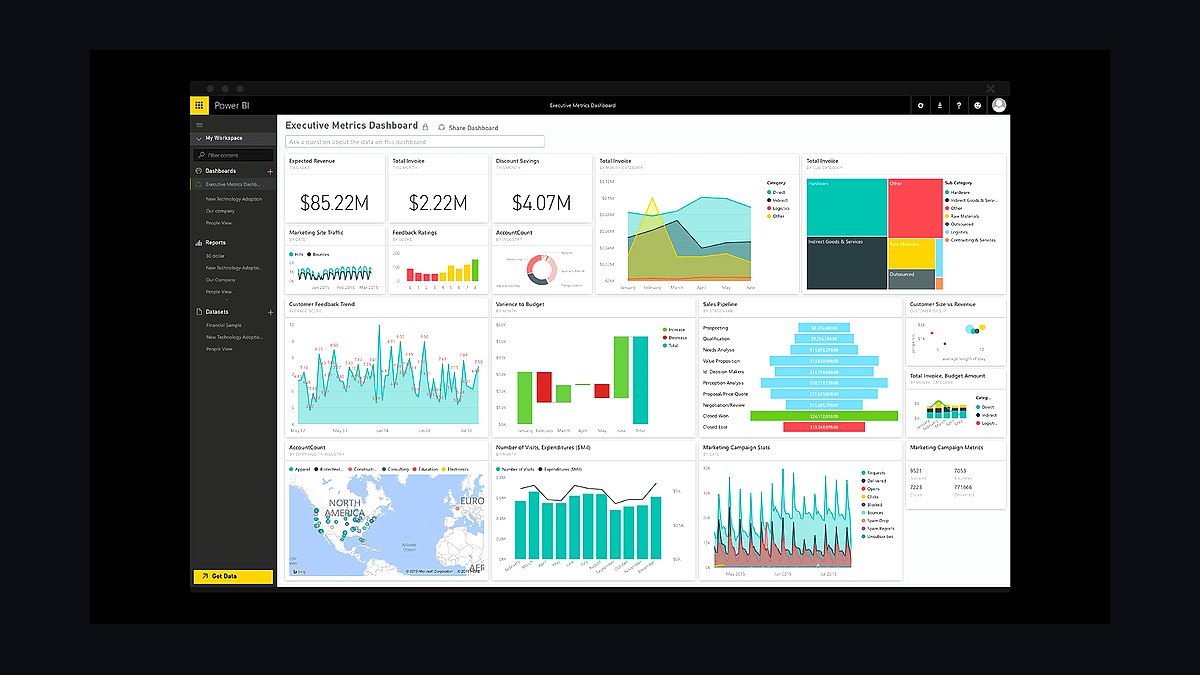
Microsoft Power BI ranks tenth because OEE, scrap-by-cavity, downtime Pareto, and on-time delivery dashboards need a reporting layer that pulls from ERP, MES, and quality together. At roughly $10–$20 per user per month it is the default for molders already running Microsoft 365.
It is for plant managers and continuous-improvement teams who need cross-plant visibility, not for transactional work. It trades away being a system of record; Power BI only reports what the ERP and MES already capture correctly. Compared with Tableau, Power BI wins on cost and Microsoft familiarity for most molder IT teams.
How we ranked these
We ranked each tool on five weighted criteria: plastics-specific fit (30%), depth of press/mold/cavity instrumentation (25%), integration breadth with ERP/MES (20%), total cost of ownership over three years (15%), and implementation risk for a molder of 10–40 presses (10%). Scores came from vendor documentation, analyst placements, and operator-reported deployment outcomes.
We deliberately ignored generic manufacturing ERP rankings, horizontal MES feature checklists, and vendor marketing claims about AI. Those measures reward breadth over molding physics and mislead buyers whose real constraint is shot-level data. We also excluded reseller pricing quotes, since they vary by region and press count, and any tool with no verifiable cavity-pressure or mold-life tracking capability.
Related questions
What is the single most important tool in an injection molder's stack?
The plastics ERP+MES core, typically DELMIAWorks or Plex. It holds the schedule, press, mold, cavitation, shot count, scrap, and job cost in one database. Everything else — cavity-pressure monitoring, mold PM, SPC — feeds into or reads from that spine. Pick it first, and pick it from a vendor that understands molding.
Why does cavity-pressure monitoring matter more than machine monitoring?
Machine monitoring tells you cycle time, downtime, and OEE off the press controller. Cavity-pressure monitoring, via RJG or Kistler, tells you what the melt is actually doing inside the tool. Only cavity pressure can automatically contain a bad shot before it reaches a box. They answer different questions, so quality-critical molders run both.
How should molds be tracked in the tech stack?
As maintained assets with location, ownership, cavitation, cycles-since-PM, and remaining life. Mold-mounted counters like Progressive Components CVe feed real shot counts into the ERP so preventive maintenance is scheduled on actual cycles, not calendar guesses. Skipping this is how cores crack and presses sit idle for weeks.
Do small job shops need the same stack as large automotive molders?
No. Small shops run E2/JobBOSS or DELMIAWorks-lite, MachineMetrics on a few presses, RJG on one or two critical tools, and QuickBooks. Mid-size custom molders move to full DELMIAWorks with Mattec MES and InfinityQS. Large automotive and medical molders add Plex or enterprise DELMIAWorks, full IATF or ISO 13485 quality, and a data warehouse.
How does the stack handle resin drying, blending, and regrind?
Dryers, blenders, and silo inventory integrate into the ERP so material moves with the job, regrind ratio is controlled, and every shipped lot traces back to its resin lot. Hygroscopic resins like nylon and PC must be dried to spec or parts splay. The cost is in integration, not a separate software license.
What quality software does an IATF 16949 molder actually need?
PPAP and APQP workflows, SPC with capability studies, CAPA, and document control. InfinityQS covers SPC well at roughly $10,000–$40,000 per site per year. DELMIAWorks and Plex carry capable native quality modules. ETQ handles enterprise QMS for regulated shops. The choice depends on whether quality lives inside the ERP or beside it.
Is Autodesk Moldflow worth the license cost?
For any molder cutting new tools regularly, yes. Moldflow predicts fill, packing, warpage, and weld lines before steel is cut, which prevents expensive tool rework. Seats run roughly $15,000–$25,000 per year. Moldex3D is a strong alternate, and SolidWorks Plastics is the affordable in-CAD option for shops already on SolidWorks.
How long does a plastics ERP implementation actually take?
A focused 90-day plan gets a mid-size molder live on the core: days 0–30 load molds, presses, and BOMs; days 31–60 bring machine monitoring and RJG online; days 61–90 turn on SPC, PPAP, mold PM, and Power BI dashboards. Full multi-plant enterprise rollouts run six to eighteen months. The 90-day path works only if scope stays tight.
FAQ
Why is DELMIAWorks (formerly IQMS) so dominant for injection molders?
Because it was purpose-built for plastics as a single ERP with native MES and machine monitoring, so the schedule, press, mold, shot count, scrap, and job cost all live in one database. Molders avoid the reconciliation pain of bolting a separate MES onto a horizontal ERP. Plex is the main cloud-native competitor, strong in automotive.
Do I really need RJG scientific molding if I already have machine monitoring?
Yes, for quality-critical tools. Machine monitoring tracks cycle time, downtime, and OEE off the press; RJG controls the part on actual cavity pressure — the melt physics inside the tool — and provides automatic containment of bad shots. They answer different questions. Run both: monitoring on every press, RJG on the tools where quality is non-negotiable.
Can a small job shop skip the expensive plastics ERP?
Often, yes. Small shops run E2/JobBOSS or DELMIAWorks-lite for quoting and job tracking, add MachineMetrics to monitor a few presses, put RJG on the one or two tools that demand it, and keep QuickBooks for the books. The full DELMIAWorks implementation is for the 10-plus-press tier where ERP+MES unity pays off.
How does the tech stack handle resin price volatility and material traceability?
Material handling integrates into the ERP so dryers, blenders, silo inventory, and regrind ratios move with the job. Every shipped lot traces back to its resin lot for automotive and medical recalls. Commodity resin price swings flow into job costing continuously, so quotes and margins stay honest instead of being reconciled quarterly in a spreadsheet.
What is the biggest mistake buyers make when choosing this stack?
Buying a horizontal ERP and trying to make it understand presses and molds. Generic ERPs track work orders, not shots, cavitation, or cycle time, and have no concept of a mold as a maintained asset. Molders then run spreadsheets alongside the ERP for what matters, and the floor stops trusting the part counts entirely.
How much should a mid-size molder budget for the full stack?
Roughly $10,000–$35,000 per month in subscriptions and support, plus a $150,000–$400,000 first-year DELMIAWorks implementation. That covers ERP+Mattec MES, RJG on quality-critical tools, Moldflow or Moldex3D, InfinityQS SPC, and integrated resin handling. This tier lives or dies on a clean ERP implementation, so budget for the integrator, not just the license.
Should machine monitoring cover every press or just the critical ones?
Every press. Partial monitoring gives partial OEE, which means you cannot trust the downtime Pareto or the scrap numbers. The cheap presses you skipped are usually the ones quietly bleeding margin. Vendor-agnostic tools like MachineMetrics run roughly $50–$120 per machine per month, which is cheap compared to the blind spot.
How do mold cycle counters like Progressive CVe fit into the stack?
They mount on the mold and count actual shots, feeding real cycle data back to the ERP or CMMS. Preventive maintenance is then scheduled on actual shots rather than calendar guesses. Counters run roughly $150–$400 per mold. Without them, a tool running triple shifts gets under-maintained and a core cracks, idling a press for weeks.
What does a medical-device molder need beyond the standard stack?
Full lot traceability and process validation under ISO 13485, plus a validated QMS such as ETQ for CAPA and document control. RJG with automatic containment runs on every validated tool, and IQ/OQ/PQ validation records tie directly to cavity-pressure data. DELMIAWorks or Plex handles the ERP and MES layer with cleanroom-compatible workflows.
How does business intelligence fit into a molder's stack?
Power BI at roughly $10–$20 per user per month pulls OEE, scrap-by-cavity, downtime Pareto, and on-time delivery from the ERP and MES into dashboards. Most molders already run Microsoft 365, so the marginal cost is low. Tableau is the alternate for heavier analytics teams. Without BI, the ERP data sits unused and improvement stalls.
Sources
- https://www.gartner.com/en/documents/4027083
- https://www.mckinsey.com/capabilities/operations/our-insights
- https://www.idc.com/getdoc.jsp?containerId=US49007222
- https://www.rjginc.com/
- https://www.autodesk.com/products/moldflow/overview
- https://www.infinityqs.com/
- https://www.machinemetrics.com/
- https://www.progressivecomponents.com/cve/
- https://www.plex.com/
- https://www.3ds.com/products/delmiaworks
Related on PULSE
This page will be disappearing soon. Save it to your device for $1 — or read it free while it is here.
@Kory-White- · if Venmo asks, the last 4 of my number are 2012
This page is gone.
This one is off the shelf now. $1 keeps it on your phone for good — the whole page, pictures and diagrams included.
 pulse-tech-stacksTop 10 Best Tech Stack Tools for API Security Vendors in 2027
 pulse-tech-stacksTop 10 Best Tech Stack Tools for Home Inspection Companies in 2027
 pulse-tech-stacksTop 10 Best Tech Stack Tools for Data Loss Prevention (DLP) Software Vendors in 2027
 pulse-tech-stacksTop 10 Best Tech Stack Tools for Septic and Portable Sanitation Services in 2027
 pulse-tech-stacksTop 10 Best Tech Stack Tools for AI Music Generation Companies in 2027
 pulse-tech-stacksTop 10 Best Tech Stack Tools for Appliance Repair Services in 2027
 pulse-tech-stacksTop 10 Best Tech Stack Tools for Hair Salons in 2027
 tkTop 10 Best Tech Stack Tools for Fencing and Deck Contractors in 2027
 pulse-tech-stacksTop 10 Best Tech Stack Tools for Commercial HVAC Contractors in 2027
 pulse-tech-stacksTop 10 Best Tech Stack Tools for Home Builders and Residential Developers in 2027