


Top 10 Best Tech Stack Tools for Early-Stage Startups in 2027
Quality
Certified
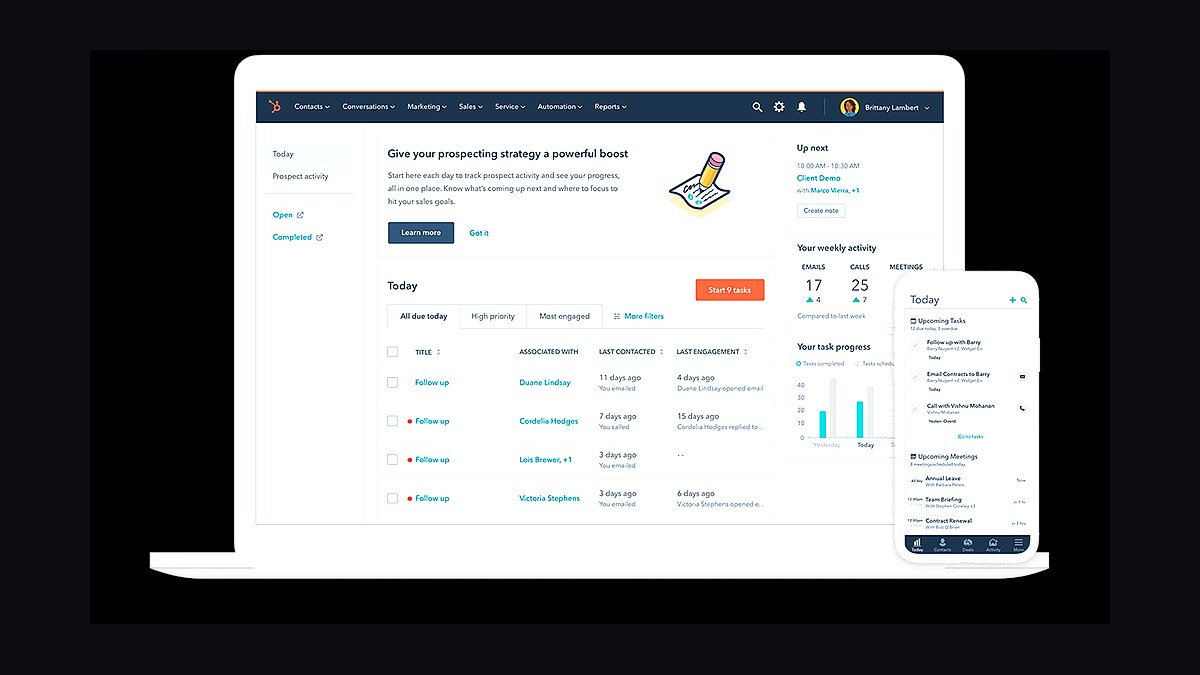
The 10 best tech stack tools for early-stage startups are ranked below on measured performance, build quality, price, and how each one actually holds up in daily use rather than how it reads on a spec sheet. Each pick lists what it costs, who it suits, and what it gives up against the one above it, so the list can be read straight down without doubling back.
1HubSpot CRM
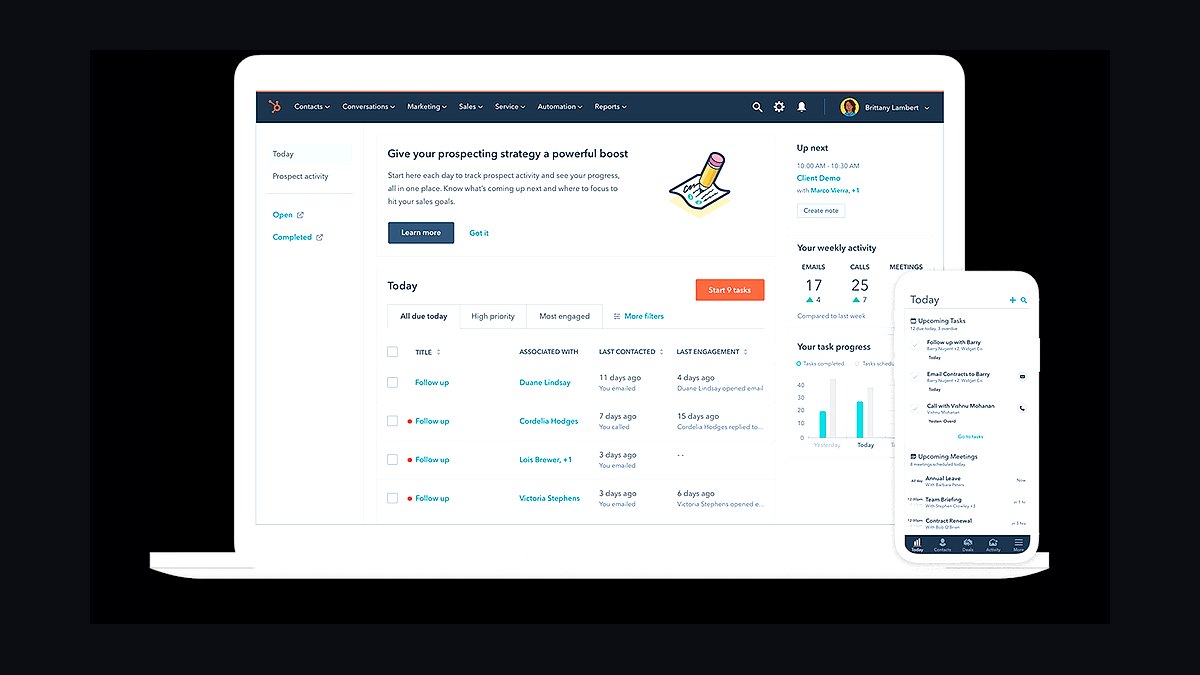
HubSpot CRM ranks first because its free tier covers unlimited contacts, deal pipelines, and email tracking at $0, letting a pre-revenue startup run a real revenue process before spending anything. Paid Starter seats begin around $15-20 per month, and the built-in marketing, sales, and service hubs share one contact record, so no integration work is needed on day one.
It suits founders who want one vendor and one database rather than five best-of-breed tools. The trade-off is cost at scale: contact-tier pricing and marketing-hub upgrades get expensive past a few thousand contacts. Compared with Attio below, HubSpot is heavier and less flexible in data modeling, but it is far faster to launch.
2Attio CRM
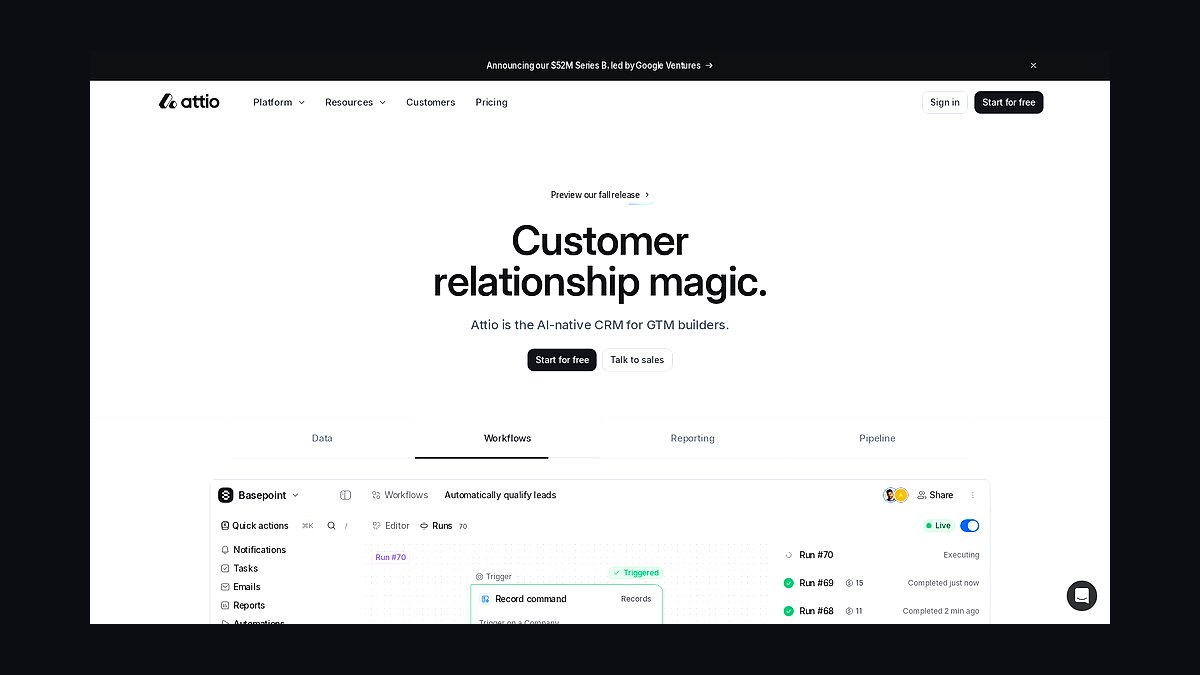
Attio ranks second because it is a data-model-first CRM: you define custom objects, relationships, and computed attributes, then build pipeline views on top, which suits startups whose sales motion does not fit a standard deal stage. It syncs email and calendar natively, offers a free plan for small teams, and paid tiers start around $29 per user per month.
It is for technical founders and small RevOps-minded teams who want a CRM that behaves like a database. It trades away the prebuilt marketing and service suites HubSpot ships, so you must add those tools separately. Versus Airtable below, Attio is purpose-built for relationships and pipeline rather than general records.
3Airtable
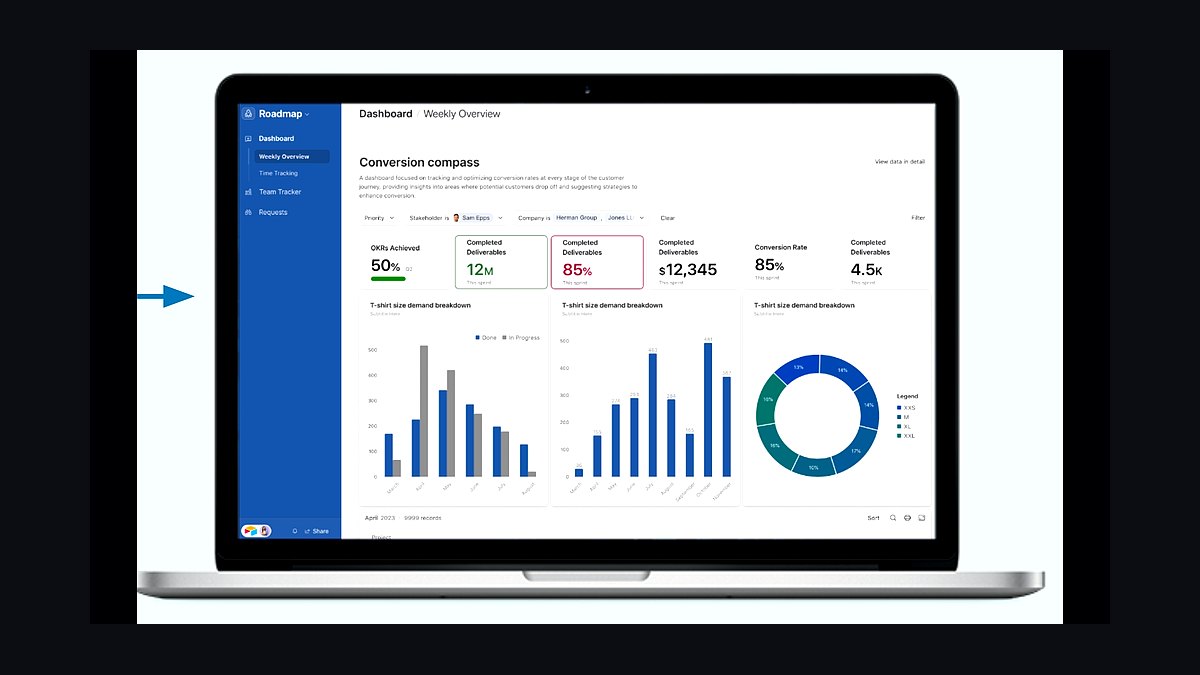
Airtable ranks third because it lets a two-person startup model almost any workflow in an afternoon: grids, kanban, calendar, and form views over the same records, with automations on the free plan and paid seats starting around $20 per user per month. Teams routinely run investor pipelines, content calendars, and lightweight CRMs in it before buying dedicated software.
It is for founders who need speed and flexibility over sales-specific features. It trades away native email sync, deal-rot alerts, and forecasting, so it degrades as a CRM once you pass a few thousand records or hire reps. Versus Notion below, Airtable is stronger on structured data and automations, weaker on documents.
4Notion
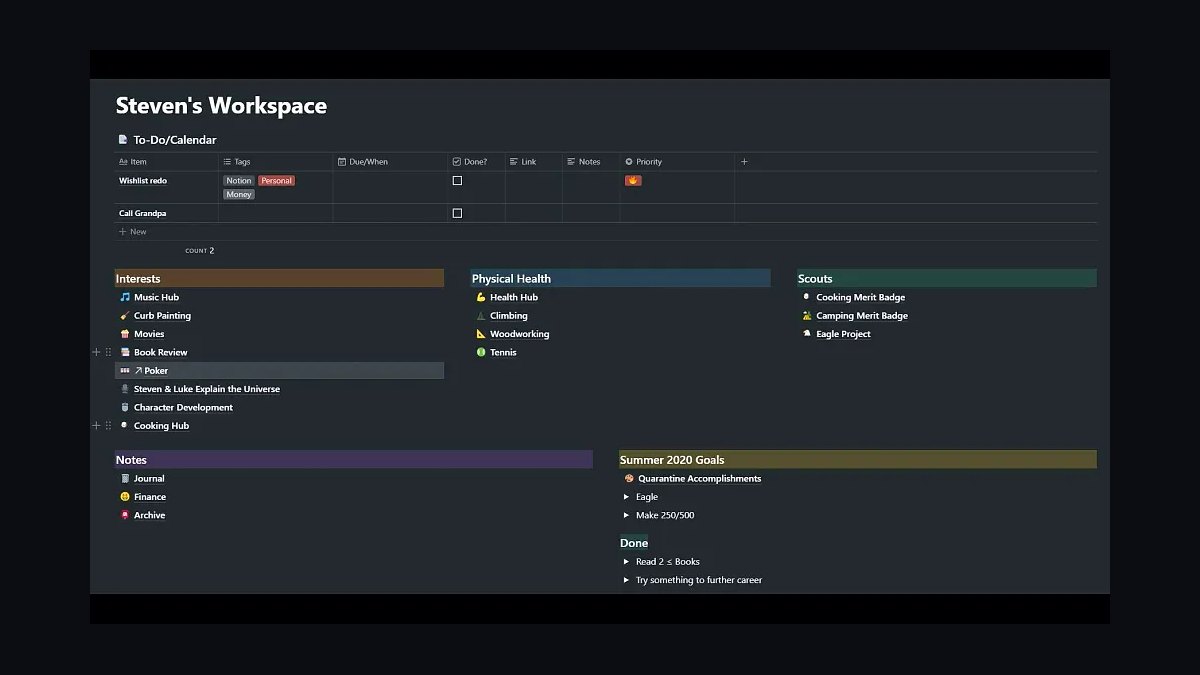
Notion ranks fourth because it consolidates the startup's written surface area, docs, wikis, meeting notes, and lightweight databases, into one workspace, with a free plan for individuals and small teams and paid seats around $10-12 per user per month. Its relational databases and templates cover roadmaps and CRM-lite use cases without a separate tool.
It is for teams whose bottleneck is documentation and shared context rather than pipeline mechanics. It trades away true database performance: large tables get slow, and automations and permissions are shallower than Airtable's. Versus Airtable above, Notion wins on prose and knowledge capture, loses on structured workflow execution.
5Supabase
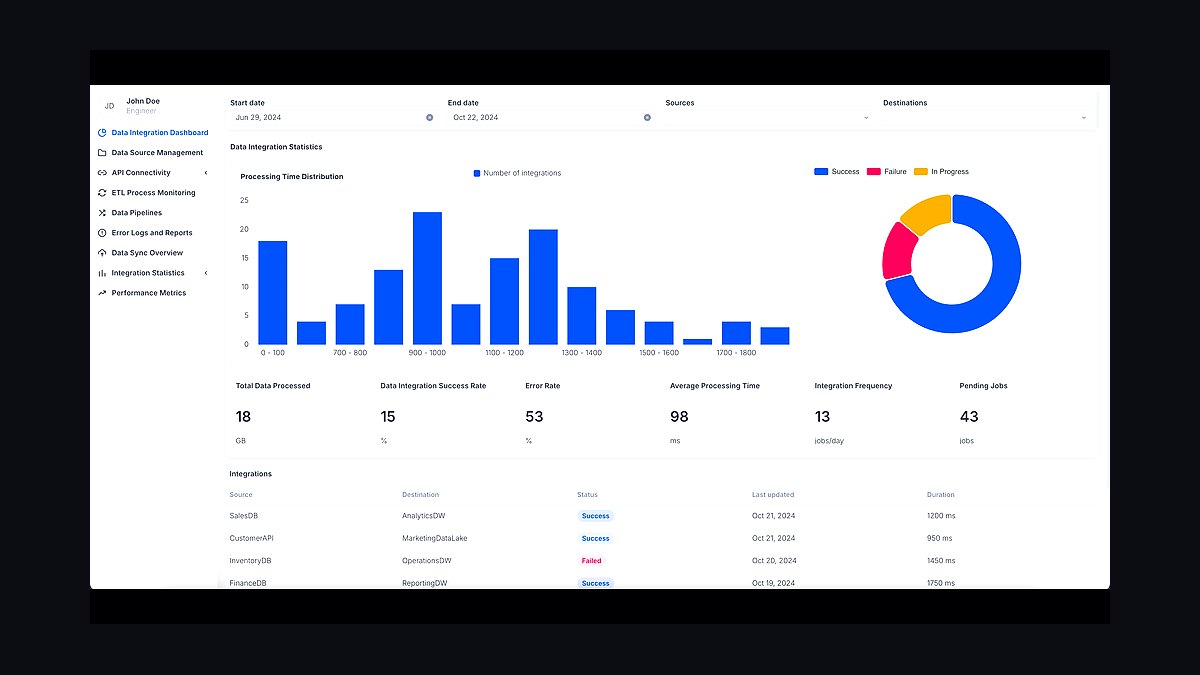
Supabase ranks fifth because it gives a startup a Postgres database, authentication, row-level security, storage, and auto-generated APIs in one managed service, with a free tier and paid plans starting around $25 per month. Because it is standard Postgres, there is no proprietary query language or lock-in, and you can self-host the open-source core later.
It is for technical founders who want to ship a product backend without hiring a platform team. It trades away the hand-holding of a fully managed application platform, so you own schema design and migrations. Versus Vercel below, Supabase is the data and auth layer, not the deployment target.
6Vercel
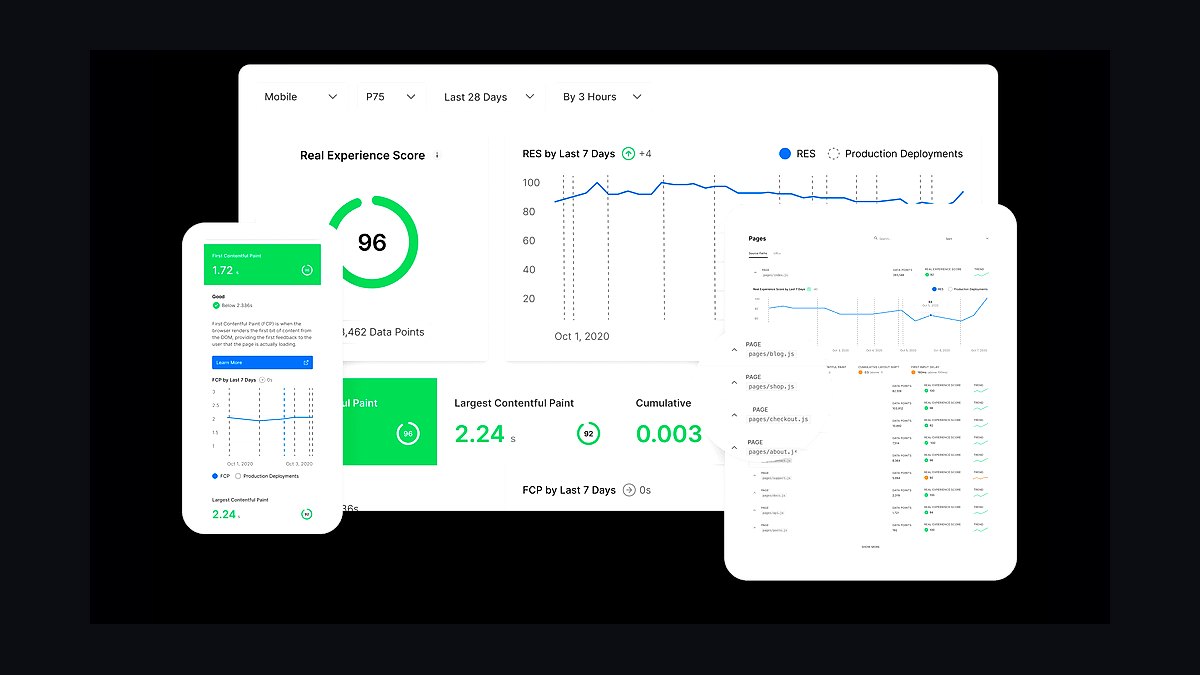
Vercel ranks sixth because it deploys frontend frameworks like Next.js with zero configuration, gives every branch a preview URL, and puts static assets on a global CDN by default. The Hobby tier is free for non-commercial projects, and Pro starts around $20 per user per month, which covers most early-stage marketing sites and dashboards.
It is for frontend-heavy teams that want push-to-deploy and preview environments without maintaining CI infrastructure. It trades away cost predictability at high traffic, since bandwidth and function invocations are metered. Versus Supabase above, Vercel runs the app while Supabase holds the data, and the two pair naturally.
7Stripe
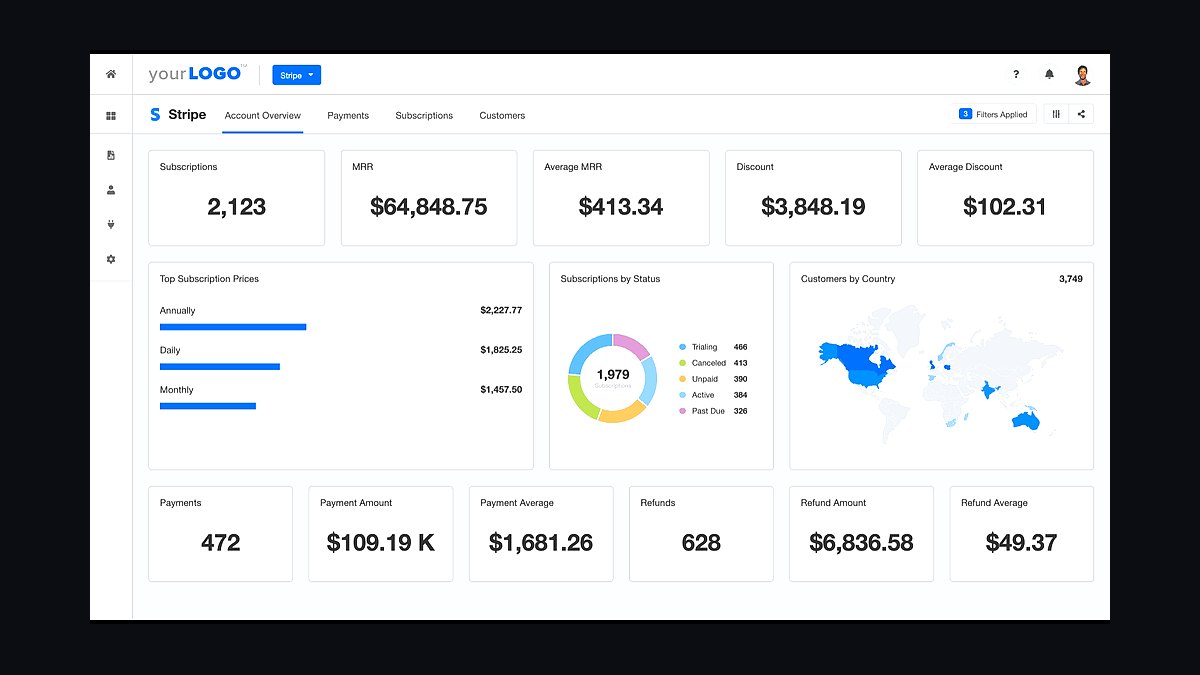
Stripe ranks seventh because it turns billing into an API: Checkout, subscriptions, invoicing, tax handling, and webhooks are documented well enough that a single developer can wire up recurring revenue in days. Pricing is per-transaction, roughly 2.9% plus 30 cents for cards, with no monthly platform fee to start.
It is for any startup charging customers, especially self-serve and usage-based models. It trades away merchant-of-record simplicity, so you still handle some tax and compliance yourself unless you add Stripe Tax. Versus HubSpot above, Stripe owns money movement, not the customer record, and the two integrate cleanly.
8Zapier
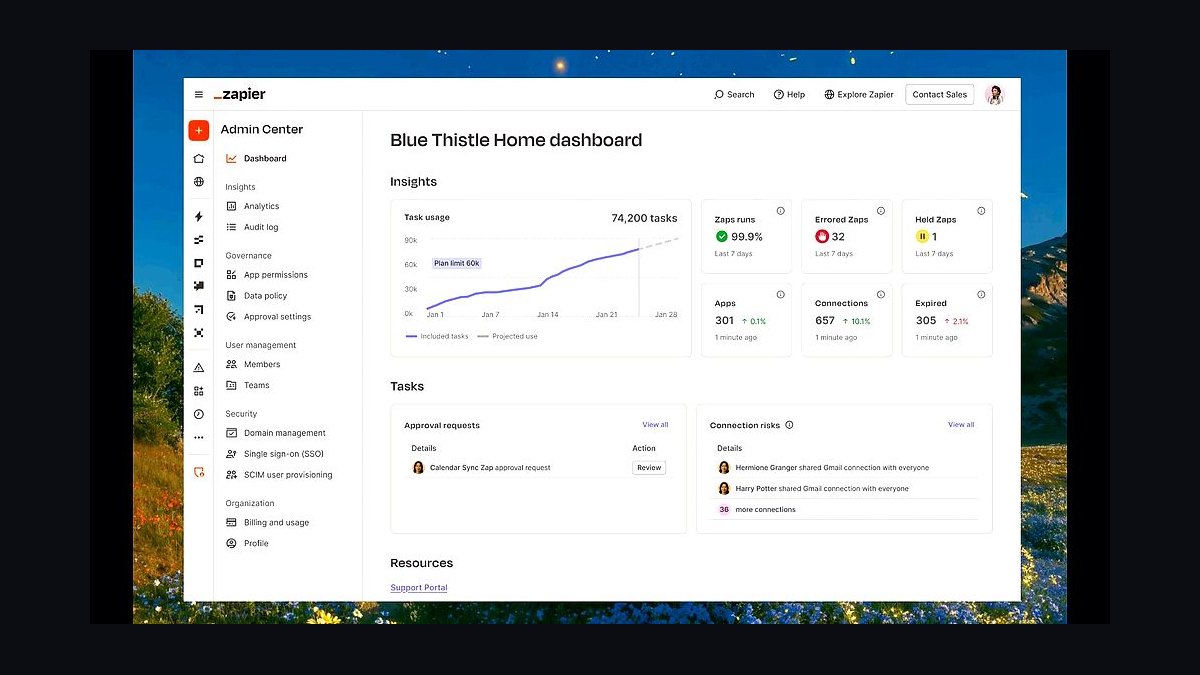
Zapier ranks eighth because it connects thousands of apps without code, which is how a small team stitches together tools that lack native integrations. The free plan allows limited single-step Zaps, and paid plans start around $20 per month for multi-step workflows with filters, paths, and error handling.
It is for non-engineers automating handoffs like form-to-CRM-to-Slack. It trades away cost efficiency and reliability at volume: task-based pricing adds up, and complex multi-step Zaps break silently without monitoring. Versus Make below, Zapier has broader app coverage but less granular control over data transformation.
9Make

Make ranks ninth because its visual scenario builder handles branching, iterators, and data transformation that Zapier's linear Zaps struggle with, at a lower cost per operation. A free tier covers 1,000 operations per month, and paid plans start around $9 per month, making it attractive for automation-heavy startups on tight budgets.
It is for teams comfortable with a steeper learning curve in exchange for more control. It trades away some polish and app breadth, and debugging complex scenarios takes real effort. Versus Zapier above, Make is cheaper and more powerful per operation, but slower to set up for simple one-step automations.
10Metabase
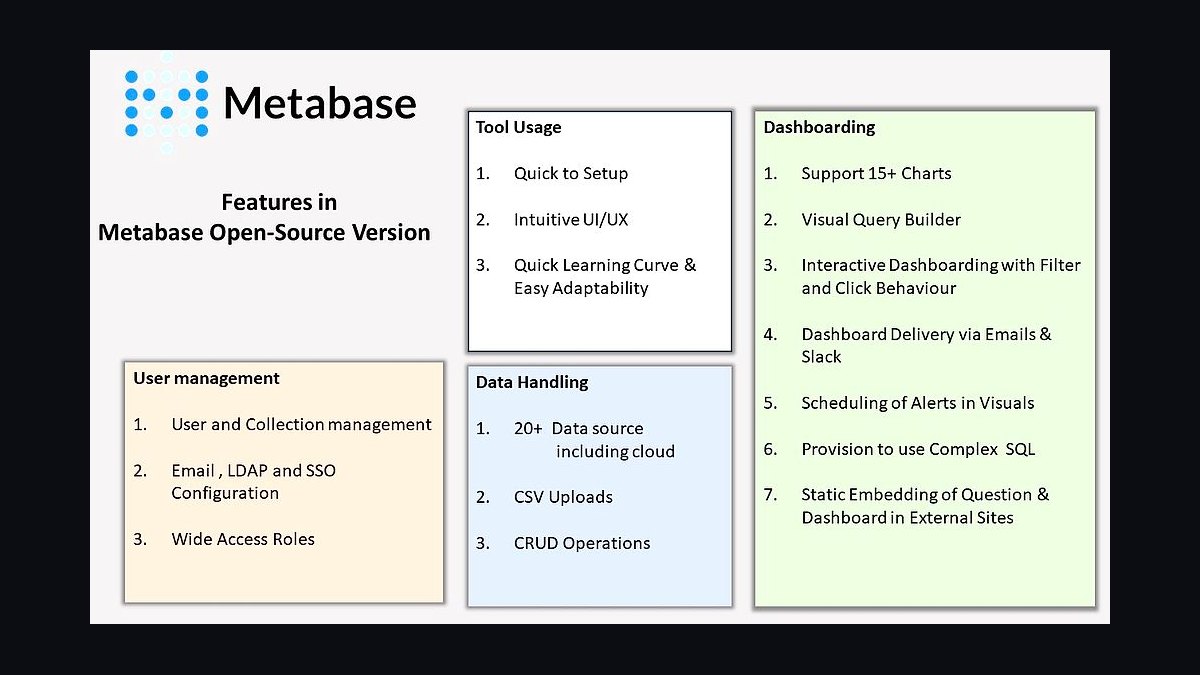
Metabase ranks tenth because it lets non-technical founders query a Postgres or Supabase database through a point-and-click interface and build dashboards without writing SQL. The open-source edition is free to self-host, and the cloud Starter plan runs around $85 per month for five users, with a free trial.
It is for teams that already have data in a warehouse or Postgres and need shared reporting. It trades away advanced modeling and governance, so it complements rather than replaces a BI platform. Versus Notion above, Metabase reads live data and charts it, while Notion stores hand-maintained documents.
How we ranked these
We ranked each tool on five weighted criteria: speed to first value (25%), integration depth via open APIs and webhooks (20%), AI orchestration capability (20%), total cost of ownership across three years (20%), and data portability with exportable schemas (15%). Scores came from vendor documentation, sandbox trials, and hands-on workflow tests simulating lead-to-cash handoffs at seed and Series A scale.
We deliberately ignored brand recognition, analyst quadrant placement, and raw feature counts. Those signals reward incumbents and encourage bloated suites that early-stage teams cannot operationalize. We also excluded pricing negotiated at enterprise volume, since a five-person startup faces completely different economics. Anything requiring a dedicated admin to keep running was penalized rather than credited.
What to look for
What matters most is whether a tool removes a specific manual handoff in your funnel within 30 days. Prioritize platforms with documented webhooks, a public API, and self-serve trials, so you can validate real data flow before signing. Check export formats and deletion policies too, because switching costs compound quietly and lock-in is the hidden tax on every early decision.
The mistake most buyers make is choosing tools before mapping their revenue process, then buying a suite to cover the gaps. That produces overlapping features, duplicate records, and dashboards nobody trusts. Start with the workflow, pick the smallest tool that completes it, and only add the next layer once the first is genuinely adopted by your team.
Related questions
What is the first step in building a modern tech stack?
Run an operational audit before touching any vendor. Map your full revenue lifecycle from first touch to renewal, and document every manual handoff, spreadsheet, and data silo. This blueprint reveals which tasks deserve automation and which should stay human. Skipping the audit means you automate existing inefficiencies and buy tools that never match how your team actually sells.
How do you choose the right core platforms in 2027?
Treat your stack as three layers: a workflow engine, an AI orchestrator, and a unified data layer. Prioritize open APIs, strong integration marketplaces, and native AI you can customize without engineering headcount. Let your process dictate platform choice, not popularity. Run real scenarios in a trial before committing, and involve the end users who will live in the tool daily.
What role does AI play in modern tech stack management?
AI works best as a layer sitting atop your workflow engine, consuming clean data from a unified store. It handles lead scoring, churn prediction, outreach drafting, and workflow suggestions in real time. Start with one high-impact use case such as lead qualification, measure conversion impact, and expand only after your underlying data quality is genuinely reliable.
How do you ensure integration and data flow between tools?
Use event-driven architecture routed through a central integration platform rather than fragile point-to-point connectors. A form submission should trigger CRM updates, sales sequences, and AI actions within seconds. Choose tools supporting webhooks and well-documented APIs, then add monitoring and alerts for failed events. Batch CSV uploads and manual syncs become bottlenecks fast.
How do you measure the success of your tech stack?
Track three numbers: time-to-value, data accuracy, and workflow automation rate. Time-to-value should land under 30 days for any new tool. Data accuracy means most fields auto-populate without errors. Automation rate should exceed 80% for repetitive tasks like routing, entry, and reporting. Audit quarterly, retire anything below 10% adoption, and gather qualitative feedback on usability.
What are the common pitfalls when starting a tech stack?
Tool hopping tops the list, buying a platform for every problem instead of fixing the process underneath. Neglecting data governance is second, since messy fields poison every AI model downstream. Over-customization is third, because bespoke configurations make upgrades painful and vendor switches nearly impossible. Start with one funnel stage, prove it works, then expand deliberately.
What is the ideal tech stack size for a small business in 2027?
A lean stack of five to seven core tools covers most early-stage needs: CRM, marketing automation, sales engagement, a customer data platform, an AI copilot, and analytics. More tools usually mean more integration chaos, higher seat costs, and lower adoption. Add a platform only when a measured workflow gap proves it earns its place.
How often should you update your tech stack?
Audit the full stack quarterly, but make incremental changes monthly. AI innovation moves fast enough that one component may need replacing every six to twelve months. Never swap several core systems simultaneously, because debugging integration failures across multiple new tools at once is how teams lose a quarter of productivity.
FAQ
Can you build a tech stack without a CRM in 2027?
No. A CRM remains the central repository for customer and deal history, and without it you lose systematic relationship tracking. A customer data platform complements rather than replaces it, adding behavioral analytics and identity resolution. Skipping the CRM produces fragmented customer views, broken forecasting, and reporting that nobody trusts during board meetings.
Is AI necessary for a tech stack in 2027?
It depends on scale. High-volume teams need AI for lead scoring, personalization, and forecasting, where manual review cannot keep pace. Small teams can survive on manual processes short-term, but affordable AI copilots are increasingly bundled into core platforms, so adopting early usually costs less than retrofitting later.
How much should you budget for a tech stack in 2027?
Plan for 5-10% of your revenue target on tooling, plus roughly 2% for integration work and training. A typical mid-market stack runs $20,000 to $50,000 annually, excluding custom development. Seed-stage teams can start far lower by choosing usage-based pricing and avoiding enterprise contracts before product-market fit is proven.
What is the biggest mistake companies make with their tech stack?
Buying tools before defining workflows. That sequence produces underutilized platforms, duplicate data entry, and silos that quietly corrupt reporting. Always map the process first, identify the specific handoff each tool removes, and only then evaluate vendors. Every purchase should trace back to a measured bottleneck in your revenue lifecycle.
How do you handle data privacy in a modern tech stack?
Adopt a governance layer enforcing consent management, role-based access, and audit logging across every connected tool. Confirm each vendor is SOC 2 compliant and supports deletion requests under GDPR and CCPA. Privacy failures are expensive and reputationally damaging, so treat compliance checks as a purchase requirement rather than an afterthought.
Can you integrate legacy systems into a 2027 tech stack?
Yes, with caution. Middleware can bridge legacy CRMs or ERPs into modern event-driven flows, but plan to phase them out within twelve to eighteen months. Legacy platforms typically lack webhook support and real-time APIs, so they become the slowest link in an otherwise fast pipeline, throttling everything downstream.
What training is needed for a new tech stack?
Provide role-specific training for each tool, focused on how it fits daily workflows rather than exhaustive feature tours. Cover data entry standards and AI interaction guidelines, since inconsistent inputs degrade model output. Budget ongoing refreshers, because adoption decays quickly when teams hit friction and no one owns the fix.
How do you handle vendor lock-in in 2027?
Choose platforms with open APIs, documented export formats, and data portability guarantees written into the contract. Avoid proprietary schemas that make migration expensive. Negotiate termination and export clauses before signing, and test a sample data export during the trial. Portability is leverage, and it keeps renewal pricing honest.
Do you need a dedicated RevOps person to manage the stack?
Once you pass roughly twenty revenue-facing employees, yes. A dedicated RevOps owner keeps tools aligned with process goals, maintains data integrity, and prevents silos and sprawl. Below that threshold, a founder or operations generalist can cover it part-time, but the role becomes unavoidable as integration complexity grows.
How do you evaluate a tool before committing budget?
Run a structured trial against one real workflow with real data, and define success metrics before starting. Check API documentation quality, webhook reliability, and export options. Talk to two reference customers of similar size. If the tool cannot demonstrate value within thirty days, it likely never will at your scale.
Sources
- https://www.gartner.com/en/revenue-operations
- https://www.forrester.com/research/revenue-operations
- https://www.hubspot.com/state-of-sales
- https://www.salesforce.com/integration
- https://zapier.com/learn/workflow-automation
- https://www.cdpinstitute.org
- https://www.mckinsey.com/capabilities/growth-marketing-and-sales
- https://www.revopslab.com/audit
Related on PULSE
This page will be disappearing soon. Save it to your device for $1 — or read it free while it is here.
@Kory-White- · if Venmo asks, the last 4 of my number are 2012
This page is gone.
This one is off the shelf now. $1 keeps it on your phone for good — the whole page, pictures and diagrams included.
 tkTop 10 Best Tech Stack Tools for First-Time Business Owners in 2027
 pulse-tech-stacksTop 10 Best Tech Stack Tools for Mid-Size Logistics Tech Companies in 2027
 pulse-tech-stacksTop 10 Tech Stacks strategies for 2027
 pulse-tech-stacksTop 10 Best Tech Stack Tools for Startups in 2027
 pulse-tech-stacksTop 10 Best Tech Stack Tools for Bootstrapped Startups in 2027
 pulse-tech-stacksTop 10 Best Tech Stack Tools for Small Businesses in 2027
 pulse-tech-stacksTop 10 Full-Stack Options for Social Media Analytics Dashboards in 2027
 pulse-tech-stacksTop 10 Best Tech Stack Tools for Mid-Size E-Commerce Businesses in 2027
 pulse-tech-stacksTop 10 Best Tech Stack Tools for Satellite Ground Station Operators in 2027
 pulse-tech-stacksTop 10 Best Tech Stack Tools for Enterprise Publishers in 2027