


Top 10 Best Tech Stack Tools for Aerospace & Defense Companies in 2027
Quality
Certified
The 10 best tech stack tools for aerospace & defense companies are ranked below on measured performance, build quality, price, and how each one actually holds up in daily use rather than how it reads on a spec sheet. Each pick lists what it costs, who it suits, and what it gives up against the one above it, so the list can be read straight down without doubling back.
1Deltek Costpoint

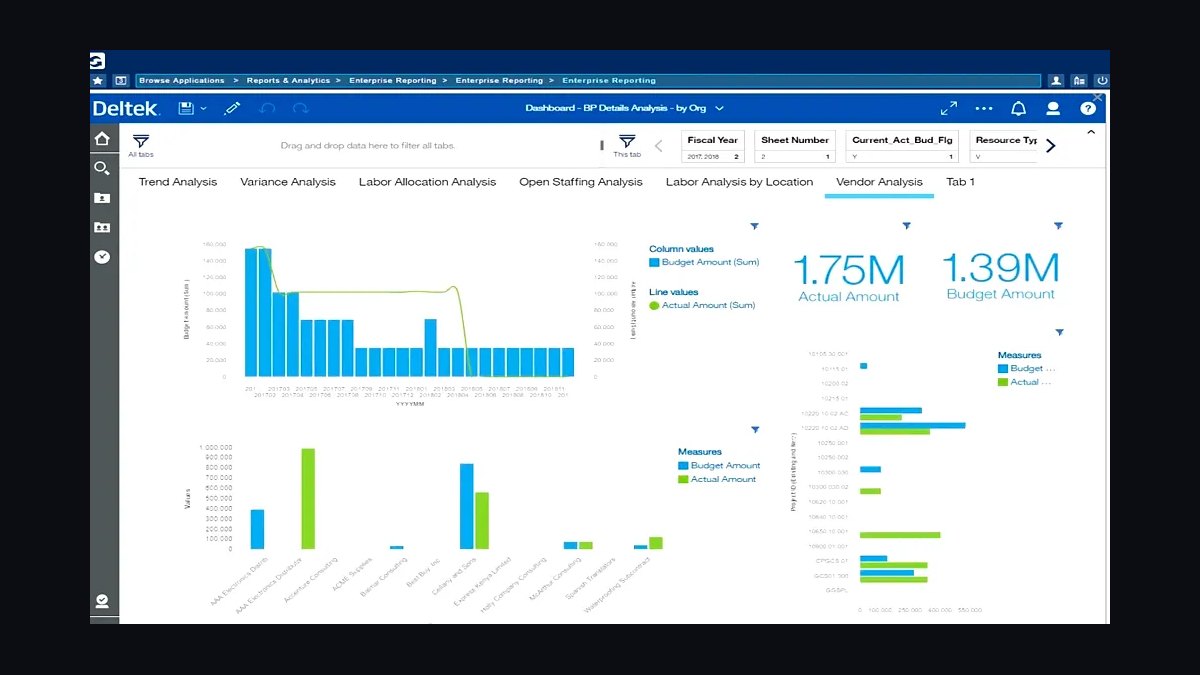
Deltek Costpoint ranks first because it was purpose-built around DCAA-compliant timekeeping and cost accounting, the single most audited data flow in defense contracting. It natively handles indirect rate pools, provisional billing rates, and project accounting without bolt-on workarounds. Mid-market deployments commonly land in the multi-hundred-thousand-dollar annual range including implementation, data migration, and compliance configuration, with six-to-twelve-month timelines typical.
It is for contractors running mostly cost-reimbursable DoD work where DCAA scrutiny of labor charging is constant. The trade-off is shop-floor usability: machinists often find its manufacturing modules less fluid than dedicated MES tools. Against IFS Cloud directly below, Costpoint wins on audit pedigree but loses on native manufacturing execution depth.
2IFS Cloud

IFS Cloud ranks second for pushing hard into Costpoint's lane with stronger manufacturing execution built in natively rather than bolted on. Its single data model covers ERP, project accounting, MRP, and shop-floor execution, which shrinks the CMMC assessment boundary compared with stitched-together stacks. Larger A&D deployments frequently run into seven figures once quality and multi-entity consolidation are in scope, with twelve-to-eighteen-month first-phase windows.
It suits mid-to-large contractors wanting unified audit simplicity without sacrificing MES depth. The trade-off is a smaller North American defense-specific partner ecosystem than Deltek's. Compared with SAP S/4HANA below, IFS fits mid-market manufacturers better; SAP scales further for global primes with complex intercompany billing.
3SAP S/4HANA A&D

SAP S/4HANA's aerospace and defense industry variant ranks third for global primes and Tier 1 suppliers needing multi-entity consolidation and complex intercompany billing at scale. It handles program accounting across dozens of legal entities where mid-market suites strain. Deployments routinely exceed seven figures with manufacturing execution, quality, and consolidation in scope, and twelve-to-eighteen-month first phases are common.
It is for organizations above roughly 500 employees with global operations and dedicated IT teams. The trade-off is cost and implementation weight that overwhelms smaller contractors. Against Siemens Teamcenter below, SAP owns the financial and program-accounting layer while Teamcenter owns engineering configuration data — most primes run both rather than choosing.
4Siemens Teamcenter

Siemens Teamcenter ranks fourth as the standalone PLM reference point for configuration management across long-lived airframe and space hardware programs. It preserves BOM revision history tied to specific tail or serial numbers — data that is often contractually required to remain auditable for decades. A standalone license for a mid-sized engineering team is a smaller annual line than ERP, but integration labor adds 15-25% of total project cost.
It is for businesses with deep engineering change management needs and decades-long configuration histories. The trade-off is that it does not replace ERP financials, so it demands a documented, owned interface to whatever system of record sits above it. Against PTC Windchill below, Teamcenter fits larger, more complex programs while Windchill often lands faster at mid-size.
5PTC Windchill

PTC Windchill ranks fifth as the other major standalone PLM option, frequently chosen by mid-sized engineering teams that need configuration management without Teamcenter's deployment weight. It handles engineering change orders, document control, and BOM revision tracking that flow into ERP work orders and MES cost buckets. Licensing scales by named engineering users, keeping entry cost below enterprise PLM platforms.
It is for contractors with heavy PLM needs but lean IT staff who cannot absorb a multi-year PLM rollout. The trade-off is that very large, multi-site primes often outgrow it. Against Teamcenter directly above, Windchill trades some enterprise depth for faster time-to-value, making it the pragmatic pick below roughly 500 engineers.
6iBase-t Solumina

iBase-t Solumina ranks sixth among dedicated MES platforms for aerospace shop-floor traceability, work-order execution, and as-built record generation tied to specific lots and serial numbers. It produces the traceable nonconformance and corrective-action records AS9100D auditors demand, linked to work orders and PLM revisions. Licensing scales to the number of shop-floor workstations or terminals rather than total headcount.
It is for high-mix, low-volume precision machining operations where project-accounting-first ERPs force awkward workflow assumptions onto the floor. The trade-off is another system inside the CMMC boundary requiring its own access reviews and backup plans. Against Critical Manufacturing below, Solumina leans aerospace-specific while Critical Manufacturing spans broader discrete manufacturing.
7Critical Manufacturing MES

Critical Manufacturing MES ranks seventh as a modular manufacturing execution platform adaptable to aerospace, defense, and hypersonics production environments. Its modular architecture lets contractors deploy only the shop-floor modules they need — traceability, SPC, equipment integration — rather than licensing a full suite upfront. It integrates with ERP and PLM through documented interfaces that must each be mapped inside the CMMC assessment boundary.
It is for manufacturers wanting MES flexibility without committing to a single vendor's entire manufacturing stack. The trade-off is that aerospace-specific as-built and AS9100 templates are less turnkey than Solumina's. Against Solumina above, Critical Manufacturing offers broader industry coverage but shallower A&D-specific out-of-the-box content.
8Microsoft Dynamics 365
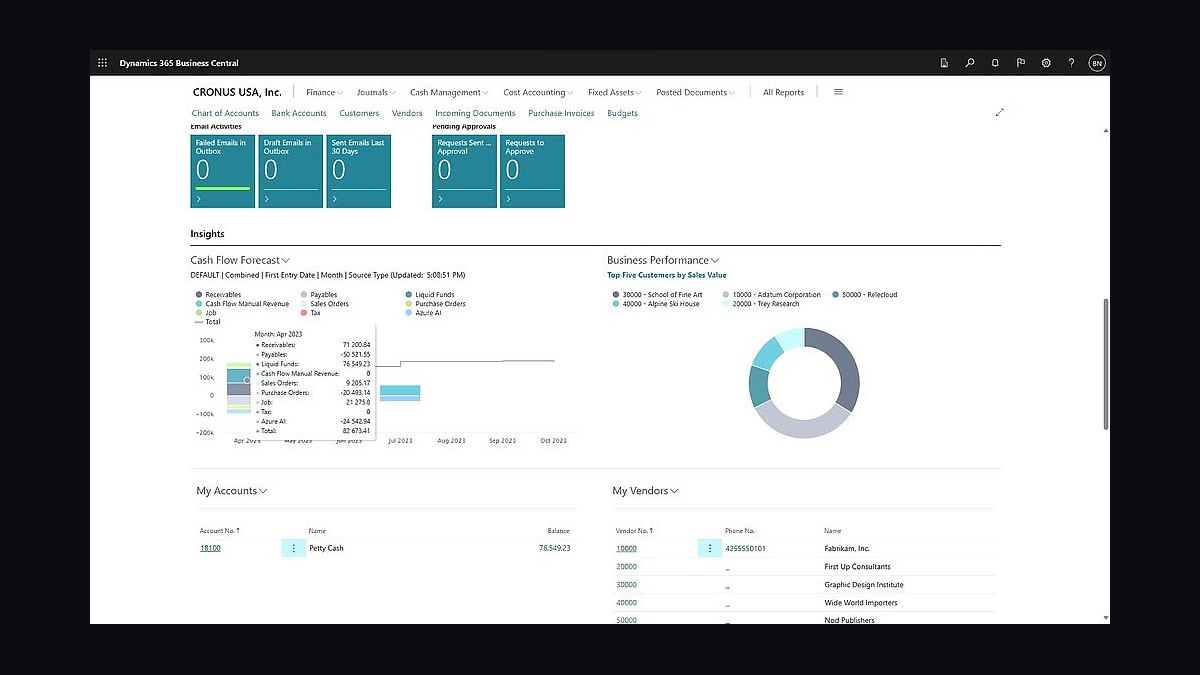
Microsoft Dynamics 365 ranks eighth as a general-purpose ERP and financial core that defense contractors pair with contracting add-on layers for DCAA-style cost accounting. It fits organizations already standardized on Microsoft identity and productivity tooling, simplifying role-based access control and MFA configuration ahead of CMMC assessment. Licensing is per-user and modular, keeping entry cost below purpose-built defense ERPs.
It is for contractors with mostly fixed-price commercial aerospace subcontracts rather than constant DCAA labor-charging scrutiny. The trade-off is that compliant timekeeping and indirect rate handling require third-party add-ons that expand the audit surface. Against Deltek Costpoint above, Dynamics trades defense-native compliance depth for lower cost and broader ecosystem familiarity.
9Azure Government GCC High

Azure Government GCC High ranks ninth as the hosting environment where ITAR-controlled and CUI workloads belong, carrying FedRAMP High authorization and personnel screening that commercial multi-tenant cloud cannot match. Standing it up before migrating any production financial or engineering record is the sequencing that avoids failing a first C3PAO assessment. It supports the identity, access control, and audit-trail controls that NIST SP 800-171's 110 requirements demand.
It is for any contractor touching controlled unclassified information, regardless of which ERP or PLM sits on top. The trade-off is higher cost and fewer region choices than commercial Azure. Against AWS GovCloud below, GCC High integrates more tightly with Microsoft 365 and Entra ID, which matters if the stack is Microsoft-centric.
10AWS GovCloud
AWS GovCloud ranks tenth as the alternative certified government cloud for defense workloads, offering FedRAMP High authorization and ITAR-compliant isolated regions. Contractors running Linux-based PLM, MES, or integration platforms often find GovCloud's service catalog and container tooling more flexible than GCC High for custom interfaces. It supports the documented data flow diagrams and access-control boundaries assessors probe hardest.
It is for contractors whose software stack leans on AWS-native services or non-Microsoft middleware. The trade-off is less seamless identity integration with Microsoft-centric ERP deployments. Against Azure Government GCC High above, GovCloud wins on infrastructure flexibility but loses on out-of-the-box Entra ID and Microsoft 365 alignment.
How we ranked these
We ranked tools on five weighted criteria: CMMC 2.0 and NIST SP 800-171 alignment (30%), DCAA-compliant project accounting and timekeeping depth (25%), native A&D manufacturing and PLM capability (20%), GovCloud or ITAR-segregated hosting options (15%), and total cost of ownership including integration labor (10%). Each vendor was scored against published documentation, FedRAMP authorization status, and disclosed aerospace customer deployments.
We deliberately ignored vendor market share, analyst quadrant placement, Gartner-style magic-quadrant positioning, and conference sponsorship presence, because none of those predict whether a stack survives a C3PAO assessment. We also excluded generic review-site star ratings, since defense contractors rarely publish implementation post-mortems. Pricing list rates were excluded because negotiated government pricing and module bundling make published numbers misleading for comparison.
What to look for
What matters most is whether the vendor's compliance documentation maps cleanly to the 110 NIST SP 800-171 controls, not whether marketing claims "CMMC-ready." Ask for a control-by-control matrix, the FedRAMP authorization boundary, and named aerospace customers who passed a C3PAO assessment on that exact version. Integration ownership matters more than feature checklists, because an undocumented interface becomes a finding.
The mistake most buyers make is scoping the purchase around functional fit and treating compliance as a configuration task after go-live. That reverses the correct sequence. The second common error is budgeting only license cost and ignoring that 15-25% of total project spend goes to integration and interface documentation. A third is assuming a unified suite eliminates integration risk; it only relocates it across module boundaries inside one vendor.
Related questions
Does a small Aerospace & Defense subcontractor need full CMMC Level 2 immediately?
Only if the contract or a prime's flow-down clause specifically requires handling controlled unclassified information. Many small subcontractors start at CMMC Level 1, covering basic Federal Contract Information protection across 17 practices, and scale to Level 2 only when a specific program grants CUI access. Choosing software prematurely for Level 2 adds cost without contract justification.
Can a business use commercial cloud software like standard NetSuite for defense work?
Only for functions that never touch controlled unclassified information. Any workload handling CUI or ITAR-controlled technical data needs a GovCloud-equivalent, segregated environment such as GCC High, Azure Government, or AWS GovCloud, because commercial multi-tenant regions lack the FedRAMP boundary, personnel screening, and data-residency controls assessors expect.
How long does a full ERP replacement take for a defense contractor?
Six to twelve months for a focused financial and project-accounting core replacing a legacy system. Twelve to eighteen months or longer when manufacturing execution, PLM integration, multi-entity consolidation, and full CMMC hardening are in scope. Data cleansing of historical project and configuration records frequently adds several months before cutover, not after.
Is PLM required for every Aerospace & Defense business, or only large primes?
Any business managing engineering revisions across long-lived airframe or space hardware configurations benefits from dedicated PLM. Smaller build-to-print job shops sometimes manage adequately inside ERP-native document control. The deciding factor is whether revision history is contractually required to be preserved and auditable, which pushes toward standalone PLM such as Teamcenter or Windchill.
Can a business mix a unified suite for finance with best-of-breed PLM?
Yes, and this hybrid is common in practice. The critical requirement is defining one documented, owned interface between the two systems rather than allowing ad hoc exports, spreadsheets, and manual re-entry to accumulate. That single interface needs a named technical owner, a data flow diagram, and a defined CUI boundary before go-live.
What happens if a contractor fails a CMMC assessment?
The business typically receives a Plan of Action and Milestones window to remediate specific findings, with conditional status during that period. Persistent failure can result in loss of eligibility to bid on or perform contracts requiring that CMMC level. For many small and mid-sized contractors, that eligibility loss is an existential business risk.
How does contract mix change which software stack fits best?
Cost-reimbursable DoD contracts put constant DCAA scrutiny on labor charging and indirect rate pools, which favors a unified suite with native timekeeping-to-billing traceability. Fixed-price commercial aerospace subcontracts with deep engineering change management favor best-of-breed with a strong standalone PLM. Most contractors run a blend and should weight the dominant contract type.
What headcount threshold tips a contractor toward a unified suite?
Below roughly 500 employees and a handful of active programs, maintaining five to seven integrated systems usually exceeds what a lean IT and compliance team can sustain. Above that size, dedicated PLM and MES administrators become affordable, integration risk gets absorbed by a real integration team, and best-of-breed fit advantages start to outweigh audit-surface cost.
FAQ
What is the single biggest software mistake Aerospace & Defense businesses make?
Treating CMMC and DFARS compliance as a bolt-on step after the software stack is chosen and implemented, rather than as a foundational requirement shaping architecture, hosting environment, and access-control design from day one. Retrofitting controls after data migration routinely forces re-migration and fails first C3PAO assessments.
Should a defense contractor host its own servers or use cloud infrastructure?
Nearly all modern deployments use cloud infrastructure certified for government workloads such as GCC High, Azure Government, or AWS GovCloud rather than self-hosted servers. These environments carry FedRAMP authorizations plus physical and personnel security controls that CMMC assessments expect. Self-hosting shifts the entire control burden in-house and rarely pencils out for mid-market contractors.
Does the software stack differ for space and hypersonics work versus traditional aircraft manufacturing?
The compliance backbone stays the same across both. Space and hypersonics programs lean harder on PLM for rapid design iteration and simulation data management. Traditional aircraft manufacturing leans harder on MES for repetitive, high-volume production traceability and serial-number genealogy. Contract mix and program count matter more than the product category itself.
How often should an Aerospace & Defense business reassess its software stack?
A full architectural reassessment every three to five years is typical, aligned with major contract wins, CMMC recertification cycles, or vendor end-of-life announcements. Reactive replacement after a compliance finding or failed assessment is far more expensive, because migration must happen under audit pressure rather than on a planned timeline.
What does DCAA actually audit in an ERP system?
Labor charging accuracy, timekeeping integrity, indirect rate pool composition, and the traceability from timesheet to project cost to invoice. Auditors test whether the system enforces segregation of duties, prevents backdated time edits without approval, and produces an unbroken audit trail. Systems without native DCAA-aware design generate findings.
How should a contractor budget for integration work in a best-of-breed stack?
Budget 15-25% of total project cost for integration platform subscription plus labor to build, document, and maintain each interface. Under CMMC, every interface touching CUI needs a data flow diagram, a named owner, and a defined access boundary. Contractors who skip this line item run over budget and accumulate assessment findings.
Are CMMC configuration-management controls triggered by routine software patches?
Yes. Changes to systems handling CUI must go through a documented approval process, meaning an ERP patch or MES firmware update is a compliance event, not just IT maintenance. It needs a change ticket, a risk assessment, and in some cases re-verification that security posture was not altered. Patching without a change gate accumulates compliance debt.
What is DFARS 252.204-7012 and how does it affect software choice?
It requires contractors handling covered defense information to implement NIST SP 800-171, report incidents within 72 hours of discovery, and flow the same requirements down to subcontractors. That flow-down means a small supplier's software stack is partly dictated by its prime contractor's clauses, not chosen freely on internal preference alone.
How much does a unified suite like Deltek Costpoint typically cost?
Per-user subscription pricing scales by module set, with core financials and project accounting at the low end and full manufacturing plus CRM at the high end. Mid-market deployments commonly land in a multi-hundred-thousand-dollar annual range once implementation, data migration, and DCAA-compliance configuration are included. Timelines run six to twelve months for a first deployment.
Why does AS9100D matter to software selection?
Most aerospace primes require AS9100D certification of suppliers regardless of whether work is defense or commercial. It demands a QMS capable of producing fully traceable nonconformance and corrective-action records tied to a specific work order, lot, and PLM revision. Neither stack path avoids this; the only question is native module versus bolted-on component.
Sources
- https://dodcio.defense.gov/CMMC/
- https://csrc.nist.gov/pubs/sp/800/171/r2/final
- https://www.acq.osd.mil/dpap/dars/dfars/html/current/252204.htm
- https://www.iso.org/standard/74350.html
- https://www.deltek.com/en/aerospace-and-defense
- https://www.ifs.com/industries/aerospace-and-defense
- https://www.sap.com/products/scm/industry-solutions/aerospace-defense.html
- https://www.plm.automation.siemens.com/global/en/industries/aerospace-defense/
Related on PULSE
This page will be disappearing soon. Save it to your device for $1 — or read it free while it is here.
@Kory-White- · if Venmo asks, the last 4 of my number are 2012
This page is gone.
This one is off the shelf now. $1 keeps it on your phone for good — the whole page, pictures and diagrams included.
 pulse-tech-stacksTop 10 Best Tech Stack Tools for Independent Dance Studios in 2027
 pulse-tech-stacksTop 10 Best Tech Stack Tools for Movie Theaters in 2027
 pulse-tech-stacksTop 10 tech stack differences between a multi-location retail chain and a single-store operator in 2027
 pulse-tech-stacksTop 10 Best Tech Stack Tools for Tree Services in 2027
 pulse-tech-stacksTop 10 Best Tech Stack Tools for AI Customer Support Companies in 2027
 pulse-tech-stacksTop 10 Best Tech Stack Tools for Private Ambulance and EMS Companies in 2027
 pulse-tech-stacksTop 10 Best Tech Stack Tools for Data Loss Prevention (DLP) Software Vendors in 2027
 pulse-tech-stacksTop 10 Best Tech Stack Tools for Appliance Repair Services in 2027
 pulse-tech-stacksTop 10 Best Tech Stack Tools for AI Music Generation Companies in 2027
 pulse-tech-stacksTop 10 Best Tech Stack Tools for Software Development Agencies in 2027