
What software stack should a Mortgage & Lending business run in 2027?
 Curated byKory White · Fractional CRO · Maryland
 PULSEKNOWLEDGE LIBRARY
Quality
Certified
A Mortgage & Lending business in 2027 should run a composable stack: a modern loan origination system (LOS) as the system of record, a point-of-sale (POS) layer for borrower intake, a pricing and product-and-eligibility engine (PPE), an automated underwriting connection, a servicing platform, and a CRM plus data warehouse tying it together. Buy integration-ready software, not monoliths.
A mortgage lender's stack problem, made concrete
Picture a mid-sized Mortgage & Lending business — say 180 employees, licensed in 34 states, originating roughly $2.4 billion a year across retail, correspondent, and a small wholesale channel. In 2023 it ran a legacy loan origination system licensed per seat, a homegrown borrower portal, a spreadsheet-driven pricing desk, and a CRM that nobody trusted. Loan officers kept their real pipeline in personal spreadsheets. The operations team re-keyed the same borrower data into four systems. When rates moved 40 basis points in a week, the pricing desk needed two days to reprice the full product catalog, and by then the opportunity had passed.
That is the classic failure mode: the software exists, but it does not compose. Each tool is a silo, and the human glue holding the silos together is expensive, slow, and error-prone. By 2027 the economics of that approach stop working. Borrower expectations have been set by fintech point-of-sale experiences; regulators expect auditable, explainable decisions; and margin compression means every basis point of operational cost matters.
The fix is not "buy more software." It is to define a target architecture — a small number of systems of record, each with a clean API, surrounded by integration and orchestration layers — and then migrate toward it deliberately. The rest of this page lays out what that stack looks like, how the pieces interact, what it costs, where the trade-offs bite, and the pitfalls that sink otherwise sensible implementations.
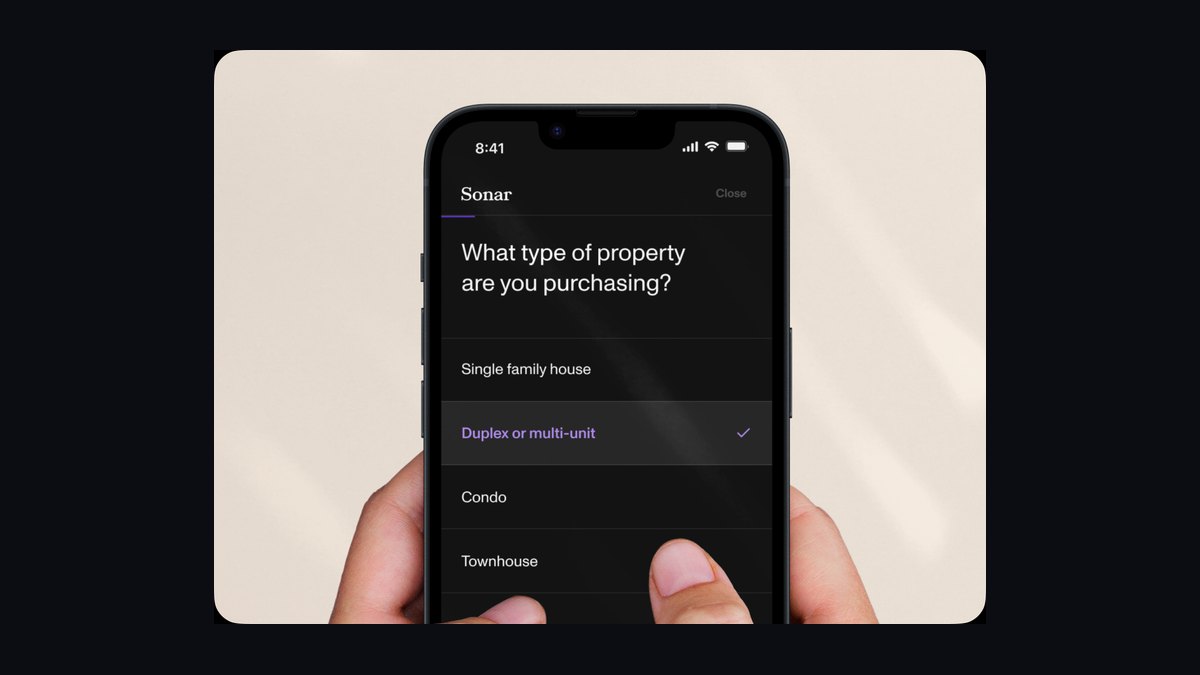
A useful framing: think of the stack in five layers. The experience layer is what borrowers and loan officers touch — point-of-sale, borrower portal, mobile apps, LO desktop. The decision layer is pricing, product and eligibility, automated underwriting, and rules. The system-of-record layer is the LOS and, after closing, the servicing platform. The data layer is the warehouse, the customer data platform, and the reporting/BI surface. The integration and identity layer is the iPaaS or event bus, the identity provider, and the audit trail. Every credible 2027 stack is a deliberate arrangement of these five layers, and every failed stack is one where two layers got fused together and could never be separated again.
How the pieces actually connect
The mechanism matters more than the vendor list. A mortgage application is a long-lived, stateful workflow with dozens of external dependencies: credit bureaus, verification-of-employment and verification-of-assets services, title and appraisal vendors, flood and fraud checks, investor delivery, and compliance reporting. The stack's job is to move a loan through that workflow with the fewest manual touches and the most complete audit trail.
In practice, the flow looks like this. The borrower enters through the point-of-sale, which captures intent and pre-qualifies. That intake writes to the LOS, which becomes the system of record for the loan file. The pricing and eligibility engine runs against the borrower's scenario and returns eligible products and rates. The automated underwriting system returns a findings report. Conditions are generated, documents are collected through the portal, and the file moves to processing, underwriting, closing, and funding. After funding, the loan is either sold to an investor or transferred to servicing, and the data flows into the warehouse for reporting and retention analytics.
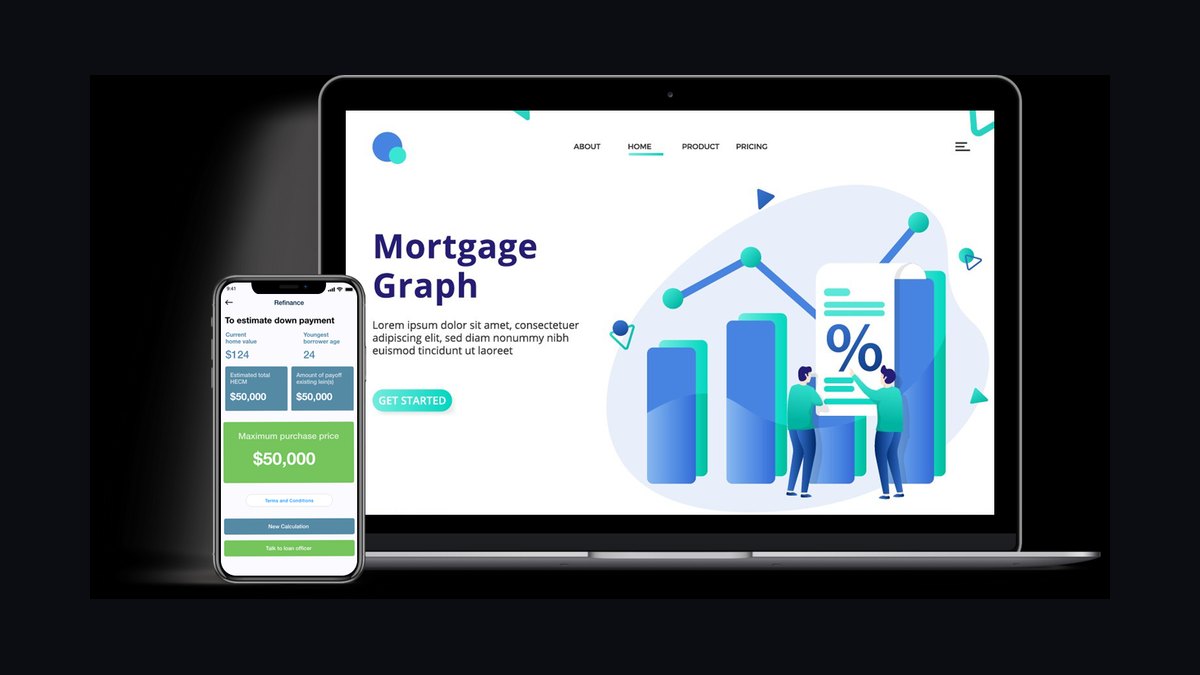
The critical design decision is where the system of record lives. If the POS is the system of record, you inherit a tool optimized for speed of intake but weak at compliance and investor delivery. If the LOS is the system of record — which is the right answer for almost every lender — then the POS, the pricing engine, and the portal must all be able to read from and write to it through APIs. That is the single most important architectural constraint in the entire stack.
A second decision is synchronous versus event-driven integration. Synchronous API calls are simpler to reason about but create tight coupling: if the pricing engine is down, intake stops. Event-driven integration — publishing a "loan.created" or "loan.conditions.updated" event to a bus — decouples the layers and lets each system retry independently. Most lenders end up with a hybrid: synchronous for the borrower-facing path where latency matters, event-driven for back-office state changes.
A third decision is build versus buy for the integration layer. A dedicated iPaaS or an event bus (Kafka-style or a managed equivalent) is almost always cheaper than maintaining bespoke point-to-point integrations. The rule of thumb: if you have more than about eight systems that need to talk to each other, point-to-point integration becomes unmaintainable, and the number of connectors grows quadratically.
Read that second diagram as a map of dependencies, not a purchase order. The point is that the integration and identity layer touches everything, which is why it deserves budget and ownership early rather than being treated as an afterthought bolted on during the final month of an implementation.
Real numbers, ranges, and benchmarks
Numbers in this space are volatile and vendor-specific, so treat everything below as planning ranges rather than quotes. Always validate against current vendor proposals and your own volume profile.

Licensing and platform cost. For a lender originating $1–3 billion annually, a modern cloud LOS typically runs somewhere in the range of $15,000 to $60,000 per month depending on volume tiers, modules, and seat counts, with per-loan fees layered on top. Point-of-sale platforms commonly price per completed application or per funded loan, often in the low tens of dollars per application at moderate volume, with enterprise minimums. Pricing and eligibility engines are frequently priced per user or per pricing request. A servicing platform for a retained portfolio is usually priced per loan per month, often measured in cents to a few dollars per active loan.
Implementation cost and timeline. A full LOS replacement is a 9-to-18-month program for a mid-sized lender. Budget implementation services at roughly 0.5x to 1.5x of first-year license cost. A point-of-sale deployment is faster — typically 3 to 6 months — but only if the LOS integration is already API-ready. If the LOS is a legacy system with batch-file interfaces, add 4 to 8 months and a meaningful integration budget.
Operational benchmarks to target. These are the numbers that tell you whether the stack is actually working:

- Pull-through rate: the share of applications that fund. Healthy retail operations often land in the 55–75% range depending on channel and lead source.
- Time to conditional approval: best-in-class operations measure this in hours, not days. A well-integrated stack should get most files to a credit decision within one business day.
- Cost to originate: total production cost per loan divided by loan volume. This varies enormously by channel and loan type, but the direction of travel for a well-integrated stack is downward — often 15–30% lower than a siloed equivalent.
- Touchless or low-touch completion rate: the share of loans that move through the workflow with minimal manual intervention. Mature implementations push this above 40% for straightforward conventional purchase loans.
- Data re-entry incidents: how many times a human re-keys the same field. The target is zero. Every re-entry is a defect in the integration layer.
Staffing implications. A composable stack does not eliminate operations headcount, but it changes the shape of it. Expect to shift roughly 10–20% of processing capacity from data entry and chasing documents toward exception handling, borrower communication, and quality control. You will also need at least one integration engineer or a small platform team — often 2 to 4 people — to own the event bus, the API contracts, and the vendor relationships. Lenders who skip this step end up with a stack that works on day one and decays by month nine.
Compliance and audit cost. Every system that touches borrower data needs to be in scope for your information security program. Expect annual third-party risk assessments per critical vendor, penetration testing, and evidence collection for exams. A stack with twelve vendors is meaningfully more expensive to govern than one with six. Consolidation has a compliance dividend, which is one reason to resist the temptation to buy a best-of-breed tool for every narrow problem.

Trade-offs and alternatives
There is no single correct stack. There are three broad strategies, and the right one depends on your size, your channel mix, and your appetite for operational risk.
Strategy one: the integrated suite. Buy as much as possible from one or two vendors — LOS, POS, pricing, and sometimes servicing from the same provider. The upside is native integration, one contract, one support relationship, and faster time to value. The downside is vendor lock-in, slower feature velocity on any individual module, and the risk that the suite's weakest module becomes your bottleneck. This strategy suits lenders under roughly $1 billion in annual volume, or lenders whose competitive advantage is not technology.
Strategy two: best-of-breed with a strong integration layer. Pick the best POS, the best LOS, the best pricing engine, and wire them together through an event bus. The upside is that each layer can be upgraded or replaced independently, and you can adopt new capabilities quickly. The downside is integration cost, more vendors to govern, and the constant risk of version drift breaking a contract. This strategy suits lenders above roughly $1 billion in volume with a real platform team.

Strategy three: build the differentiator, buy the commodity. Buy the LOS and servicing platform — these are commodities where building is almost never worth it — and build the pieces that create competitive advantage, typically the pricing engine, the borrower experience, or a proprietary data model. The upside is genuine differentiation. The downside is that you now own software maintenance forever, and mortgage technology is a moving target.
A fourth path, increasingly common, is a managed platform or co-sourced model, where a technology partner runs the stack and the lender focuses on origination. This trades margin for speed and is worth modeling honestly rather than dismissing.
Whichever path you choose, the trade-off that matters most is control versus speed. More control means more integration work, more governance, and more internal capability. More speed means more dependence on a vendor's roadmap. Lenders that get this wrong usually err toward speed at the start and then spend three years untangling the consequences.

Common pitfalls and how to avoid them
Pitfall one: letting the point-of-sale become the system of record. It is tempting because the POS is where the borrower relationship starts. But POS platforms are optimized for conversion, not for compliance, investor delivery, or servicing transfer. Keep the LOS as the system of record and make the POS a fast, well-integrated front door.
Pitfall two: point-to-point integrations. Every pair of systems that talks directly is a future maintenance burden. When you have ten systems, that is up to forty-five potential connections. Route traffic through an integration layer and define contracts explicitly.

Pitfall three: no data ownership model. If nobody owns the borrower data model, every system invents its own version of "borrower," and reconciliation becomes a permanent job. Assign a data steward and define canonical entities — borrower, loan, property, document, condition — with a single source of truth for each.
Pitfall four: skipping the identity and consent layer. Borrowers, loan officers, processors, and third-party vendors all need different access. A proper identity provider with role-based access and a consent/audit log is not optional in a regulated environment. Retrofitting it later is painful.
Pitfall five: underestimating change management. The technology is often the easy part. Loan officers who have used the same LOS for a decade will resist a new one, and if the new stack is slower for them on day one, they will route around it. Budget for training, pilot with a single branch, and measure adoption explicitly.

Pitfall six: buying modules you cannot integrate. A pricing engine with no API is a spreadsheet with extra steps. Before signing, insist on documented APIs, sandbox access, and a reference customer who has actually integrated the module into a comparable stack.
Pitfall seven: ignoring exit and data portability. Contracts should specify data export formats, timelines, and costs. The cheapest time to negotiate portability is before you sign, not when you are trying to leave.
Pitfall eight: treating the stack as a one-time project. A stack is a product, not a project. It needs an owner, a roadmap, a budget, and a regular review cadence. Lenders that assign ownership to a committee rather than a named leader tend to drift.
Related questions
What is the single most important component of a Mortgage & Lending software stack?
The loan origination system, because it is the system of record. Every other layer — point-of-sale, pricing, underwriting, servicing, analytics — reads from or writes to it. Get the LOS and its API strategy right, and everything else becomes tractable.
Should a Lending business build or buy its pricing engine?
Buy it unless pricing is your core competitive advantage. Pricing engines are complex, regulation-sensitive, and constantly changing. Building one only makes sense if you have a genuine, defensible edge in how you price risk.
How long does a full stack migration take?
For a mid-sized lender, plan on 9 to 18 months for an LOS replacement, with point-of-sale and pricing work running in parallel. Add 4 to 8 months if legacy systems lack modern APIs. Phased rollouts beat big-bang cutovers.
Do smaller lenders need the same stack as large ones?
No. Smaller lenders should favor integrated suites and managed platforms, because they lack the platform team to run a best-of-breed stack. The architecture principles still apply, but the implementation should be simpler.
How much should a lender budget for integration work?
As a planning range, budget integration services at roughly half to one-and-a-half times first-year license cost. If your vendors lack APIs, budget more and expect a longer timeline.
FAQ
What software does a Mortgage & Lending business actually need in 2027? At minimum: a loan origination system as the system of record, a point-of-sale layer for borrower intake, a pricing and product-and-eligibility engine, a connection to automated underwriting, a servicing platform if you retain loans, a CRM for pipeline and relationship management, and a data warehouse for reporting and analytics. Around those, you need an integration layer and an identity provider. The exact vendor choices matter less than whether the pieces compose cleanly through APIs.
Is a cloud-based LOS better than an on-premise one? For almost every lender in 2027, yes. Cloud LOS platforms ship updates continuously, scale with volume, and expose modern APIs. On-premise systems can still make sense in narrow cases — very large portfolios with unusual customization needs, or institutions with strict data-residency constraints — but the maintenance and integration burden is high, and vendor investment is increasingly cloud-first.
How do I know if my current stack is failing? Watch for these signals: loan officers keeping pipelines in spreadsheets, the same data re-keyed into multiple systems, pricing changes taking days instead of hours, integration work consuming most of your technology budget, and no reliable single view of a borrower or a loan. Any two of those together usually means the stack needs restructuring, not just tuning.
What role does AI play in a 2027 mortgage stack? AI shows up in document classification and extraction, income calculation assistance, fraud detection, borrower chat, and underwriting exception triage. The practical rule is to deploy AI where a human currently reads documents or makes repetitive judgments, keep a human in the loop for anything that affects a credit decision, and make sure every model's output is logged and explainable for exam purposes.
How should a Lending business approach vendor selection? Start from your target architecture, not from a vendor demo. Define the layers, define the API contracts you need, then evaluate vendors against those requirements. Insist on sandbox access, reference customers with comparable volume and channel mix, and contractual data portability. The best demo is not the best fit.
What is the biggest mistake lenders make when replacing their stack? Trying to do everything at once. Big-bang migrations concentrate risk, stretch the team, and often leave the business running on workarounds for months. Phase the work — start with the system of record and the integration layer, then move the experience layer, then the decision layer — and keep a rollback path at every stage.
Sources
- Consumer Financial Protection Bureau — mortgage rules and compliance resources: https://www.consumerfinance.gov/rules-policy/
- Fannie Mae — Selling Guide and loan delivery requirements: https://selling-guide.fanniemae.com/
- Freddie Mac — Loan Product Advisor and selling resources: https://www.freddiemac.com/singlefamily
- FHA — Single Family Housing Handbook 4000.1: https://www.hud.gov/program_offices/housing/sfh/handbook_4000-1
- Ginnie Mae — MBS and issuer resources: https://www.ginniemae.gov/
- MISMO — mortgage industry data standards: https://www.mismo.org/
- National Association of Realtors — market and industry research: https://www.nar.realtor/research-and-statistics
- Mortgage Bankers Association — industry data and forecasts: https://www.mba.org/news-and-research/research-and-economics
- FFIEC — cybersecurity and information security guidance: https://www.ffiec.gov/cyberassessmenttool.htm
- NIST — Cybersecurity Framework: https://www.nist.gov/cyberframework
Related on PULSE
- How to evaluate a loan origination system without disrupting production
- Building an integration layer for a multi-vendor lending stack
- Pricing and eligibility engines: build, buy, or partner
- Data governance for borrower records in a regulated environment
- Migrating from a legacy LOS: sequencing, risk, and rollback
- Measuring the ROI of a mortgage technology stack
This page will be disappearing soon. Save it to your device for $1 — or read it free while it is here.
@Kory-White- · if Venmo asks, the last 4 of my number are 2012
 pulse-tech-stacksTech Stack Consolidation: Cutting SaaS Spend by 40% in 2027
 pulse-tech-stacksWhat is the best tech stack for an electrical supply distributor in 2027?
 pulse-tech-stacksWhat is the best tech stack for a casino or gaming operator in 2027?
 pulse-tech-stacksTech Stack for Electrical Contractors in 2027
 pulse-tech-stacksThe Head-to-Head Stack: Commercial Real Estate Brokerage vs. Property Management Platform in 2027
 pulse-tech-stacksWhat is the recommended Zero Trust Network Access (ZTNA) Vendor sales and operations tech stack in 2027?
 pulse-tech-stacksWhat is the best tech stack for a commercial security & alarm monitoring company in 2027?
 pulse-tech-stacksWhat software stack should a HVAC / Plumbing / Electrical business run in 2027?
 pulse-tech-stacksThe Sovereign Cloud Stack for Government Intelligence in 2027
 pulse-tech-stacksTop 10 Tech Stack Comparisons for Multi-Location Retailers in 2027